
After the high-octane energy of Cyberpunk Chongqing, your soul might be craving something different. In China, when people feel “burnt out” by the big city lights, they all look toward one place: Yúnnán (云南). Its name literally means “South of the Clouds,” and it is the home of the màn shēnghuó (慢生活)—the “slow life.”
In 2026, Yúnnán has evolved from a simple tourist destination into a sanctuary for digital nomads, artists, and anyone looking to reconnect with nature. Here, time is not measured by the tick of a clock, but by the movement of sunlight across an ancient courtyard. This guide will help you navigate the three most iconic stops in Yúnnán: Dàlǐ, Lìjiāng, and Shāngé-lǐlā.
1. Dali: The Capital of “Doing Nothing”
If you ask a local in Dàlǐ (大理) what their plans are for the day, the most common answer is shàitàyáng (晒太阳)—simply “basking in the sun.” Nestled between the towering Cāngshān Mountains and the crystal-blue Ěrhǎi Lake, Dàlǐ is a place where “productivity” is a dirty word.
- The Vibe: Dàlǐ is famous for its “Renmin Road” culture, where travelers from across the world set up stalls, play guitars, and sell handmade crafts.
- The Experience: Rent an electric scooter and ride around Ěrhǎi Lake. Stop at a small café in Xǐzhōu (喜洲) to try a freshly baked Xǐzhōu bǎ bǎ (喜洲粑粑), a savory, layered flatbread that is a local legend.
- Native Insight: Many young people move here to “lie flat” (tǎngpíng 躺平), a term for rejecting the rat race in favor of a simpler life.
2. Lijiang: The Cobblestone Labyrinth
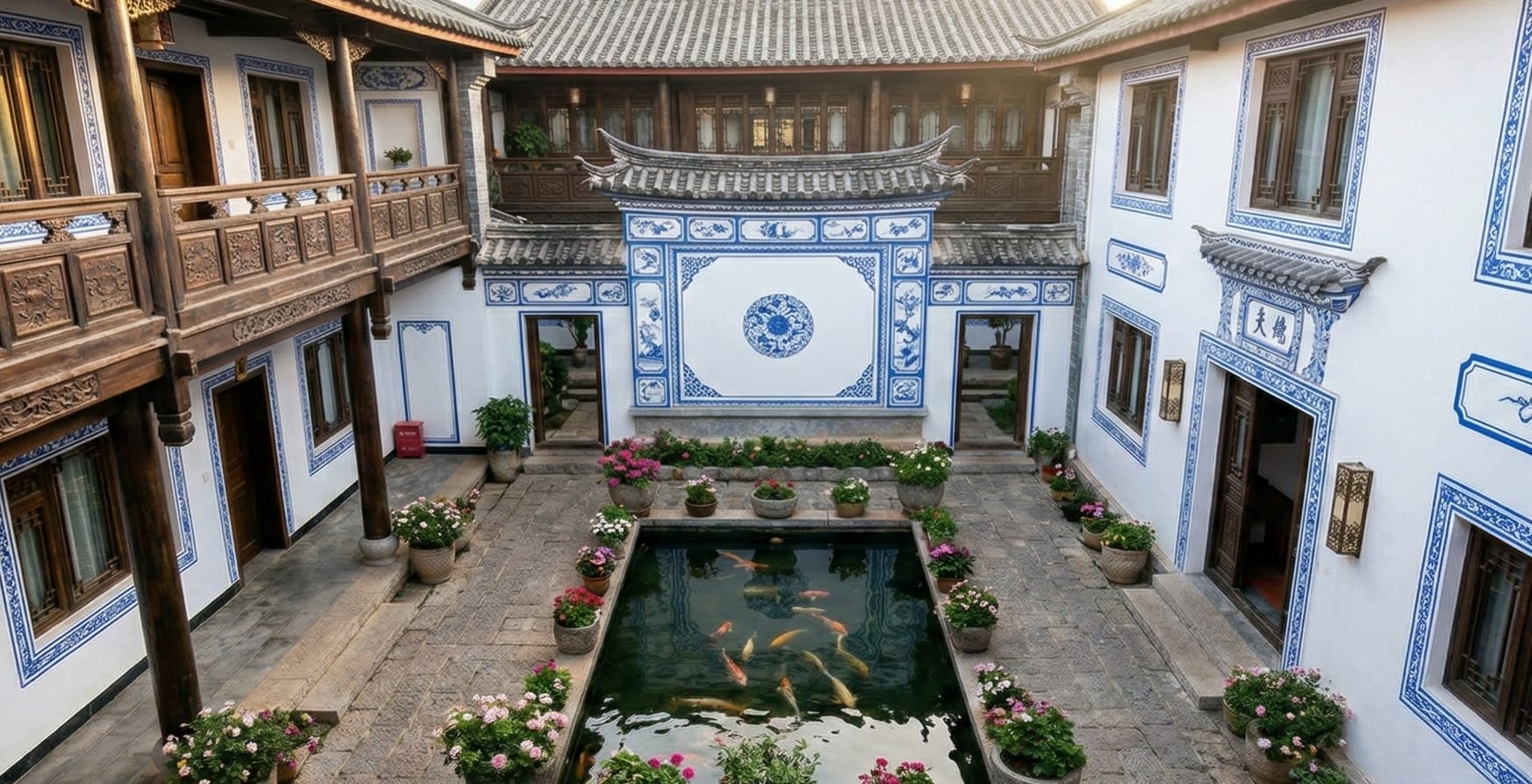
A few hours north of Dàlǐ lies Lìjiāng (丽江). While Dàlǐ is about the lake, Lìjiāng is about the Gǔchéng (古城)—the Ancient Town. It is a UNESCO World Heritage site where the streets are made of colorful breccia stone and a network of canals flows past every doorstep.
| Destination | Main Highlight | Must-Try Food |
|---|---|---|
| Dàlǐ (大理) | Erhai Lake & "Sun-Basking" | Three-Course Tea (sāndào chá) |
| Lìjiāng (丽江) | Naxi Culture & Old Town | Black Goat Hot Pot (hēiyáng huǒguō) |
| Shāngé-lǐlā (香格里拉) | Tibetan Monasteries & Glaciers | Yak Butter Tea (sūyóu chá) |
| Téngchōng (腾冲) | Hot Springs & Volcanoes | Crossing the Bridge Noodles (guòqiáo mǐxiàn) |
The real magic of Lìjiāng happens at dawn. Before the tour groups arrive, you can hear the sound of the water and the distant bells of the horses. Look up, and you’ll see the Yùlóng Xuěshān (玉龙雪山)—the Jade Dragon Snow Mountain—looming over the town like a silent guardian.
3. Shangri-La: Where Earth Meets Heaven
As you climb higher into the mountains, you reach Shāngé-lǐlā (香格里拉). This is where the landscape shifts from lush gardens to the high Tibetan plateau. The air is thinner, the sky is a deeper blue, and the atmosphere is filled with the smell of incense and juniper.
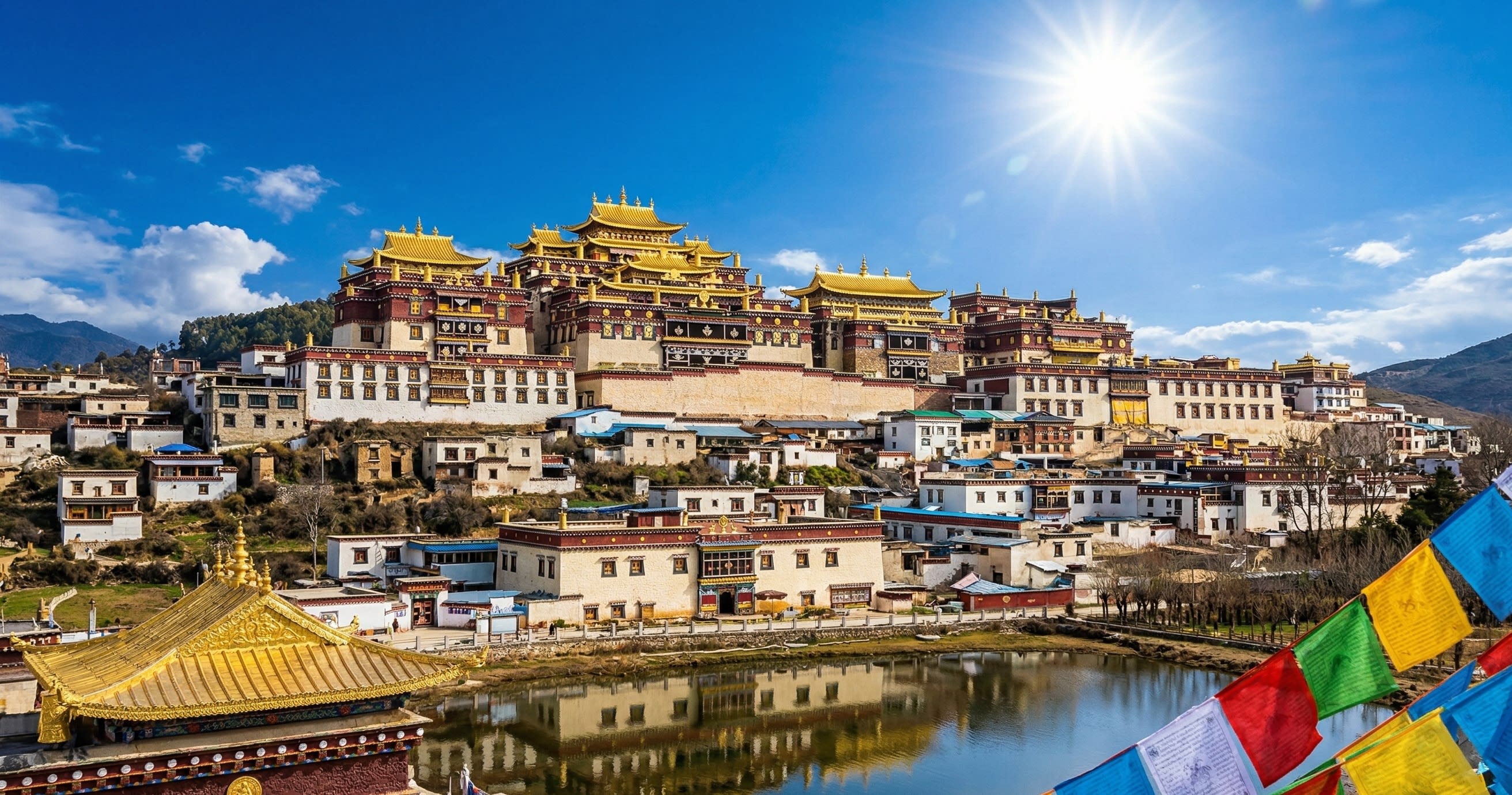
The Sōngzhànlín (松赞林) Monastery, often called the “Little Potala Palace,” is the crown jewel here. Walking through its golden halls, you’ll find a sense of peace that is hard to describe. It is a place for fàngkōng (放空)—to “empty your mind.”
4. The Flavor of Yunnan: More Than Just Noodles
Yunnan cuisine is arguably the most diverse in China because of its 25 ethnic minority groups. It’s all about fresh, “wild” ingredients.
- Wild Mushrooms (yěshēng jùn 野生菌): During the rainy season, the markets are filled with thousands of varieties of mushrooms. Be careful, though—some are delicious, while others are “hallucinogenic” if not cooked properly!
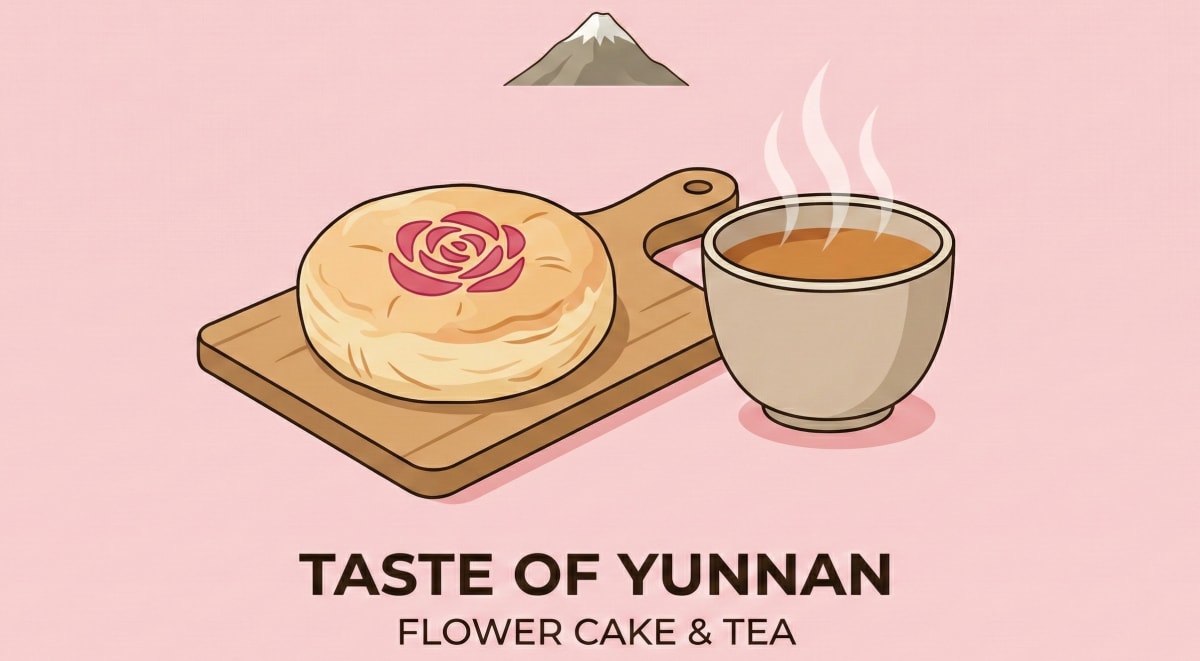
- Flower Cakes (xiānhuā bǐng 鲜花饼): These are shortbread pastries filled with sugared rose petals. They are the ultimate Yunnan souvenir.
- Cheese? Yes, Cheese!: Unlike most of China, Yunnan has a long tradition of dairy. Try the rǔshàn (乳扇)—fried goat cheese fans—usually served with a drizzle of rose jam.
5. Survival Tips for the Slow Life
To truly enjoy Yúnnán in 2026, you need to change your mindset:
- Beware the “High” Life: Shāngé-lǐlā is at 3,300 meters. Altitude sickness is real. Drink plenty of water, avoid alcohol for the first 24 hours, and don’t run—walk like a local.
- UV Protection: The sun at high altitudes is incredibly strong. Even on a cloudy day, you will get burnt. Wear a hat and use “curator-grade” sunblock.
- Book the “Minsu” (mínshù 民宿): Instead of large hotels, stay in a local boutique guesthouse. These are often renovated ancient homes where the host will invite you for a gōngfu chá (功夫茶) session in the afternoon.
Final Thoughts
Yúnnán is not just a place on a map; it is a state of mind. It is a reminder that life doesn’t always have to be lived at 100 miles per hour. Whether you are watching the sunset over Ěrhǎi Lake or listening to Tibetan chanting in Shāngé-lǐlā, Yúnnán teaches you that the most valuable thing you can “curate” is your own time.
So, put down your phone, grab a cup of tea, and let the clouds of Yúnnán carry your worries away.
Relaxed by the slow life? Continue your journey with our guide to The Art of Chinese Tea or discover the ancient engineering of Shanxi Architecture.

