
In 2026, as we manage high-precision digital infrastructure or oversee complex office renovations, the Chinese tea ceremony remains the ultimate “slow-tech” sanctuary. To the uninitiated, it may look like simply hot water and leaves. But to a curator of culture—or a professional accustomed to managing technical specifications—Chinese tea (chá 茶) is a sophisticated system of botany, chemistry, and social etiquette.
Whether you are hosting a business meeting in a quiet teahouse or taking a restorative break from troubleshooting your home NAS system, understanding the nuances of tea is a mark of high cultural literacy. This guide provides a technical breakdown of the six major tea categories, the critical role of water chemistry, and the essential gōngfu (功夫) brewing methods required to unlock the true potential of the leaf.
1. The Taxonomy of Tea: The Six Categories
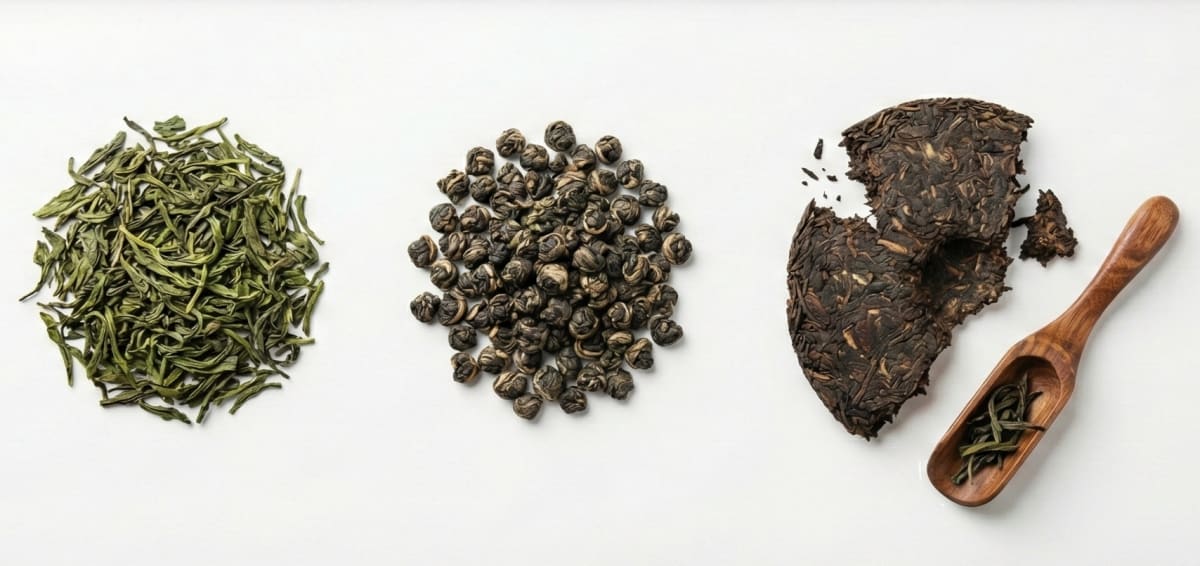
All true tea comes from the same plant, Camellia sinensis. The professional distinction in flavor, color, and aroma lies entirely in the oxidation process. For a curator, precision in matching the English name with its Chinese counterpart and correct Pinyin tones is the foundation of credibility.
| Category | Oxidation | Temp | Key Profile |
|---|---|---|---|
| Green tea (lǜ chá 绿茶) | 0% (Unoxidized) | 80°C | Fresh, grassy, nutty (e.g., lóngjǐng 龙井). |
| White tea (bái chá 白茶) | 5-10% (Sun-dried) | 85°C | Delicate, floral, high aging potential. |
| Oolong tea (wū lóng chá 乌龙茶) | 15-70% (Partial) | 95°C | Complex, fruity, roasted (e.g., dàhóngpáo 大红袍). |
| Black tea (hóng chá 红茶) | 100% (Full) | 100°C | Malty, chocolatey, robust (e.g., diānhóng 滇红). |
| Yellow tea (huáng chá 黄茶) | Slight (Steam-dried) | 80°C | Silky, mellow, no aggressive "green" bite. |
| Dark green tea (hēi chá 黑茶) | Post-fermented | 100°C | Earthy, woody, improves with age (e.g., pǔ'ěr 普洱). |
2. The Art of Gōngfu chá: Precision in Motion
In Chinese, gōngfu (功夫) translates to “skill” or “time-honored effort.” In the context of tea, it refers to the method of using small vessels and high leaf-to-water ratios with multiple short infusions. This is essentially the “agile management” of the tea table—iterative brewing that evolves with every pour.
I remember my first encounter with a master in a quiet Hangzhou teahouse. He didn’t rush. Each movement was deliberate—from the gentle rinse of the leaves to the precise pour that created a thin, fragrant veil of steam. If you want to replicate this, you’ll need a reliable gaiwan and a steady hand.

3. Tea Etiquette: The Silent Language of the Table
Sitting at a tea table in China involves a level of non-verbal communication that often speaks louder than words. Observing these silent rituals will immediately elevate your status from a “tourist” to a “curator.”
- The Finger Tap (Finger Kowtow): If your host refills your cup while you are engaged in conversation, you should lightly tap your index and middle fingers twice on the table. This is a silent “thank you.” The gesture originates from the Qing Dynasty, when an emperor traveling in disguise would tap his fingers to simulate a kowtow, allowing his servants to acknowledge his presence without revealing his imperial identity.
- The “Rinse” Cycle (xǐ chá 洗茶): The first infusion of aged teas like pǔ’ěr or roasted Oolongs is never consumed. It is used to “awaken” the leaves and rinse away any storage dust. Pouring this water over your “tea pet” or into the tray is an essential part of the opening ritual.
- Teapot Placement: Never point the spout (zhǔ 嘴) of the teapot directly at a guest. It is considered “pointing a finger” and is a sign of poor breeding or unintentional aggression.

4. The Curator’s Secret: Water Chemistry
In our high-tech era, we optimize our server configurations and NAS systems, yet we often overlook the most critical component of tea: the water. Professional tea brewing is as much about chemistry as it is about culture.
- pH Balance: For delicate lǜ chá (green tea), water with a slightly acidic to neutral pH (6.5 - 7.0) is ideal. Hard water with high mineral content will “trap” the aromatics, leaving the tea tasting flat and metallic.
- Mineral Content: While distilled water is “pure,” it lacks the minerals needed to carry the flavor of heavier teas like pǔ’ěr. A carbon-filtered spring water is generally the gold standard.
- Temperature Precision: Using boiling water on a delicate lóngjǐng will “scald” the leaves, releasing bitter tannins and destroying the fragile L-theanine. Always use a temperature-controlled kettle for professional results.
5. Why Modern Professionals are Returning to Tea
Much like the meditative art of Bead Rubbing or the patience required for Wenwan Gourds, tea culture provides a necessary grounding force.
For a professional overseeing a multi-floor renovation, the tea table offers a rare moment of focused stillness. The “calm alertness” provided by tea—a result of the synergy between caffeine and L-theanine—is far superior to the jittery spike of coffee. It allows for deep focus during complex technical planning without the subsequent “crash.”

6. Pro Tips for Sourcing Authentic Tea
The tea market can be as opaque as a legacy codebase. To find “Curator Grade” tea, follow these three rules:
- The míngqián (明前) Window: For Green Tea, always look for the “Pre-Qingming” harvest. These leaves are plucked in early April before the spring rains, resulting in a sweeter, more tender profile.
- Terroir (Environment): Just like wine, tea is about the soil. Authentic lóngjǐng must come from the West Lake area of Hangzhou. Anything else is merely “green tea in the style of lóngjǐng.”
- The Leaf Integrity: After brewing, inspect the “bottom of the leaves” (yè dǐ 叶底). Premium tea should consist of whole, supple leaves or single buds. If the remains look like chopped-up dust or twigs, the quality is commercial grade.
Final Thoughts
Chinese tea culture is not a performance; it is a lifestyle of refinement and hospitality. Whether you are troubleshooting a software bug or celebrating the completion of a massive project, a pot of well-brewed tea offers a bridge to a more balanced life. You are not just drinking tea; you are curating time itself.
Mastered the brew? Take your cultural journey further by exploring our guides on Chinese Stress Relief through Panwan or the Art of Wenwan Gourds.
Disclaimer: As an Amazon Associate, ChinaCurator earns from qualifying purchases.