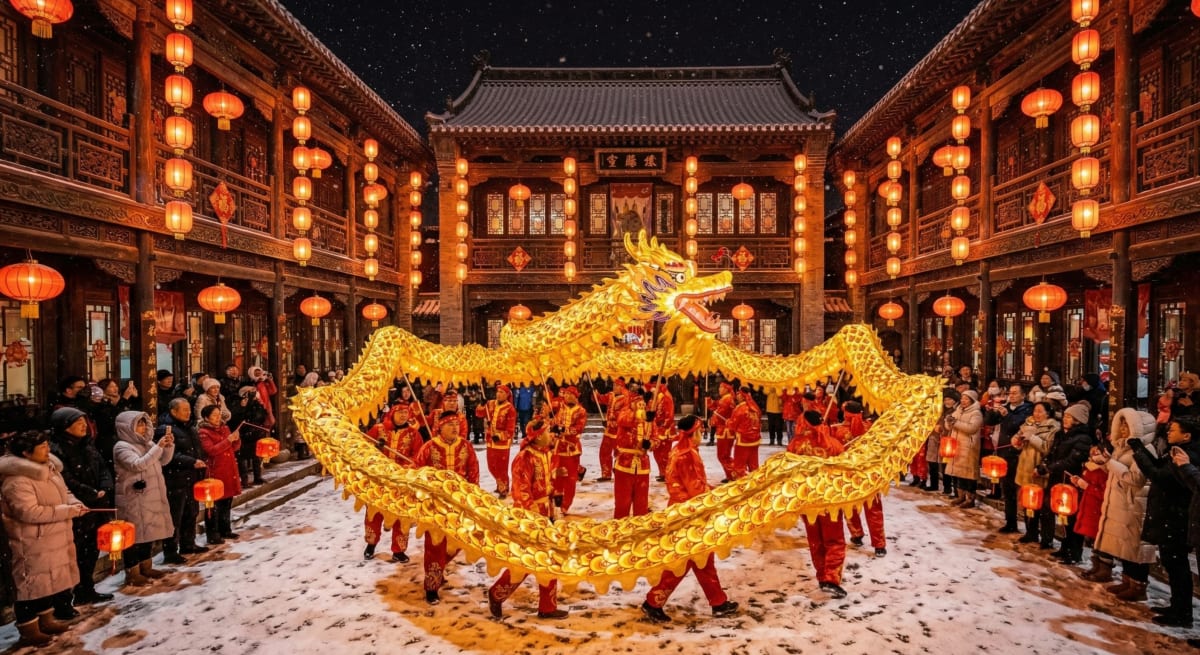
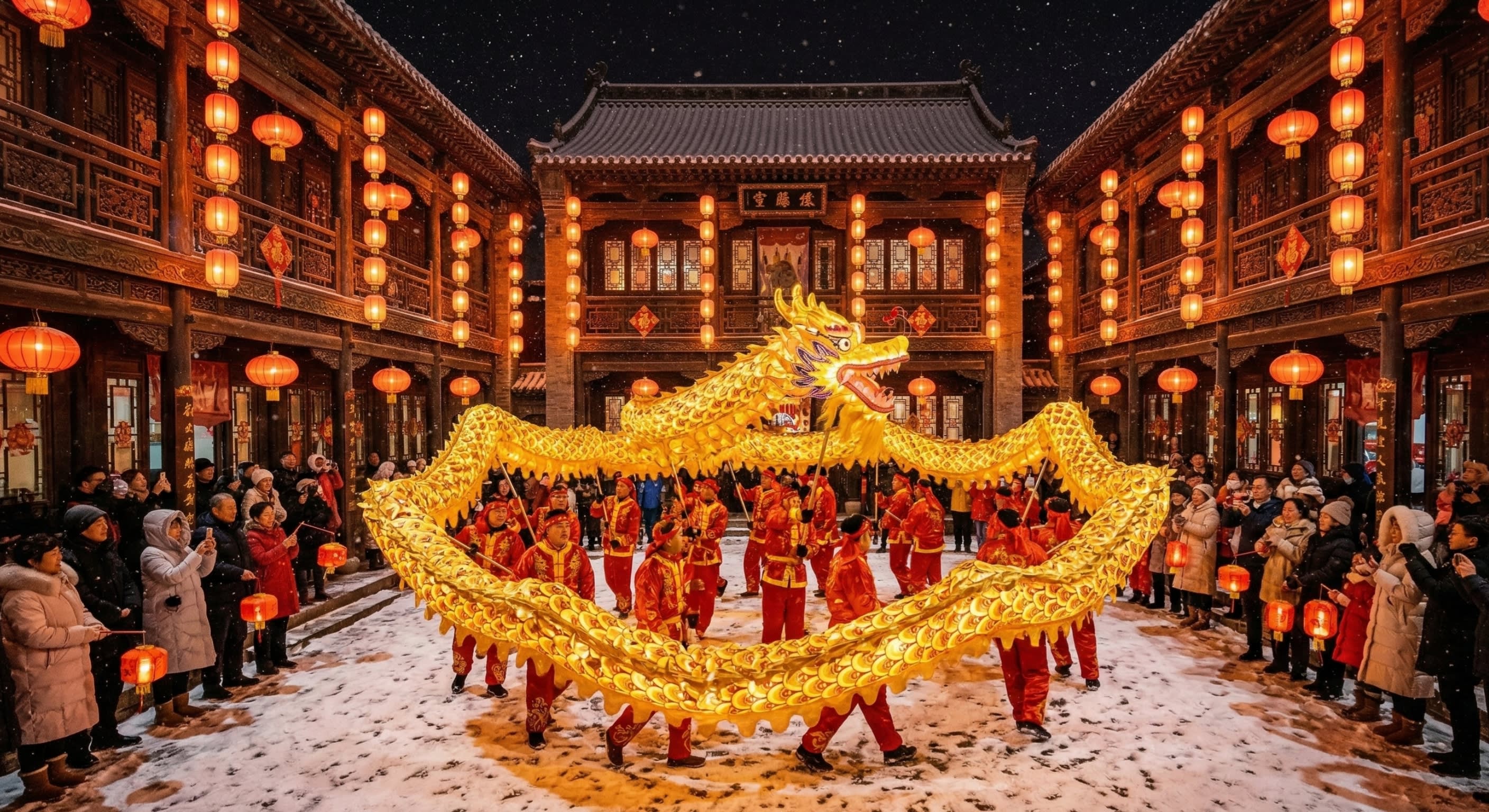
To truly understand China, you must first experience the rhythm of the Spring Festival. It is not merely a vacation; it is the emotional gravity that pulls over a billion people home. It is a massive migration of human spirit, a 4,000-year-old pact between the living and the past. While international headlines focus on the roar of pyrotechnics and the exchange of currency, the true heart of Chūnjié (春节) beats much quieter, hidden within deep-rooted mythology and the tactile comfort of family reunion. As we navigate the Year of the Horse in 2026, let us look past the festive surface to uncover the ancient origins and the evolving soul of China’s most profound holiday.
🐲 1. The Terrifying Origin: Surviving the “Nian”
When a Chinese friend mentions they are busy with Guònián (过年), a beginner might assume it simply means “celebrating the New Year.” But linguistically and historically, the term implies a much more harrowing event: “surviving the Nian.”
According to folklore, a monstrous beast known as Nián (年) haunted the world in ancient times. Lurking in the dark depths of the sea or within impenetrable mountain shadows, the beast would emerge on the final night of the lunar year. It was a night of bone-chilling cold, and the Nian would ravage villages, devouring livestock, destroying the winter harvest, and threatening the villagers themselves.
For generations, the eve of the lunar year was a night of pure, claustrophobic fear. Families would barricade their doors, sit in silence, and consume a desperate final meal, praying they would see the morning sun.
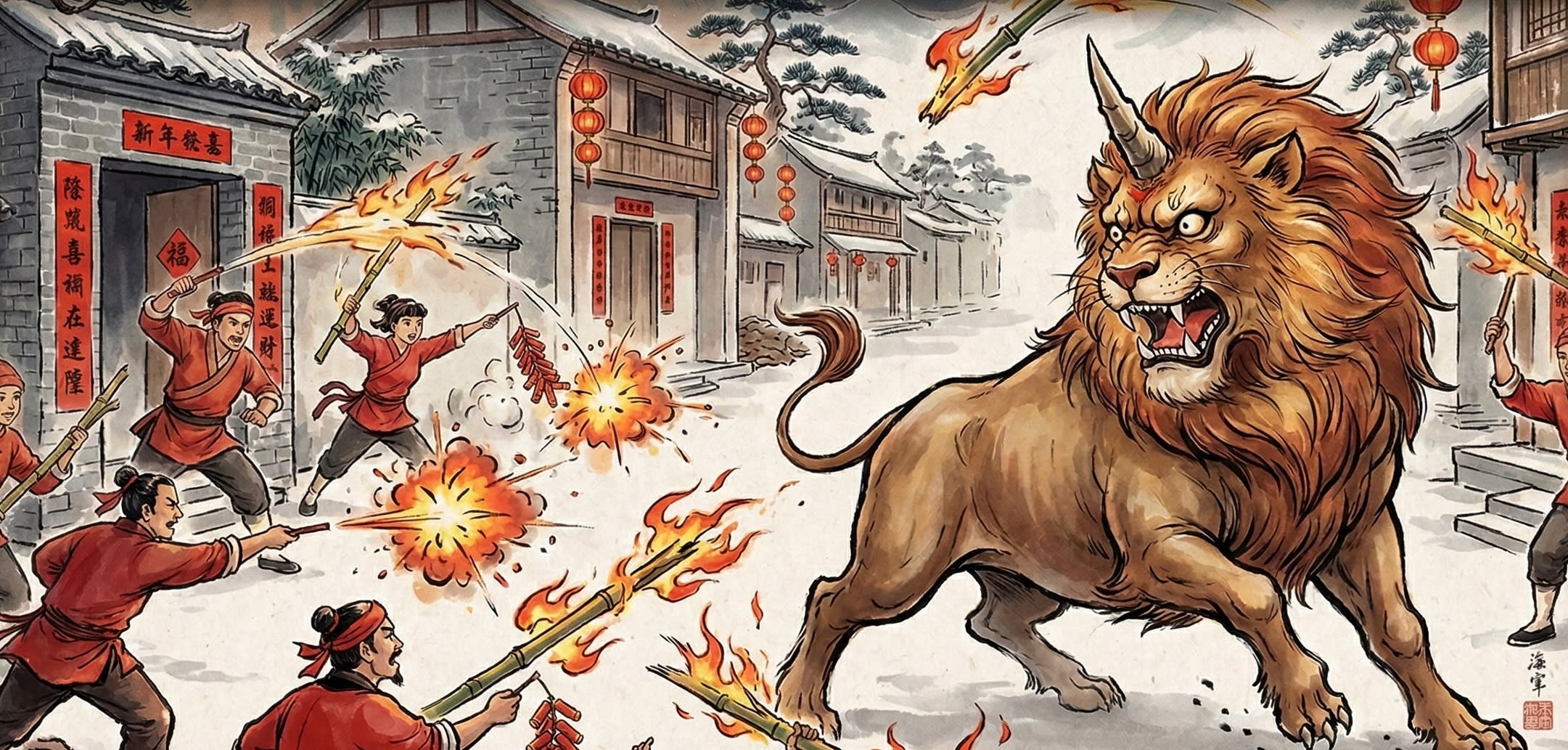
The turning point, as the stories go, came with a clever traveler. He realized the Nian had a weakness: it was terrified of three things—blinding light, deafening noise, and the color red. By draping their homes in red, setting off crackling bamboo stalks (the ancestors of our modern fireworks), and pounding drums until their hands bled, the villagers successfully drove the beast back into the shadows.
The morning of survival brought the joyous tradition of Gōngxǐ gōngxǐ (恭喜恭喜 - Congratulations on surviving). Today, those vibrant red couplets flanking doorways and the thunder of fireworks are more than mere decoration; they are a symbolic defense, a way for modern people to honor their ancestors’ courage in conquering the longest, darkest night of the year.
🥢 2. The Eve: A Feast of Reunion and Symbolism
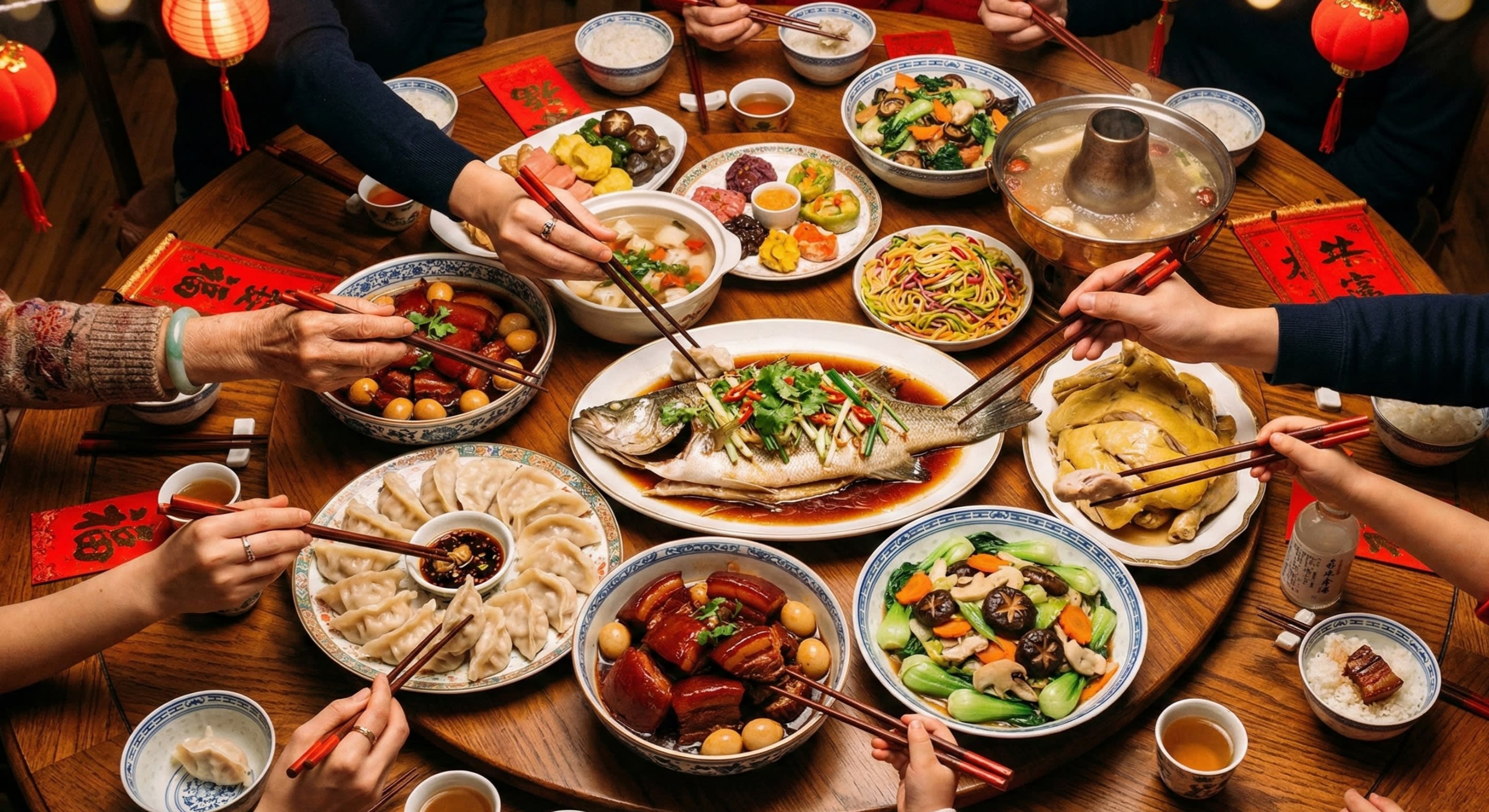
The true peak of the holiday is the Niányèfàn (年夜饭 - New Year’s Eve Reunion Dinner). It is an ironclad cultural law: no matter where you are on this planet, you return home for this meal. I remember being in a bustling station in the heart of winter, seeing the sheer determination in people’s faces—a physical manifestation of the need to be back at the round table with elders and children alike.
The menu is a linguistic puzzle of blessings. Every dish is chosen because its name sounds like a wish for prosperity:
- The Whole Fish (Yú 鱼): You cannot have a dinner without a fish. Because yú sounds like the word for “surplus” or “abundance” (余), we pray for Nián nián yǒu yú (年年有余 - may you have abundance year after year). We purposefully leave a small piece of the fish untouched on the plate to ensure that the wealth “carries over” into the next cycle. If you are shopping for your own feast, having a high-quality steaming plate makes this ritual much more elegant.
- Dumplings (Jiǎozi 饺子): In the North, these are non-negotiable. They resemble ancient silver ingots, and eating them is essentially inviting wealth into your belly.
- Sticky Rice Cake (Niángāo 年糕): A southern favorite that sounds like “Year High” (年高), symbolizing a jump in prosperity or personal growth.
🧧 3. The True Meaning of the Red Envelope
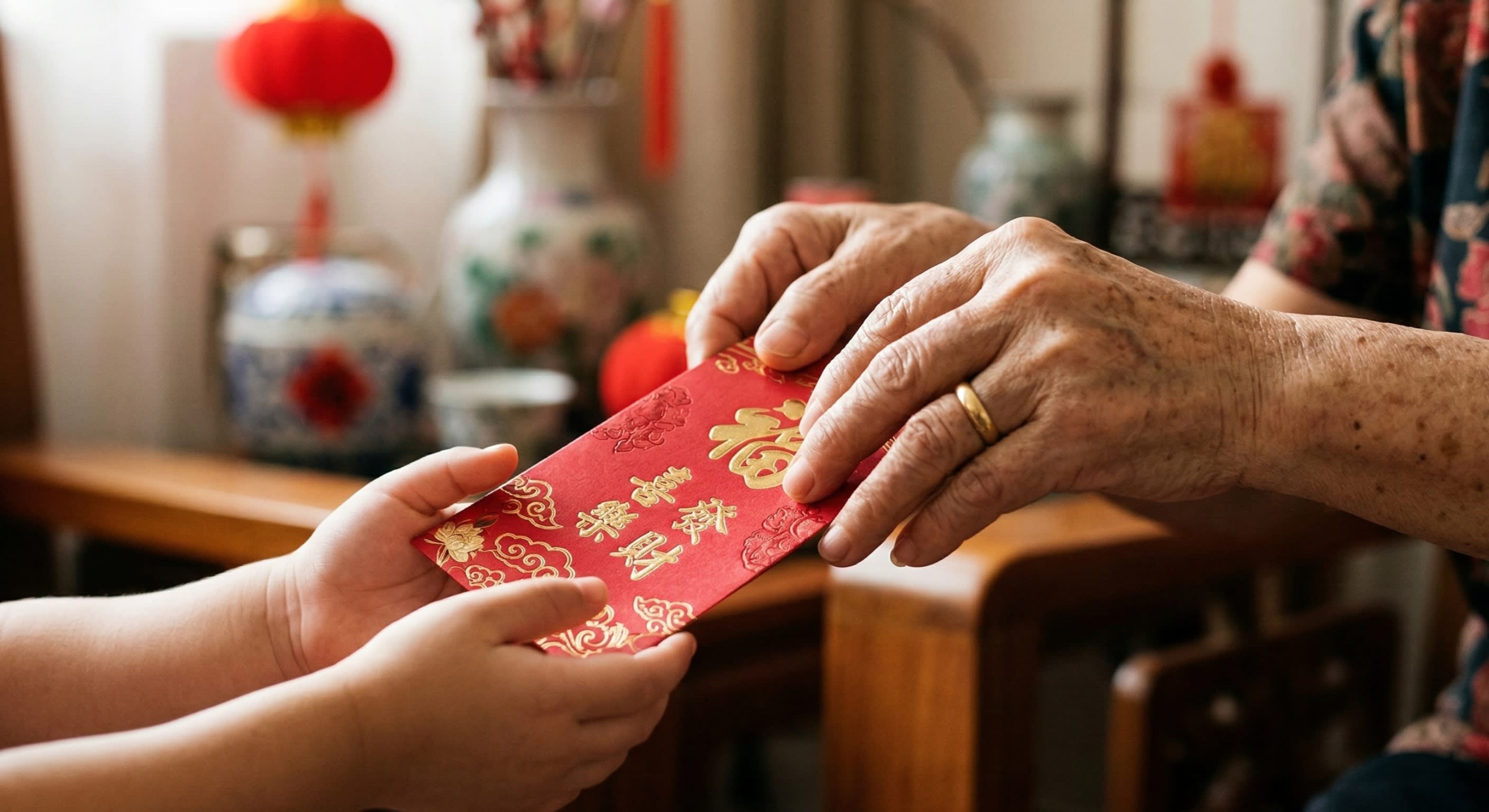
The Hóngbāo (红包) is often reduced to “cash gifts” in travel blogs, but its origins are rooted in a ritual of spiritual guardianship. Known as Yāsuìqián (压岁钱), these red-paper-wrapped coins were originally designed to protect children from a demon named Sui (祟).
The legend tells of parents who used coins wrapped in red paper to stay awake, only to discover the coins flashed a protective golden light that terrified the demon away. Today, when grandparents hand these to their grandchildren, they aren’t just gifting money; they are bestowing a blessing of safety. For those looking to continue this tradition, you can find ornate silk envelopes that add a tactile weight to the gift.
📅 4. The 15-Day Marathon of Rituals
This is a structured 15-day journey, not a singular party. It follows specific etiquette, much of which is explored in our guide to essential Spring Festival customs.
| Phase | Ritual | Taboo |
|---|---|---|
| Day 1 | Bàinián: Visiting elders. | No sweeping—you don't want to discard the new luck! |
| Day 2 | Daughters return to parents. | Gifts must be in even numbers. |
| Day 5 | Welcoming Cáishén (Wealth). | Sweeping is finally permitted again. |
| Day 15 | Yuánxiāo Jié (Lanterns). | Return to the daily grind. |
🚅 5. The Modern Soul: High-Speed Rails and Digital Envelopes
The soul of this holiday is resilient. It has survived centuries of change, now manifesting in the Chūnyùn (春运) travel rush. It is a logistical miracle—the largest human migration on Earth—facilitated by high-speed rail networks that slice across the country, bridging the gap between urban centers and rural roots.
Even the Hongbao has gone digital. During the Chūnwǎn (春晚 - the CCTV New Year’s Gala), families now engage in a chaotic, laughter-filled dance of tapping their smartphones to capture digital envelopes in group chats. It is a perfect, somewhat humorous marriage of cutting-edge technology and ancient, communal generosity.
To better navigate the nuances of the local language during these social gatherings, I highly recommend keeping a copy of Mandarin conversational guides handy—it helps bridge the gap when you’re trying to exchange greetings with local elders.
💬 6. Speak Like a Local
If you find yourself in the middle of these festivities, put down the dictionary and use these phrases. They carry much more weight than a standard “Happy New Year.”
| Phrase | Usage |
|---|---|
| Xīnnián hǎo! (新年好) | The casual, go-to greeting for anyone. |
| Gōngxǐ fācái! (恭喜发财) | Essential when you're greeting a business owner or a friend. |
| Shēntǐ jiànkāng! (身体健康) | The highest sign of respect for grandparents. |
Final Thoughts from Wei
Chinese New Year is a beautiful contradiction—it is deafeningly loud and yet profoundly intimate. It is rooted in 4,000-year-old folklore, yet celebrated on the glowing screens of modern devices. To participate in it is to experience the heartbeat of China. Beneath the fireworks, the message remains unchanged: the winter has passed, we are together, and the spring is finally here.
祝您新年快乐! (Zhù nín xīnnián kuàilè!)
Curious about the astronomical math behind the festival? Learn more in my guide to the 24 Solar Terms or plan your next trip by reading about where to experience the most authentic ‘Nian Wei’ flavor.
Disclaimer: As an Amazon Associate, ChinaCurator earns from qualifying purchases.