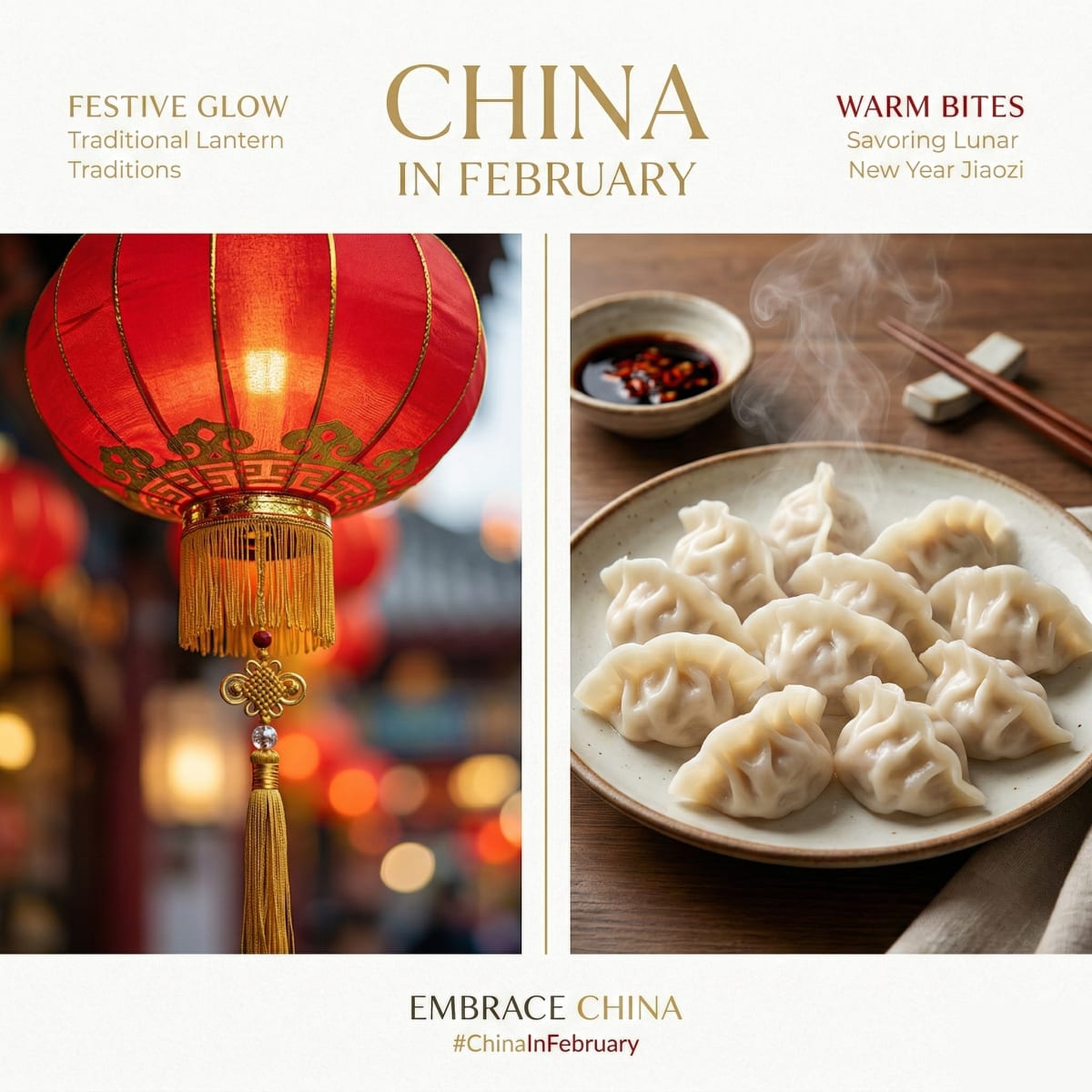
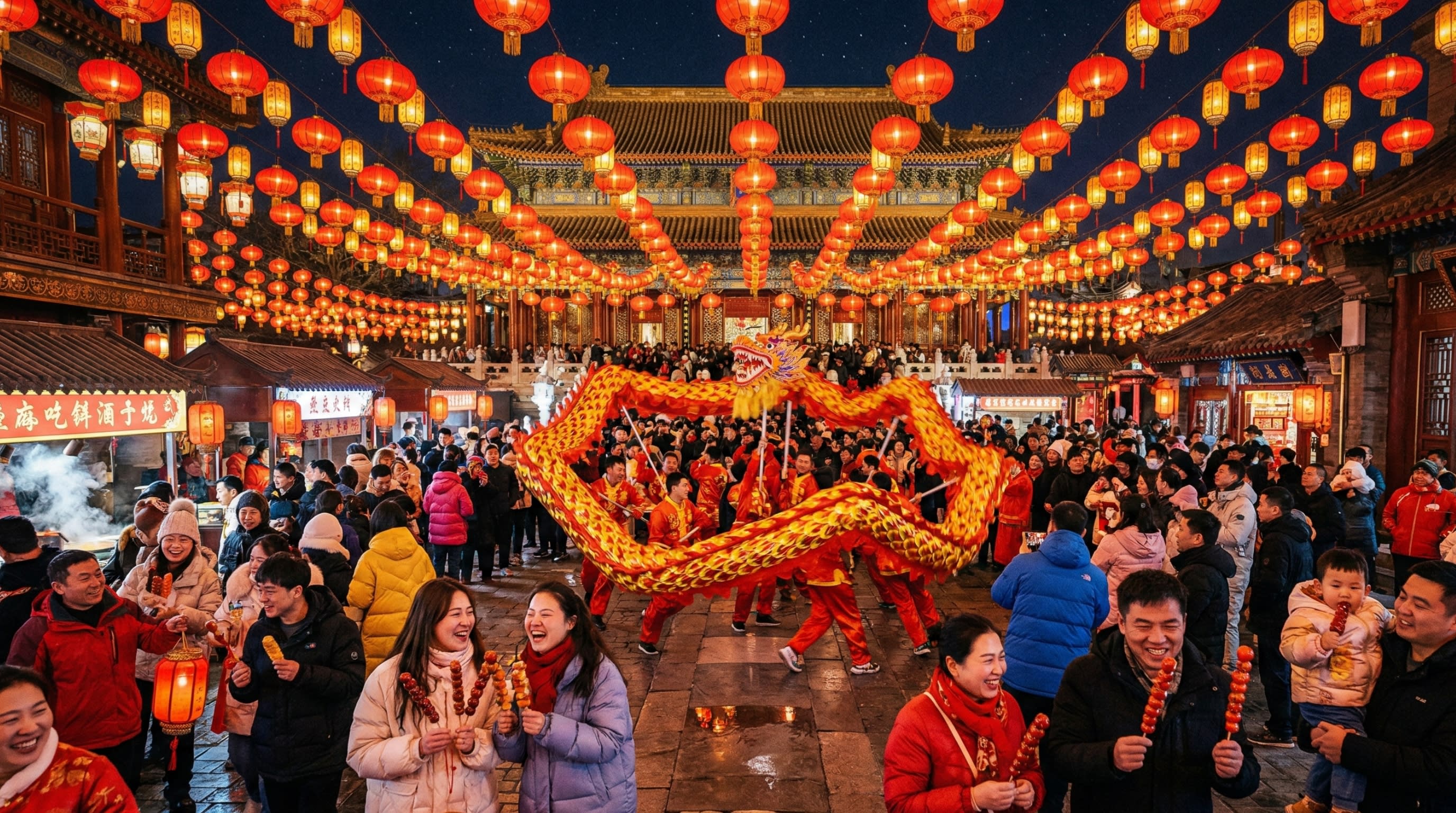
In China, February is not merely a page on the calendar; it is a profound cultural vibration. It is the month of Chūnjié (春节), the Spring Festival, the moment when the nation draws a collective breath and pivots toward home. As we step into 2026 and welcome the Year of the Horse (马年 mǎnián), the air feels uniquely charged. There is a palpable momentum in the streets—a blend of ancient, rhythmic ritual and the neon-soaked energy of modern China. For a traveler, this is the most spectacular front-row seat to a civilization in celebration.
⛅ February Weather: The Turning Tide
February marks the long, slow retreat of “Deep Winter.” In the north, the world remains encased in a crisp, dry stillness, while the south begins to offer tentative whispers of the coming spring. Traveling during this time requires an appreciation for contrast: you might be shivering beneath a heavy wool coat while watching locals play chess in a sunny, windless hutong, or stepping off a high-speed train in Yunnan to feel the sudden, surprising warmth of a valley floor.
| Region (地区) | Avg Temp | Travel Vibe (氛围) |
|---|---|---|
| North (Beijing, Harbin) | -5°C to 8°C | Bracingly cold; perfect for temple fairs and ice skating. |
| Southwest (Dali, Kunming) | 5°C to 18°C | "Eternal Spring" conditions; early blossoms in valleys. |
| East (Shanghai, Suzhou) | 3°C to 12°C | Damp, atmospheric chill; vibrant lantern festivals. |
Native Insight: Everything in February dances to the tune of the Lunar Calendar. If your trip coincides with the Golden Week (the first seven days of the New Year), you will be witnessing Chūnyùn (春运), the largest human migration on Earth. My advice? Do not leave your logistics to chance. Whether you are traversing the country or simply moving between cities, treat your high-speed train bookings as a mission-critical task to be settled months in advance. You can learn more about managing these journeys in our guide to booking high-speed trains.
📍 Top 3 Destinations for February
1. Beijing (北京): The Epicenter of Tradition
To feel the pulse of a “True New Year,” there is no substitute for the capital. Beijing in February is a city of layered history. The austere grey bricks of the historic Hutongs are suddenly draped in the vibrant, impossible red of Chūnlián (春联 - Spring Couplets), and the crisp air carries the smoky, sweet scent of roasting chestnuts sold on street corners.
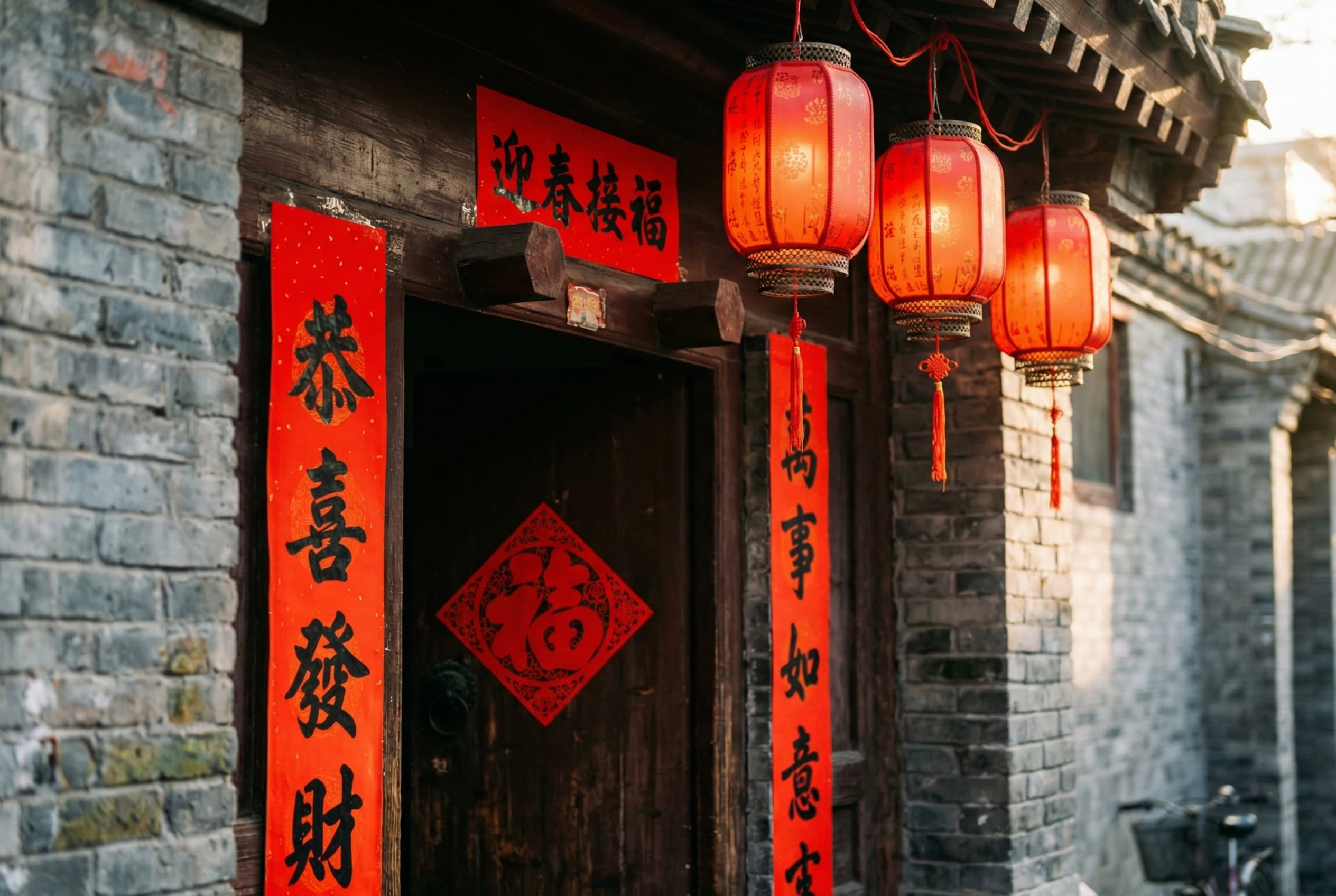
- The Temple Fairs (Miàohuì): Visit Ditan Park or Longtan Park. These are sensory kaleidoscopes—a blur of traditional street snacks, folk crafts, and the thrumming beat of lion dances. For 2026, keep an eye out for the intricate horse-themed lanterns that celebrate the new zodiac.
- Frozen Memories: I highly recommend joining the locals at Shichahai. Watching families skate on the frozen lake with the ancient Bell and Drum Towers looming in the background is a scene of pure, timeless joy.
- Insider Tip: If you are a fan of photography, visit the Forbidden City immediately after a light snowfall. The contrast of the “Red Walls and White Snow” (Hóngqiáng báixuě) is a photographic dream that locals cherish all year. If you enjoy deep dives into heritage, check out our insider’s guide to Beijing’s hutong citywalks.
2. Pingyao Ancient City, Shanxi (平遥古城): A Step Back in Time
Pingyao is, in my opinion, the most atmospheric place to spend the New Year. It is an ancient walled city that feels less like a tourist site and more like a set from a Ming Dynasty period drama.
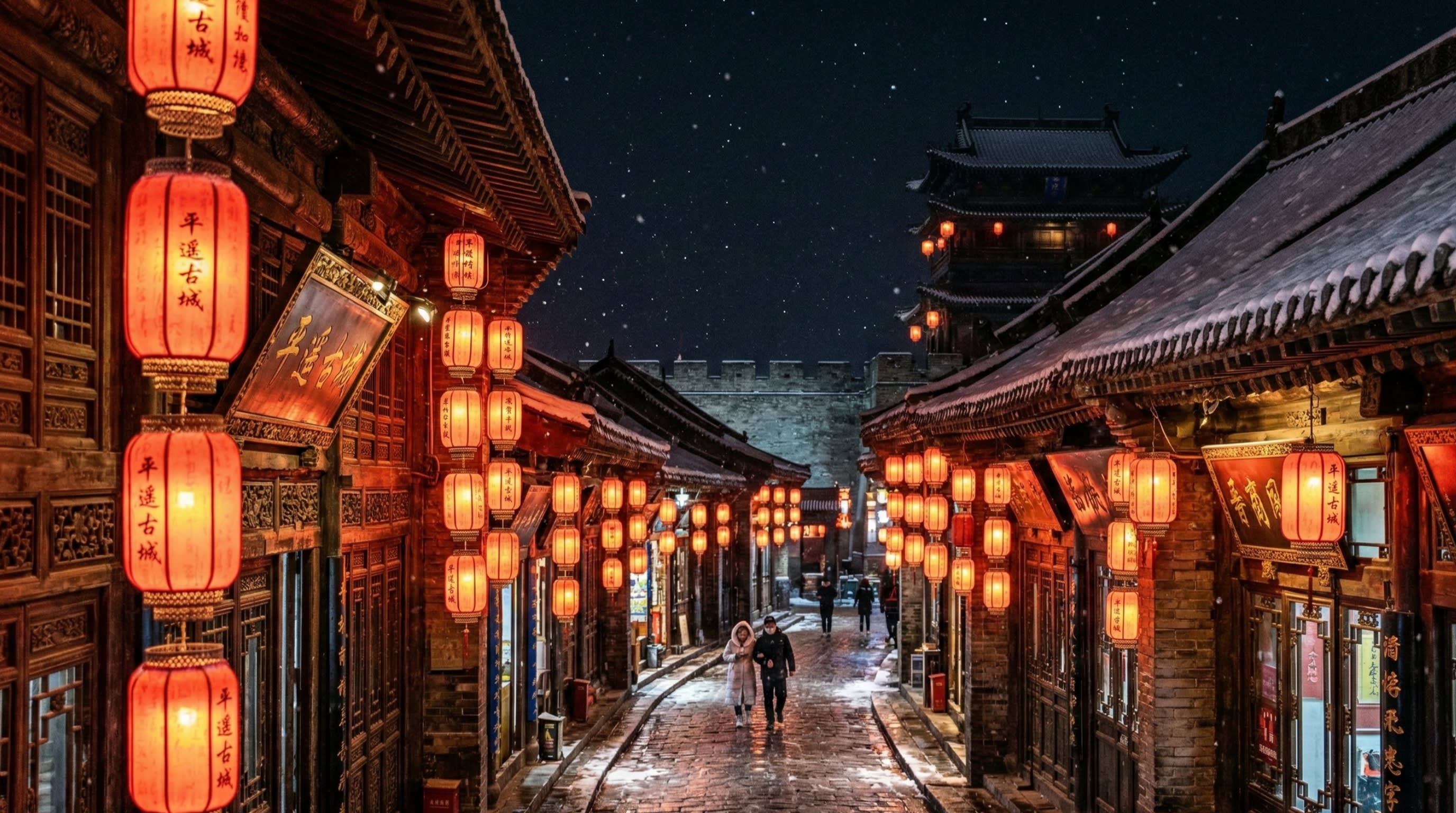
- The Atmosphere: At night, the city transforms under the glow of thousands of red lanterns. Walking the cobblestones, the world feels smaller, warmer, and older.
- The Experience: You can watch traditional opera performances in the inner courtyards of mansions that have stood for centuries.
- Stay: To truly understand the northern lifestyle, you must book a stay in a traditional Kàng (heated brick bed) guesthouse. It is the single most authentic way to survive and enjoy a northern winter.
3. Dali, Yunnan (大理): Chasing Early Spring
When the northern chill feels too persistent, Dali provides a soft, floral escape. While the rest of China bundles up, Dali’s mountains often begin to wake up in February.
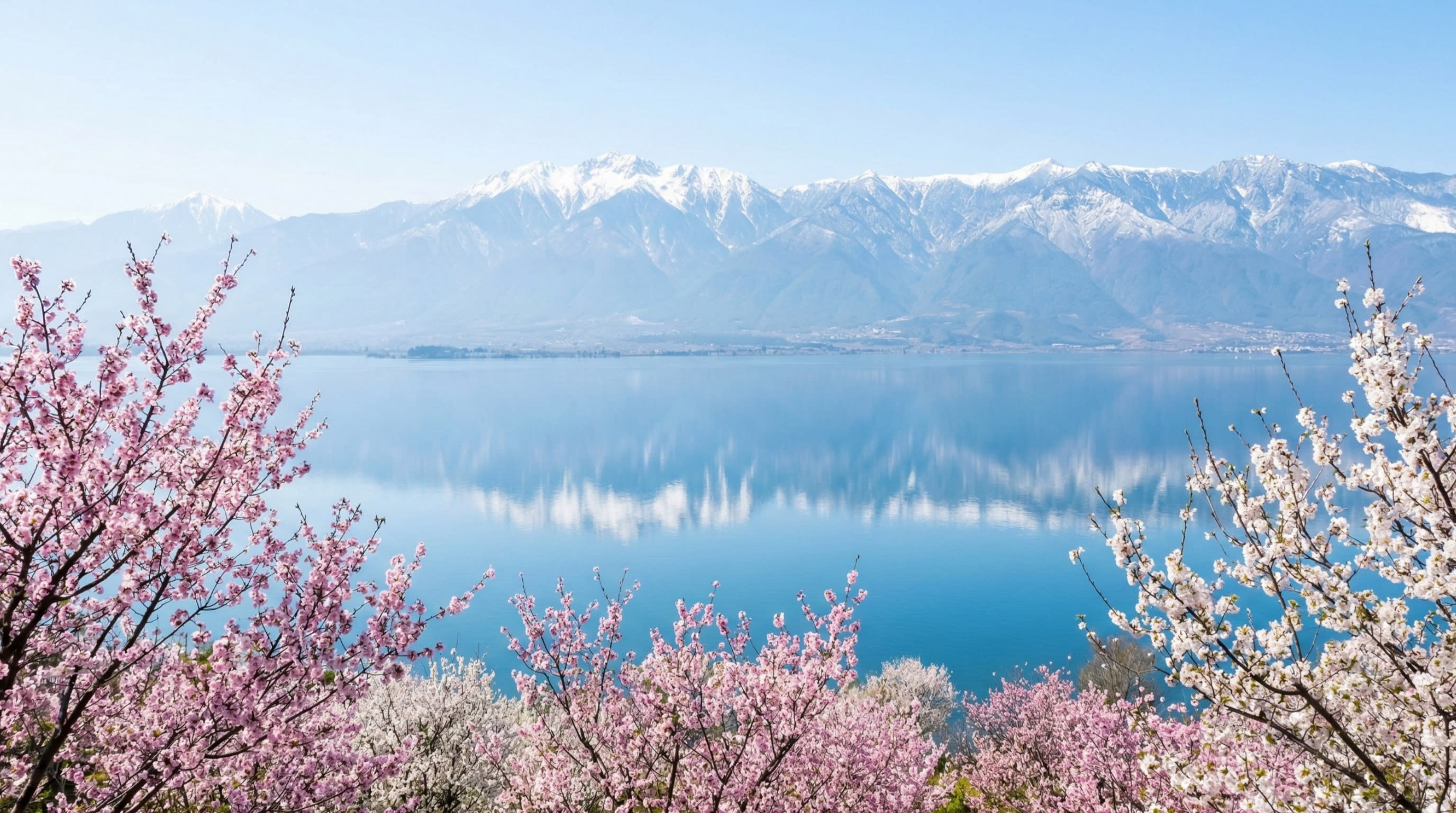
- Erhai Lake: Grab a bicycle and ride the eco-corridor along the lake. The peaks of the Cangshan range are still capped with snow, providing a dramatic, high-altitude contrast to the blooming plum blossoms in the valley.
- The Slow Life: Dali is the spiritual home of Màn shēnghuó (慢生活 - slow life). It is the ideal place to decompress after the sensory intensity of the big cities. For more on this region, take a look at our guide to Yunnan’s slow-paced travel.
🏮 Cultural Highlight: 2026 Year of the Horse
The Horse (Mǎ 马) is revered in Chinese tradition for its indomitable spirit, speed, and grace. It is a symbol of forward momentum.
- Symbolism: You will hear the phrase Mǎdào chénggōng (马到成功)—”Success the moment the horse arrives.” It is a potent blessing used in business and personal goals throughout 2026.
- The Culmination: On the 15th day of the first lunar month, the Yuánxiāo Jié (元宵节 - Lantern Festival) closes the holiday window. It is a night of riddles, sticky rice sweets, and breathtaking light displays.
🍲 Culinary Traditions
Food in February is not just sustenance; it is a coded language of love and prosperity.
- Dumplings (Jiǎozi 饺子): In the north, these are non-negotiable. Their shape mimics ancient silver ingots, a direct wish for wealth.
- Tangyuan (汤圆): These glutinous rice balls are filled with black sesame and are served in sweet broth. Their perfectly round shape is a homophone for Tuányuán (团圆 - reunion).
- Nian Gao (年糕): A dense, sticky rice cake that sounds like “Year High.” Eating it is a literal ritual for professional and personal advancement.
🪵 The Meditative Art of “Panwan”
For those interested in Wenwan (literati collectibles), February offers a unique challenge: the “Winter Polish.” The dry indoor heating can be harsh on organic materials.
- The Ritual: Taking 15-20 minutes a day to rub your Wenwan gourd with a soft cloth is more than maintenance; it is a meditation. The heat from your palms, known as Pán (盘), is the secret to a deep, glass-like patina. It is a quiet, steady practice in a world that often moves too fast. Learn more in our introduction to Wenwan collectibles.
💬 Essential February Phrases
| English | 中文 | Pinyin |
|---|---|---|
| Happy New Year! | 新年快乐! | Xīnnián kuàilè! |
| Success upon arrival! | 马到成功! | Mǎdào chénggōng! |
| I'd love some dumplings. | 我想吃饺子。 | Wǒ xiǎng chī jiǎozi. |
Final Thoughts from Bo
February is the beating heart of the Chinese calendar. It is inherently loud, beautifully chaotic, and deeply emotional. It is the rare time when a billion people share a unified goal—to return home, to honor the past, and to welcome the future. If you embrace the crowds and the biting cold, you will find that February offers a sense of belonging that is truly impossible to replicate elsewhere.
㊗️ Wishing you a vibrant and successful Year of the Horse!
Disclaimer: As an Amazon Associate, ChinaCurator earns from qualifying purchases.