Disclaimer: As an Amazon Associate, we may earn a small commission from qualifying purchases made through links in this post, at no extra cost to you.
When a historic heatwave descends upon a metropolitan city, individual efforts can only do so much. I have stood on a pavement in mid-July where the heat rising from the asphalt was so intense it felt like standing in front of a blast furnace, and I can tell you: personal cooling hacks are no match for that. Extreme heat is a full-blown public health crisis. As global cities face unprecedented, deadly summer temperatures that buckle infrastructure and overwhelm hospitals, municipalities often scramble, unsure how to protect their most vulnerable.
In China, where vast southern and central regions endure sweltering, sauna-like summers annually, combating the heat is not merely a personal responsibility. It is treated with the gravity and systemic coordination of disaster relief. I have seen firsthand how the government recognizes that relying solely on residential air conditioning puts an unsustainable strain on the power grid, so they shift to a macro-level “National Cooling Campaign.” This approach relies on two pillars: transforming infrastructure into shared, free cooling oases and enforcing uncompromising labor laws.
🕳️ 1. The Underground Oases: Repurposed Air Raid Shelters (防空洞)
One of the most visually iconic strategies involves a brilliant pivot of history. During the mid-20th century, China constructed massive, sprawling networks of underground air raid shelters—known as Fángkōngdòng (防空洞)—beneath major cities to prepare for potential conflicts. I have walked through these tunnels myself; the contrast is startling. You descend a staircase from the shimmering, humid air of the street, and within seconds, the chaotic noise of the city is muted by the cool, damp embrace of thick concrete.
Cities famously known as “Furnaces” (Huǒlú 火炉)—such as Chongqing, Nanjing, and Hangzhou—officially open these shelters to the public for free every summer. Because they are insulated by tons of earth, the temperature inside naturally hovers around a crisp 24°C to 26°C (75°F to 79°F), requiring no energy-consuming air conditioning.
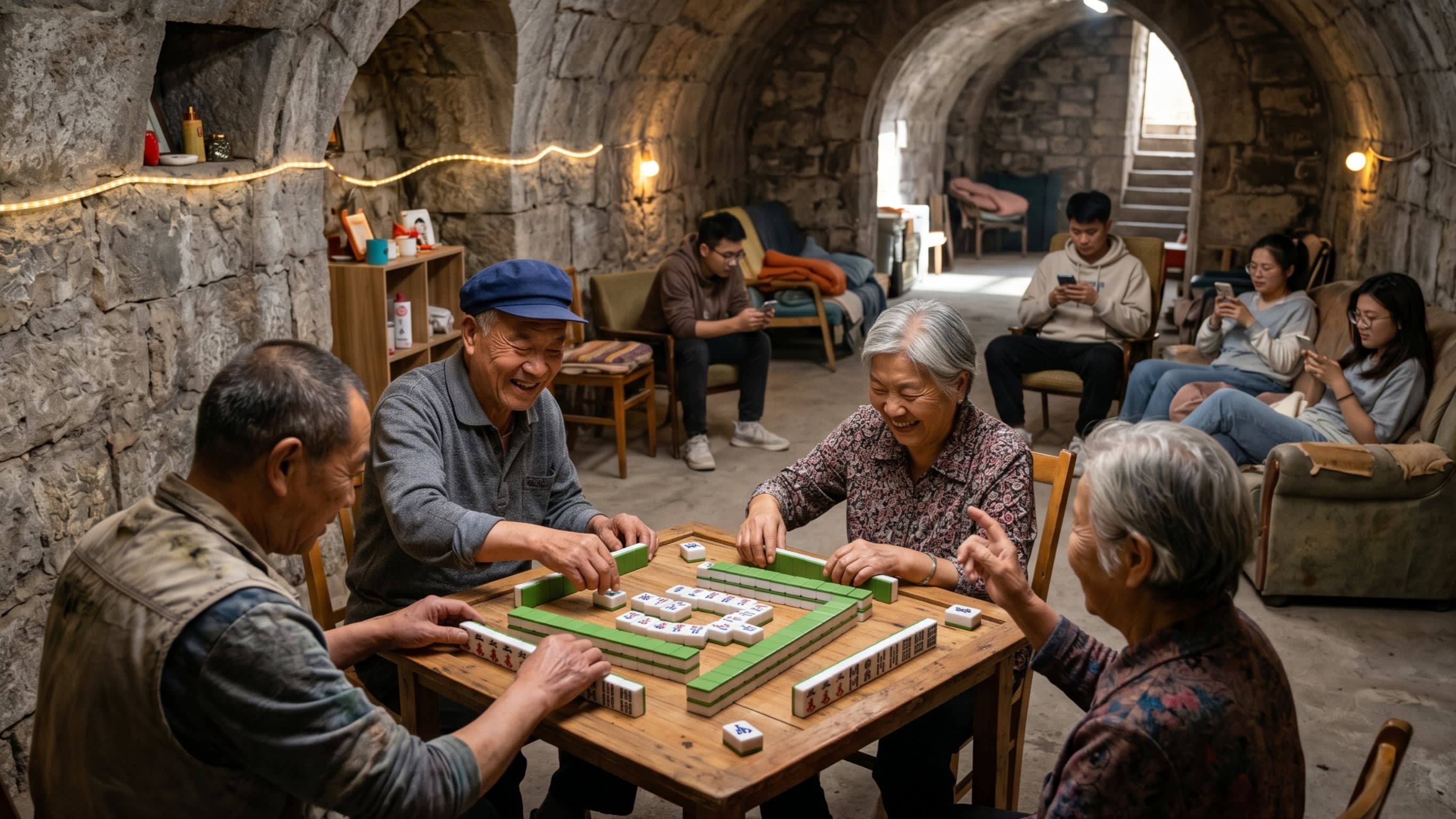
Municipal governments curate these spaces, equipping them with comfortable seating, free high-speed Wi-Fi, television screens, and reading materials. Inside, you find a vibrant community atmosphere: the elderly escaping the afternoon heat to play cards, students studying in quiet corners, and exhausted delivery drivers catching a secure, cool nap. It is a masterpiece of adaptive reuse, turning monuments of past anxieties into sanctuaries of modern comfort. For more on how these high-tech systems are evolving, see our take on China’s hardcore cooling tech.
❄️ 2. The Culture of “Ceng Kongtiao” (蹭空调): Freeloading the Cold
In many Western cities, lingering in a commercial space without purchasing something might get you shooed away by security. In China, however, there is a high societal tolerance for Cèng kōngtiáo (蹭空调), a colloquial phrase that playfully translates to “freeloading air conditioning.” It is an expected practice for citizens to flock to public libraries, shopping malls, and subway stations to cool down.
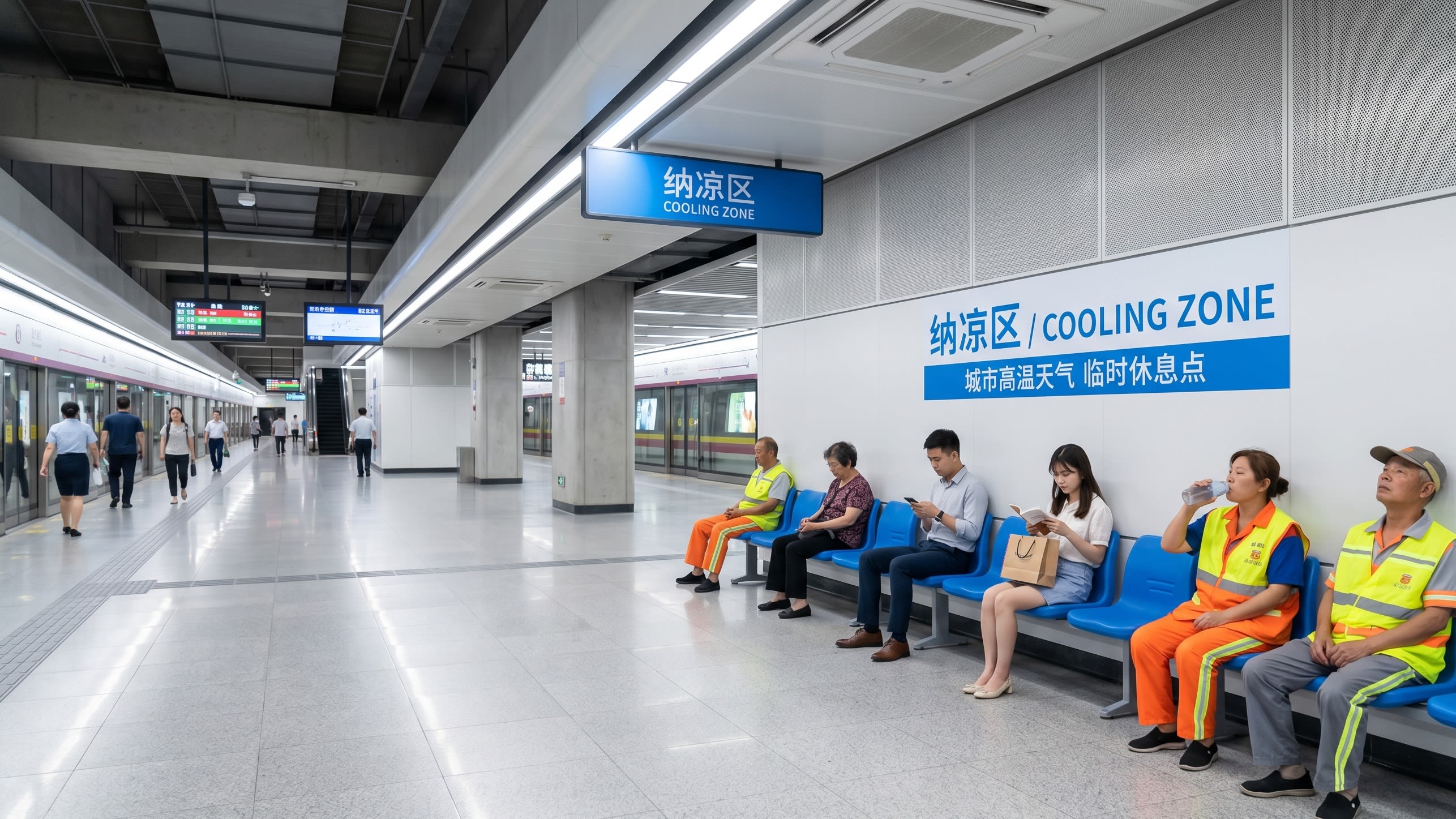
Many subway systems set up official “Cooling Zones” (Nàliáng qū 纳凉区) with rows of plastic chairs. These zones allow sanitation workers, couriers, and the elderly to rest in chilled air without blocking traffic. It fosters a deep sense of civic unity, silently acknowledging that surviving the heat is a collective endeavor. It is a far cry from the social etiquette codes one might expect in more formal settings, yet here, it feels entirely natural.
💵 3. Institutional Protection: The “High-Temperature Allowance” (高温津贴)
Providing physical spaces is crucial for pedestrians, but what about the millions who must work outside? China addresses this through stringent labor protections. The most prominent is the “High-Temperature Allowance” (Gāowēn jīntiē 高温津贴).
According to labor laws, if an employer requires a worker to perform tasks outdoors in temperatures exceeding 35°C (95°F), or if the indoor workplace cannot be cooled below 33°C (91.4°F), the employer is legally obligated to pay a non-taxable cash allowance on top of the regular salary. This financial shield applies to everyone from street cleaners to traffic police.
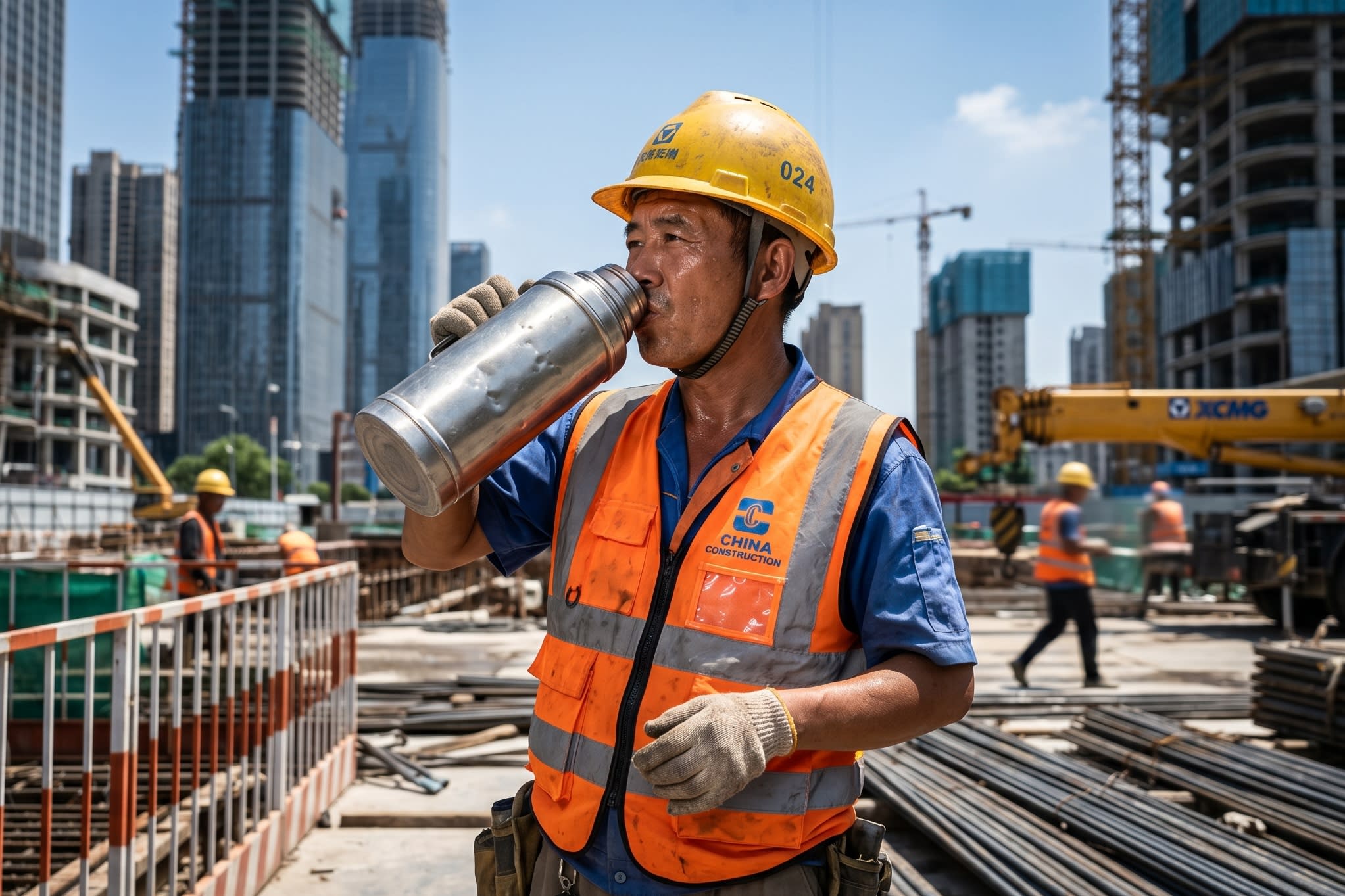
Workers on the scorching asphalt rely on essential gear to keep going. They often carry a heavy-duty insulated thermos, a standard tool for staying hydrated throughout the shift. Many also use cooling neck wraps, which provide instant relief, while mixing electrolyte hydration powder packets into their water to replenish lost minerals. These aren’t luxuries; they are part of the daily survival kit, much like the cultural habit of drinking warm water to balance the body’s internal rhythm.
🚨 4. The Red Alert: Mandatory Work Stoppage
The meteorological bureau’s warnings act as an uncompromising regulatory trigger. When a Red Alert is issued for temperatures above 40°C (104°F), it triggers a mandatory, city-wide legal protocol. By law, all outdoor physical labor must be suspended for the day. No construction schedules or delivery quotas supersede this rule, representing a firm societal line: human life holds higher value than economic output.
| Warning Level | Threshold | Mandate |
|---|---|---|
| Yellow/Orange | 35°C - 39°C | Rotating shifts; midday work prohibited. |
| Red | 40°C+ | Immediate, full outdoor work suspension. |
🏛️ 5. Lessons for the Global Community
As lethal heatwaves become annual, the West can look at China’s systemic approach:
- Develop Permanent Cooling Centers: Move beyond temporary tents toward permanent, accessible community hubs.
- Enforce Labor Rights: Implement legally binding, temperature-triggered work stoppages.
- Destigmatize Public Rest: View the use of public infrastructure for cooling as a vital public health necessity.
When the heat reaches critical mass, the response must be institutional. Individual resilience has limits; systemic support is how we ensure that no one is left to swelter alone. For those interested in how these strategies fit into the broader Chinese wellness philosophy (Yangsheng), understanding these environmental adaptations is a perfect starting point.