
When I search for the true heart of a Chinese city, I don’t look at its glittering skyscrapers or the sterile glass of its high-end malls. Instead, I wait for the shadows to lengthen, wander into the narrowest alleyways I can find, and listen for the rhythmic clack-clack of a spatula hitting a seasoned iron wok.
In China, we call this elusive spirit yānhuǒqì (烟火气). It literally translates to “smoke and fire,” but to me, it is the sensory shorthand for life itself. It is the sharp, mouth-watering aroma of roasted cumin dancing in the humid night air and the sight of locals huddled on tiny plastic stools, hunched over bowls of steaming broth.
While the fine dining scene here is undeniably impressive, my fondest memories—and the best meals I’ve ever had—always happen at the lùbiāntān (路边摊), or street food stalls. In 2026, hunting down these hidden gems has become my favorite way to navigate the country. This is my personal map to four of China’s most intoxicating night market (yèshì 夜市) capitals.
1. Xi’an (西安): The Hearty Northern Soul
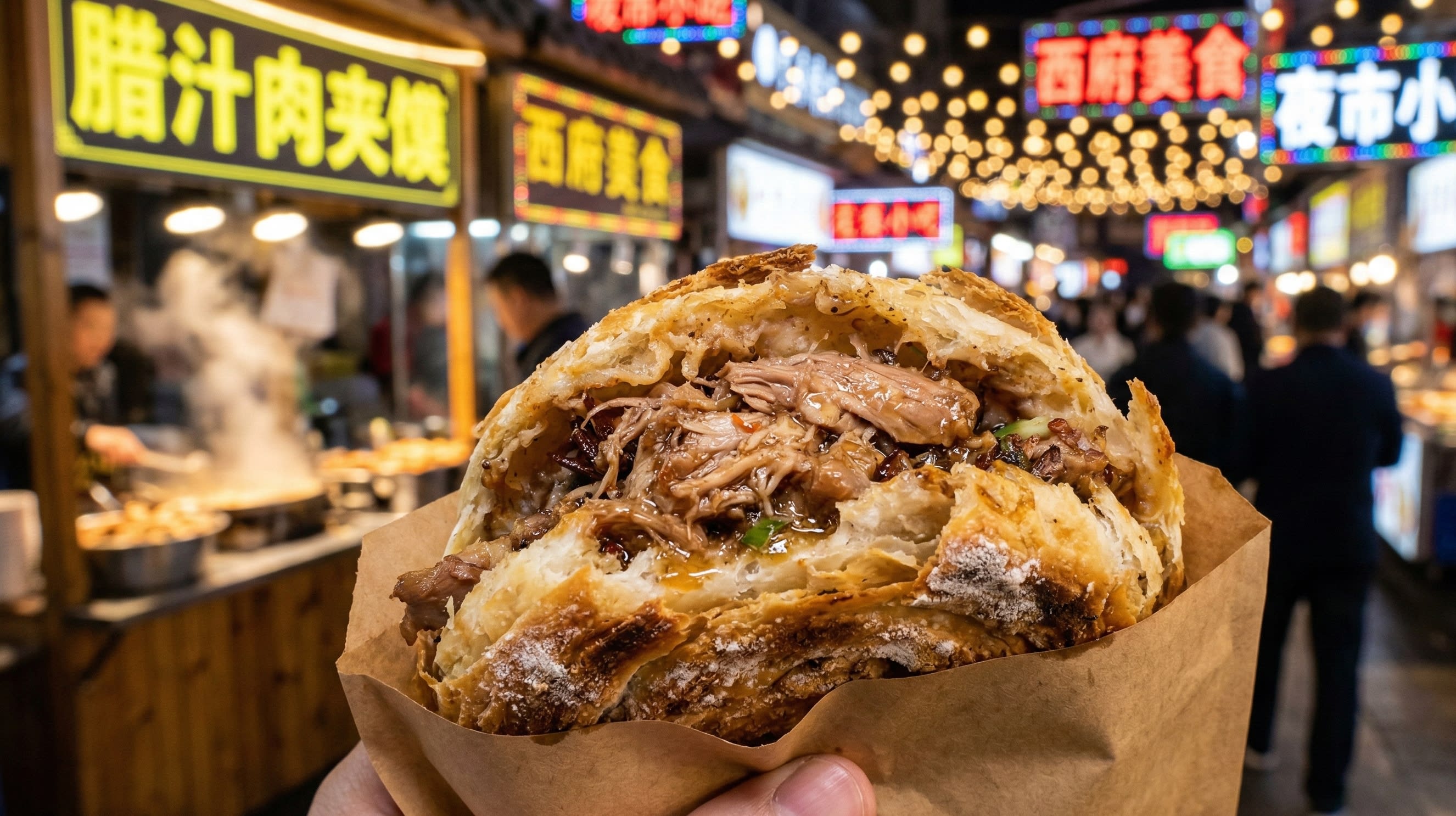
Whenever I land in Xi’an, my first stop isn’t the Terracotta Warriors; it’s the hunt for a authentic ròujiāmó (肉夹馍). While most tourists flock to the Muslim Quarter for a photo op, I prefer the smaller, grit-filled markets tucked away outside the ancient city walls.
The air here is thick with the scent of charcoal-grilled lamb and heavy, earthy spices. When I finally bite into that “Chinese hamburger,” the crunch of the freshly baked flatbread gives way to tender, slow-braised meat that practically melts on my tongue. I always pair this with a cold bowl of liángpí (凉皮). The interplay between the hot, savory meat and the cold, slippery noodles tossed in a sharp, vinegar-based chili oil is, in my experience, the ultimate culinary balance.
2. Chengdu (成都): The Spicy Southwest
Chengdu taught me that food is a social sport. In the capital of Sichuan, eating is a ritual that stretches deep into the early hours. I’ve spent many nights here perched on a stool, nursing a cold beer as the city hums around me.
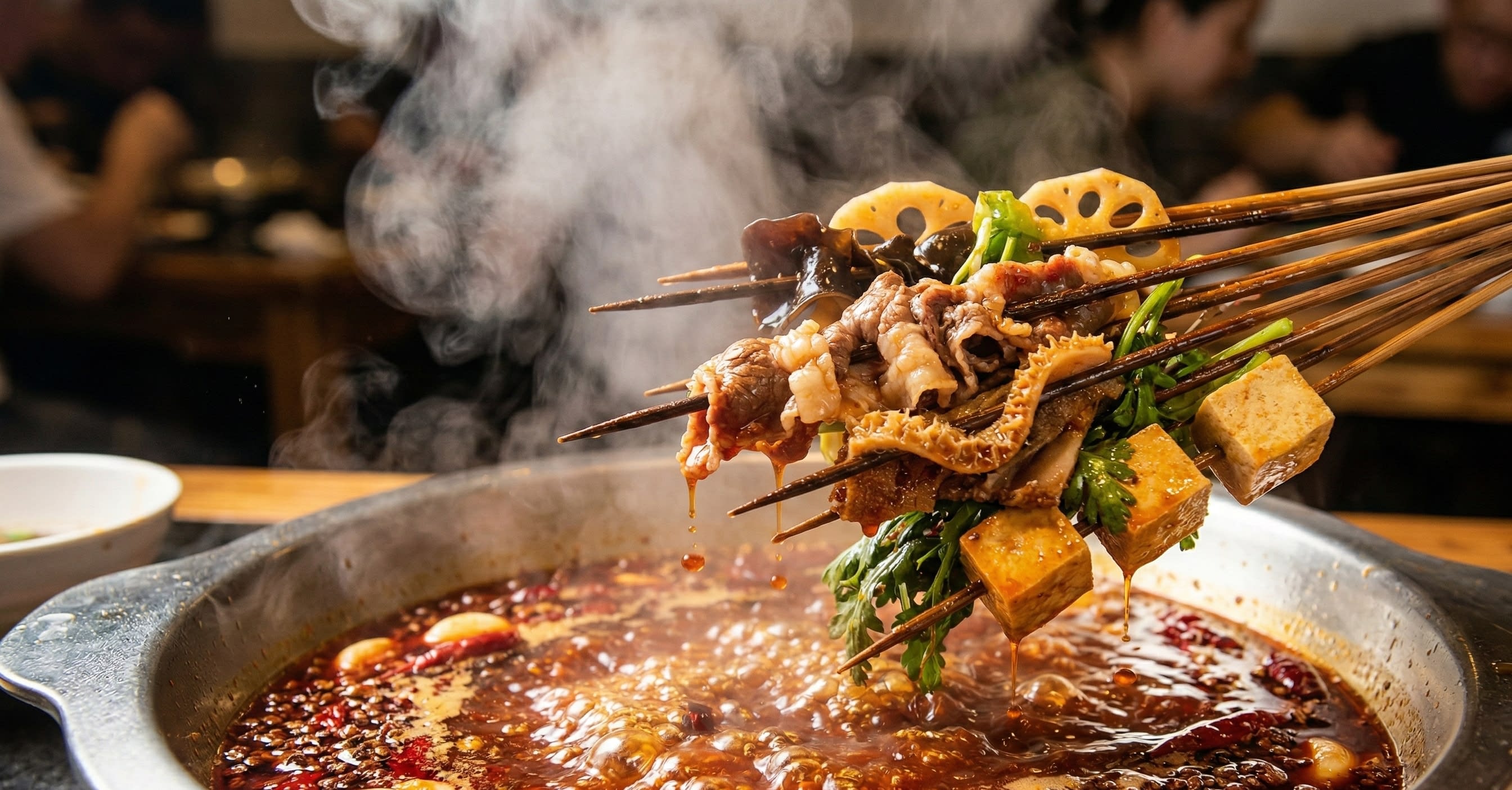
The undisputed champion here is chuānchuàn (串串). It’s essentially hot pot served on bamboo skewers. I love the freedom of grabbing a basket and filling it with whatever catches my eye—marinated beef, fresh lotus root, or spicy tofu—before plunging them into a communal, bubbling pot of beef-tallow broth. To protect my palate from the numbing heat of the Sichuan peppercorns, I always keep a bowl of bīngfěn (冰粉) close by. This clear ice jelly, sweetened with brown sugar and scattered with crunchy peanuts, is the only way to “extinguish” a Chengdu-level spice fire.
3. Changsha (长沙): The Sleepless Neon Wonder
Changsha is an intense, high-energy city that honestly makes me feel like I’m running out of steam while the locals are just getting started. It is the birthplace of the yèxiāo (夜宵) culture—the art of the late-night snack—that dictates the city’s heartbeat.
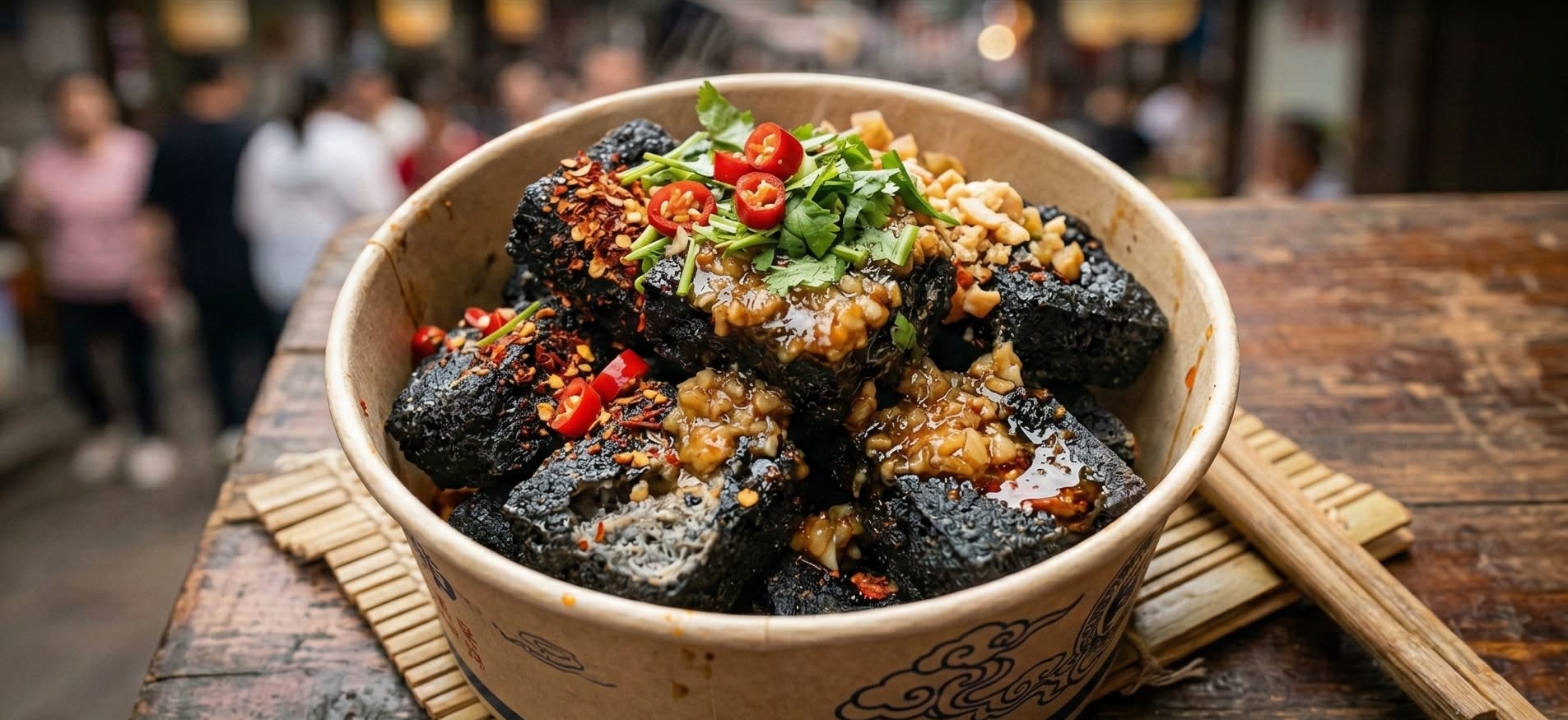
The real test for any adventurous eater is the legendary chòudòufu (臭豆腐), or Stinky Tofu. I remember my first time standing in line for it; the scent is, well, intimidating. But when it’s fried to perfection—shatteringly crisp on the outside and velvety soft within—and drenched in a pungent, garlicky chili broth, it’s a revelation. If you’re feeling bold, wash it down with some spicy crayfish (xiǎolóngxiā 小龙虾) and a glass of icy plum juice. It’s a messy, loud, and incredibly rewarding way to spend a Tuesday at 2:00 AM.
4. Guangzhou (广州): The Delicate South
After the fiery intensity of the north and west, I find the Cantonese approach in Guangzhou deeply soothing. Here, the focus isn’t on hiding ingredients behind spice, but on letting their natural freshness shine through.
My favorite late-night comfort food is chángfěn (肠粉). I love watching the vendors pour thin, silky rice batter onto a metal tray, add a dash of fresh shrimp or minced pork, and steam it for exactly sixty seconds. Once scraped into a soft, wrinkled roll and drizzled with a mild, umami-rich soy sauce, it’s nothing short of elegant. I often round off a night with a clay pot of shāguōzhōu (砂锅粥), a rice porridge simmered with fresh crab that feels like a warm embrace for the stomach.
5. The Street Food Comparison Matrix
| City | Flavor Profile | The Must-Eat Item | Best For... |
|---|---|---|---|
| Xi'an | Savory, cumin-heavy, wheat-based | Ròujiāmó (Meat Burger) | Hearty, filling winter meals. |
| Chengdu | Spicy, numbing (má 麻), oily | Chuānchuàn (Spicy Skewers) | Social dining and beer. |
| Changsha | Fiery hot, garlicky, bold | Chòudòufu (Stinky Tofu) | Late-night 2:00 AM snacking. |
| Guangzhou | Fresh, sweet, umami, delicate | Chángfěn (Rice Noodle Rolls) | Comforting, light late-night bites. |
6. The Unwritten Rules of the Cart
Entering a chaotic night market can feel overwhelming, but I’ve learned a few tricks to make it seamless:
- Follow the Queue: It’s a universal truth—if you see a small, worn-out cart with a long line of locals, join it. It’s a guaranteed win for your tastebuds.
- Go Cashless: In 2026, you won’t need a wallet full of bills. Every stall will have a QR code. Ensure your Alipay or WeChat Pay is linked to your credit card; you’ll be scanning these codes for everything from skewers to sweet treats.
- Communication: When the vendor asks if you want to take it away (dǎbāo 打包) or eat it right there (zài zhèr chī 在这儿吃), don’t panic. If you’re lost for words, just point, smile, and say “zhège” (这个)—”this one.” It works every single time.
Final Thoughts
Street food is the ultimate curator’s experience. It’s not just about what’s on the plate; it’s about the community gathered around the fire and the centuries of tradition embedded in every bite. If you’re heading out, consider grabbing a durable metal spatula if you ever want to attempt these flavors at home, but for now, pull up that plastic stool and dive in.
For more deep-dives into local life, you might enjoy my guide to the art of Chinese tea culture or my tips on finding peace in China’s lesser-known cities.
Disclaimer: As an Amazon Associate, ChinaCurator earns from qualifying purchases.