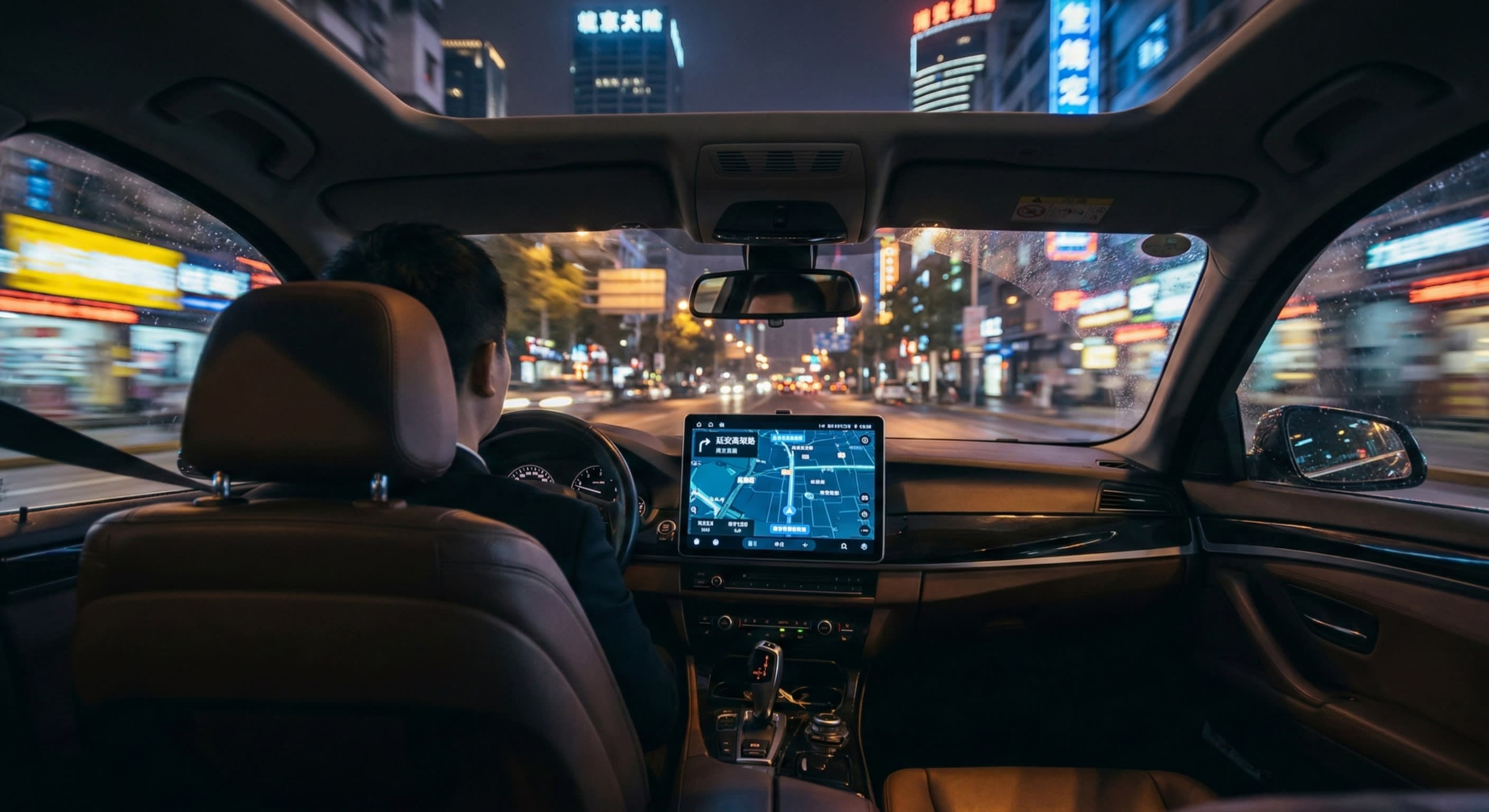
I remember vividly my first few weeks working in China. I was constantly rushing between project sites, trying to oversee multi-floor office renovations while battling the relentless pulse of a megacity. Back then, transportation friction was my biggest enemy. Even if you are accustomed to the quiet autonomy of driving a high-tech EV back home, attempting to navigate the dense, multi-layered traffic of a Chinese urban center is a high-stakes game best left to the local professionals.
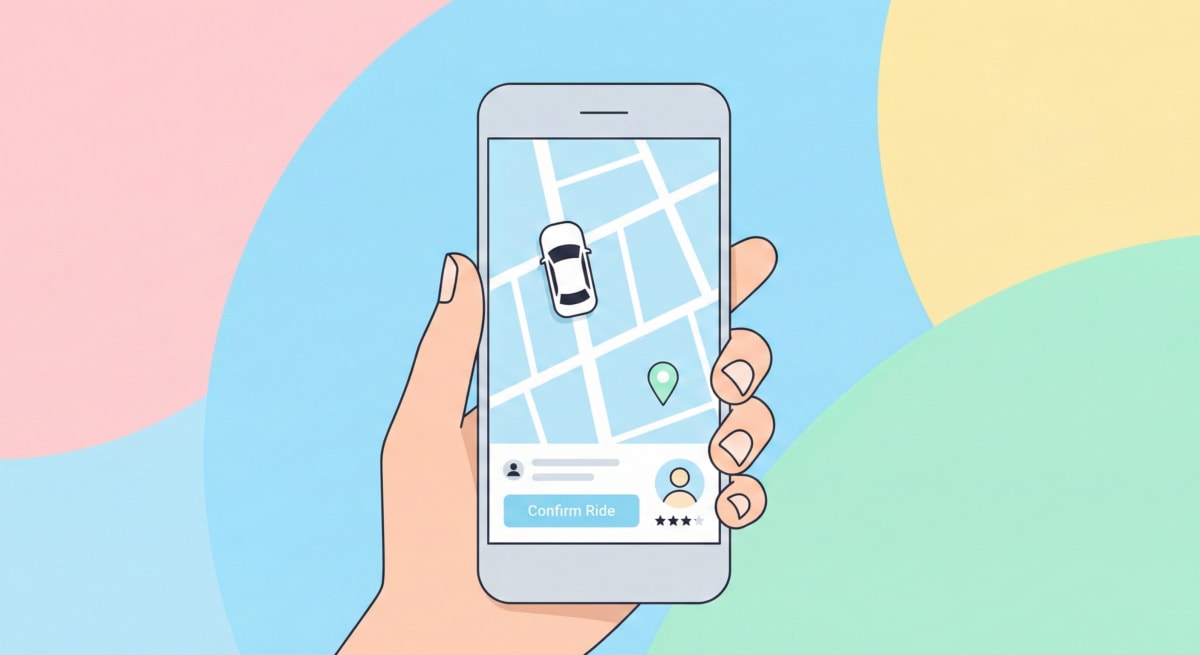
In China, Dīdī Chūxíng (滴滴出行)—the local equivalent of Uber—is your absolute lifeline. While the app itself features a polished English interface with a built-in text translation tool that can bridge most communication gaps, technology has its limits. GPS signals sometimes falter between the steel canyons of high-rise buildings, and occasionally, a driver will ring your phone to clarify a pick-up point. For a non-native speaker, hearing the rapid-fire, heavily accented Mandarin of a driver on the other end of the line can be, frankly, a terrifying experience.
Through trial, error, and many successful commutes, I have curated the exact, authentic phrases you need to handle the pick-up, the ride, and the drop-off with absolute composure.
1. The Golden Rule: Address Them as “Shīfu”
Before you utter a single word, you must master the local etiquette. Forget “Mr.” or “Sir” (xiānsheng 先生); they will make you sound like a textbook.
In China, the universally respectful and professional term for a driver, mechanic, or any skilled blue-collar worker is shīfu (师傅). It literally translates to “master” or “skilled craftsman.” Whether you are opening the car door to greet them or asking them to adjust the climate, starting your sentence with “Shīfu” instantly commands respect and sets a friendly, localized tone.
2. The Dreaded Phone Call: Confirming Location
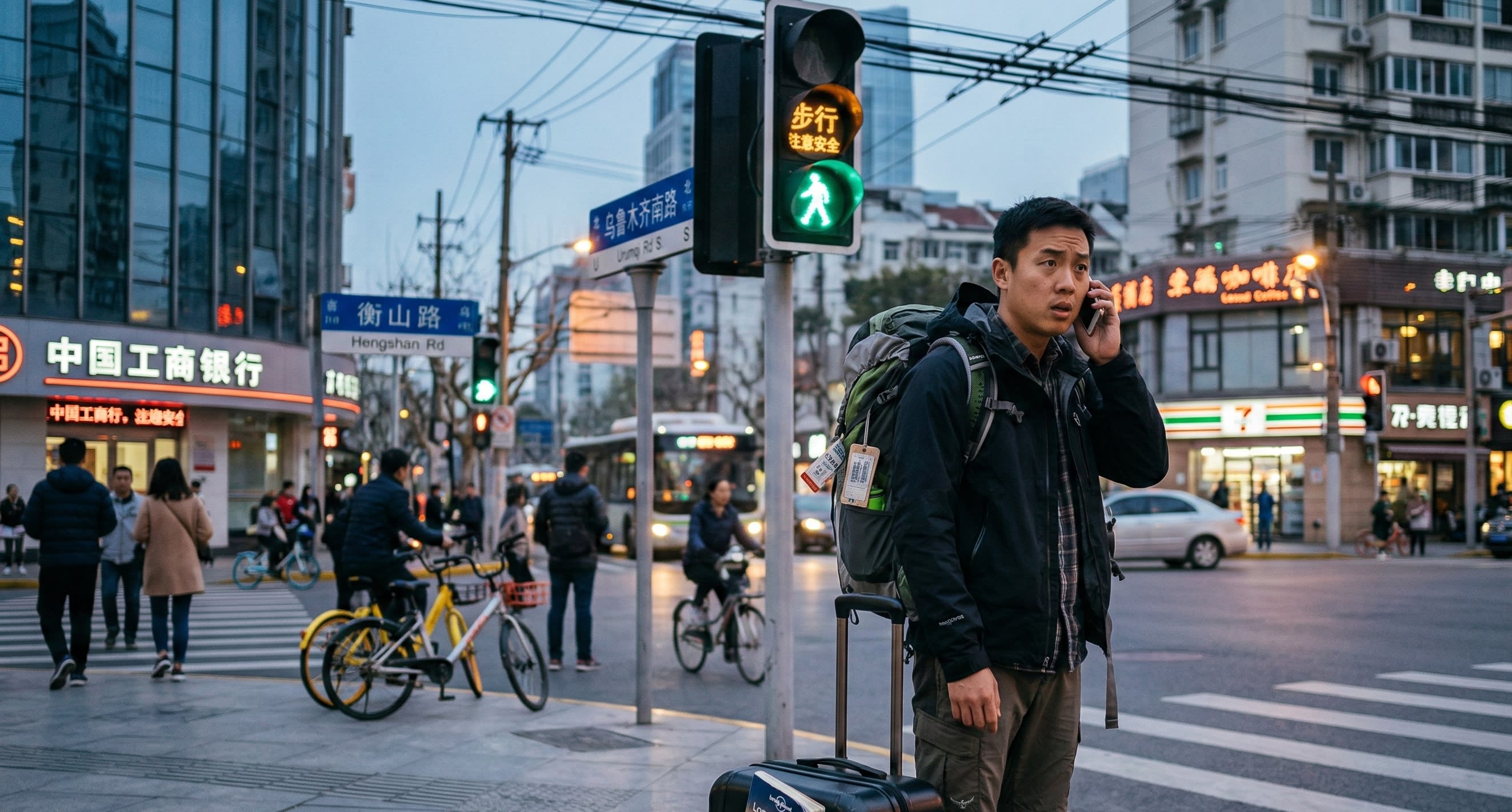
You have booked your ride. The car is 200 meters away, and suddenly, your phone rings. It is the driver, likely needing clarity on exactly where you are standing. They will almost always start with:
“Wéi, nǐ zài nǎlǐ?” (喂,你在哪里? - Hello, where are you?)
Don’t panic. You don’t need to provide a complex description. Simply state “Wǒ zài…“ (我在… - I am at…) followed by a nearby landmark:
- Lùkǒu (路口): The intersection. “Wǒ zài lùkǒu.” (I am at the intersection.)
- Ménkǒu (门口): The gate or main entrance. Every hotel, office complex, or residential compound has a ménkǒu.
- Hónglǜdēng (红绿灯): The traffic light. “Wǒ zài hónglǜdēng zhèlǐ.” (I am here by the traffic light.)
Pro Tip: If the stress of the phone call becomes too much, just say: “Wǒ pān bu dǒng, wǒ fā duǎnxìn.” (我听不懂,我发短信。 - I don’t understand, I will send a text.) Then, hang up and use the Didi app’s in-app chat function—the translation engine there is your best friend.
3. Getting In: The “Weihao” Verification
When that familiar green or white car pulls up, double-check the license plate on your app. Once you slide into the backseat, the driver will usually ask to verify you are the correct passenger by requesting your phone digits.
They will say: “Shǒujī wěihào shì duōshǎo?” (手机尾号是多少? - What are the last digits of your cell phone number?)
The keyword wěihào (尾号) simply means “tail number.” Just recite the last four digits associated with your account. If your number ends in 4-8-2-1, you say: “Wěihào shì sì-bā-èr-yāo.” (尾号是四八二一。) (Note: In spoken Chinese, the number 1 is pronounced “yāo” instead of “yī” to avoid any confusion with the number 7, “qī”.)
4. Luggage and Comfort: Trunks and AC
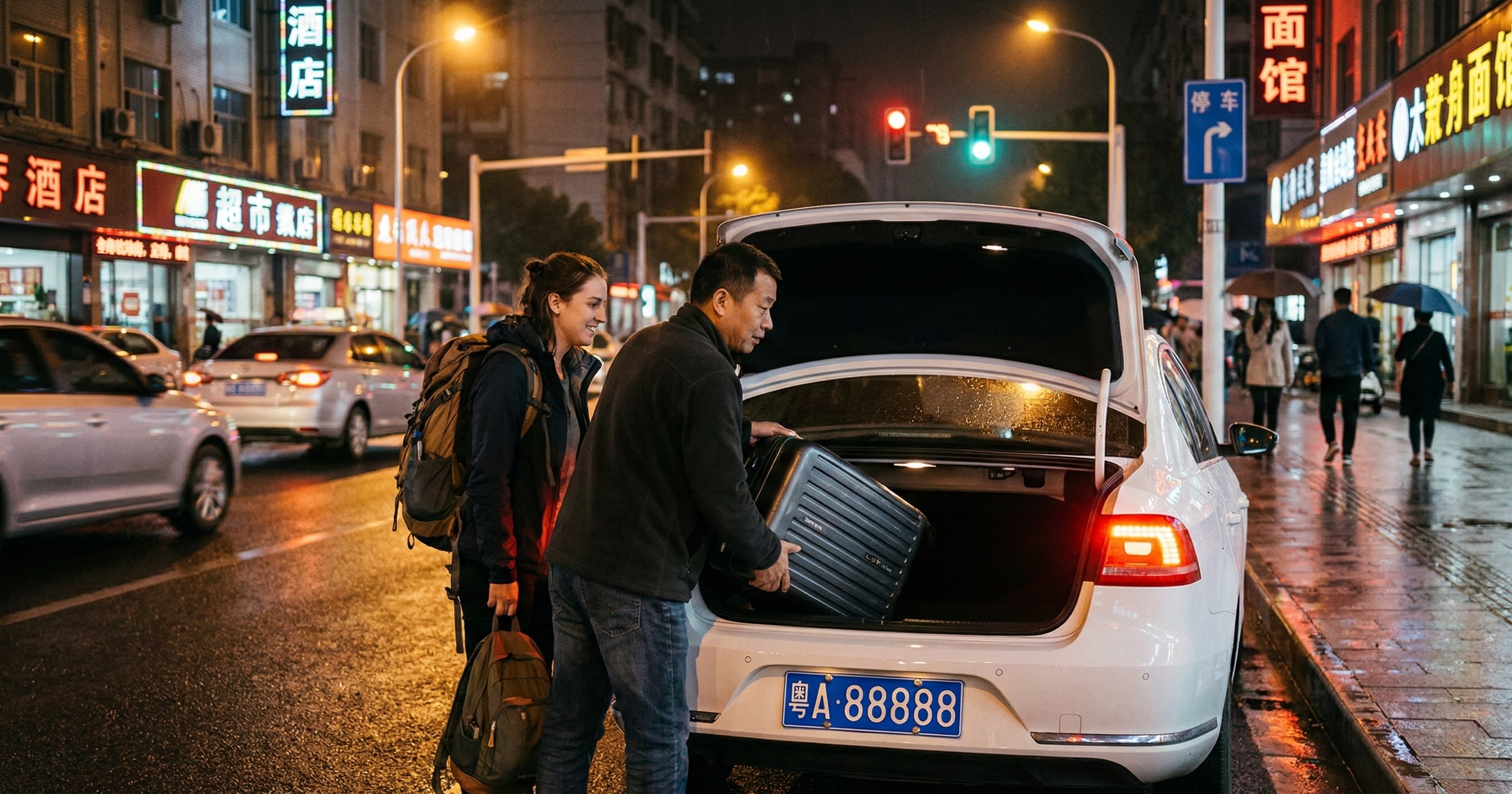
If you are heading to the airport with heavy travel luggage, you may need the trunk. Many Chinese cars run on clean-burning natural gas, which can eat up trunk space, so you may need to ask:
- “Shīfu, kěyǐ kāi yīxià hòubèixiāng ma?” (师傅,可以开一下后备箱吗? - Master, could you please open the trunk?)
Once moving, you might find the cabin air stifling or freezing. Polite requests are always better than suffering in silence:
- “Kěyǐ kāi kōngtiáo ma?” (可以开空调吗? - Can you turn on the air conditioning?)
- “Kěyǐ guān chuānghu ma?” (可以关窗户吗? - Can you close the window?)
5. Navigating the Route
In the past, avoiding the “scenic route” was a major concern for travelers. Today, Didi’s algorithm pre-calculates the most efficient path. Occasionally, a driver might ask:
“Àn dǎoháng zǒu ma?” (按导航走吗? - Follow the navigation?)
A simple, confident “Duì, àn dǎoháng zǒu.” (对,按导航走。 - Yes, follow the navigation.) is all you need to say.
6. The Drop-Off: Nailing the Landing
When you reach your destination, don’t just jump out. If you are at a busy spot, you may need to direct the driver to a safer stop. Avoid using the English word “Stop”; it sounds abrupt. Instead, use:
“Shīfu, qiánmiàn kào biān tíng.” (师傅,前面靠边停。 - Master, pull over to the side up ahead.)
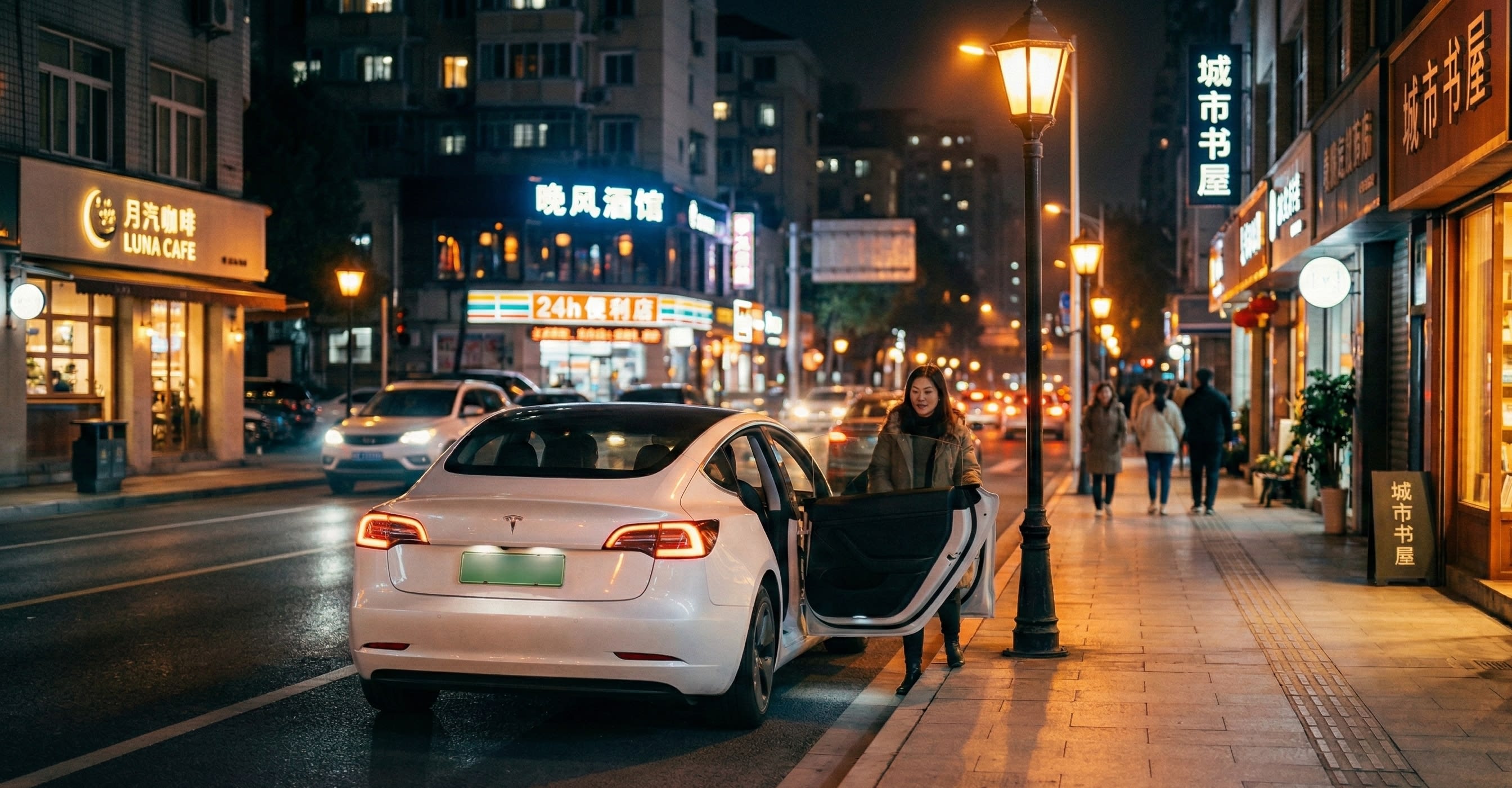
If you have arrived exactly where you need to be, say: “Jiù zài zhèlǐ tíng, xièxiè.” (就在这里停,谢谢。 - Just stop right here, thank you.) Because the payment is handled via your linked Alipay or WeChat Pay, you can simply thank them and step out.
7. The Didi Survival Cheat Sheet
| Situation | Chinese Phrase | Pinyin | Meaning |
|---|---|---|---|
| On the phone | 我在路口 / 门口 | wǒ zài lùkǒu / ménkǒu | I am at the intersection / gate. |
| Getting in | 尾号是... | wěihào shì... | The last 4 digits are... |
| Luggage | 开一下后备箱 | kāi yíxià hòubèixiāng | Please open the trunk. |
| Navigation | 按导航走 | àn dǎoháng zǒu | Follow the GPS. |
| Dropping off | 靠边停,谢谢 | kào biān tíng, xièxiè | Pull over to the side, thanks. |
Final Thoughts
Using Didi is a seamless, efficient experience once you move past the initial hesitation. The drivers are professional, and a small dose of localized courtesy goes a very long way. By learning how to address them respectfully and confirm your details, you elevate your status from a confused newcomer to a capable, independent traveler.
Now that you can navigate the city with ease, why not explore further? You might find our tips on surviving the 40°C heatwave helpful for your next outdoor excursion, or check out our Chinese Street Food Map to discover where to have your driver drop you off for the best local bites.
Disclaimer: As an Amazon Associate, ChinaCurator earns from qualifying purchases.