Disclaimer: As an Amazon Associate, I may earn a small commission from qualifying purchases made through links in this post, at no extra cost to you.
When severe summer heatwaves strike, pushing thermometers past the 40°C (104°F) mark, my first instinct used to be the same as everyone else’s: seeking immediate, shocking relief. I remember my own frantic, misguided attempts to beat the heat by gulping down ice water and devouring tubs of ice cream, only to feel more bloated and thirsty an hour later. That icy blast is a fleeting illusion. My stomach would feel tight, and my body had to work overtime just to warm up those freezing liquids, leaving me more lethargic than before.
In China, where “Furnace Cities” have forced people to adapt to suffocating heat for centuries, I discovered a radically different approach. Survival here isn’t about aggressively cooling the body with ice; it’s about strategically changing the nature of what you eat.
Welcome to the ancient Chinese philosophy of “clearing heat.” It is a system so ingrained in daily life that it acts as an invisible, internal “Oriental Air Conditioner.”
☯️ 1. Understanding Internal Heat (Shànghuǒ)
I had to abandon the Western obsession with physical temperature to grasp this. In traditional Chinese dietary wisdom, foods carry energetic properties. When humidity and heat skyrocket, the body accumulates Shànghuǒ (上火), or “Internal Heat.”
To me, Shanghuo isn’t just a traditional concept—it’s a physical state. It is that familiar sensation of feeling irritable, having dry lips, or dealing with an unexpected breakout. When I am suffering from this systemic inflammation, I don’t reach for ice. Instead, I turn to “cooling” foods, known as Jiànghuǒ (降火) or “Fire-Defeating” ingredients. These foods soothe the body from the inside out, effectively acting as an internal coolant that works far better than any freezer-burned dessert.
🥣 2. The National Summer Hydrator: Mung Bean Soup (Lǜdòu tāng)
If you walk down any street in China during July, you will find locals sipping on Lǜdòu tāng (绿豆汤), or Mung Bean Soup.
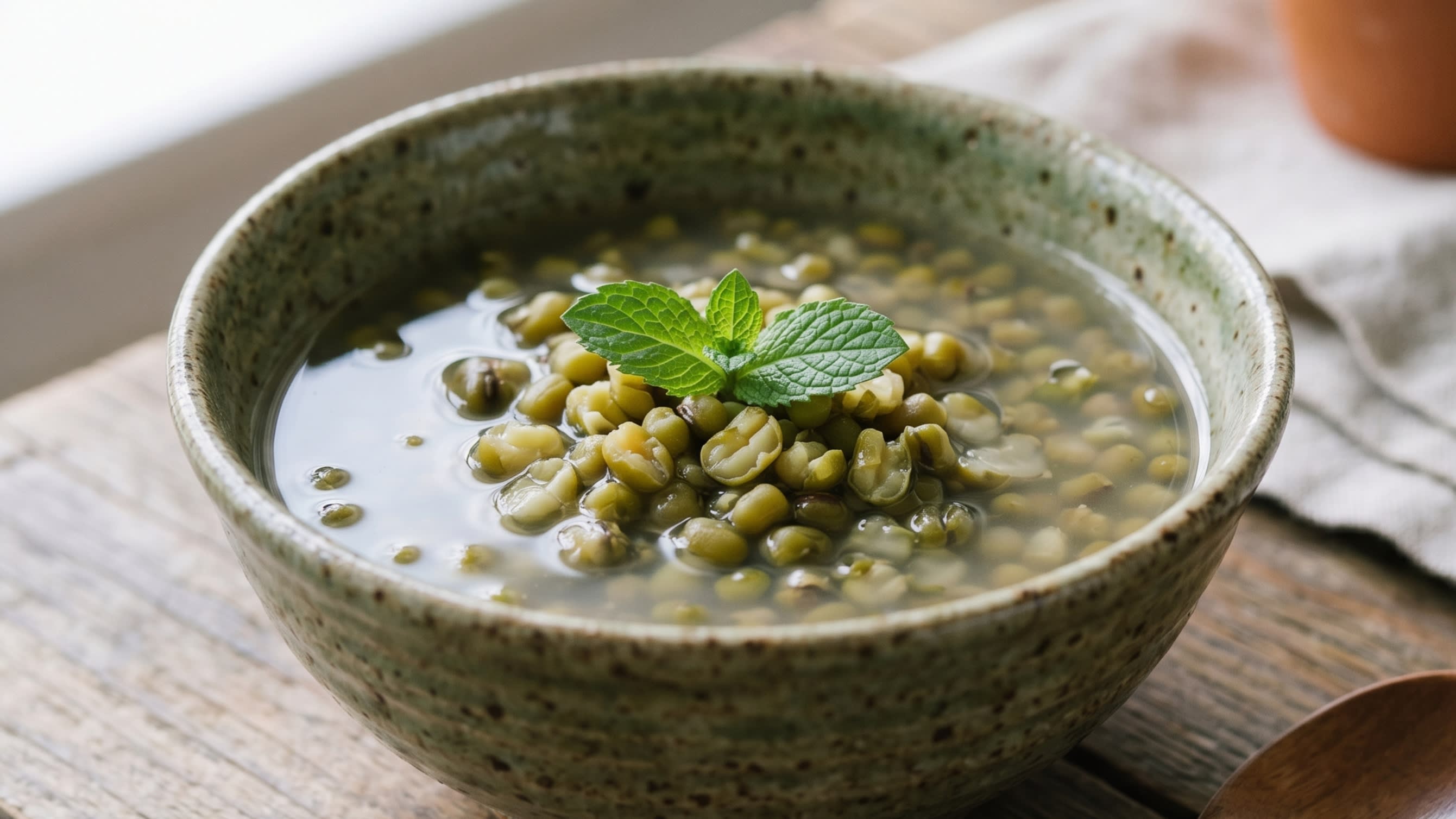
Forget the idea of a heavy, savory stew. This is a lightly sweetened, refreshing tonic. The mung bean is prized for its ability to detoxify the body and clear severe heat. When I sweat through my clothes in the summer, I know I’m losing electrolytes; mung beans are natural powerhouses of potassium and sodium, functioning like a primitive, all-natural sports drink.
To prepare it, I simmer washed mung beans until they kāihuā (开花)—literally “blossom”—until the beans split open to release their starchy, nutrient-dense interior into the water. A touch of rock sugar, or bīngtáng (冰糖), adds a clean, delicate sweetness that doesn’t feel heavy. I keep a large pitcher of this in my fridge, and it has become my go-to remedy for heat-induced fatigue.
🍷 3. The Imperial Thirst Quencher: Sour Plum Drink (Suānméi tāng)
Long before commercial sodas, emperors in the Forbidden City sipped on Suānméi tāng (酸梅汤). This deep-ruby infusion is my absolute favorite accompaniment to spicy Sichuan meals.
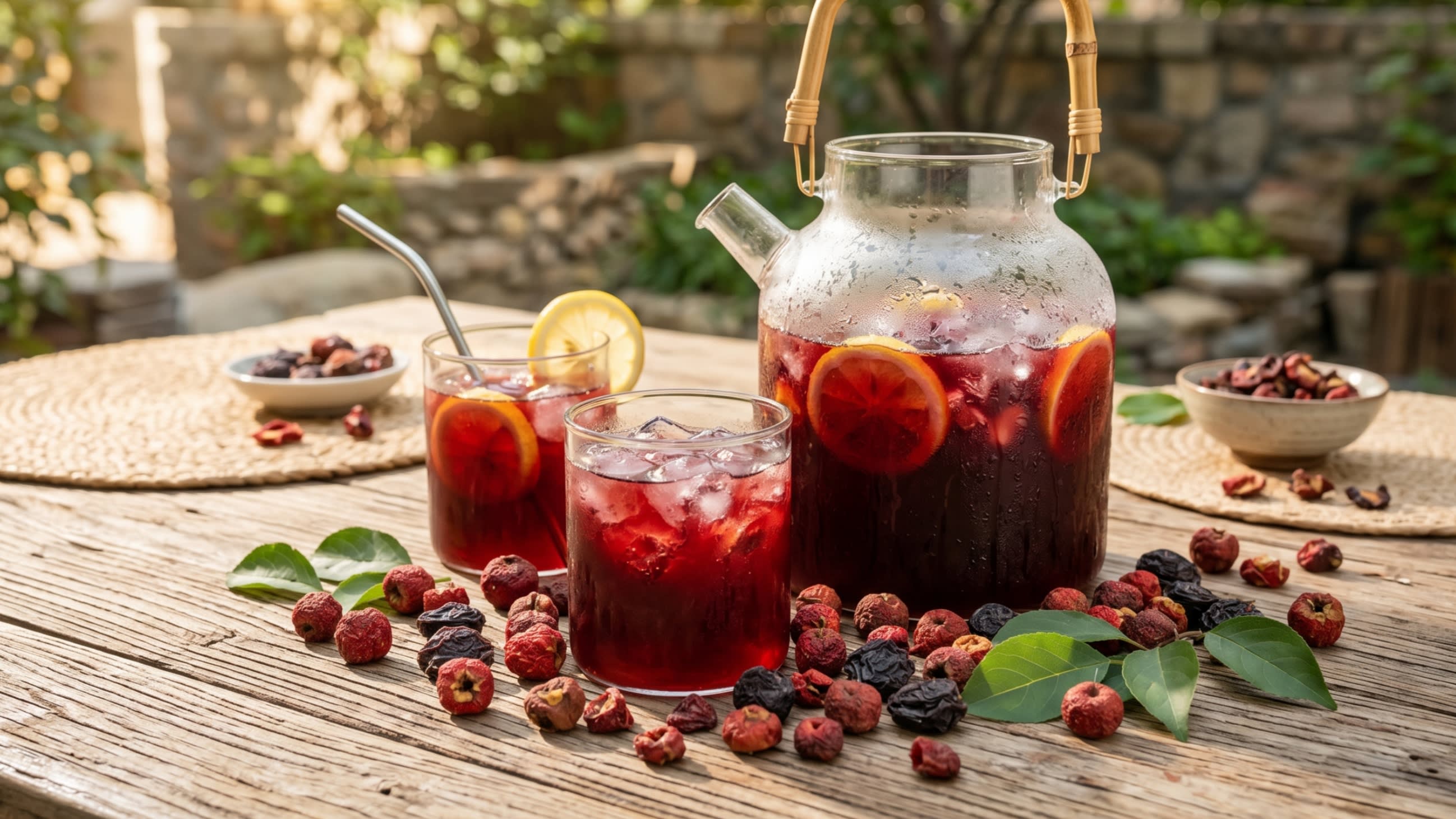
It is brewed with smoked plums (Wūméi 乌梅) for tartness, hawthorn berries (Shānzhā 山楂) to aid digestion, and licorice root (Gāncǎo 甘草) for a lingering, natural sweetness. In Chinese therapy, we use this for Shēngjīn (生津)—”generating fluids.” When the heat makes my mouth feel like sandpaper, the complex sweet-and-sour profile of this drink stimulates my salivary glands instantly.
🥒 4. The “Melon-Eating” Culture and Smashed Cucumbers
My daily summer hydration often comes directly from the food I eat. I’ve learned to embrace the “melon-eating” habits of the locals.
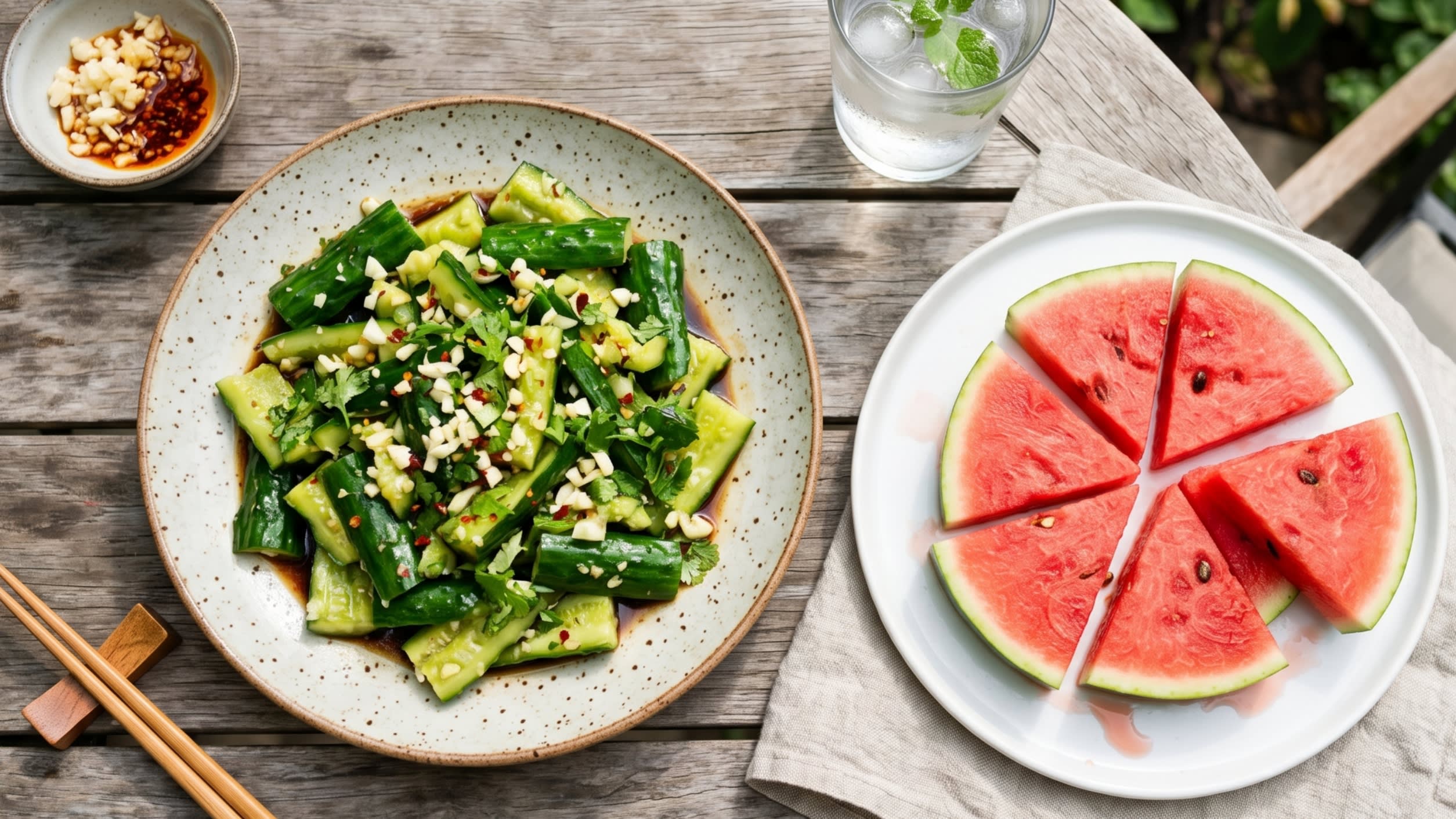
The undisputed champion is Liángbàn pāi huángguā, or Smashed Cucumber Salad. I never slice the cucumbers neatly; instead, I take a heavy traditional Chinese cleaver and crush the vegetable. This creates jagged, uneven surfaces that hold the dressing—a mixture of raw garlic, aged black vinegar, and nutty sesame oil—far better than a clean cut ever could.
| Cooling Food | Chinese Name | Primary Benefit |
|---|---|---|
| Mung Bean | Lǜdòu (绿豆) | Electrolyte replenishment and detox |
| Smoked Plum | Wūméi (乌梅) | Astringent; stops excessive sweating |
| Cucumber | Huángguā (黄瓜) | High water content; cools internal heat |
🌍 5. Bringing the Cooling Magic to Your Home
You don’t need to visit a traditional pharmacy to start practicing this. I find that integrating these elements into my pantry makes a massive difference during a heatwave.
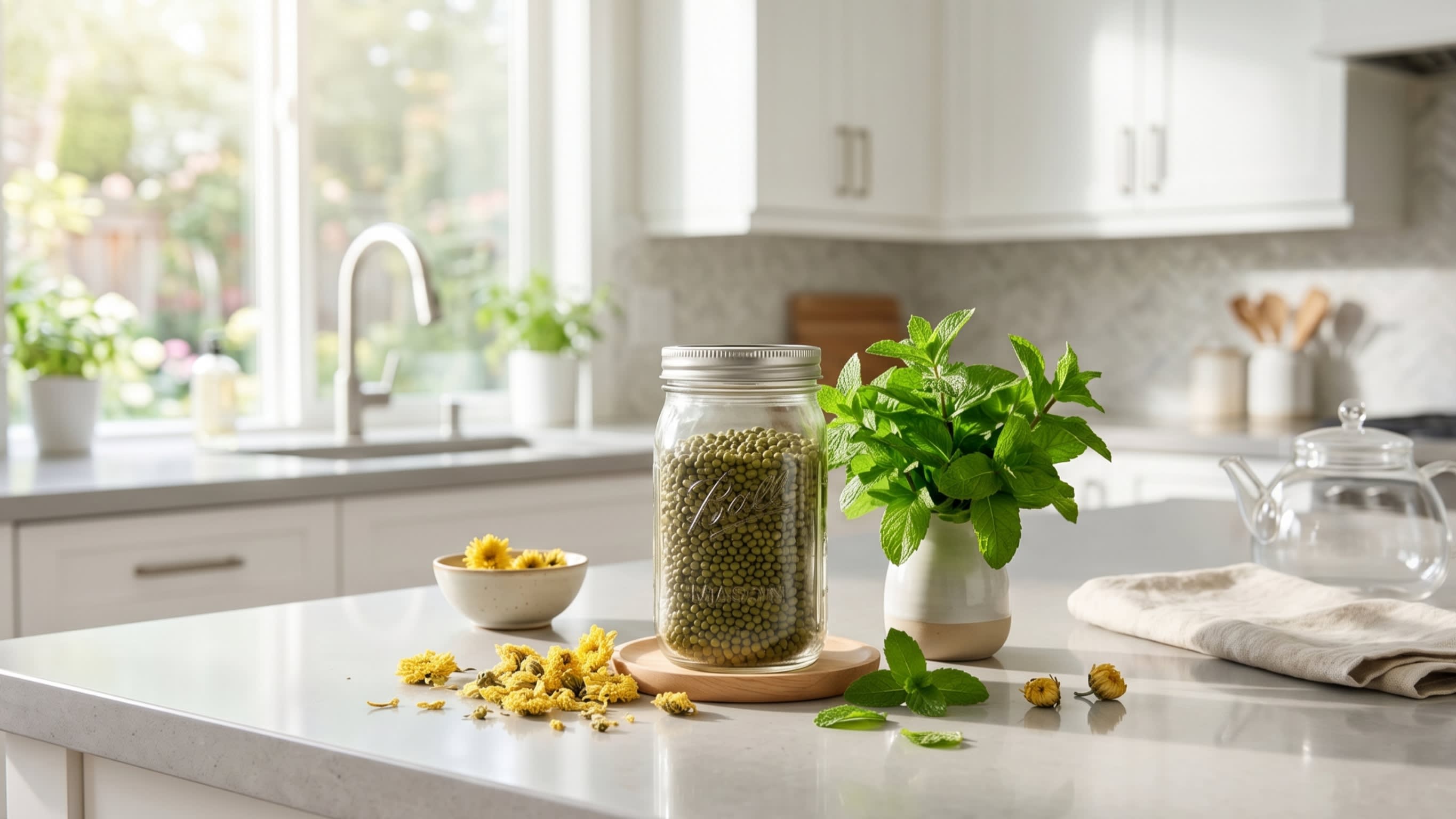
To get started, I always keep a jar of dried green mung beans in my pantry, which I find to be an effortless way to prepare a quick, cooling infusion. If I can’t source specific plums, I brew a strong, refreshing tea using dried chrysanthemum flowers or even pure mint tea. These herbal infusions keep my body hydrated without the need for processed sugars. I’ve also shifted my diet to prioritize water-rich greens; lightening my meal load prevents my digestive system from generating unnecessary heat, which, in the long run, has kept me far more comfortable when the sun hits its peak.
True, lasting coolness isn’t found in a freezer; it’s a balance I’ve learned to cultivate from within.
Curious about how Chinese philosophy views the changing of the seasons? Explore our deep dive into Nature’s Rhythm: A Simple Guide to the 24 Solar Terms or uncover another fascinating aspect of Chinese beverage culture in Why Do Chinese People Always Drink Hot Water?. If you want to learn how to order your favorite summer drinks in Mandarin, check out our Survival Chinese Guide: Ordering Coffee and Milk Tea Like a Local.