🍄 Introduction: The Ultimate Guilt-Free Chinese Takeout
When you flip open a multi-page menu at your local Chinese-American takeout spot, your eyes are immediately drawn to the deep-fried, sticky-sweet heavy hitters like General Tso’s or Orange Chicken. But tucked away in the “Diet Menu” section often lies a quiet, unassuming masterpiece: Moo Goo Gai Pan (蘑菇鸡片 - Mógū Jīpiàn).
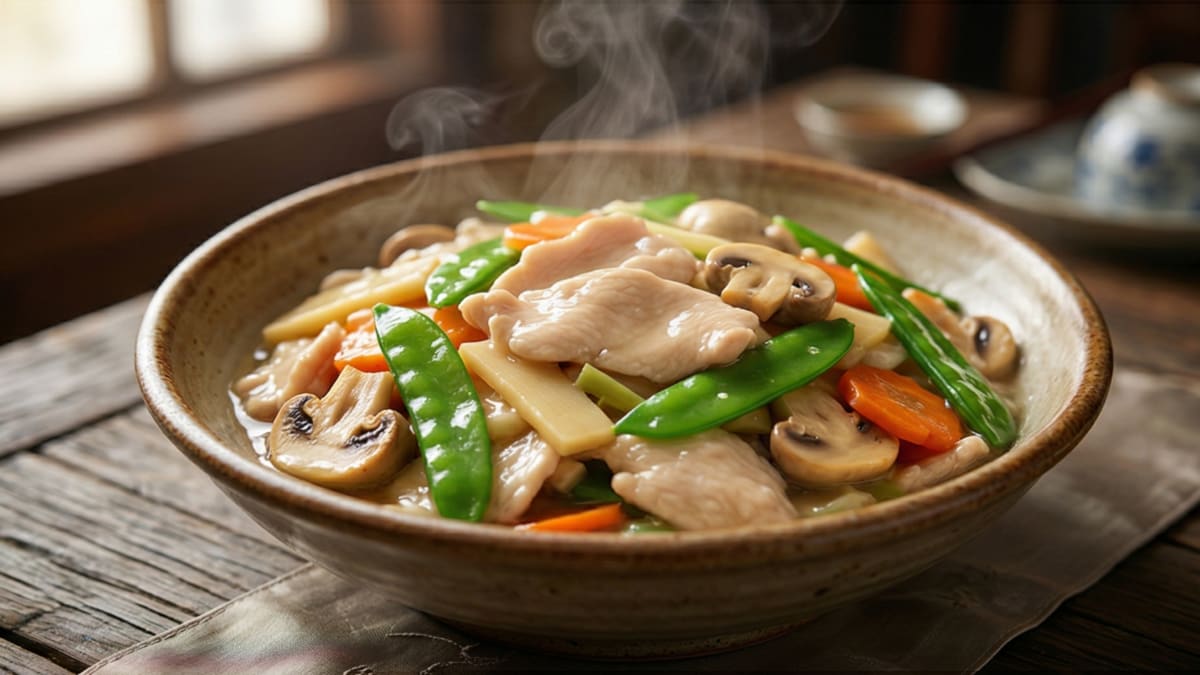
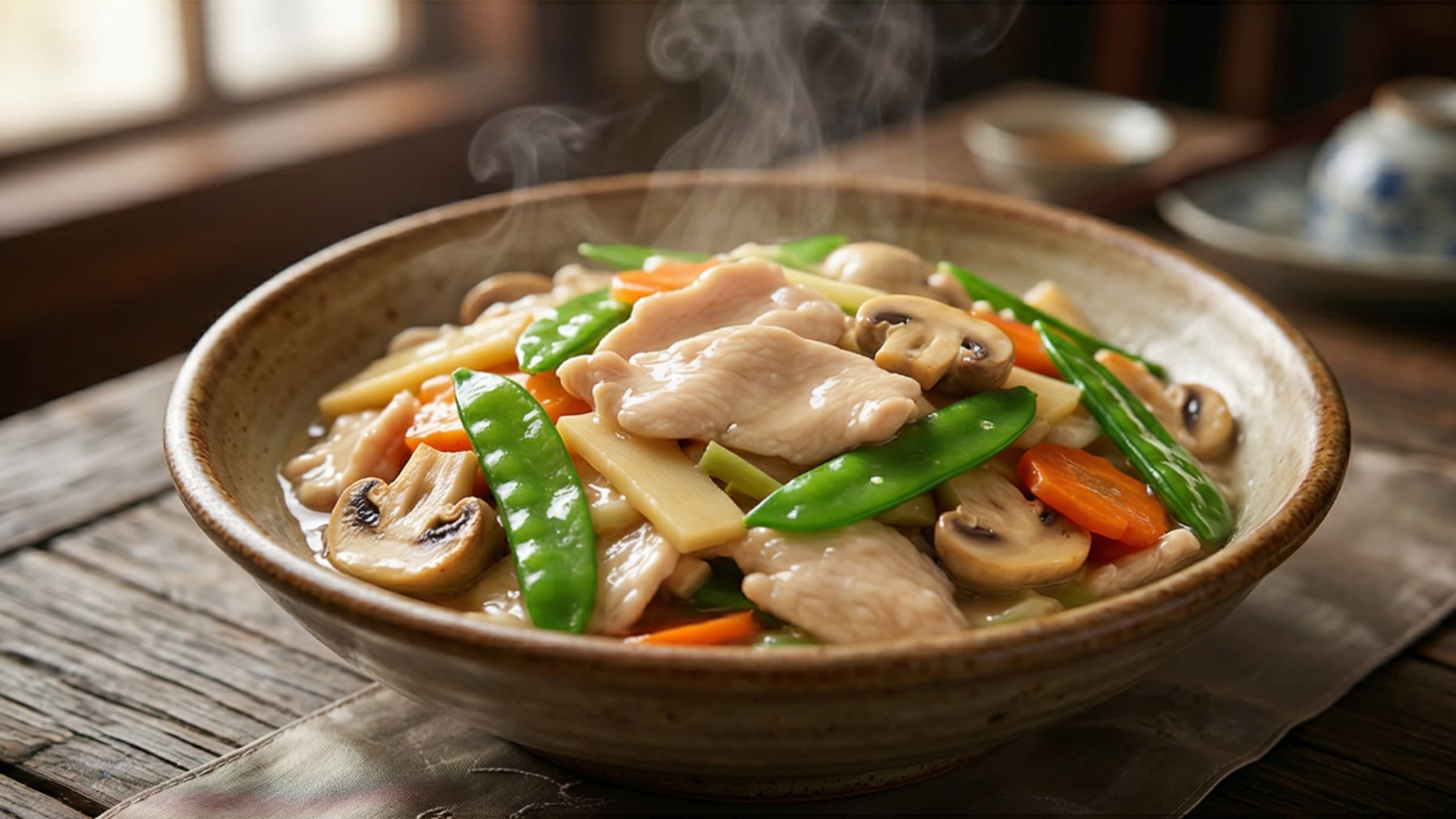
For those of us craving something wholesome, this dish is the holy grail. It is a vibrant, colorful, and incredibly light stir-fry featuring lean chicken breast, earthy mushrooms, and a medley of snap-crisp vegetables, all brought together by a delicate, savory, and silky white sauce. Because it relies on stir-frying rather than deep-frying, it remains one of the cleanest, most satisfying meals you can make at home.
However, its reputation in the West has been tarnished by shortcuts. Too often, a delivered Moo Goo Gai Pan arrives as a sad, grey, watery soup filled with rubbery, bland chicken chunks swimming in a flavorless starch slurry. Today, I’m going to help you rescue this Cantonese classic. We will decode the secrets behind its name, unveil the “velveting” technique that transforms lean breast meat into tender pillows, and master a translucent sauce that pulses with intense umami.
If you enjoy light, healthy Cantonese staples, you might also want to try my Authentic Chinese Steamed Whole Fish or perhaps a refreshing Smashed Cucumber Salad as a crisp appetizer.
📜 The Translation: What Exactly Does “Moo Goo Gai Pan” Mean?
If you run “Moo Goo Gai Pan” through a standard translator, you might get a confused response. This is because the name is a phonetic spelling derived from the Cantonese dialect, carried to North America by early immigrants from Guangdong province.
Let’s break down the literal meaning:
- Moo Goo (蘑菇 - Mógū): Simply means “Mushrooms.” Traditionally, this dish calls for fresh white button mushrooms, which provide a delicate, forest-like earthiness.
- Gai (鸡 - Jī): The Cantonese pronunciation for “Chicken.”
- Pan (片 - Piàn): Means “Slices.”
The dish is literally “Mushroom Chicken Slices.” This name is a structural command: the chicken must be sliced incredibly thin against the grain so that it cooks in mere seconds and provides that elusive “melt-in-your-mouth” texture.
🔬 The Culinary Science: Velveting and the “Bai Zhi” (白汁)
To graduate from “watery home-cooked” to “professional restaurant quality,” you must master two fundamental pillars of Cantonese stir-frying.
1. The Art of Velveting (上浆 - Shàngjiāng)
Chicken breast is notoriously unforgiving. If you toss raw, naked strips into a hot wok, the protein fibers contract instantly, pushing out all the moisture and leaving you with chalky, dry meat.
To prevent this, chefs use Shàngjiāng (上浆 - Velveting). We marinate the meat with egg white, a splash of wine, and a touch of cornstarch. This creates a microscopic, invisible gel barrier. When the chicken hits the oil, the barrier seals in the juices. The result? A texture that is impossibly soft, slippery, and tender.
2. The Signature White Sauce (白汁 - Báizhī)
Unlike brown stir-fries that hide behind dark soy sauce, Moo Goo Gai Pan relies on a Báizhī (白汁 - White Sauce). This sauce must be pristine. Because you aren’t using dark colors, the visual appeal comes from the bright contrast of the green snow peas and the snowy white chicken. We use high-quality chicken broth, ginger, and—the real secret—white pepper powder (白胡椒粉). This spice provides a floral, earthy heat that doesn’t stain the sauce black, keeping the look clean and professional.
🛒 Ingredients List
| Category | Ingredients |
|---|---|
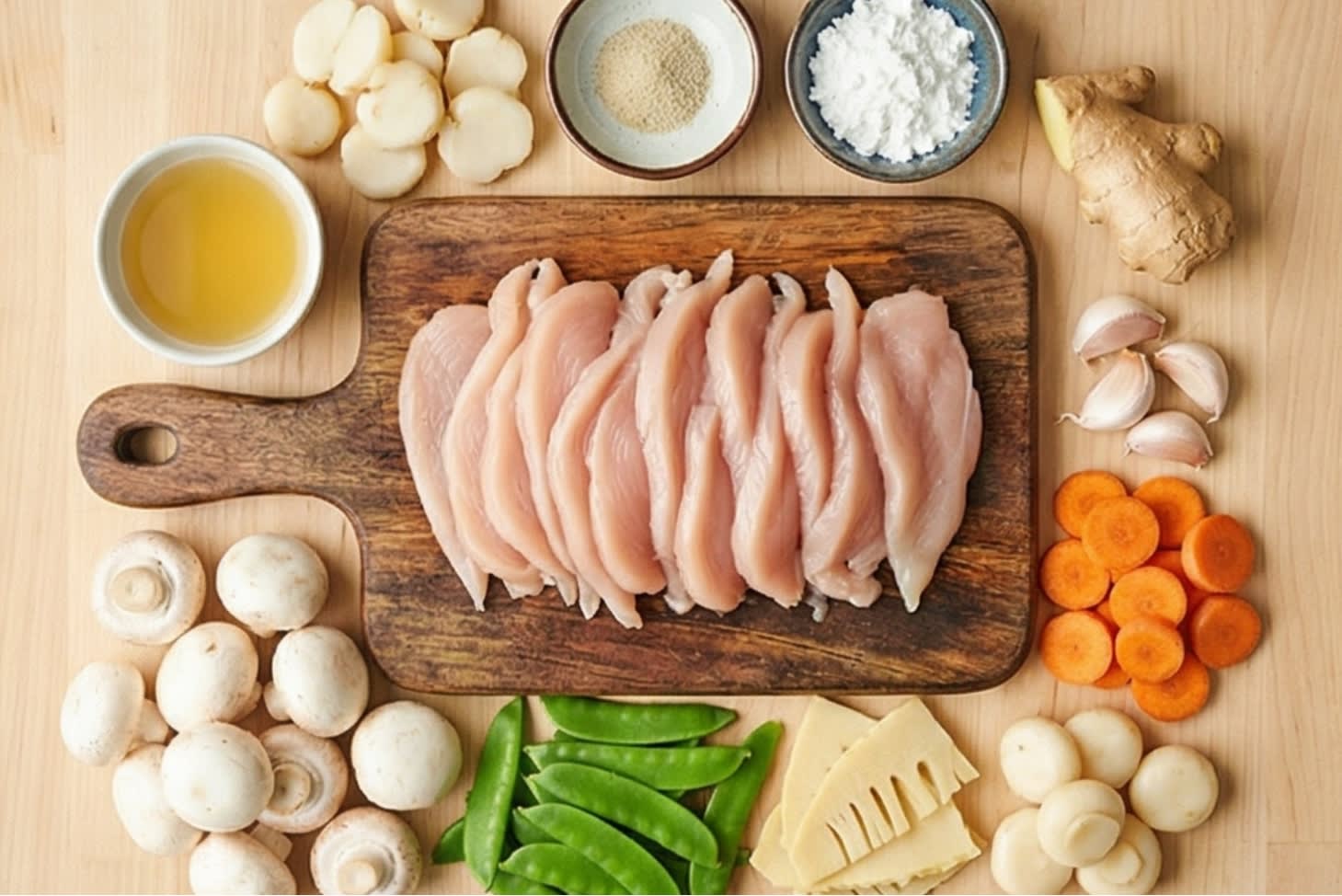
| Marinade | 1 lb Chicken Breast (thinly sliced against the grain), 1 Egg White, 1 tbsp Shaoxing Wine, 1 tsp Salt, 1 tbsp Cornstarch, 1 tbsp Oil. |
| Vegetables | 8 oz Button Mushrooms (sliced), 1.5 cups Snow Peas, 1/2 cup Bamboo Shoots, 1/2 cup Water Chestnuts, 1/2 Carrot (sliced). |
| White Sauce | 3/4 cup Chicken Broth, 1 tbsp Shaoxing Wine, 1 tsp Light Soy Sauce, 1/2 tsp Salt, 1/2 tsp Sugar, 1/4 tsp White Pepper, 1 tsp Sesame Oil, 1.5 tbsp Cornstarch. |
| Aromatics | 3 cloves Garlic (minced), 1 thumb-sized piece Ginger (minced). |
🍳 Step-by-Step Instructions
1. Velvet the Chicken (上浆): Place your thinly sliced breast in a bowl. Add the salt, wine, and egg white. Massage the meat vigorously until the liquid is fully absorbed and the chicken feels slightly sticky. Mix in the cornstarch, and finally, add the oil to seal the pieces. Let it rest for 20 minutes.
2. Prepare the Sauce (白汁): Whisk together your chicken broth, wine, light soy sauce, salt, sugar, white pepper powder, and sesame oil. Add the cornstarch and whisk until no clumps remain. Place this right by your stove—you will need it quickly!
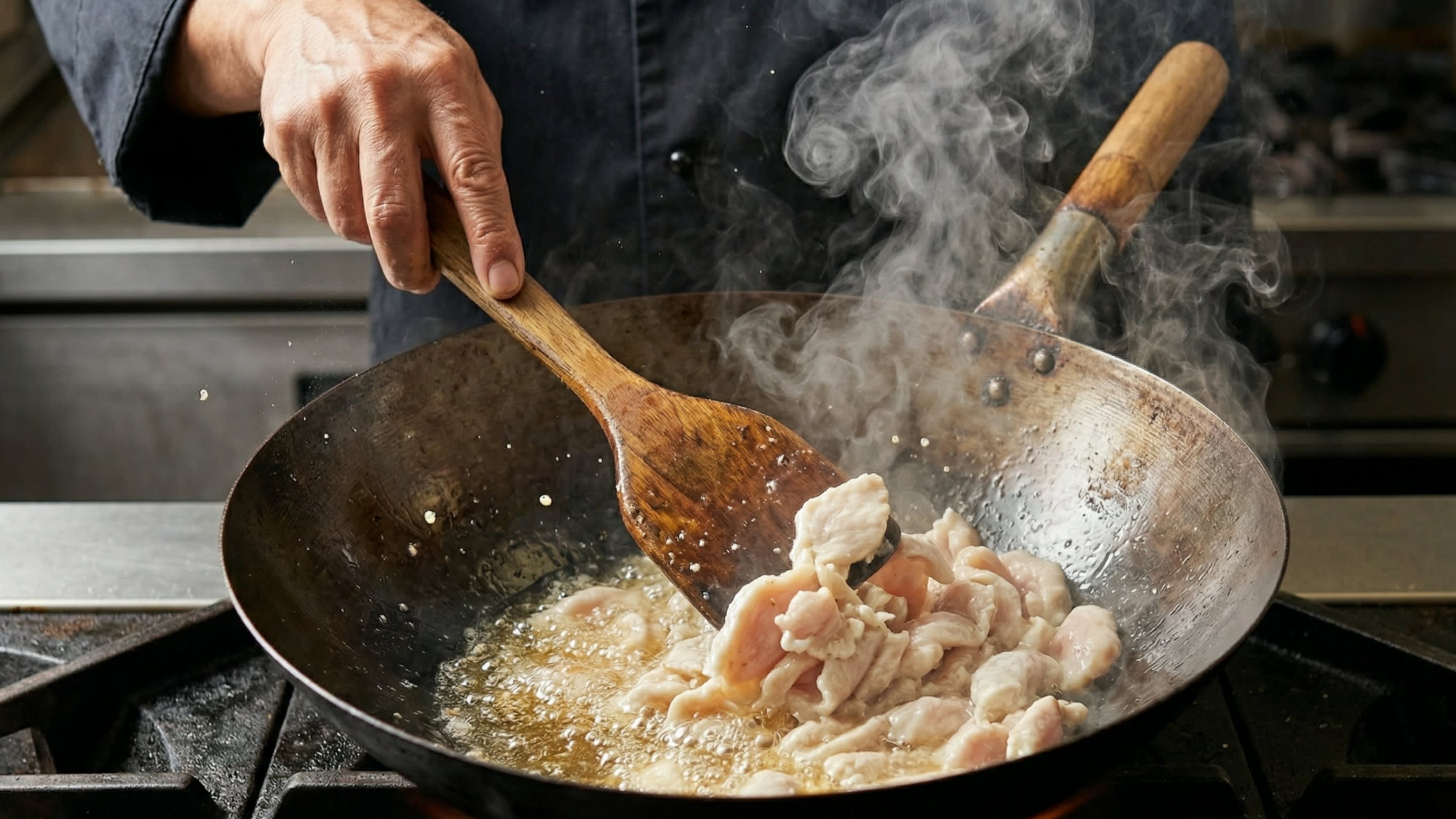
3. Sear the Chicken (滑炒 - Huáchǎo): Heat your carbon steel wok until it begins to smoke. Add two tablespoons of oil. Spread the chicken out and sear for 30 seconds without touching it, then stir-fry rapidly for two minutes. Once opaque and 90% cooked, remove it to a clean plate.
4. Sauté and Blister: Wipe your wok clean. Add one tablespoon of oil, toss in the mushrooms, and sauté until they develop a light golden color. Push them aside and add your ginger and garlic. Once fragrant, throw in the snow peas, carrots, and water chestnuts. Stir-fry for 60 seconds to ensure the vegetables stay snappy.
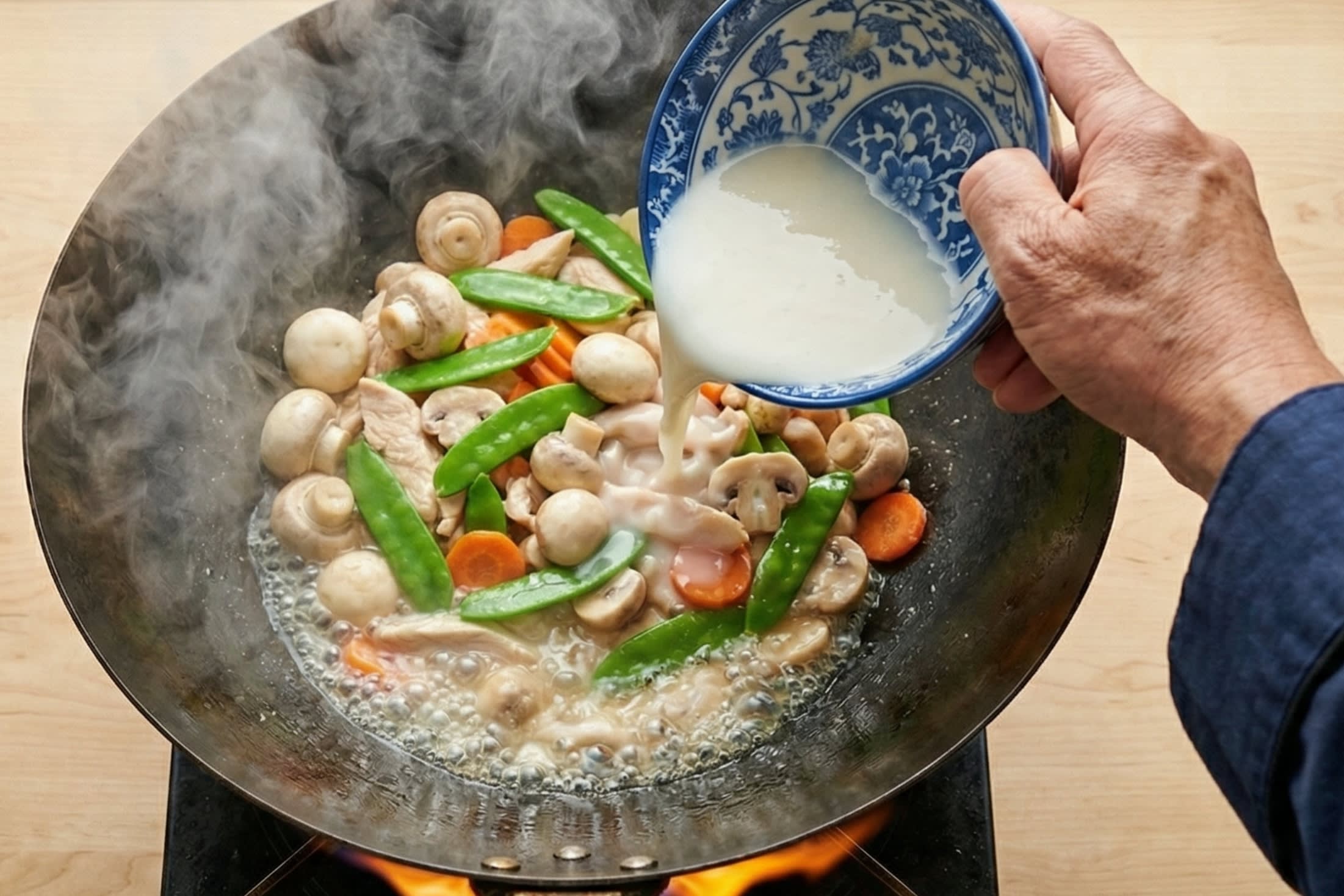
5. Thicken the Glaze (勾芡 - Gōuqiàn): Return the chicken to the wok. Give your sauce a quick whisk to lift any settled starch and pour it over the mixture. Stir constantly. Within seconds, the sauce will bloom into a thick, glossy, translucent glaze that coats everything in a beautiful, savory sheen.
💡 Troubleshooting & Pro Tips
- The Sauce Clumped Up: This usually happens if you dump the sauce in and walk away. You must keep the spatula moving! If it gets too thick, a splash of water will loosen it right back up.
- The Flavor is Weak: Moo Goo Gai Pan is subtle. If your broth is low-quality, the dish suffers. I recommend using a robust, concentrated chicken stock. And never, ever skimp on the toasted sesame oil—it provides the deep, aromatic finish that makes this dish smell like a real restaurant kitchen.
- Tough Chicken: If your meat is still chewy, check your technique. Slicing with the grain (instead of against it) is the #1 mistake. Also, ensure you’re doing the full velvet marination—it really is the difference between a sad, home-cooked meal and a restaurant-style experience.
For more Cantonese-style wok techniques, check out my guide on The Ultimate Beef Chow Fun. Cooking is a journey, and mastering the wok is the best part of the ride!
Disclaimer: As an Amazon Associate, ChinaCurator earns from qualifying purchases.