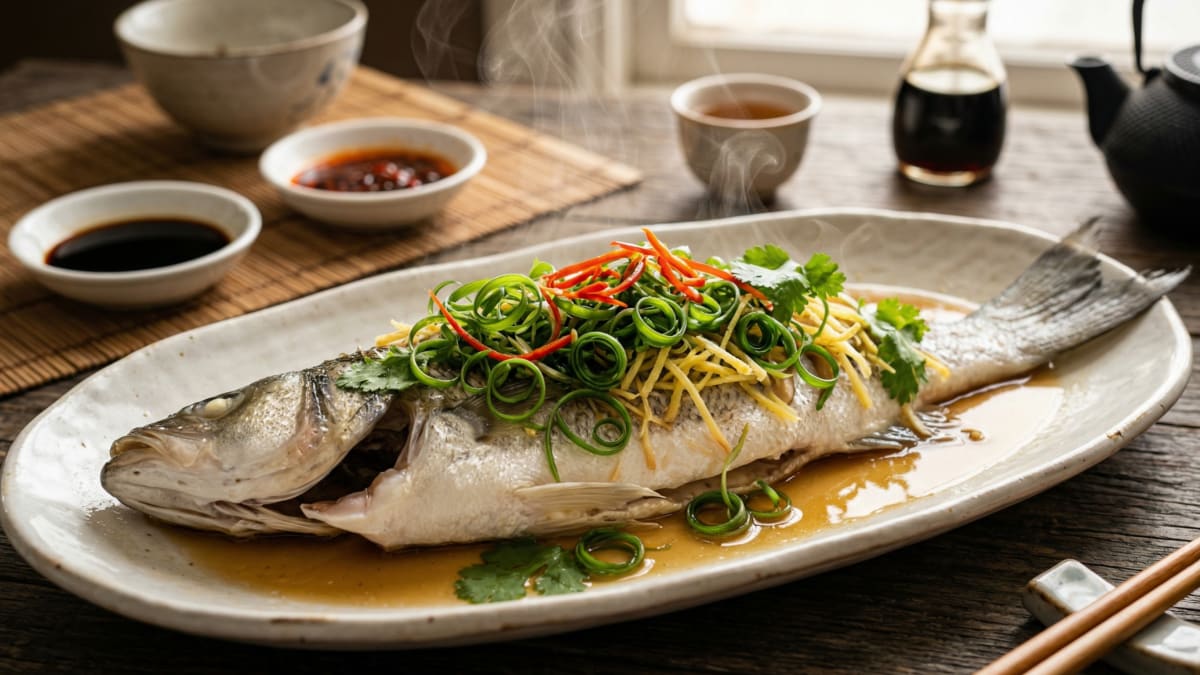
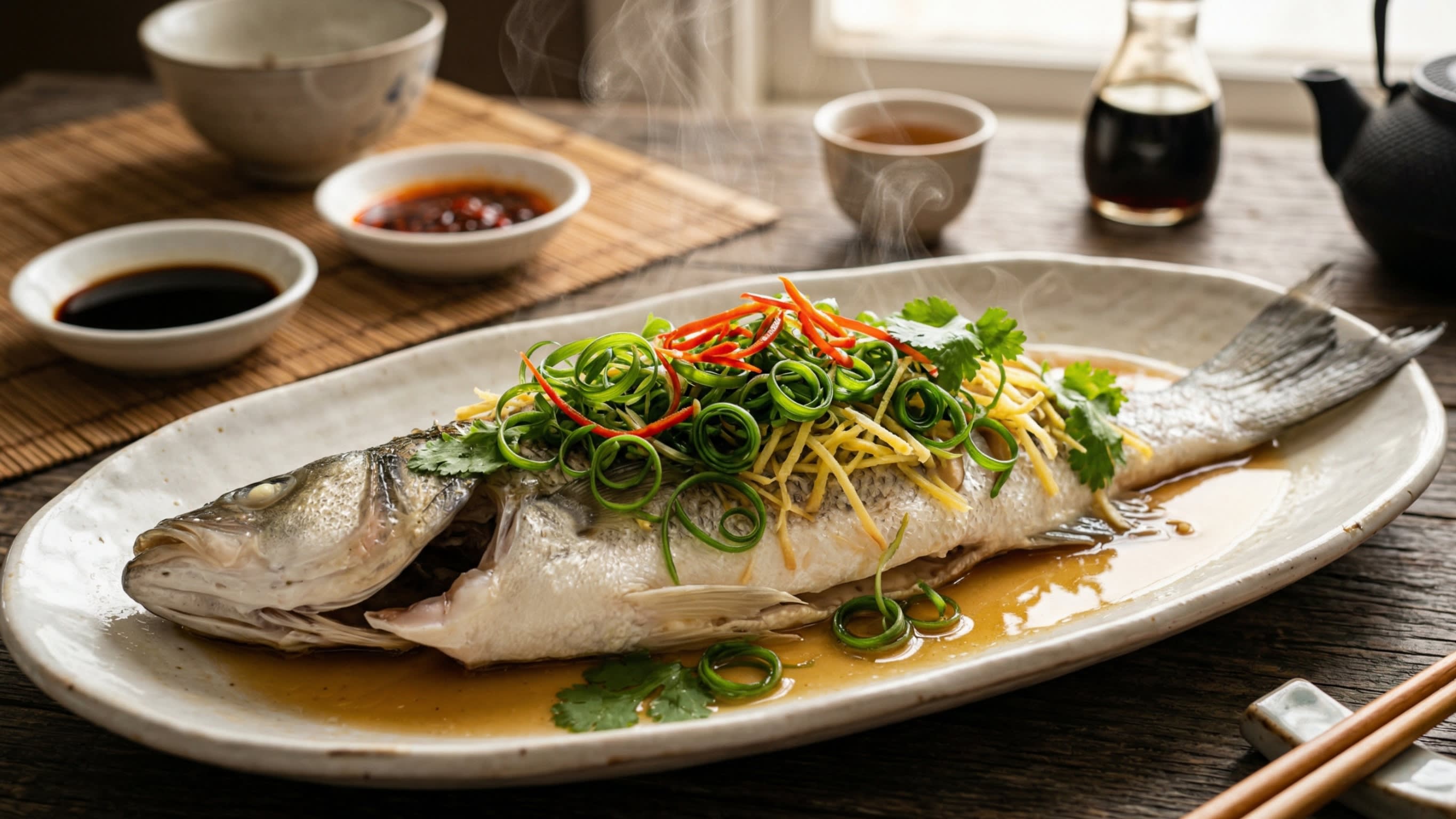
🐟 Introduction: The Pinnacle of Cantonese Culinary Arts
In Western culinary traditions, a high-end seafood dinner often involves heavy cream sauces, intense pan-searing, or deep-frying heavily battered fillets. However, if you step into a Michelin-starred Cantonese restaurant in Hong Kong or Guangzhou, the ultimate expression of luxury, wealth, and culinary perfection is astonishingly simple: Steamed Whole Fish (清蒸鱼 - Qīngzhēng Yú).
For many home cooks, the idea of preparing a fish with its head and eyes still attached is deeply intimidating. I remember my first time attempting this; the staring eyes felt like a culinary judgment. But in Chinese culture, serving a whole fish is mandatory, especially during the Lunar New Year. The Chinese word for fish (鱼 - Yú) sounds exactly like the word for “surplus” or “abundance.” Serving it whole from head to tail symbolizes a good beginning and a good end to the year—a blessing known as Nián Nián Yǒu Yú (年年有余 - May you have abundance every year).
Beyond the symbolism, this cooking method is a masterclass in respecting the ingredient. If a fish is exceptionally fresh, any heavy spices, garlic, or thick sauces are an insult to the ingredient. High-heat steaming preserves the fish’s natural oceanic sweetness, rendering the flesh impossibly delicate, flaky, and buttery.
I will guide you through the process of conquering your fear of the whole fish. We will cover how to select the freshest specimen at the Asian market, the architectural secret to steaming it evenly, and the explosive, dramatic final step—the Pōyóu—that transforms this dish into an aromatic masterpiece.
🛒 The Ultimate Guide: How to Buy a Whole Fish
The golden rule of Qing Zheng Yu is simple: You can only steam a fresh fish. If the fish has been sitting in a freezer, it will taste incredibly fishy, and you should consider something like Authentic Chinese Egg Fried Rice instead.
When you visit your local Asian supermarket, look for Sea Bass (鲈鱼 - lúyú), Branzino, or Flounder. Ask the fishmonger to clean it for you, but perform this 3-second freshness check yourself:
- The Eyes: They must be crystal clear and bulging. If they are cloudy or sunken, walk away.
- The Gills: Lift the gill flap. The gills should be bright, vibrant red. Dark brown gills indicate the fish has been sitting too long.
- The Texture: The fish should have a clean, transparent slime. It should not smell strongly of “fishy” ammonia.
🔬 The Science of the Steam: Eliminating the “Fishy” Smell
Even with the freshest fish, there is a natural odor that must be neutralized. In Chinese cooking, removing this unwanted odor is called Qùxīng (去腥).
1. The Chopstick Architecture
I never lay a fish completely flat on the steaming plate. The bottom will boil in its own juices and become mushy. My Restaurant Secret: Cut thick slices of ginger and scallions and lay them flat on the plate. Place the fish on top of them. This creates a physical gap, allowing the 212°F (100°C) steam to circulate 360 degrees around the fish.
2. The Golden Rule: Discard the Fishy Water!
This is the single biggest mistake home cooks make. When the fish is done steaming, there will be a pool of cloudy, grey liquid at the bottom of the plate. Do not use this as a sauce. That water contains the blood and impurities that were sweat out during the process. Pour this cloudy liquid down the sink before adding your final seasonings.
| Step | Action | Reasoning |
|---|---|---|
| Elevation | Use ginger/scallion bed | Prevents mushy bottom, ensures even steam |
| Drainage | Discard steaming liquid | Eliminates fishy proteins and "off" flavors |
🔥 The Climax: “Po You” (泼油) and the Scallion Curl
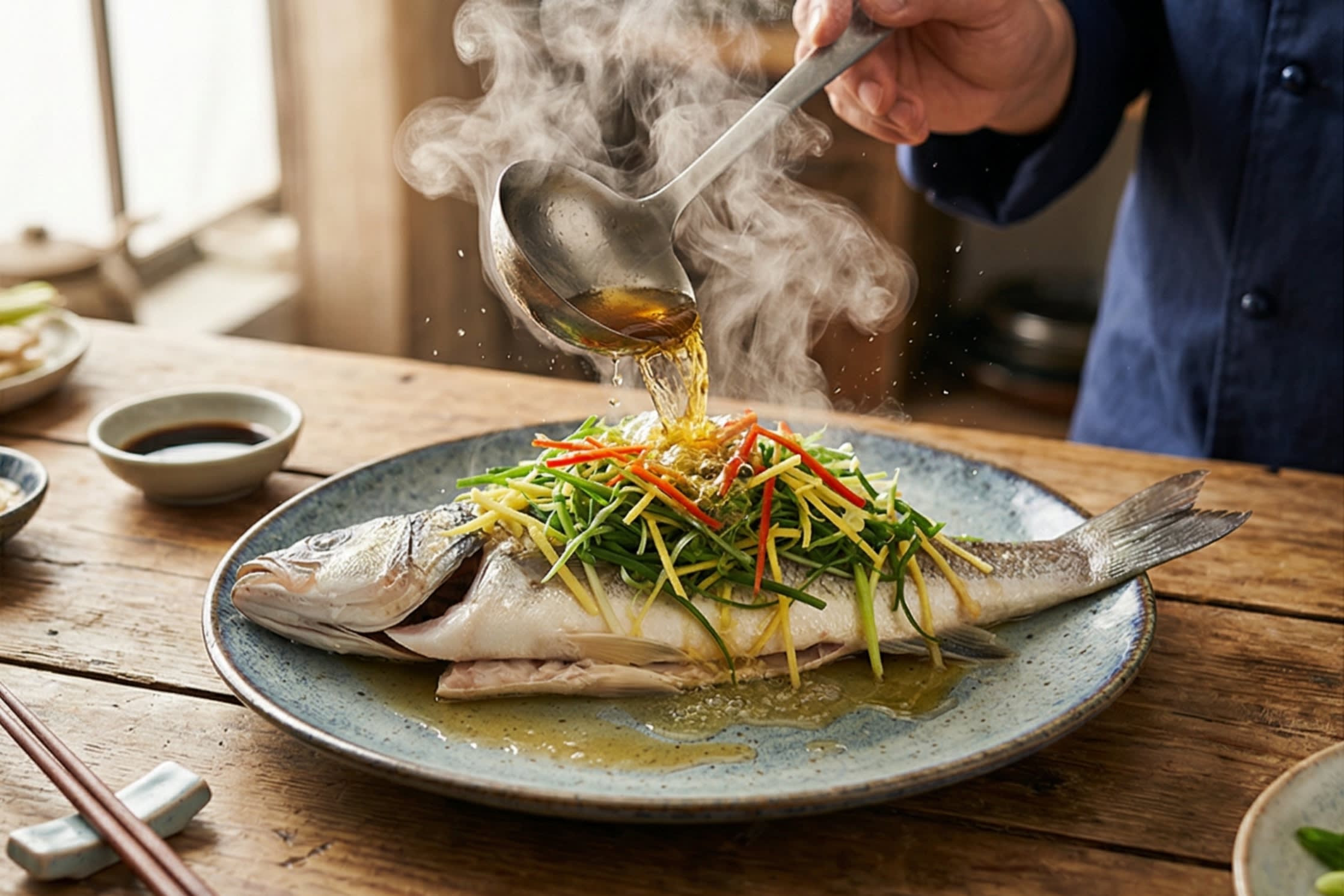
The magic happens after the fish is cooked. While it steams, you prepare Cōngjiāngsī (葱姜丝)—extremely fine, julienned strips of ginger and scallion greens. Pro-tip: Soak the julienned scallions in a bowl of ice water for 5 minutes. They will curl up into beautiful little springs!
Once the fish is steamed and the liquid drained, you pile a mountain of these fresh aromatics on top. Then comes the Pōyóu (泼油 - Splashing Hot Oil). I heat a few tablespoons of cooking oil until it is smoking hot and pour it directly over the raw aromatics. The violent, sizzling heat instantly extracts the essential oils, creating an explosive aroma.
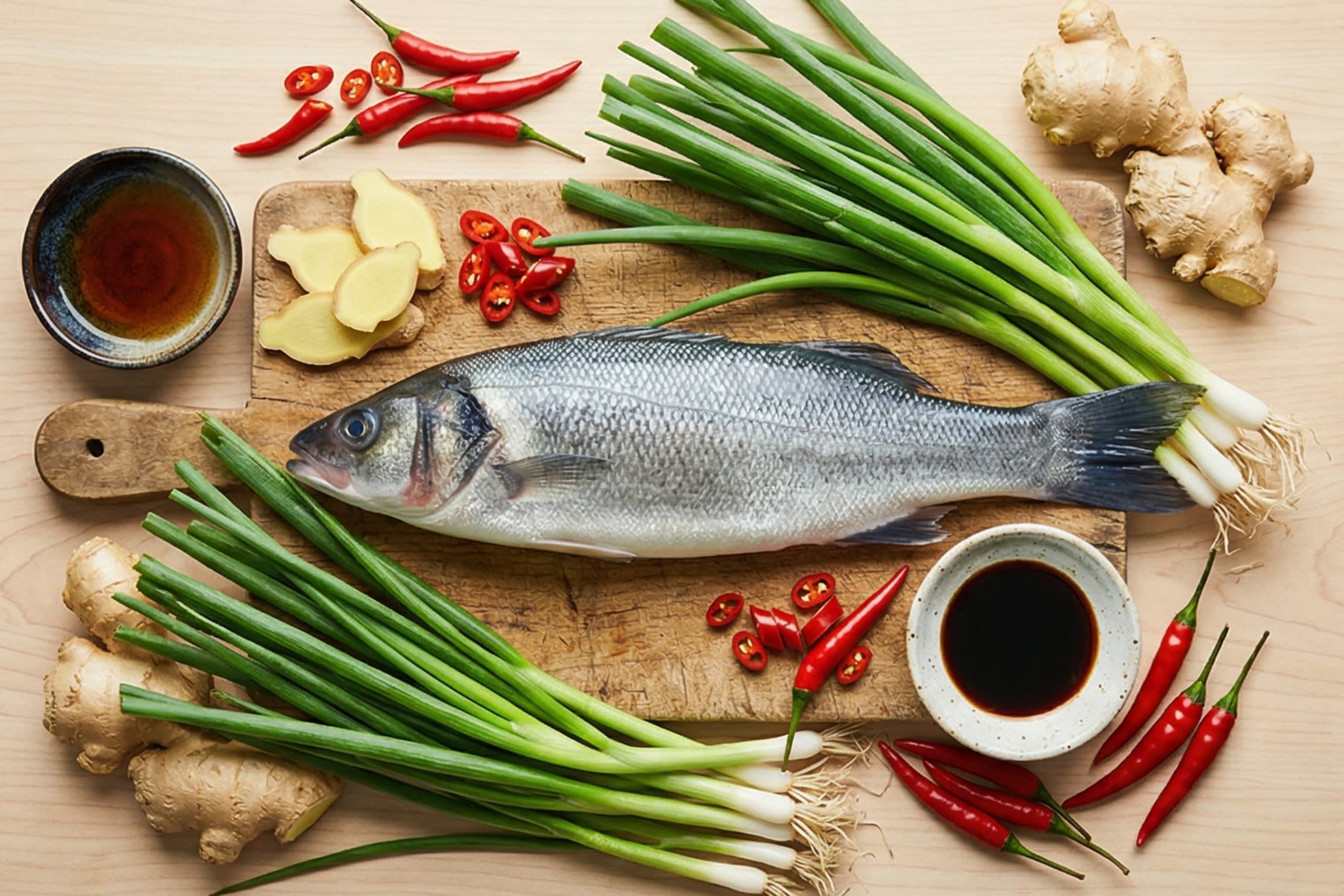
🛒 Ingredients List
The Fish & Prep:
- 1 Whole Fish (about 1.5 lbs / 700g). Sea Bass or Tilapia. Cleaned, scaled, gutted.
- 1 large knob of fresh Ginger (姜), peeled
- 4-5 stalks of fresh Scallions (葱)
- 2 tbsp Shaoxing Cooking Wine (绍兴酒)
- A pinch of Salt
The Aromatic Garnish (葱姜丝):
- 3 inches of Scallion greens, finely julienned
- 2 inches of fresh Ginger, finely julienned
- 1 fresh Red Chili (红辣椒), thinly julienned
The Sizzle & Sauce:
- 3 tbsp high-heat Cooking Oil
- 1/4 cup Seasoned Soy Sauce for Seafood. If unavailable, mix 3 tbsp light soy sauce with 1 tsp sugar and a dash of sesame oil.
🍳 Step-by-Step Instructions
1. Prep the Aromatics: Soak your scallion greens and red chili threads in ice water until they curl. Set the julienned ginger aside.
2. Prepare the Fish: Wash the fish thoroughly under cold water, ensuring the dark bloodline along the spine is gone. Pat it incredibly dry—moisture is the enemy of a clean-tasting steam. Make 3 deep diagonal slashes on both sides. Rub the fish with a pinch of salt and the Shaoxing cooking wine.
3. Build the Architecture: Place your thick slices of ginger and white scallion parts on a heat-proof plate. Lay the fish on top. Stuff a few more ginger slices into the belly.
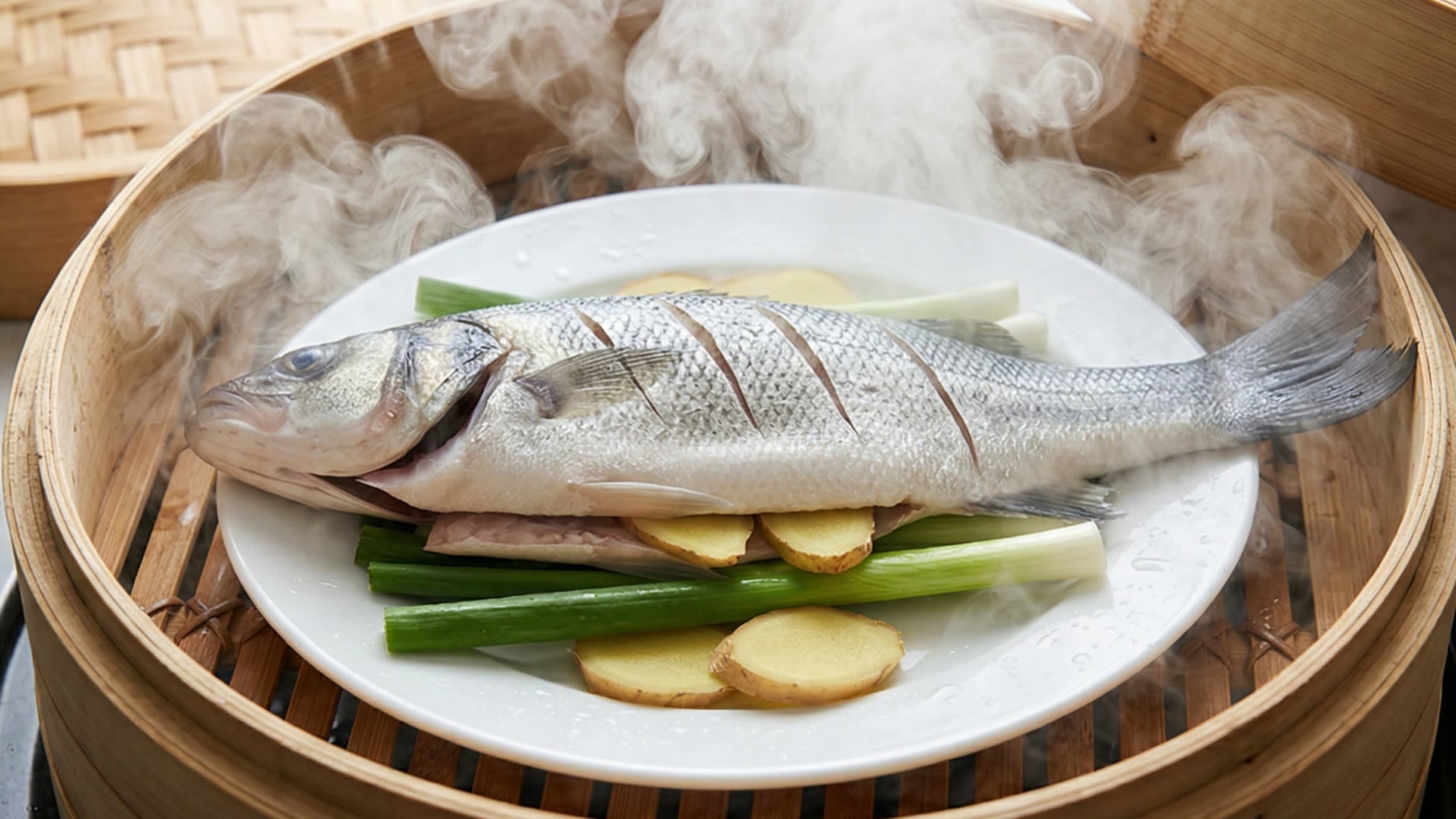
4. The Steam: Bring water in your wok or steaming pot to a furious boil. Never put the fish into a cold steamer! Steam over high heat for exactly 8–10 minutes.
5. The Chopstick Test: Poke a chopstick into the thickest part behind the gills. If it meets no resistance and the meat is opaque, it’s ready. Don’t overcook it, or it will turn into a rubbery mess.
6. Drain and Serve: Drain the liquid, discard the old aromatics, and pile on your fresh curls. Heat your cooking oil until it smokes. Pour it over the aromatics to create that signature sizzle. Pour the Seasoned Soy Sauce around the edges of the plate, and enjoy.
💡 Pro Tips for Success
If you want to explore more Cantonese classics, I highly recommend trying your hand at Authentic Cantonese Char Siu (Chinese BBQ Pork) or even my favorite The ULTIMATE Dim Sum Steamed Pork Ribs. These dishes, like the steamed fish, rely on precise timing and high-quality ingredients to shine.
- Rubberiness: It means you overcooked the fish. Set a timer; it saves lives—or at least, the integrity of your dinner.
- Plate safety: Always ensure your ceramic plate is high-heat safe, or it might crack in the steamer.
Disclaimer: As an Amazon Associate, ChinaCurator earns from qualifying purchases.