🥢 Introduction: The Crown Jewel of the Dim Sum Cart
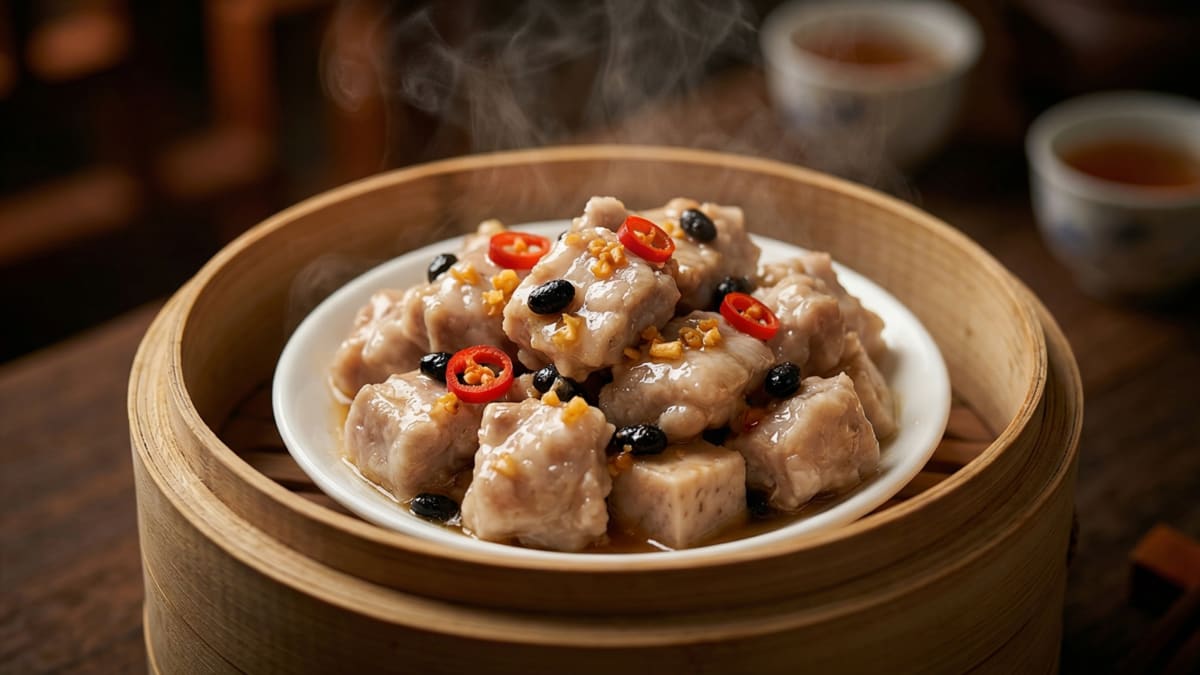
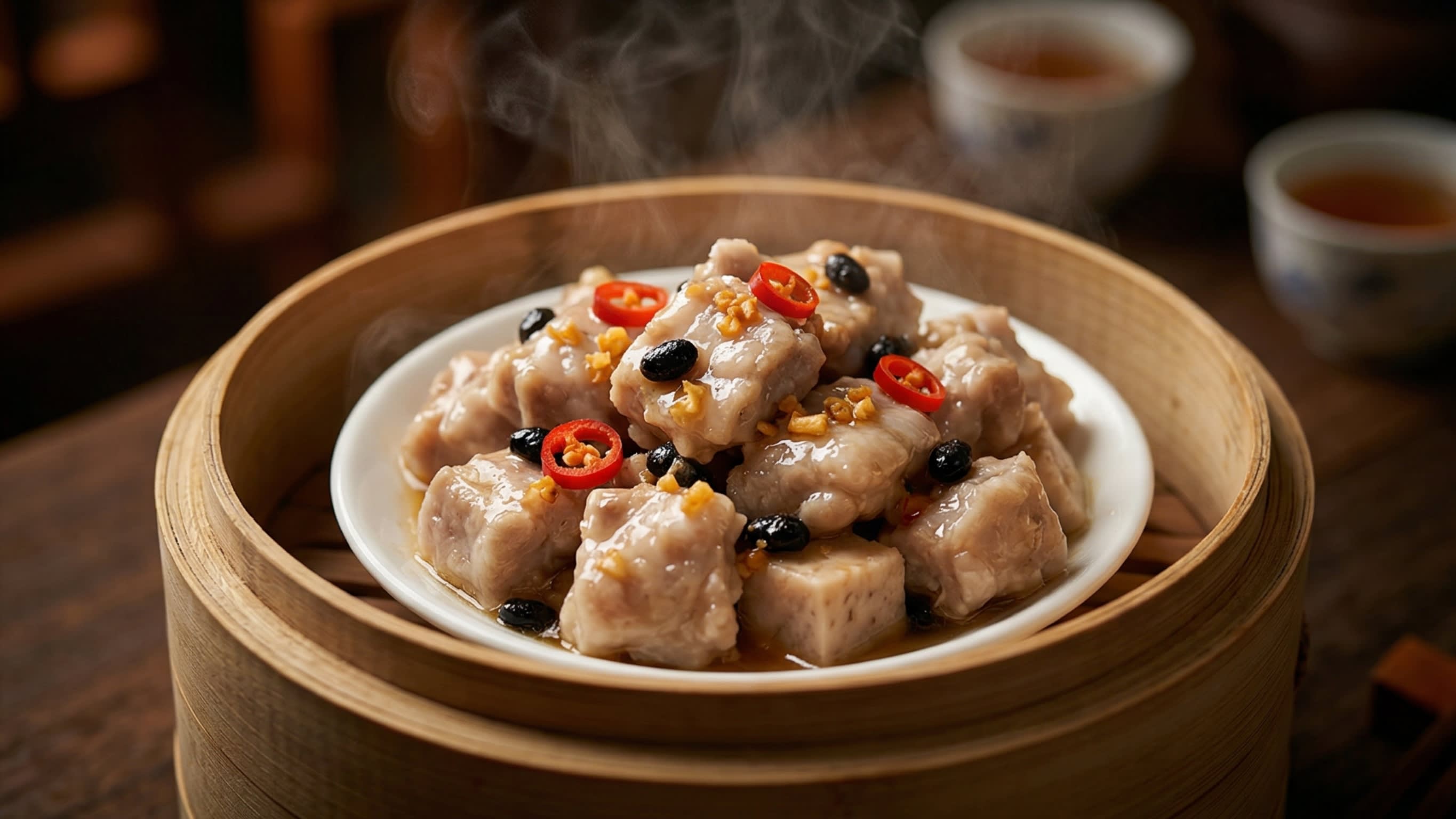
Imagine sitting in a bustling Cantonese teahouse in Hong Kong on a humid Sunday morning. The air is thick with the scent of jasmine tea and the faint, sweet perfume of roasted meats. A server navigates the crowded tables, pushing a stainless steel cart stacked high with bamboo steamers. When they pause at your table and lift a lid, a cloud of deeply savory, garlicky steam escapes. Inside, you find the most iconic appetizer of Southern China: Steamed Pork Ribs with Black Bean Sauce (豉汁蒸排骨 - Chǐzhī Zhēng Páigǔ).
Unlike Western-style barbecue ribs, which are often coated in thick, sticky glazes, these Dim Sum ribs are an exercise in Cantonese restraint. Chopped horizontally across the bone into tiny, bite-sized nuggets, the meat is pale, glistening, and astonishingly tender. The experience of eating them is unique—the exterior is slippery and velvety, while the meat itself is juicy and bouncy, slipping off the bone with the slightest tug of your teeth. The flavor is a sophisticated umami bomb, driven by aged fermented black soybeans and the sharp, clean pungency of fresh garlic.
If you have ever tried to recreate this at home, you may have faced the “grey meat” dilemma. Perhaps your ribs came out looking dull, tough, or rubbery. I’ve been there, too. The truth is, the Dim Sum kitchen relies on a specific sequence of chemistry that transforms simple pork spare ribs into a culinary masterpiece.
🧼 The “Snow White” Secret: Purifying the Pork (去血水)
If your steamed ribs look dark, muddy, or have grey coagulated liquid pooling at the bottom of the plate, you have missed the most vital step in the Cantonese process.
In Western kitchens, we are often told to leave meat untouched, but for this dish, aggressive washing is mandatory. We must remove every trace of myoglobin and surface impurities. We call this process Qù Xuèshuǐ (去血水 - Removing the bloody water).
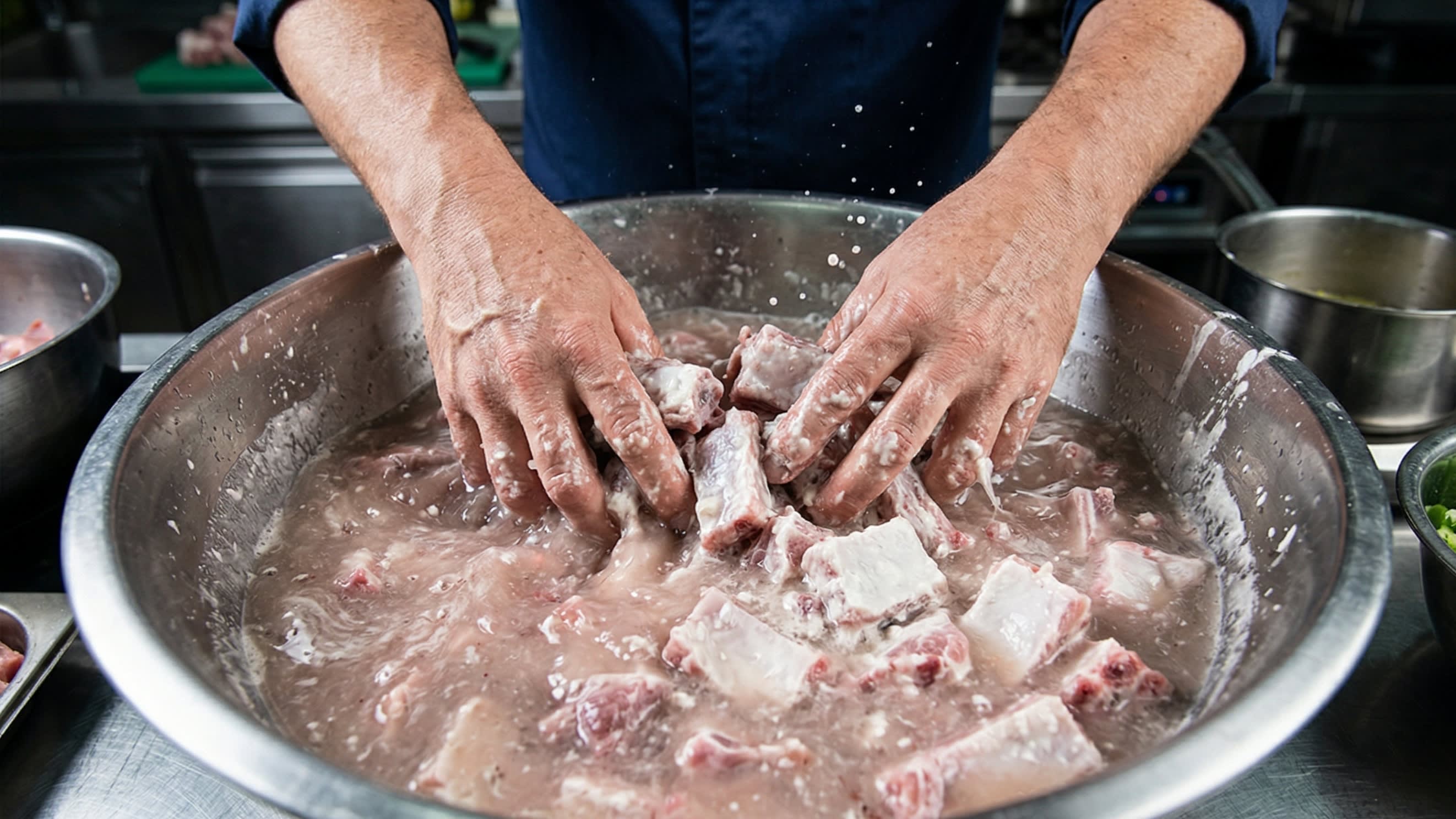
The Professional Technique: Place your chopped ribs in a bowl with a generous spoonful of flour and a splash of cool water. Massage the ribs with your hands—the flour acts as an abrasive, lifting the surface blood and proteins from the meat fibers. After a vigorous two-minute scrub, rinse the ribs under cold running water for at least 10 to 15 minutes. By the end, the pork will look strikingly pale and clean.
Crucial Step: Once washed, you must use paper towels to squeeze the ribs until they are bone-dry. If the meat is wet, your marinade will slide right off, and you will lose the flavor density we are striving for.
🛡️ The Velvet Shield: The Science of “Shang Jiang” (上浆)
Why are restaurant ribs so “slippery”? It is a technique known as Shàngjiāng (上浆 - Velveting). It isn’t just about the flavor; it is about the physics of the coating.
- The Seasoning: First, marinate the ribs with sugar, salt, and soy sauce to penetrate the meat.
- The Hydration: Massage in a splash of water. The meat fibers act like a sponge, drinking up the moisture to ensure juiciness.
- The Shield (生粉 - Shēngfěn): Coat the ribs in a generous layer of potato starch. This creates a gel-like barrier that locks the moisture inside during the high-heat steam.
- The Seal: Finally, add a tablespoon of cooking oil. This oil coats the starch, providing the signature silky mouthfeel (滑嫩 - Huánèn) and preventing the ribs from sticking together in the basket.
🧄 Activating the Black Bean (炒香豆豉)
The soul of this dish is Dòuchǐ (豆豉 - Fermented Black Soybeans). These are small, wrinkled, salty flavor-bombs. Many home cooks make the mistake of tossing them in raw. To unlock their full, earthy potential, you must lightly rinse, mash, and then sauté them in hot oil with minced garlic. This heat-activation releases their volatile oils, transforming a raw, funky bean into a fragrant, mouth-watering aromatic base.
| Stage | Goal |
|---|---|
| Purification | Removes "gamey" blood and produces snow-white meat. |
| Velveting | Uses starch and oil to create a moisture-locking barrier. |
| Steaming | Requires high, consistent pressure to tenderize quickly. |
🛒 Ingredients List
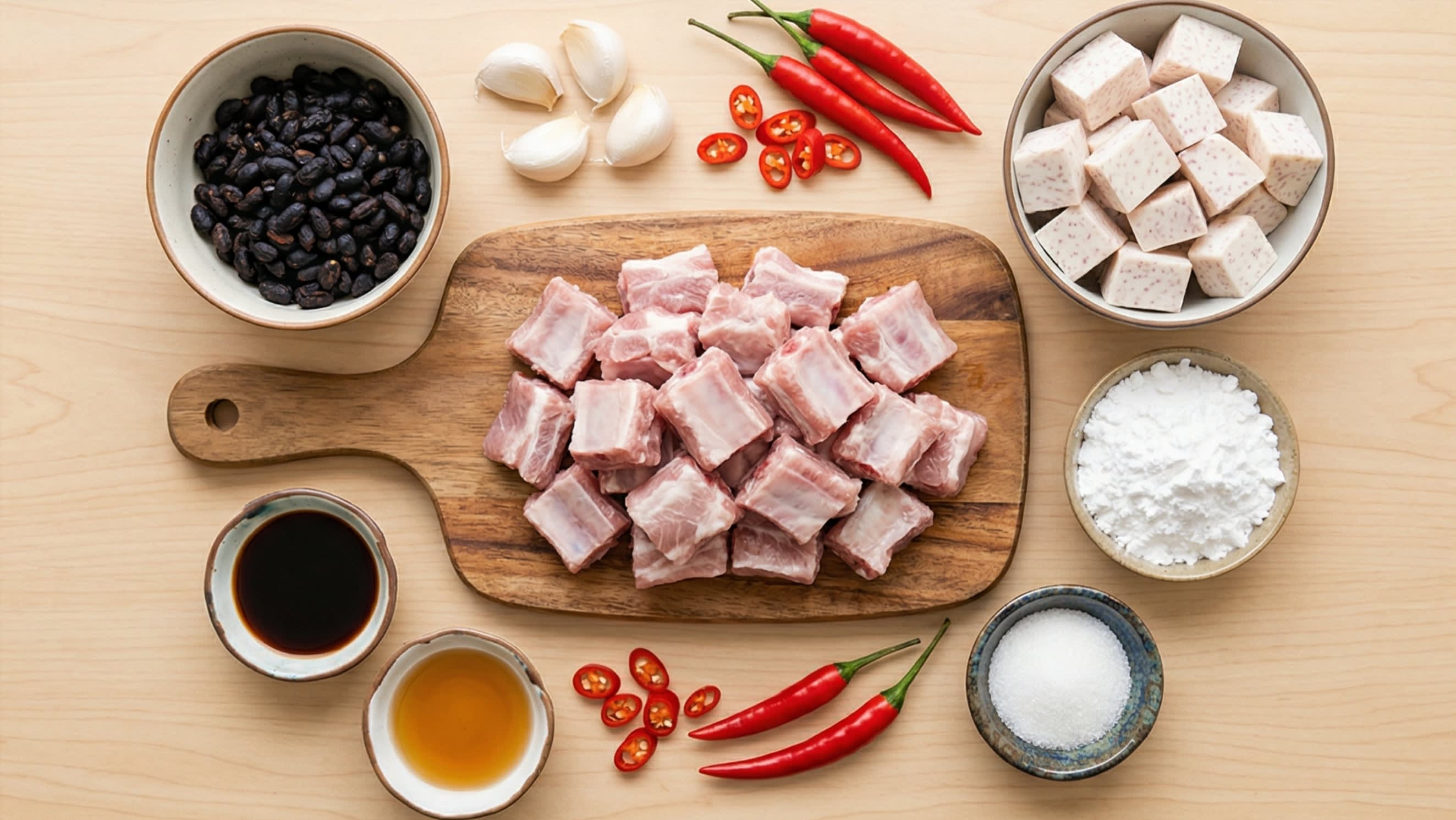
- Pork Spare Ribs: 1 lb (450g), chopped horizontally into 1-inch pieces.
- Taro Root (芋头): 1 cup, cubed (optional, but highly recommended as a base).
- Fermented Black Beans (豆豉): 1.5 tbsp, rinsed and chopped.
- Aromatics: 4 cloves garlic (minced), 1 fresh red chili (sliced).
- Marinade: 1 tsp sugar, 1/2 tsp salt, 1 tbsp light soy sauce, 1 tbsp Shaoxing wine, 1/4 tsp white pepper, 1.5 tbsp potato starch, 1 tbsp neutral oil.
🍳 Step-by-Step Instructions
- Wash: Massage the ribs with flour and water for two minutes. Rinse under cold water for 10 minutes until pale. Pat 100% dry.
- Sauté: Briefly sizzle your black beans and garlic in a pan with a tablespoon of oil until fragrant. Let this mixture cool completely.
- Marinate: Toss the ribs with the seasoning (except starch and oil). Massage well. Mix in the cooled black bean paste, then the starch, and finally the oil to seal. Marinate for 30 minutes in the fridge.
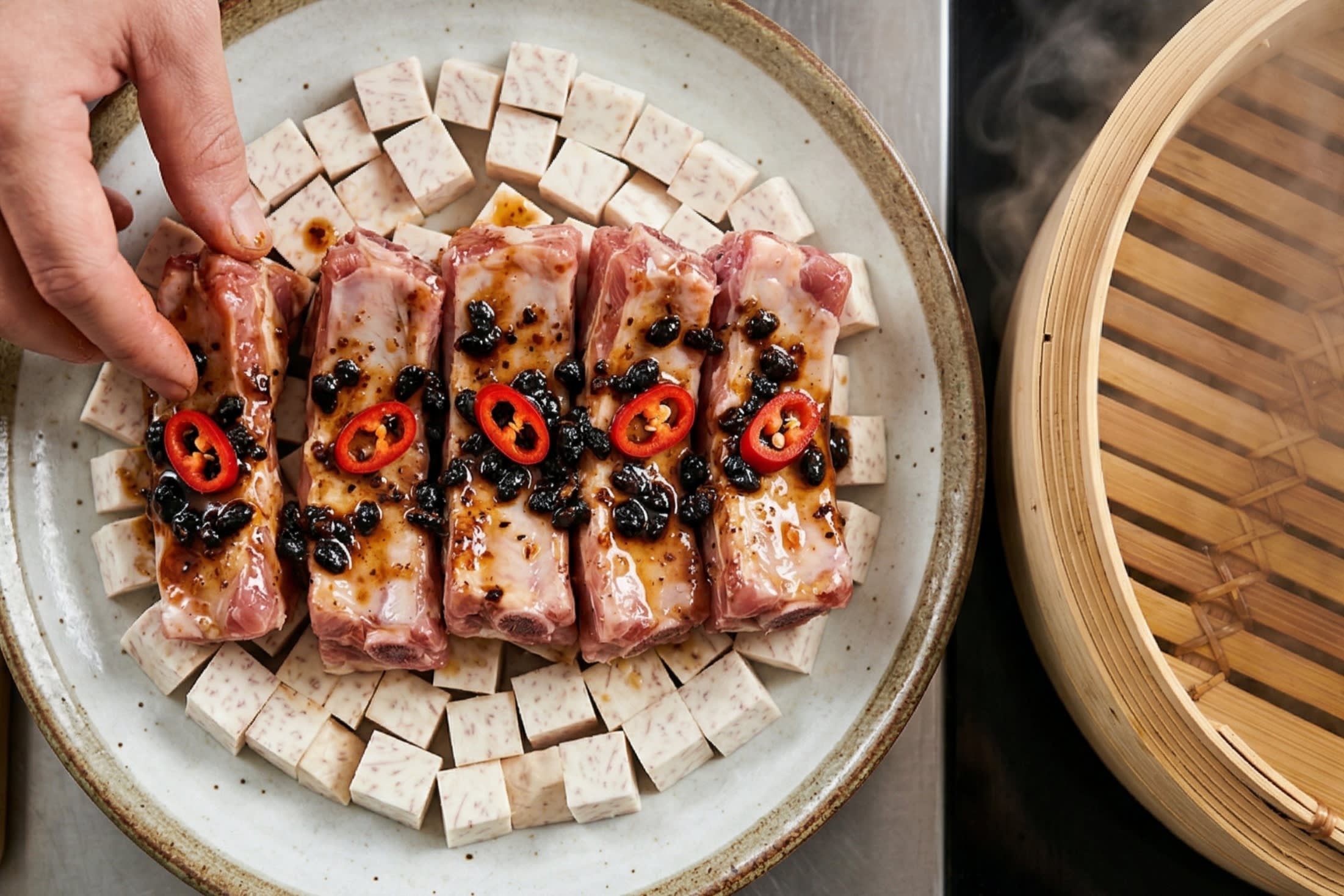
- Plating: Arrange your taro cubes on a heat-proof plate. Lay the ribs in a single layer on top. Do not stack them; proper airflow is the secret to even cooking.
- Steam: Place in a bamboo steamer over a furious, rolling boil. Steam for 12–15 minutes.
💡 Troubleshooting & Pro Tips
- Tough Meat? You likely piled the ribs too high. High-heat steam needs to circulate around each piece of meat to snap the fibers into that signature tender, bouncy state.
- Watery Sauce? Your ribs weren’t dry enough before marinating. If the starch can’t stick to the meat, it just creates a watery soup at the bottom of the plate.
- Hungry for more? If you love the complexity of Cantonese steaming, try perfecting the Authentic Chinese Steamed Whole Fish or learning the delicate layering techniques found in Authentic Cantonese Char Siu.
Disclaimer: As an Amazon Associate, ChinaCurator earns from qualifying purchases.