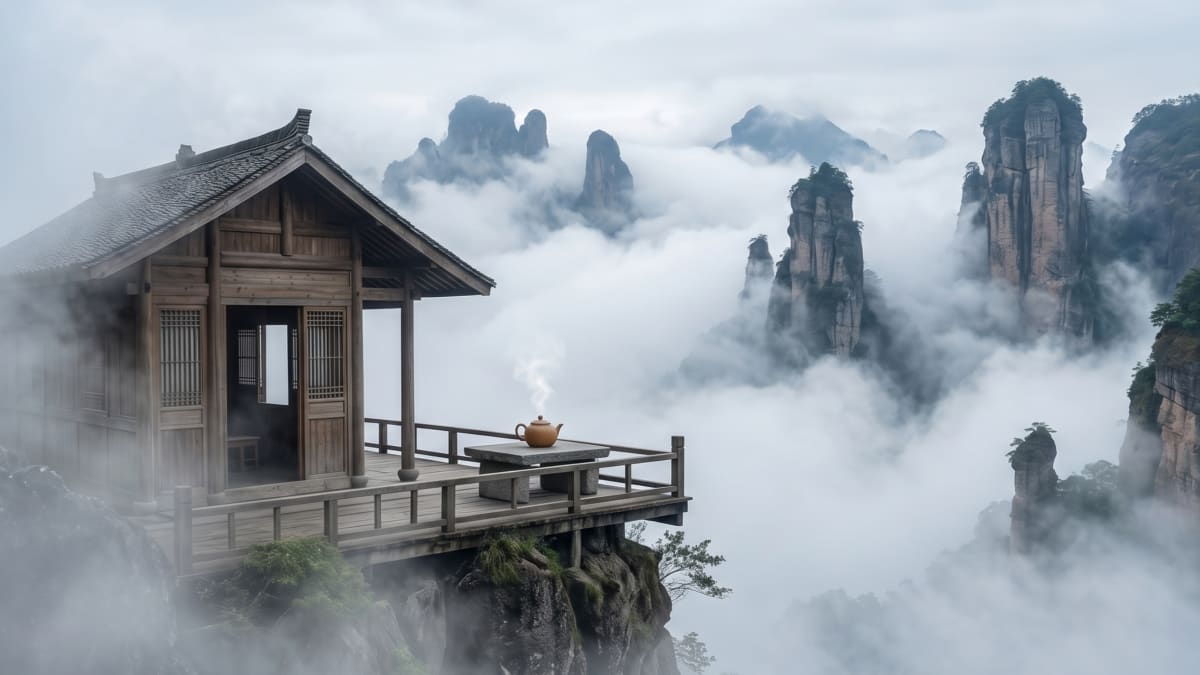
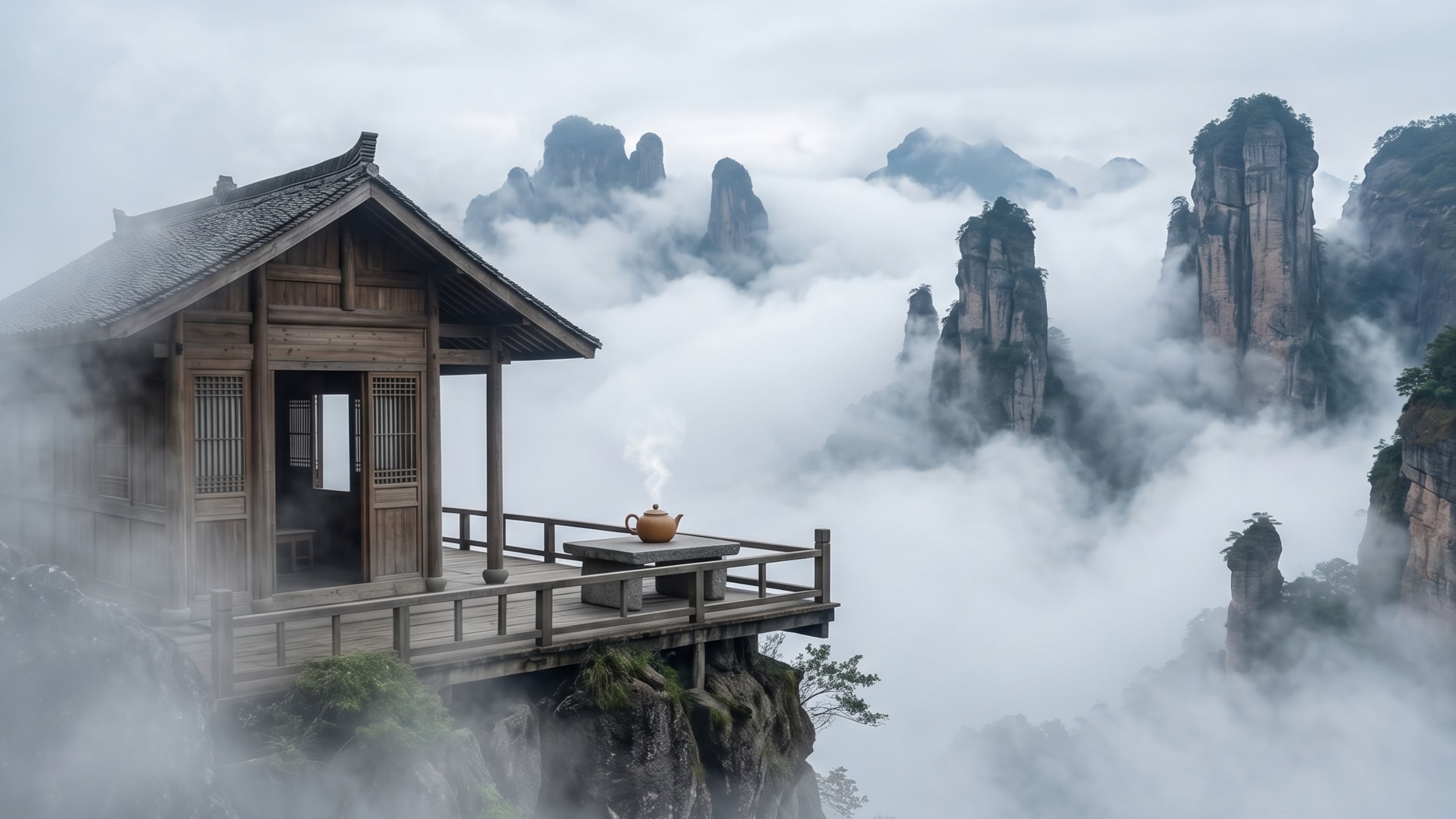
“In the heart of a 5A national park, where the mist clings to the peaks and the only sound is the wind through the pines, time doesn’t tick—it flows like hot water over aged leaves. In 2026, the Tea Ceremony (茶道 - chádào) has become the ultimate ‘Analog Escape’ for the digitally exhausted. As curators of the authentic, I invite you to put down your notifications and learn the grammar of silence in the teahouses of the Great Mountains.”
The 2026 Tea Renaissance: Why Silence is the New Luxury
In 2026, the way we travel has shifted dramatically. We are no longer merely chasing “Sights” to tick off a bucket list; we are chasing states of mind. The ‘Slow Travel’ (慢旅行 - màn lǚxíng) movement has fundamentally transformed China’s 5A mountain teahouses into secular cathedrals of calm. Whether you are a weary student seeking a mental reset before a major project or a world traveler looking to strip away the varnish of modern tourism, the mountain teahouse is the ultimate sanctuary where the relentless noise of daily life simply stops.
Thanks to advanced ‘Smart Serenity’ systems integrated into many of these protected areas, modern teahouses now employ sophisticated noise-canceling architectural designs and real-time ‘Quiet-Zone’ monitoring. This ensures your ‘Tea Meditation’ (茶禅 - cháchán) is never interrupted by the cacophony of a tour group. I’ve found that sitting in these high-altitude spaces, where the air smells of damp pine and charcoal, offers a clarity that no spa retreat can match.
- A Local Perspective: “现在的旅行,大家都想找回那种‘松弛感’ (sōngchígǎn)。在高山茶室里坐一个下午,看着云雾就在窗外飘,你会发现生活里的那些‘纠结’ (jiūjié) 瞬间都消失了。这种‘治愈感’ (zhìyùgǎn) 才是 2026 年最高级的消费,真的是绝绝子 (juéjuézi)。” (Travel today is all about finding that ‘relaxed feeling.’ Sitting in a mountain teahouse for an afternoon, watching the mist float outside the window, you’ll find all of life’s ‘obsessions’ vanish instantly. This ‘healing vibe’ is the most high-end luxury of 2026; it’s truly incredible.)
Step 1: Choosing Your Landscape (Selecting 5A Peaks)
Not all tea is created equal, and certainly, not all views are designed to induce the same depth of reflection. In 2026, three locations stand as the pinnacle of the Zen experience.
1. Mount Wuyi: The Rock of Ages (武夷山)
Located in Fujian, Wuyishan is the legendary home of Da Hong Pao (大红袍 - Scarlet Robe).
- The Vibe: The geography is rugged, dramatic, and intensely vertical. Many teahouses are carved directly into the granite cliffs, suspended between the river and the clouds.
- The Taste: ‘Yan Cha’ (岩茶 - Rock Tea) has a smoky, mineral-rich aftertaste that mirrors the ancient stone of the mountains themselves. If you are looking for more depth on this region, check out my recent guide on The Mist of Wudang: A 2026 Survival Guide to the ‘Karate Kid’ Mountains for context on mountain-based retreats.
2. West Lake: The Emerald Dream (杭州西湖/龙井村)
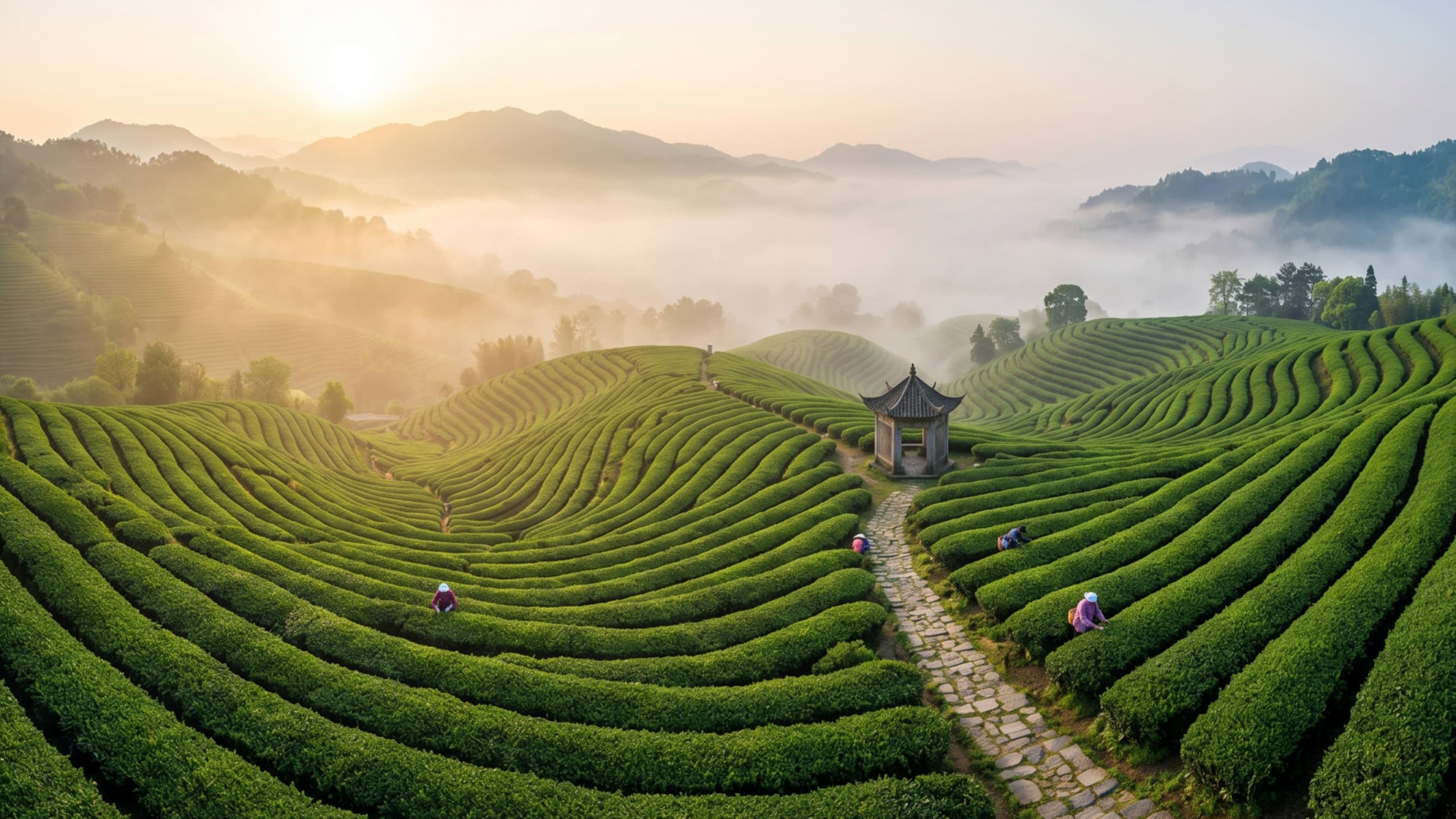
Hangzhou remains the undisputed capital of green tea. In 2026, the Longjing 5A Scenic Area has pioneered ‘Tea-Path Hiking’, where you traverse through the fragrance of billions of leaves.
- The Experience: I suggest finding a pavilion near Meijiawu (梅家坞). The water used here is sourced from local tiger springs, which renders the tea as clear as liquid jade. For a broader look at how Chinese tea culture is evolving, you might enjoy my deep dive into Beyond the Cup: A Curator’s Guide to Chinese Tea Culture.
Step 2: Tea 101 – The Ritual of Gongfu (功夫茶)
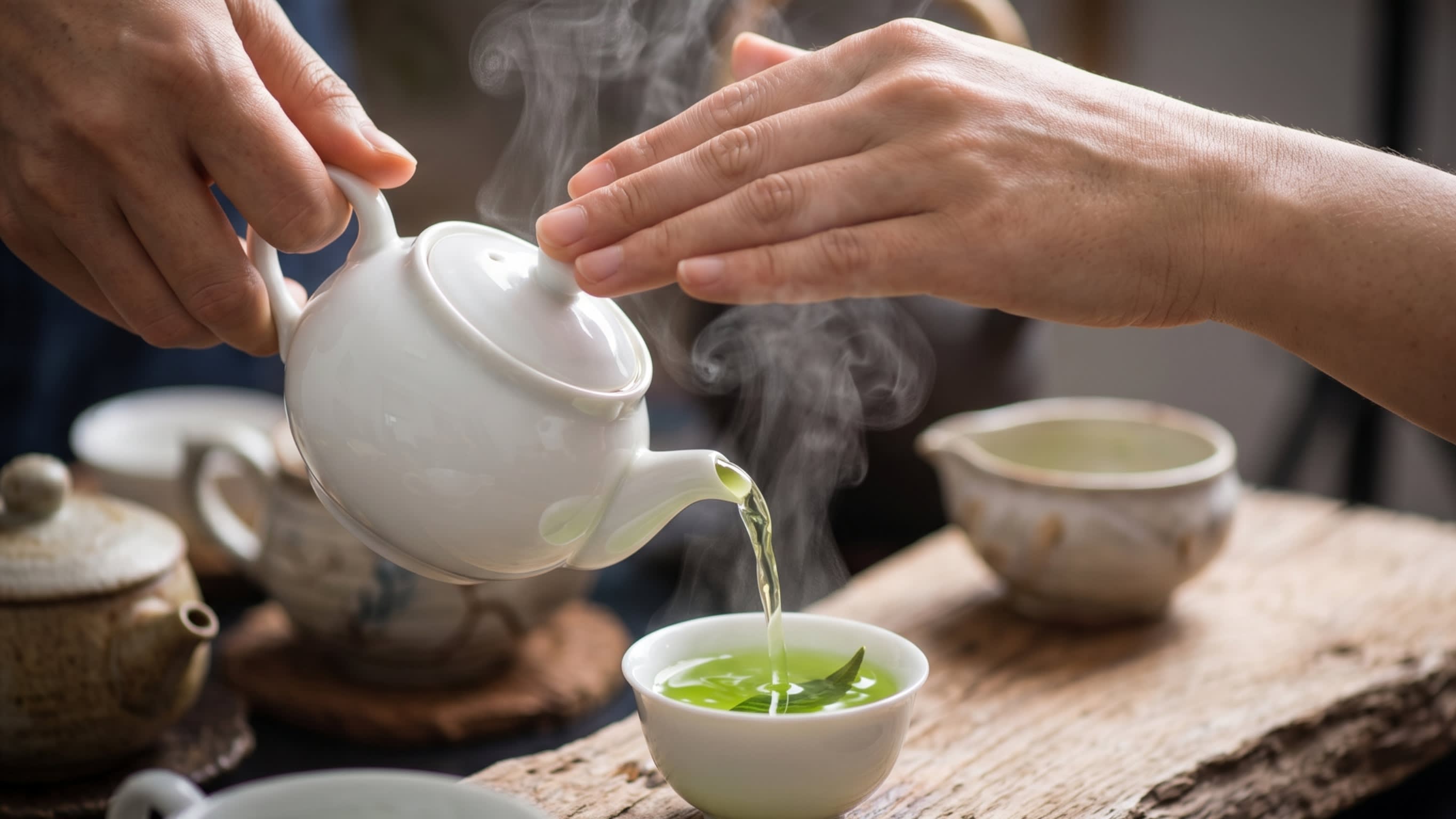
Gongfu Tea isn’t a performance for others; it is a dedicated performance for your own senses. To truly engage with the ritual, you must invest in the right quality porcelain gaiwan. We follow the ‘Four Constants’ (四常 - sì cháng):
- Warm the Cup (温杯 - wēn bēi): Rinse your porcelain with boiling water. This awakens the vessel and sanitizes the space.
- Wash the Leaves (洗茶 - xǐ chá): Pour hot water over the leaves and discard it immediately. This ‘wakes up’ the aroma.
- The Steep (冲泡 - chōngpào): Watch the leaves dance. In 2026, we call this the ‘Green Ballet’—it is a visual meditation.
- The Smell (闻香 - wén xiāng): Before you take your first sip, breathe in the steam trapped in the lid. This is 50% of the Zen.
Tea Experience Comparison Matrix (2026 Edition)
| Mountain (5A) | Signature Tea | Primary Vibe | Zen Level |
|---|---|---|---|
| Wuyishan (武夷山) | Oolong (Rock Tea) | Ancient & Powerful | ⭐⭐⭐⭐⭐ |
| Hangzhou (西湖) | Longjing (Green) | Elegant & Scholarly | ⭐⭐⭐⭐ |
| Huangshan (黄山) | Mao Feng (Green) | Majestic & Misty | ⭐⭐⭐⭐⭐ |
| Lushan (庐山) | Yun Wu (Cloud/Mist) | Poetic & Solitary | ⭐⭐⭐⭐ |
Fueling the Zen: The Art of Tea Pairing
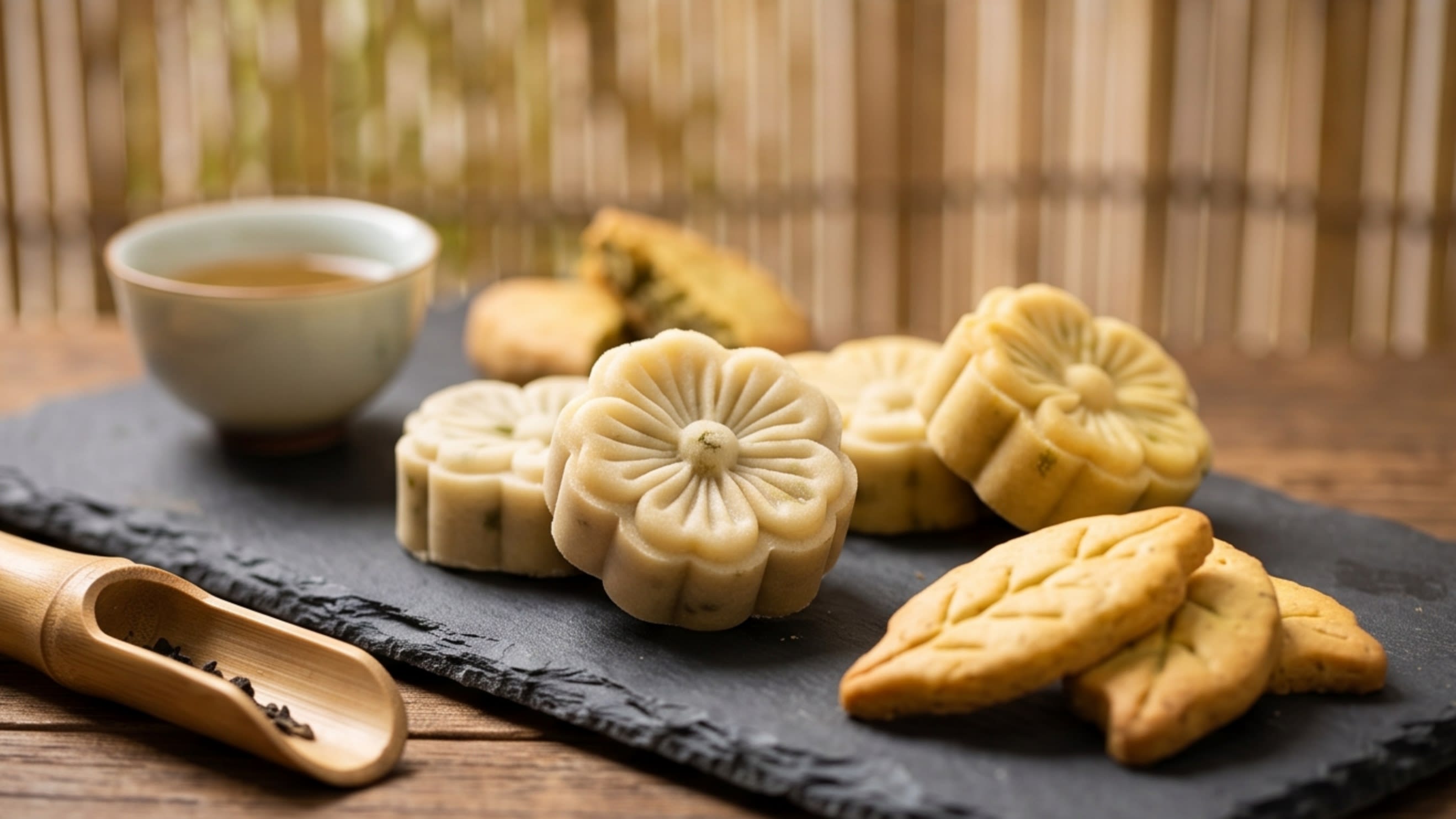
Never drink high-quality tea on an empty stomach—it can cause ‘Tea Drunkenness,’ a dizzying caffeine rush that ruins the meditative intent. In 2026, the 5A teahouse snack menu is a masterclass in ‘Aesthetic Dining’.
- Mung Bean Cakes (绿豆糕 - lǜdòugāo): The perfect melt-in-your-mouth contrast to a sharp Green Tea.
- Tea-Smoked Duck: In Wuyishan, the fatty, smoky duck skin perfectly complements the ‘Rock Rhyme’ (岩韵 - yányùn) of the heavy Oolong.
- Reflective Note: “吃茶点不能‘喧宾夺主’ (xuānbīn duózhǔ)。最正宗 (zhèngzōng) 的配搭是那种甜而不腻的小点心,它能把茶的‘回甘’ (huígān) 给勾出来。这种‘细节’ (xìjié) 才是喝茶的乐趣所在。” (Tea snacks shouldn’t ‘overshadow the host.’ The most authentic pairing is small, sweet-but-not-greasy snacks that draw out the tea’s ‘sweet aftertaste.’ These ‘details’ are where the true fun of drinking tea lies.)
Step 3: Entering the Flow – The Interior Atmosphere
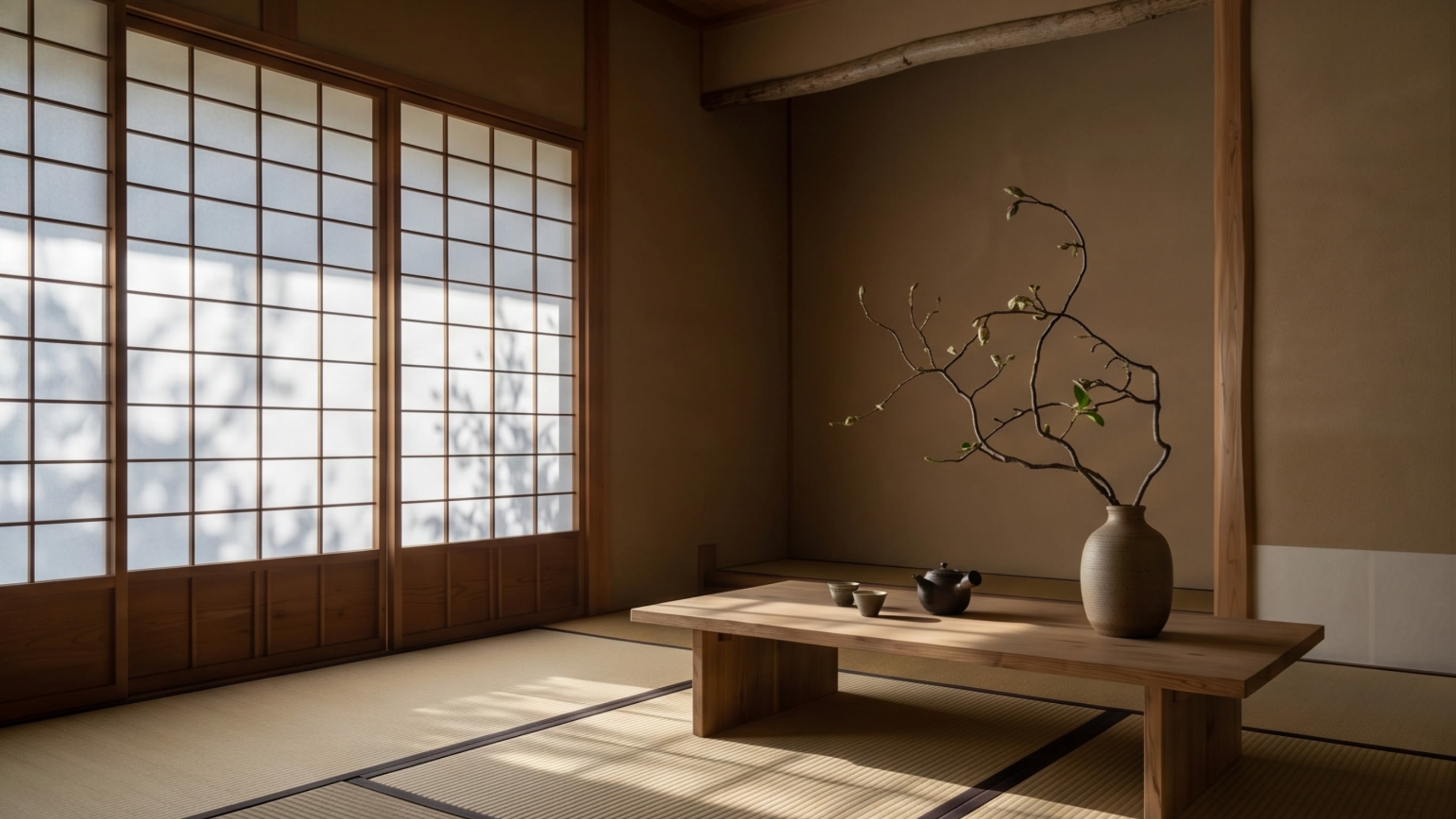
In 2026, the design of high-end mountain teahouses has truly embraced ‘Wabi-Sabi with Chinese Characteristics.’
- The Sensory Experience: The smell of slowly burning sandalwood incense, the coarse texture of natural stone floors underfoot, and the framing of landscapes through minimalist circular windows.
- The ‘Digital Fast’: Most 5A teahouses now encourage guests to place their phones in a wooden ‘Bambu Box’ at the table. To see the world through a camera lens is one thing; to see it through the steam of a cup of tea is quite another. It is about reconnecting with the physical reality of the mountain.
Traveler’s Language Survival Table (Tea Edition)
| English | Chinese & Pinyin |
|---|---|
| I’d like a pot of Da Hong Pao. | 我要一壶大红袍。 (Wǒ yào yī hú dàhóngpáo.) |
| This tea has a very long aftertaste. | 这茶的回甘很好。 (Zhè chá de huígān hěn hǎo.) |
| Please show me the ritual. | 请帮我演示一下茶艺。 (Qǐng bāng wǒ yǎnshì yīxià chá yì.) |
| It’s very peaceful here. | 这里非常安静。 (Zhèlǐ fēicháng ānjìng.) |
| The aroma is amazing! | 这香味真是‘绝了’! (Zhè xiāngwèi zhēnshì 'jué le'!) |
Final Thoughts from the Curator
Drinking tea in a mountain teahouse in 2026 isn’t just a tourist activity—it’s a necessary survival skill. It is the ability to find a quiet center in a world that never stops moving. Whether you are overlooking the sharp, karst peaks of Wuyi or the gentle bamboo forests of Hangzhou, remember: the tea is just a tool. The Zen is already inside you, waiting to be quieted.
My best advice? Do not rush to finish the pot. Watch the leaves unfurl, listen to the rhythmic pouring of the water, and let the mountain breathe through you. In China, the best view isn’t what you see; it’s how you feel after the third cup.
🍃 Zen Traveler’s Checklist
- Booking: Most 5A cliffside teahouses in 2026 require a 24-hour reservation via local WeChat mini-programs.
- HSR Travel: Use the Beijing-Fuzhou HSR, often called "The Tea Corridor." It stops directly at Wuyishan Station.
- Attire: Opt for loose, natural fabrics like linen or cotton. You will often be asked to remove your shoes at the entrance.
- Etiquette: When your host pours your tea, tap your index and middle fingers twice on the table to say 'Thank You'—this is the traditional 'Finger Kowtow' (扣指礼 - kòuzhǐ lǐ).
Disclaimer: As an Amazon Associate, ChinaCurator earns from qualifying purchases.