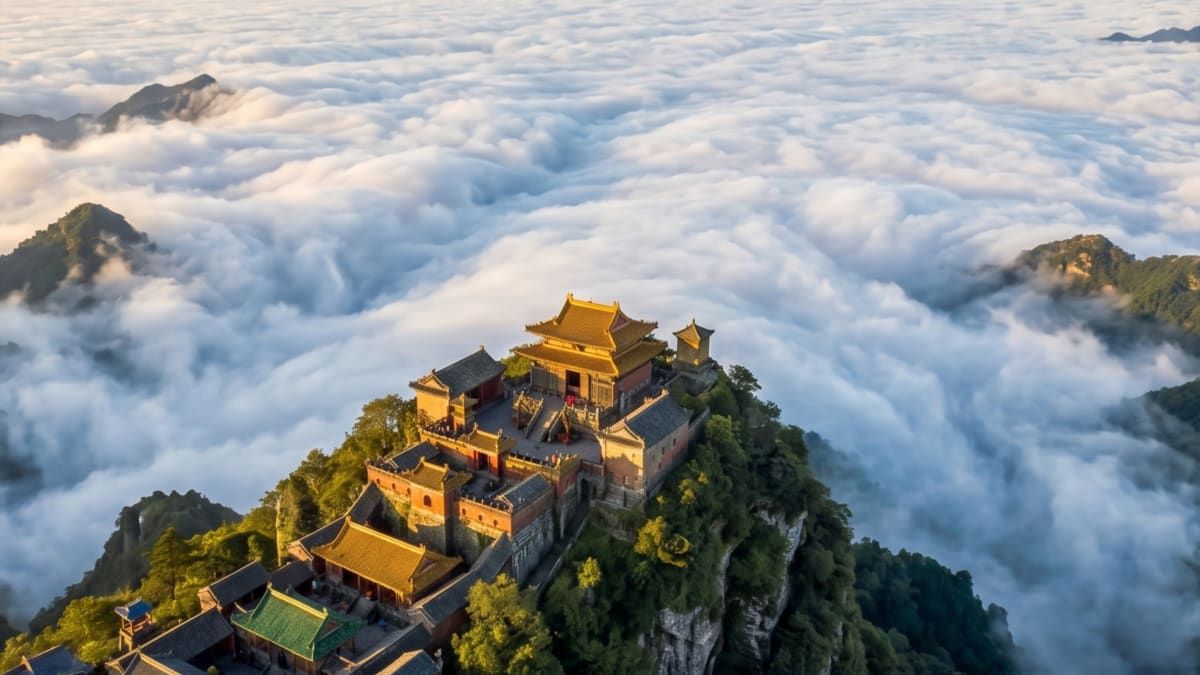

In the 2010 remake of The Karate Kid, there is a scene that captured the global imagination: a young boy drinking from a mystical well on top of a mountain, surrounded by hundreds of disciples practicing Kung Fu in perfect, synchronized harmony. That mountain is Wudang (武当山 - wǔ dāng shān). In 2026, it remains a sanctuary for those seeking internal power and a retreat from the digital noise of the modern world. But conquering Wudang requires more than just spirit; it demands strategy.
When I first planned my pilgrimage to these peaks, I naively thought I could just show up and wander. I quickly learned that Wudang is a complex ecosystem of Taoist philosophy, steep stone staircases, and mist-covered history. Here is my curator-approved survival guide to the heart of Taoism.
Phase 1: The Modern Gateway – Shiyan and Beyond
Wudang is no longer the isolated, inaccessible retreat it was in the centuries past. In 2026, the Wudangshan High-Speed Rail Station (武当山西站 - wǔ dāng shān xī zhàn) acts as a high-tech portal, connecting you to the bustling transit hubs of Wuhan in under two hours and the ancient capital of Xi’an in about 90 minutes.
- The Arrival: Once I stepped off the bullet train, I headed straight for the direct electric shuttle bound for the visitor center. Do not waste time haggling with unofficial taxis; the official shuttle system is efficient, clean, and reliable.
- The Smart Entry: You MUST book your entry timeslot at least three days in advance via the “Wudang Mountain” WeChat mini-program. As a foreigner, my biggest hurdle was navigating the digital interface. I recommend heading directly to the Manual Entry Channel (人工通道 - rén gōng tōng dào). The staff there are now remarkably well-trained to handle international passports.
- Native Insight: “别想在这里‘随到随买’ (suí dào suí mǎi),特别是周末和节假日。” (Don’t think about ‘buying on arrival’ here, especially on weekends.) I learned this the hard way during a previous trip; if you haven’t secured your digital reservation, the security guard—no matter how politely you smile—will not let you through the turnstile. Always plan ahead to avoid bái pǎo yī tàng (a wasted trip).
Phase 2: The Cliff Pilgrimage – Nanyan Temple (南岩宫)

If you are here for the Karate Kid vibes, Nanyan Temple is your Ground Zero. This “South Cliff” temple is where the most dramatic, vertigo-inducing cliff-side scenes were filmed.
When I first stood on those narrow, worn stone paths, I felt a deep sense of humility. The way the temple structures are literally fused into the vertical cliff face is mind-blowing. It is a 5A-rated testament to human ingenuity and spiritual devotion. As I looked out over the abyss, I understood why the filmmakers chose this specific spot to portray the birthplace of internal power.
- Curator’s Tip: For those serious about trekking, ensure you have a pair of sturdy hiking boots with excellent traction. The stone paths here are slick with constant mountain mist and can be treacherous if you aren’t prepared.
- Native View: “南岩宫 (nán yán gōng) 是武当山的‘颜值担当’ (yán zhí dān dāng)。” (Nanyan Temple is the ‘beauty anchor’ of Wudang.) The staggered architecture built into the side of the mountain is inherently cinematic. Standing there, the silence is so profound that the only sound you hear is the rustling of pine needles in the wind.
Phase 3: The Imperial Grandeur – Purple Cloud Palace (紫霄宫)

While Nanyan feels raw and elemental, the Purple Cloud Palace (紫霄宫 - zǐ xiāo gōng) exudes imperial Taoist grandeur.
This complex is massive, characterized by vibrant green roof tiles and vermilion walls, all cradled within a lush, U-shaped valley. It is a “Zen Seeker’s” dream. During my last visit, I found myself sitting in the courtyard for over an hour, just watching the way the sunlight filtered through the ancient cedars.
- The Experience: This is one of the few places where you can witness live Taoist Rituals (道教仪式 - dào jiào yí shì). The haunting, melodic chanting, layered over the deep resonance of bells, offers an auditory immersion that no recording could ever replicate.
If you are a photography enthusiast looking to capture the “soul” of the mountain, keep your camera lens cleaning kit handy. The moisture in the air here is a constant presence, and you will need to wipe your gear frequently to get that crisp, clear shot of the palace roof against the mist.
Phase 4: The Internal Power – Tai Chi with the Masters

Wudang is the fabled birthplace of Tai Chi (太极 - tài jí). Unlike the external, aggressive power of Shaolin Kung Fu, Wudang’s focus is on internal harmony and the effortless flow of energy.
- The Morning Practice: In 2026, several smaller temples offer “Short-term Immersion” (短期体验 - duǎn qī tǐ yàn) classes. Spending two hours with a Taoist master, moving in slow, rhythmic sync with the mountain air, was a highlight of my travels.
- The Patina of Patience: Mastery here cannot be rushed. It is much like the time it takes to develop a rich, lustrous patina on a traditional natural wood accessory. You have to be willing to hold the pose, breathe, and let the discipline seep into your bones.
- Native View: “在武当山,‘慢’才是王道。” (In Wudang, ‘slow’ is the golden rule.) Finding a quiet corner to watch the masters practice is a form of meditation in itself. That ancient concept of yǐ róu kè gāng (overcoming hardness with softness) will make your restless, modern heart quiet down instantly.
Phase 5: The Ascent – The Golden Summit (金顶 - jīn dǐng)
To reach the Golden Summit, you have two choices: the grueling “Pilgrim’s Path” or the modern cable car. If you want the full “Karate Kid” experience, you have to take the stairs. But be warned: it is a vertical test of endurance.
Wudang Ascent Comparison Matrix (2026)
| Method | Effort Level | Best For | Time |
|---|---|---|---|
| Cable Car | 🟢 Low | Families / Photography | 20 Mins |
| The Hundred Steps | 🟡 Medium | Casual Hikers | 1.5 Hours |
| The Ancient Trail | 🔴 Hardcore | Determined Pilgrims | 3-4 Hours |
A Taste of the Mountain: Wudang Dao-zhai (道斋)

Wudang food is an extension of Taoist philosophy: balance, simplicity, and purity.
During my trek, I relied on my trusty insulated water bottle to keep my herbal tea hot throughout the chilly, damp climbs. When you finally reach the canteens near the summit, you are treated to Wudang Bamboo Shoots (武当竹笋 - wǔ dāng zhú sǔn) and wild mountain mushrooms. These dishes aren’t heavy with oil or spice; they taste like the mountain itself.
- Native View: “这里的斋饭可能不像外面的大餐那么‘重口味’ (zhòng kǒu wèi),但胜在‘鲜’ (xiān)。” (The vegetarian food here might not be ‘heavy-flavored’ like meals outside, but it wins on ‘freshness.’) I always leave the canteen feeling light and clear-headed.
Final Thoughts: Finding Your Rhythm
Wudang rewards the patient traveler. Whether you are following in the footsteps of martial arts legends or seeking the deep wisdom of the Tao, the mountain will meet you exactly where you are. In 2026, technology makes the ascent easier, but it still takes a quiet mind to truly “see” the mist.
My advice? Stay overnight on the mountain if you can. Wake up before the cable cars start humming, walk out toward Nanyan Temple while the world is still in shadow, and listen to the silence. Wudang is more than just a 5A scenic spot; it is a rhythm. If you’re interested in other spiritual retreats, I highly recommend checking out my guide on the Monks, Mist, and Meditation in Shaolin.
🥋 Taoist Traveler's Survival Checklist
- Fog Warning: Wudang is famous for its yún hǎi (sea of clouds). If the mist is too thick, don't be discouraged—it’s part of the mountain’s magic.
- Footwear: Even if you take the cable car, you'll be walking on uneven, historic stone stairs. Bring shoes with high-performance grip.
- Monkey Etiquette: The local macaques are cheeky. Keep your snacks tucked away in a secure daypack and never open plastic bags in their line of sight.
- Booking: HSR tickets to Wudangshan West sell out quickly during festival seasons. Book at least 14 days in advance.
Disclaimer: As an Amazon Associate, ChinaCurator earns from qualifying purchases.