🌯 Introduction: The Original “Chinese Burrito”
When you ask people in the West what their favorite fun, interactive, and messy Chinese takeout dish is, the answer is almost always Moo Shu Pork (木须肉 - Mùxū Ròu).
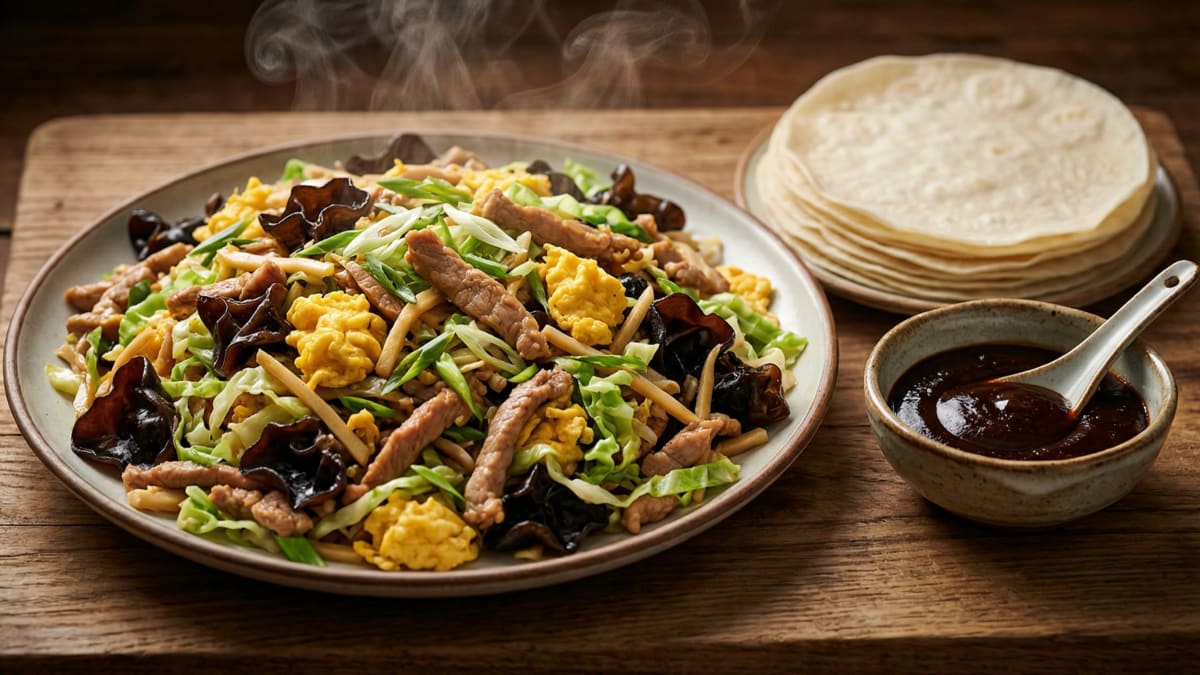
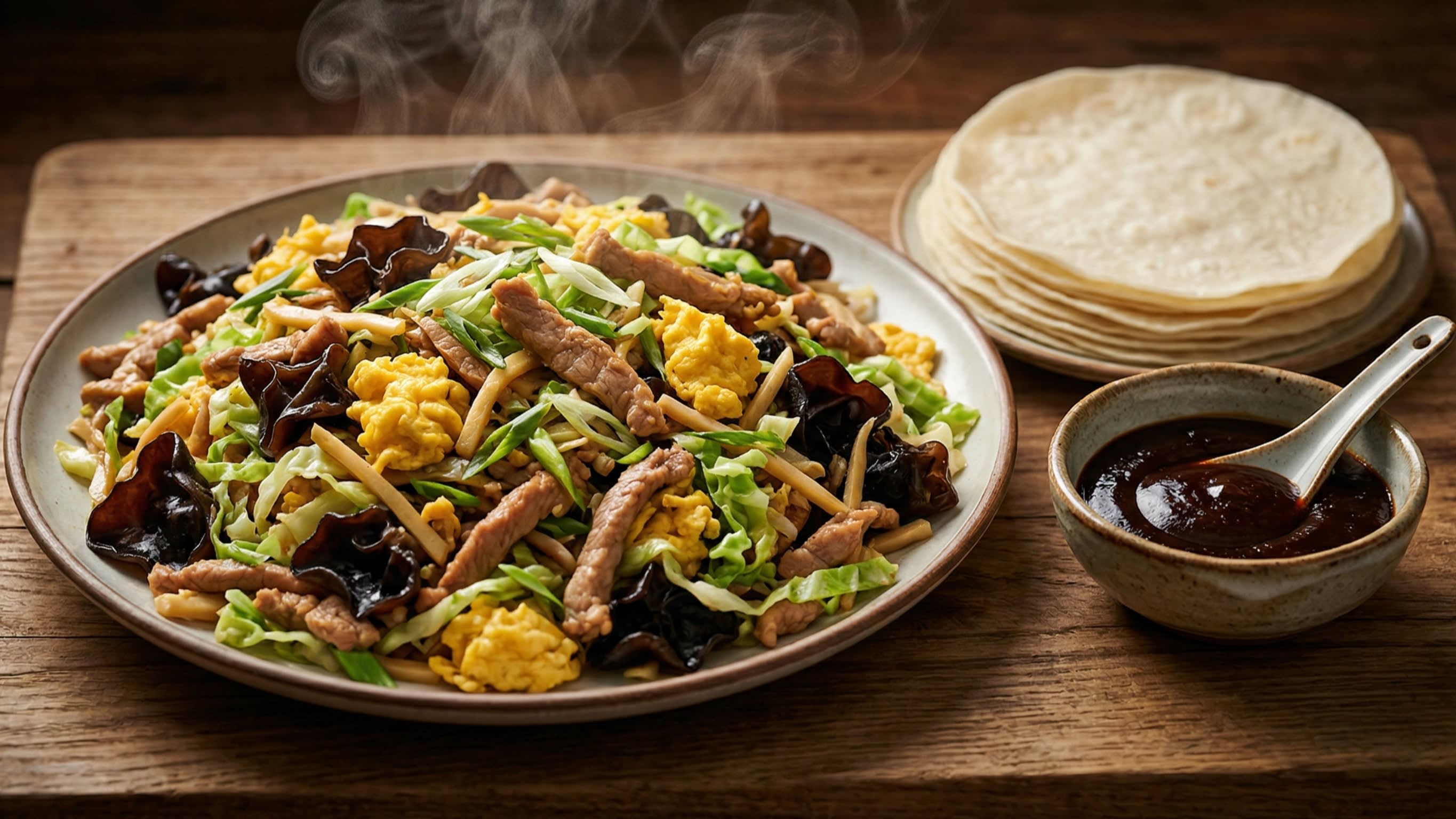
Affectionately known as the “Chinese Taco” or “Chinese Burrito,” this dish is an absolute textural masterpiece. It is a vibrant, earthy, and deeply savory stir-fry consisting of velvety strips of pork, incredibly fluffy scrambled eggs, crunchy cabbage, and snappy black mushrooms.
But the real magic happens at the dining table. You take a warm, paper-thin wheat wrapper known as a Mandarin Pancake (春饼 - Chūnbǐng), smear a generous layer of thick, sweet, and umami-rich Hoisin sauce across it, pile the hot stir-fry in the center, and roll it up into a magnificent, hand-held flavor bomb.
If you have ever tried to make this at home, you might have run into the classic stir-fry pitfalls: the pork turns tough, the eggs become rubbery, or the vegetables release so much water that your beautiful pancake turns into a soggy, disintegrating mess.
Today, we are going to unlock the restaurant secrets to a flawless, dry, and incredibly flavorful Moo Shu Pork. We will decode the mysterious authentic ingredients, master the art of protein velveting, and show you how to build the perfect roll. If you enjoy this, you should also try my Authentic Cantonese Char Siu (Chinese BBQ Pork) for another incredible pork experience.
🌸 The Etymology: What Does “Moo Shu” Actually Mean?
Before we start chopping, let’s explore a beautiful piece of Chinese culinary poetry. What exactly is a “Moo Shu”?
The dish originated in Shandong province in northern China. In traditional Chinese, the dish was originally called Mùxī Ròu (木樨肉). “Muxi” is the ancient Chinese word for the Sweet Osmanthus flower, a tiny, vibrantly yellow, and highly fragrant blossom.
Because traditional northern Chinese culture sometimes considered it taboo to say the word “egg” (due to historical superstitions or local slang), chefs named the dish after the Osmanthus flower instead. Why? Because when you vigorously stir-fry the eggs, they break apart into thousands of bright yellow, fluffy pieces that beautifully resemble a shower of blooming golden Osmanthus flowers! Over time, regional accents shifted the pronunciation, and “Muxi” morphed into the “Moo Shu” we know today.
🍄 Decoding the Textures: Wood Ears and Golden Needles
A perfect Moo Shu Pork is an exercise in textural contrast. While Western takeout versions often rely heavily on cheap cabbage, an authentic version requires a specific matrix of traditional ingredients.
1. Wood Ear Mushrooms (木耳 - Mù’ěr)
This is the mysterious, dark, crinkly ingredient you see in your takeout box. It is a type of edible fungus that grows on the bark of trees. While it doesn’t have a strong flavor of its own, it is absolutely essential for its texture. It provides a unique, gelatinous, yet snappy crunch that cannot be replicated by regular button mushrooms. You buy them dried—often available as dried wood ear mushrooms—and soak them in warm water until they magically expand to five times their size.
2. Dried Lily Flowers (黄花菜 - Huánghuācài)
Also known as “Golden Needles,” these are the dried, unopened buds of the daylily flower. When rehydrated, they add a delicate, earthy, and slightly tart, musky flavor to the stir-fry, along with a pleasant chewiness. While optional in quick takeout, they are mandatory for true authenticity.
🔬 The Science of the Stir-Fry
To avoid a watery, soggy disaster, you must understand how to sequence your cooking in the wok.
- The Egg Sponge: You must cook the eggs first. Scramble them quickly in hot oil until they are fluffy and golden, then remove them. This ensures they don’t turn into rubber, and allows them to act like a sponge, soaking up the savory sauce later.
- Velveting the Pork (上浆 - Shàngjiāng): You cannot just throw raw pork into the wok. You must coat it in a mixture of soy sauce, water, and cornstarch. This locks in the moisture, ensuring the pork remains velvety and tender instead of dry and chewy.
- Dry Frying the Veggies: Cabbage contains a massive amount of water. You must stir-fry the vegetables aggressively over high heat to drive off the moisture. If your wok is not hot enough, the vegetables will boil in their own juices, ruining the dish.
🛒 Ingredients List
| Category | Ingredients |
|---|---|
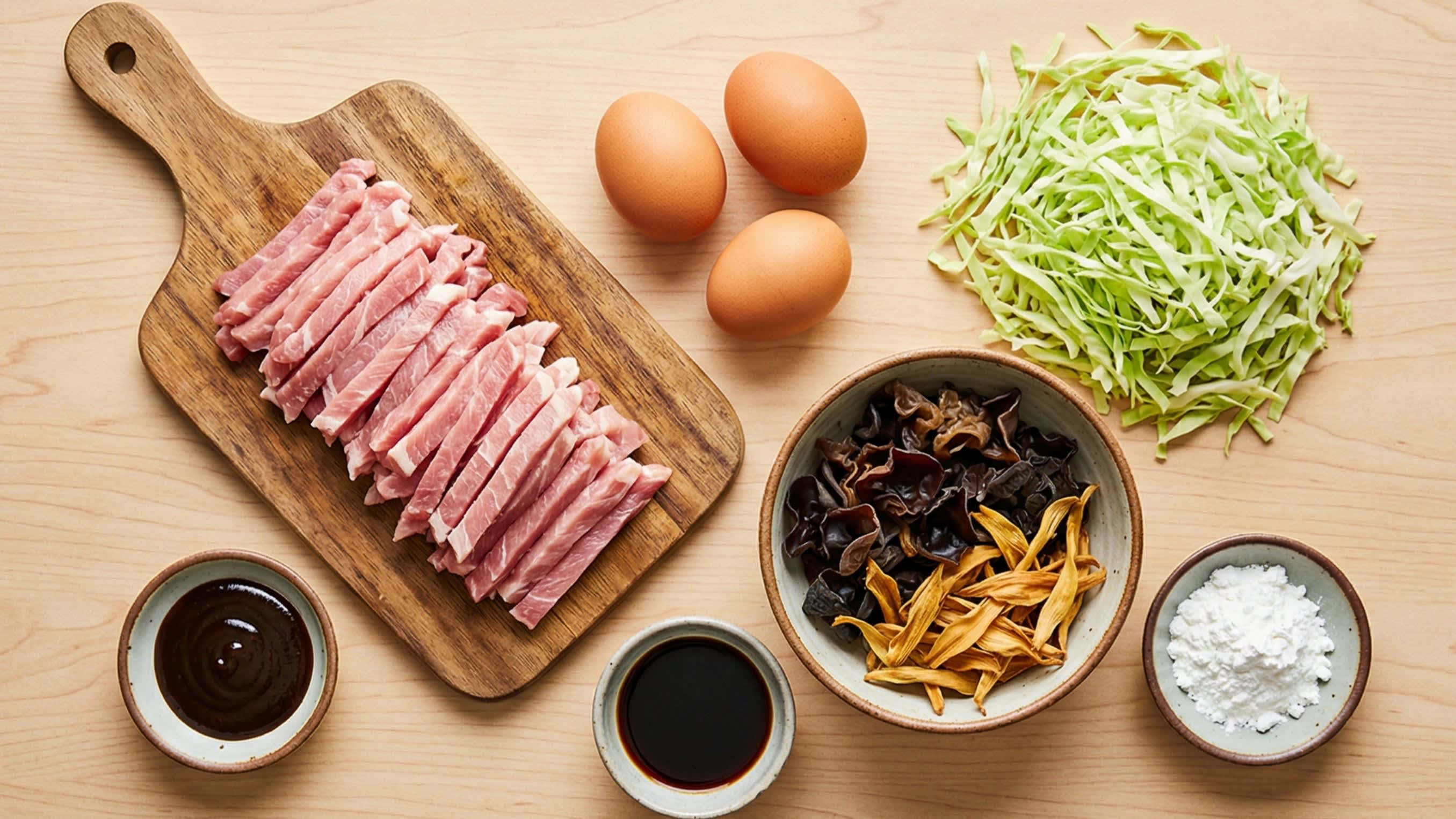
| Pork & Marinade | 1/2 lb Pork Loin, 1 tbsp light soy sauce, 1 tsp Shaoxing wine, 1 tsp cornstarch |
| Eggs | 3 large eggs, pinch of salt, 1/4 tsp toasted sesame oil |
| Vegetables | 3 cups shredded cabbage, 1/2 cup rehydrated wood ear, 1/4 cup lily flowers |
🍳 Step-by-Step Instructions
1. Rehydrate the Fungi: Place the dried mushrooms and lily flowers in a bowl of warm water for 20 minutes until fully expanded. Rinse thoroughly, remove tough stems, and slice the mushrooms into thin strips.
2. Velvet the Pork (上浆): Place the sliced pork in a bowl. Add the soy sauce, Shaoxing wine, water, and cornstarch. Massage the liquids into the meat until a sticky paste forms. Fold in a splash of oil and rest for 15 minutes.
3. Scramble the Eggs: Heat oil in a wok. Pour in beaten eggs and scramble into large, fluffy curds. Remove and set aside.
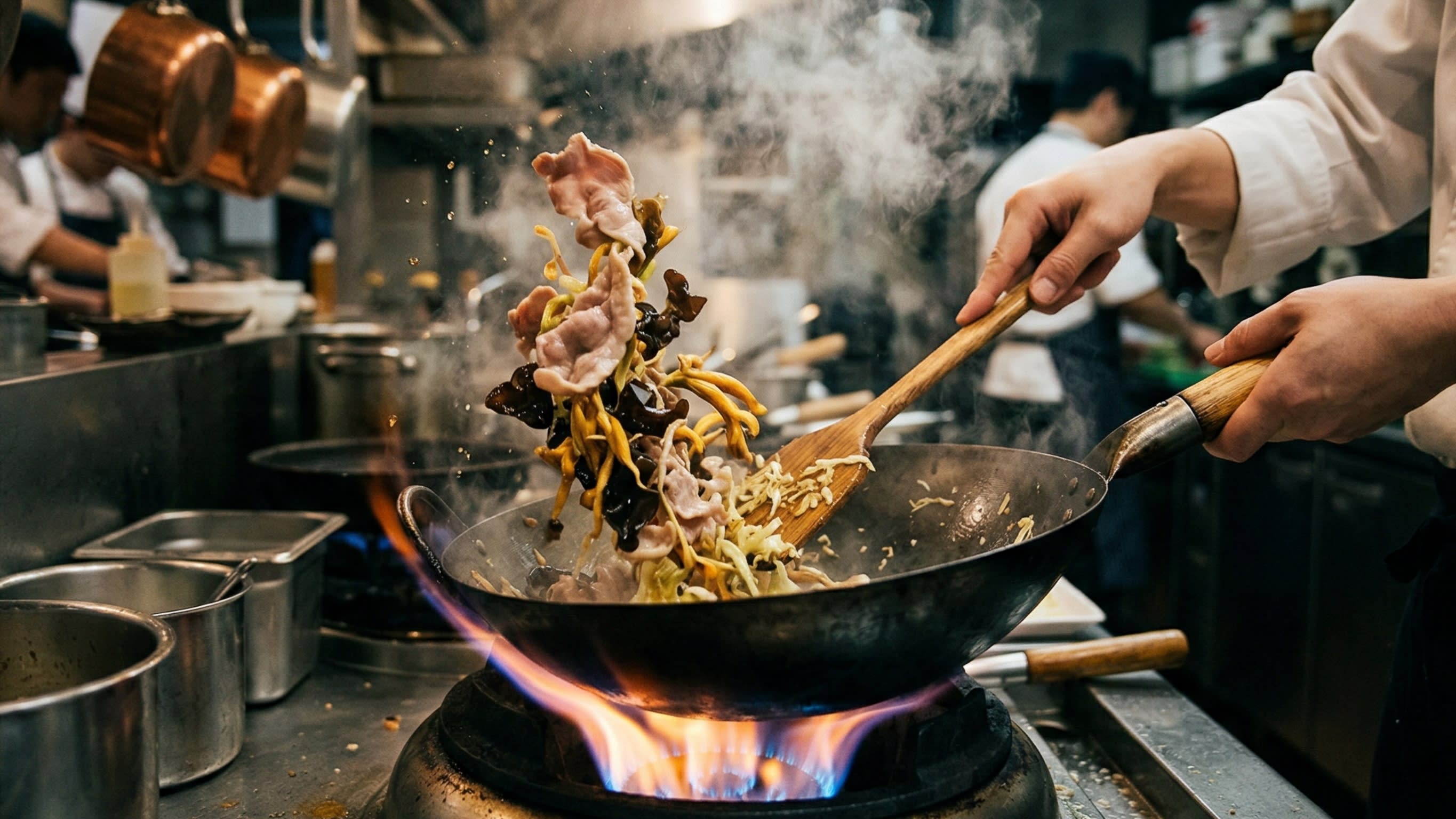
4. Sear and Stir-Fry: Sear the marinated pork on high heat for 2 minutes until 90% cooked; remove. Add ginger, garlic, cabbage, and fungi to the hot wok. Stir-fry aggressively for 2 minutes to blister the cabbage without making it soggy.
5. The Final Reunion: Return the pork and eggs to the wok. Pour in your sauce mixture (soy sauce, oyster sauce, sugar, white pepper, and toasted sesame oil). Toss for 60 seconds until the sauce coats everything. Finish with fresh scallions.
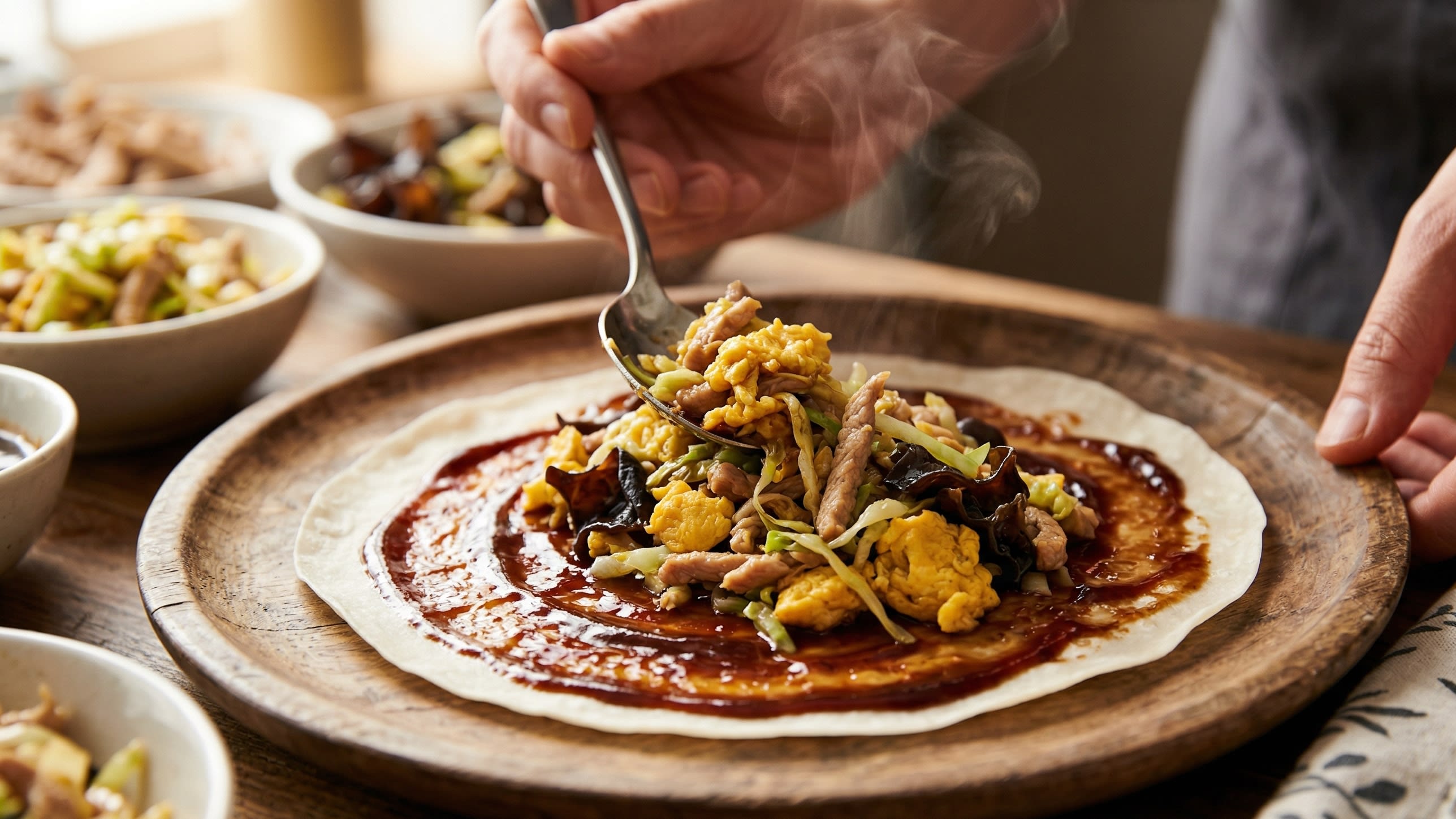
6. Assemble: Steam your Mandarin pancakes until pliable. Smear them with Hoisin sauce, pile on the pork, and roll tight.
💡 Troubleshooting & Pro Tips
- Can’t find Mandarin Pancakes? If you cannot find them at your local Asian market, small flour tortillas work well as a substitute—just ensure they are steamed or lightly toasted until soft.
- The stir-fry is too wet! This usually happens if the wok heat wasn’t high enough or the sauce was added too early. Always ensure your cabbage is stir-fried at the highest heat possible to evaporate excess liquid.
- Sweet Bean Sauce vs. Hoisin: While Hoisin is the standard for takeout, traditionalists prefer Tiánmiànjiàng (甜面酱 - Sweet Bean Sauce). It offers a deeper, more savory, and fermented profile compared to the sweeter Hoisin.
Disclaimer: As an Amazon Associate, ChinaCurator earns from qualifying purchases.