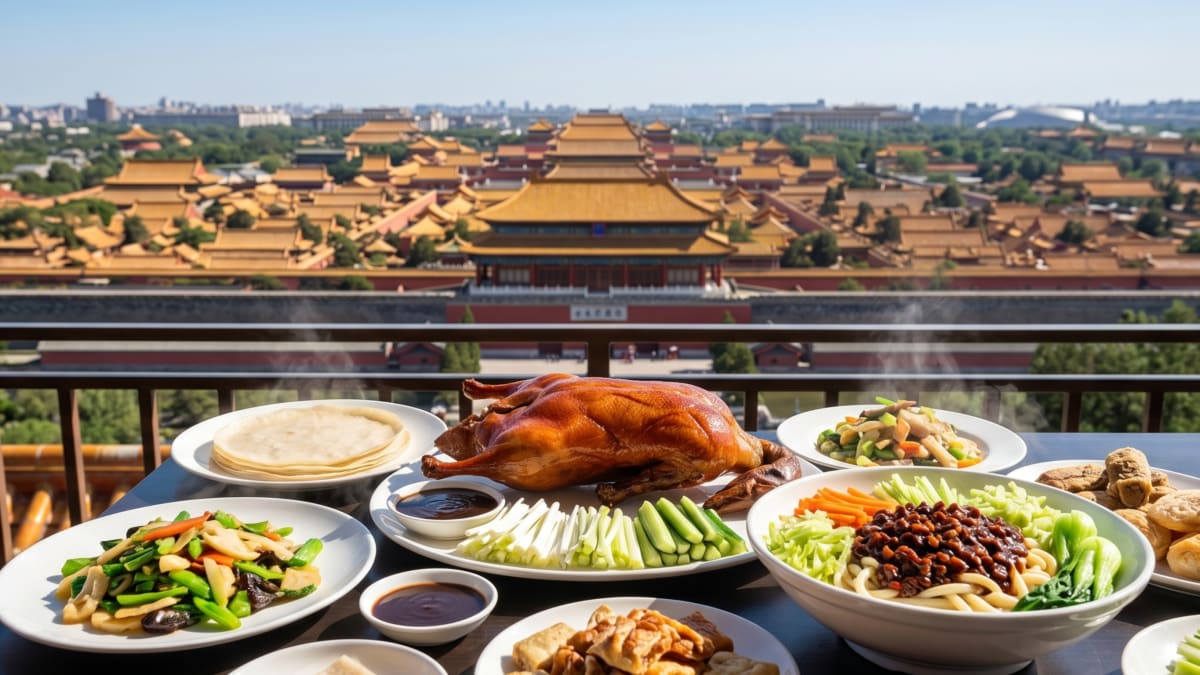

Beijing is a city of profound layers—monumental, thousand-year-old history on the surface, and an obsessive, bubbling cauldron of flavor tucked into every hidden alleyway. In 2026, the capital’s 5A landmarks, like the majestic Palace Museum (故宫 - gùgōng) and the winding serpent that is the Great Wall (长城 - chángchéng), are more accessible and technologically integrated than ever before.
However, there is a golden rule I have learned through years of trekking these sites: the closer you are to the official ticket booth, the more likely you are to encounter overpriced, lackluster food that serves no purpose other than to fill a gap. As curators of authentic experiences, my team and I believe your palate deserves the same respect as your eyes. Here is my personal survival guide to eating like a local in the shadows of giants.
Phase 1: The Forbidden City – Duck and Rituals
After navigating the vast, sun-drenched courtyards of the Palace Museum (故宫 - gùgōng)—a trek that can easily span three hours and thousands of steps—the sheer scale of the architecture will leave you breathless and famished.
The Peking Duck Quest (北京烤鸭 - běijīng kǎoyā)
Do not be tempted by the generic “Duck” signs plastered along the bustling Qianmen Street. In 2026, those in the know drift toward the East Gate area. My top recommendation remains Siji Minfu (四季民福). It is legendary for a reason, specifically their “Duck with a View,” which allows you to watch the sunset over the moat while you eat.
Pro-Tip for 2026: Technology is your best friend. Use the Dianping (点评) app to join the digital queue the moment you pass the Meridian Gate. If you wait until you are standing at the restaurant’s front door, you may be looking at a two-hour wait.
“去故宫千万别在里头吃那些冷冰冰的快餐,那是‘避雷’ (bìléi) 重点。” (Never eat those cold, overpriced fast-food meals inside the Palace—that is a major ‘pitfall’ to avoid.) Instead, head out to Donghuamen. That first bite of paper-thin, crispy duck skin dipped in a tiny bit of granulated sugar? It is, as we say, juéjuézi (绝绝子)—absolutely top-tier.

Phase 2: Great Wall – Farmhouse Feasts at Mutianyu
When you visit the Mutianyu Great Wall (慕田峪长城 - mùtiányù chángchéng), avoid the temptation of the fast-food chains huddled at the base. You are in the mountains; eat like it.
- The Experience: Seek out a local Nongjiayuan (农家院 - farmhouse restaurant) tucked into the nearby village slopes.
- The Must-Eat: Grilled Rainbow Trout (烤虹鳟鱼 - kǎo hóngzūnyú). These fish are harvested fresh from icy mountain streams and charred over charcoal pits. The skin is blistered and smoky, seasoned heavily with cumin (孜然 - zīrán) and dried chili flakes.
“爬长城是个‘体力活’ (tǐlìhuó)。” (Climbing the wall is serious physical labor.) After descending, I always find that sitting on a low wooden stool in a village courtyard, cracking open an icy bottle of Yanjing beer, and sharing a platter of trout captures the true yānhuǒ qì (烟火气)—the authentic “vibe of life” that defines a Beijing summer.

Phase 3: The Temple of Heaven – The Soul of the Hutong
Near the Temple of Heaven (天坛 - tiāntán), the food culture leans into tradition, grit, and, for some visitors, “bravery.”
- The Challenge: Douzhi (豆汁儿 - dòuzhīr). This fermented mung bean milk is the ultimate litmus test. It has an acidic, pungent aroma that can be startling, but it is an ancient, cooling staple of Beijing.
- The Safe Bet: If you aren’t feeling adventurous enough for Douzhi, stick to the Zha Jiang Mian (炸酱面 - zhàjiàngmiàn). These thick, hand-pulled wheat noodles are tossed in a rich, salty fermented soybean paste, topped with crisp julienned cucumbers and radishes.
I prefer the small “hole-in-the-wall” shops (cāngyíng xiǎoguǎn - 苍蝇小馆) near the North Gate. You know you are in the right place if the patrons are all elderly Beijingers, speaking in the local dialect and ignoring the lack of fancy décor.

Comparison Matrix: Beijing 5A Food Map (2026)
| Landmark | Signature Dish | Vibe | Pro-Tip |
|---|---|---|---|
| Forbidden City | Peking Duck | Imperial & Refined | Queue via App |
| Great Wall | Grilled Trout | Rustic & Wild | Avoid chains |
| Temple of Heaven | Zha Jiang Mian | Local Hutong | Add extra garlic |
| Summer Palace | Pastry Set | Poetic & Subtle | Pea flour cakes |
Phase 4: Modern Comfort – Corner Tower Cafe (角楼咖啡)

When your legs start to ache, retreat to the Corner Tower Cafe (角楼咖啡 - jiǎolóu kāfēi). It has become a 2026 social media icon, but for good reason. Sipping an “Emperor’s Latte” while looking out over the ancient moat is a surreal blend of the old and the new. Just as one might spend hours learning to appreciate the patina of a fine wooden bead necklace, taking an hour here to watch the world go by is the ultimate luxury for a weary traveler.
Traveler’s Language Survival Table (Beijing Food Edition)
| English | Chinese & Pinyin |
|---|---|
| One Peking Duck, please. | 请给我一只烤鸭。 (Qǐng gěi wǒ yīzhī kǎoyā.) |
| Is this a local specialty? | 这是这里的特色菜吗? (Zhè shì zhèlǐ de tèsè cài ma?) |
| Not too spicy, thank you! | 不要太辣,谢谢! (Bùyào tài là, xièxie!) |
Final Thoughts
Beijing is a city where history is heavy, but the food remains joyful. Technology makes it easier to navigate the crowds in 2026, but the spirit of the kitchen—the steam, the shout of the chef, the communal clatter of chopsticks—stays the same. If you see a small, bustling restaurant tucked away in a side alley, trust your instincts and step inside. Your best meal here will rarely be in a formal guide; it will be in the places you almost overlooked.
Need more local wisdom? Don’t forget to read my full Hutong Citywalk Guide or learn how to stay connected in China so you never lose your way to the best noodles in town.
Disclaimer: As an Amazon Associate, ChinaCurator earns from qualifying purchases.