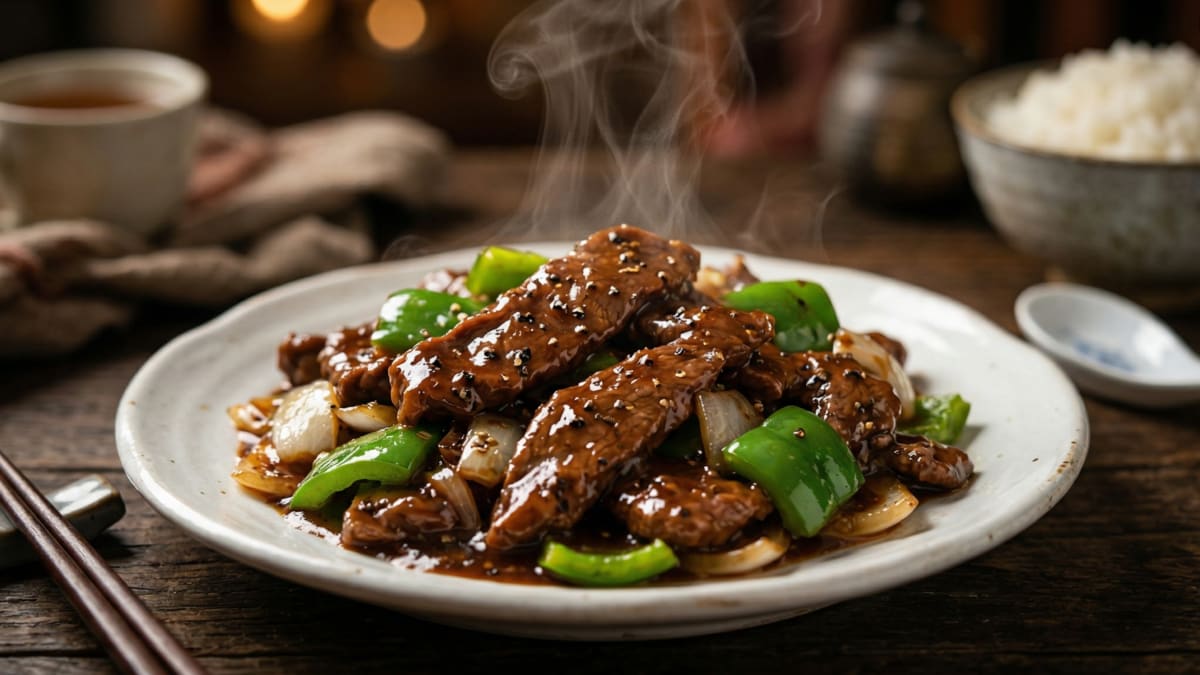

🥩 Introduction: The Ultimate Weeknight Takeout Classic
When the clock hits 6:00 PM and the familiar pang of hunger strikes, there is a specific, savory magic found in a well-executed Pepper Steak (青椒炒牛柳 - Qīngjiāo chǎo niúliǔ). It is a dish that sits at the intersection of comfort and necessity—a staple of the Chinese-American takeout experience that feels both familiar and deeply satisfying.
Unlike more intricate dishes that demand deep-frying or elaborate spice tempering, Pepper Steak thrives on the beauty of the stir-fry method. It relies on the marriage of three primary components: ribbons of tender beef, crisp, emerald-hued bell peppers, and the sweet, aromatics of white onion. These are unified by a rich, umami-dense brown gravy, heavily punctuated by the sharp, biting heat of cracked black pepper. When spooned over a fluffy bed of jasmine rice, it’s a meal that restores the soul.
However, I’ve learned the hard way that there is a fine line between restaurant-quality perfection and the “Curse of the Homemade Stir-Fry.” Without the right technique, the beef often transforms into something grey and tough, while the vegetables collapse into a soggy, lackluster mess. Today, we are going to bridge that gap. We will dismantle the “restaurant secret” of velveting, discuss the physics of high-heat cooking, and ensure your next home-cooked meal stands toe-to-toe with your favorite local spot.
If you enjoy the refined techniques of Chinese stir-fry, I highly recommend checking out my deep dive into The ULTIMATE Beef Chow Fun (Gon Chau Ngau Ho): Master the Wok Hei Secret or exploring the comforting, spicy depths of Authentic Sichuan Mapo Tofu: The Ultimate Spicy Comfort Food.
🔬 The Science of Tenderness: Slicing, Baking Soda, and Velveting
The chasm between a home kitchen and a professional Chinese restaurant often comes down to how the protein is prepared. To achieve that melt-in-your-mouth texture when using common cuts like flank or sirloin (牛里脊 - Niúlǐjǐ), we must respect the biology of the meat.
1. The Art of the Slice (逆纹切 - Nì wén qiē)
If you look closely at a raw piece of flank steak, you will see thin, white lines—the muscle fibers. When we chew, our teeth work to sever these. If you slice parallel to them, the fiber remains long and tough. By practicing Nì wén qiē (逆纹切)—slicing perpendicular to the grain—you effectively shorten these fibers, rendering the meat inherently tender before it ever touches heat.
2. The Baking Soda Miracle
Here is a secret that many home chefs overlook: Baking Soda (小苏打 - Xiǎosūdǎ). A tiny pinch—no more than 1/4 teaspoon—added to your marinade changes the surface pH of the beef. This alkalinity prevents the proteins from binding too tightly during the rapid-fire heat of the stir-fry. It is a subtle, almost invisible transformation that prevents the “rubbery” texture often associated with home-cooked beef.
3. Velveting (上浆 - Shàngjiāng)
After the baking soda works its magic, we perform the process of Shàngjiāng (上浆). By coating the beef in soy sauce, water, and cornstarch, we create a protective barrier. This microscopic gel layer traps the moisture inside the meat, allowing the beef to “glide” in the pan, resulting in a texture that is remarkably soft and silky.

🫑 The Vegetable Strategy: “Duan Sheng” (断生)
A common mistake is treating vegetables as an afterthought. We want them to retain their identity. In professional kitchens, we aim for Duànshēng (断生), or “just breaking the rawness.”
The goal is a vibrant contrast: the tender beef against the sharp, watery snap of the pepper. By searing the bell peppers in a screaming hot wok for barely 60 seconds, we create a slight char on the exterior—a hint of smokiness—while the interior remains crisp and bright.
🍳 Culinary Fundamentals: A Quick Reference
| Technique | Purpose |
|---|---|
| Ni Wen Qie | Breaks long muscle fibers for easier chewing. |
| Velveting | Locks in juice and prevents protein over-bonding. |
| Duan Sheng | Ensures vegetables remain crisp and bright-colored. |
🛒 Ingredients List
The Beef & Velveting Marinade:
- 1 lb (450g) Flank or Sirloin (牛里脊), sliced thin against the grain
- 1 tbsp Light Soy Sauce (生抽)
- 1 tbsp Shaoxing Cooking Wine (绍兴酒)
- 1/4 tsp Baking Soda (小苏打)
- 1 tbsp Cornstarch
- 2 tbsp Water
- 1 tbsp Cooking Oil
The Aromatics & Vegetables:
- 2 large Green Bell Peppers (青椒 - Qīngjiāo), cut into 1-inch squares
- 1 large White Onion (洋葱), cut into 1-inch squares
- 3 cloves Garlic, minced (蒜末)
- 1 thumb of Ginger, minced (姜末)
The Black Pepper Sauce:
- 3 tbsp Oyster Sauce
- 1.5 tbsp Light Soy Sauce (生抽)
- 1 tsp Dark Soy Sauce
- 1 tbsp Sugar
- 1.5 tsp Black Peppercorns, coarsely cracked
- 1/2 tsp Toasted Sesame Oil
- 1/2 cup Beef Broth
- 1 tbsp Cornstarch (for the final slurry)
🍳 Cooking Steps
1. Prepare the Protein: Place the beef in a bowl. Massage in the water, light soy sauce, Shaoxing wine, and baking soda. The beef will absorb the liquid. Add the cornstarch and massage again until it is slightly tacky. Finally, coat with oil and let it rest for 20 minutes.
2. Whisk the Sauce: Combine the oyster sauce, soy sauces, sugar, sesame oil, broth, and black pepper. Stir in the cornstarch until smooth. Keep this within arm’s reach of your stove.
3. The Searing (滑炒 - Huáchǎo): Get your carbon steel wok smoking hot. Add oil, then spread the beef out. Let it sit for 30 seconds—do not touch it! Once it browns, toss it quickly until 80% cooked. Set aside.

4. Blister the Peppers: Add a splash of fresh oil to the wok. Sear the peppers and onions until they look blistered but are still structurally sound. Add the ginger and garlic, letting them fragrant the oil for 10 seconds.
5. The Final Toss: Pour in your sauce mixture. It will thicken almost immediately. Return the beef to the wok. Toss everything together for 15 seconds, coating every strand of beef in that glossy, dark, pepper-rich glaze. Serve immediately over rice.

💡 Troubleshooting & Pro Tips
- Why does the flavor feel flat? It is almost always the pepper. Pre-ground pepper is a ghost of its former self. You need to use a pepper grinder to crack fresh, coarse black peppercorns (黑胡椒碎 - Hēi hújiāo suì). The difference in aromatic punch is transformative.
- Beef is rubbery? Check your heat and your grain. If the pan wasn’t hot enough, the beef steamed rather than seared. If you sliced with the grain, the texture will be stringy regardless of your technique.
- Vegetables turned to mush? You are likely letting them sit in the wok too long while the sauce reduces. Keep the veggies moving, and treat the “reunion” of sauce and protein as a sprint, not a marathon.
Disclaimer: As an Amazon Associate, ChinaCurator earns from qualifying purchases.