🌶️ Introduction: The Legend of the Pockmarked Grandma
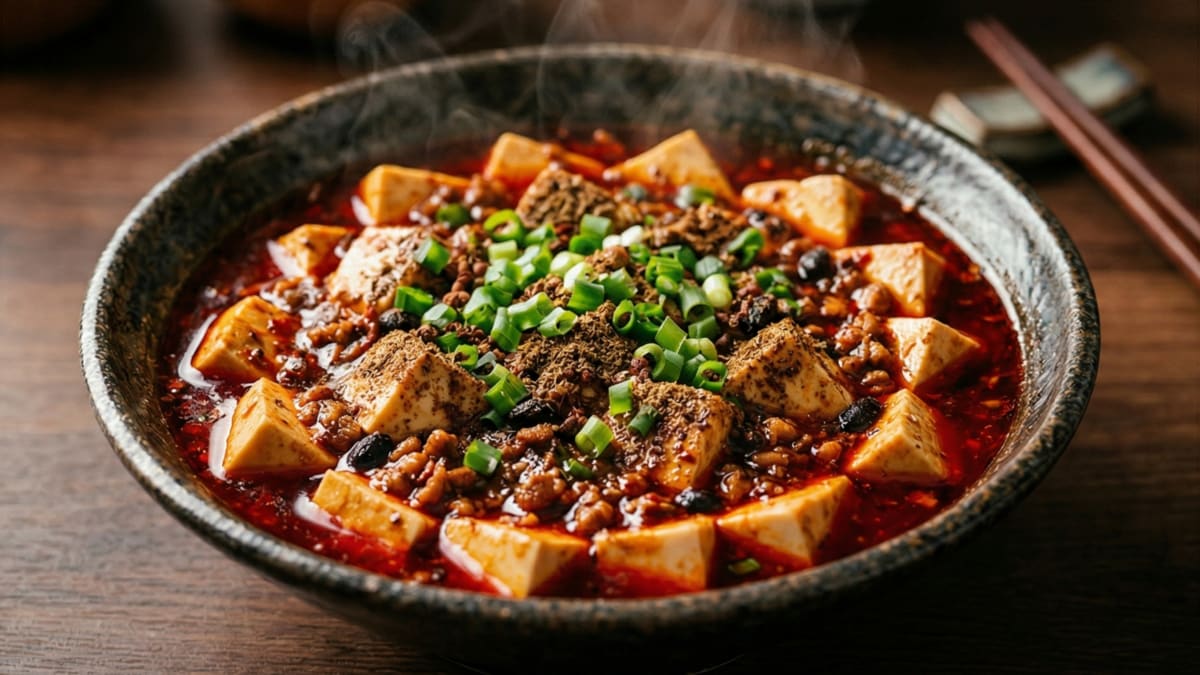
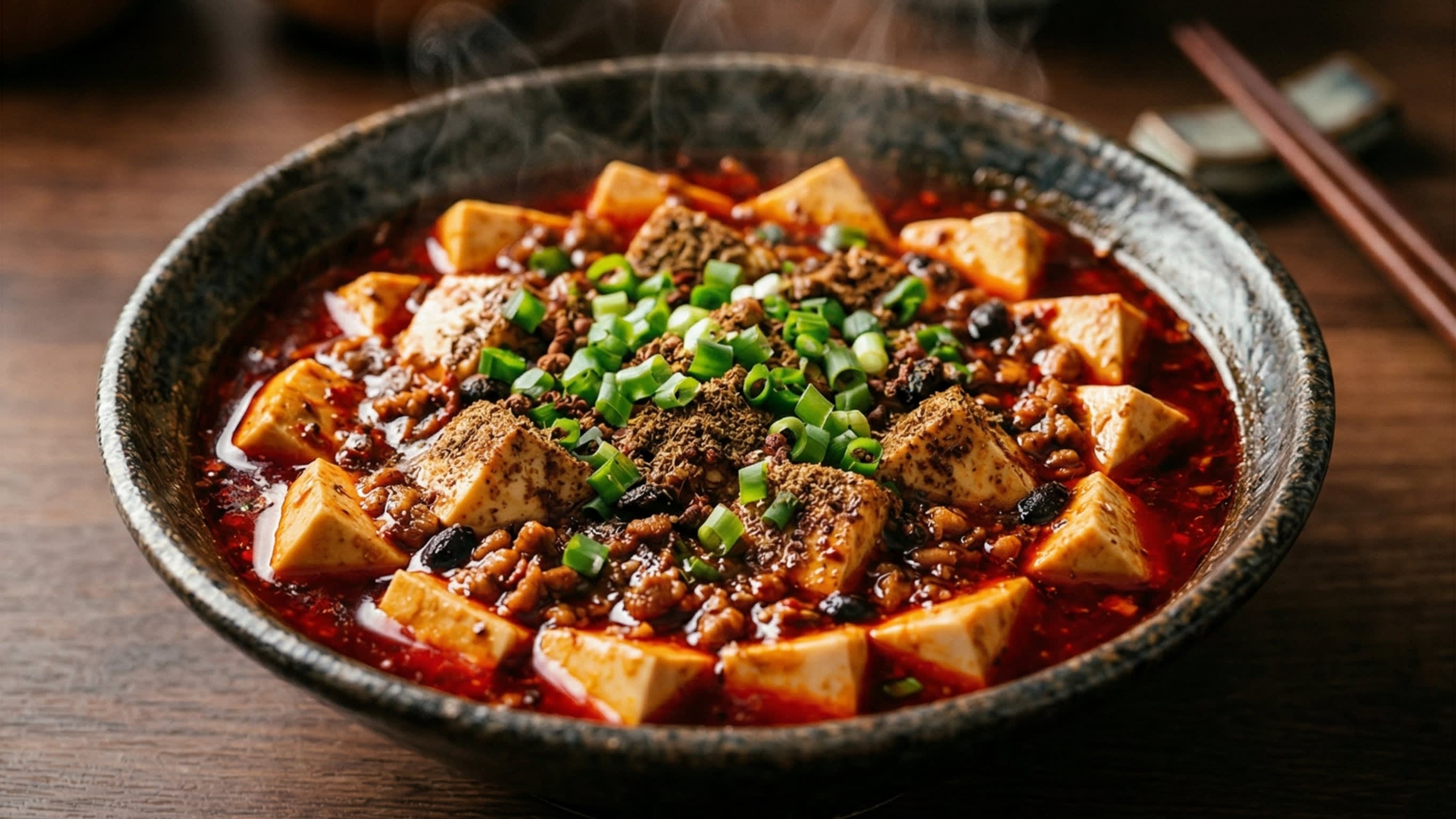
If there is one dish that perfectly encapsulates the soul of Sichuan cuisine, it is Mapo Tofu (麻婆豆腐 - Mápó Dòufu). It is a brilliant, fiery, and deeply comforting masterpiece. Cubes of silken tofu and crispy minced meat swim in a glowing red sauce that is savory, spicy, and fiercely aromatic.
But what exactly does the name mean? The history of this dish dates back to the late 19th century during the Qing Dynasty in Chengdu, the capital of Sichuan province. “Ma” (麻) refers to mázǐ, meaning pockmarks, and “Po” (婆) means an older woman or grandma. The dish was invented by a Mrs. Chen, a tavern owner whose face was scarred by smallpox. Her signature tofu dish became so legendary among traveling merchants and laborers that it was forever immortalized as “Pockmarked Grandma’s Tofu.”
Today, Mapo Tofu is the ultimate Xiàfàncài (下饭菜)—a dish so intensely flavorful that it practically demands to be eaten with massive bowls of plain, steamed white rice. If you are also interested in mastering other iconic Sichuan flavors, I highly recommend checking out my guide on the ULTIMATE authentic Dan Dan Noodles or for a lighter side dish, try the ULTIMATE Smashed Cucumber Salad (Pai Huang Gua).
To cook authentic Mapo Tofu at home, you have to forget the bland, watery takeout versions you may have had in the West. Authentic Mapo Tofu relies on a highly specific flavor profile known as Málà (麻辣): “Ma” meaning numbing, and “La” meaning spicy. To achieve this, you need to understand the holy trinity of Sichuan ingredients.
🔬 The Holy Trinity of Sichuan Flavor
If your homemade Mapo Tofu lacks that deep, earthy, restaurant-quality punch, it is almost certainly because you are missing one of these three foundational ingredients.
1. The Soul: Pixian Doubanjiang (郫县豆瓣酱)
You cannot make authentic Mapo Tofu without Doubanjiang. Often called the “Soul of Sichuan Cuisine,” this is a fermented paste made from broad beans, soybeans, salt, wheat flour, and fiery red chilies. You must look for Pixian Doubanjiang, which comes from a specific district in Chengdu and is aged for years under the sun. It provides a massive umami bomb and gives the dish its signature deep red oil (红油 - Hóngyóu). If you are looking for this ingredient, you can find various Pixian Broad Bean Paste options online to get that authentic depth.
2. The Numbing Sensation: Sichuan Peppercorns (花椒 - Huājiāo)
Sichuan peppercorns are not actually peppers; they are the dried husks of the prickly ash shrub. They do not produce heat. Instead, they contain a molecule that interacts with the nerve endings on your tongue, creating a vibrating, citrusy, tingling numbness. This numbing sensation acts as an anesthetic, allowing you to endure the fiery heat of the chilies. A generous dusting of fresh Sichuan Peppercorns right before serving is non-negotiable.
3. The Savory Depth: Fermented Black Beans (豆豉 - Dòuchǐ)
These tiny, wrinkled black beans are heavily fermented and salted. Mincing just a tablespoon of Fermented Black Beans and frying them into the sauce adds a profound, earthy depth that salt or soy sauce alone can never replicate.
🧊 The Secret to Unbreakable, Flavorful Tofu
Another major hurdle for home cooks is keeping the tofu intact. Authentic Mapo Tofu uses Silken or Soft Tofu (嫩豆腐 - Nèn Dòufu) because it provides a luxurious, melt-in-your-mouth contrast to the crispy minced meat. But soft tofu shatters easily in a wok.
Chinese chefs solve this with a technique called Cháoshuǐ (焯水)—blanching. Before stir-frying, you must gently boil the raw tofu cubes in hot water heavily seasoned with salt. The salt draws out excess moisture, slightly firming up the protein structure of the tofu so it won’t break. This hot bath also removes the raw, earthy “beany” smell (豆腥味 - Dòuxīngwèi) and physically warms the tofu so it absorbs the spicy sauce much faster.
🛒 Ingredients List
| Category | Ingredient |
|---|---|
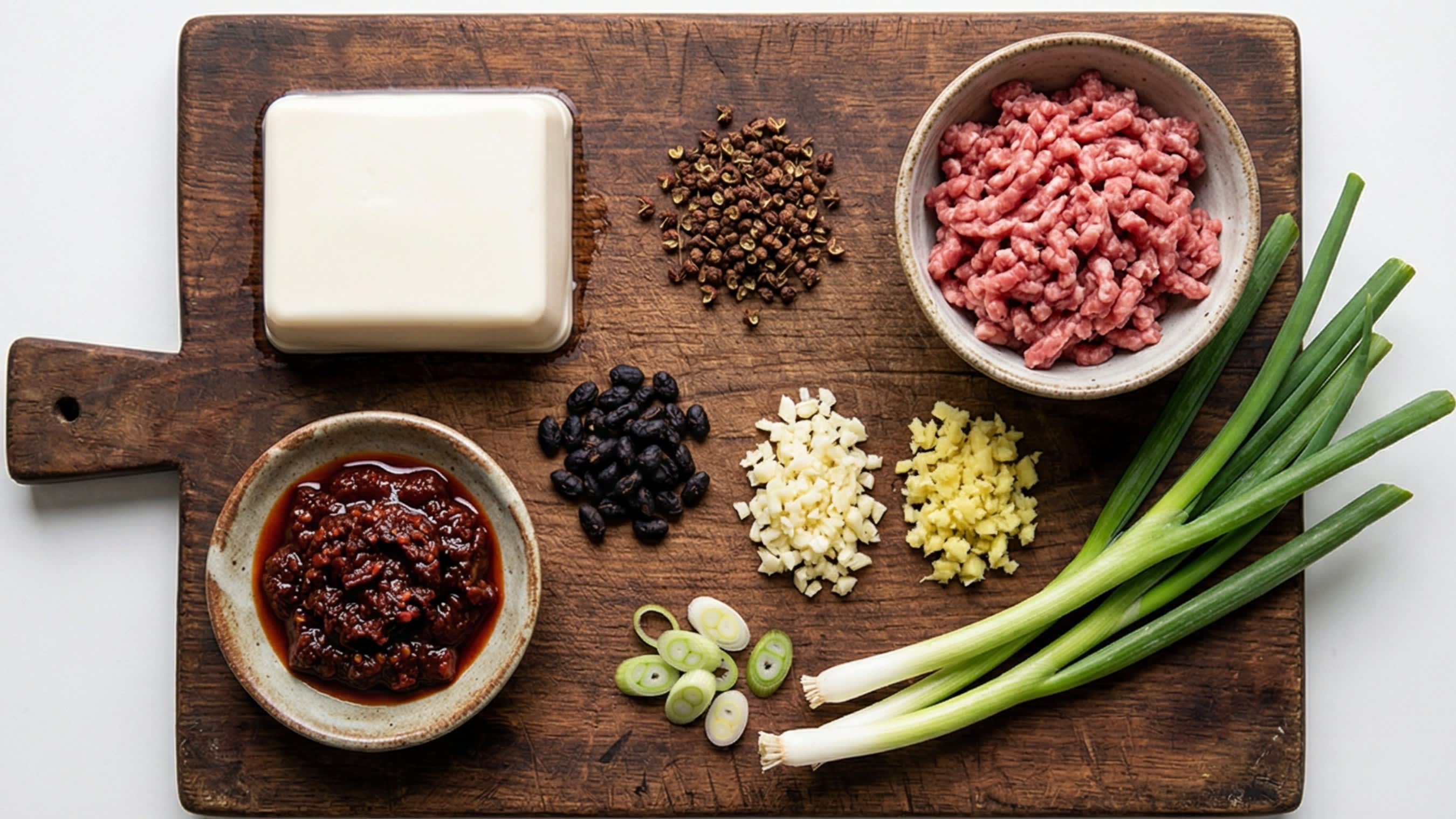
| Main | 400g Silken or Soft Tofu, cubed |
| Protein | 100g Minced Beef or Pork |
| Base | Doubanjiang, Douchi, Ginger, Garlic |
🍳 Step-by-Step Instructions
1. Blanch the Tofu (焯水): Bring a pot of water to a gentle simmer. Add 1 teaspoon of salt. Gently slide your tofu cubes into the water. Let them simmer for 2 to 3 minutes. Turn off the heat and let the tofu sit in the hot water until you are ready to use it.
2. Crisp the Minced Meat: Heat your wok over medium heat. Add 1 tablespoon of cooking oil. Add the minced meat. Stir-fry continuously until the meat releases its moisture, turns brown, and becomes slightly crispy. Push the meat to the side.
3. Fry the Aromatics (炒红油): Add the remaining 2 tablespoons of oil into the center of the wok. Add your minced Pixian Doubanjiang. Fry it over low heat for about 1 minute until the oil turns a bright, glowing ruby red. Then, add the fermented black beans, minced garlic, minced ginger, and chili flakes. Stir everything together until the kitchen smells fragrant.
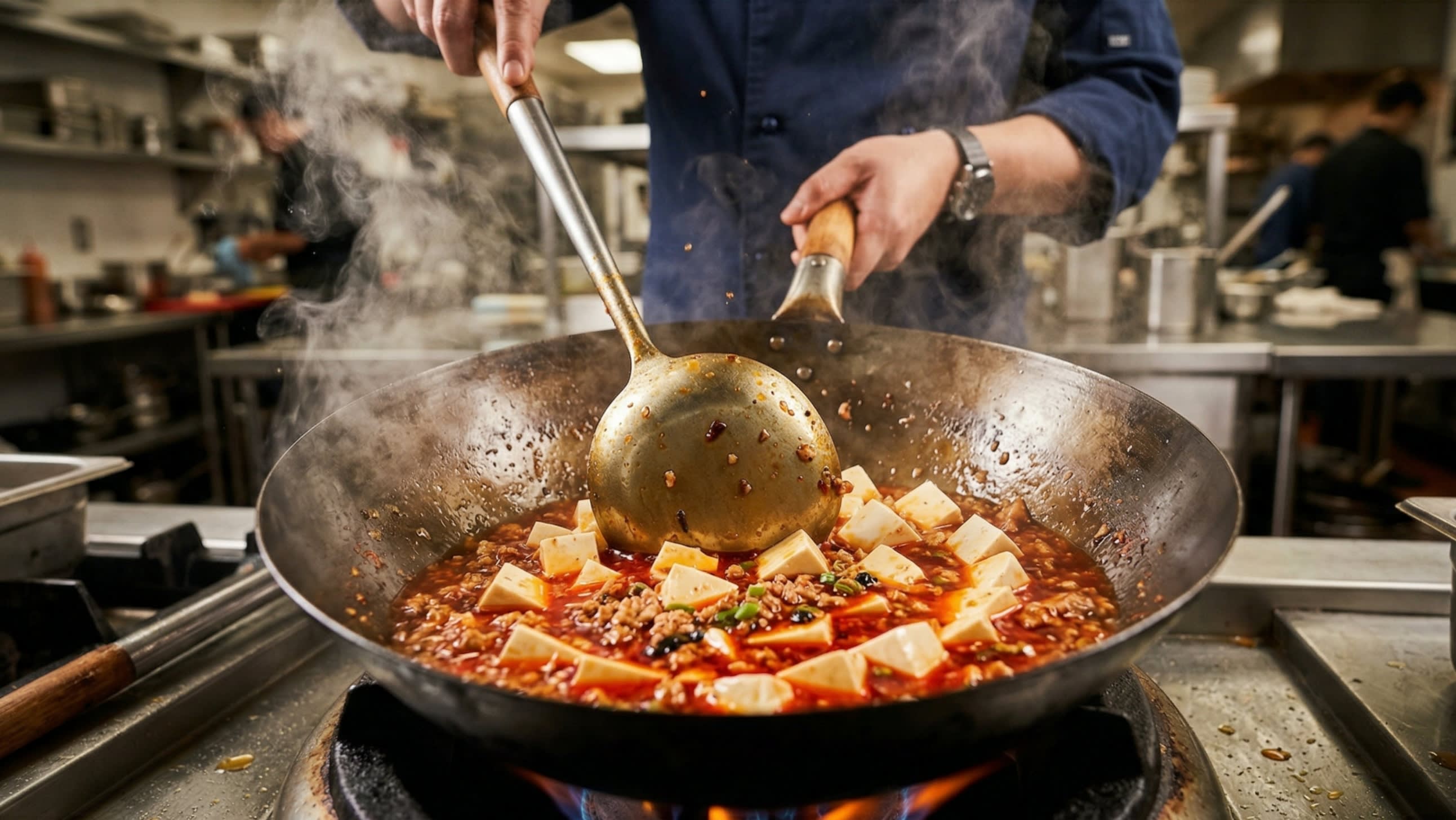
4. Build the Broth: Pour the chicken broth or water into the wok. Turn the heat up to medium-high and bring the fiery red sauce to a rolling boil. Add the light soy sauce and sugar to balance the saltiness.
5. Simmer the Tofu: Use a slotted spoon to transfer the warm, blanched tofu cubes into the wok.
🚨 PRO TECHNIQUE: The “Push,” not the “Stir” From this moment on, do not use your spatula to stir the food in circles! If you do, you will turn the silken tofu into mush. Instead, place the back of your spatula or ladle against the bottom of the wok, and gently push the sauce forward. Let the boiling liquid do the mixing for you. Simmer for 3 to 4 minutes.
6. The Three-Stage Thickening (三次勾芡 - Sāncì Gōuqiàn): Give your cornstarch slurry a stir. Drizzle in one-third, wait 30 seconds, and add the second third. Finally, turn off the heat and add the last third with your scallions. This ensures the sauce stays glossy and clings perfectly to the tofu.
7. The Final Flourish: Slide the Mapo Tofu onto a serving plate. Heavily dust the top with freshly ground Sichuan Peppercorn Powder. Serve immediately with plenty of steamed rice.
💡 Troubleshooting Common Mistakes
- Why is my sauce pale? You didn’t fry the Doubanjiang long enough. The “red oil” must be coaxed out over low heat.
- Why is it too salty? The fermented pastes are high in salt; do not add extra table salt. Use sugar to balance the profile.
- Can I use Firm Tofu? It is technically possible, but it lacks the custard-like texture that makes this dish an authentic Sichuan classic. Stick to soft tofu for the best experience.
As you explore more about Chinese dining, remember that Mapo Tofu is just one of many traditional Sichuan comfort foods you can master. Once you get comfortable with the heat, you might even enjoy learning about the cultural etiquette of Chinese gift-giving if you are ever invited to a local home for dinner.
Disclaimer: As an Amazon Associate, ChinaCurator earns from qualifying purchases.