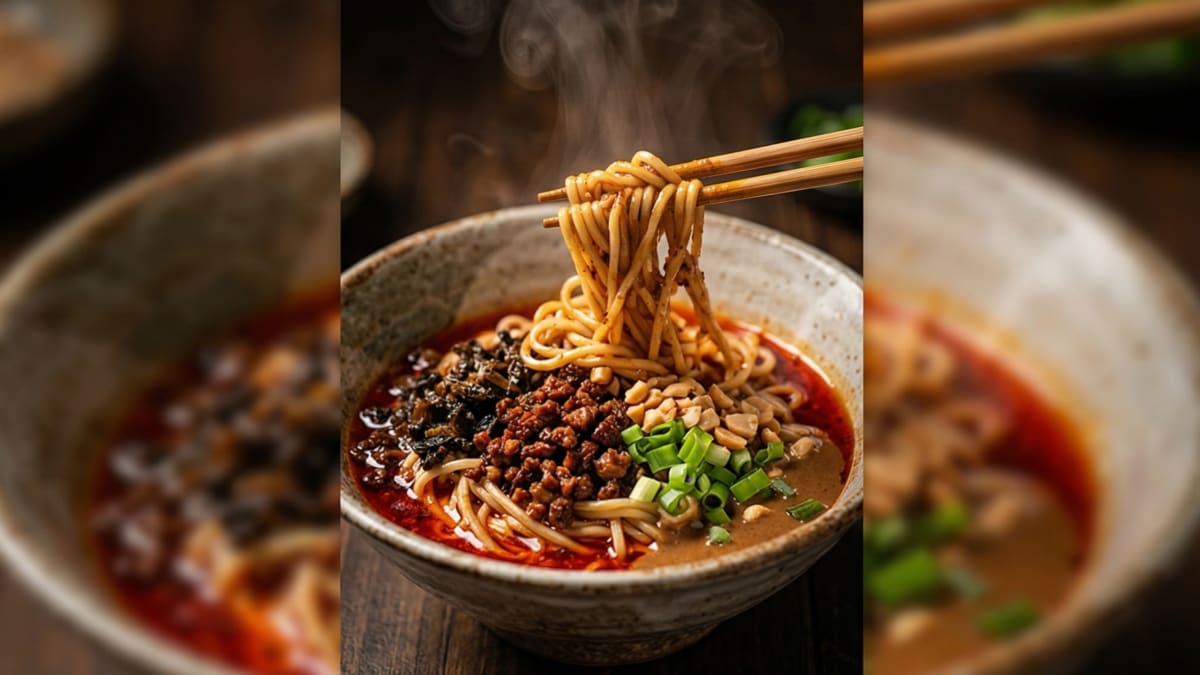

🍜 Introduction: The Undisputed King of Sichuan Street Food
If you want to experience the true, unadulterated, and explosive flavor profile of authentic Sichuan cuisine, look no further than a steaming, fiery bowl of Dan Dan Noodles (担担面 - Dàndàn Miàn).
For many traveling abroad, the first encounter with Dan Dan Noodles occurs at a localized takeout joint, where it is often presented as a cloying, peanut-butter-heavy soup. Let’s clear the air immediately: Authentic Sichuan Dan Dan Noodles are not a soup, and they certainly do not contain peanut butter.
True Dan Dan Noodles are an intense, dry-tossed dish known as Gānbàn Miàn (干拌面). They are a breathtaking symphony of the famous Sichuan Málà (麻辣 - numbing and spicy) profile. The dish features fresh, chewy wheat noodles resting on a complex, fire-red sauce, crowned with crispy, savory fried pork and fermented mustard greens. When you aggressively toss the bowl, every strand of noodle becomes coated in a thick, nutty, spicy, and umami-packed glaze.
Today, I’m taking you back to the smoky alleyways of Chengdu to decode the traditional ingredients you need to source from your local Asian grocer and master the technique for the perfect home-cooked bowl. If you enjoy the depth of our Authentic Sichuan Mapo Tofu, you are going to love this.
📜 The History: What Does “Dan Dan” Mean?
The name “Dan Dan” doesn’t refer to a person; it pays homage to the Biǎndan (扁担)—the traditional wooden carrying pole worn across the shoulders of street vendors in the 1840s.
In the bustling city of Chengdu, vendors would navigate the streets with this pole. One end held a basket of fresh noodles; the other carried a small stove and a box of intense flavorings: chili oil, vinegar, garlic, and preserved vegetables. Because broth was too heavy to carry, the noodles were served “dry.” The vendor would stir the sauce base at the bottom of a bowl, drop in a flash-boiled handful of noodles, and hand it to you. You were expected to mix it right there on the street corner. It was fast, furious, and incredibly delicious.
🔬 Decoding the Soul: The Authentic Ingredients
To replicate that street-side magic, you cannot cut corners. Here are the four pillars that define the dish.
1. The Soul of the Pork: Sui Mi Ya Cai (碎米芽菜)
This is the single most important ingredient often omitted in Western versions. Yácài (芽菜) is a fermented mustard green native to Yibin, Sichuan. It’s dark, finely minced, and offers an earthy, salty, slightly sweet depth that anchors the pork topping. When you fry the minced pork until it is crispy (脆臊 - Cuìsāo), the pork absorbs the essence of the fermented greens, creating a topping so addictive you’ll be tempted to snack on it plain.
2. The Numbing Magic: Sichuan Peppercorns (花椒)
Sichuan cuisine is defined by Mala (麻辣). While “La” refers to the heat from chili peppers, “Ma” refers to the electric, numbing vibration on your tongue. Sichuan Peppercorns (花椒 - Huājiāo) aren’t actually peppers—they are the husks of the prickly ash tree. Use high-quality, fresh-ground peppercorns for that authentic, buzzing experience.

3. The Nutty Base: Chinese Sesame Paste (芝麻酱)
Put down the peanut butter! Authentic Chinese Sesame Paste (芝麻酱 - Zhīmájiàng) is made from heavily roasted, hulled sesame seeds. It has a dark brown hue, a smoky aroma, and a slight bitterness that creates the “weight” of the sauce. Middle Eastern tahini is too mild and lacks that deep, roasted punch.
4. The Fire: Chili Oil (红油)
A proper Sichuan Chili Oil (红油 - Hóngyóu) is a work of art, often infused with cinnamon, star anise, and bay leaf. It’s not just about heat; it’s about the fragrance that hits your nose before the spice hits your palate.
🛒 The Blueprint
| Component | Authentic Ingredients |
|---|---|
| Crispy Pork | Ground pork, Sui Mi Ya Cai, ginger, dark soy sauce. |
| Sauce Matrix | Chinese Sesame Paste, Sichuan Chili Oil, light soy, black vinegar. |
| The Numbing | Whole Sichuan Peppercorns, toasted and ground. |
🍳 Step-by-Step Instructions
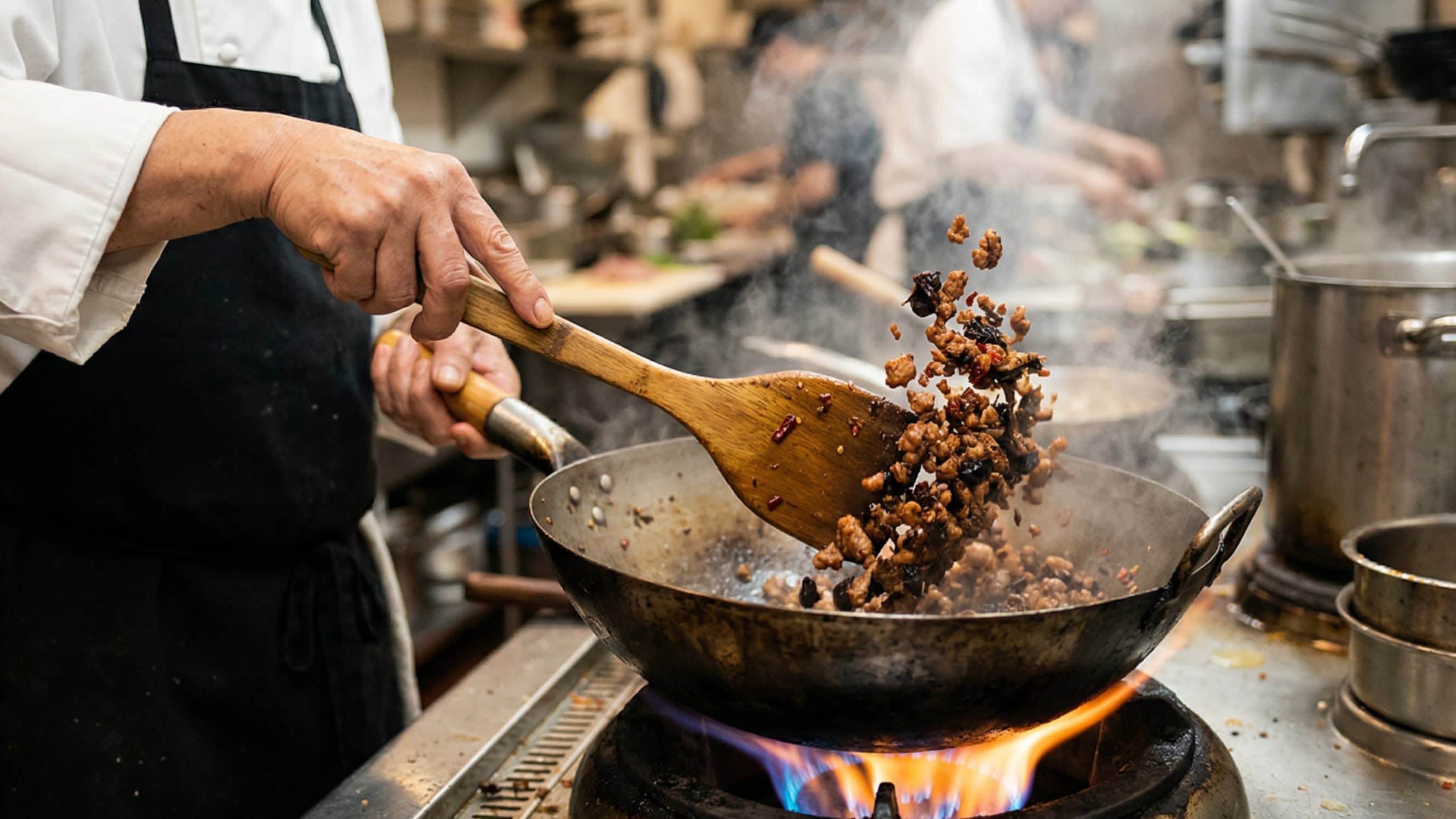
1. The Crispy Pork (煸炒脆臊): Heat a tablespoon of oil in a wok over medium-high. Add the pork and break it into fine bits. Fry aggressively for 3-4 minutes until the fat renders and the meat is crispy. Stir in the ginger, dark soy sauce, and your fermented mustard greens. Sauté for another 2 minutes until the aroma is intoxicating. Set aside.
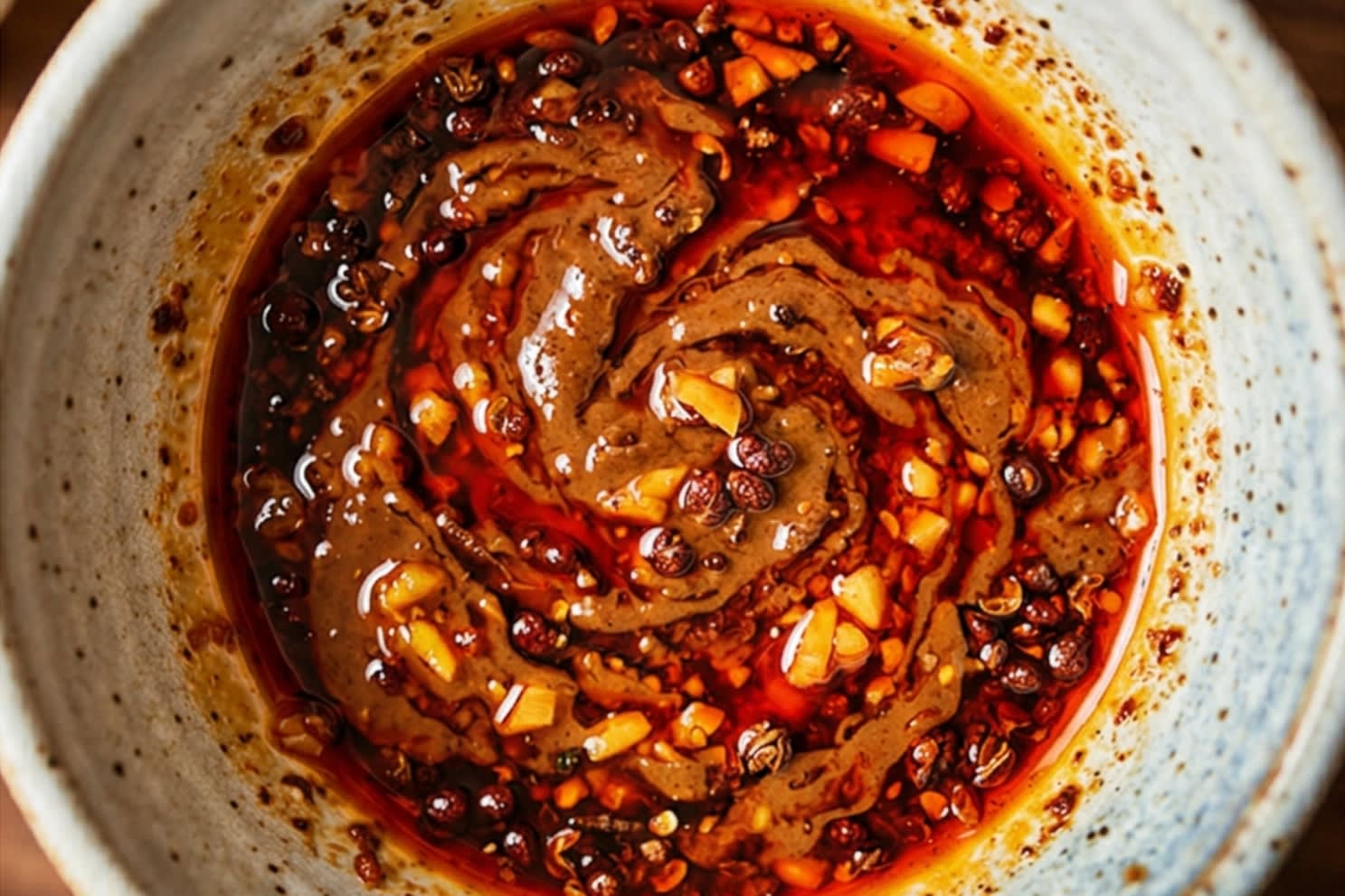
2. The Sauce Matrix: Assembly happens in the bowl. In each serving bowl, whisk together the sesame paste, soy sauce, black vinegar, minced garlic, a pinch of sugar, and fresh Sichuan peppercorn powder. Finish with a generous drizzle of your vibrant chili oil.
3. The Noodles: Boil your fresh wheat noodles in water. When they are just Jìndào (chewy), toss in your greens. Before draining, scoop one tablespoon of that hot, starchy noodle water into your sauce bowl—this helps thin the paste into a silky glaze.
4. The Toss: Place the noodles and greens over the sauce. Top with your crispy pork mixture, crushed peanuts, and scallions. Grab your chopsticks and mix thoroughly—this emulsification is the final secret to the perfect Dan Dan texture.
💡 Troubleshooting & Tips
- Why is my sesame paste clumping? Like natural nut butters, Chinese sesame paste separates. Stir the jar vigorously before use. If the sauce feels too thick, don’t be afraid to add another teaspoon of hot noodle water.
- Is it too spicy? If you have a lower heat tolerance, reduce the chili oil but keep the Sichuan peppercorns; the “numbing” sensation is what makes this dish legendary.
- Vegetarian Swap: You can easily swap the pork for crumbled extra-firm tofu or finely diced shiitake mushrooms, sautéed with the same Yacai base. The fermented umami is the real star here!
Pair this with our Authentic Chinese Smashed Cucumber Salad to perfectly balance the heat with something cool and crunchy. Enjoy your DIY Chengdu street food adventure!
Disclaimer: As an Amazon Associate, ChinaCurator earns from qualifying purchases.