🐜 Introduction: The Quirkiest Name in Chinese Cuisine
When exploring the vast, intimidating, and delicious world of traditional Chinese cuisine, you will inevitably encounter dishes with incredibly poetic, confusing, or downright bizarre names. “Lion’s Head Meatballs” contain no lion, and “Husband and Wife Lung Slices” contain neither husbands nor wives.
But perhaps the most famous and visually evocative dish of them all is a Sichuan classic known as Ants Climbing a Tree (蚂蚁上树 - Mǎyǐ Shàngshù).
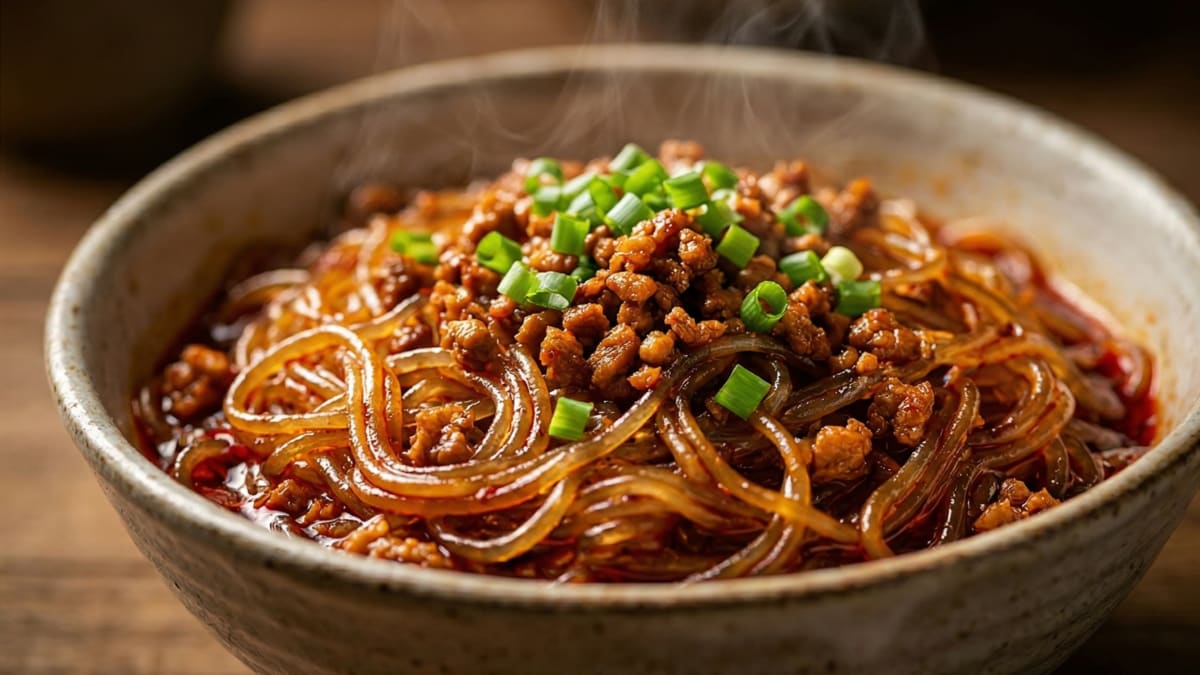
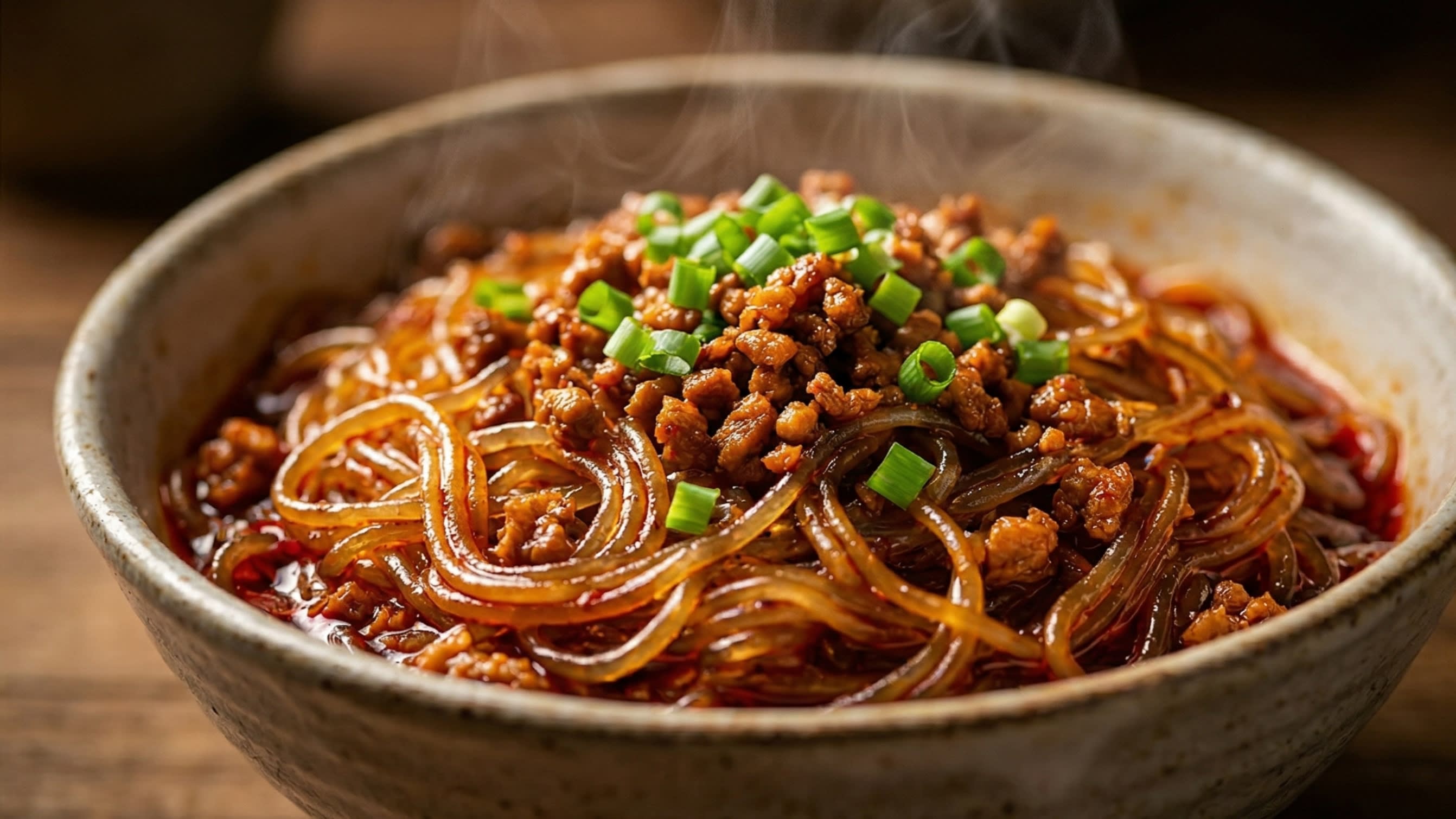
Do not panic—there are absolutely no insects in this recipe! The name is a brilliant visual metaphor. The “tree branches” are beautifully translucent, slippery mung bean glass noodles. The “ants” are tiny, intensely flavorful, caramelized morsels of minced pork that cling tightly to the noodles.
When executed perfectly, this dish is a textural masterpiece and the ultimate comfort food. The noodles are incredibly springy and slurpable, acting like microscopic sponges that absorb a deeply savory, slightly spicy, and umami-packed broth made from fermented chili bean paste and soy sauce.
However, for many home cooks, these noodles are notoriously tricky. If you treat them like Italian pasta, you will end up with a giant, unchewable, sticky ball of glue trapped in your wok. Furthermore, getting the “ants” to actually cling to the “tree” rather than sinking into a lonely pile at the bottom of the bowl requires a specific culinary mechanism.
Today, I am going to share the secrets I learned from my grandmother in Chengdu. We will dive into the physics of mung bean starch, the essential restaurant hack to prevent clumping, and the exact steps to build the fiery, savory sauce that makes this dish a true Sichuan staple.
🔬 The Science of Glass Noodles (粉丝的物理学)
The undisputed star of this dish is Fěnsī (粉丝 - Glass Noodles). Made purely from mung bean starch and water, these noodles behave quite differently from the wheat or egg noodles you might be used to.
1. The “No Boil” Golden Rule
If you throw dry glass noodles into a pot of rapidly boiling water, the extreme heat will instantly gelatinize the exterior starch. This turns them into a mushy, sticky disaster before the center even hydrates. The authentic technique is Pàofā (泡发 - Rehydrating). You must soak the noodles in warm water (not boiling!) for 15 minutes. This allows them to absorb moisture slowly, becoming pliable and translucent while maintaining their structural integrity.
2. The Scissor and Oil Secret
Once the noodles are soft, drain them thoroughly. Then, use a pair of kitchen scissors to trim the long, tangled threads into manageable 4-to-5-inch segments. Finally, toss them with a teaspoon of oil. This creates a microscopic barrier that prevents the noodles from knitting together into a giant clump when they hit the hot wok. It’s a simple trick, but it’s the difference between a mess and a masterpiece.
🧲 The Binding Secret: How the Ants Climb the Tree
The biggest complaint home cooks have is that their minced pork slides right off the noodles. How do chefs in Sichuan get the meat to stubbornly cling to the slippery strands? It is an elegant exercise in culinary chemistry.
We do not rely on a cornstarch slurry here. Instead, we use the noodles themselves! After we vigorously stir-fry the minced pork (肉末 - Ròumò) and our spicy aromatics, we add chicken broth and our pre-soaked noodles. As the noodles braise in the bubbling liquid, they release a tiny amount of their own mung bean starch. As the broth reduces (收汁 - Shōuzhī), this starch thickens the red oil sauce into a glossy glaze that physically anchors the savory pork crumbles to every strand of the noodle.
📋 The Essential Ingredients
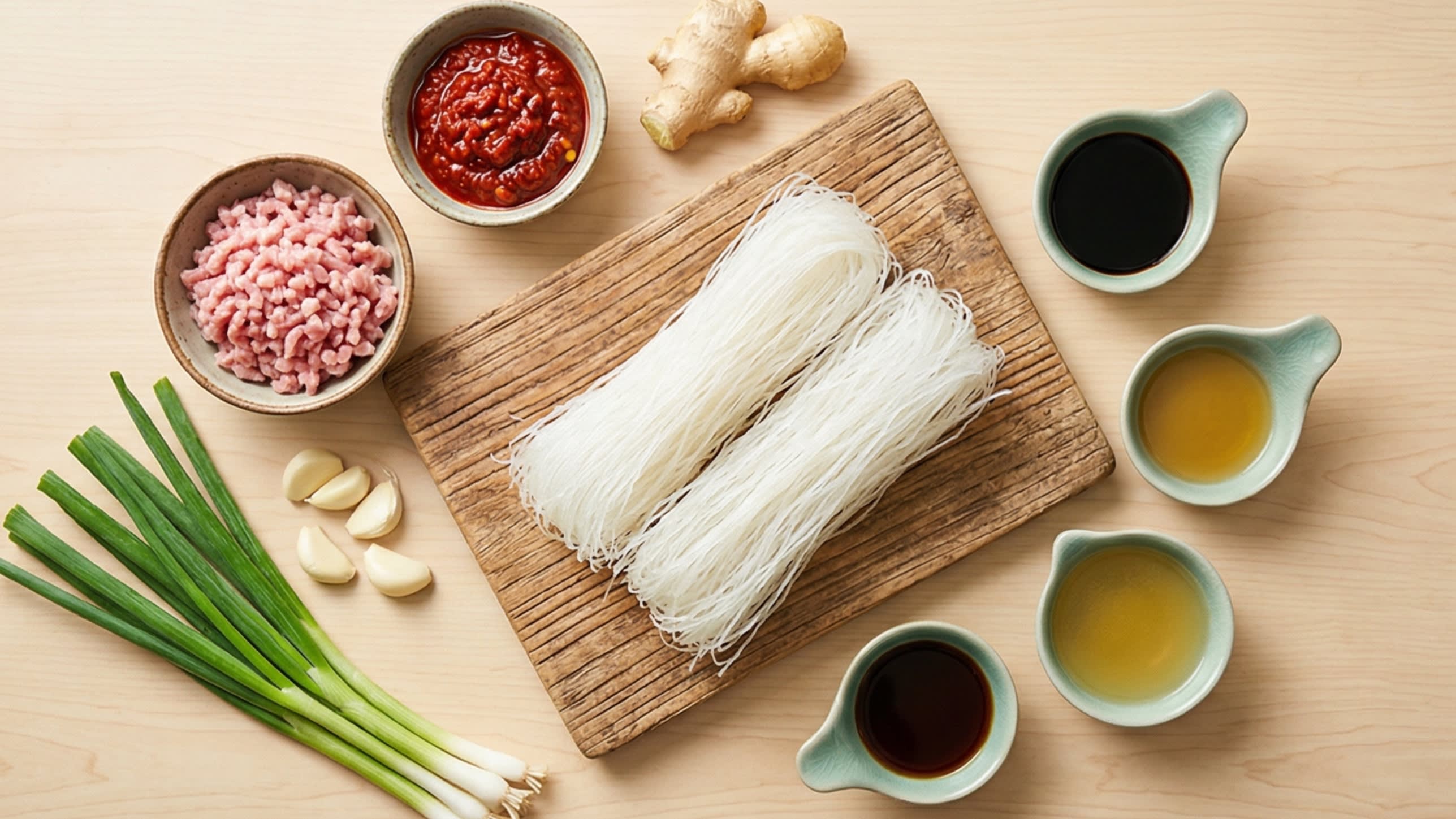
To make this correctly, you will need a few foundational items. To get that perfect texture, I highly recommend sourcing quality Longkou Mung Bean Glass Noodles. You will need 100g of these, which should be soaked, drained, and trimmed before use. For the protein, prepare 115g of finely minced pork (肉末 - Ròumò).
For the aromatics, gather 1.5 tbsp of Pixian Doubanjiang, which is the soul of this dish, alongside 4 cloves of minced garlic, a thumb-sized knob of ginger, and 3 scallions. For the seasoning, have 1 cup of chicken broth, 1 tbsp of light soy sauce, 1/2 tsp of dark soy sauce, 1/2 tsp of sugar, and 1 tbsp of Shaoxing wine ready. Using a carbon steel wok is invaluable for managing the heat properly during the reduction process.
🍳 The Cooking Process: A Step-by-Step Guide
1. Rehydrate the Noodles (泡发): Soak your noodles in 100°F water for 15 minutes. Drain, trim with scissors, and toss with a teaspoon of oil. Set these aside; they are now ready to soak up all that flavor.
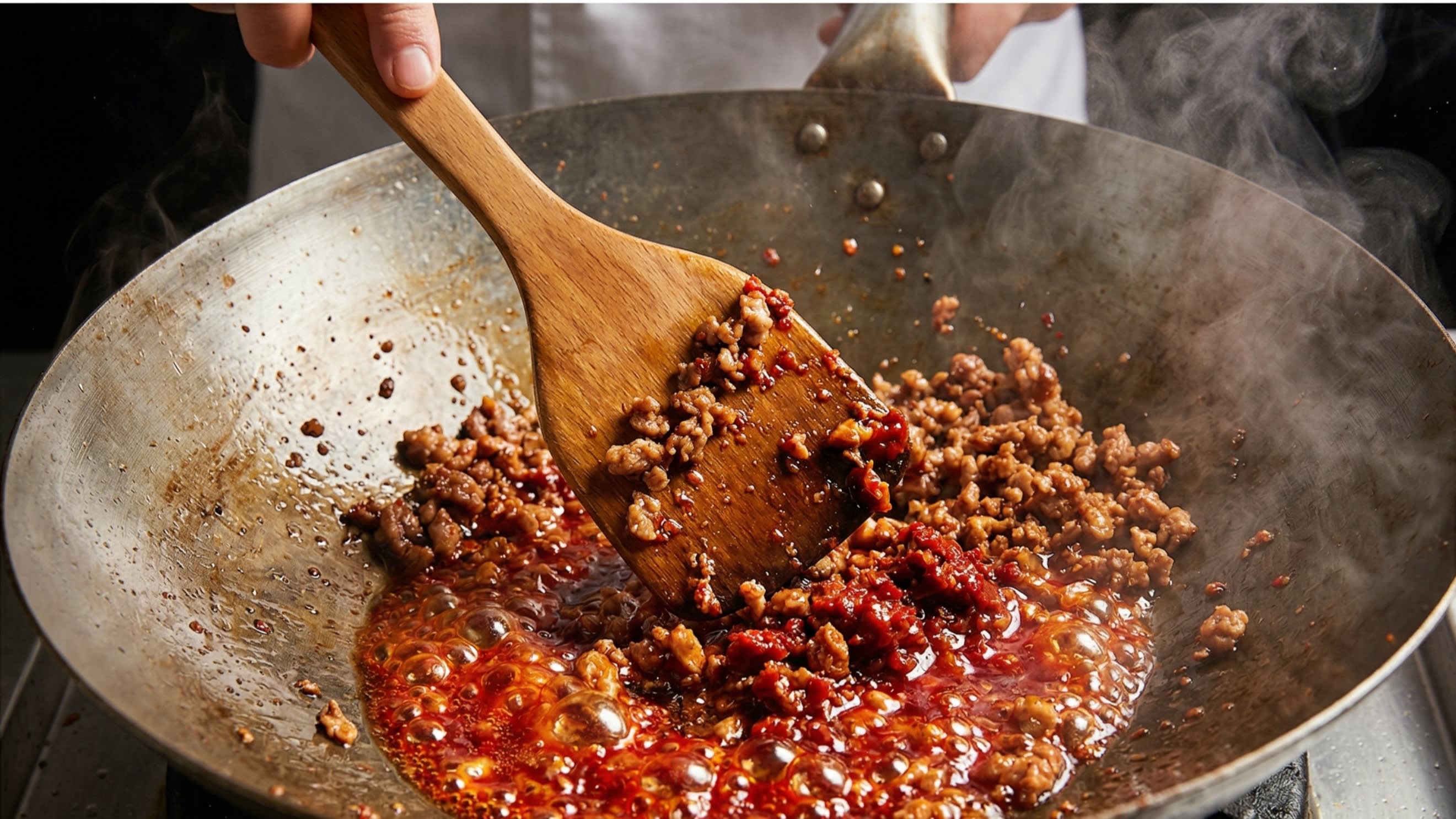
2. Render the “Ants” (煸炒肉末): Heat your wok over medium heat with 2 tablespoons of oil. Add the pork and break it into tiny, ant-sized crumbles. Stir-fry for 3 minutes until golden and crispy (煸香 - Biānxiāng). Splash in the Shaoxing wine to deglaze.
3. Develop the Red Oil (炒出红油): Push the meat to the side. In the center, fry the fermented paste in the oil for 30 seconds. Watch as the oil transforms into a beautiful, glowing ruby red.
4. Sizzle the Aromatics: Toss in your garlic, ginger, and the white parts of the scallions. Stir for another 30 seconds until the aroma fills your kitchen.
5. The Braise (焖煮入味): Pour in the chicken broth, soy sauces, and sugar. Once it hits a boil, add your noodles. Use your chopsticks to press them down into the broth.
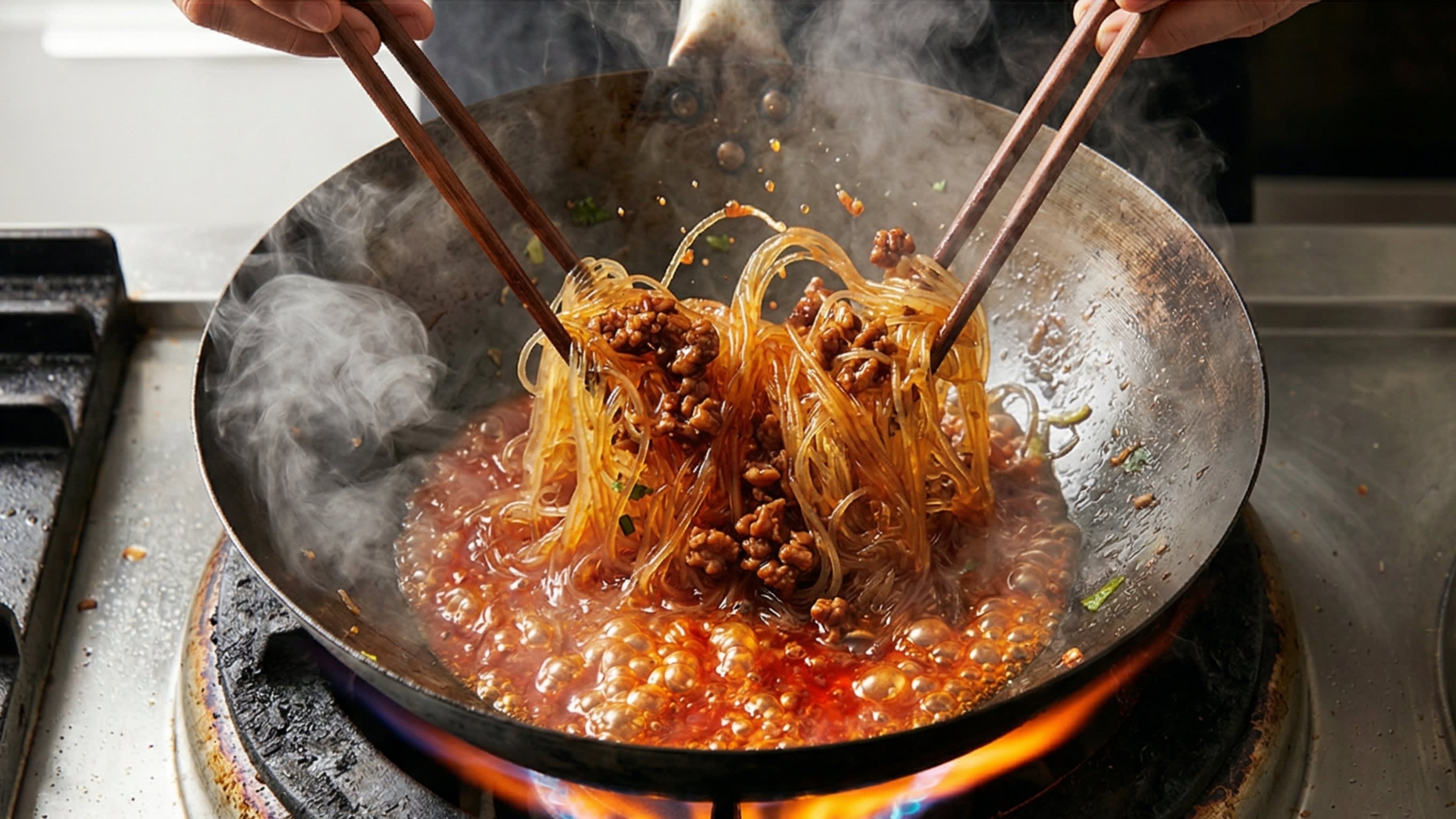
6. Reduce to Perfection (收汁): Simmer for 3–5 minutes. The noodles will drink the broth, turning from white to a deep, savory mahogany. Keep tossing until the liquid vanishes, leaving only a glossy, sticky glaze that binds the pork to the noodles.
7. Garnish: Turn off the heat and stir in the green scallions. Serve immediately while hot.
💡 Troubleshooting Your Ants
If you find yourself struggling, don’t worry—even experienced cooks in China have these “oops” moments. Here is a quick reference table to keep you on the right track:
| Issue | Likely Cause | The Fix |
|---|---|---|
| Sticky, unchewable lump | Boiled the noodles | Soak in warm water only. |
| Watery, soupy sauce | Insufficient reduction | Increase heat and stir until dry. |
| Noodles feel mushy | Wrong type of noodle | Use Mung Bean or Sweet Potato starch only. |
Cooking is a journey, not a destination. If you enjoyed this dish, you might also want to try mastering the fiery profile of Authentic Sichuan Mapo Tofu or the perfectly seared, smoky magic of The ULTIMATE Beef Chow Fun. Happy cooking!
Disclaimer: As an Amazon Associate, ChinaCurator earns from qualifying purchases.