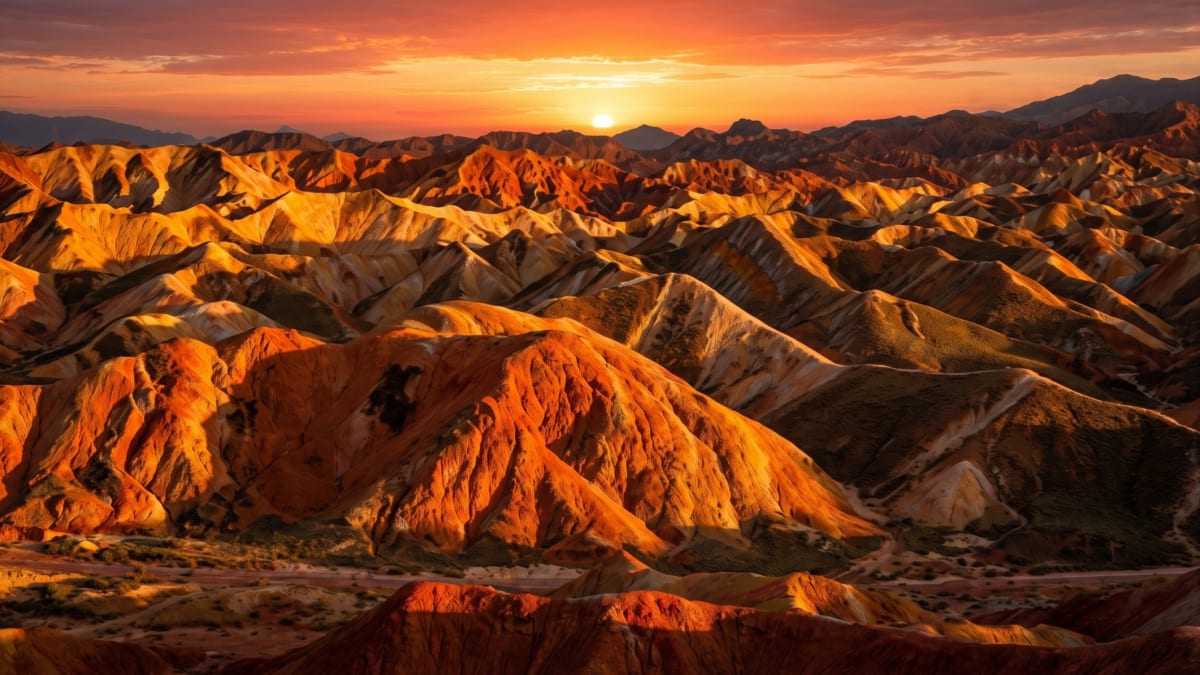
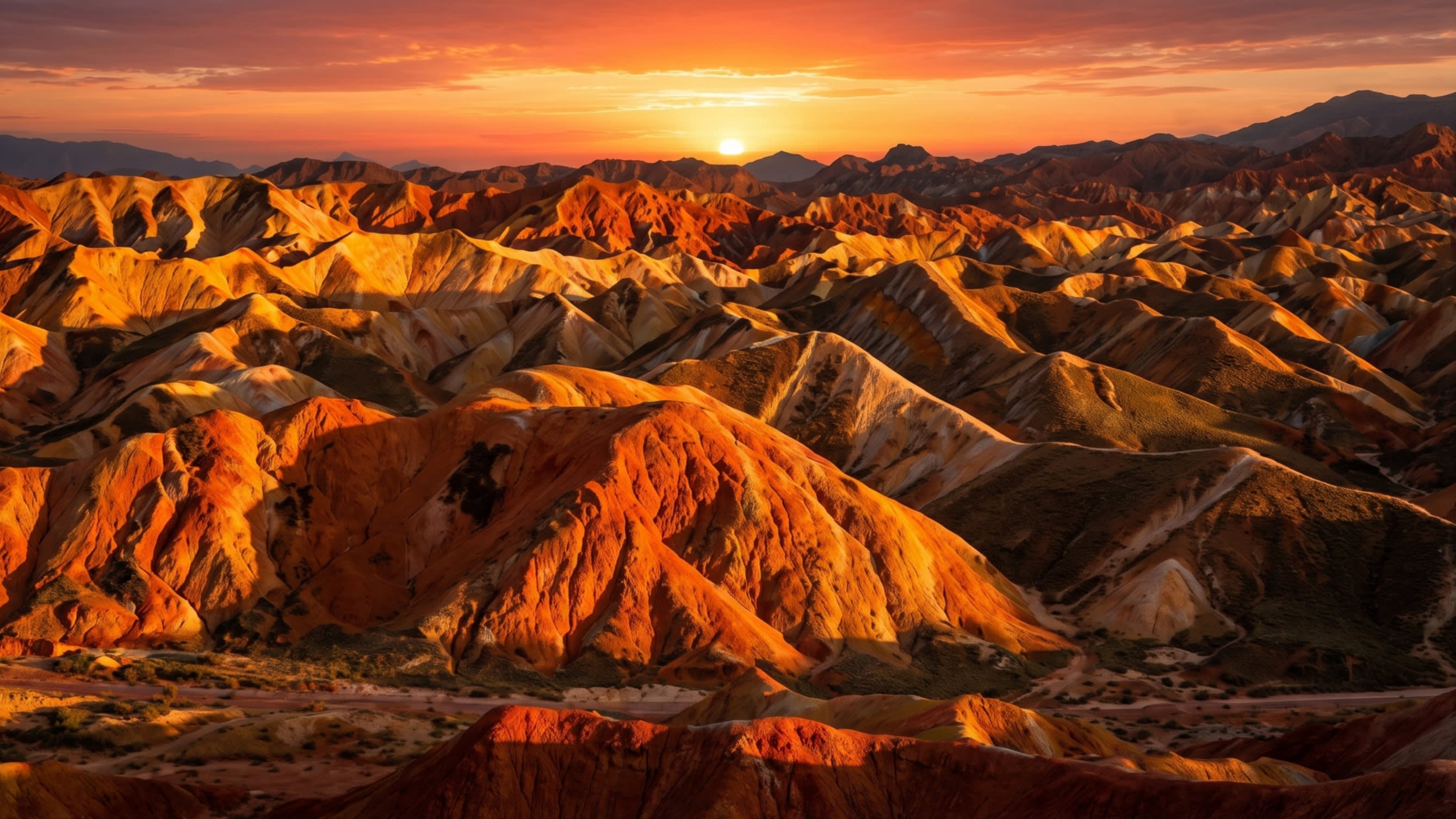
To most travelers, China’s Danxia Landform (丹霞地貌 - dān xiá dì mào) looks like a fever dream from a sci-fi epic—an impossible, jagged landscape of blood-red cliffs and mountains painted in swirling, technicolor stripes. But in 2026, as I stand before these towering monoliths, I’ve come to realize that these aren’t just aesthetic photo ops for your social media feed. They are the Earth’s own historical archives, a brutal, beautiful, and “cooked” record of 100 million years of geological history.
When you explore these 5A-rated wonders, you are essentially time-traveling. You aren’t just looking at scenery; you are peering into the ‘Deep Time’ of our planet, where every strata represents an era of terrestrial evolution.
The 2026 Renaissance of “Geological Tourism”
In 2026, travel across China has shifted from the frantic tick-box sightseeing of the past to a form of “deep understanding.” Thanks to the rapid expansion of the Western High-Speed Rail Corridor, reaching the remote, arid reaches of Gansu or the humid, jungle-draped valleys of Guizhou is now as effortless as a morning commute.
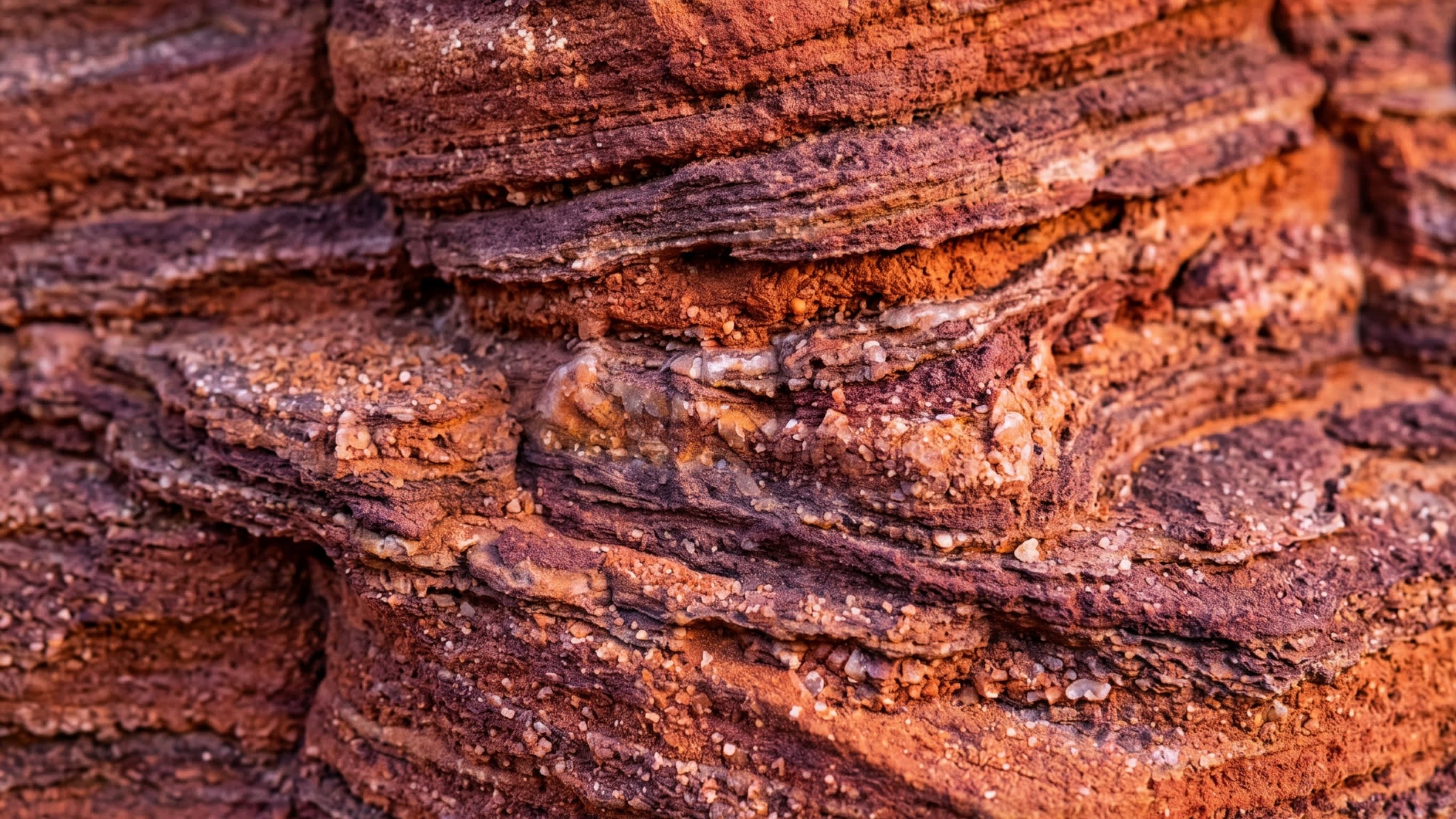
For a curious student or a dedicated nature enthusiast, the Danxia landforms serve as a living masterclass in chemistry and physics. You won’t find neon lights or digital gimmickry here. The only high-definition experience is the raw, unfiltered sun hitting the Iron Oxide (氧化铁 - yǎng huà tiě) within the rock faces.
I remember my first trip to Zhangye; I was skeptical about the photos I had seen online. I thought, surely, it’s all saturation filters. But when the light caught the ridge just after a light, dusty wind, the colors didn’t just pop—they vibrated.
- Native Perspective: “很多人以为张掖的‘彩虹山’ (cǎi hóng shān) 是后期修图,但只有你亲自站在那里,才会发现大自然的‘调色盘’ (tiáo sè pán) 到底有多硬核。这种红,是亿万年风化出来的‘地质奇迹’,真的是绝绝子 (jué jué zi)。” (Many people think Zhangye’s ‘Rainbow Mountains’ are photoshopped, but only when you stand there will you realize how ‘hardcore’ nature’s palette truly is. This red is a ‘geological miracle’ weathered over hundreds of millions of years; it’s absolutely amazing.)
The Science: Why is the Earth Red?
The term Danxia (丹霞) literally translates to “Rosy Cloud.” It evokes a sense of ethereal beauty, but the science behind it is rooted in the harsh, violent reality of tectonic shifts.
- The Sedimentation: Roughly 100 million years ago, these regions were vast, prehistoric basins. Red sandstone and conglomerate rocks were deposited layer by layer, burying the history of ancient riverbeds.
- The Oxidation: The secret ingredient here is Iron. As the sedimentary layers were exposed to the atmosphere during various climatic shifts, the iron minerals oxidized—essentially “rusting” over aeons—which turned the rock into those brilliant, oxidized reds, oranges, and purples.
- The Tectonic Collision: When the Indian plate slammed into the Eurasian plate, it forced these sedimentary layers to buckle, tilt, and rise. This created the jagged, dramatic peaks and valleys we see today.
- The Erosion: Wind and water then acted as the “Curator’s Brush,” carving out the shapes and stripping away layers to reveal the colorful, layered strata beneath.
The 5A “Big Three” of Danxia
In 2026, three major sites stand as the pinnacle of the Danxia experience. If you are planning your itinerary, consider reading my guide on the best time to visit China in 2026 to time your trip for the perfect weather.
1. Zhangye: The Rainbow Palette (张掖七彩丹霞)
Located in the arid corridor of Gansu, this is the definitive Danxia experience.
- The Experience: In 2026, the park has introduced “Low-Carbon Observation Decks.” These structures are built with recycled materials designed to vanish into the landscape, minimizing the human footprint on this fragile site.
- The Pro-Tip: Don’t rush. Wait for a light rain. The moisture makes the minerals turn 200% more saturated, creating the ultimate “rainbow” effect that no camera lens can truly replicate.
2. Chishui: The Wet Danxia (赤水丹霞)
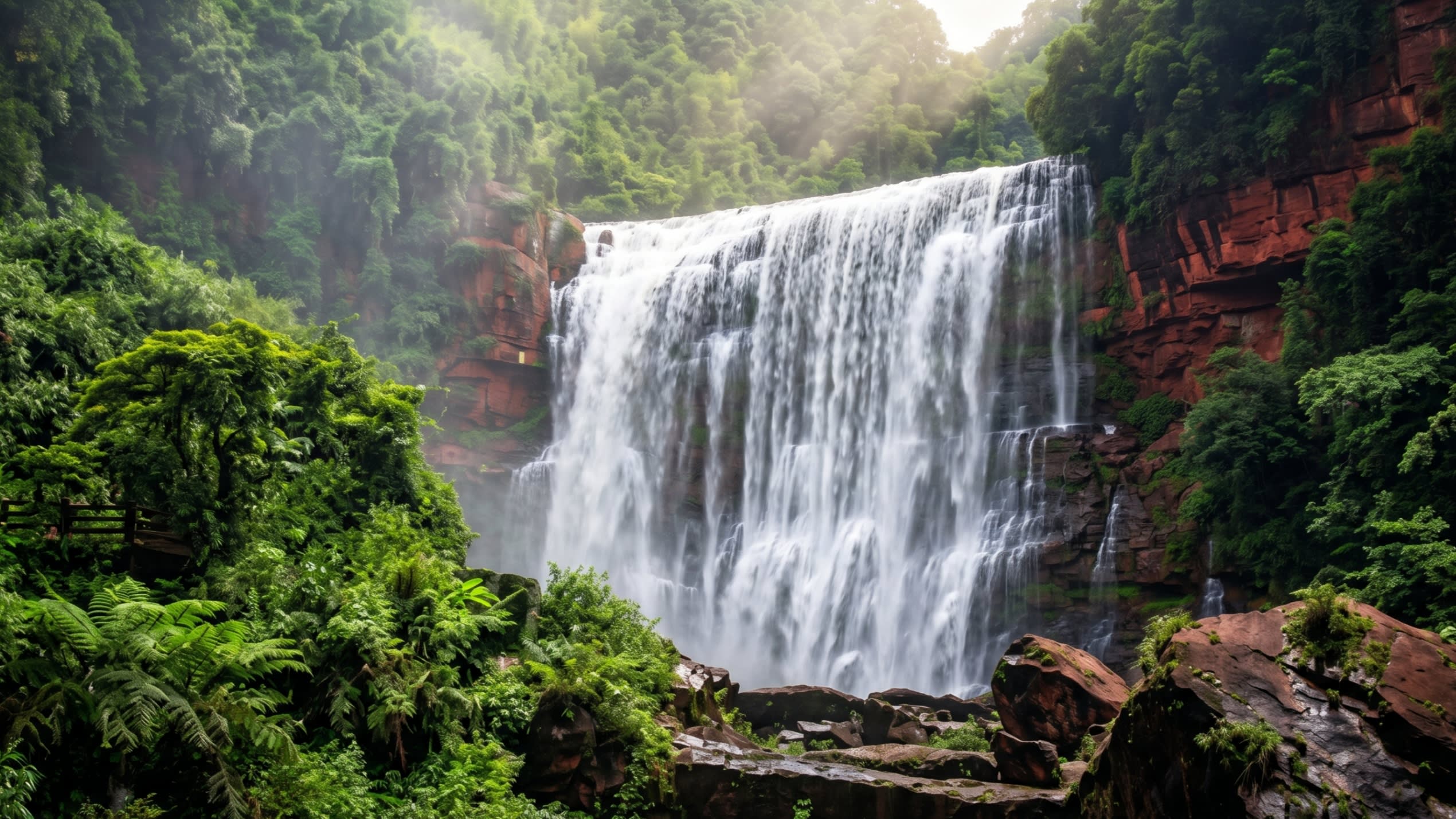
Located in Guizhou, this is “Danxia in the Jungle.”
- The Contrast: While Zhangye feels like a scorched desert, Chishui is a lush, breathing wilderness. Seeing a massive white Waterfall (瀑布 - pù bù) thunder down a sheer 76-meter red cliff is a sensory overload. The roar of the water against the silence of the red stone is something you won’t forget.
- Native Perspective: “赤水的红是不一样的,它透着一股‘灵气’ (líng qì)。那种漫山遍野的绿包裹着鲜红的岩石,非常有‘冲击力’。” (The red in Chishui is different; it has a sense of ‘spirituality.’ That emerald green covering the bright red rocks is extremely impactful.)
3. Danxiashan: The Ancestral Peak (广东丹霞山)
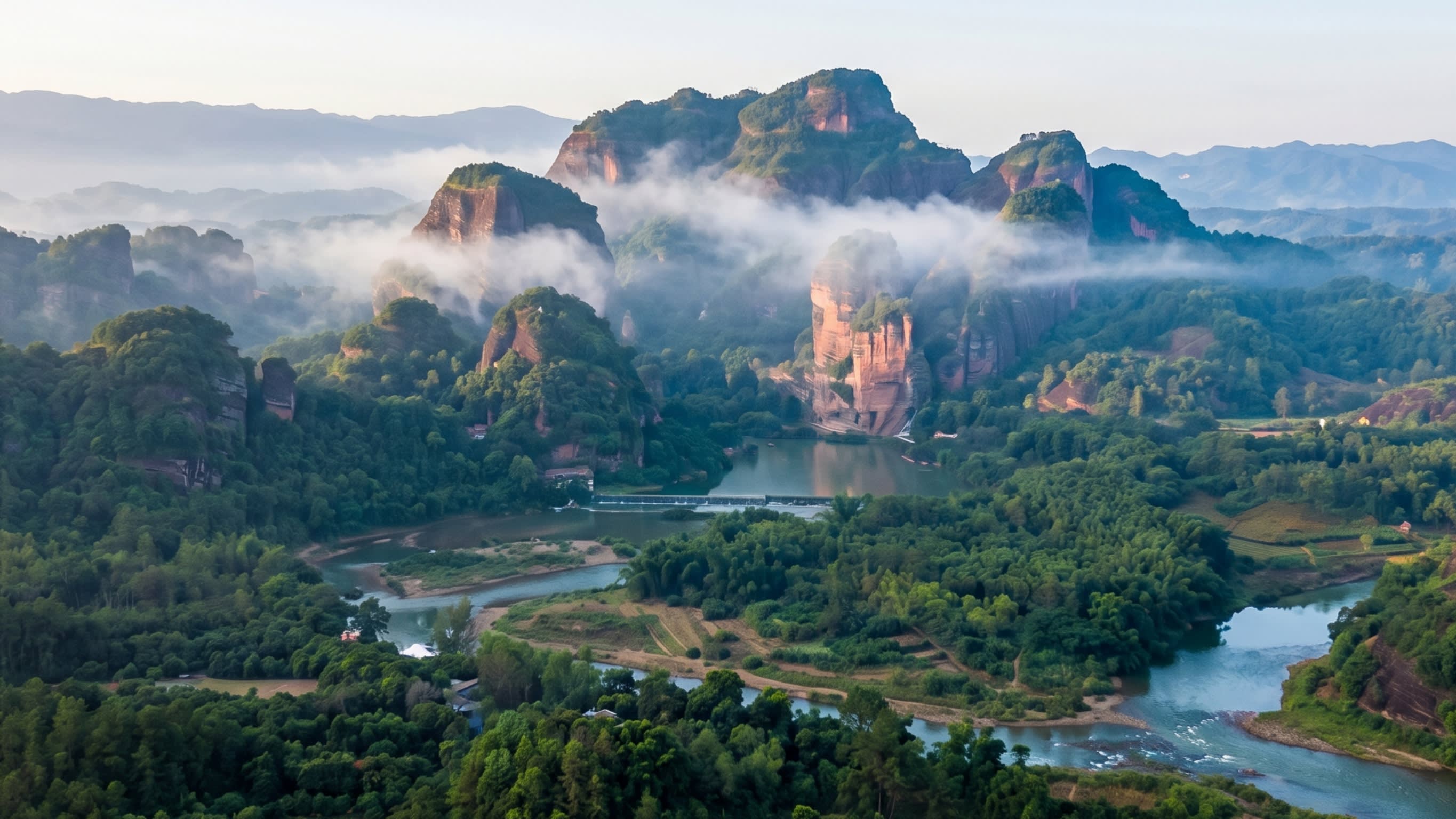
As the “namesake” of the landform, located in Guangdong, it offers the most diverse range of shapes. The vibe here is ancient, misty, and profoundly poetic. In 2026, the local government has strictly limited industrial noise within a 50km radius, ensuring that the Jinjiang River Cruise remains a silent, contemplative journey through time.
The Danxia Comparison Matrix (2026 Edition)
| Location | Aesthetic | Climate | Best Feature |
|---|---|---|---|
| Zhangye (甘肃) | Vibrant Rainbows | Arid / Desert | Technicolor Layers |
| Chishui (贵州) | Wild & Lush | Humid / Subtropical | Red Rock Waterfalls |
| Danxiashan (广东) | Majestic & Misty | Mild / Coastal | Iconic Rock Pillars |
Fueling the Exploration: Silk Road Flavors
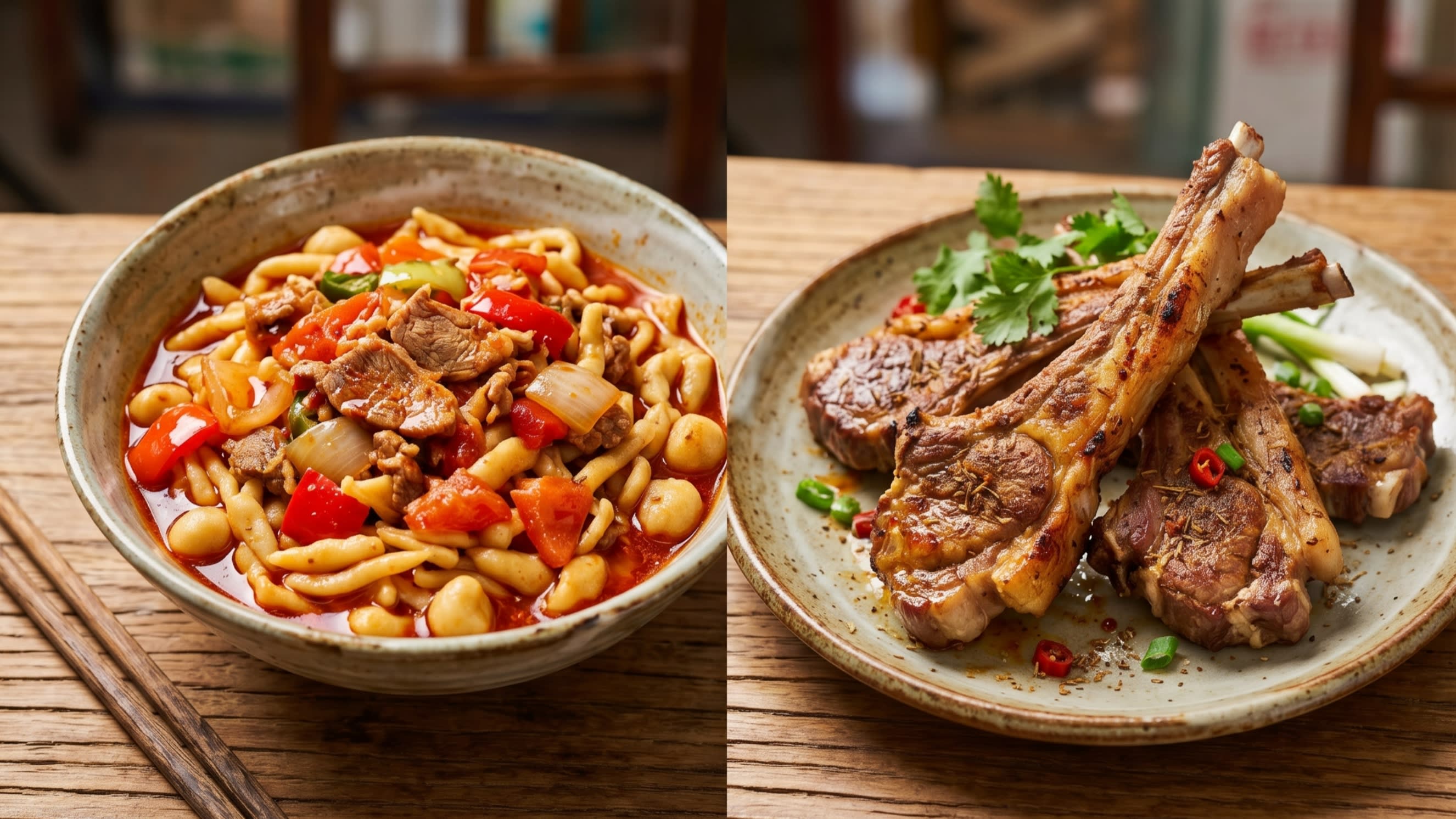
If you are exploring the Zhangye region, you need the heavy-hitting fuel of the Hexi Corridor. My favorite is Chao Pao Rou (炒炮仗 - chǎo pào zhàng). These are short, thick noodles that resemble firecrackers, stir-fried with tender lamb and fresh peppers. It embodies that authentic ‘Yanhuoqi’ (烟火气 - the raw, vibrant vibe of life) found in the Northwest.
When you’re out there, look for a small, bustling shop—the kind that makes you want to reach for a sturdy pair of chopsticks. If you want to dive deeper into the regional food culture, check out my Ultimate Chinese Street Food Map for more inspiration.
- Native Perspective: “在张掖一定要‘嗦’一碗炮仗面。那种大西北特有的‘分量’ (fèn liàng) 会让你觉得特别踏实。别管什么‘网红店’,找个全是本地人的小馆子,味道绝对正宗 (zhèng zōng)。” (In Zhangye, you must ‘slurp’ a bowl of Paozhang noodles. That unique Northwest ‘portion size’ makes you feel very satisfied. Don’t worry about ‘influencer shops’; find a small place full of locals, and the taste will be absolutely authentic.)
Traveler’s Language Survival Table (Geology Edition)
| English | Chinese & Pinyin |
|---|---|
| When is the best light for photos? | 什么时候光线拍照片最好? (Shén me shí hòu guāng xiàn pāi zhào piàn zuì hǎo?) |
| Is this the Rainbow Mountain? | 这就是七彩丹霞吗? (Zhè jiù shì qī cǎi dān xiá ma?) |
| Where is the viewing platform? | 观景台在哪里? (Guān jǐng tái zài nǎ lǐ?) |
Final Thoughts from Haoran
Exploring China’s Danxia landforms is an exercise in perspective. In 2026, as we live our lives at the relentless pace of a fiber-optic signal, the red rocks of Zhangye and Chishui remind us to slow down. Nature doesn’t rush, and yet, everything gets done—usually in the form of a masterpiece.
My advice? Pack your best polarized sunglasses to cut the desert glare and make those colors pop. Stay for the sunset, and remember: the most beautiful thing about the rainbow mountains isn’t just the color, it’s the fact that they are still changing, one grain of sand at a time. It’s a powerful, humbling reminder of our brief place in the world.
Disclaimer: As an Amazon Associate, ChinaCurator earns from qualifying purchases.