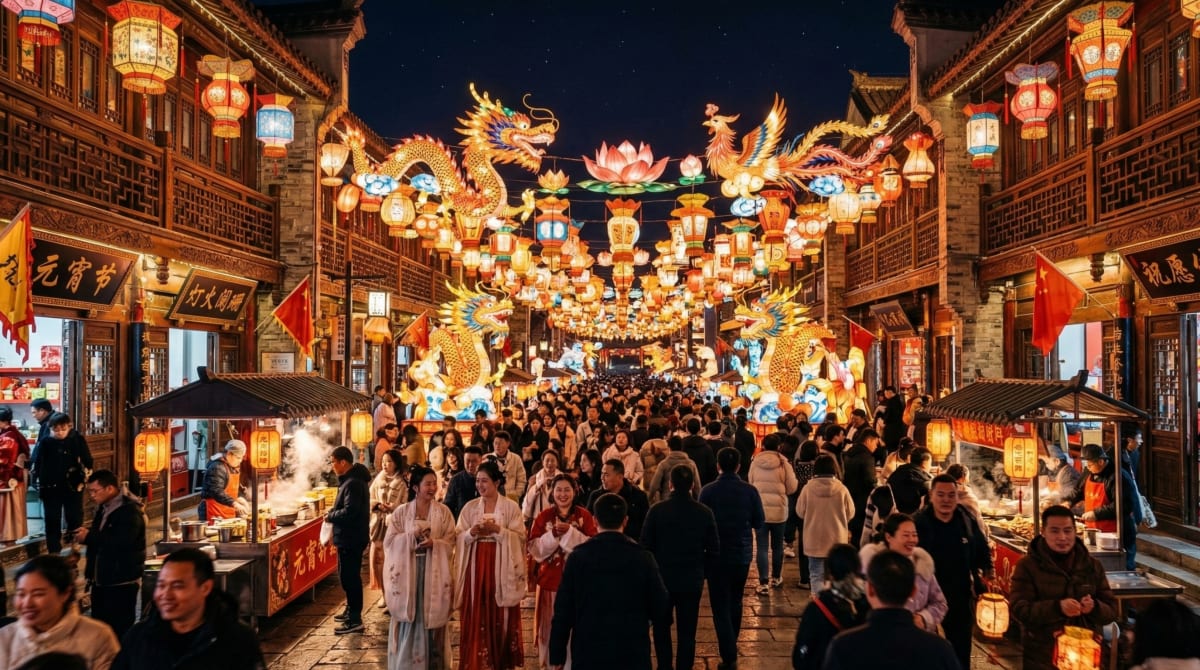
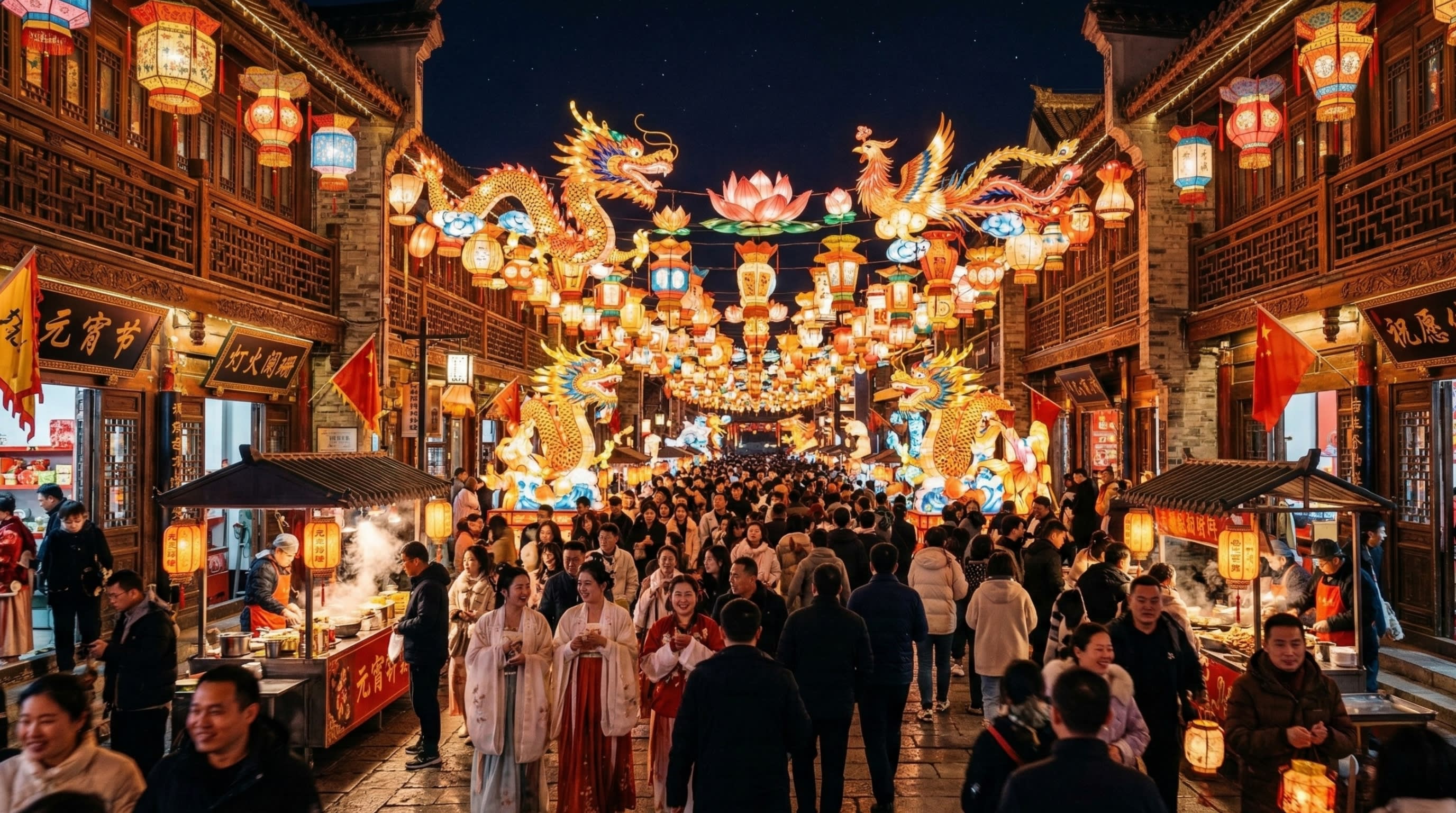
If the Spring Festival is a private, indoor affair defined by intimate family reunions and quiet ancestral reverence, the Lantern Festival is its boisterous, public-facing opposite. Falling on the 15th day of the first lunar month, Yuánxiāo Jié (元宵节) acts as a grand, bittersweet finale to the New Year celebrations. It is the night of the first full moon—a moment when the air is still crisp with winter’s chill, yet the streets are ablaze with the warm, flickering glow of a thousand paper lanterns.
To truly grasp this holiday, one must look past the modern LED displays and recognize that, for over a millennium, this was the only night when the rigid social constraints of ancient Chinese life were discarded in favor of collective joy.
🏮 1. The Concept of “Nao”: Making Joyful Noise
In China, we don’t just “observe” this holiday; we Nào Yuánxiāo (闹元宵). The verb Nào implies a joyful ruckus, a stirring of excitement, or the act of creating a festive commotion.
While the New Year’s Eve dinner is a solemn commitment to blood relatives behind closed doors, Nào Yuánxiāo demands that you step out into the night. It is about mingling with the masses, listening to the rhythmic thrum of drums, and allowing yourself to be swept up in the sensory overload of a true, unadulterated carnival. It is the night when the city—and the people within it—come alive.
🚫 2. The Broken Curfew: A Brief Taste of Freedom
To appreciate the historical weight of this festival, consider the Yèjìn (夜禁), or the ancient night curfew.
During the height of the Tang (618–907 AD) and Song (960–1279 AD) dynasties, cities like the great capital Chang’an were strictly regulated. Once the sun dipped below the horizon, 400 drumbeats would signal the locking of the city gates. The streets belonged to the night watchmen, and lingering outside without an official permit could lead to public flogging. The world turned silent, grey, and shuttered.
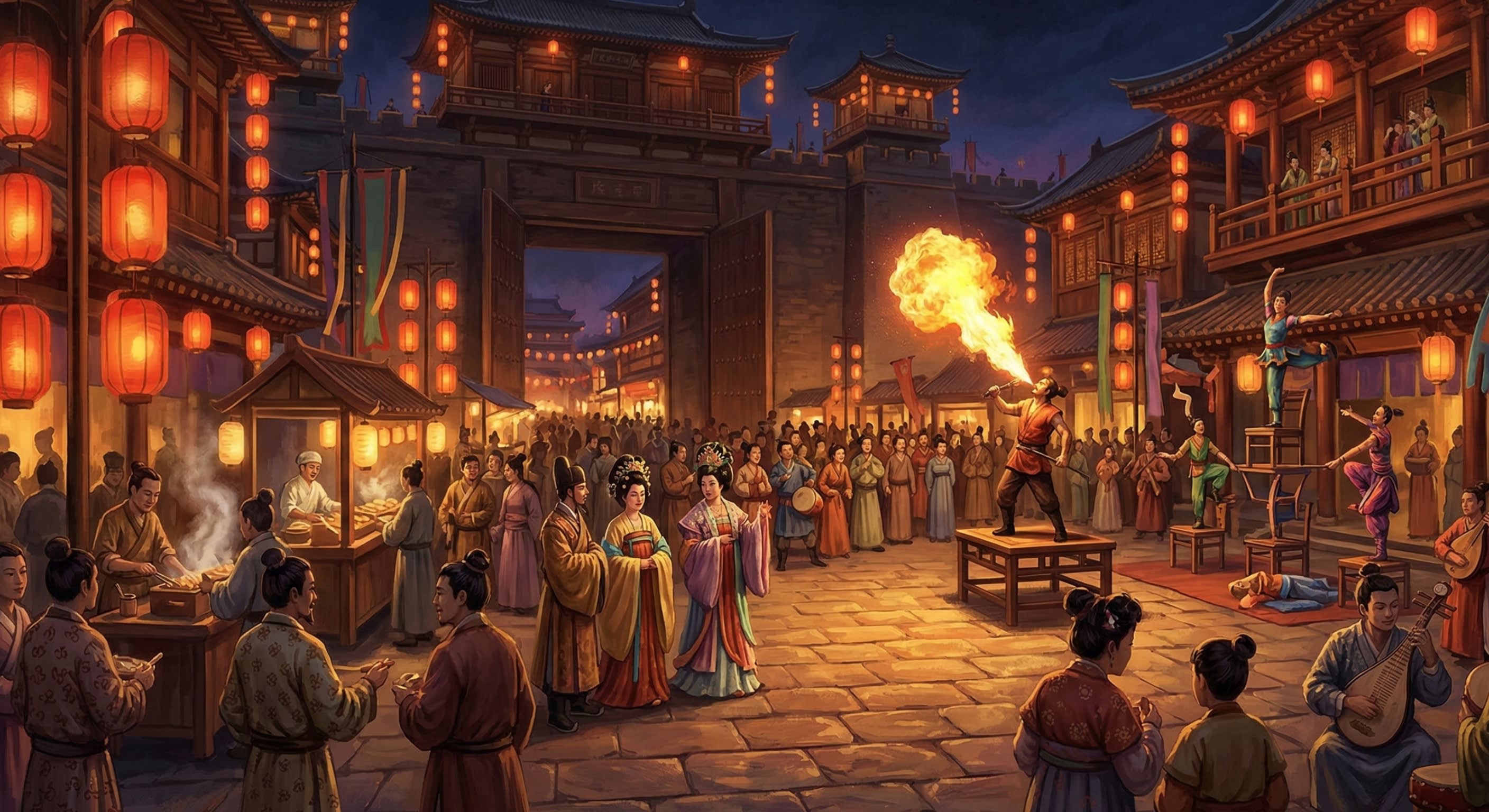
The Lantern Festival was the glorious exception. Known as Fàngyè (放夜), or “releasing the night,” the Emperor would decree a temporary suspension of the curfew. For three to five days, the gates were flung open. The darkness was vanquished by millions of silk lanterns. For the commoner, this wasn’t just a party; it was a rare, intoxicating taste of social freedom, where merchants, poets, and royalty shared the same cobblestone streets.
💖 3. The Original Chinese Valentine’s Day
While the Qixi Festival is often marketed today as the “Chinese Valentine’s Day,” it was historically a day for women to pray for domestic prowess. The true historical arena for romance—the night when matches were actually made—was the Lantern Festival.
In feudal China, unmarried women were often confined to the inner courtyards of their homes. Yet, under the golden glow of the lanterns, these societal rules were paused. Young women were permitted to venture out in their finest silks to admire the displays.
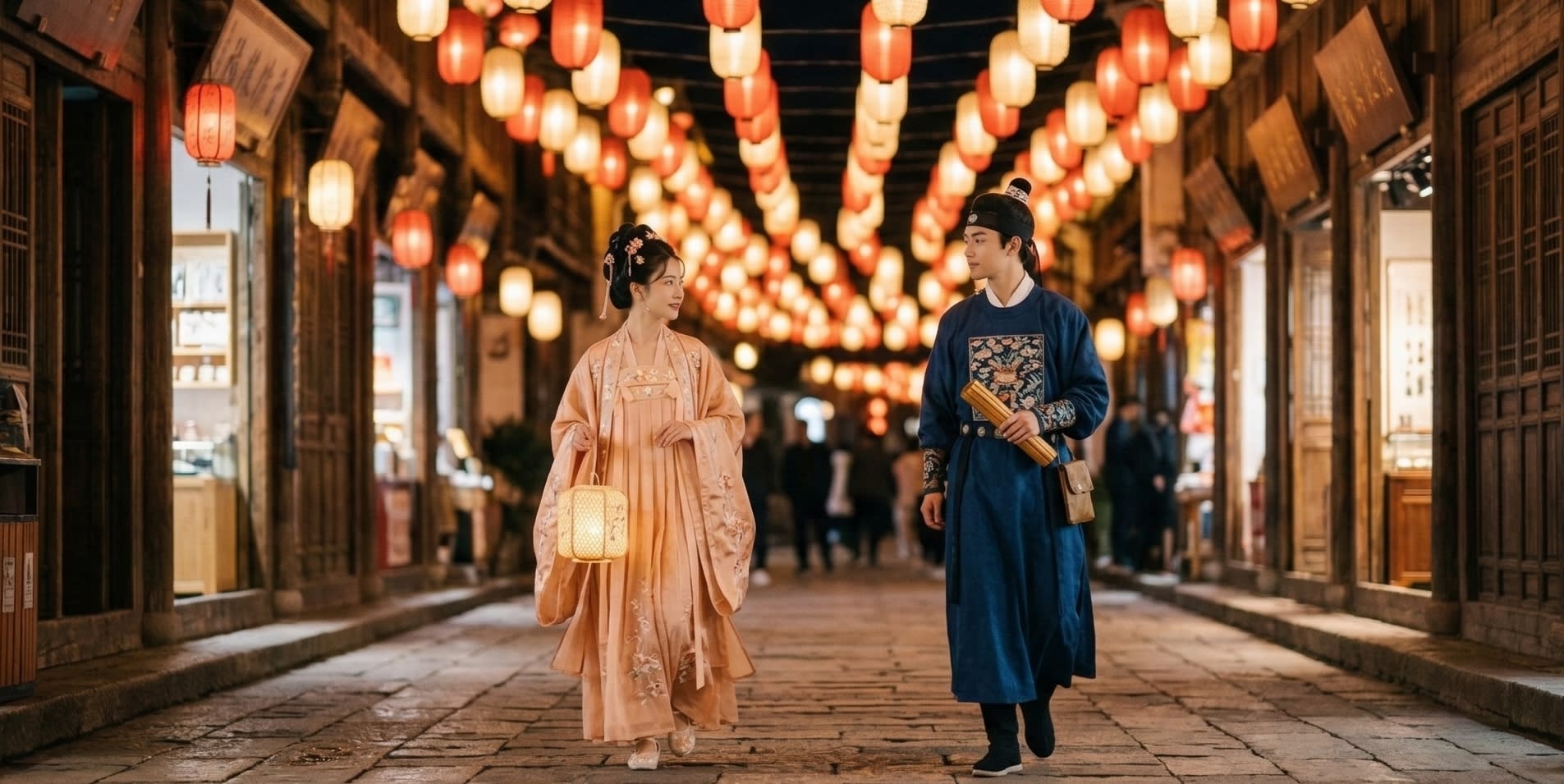
It became the ultimate matchmaking theater. Scholars would wander the crowd, not just for the art, but to catch a glimpse of the women shielded from view for the rest of the year. Poetry was exchanged, handkerchiefs were dropped, and glances were stolen in the shadows. As the great Song Dynasty poet Ouyang Xiu famously lamented, the memory of these twilight trysts often lingered in the heart long after the lanterns had been extinguished.
📜 4. The Literati’s Game: Lantern Riddles
Beyond the acrobatics and fire-breathers, scholars engaged in Cāi Dēngmí (猜灯谜), or “Guessing Lantern Riddles.”
Organizers would write complex, poetic brain-teasers on paper slips and suspend them beneath lanterns. A correct answer often earned a small prize, like an inkstone or a fine brush. These riddles weren’t just simple toys; they were tests of linguistic mastery, often requiring deep knowledge of character radicals or classical literature.
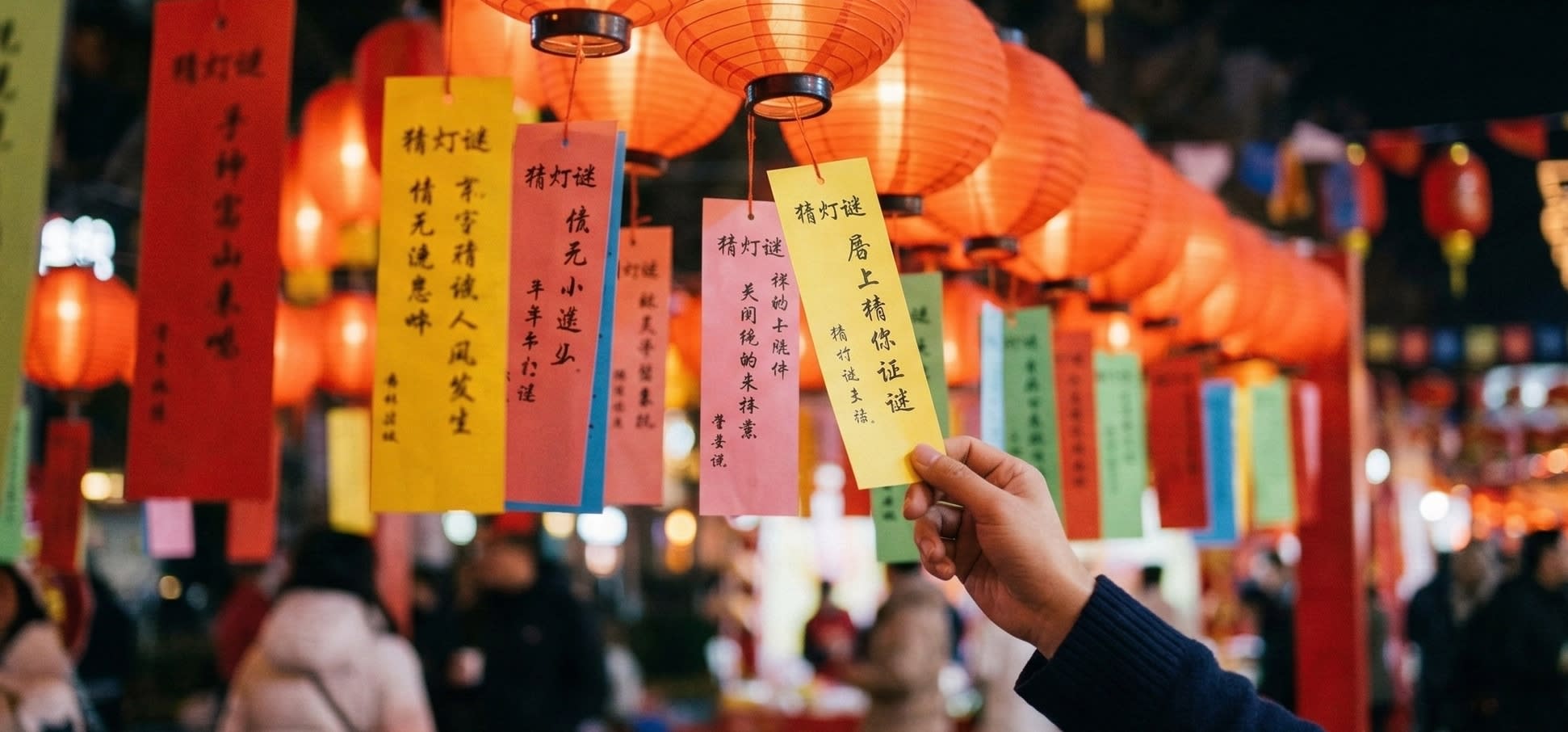
Take, for instance, the riddle: “A person stands next to a tree.” The answer is Xiū (休), meaning “to rest.” It’s an intellectual dance that keeps the beauty of the Chinese language alive—if you want to dive deeper into how this language shapes culture, I highly recommend checking out our guide on Demystifying Chinese tones and characters.
🥣 5. The Great Culinary Debate: Tangyuan vs. Yuanxiao
No carnival is complete without a signature flavor. The Lantern Festival is synonymous with round, glutinous rice dumplings filled with sweet sesame or peanut paste. This round shape signifies Tuányuán (团圆), or “reunion.”
However, there is a spirited divide between North and South:
- Tangyuan (汤圆): Popular in the South, these are meticulously wrapped by hand. The dough is soft and silky, melting instantly on the tongue.
- Yuanxiao (元宵): The Northern specialty is “rolled.” Chunks of filling are shaken in a basket of dry flour, resulting in a heartier, more textured chew.

Regardless of the technique, enjoying these in a warm bowl of soup feels like the final hug of the holiday season. If you’re feeling adventurous and want to try your hand at sweet treats, you might find that using high-quality glutinous rice flour makes all the difference in achieving that perfect, non-sticky texture.
💬 6. Essential Vocabulary
To navigate the festivities like a local, keep these terms in your back pocket:
| The Term | Pinyin | Context |
|---|---|---|
| 元宵节快乐 | Yuánxiāo jié kuàilè | "Happy Lantern Festival!" |
| 闹元宵 | Nào Yuánxiāo | The act of celebrating/partying. |
| 猜灯谜 | Cāi dēngmí | Solving lantern riddles. |
As the final firework fades and the last of the Tangyuan is finished, a quiet reality sets in. The Spring Festival is officially over. Tomorrow, the alarm clocks will ring, the schools will unlock their doors, and the intense rhythm of the modern year begins. Yet, the Lantern Festival leaves a lingering warmth, a reminder that even after the darkest winter, we have the light to carry us forward.
㊗️ Wishing you a year as complete and bright as the full moon!
Curious about the cultural roots that lead up to this moment? You might enjoy exploring the 10 Essential Spring Festival Customs or reading our deep dive into the history of the 24 Solar Terms.
Disclaimer: As an Amazon Associate, ChinaCurator earns from qualifying purchases.