In our last article, we dispelled the myth that Chinese is impossibly hard and highlighted its surprising simplicity. Yet, let’s be honest—anyone who has tried to order a coffee in Beijing or decipher a street sign knows that the “simplicity” usually kicks in after the initial climb. We are ready to roll up our sleeves and tackle the heavy hitters: tones, characters, and the profound cultural fabric that holds them all together.
This isn’t just abstract theory. By the end of this guide, you will have a clear, actionable roadmap to navigate these hurdles. Think of this as your survival kit for your first real steps into the language.
Part 1: Tones – Mastering the “Singing” of Chinese
Tones are the most distinctive—and often most feared—aspect of Mandarin for native English speakers. When I first started, I sounded like a broken record, and my “mother” often sounded uncomfortably like a “horse.” But here is the secret: Chinese isn’t just about speaking; it is about listening to the melody of the language.
The Four Tones of Mandarin
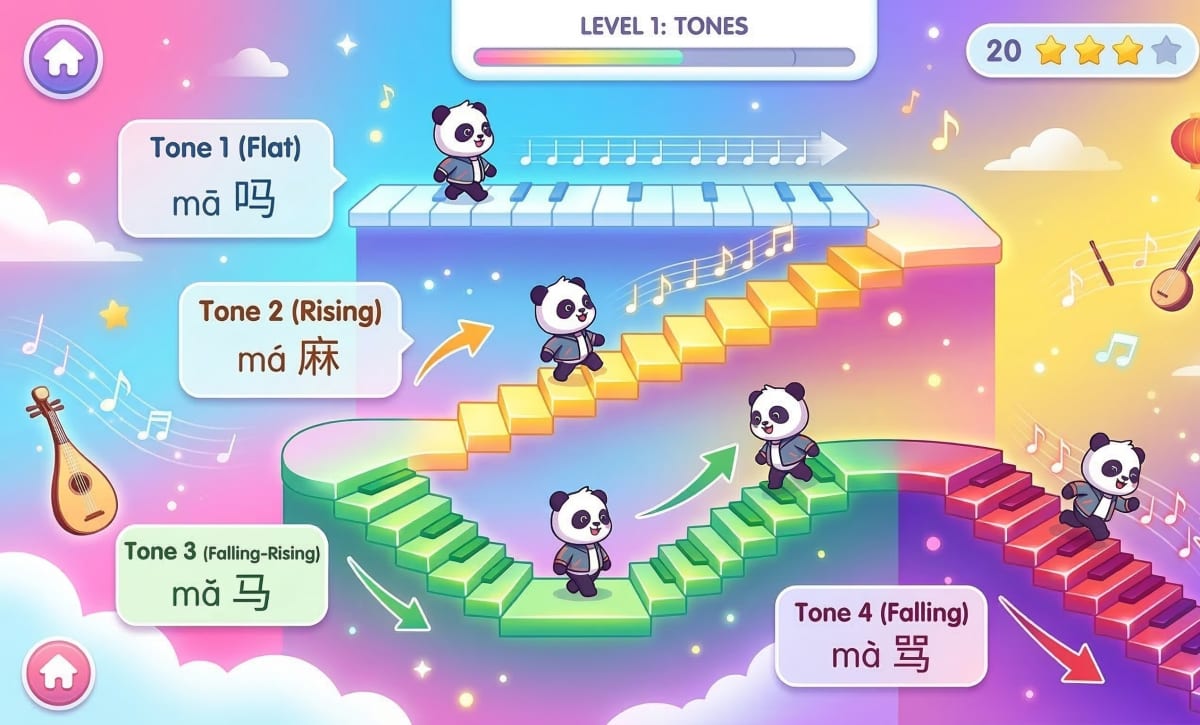
Mandarin relies on four distinct pitch contours. Think of these not as arbitrary rules, but as the emotional inflection of a musical phrase.
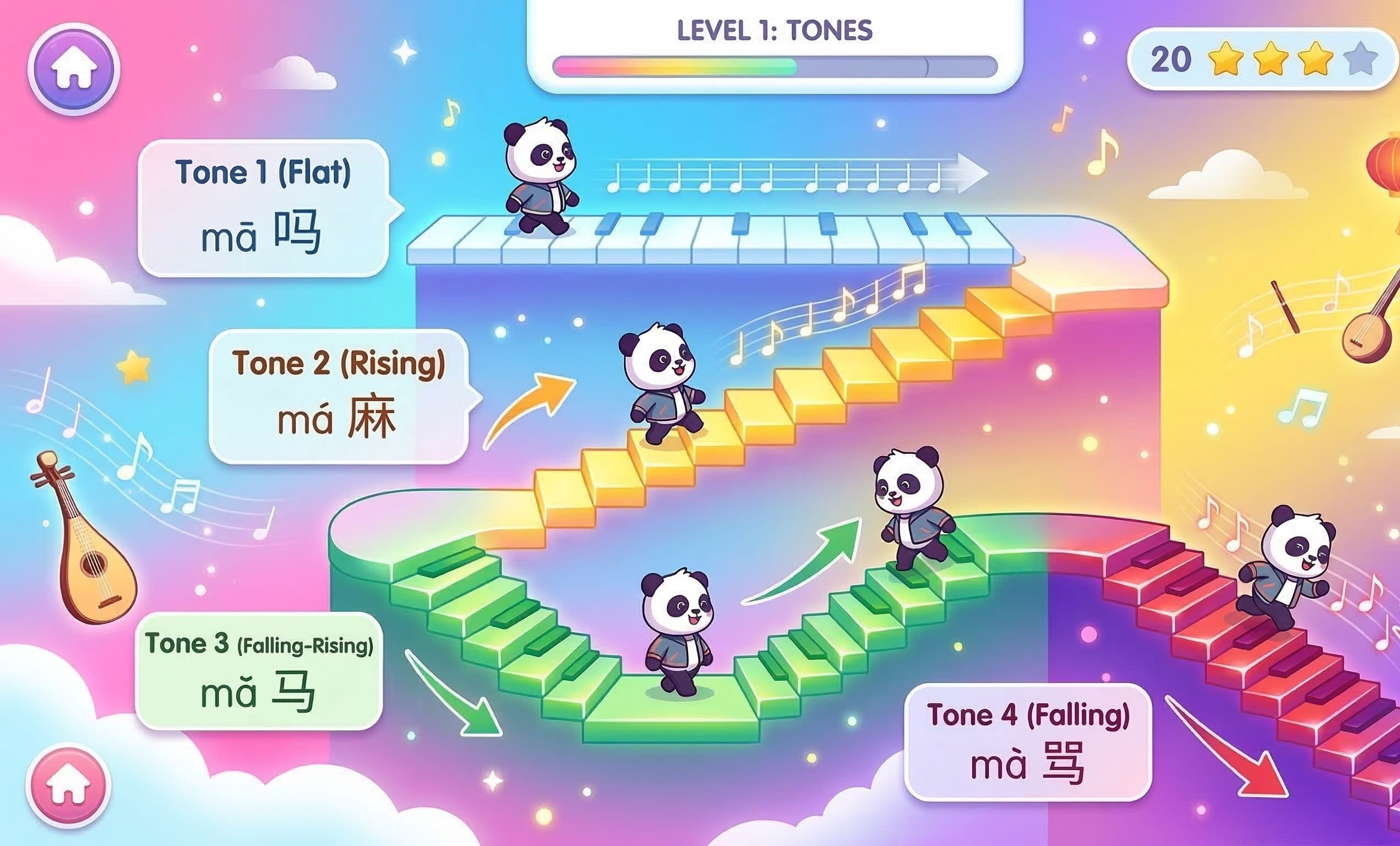
| Tone | Description | Example | Meaning |
|---|---|---|---|
| 1st (Flat) | High and steady; like singing a single note. | mā (妈) | Mother |
| 2nd (Rising) | Starts low, rises sharply; like asking "Really?" | má (麻) | Hemp |
| 3rd (Falling-Rising) | Starts low, dips, then climbs; the most complex. | mǎ (马) | Horse |
| 4th (Falling) | Starts high, drops quickly; like a firm command. | mà (骂) | To scold |
Strategies for Tone Mastery
If you want to move beyond textbook rote memorization, I highly recommend the “Shadowing Technique.” Don’t just read; listen to native speakers—try using high-quality audio resources like ChinesePod—and repeat what you hear immediately, mimicking their exact pitch. You might also find that using a high-quality voice recorder to compare your own voice against native audio is an eye-opening exercise. It’s painful at first, but it is the fastest way to bridge the gap between “textbook Chinese” and “real-world communication.”
Part 2: Characters – From “Mystery” to “Method”
People often look at Chinese characters and see a chaotic mess of ink. But there is a deep, architectural logic behind them. Once you understand that characters are essentially “Lego sets” of meaning, the fear begins to dissolve.
The Anatomy of a Character
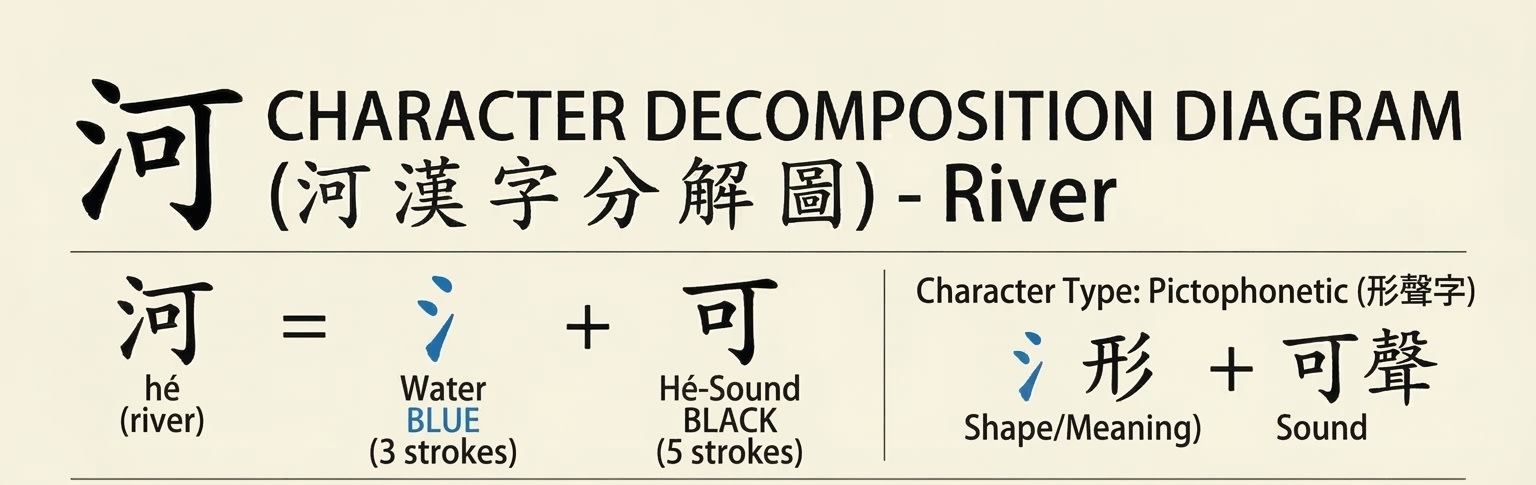
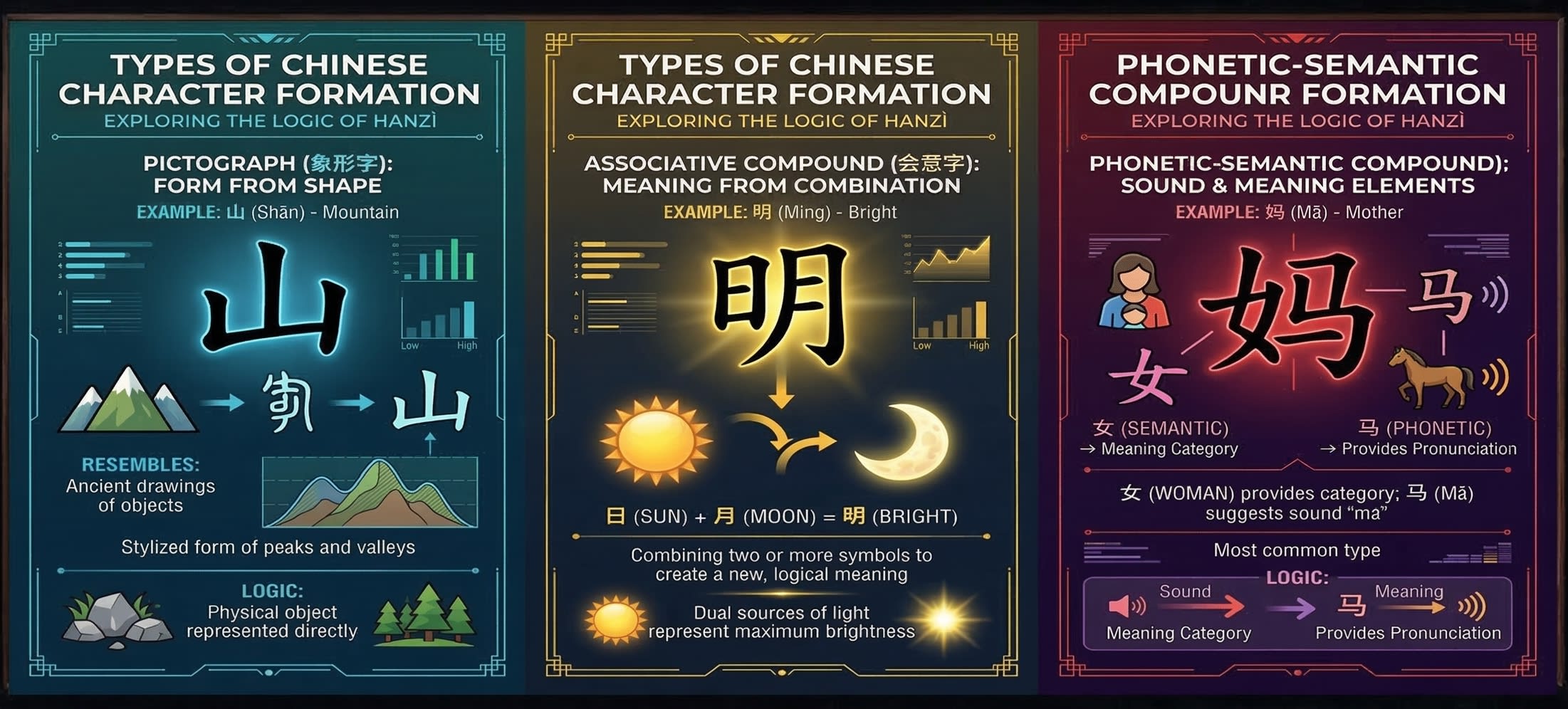
Every character is composed of strokes and radicals—the piānpáng bùshǒu (偏旁部首). If you see the radical 氵 (shuǐ, water), you know immediately that the word relates to liquid, like 河 (hé, river) or 湖 (hú, lake). It’s not magic; it’s a filing system.
- Pictographs: Simple drawings like
山(shān, mountain). - Associative Compounds: Combining two concepts, like
日(sun) +月(moon) =明(bright). - Phonetic-Semantic Compounds: This is where the real power lies. Most characters contain a radical for meaning and a component that provides a hint of the sound.
If you are struggling with retention, don’t just stare at the page. Invest in a good stylus to practice writing on a screen, or stick to the classic pen-and-paper method to build muscle memory. If you feel overwhelmed, check out our guide on why pinyin is crucial for fluency to ensure you are building a solid foundation.
Part 3: Culture – The Invisible “Third Challenge”
Language is the skin of culture. You can know every word in the dictionary, but if you don’t understand the concept of miànzi (面子, face) or how to appropriately address someone as Lǎoshī (老师, teacher), your Chinese will feel “hollow.”
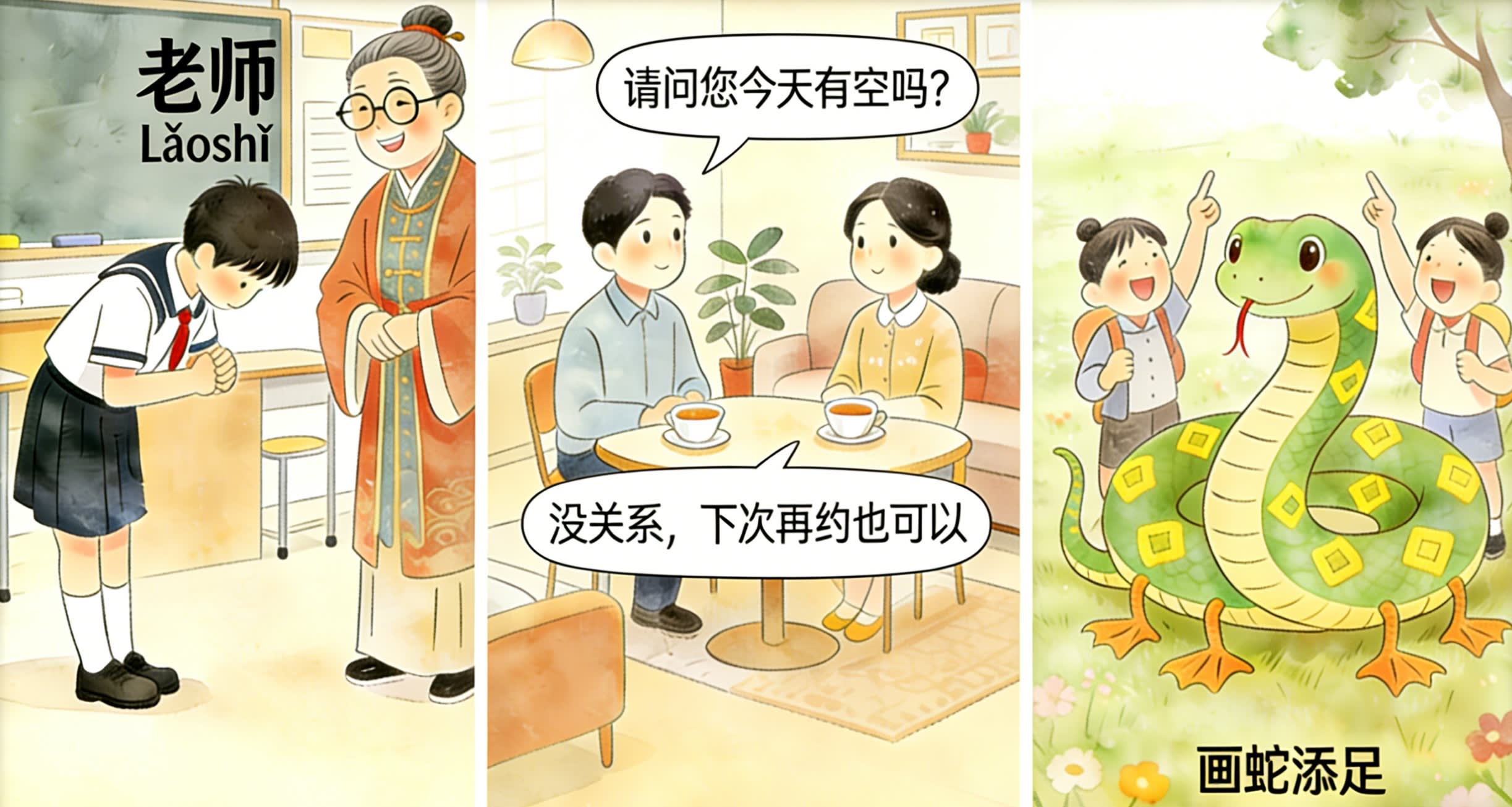
Chinese society is built on a complex web of hierarchy and subtle, indirect communication. In the West, we are taught to be direct; in China, “no” is often a soft phrase, not a flat rejection. Mastering the language requires you to master these social cues. For those interested in deeper cultural immersion, our exploration of Chinese tea culture is a great place to start learning how the language manifests in daily rituals.
Actionable Immersion
- Media: Stop using English subtitles as a crutch. Use Chinese subtitles as soon as you are able; it forces your brain to bridge the sound and the script.
- Social Context: Understand that learning Chinese is also about learning how to say ‘no’ without losing face.
- Modern Trends: If you want to sound current, peek at our 2026 Chinese internet slang guide to avoid sounding like a 1990s textbook.
Conclusion: From Fear to Confidence
We have taken a deep dive into the three pillars: tones, characters, and culture. Tones are the music, characters are the architecture, and culture is the soul. By breaking these down into daily, manageable tasks, you aren’t just memorizing symbols—you are acquiring a new lens through which to view the world.
Don’t let the complexity intimidate you. Every expert was once a beginner staring at a page, confused by the strokes. Keep practicing, keep listening to the rhythm of the language, and most importantly, keep enjoying the process.
Ready to find out why this journey is worth the effort? Read our next article, “Why Learn Chinese? Beyond ‘The Language of the Future’”, to discover the cognitive and personal rewards that make the hard work so incredibly fulfilling.
Disclaimer: As an Amazon Associate, ChinaCurator earns from qualifying purchases.