
Have you ever been deterred by the pervasive myth that Chinese is the “hardest language in the world”? Or perhaps you’ve felt that initial shiver of intimidation when glancing at a page of dense, ancient-looking characters, wondering how anyone could possibly make sense of them?
I have been there. Years ago, I stared at those same characters with the same skepticism. However, after walking the path of a learner and eventually navigating the nuances of daily life in China, I discovered a widely misunderstood truth: the difficulty of Chinese is often vastly overstated, while its most elegant features are rarely discussed.
Today, we are going to strip away the hyperbole. We won’t shy away from the legitimate challenges, but we certainly won’t indulge in the “impossible language” narrative. This 2026 reality check is designed to help you objectively assess the true barriers to learning Mandarin, so you can decide your next move with clarity and confidence.
Part 1: The Hurdles (Let’s Face Them Head-On)
To be fair, Chinese does present unique obstacles for English speakers. These aren’t impossible, but they do require a different “mental architecture” than learning a language like Spanish or German.
1. The Tones: A Musical Necessity
In English, we use intonation to express emotion or to turn a statement into a question. We might raise our pitch when we are excited, but the meaning of the word “happy” remains “happy” regardless of whether I shout it or whisper it.
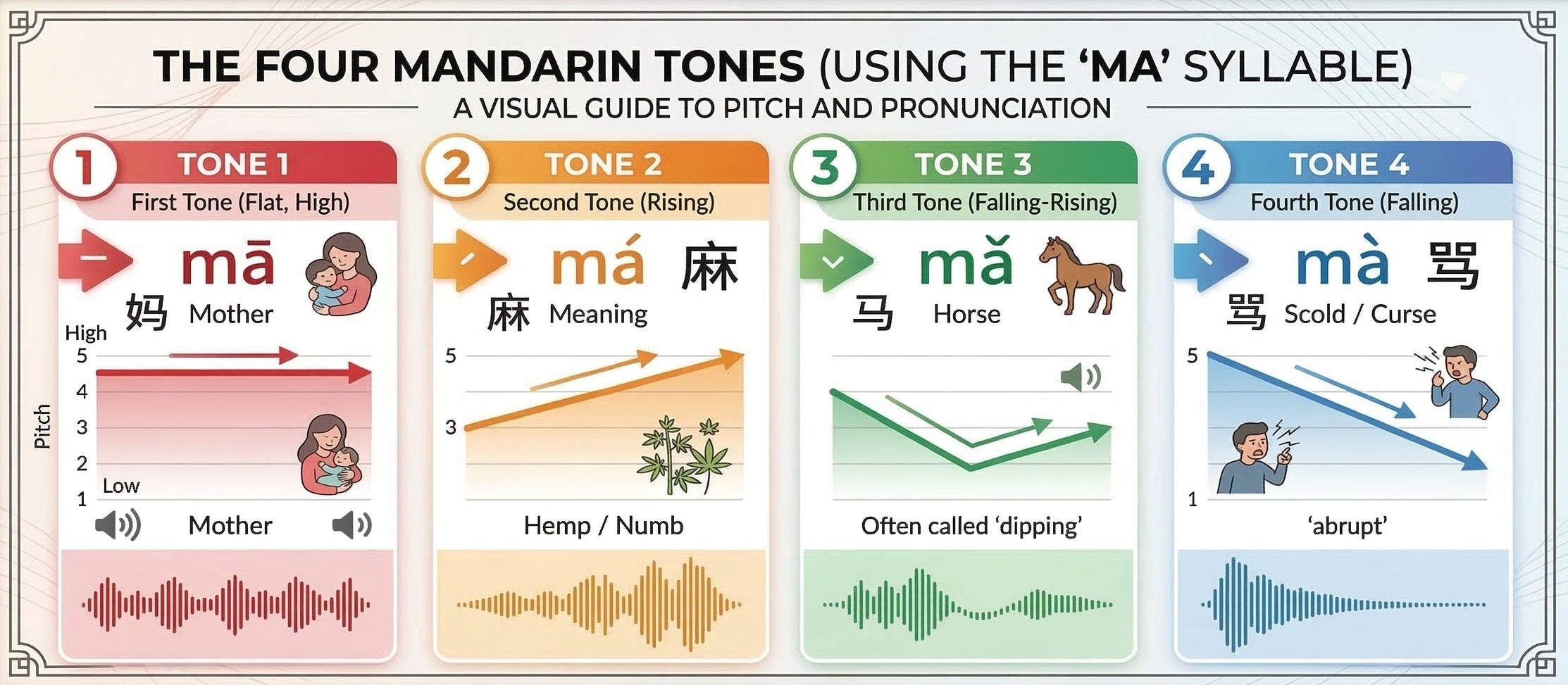
In Chinese, however, pitch is semantic. The tone of a syllable—its “pitch contour”—can completely redefine what you are saying. Take the classic example of “ma”:
- mā (妈, mother): A high, level pitch.
- má (麻, hemp/numb): A rising pitch, like you’re asking “What?”.
- mǎ (马, horse): A dipping pitch, descending then rising.
- mà (骂, scold): A sharp, falling pitch, like a command.
The challenge here isn’t just “hearing” the difference; it is training your vocal muscles to replicate these precise contours consistently. It feels strange at first, almost like learning to sing a song where the notes are embedded in every single word.
2. Characters: The Visual Landscape
English is alphabetic; you learn twenty-six letters, and you can theoretically decode any word you encounter. Chinese is character-based, and for an English speaker, that is the biggest psychological leap.
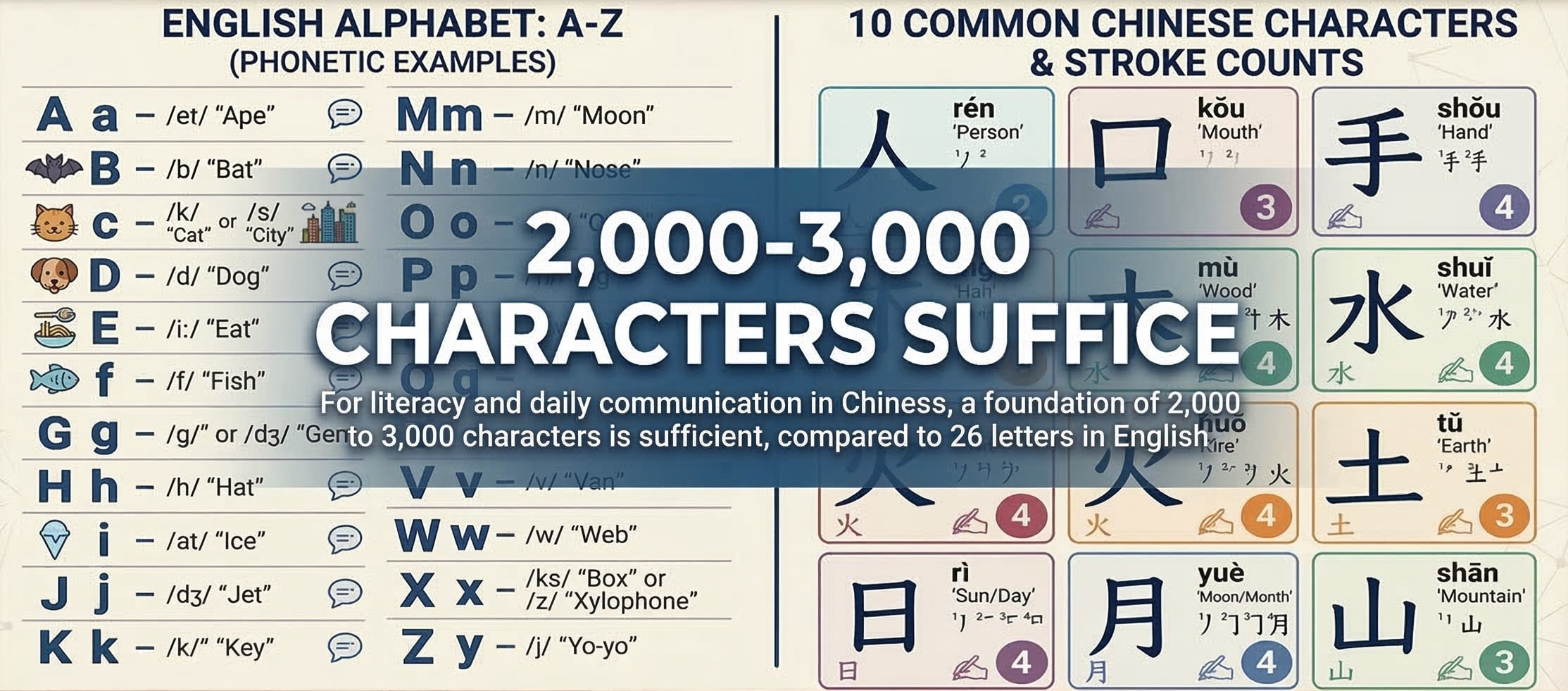
Many learners are frightened by the “50,000 characters” legend. In reality, you don’t need to be a lexicographer to be fluent. A solid grasp of 2,000 to 3,000 characters is the magic threshold that allows you to read newspapers, navigate streets, and understand the vast majority of daily social interactions. You aren’t memorizing thousands of arbitrary squiggles; you are learning a system of “radicals” (building blocks) that hint at meaning and sound.
Part 2: The Hidden Simplicity
Once you move past the initial shock of tones and characters, you will find that Chinese is arguably more logical and streamlined than most European languages.
A Grammar System That Actually Makes Sense
There is no better feeling than realizing you don’t have to deal with conjugation. In English, we have to navigate the shifting sands of “go,” “goes,” “went,” and “gone.”
| Concept | English (Complex) | Chinese (Simple) |
|---|---|---|
| Verb Tense | I go, I went, I have gone | Wǒ qù (我去) |
| Plurals | One cat / Three cats | Yī zhī māo / Sān zhī māo |
| Gender | He / She / It | Tā (他/她/它) |
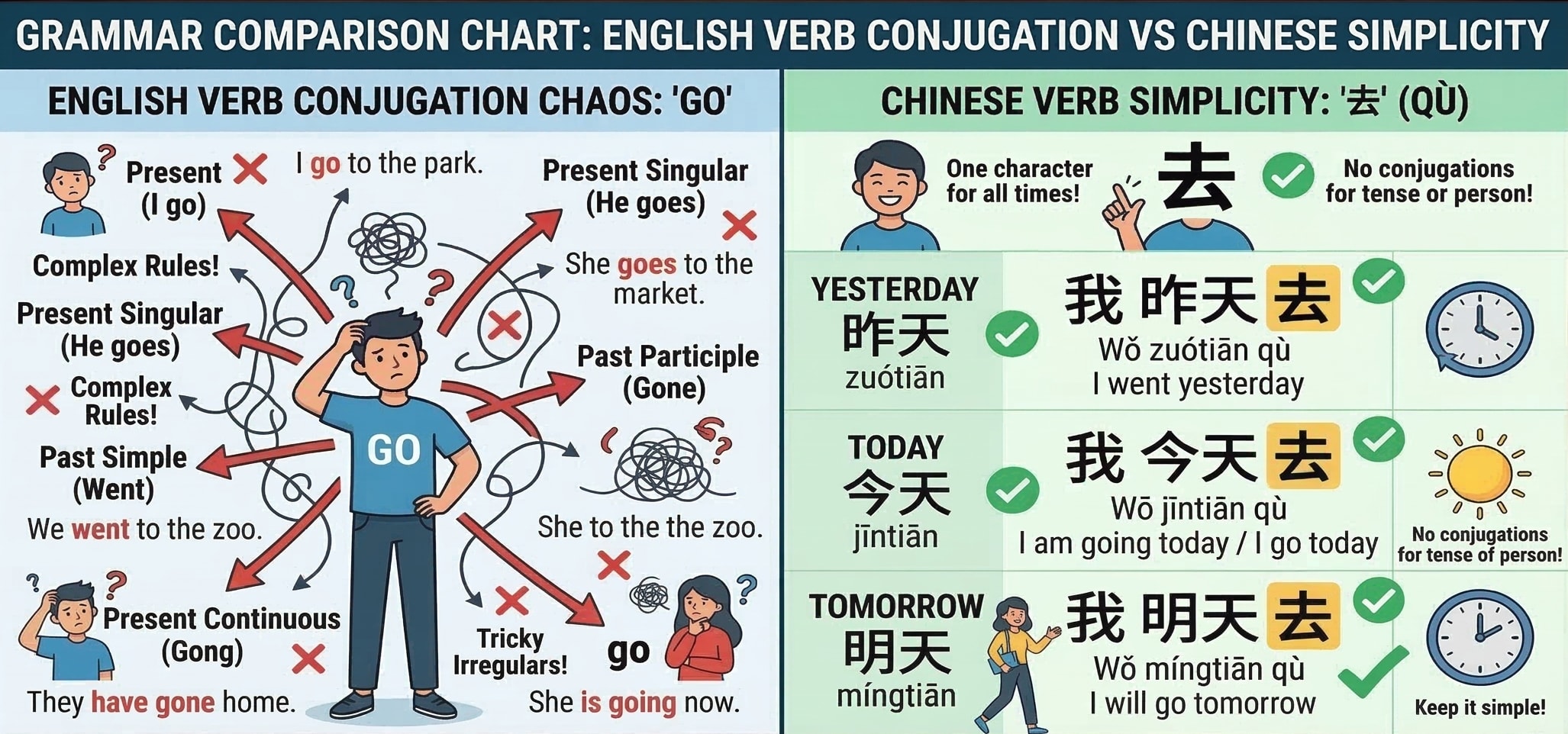
In Mandarin, the verb qù (去, to go) remains qù regardless of who is performing the action or when it occurred. You simply append a time word—”yesterday,” “next week,” or “already”—and the context is set. There are no noun genders to memorize, and plurals are handled by simple numbers. It is a language of absolute precision.
Vocabulary Logic
Chinese words are often built like Lego bricks. Once you know the base character, the meaning of a compound word becomes a fun, logical puzzle.
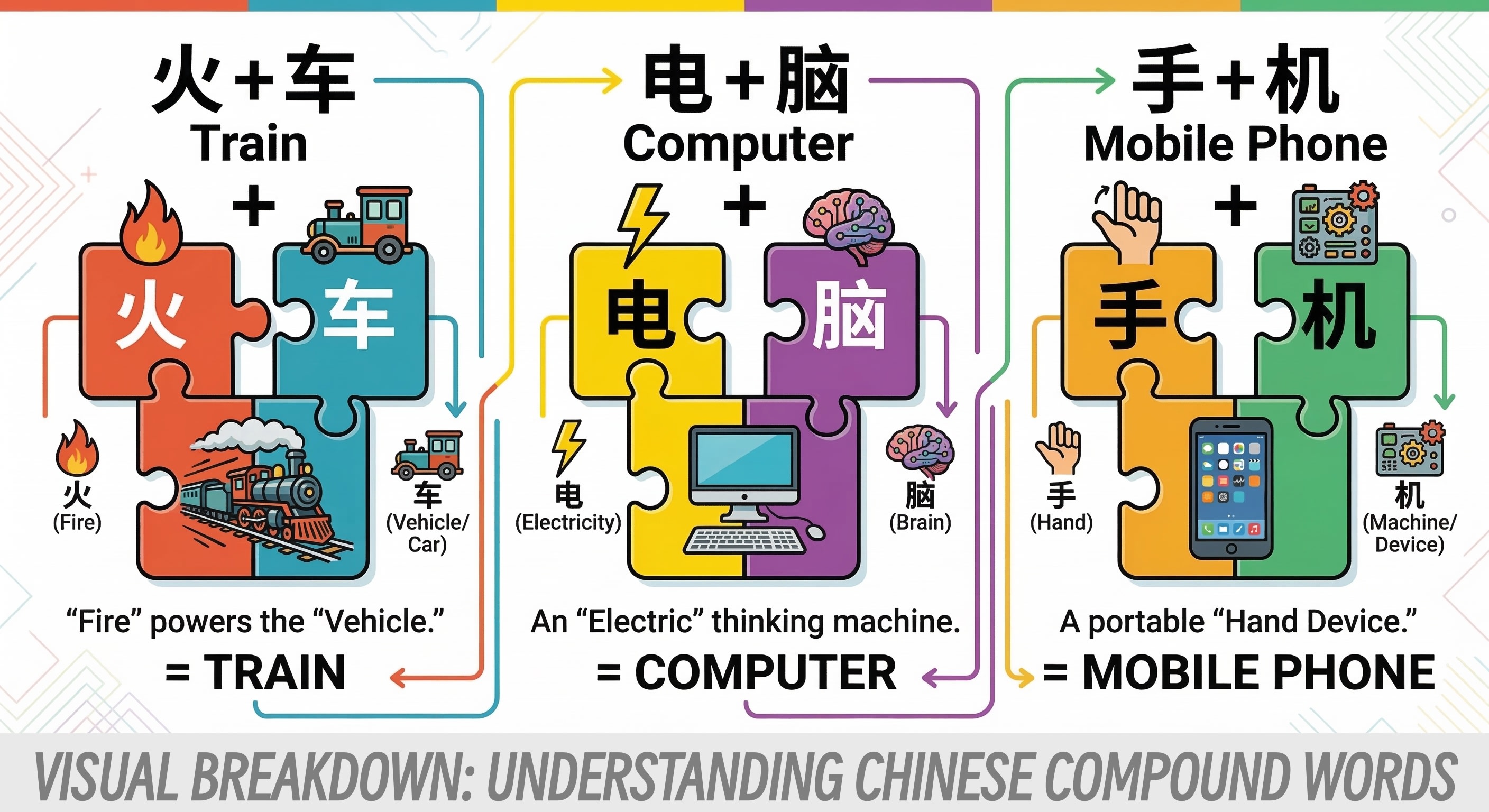
- Huǒchē (火车): “Fire” + “Car” = Train.
- Diànnǎo (电脑): “Electricity” + “Brain” = Computer.
- Shǒujī (手机): “Hand” + “Machine” = Mobile phone.
Part 3: The 2026 Advantage
In 2026, the barriers to entry are lower than ever. If you feel overwhelmed, you are likely not using the right tools.

- AI Tutors: We now have access to AI chatbots that never get tired. You can practice your tone pronunciation with real-time feedback, and you can ask for grammar explanations tailored to your specific level of confusion.
- Gamification: If you’ve ever found textbooks dry, modern apps transform the “grind” of memorizing vocabulary into a daily streak-based habit.
- Immersive Entertainment: Access to Chinese media is instantaneous. Whether you are browsing Chinese streaming platforms or just watching dramas on Netflix, the “immersion” factor is at an all-time high.
For those who find character recognition daunting, I highly recommend using a dedicated calligraphy brush set to practice writing characters by hand; the physical act of tracing the strokes helps “lock” the visual logic into your muscle memory far better than tapping on a screen.
Conclusion: A Marathon, Not a Sprint
Is Chinese hard? If you compare it to a Romance language, it is definitely different. However, it is fundamentally a language of order, logic, and profound beauty. It is a “front-loaded” investment; the beginning is the steepest part of the climb, but the view from the top—being able to read ancient poetry or converse with locals in a busy night market—is unmatched.
Learning this language is not a sprint. It is a long, rewarding marathon that will fundamentally change how you process information and connect with the world.
If you are ready to take the next step, I recommend exploring my guide on Demystifying Chinese: A Deep Dive into Tones, Characters, and Culture. You might also find my article on Stop Saying ‘Er’ for Everything: The Ultimate Er (二) vs Liang (两) Grammar Guide helpful for tackling some of the most common early mistakes.
The door is not locked; it is simply waiting for you to turn the handle. Are you ready to begin?
Disclaimer: As an Amazon Associate, ChinaCurator earns from qualifying purchases.