
If you want to understand the true heart of a Chinese city, do not look at its shiny skyscrapers or its high-end shopping malls. Instead, wait until the sun goes down, walk into a narrow alleyway, and look for the rising steam.
In Chinese, there is a beautiful word that perfectly captures the essence of street food: yānhuǒqì (烟火气). Literally translating to “smoke and fire,” it refers to the lively, bustling, and deeply human atmosphere of everyday life. It is the sound of a spatula hitting a hot iron wok, the smell of roasted cumin drifting through the cool night air, and the sight of locals sitting on tiny plastic stools, sharing food and stories.
While fine dining in China is spectacular, the street stalls—known as lùbiāntān (路边摊)—are where the real culinary magic happens. In 2026, finding authentic street food is a badge of honor for any traveler. This guide is your culinary map to the four undisputed capitals of Chinese street food, helping you navigate the glorious chaos of the night market (yèshì 夜市).
1. Xi’an (西安): The Hearty North
Xi’an is famous for the Terracotta Warriors, but for food lovers, it is the ultimate destination for wheat-based, hearty comfort food. The Muslim Quarter gets most of the tourist traffic, but the real gems are found in the smaller night markets hidden outside the ancient city walls.
- The Vibe: Energetic, loud, and incredibly aromatic. The air is thick with the smell of roasting lamb and charcoal.
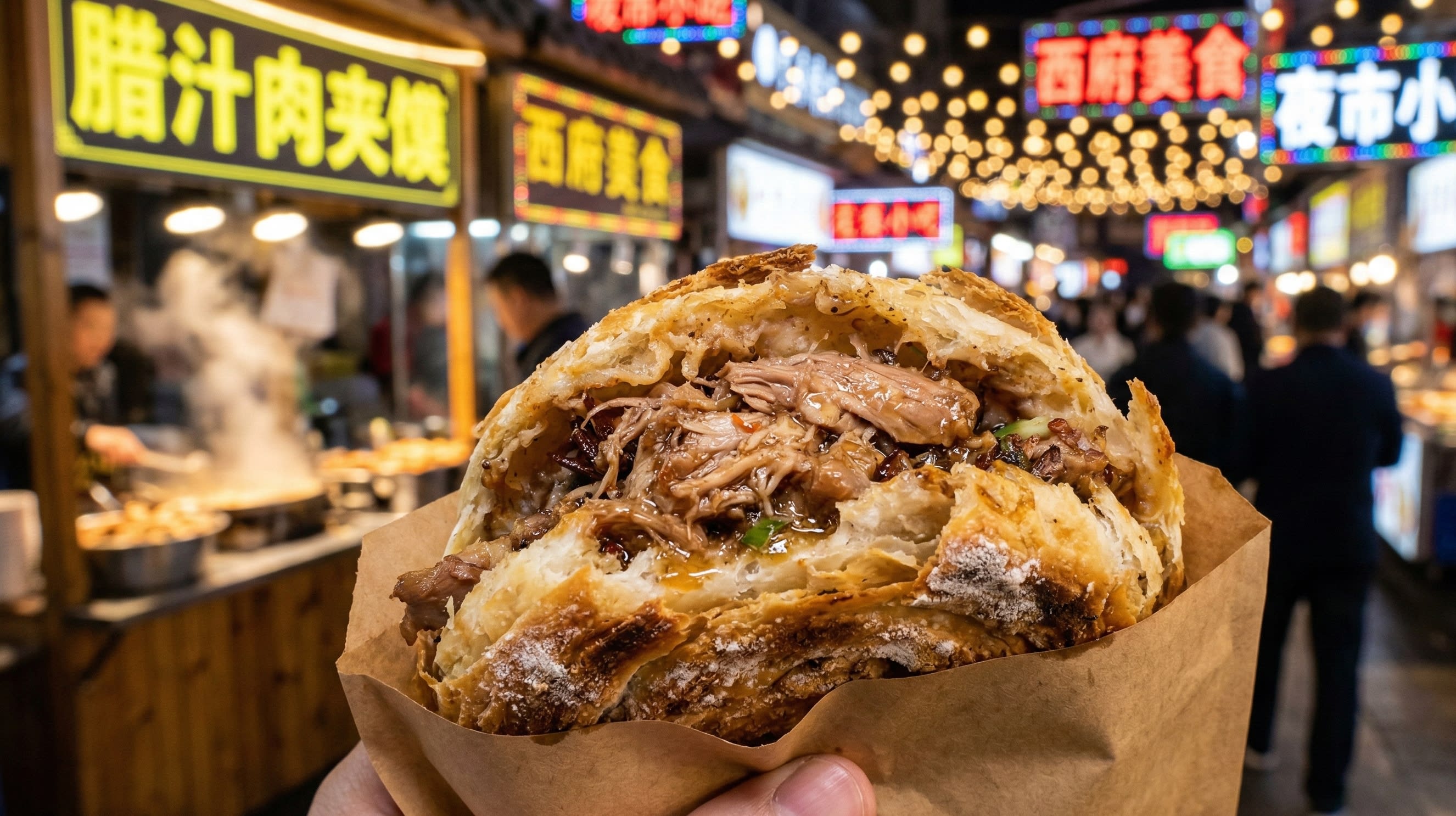
- The Star of the Show: You cannot visit Xi’an without eating a ròujiāmó (肉夹馍). Often called the “Chinese hamburger,” it consists of slow-braised, melt-in-your-mouth pork (or beef/lamb in Islamic areas) stuffed into a freshly baked, crispy flatbread.
- The Perfect Pairing: Wash it down with a bowl of liángpí (凉皮)—cold, chewy noodles tossed in a vibrant mix of chili oil, black vinegar, and garlic. The contrast between the hot, savory meat burger and the cold, tangy noodles is absolute perfection.
2. Chengdu (成都): The Spicy Southwest
Chengdu is the capital of Sichuan province, a city famous for pandas, a laid-back lifestyle, and food that will make your lips tingle. The local street food scene is deeply social; eating here is an event that can easily stretch into the early hours of the morning.
- The Vibe: Relaxed but vibrant. Locals love to gather around small tables, drinking cold beer and chatting loudly over pots of boiling broth.
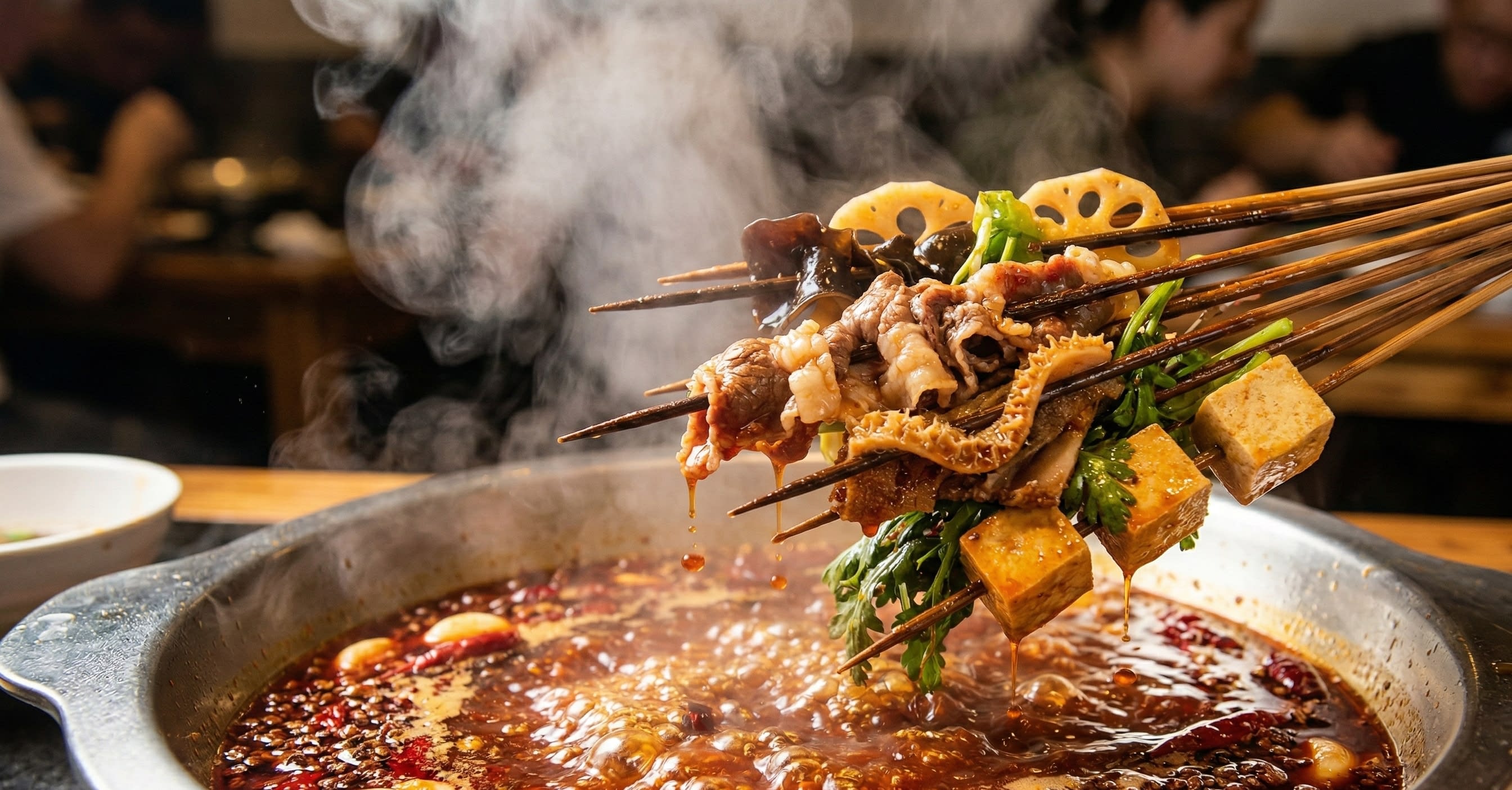
- The Star of the Show: The undisputed king of Chengdu street food is chuānchuàn (串串). Think of it as hot pot on a stick. You grab a basket, choose from hundreds of bamboo skewers loaded with meats, vegetables, and tofu, and then boil them in a communal pot of bubbling, spicy, beef-tallow broth.
- The Perfect Pairing: To rescue your tongue from the fiery Sichuan peppercorns, you must order bīngfěn (冰粉). This is a refreshing, clear ice jelly topped with brown sugar syrup, sesame seeds, crushed peanuts, and fresh fruit. It is the ultimate culinary fire extinguisher.
3. Changsha (长沙): The Sleepless City
If there is one city in China that truly never sleeps, it is Changsha. Located in Hunan province, Changsha’s street food culture is famously intense. The locals love bold flavors, bright neon lights, and staying out until 3:00 AM.
- The Vibe: Neon-lit, youthful, and high-energy. The streets are packed shoulder-to-shoulder with people hunting for midnight snacks, known locally as yèxiāo (夜宵).
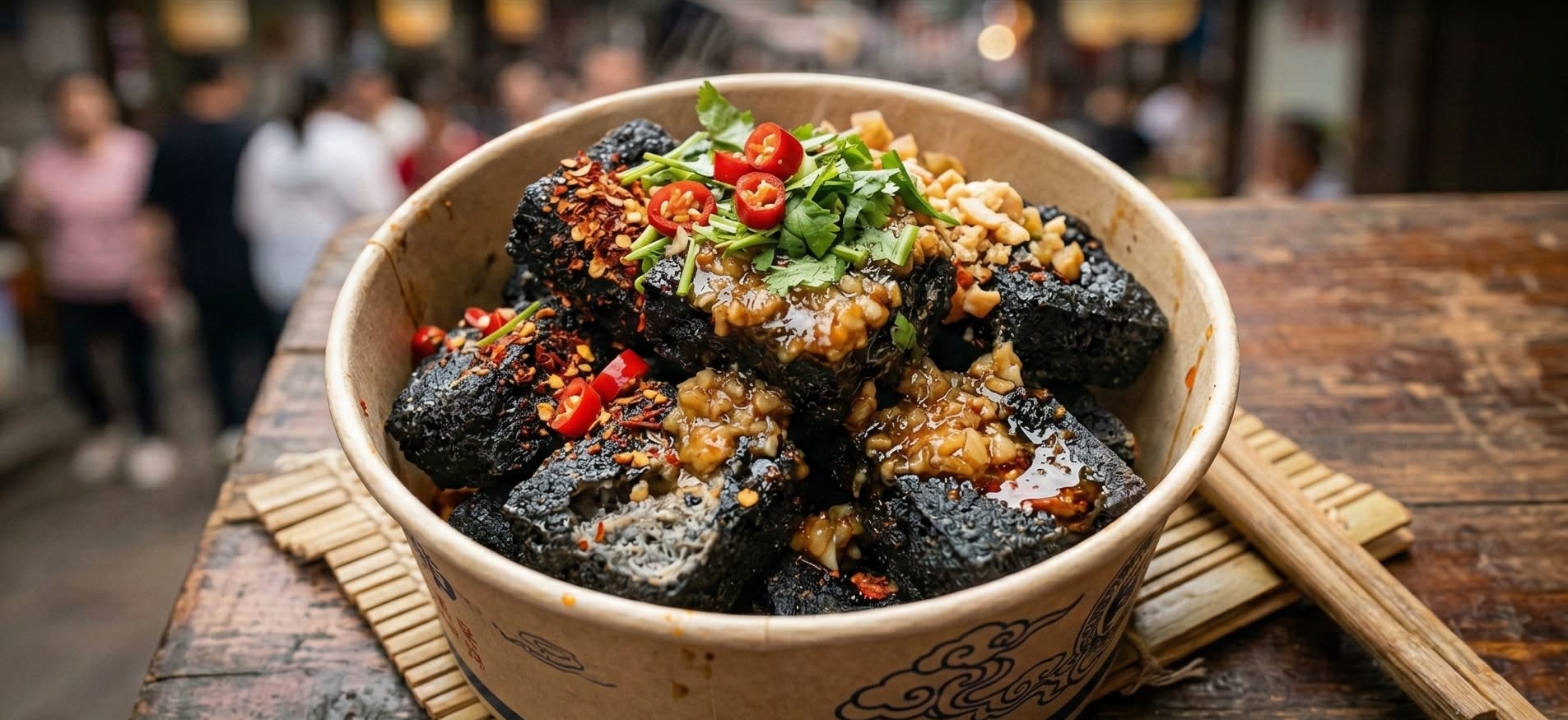
- The Star of the Show: You must conquer your fear and try Changsha’s legendary chòudòufu (臭豆腐), or Stinky Tofu. Do not let the name or the jet-black color intimidate you. When deep-fried perfectly, it is incredibly crispy on the outside, soft and porous on the inside, and drenched in a savory, garlic-and-chili broth. It tastes a hundred times better than it smells.
- The Perfect Pairing: Changsha is also famous for spicy crayfish (xiǎolóngxiā 小龙虾). Put on a pair of plastic gloves, crack open the shells, and enjoy the sweet, spicy meat with a glass of iced plum juice.
4. Guangzhou (广州): The Delicate South
In the deep south, the culinary philosophy shifts completely. Guangzhou (historically known as Canton) focuses on highlighting the original, fresh flavors of the ingredients rather than masking them with heavy spices.
- The Vibe: Steamy, warm, and comforting. The night markets here are filled with massive bamboo steamers and bubbling clay pots.
- The Star of the Show: The late-night favorite is chángfěn (肠粉), or rice noodle rolls. A vendor pours a thin layer of rice batter onto a metal tray, adds fresh shrimp or minced pork, and steams it for exactly one minute. It is then scraped into a soft, wrinkled roll and drizzled with a sweet, umami-rich soy sauce.
- The Perfect Pairing: After a long night, locals swear by a bowl of shāguōzhōu (砂锅粥)—a savory rice porridge cooked in a clay pot with fresh crab or scallops. It is warm, soothing, and incredibly gentle on the stomach.
5. The Street Food Comparison Matrix
| City | Flavor Profile | The Must-Eat Item | Best For... |
|---|---|---|---|
| Xi'an | Savory, cumin-heavy, wheat-based | Ròujiāmó (Meat Burger) | Hearty, filling winter meals. |
| Chengdu | Spicy, numbing (má 麻), oily | Chuānchuàn (Spicy Skewers) | Social dining and beer. |
| Changsha | Fiery hot, garlicky, bold | Chòudòufu (Stinky Tofu) | Late-night 2:00 AM snacking. |
| Guangzhou | Fresh, sweet, umami, delicate | Chángfěn (Rice Noodle Rolls) | Comforting, light late-night bites. |
6. The Unwritten Rules of the Street Food Cart
For a first-time visitor, walking into a chaotic Chinese night market can be intimidating. Here is a quick survival guide to eating like a local:
- Follow the Queue: The golden rule of street food anywhere in the world applies perfectly in China: always eat where the locals are eating. If you see a small, rundown cart with a line of 15 people waiting patiently, get in that line. It is guaranteed to be incredible.
- Digital Payments Only: In 2026, cash is practically obsolete at street food stalls. Vendors rely entirely on digital payments. Make sure your Alipay or WeChat Pay is linked to your international credit card before you head out. You simply scan the blue or green QR code pasted on the cart to pay.
- To-Go or Dine-In: When you reach the front of the line, the vendor will usually ask you a rapid-fire question. They are asking if you want to take it away (dǎbāo 打包) or eat it right there (zài zhèr chī 在这儿吃).
- Embrace the Pointing: Don’t speak Chinese? Don’t worry. Street food is highly visual. Simply point at what looks good, smile, and say “zhège” (这个), which means “this one.”
Final Thoughts
Eating street food in China is about much more than just filling your stomach. It is an immersive cultural experience. It is about the warmth of the community, the history of the recipes, and the undeniable charm of the yānhuǒqì.
Next time you are traveling through China, skip the hotel buffet for one night. Step out into the glowing streets, follow the scent of roasted spices, pull up a plastic stool, and dive into the real flavor of the city.
Craving more cultural immersion? After a late night of eating, learn how to relax with our guide to The Art of Chinese Tea Culture or discover the quiet charm of China’s Underrated Cities.

