
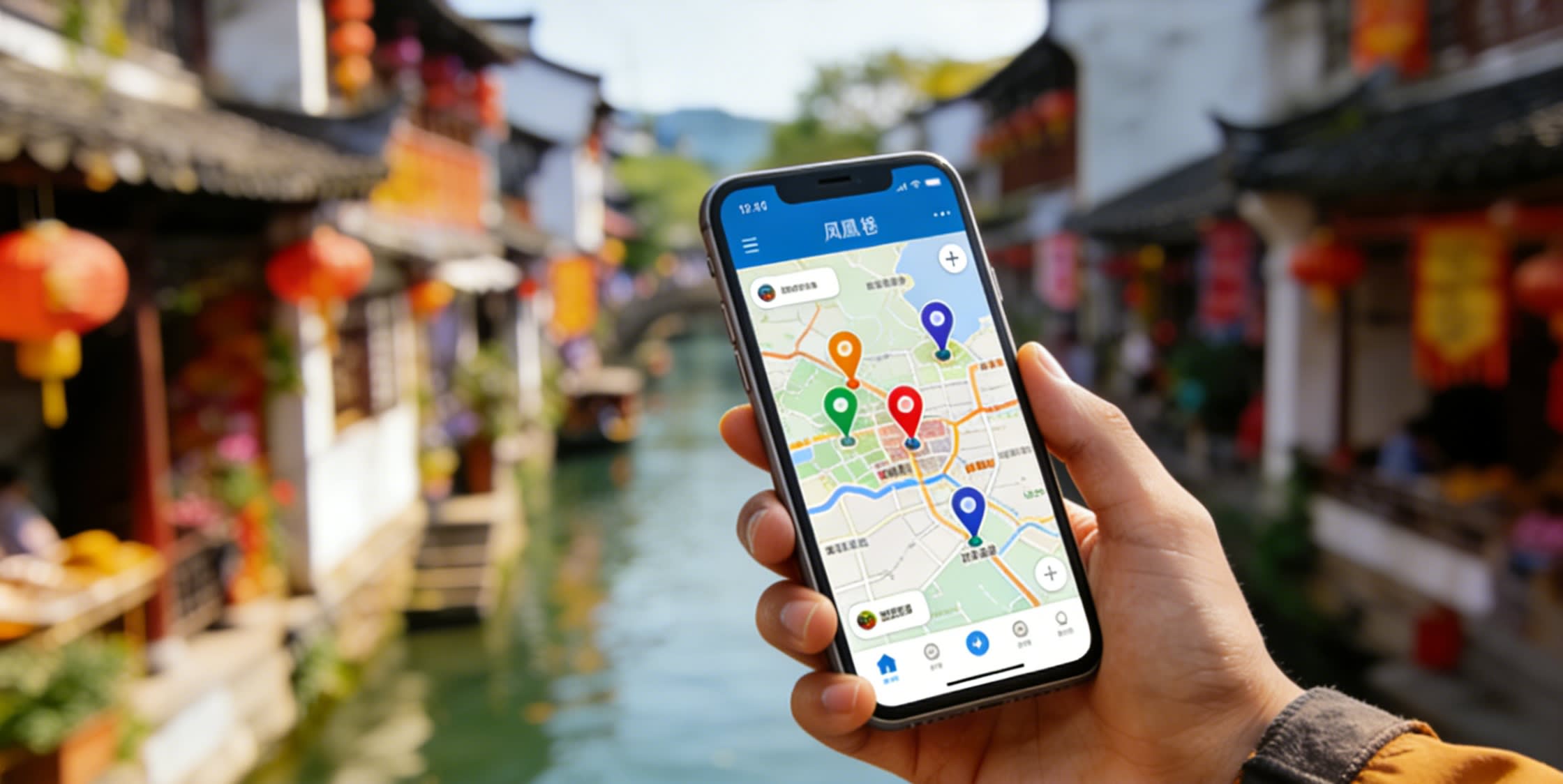
In 2026, your physical map and guidebook are relics of the past. To truly explore China—especially when venturing into the “Hidden Gems” of provinces like Shanxi, Sichuan, or Yunnan—your smartphone is your most powerful tool. While the “Big Two” (Alipay and WeChat) are obvious, a specific suite of apps is required to bridge the gap between being a tourist and a savvy traveler.
Here is the definitive app checklist for your 2026 China adventure.
1. Navigation: Amap (Gaode Maps)
While Apple Maps works surprisingly well in China, Amap (高德地图) is the gold standard for accuracy. In smaller cities, Western maps often lack the precision needed for tiny alleys (hutongs) or new developments.
- Pro Tip: Amap’s interface is in Chinese, but you can search for many landmarks using English names. It provides real-time traffic data and—most importantly—precise walking directions that Apple or Google often miss.
- Why you need it: It integrates with the local public transit system better than any other platform, showing you exactly which bus or subway exit to take.
2. Transportation: Didi (The English Version)
Uber does not exist in China, but Didi (滴滴出行) is its superior successor.
- Key Feature: Didi has a dedicated English interface and a built-in real-time translator. You can type your destination in English, and the driver receives it in Chinese.
- Beyond the City: If you are exploring regional areas, Didi is often safer and more reliable than trying to hail a local unmarked “black taxi.”

3. Communication: WeChat (Everything App)
You don’t just use WeChat to talk; you use it to live.
- Mini-Programs: Most restaurants outside of major international hotels no longer use paper menus. You will need WeChat to scan a QR code on the table to order and pay.
- Translation: Long-press any Chinese message in a chat to translate it instantly—a lifesaver when communicating with hotel staff or local guides.
4. Lifestyle & Food: Meituan & Dianping
If you want to find the best local eats in a remote town in Yunnan, skip TripAdvisor and go where the locals go: Meituan (美团) or Dianping (大众点评).
- What they do: These are the “Yelp” of China. They provide crowd-sourced reviews, photos of every dish, and even discount vouchers for meals.
- Visual Ordering: Even if you can’t read the menu, you can show the waiter a photo from the app’s review section and say “Wǒ yào zhège” (I want this).
5. Translation: Baidu Translate & DeepL
While Google Translate is great, it often requires a VPN and struggles with specific Chinese dialects.
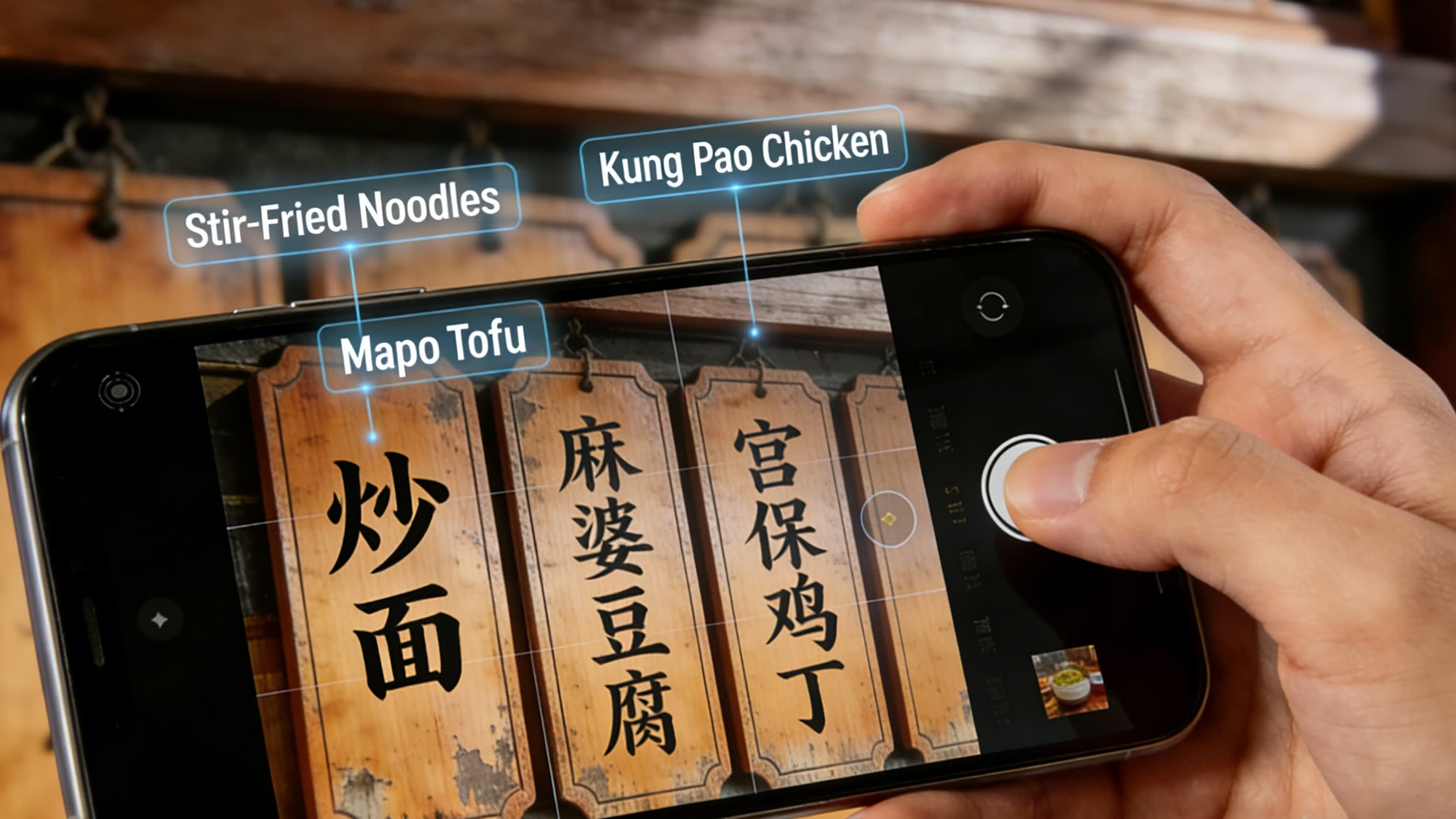
- Baidu Translate (百度翻译): Offers a superior “Object Translation” mode. Point your camera at a physical object or a menu, and it overlays the English text seamlessly.
- DeepL: Becoming the favorite for 2026 travelers who need more nuanced, natural-sounding translations for business or complex social interactions.
6. The 2026 “Must-Haves” List
| App Category | Primary Recommendation | Best Feature for 2026 |
|---|---|---|
| Navigation | Amap (Gaode) | Precise 3D walking maps |
| Transport | Didi | In-app real-time translation |
| Translation | Baidu Translate | Superior OCR (Camera) mode |
| Trains | 12306 (Official) | Official English booking system |
| Social/Tips | Xiaohongshu (RED) | Best for finding “Instagrammable” spots |
Final Pro-Tip: Battery Life
In 2026, a dead phone in China isn’t just an inconvenience; it means you can’t pay, navigate, or talk. Always carry a high-quality power bank. While “Shared Power Banks” (Meituan/Alipay chargers) are available everywhere, your own reliable source of power is essential when hiking in rural areas or long train rides.
Ready to hit the road? Make sure your payment apps are set up first with our Ultimate 2026 Payment Guide.

