When I first arrived in Beijing, I was armed with a backpack, a flimsy pocket dictionary, and a desperate desire to be polite. My textbook had taught me that the golden rule of addressing strangers was to use Xiānshēng (先生 - Mr.) and Nǚshì (女士 - Ms./Mrs.). I felt like a polished diplomat.
Then, I hopped into a taxi, smiled, and declared, “Nǐ hǎo, Xiānshēng!” The driver squinted at me through the rearview mirror as if I’d just addressed him in ancient Latin. Later that day, I entered a neighborhood dumpling shop and chirpily greeted the hardworking owner with a formal “Nǚshì.” The entire room went dead silent. The atmosphere was so thick you could have cut it with a chopstick.
What had I done wrong? I had been perfectly polite by the book, but I was failing the real-life test of Chinese social navigation.
The reality is that these “Mr.” and “Mrs.” equivalents act like an invisible wall of ice. They are reserved for stiff, formal environments—think high-end hotel receptionists or academic conference speakers. In the messy, vibrant world of daily Chinese life, you don’t use these labels. Instead, you build Guānxì (关系 - relationships) by using titles that categorize people based on their profession, age, and your own respect for them.
If you want to stop sounding like a robot and start connecting with people on the streets, here is your 2026 survival guide to the unwritten rules of Chinese titles.
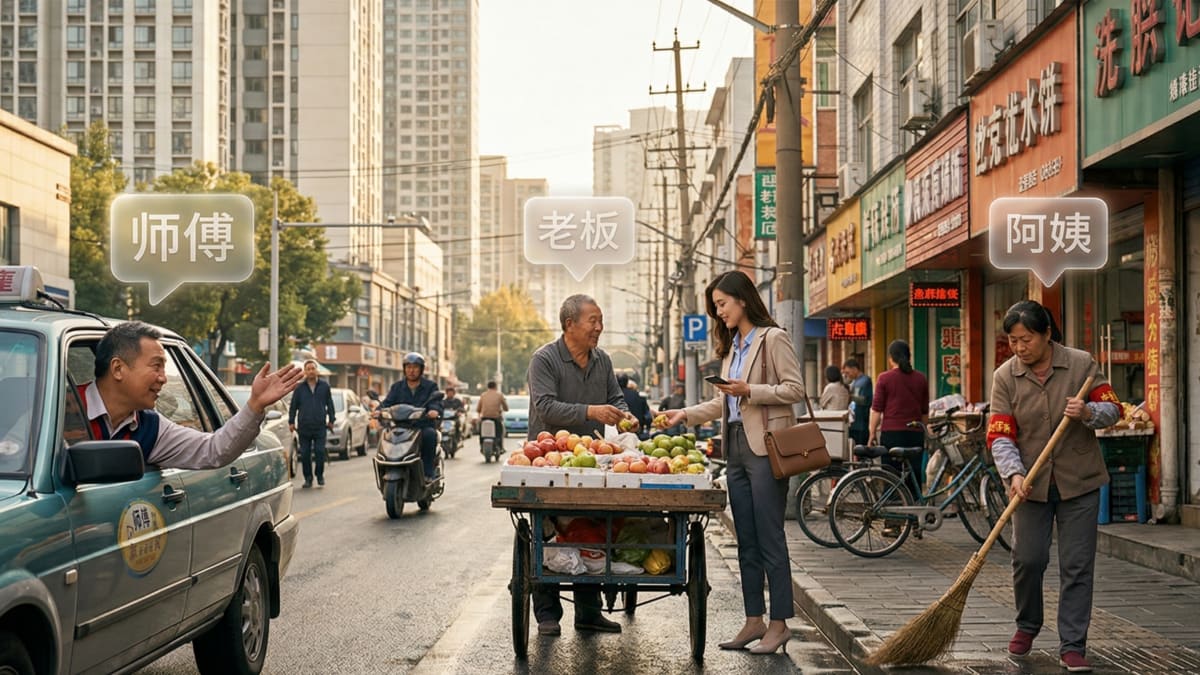
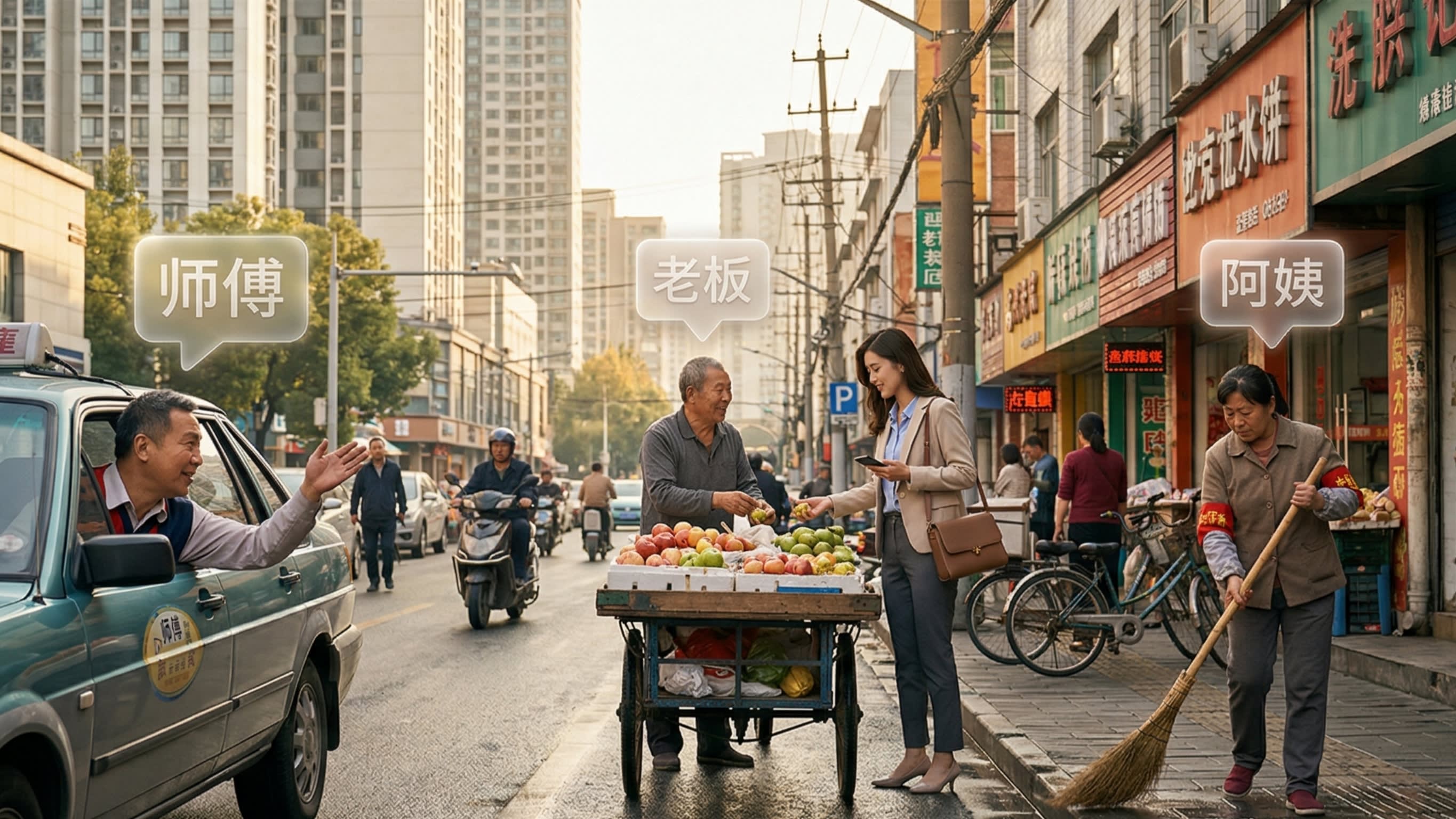
1. 师傅 (Shīfu): The Master of All Trades
In the West, you might associate Shifu with a meditative monk or a Kung Fu master in a cinema epic. In China, however, this title is the single most useful word in your linguistic toolbox.
Shifu literally means “Master” or “Teacher.” It is a beautiful, respectful way to acknowledge that the person you are talking to has a specialized, practical skill—even if that skill is just navigating traffic or frying the perfect egg.
Who to call Shifu:
- Taxi or Didi drivers: They are almost always Shifu. “Shīfu, qiánmiàn shùzì dàshà tíng” (师傅,前面数字大厦停 - Driver, please stop at the Digital Tower ahead).
- Technicians: The person who fixes your air conditioner or sets up your internet.
- Street food vendors: That person expertly flipping a pancake? They are a Shifu of their craft.
Insider Tip: While it traditionally implies a male, it has become gender-neutral in the service industry. Don’t be afraid to use it for a female driver; it’s a sign of professional respect.
2. 阿姨 (Āyí) & 叔叔 (Shūshu): The Extended Family
In Western society, calling a stranger “Auntie” or “Uncle” might get you some very weird looks. In China, it is the bedrock of how we manage multi-generational respect. Because Chinese culture venerates age, we “elevate” people who are a generation older than us by pulling them into our linguistic family tree.
Who to call Ayi (Auntie) / Shushu (Uncle):
- Your friends’ parents.
- The kind neighbors who water your plants.
- The older ladies managing the local wet market.
⚠️ The “Ayi” Minefield
You must approach the title Ayi with the tactical precision of a bomb disposal unit. If you address a woman as Ayi and she feels she is still in her prime, you have just insulted her vanity.
The Rule of Thumb: If she looks under 45, do not touch the word Ayi. If you are uncertain, pivot to Jiějiě (姐姐 - Older Sister) or Měinǚ (美女 - Beautiful Girl). Flattery is your safety net; age-guessing is a trap.

3. 老板 (Lǎobǎn): The Entrepreneurial Salute
If you want to feel like a local, walk into a neighborhood noodle shop or a small stationery store and greet the owner with a confident “Laoban!”
Chinese culture has an immense respect for entrepreneurship. Calling someone “Boss” isn’t just a title; it is a compliment to their success and independence. It’s an instant icebreaker that suggests you value their business.
Who to call Laoban (Boss) / Laobanniang (Female Boss):
- The owners of any independent, small-scale shop.
- Traders at your local wholesale market.
Pro-tip: If you’re trying to negotiate a price or ask for a little extra topping in your noodles, start with a polite “Laoban…” It shifts the power dynamic in your favor. It turns a cold transaction into a personal, respectful exchange.
4. 帅哥 (Shuàigē) & 美女 (Měinǚ): The Friendly Flattery
Ten years ago, textbooks told foreigners to shout “Fúwùyuán!” (Waitress/Waiter) to get service. Today, that sounds a bit like you’re barking orders at a servant.
In the modern 2026 service landscape, we use Shuàigē (Handsome Brother) and Měinǚ (Beautiful Girl) as standard identifiers for young service staff.
Why it works: These words have been stripped of romantic intent. They are the equivalent of saying “Hey, excuse me, miss,” or “Hey, buddy.” It makes the staff feel good, which makes them more inclined to help you when your Chinese survival skills are put to the test.
5. 老师 (Lǎoshī): The Intellectual Honorific
Lǎoshī means “Teacher.” But in China, this title is like a portable crown. It signifies that you recognize someone’s wisdom.
Who to call Laoshi:
- Your actual educators.
- Writers, journalists, and artists.
- Senior colleagues in a tech or corporate office. If you are a junior staffer, calling the lead architect Laoshi is the ultimate sign of professional deference.

6. The Professional Matrix: Surname + Title
When you step into a formal meeting or a high-end office, we discard the street slang. Here, identity is defined by your rank.
- 王经理 (Wáng Jīnglǐ): Use [Surname] + Manager.
- 李总 (Lǐ Zǒng): This is the gold standard for anyone from a Director to a CEO. It is an abbreviation of Zǒngjīnglǐ (General Manager) or Zǒngcái (President). If you want to impress a high-level partner, address them as [Surname] Zong. It acknowledges their status immediately.
Summary Table
| Title | Pinyin | Best Usage |
|---|---|---|
| 师傅 | Shīfu | Taxi drivers, tradespeople, chefs. |
| 阿姨/叔叔 | Āyí / Shūshu | Middle-aged neighbors, elderly vendors. |
| 老板 | Lǎobǎn | Restaurant and shop owners. |
| 帅哥/美女 | Shuàigē / Měinǚ | Young waiters, retail, peers. |
Final Thoughts from Bo
Learning these titles isn’t about memorizing a script; it’s about learning to see the human connections that power Chinese society. When I finally stopped worrying about the grammar books and started using these titles, the “robotic” interactions I faced in the past evaporated.
If you are cooking at home and realize you’re missing a bamboo steamer or a specific spice, understanding these social layers makes interacting with your local market traders a joy rather than a chore. It shows you aren’t just here to visit—you’re here to understand.
The next time you’re in a taxi, try greeting your driver with a confident “Shifu, nǐ hǎo.” Watch how his posture changes and how the conversation starts to flow. That’s the magic of knowing who you’re talking to.

Want to go deeper into Chinese social codes? Master the Art of the Soft No or learn the 2026 Slang that makes your Chinese friends laugh.
Disclaimer: As an Amazon Associate, ChinaCurator earns from qualifying purchases.