If you are currently navigating the labyrinthine journey of learning Mandarin, you have likely hit the wall where “to know” and “to understand” collide. Spend five minutes on any language learning forum, and you will see the same desperate plea: “What is the actual difference between 知道 (zhīdào) and 懂 (dǒng)?”
In English, the boundary between these two concepts is porous. We say “I know how to drive” and “I understand how to drive” as if they were synonymous. But in Chinese, equating these two is like mixing up a compass with a map—one points to a fact, while the other maps out the terrain of logic. If you confuse them, you risk more than just sounding like a tourist; you can accidentally signal arrogance or complete confusion.
I remember my first week in Beijing, trying to impress a local friend by confidently misusing these verbs, only to be met with a confused, polite smile. Let’s dismantle this confusion once and for all, so you can stop translating in your head and start speaking with the precision of a native. Before we dive into the deep end, if you are looking to build a rock-solid foundation, I highly recommend checking out our comprehensive guide to tones, characters, and culture to keep your momentum going.
1. The Surface Level: 知道 (Zhīdào) - Factual Awareness
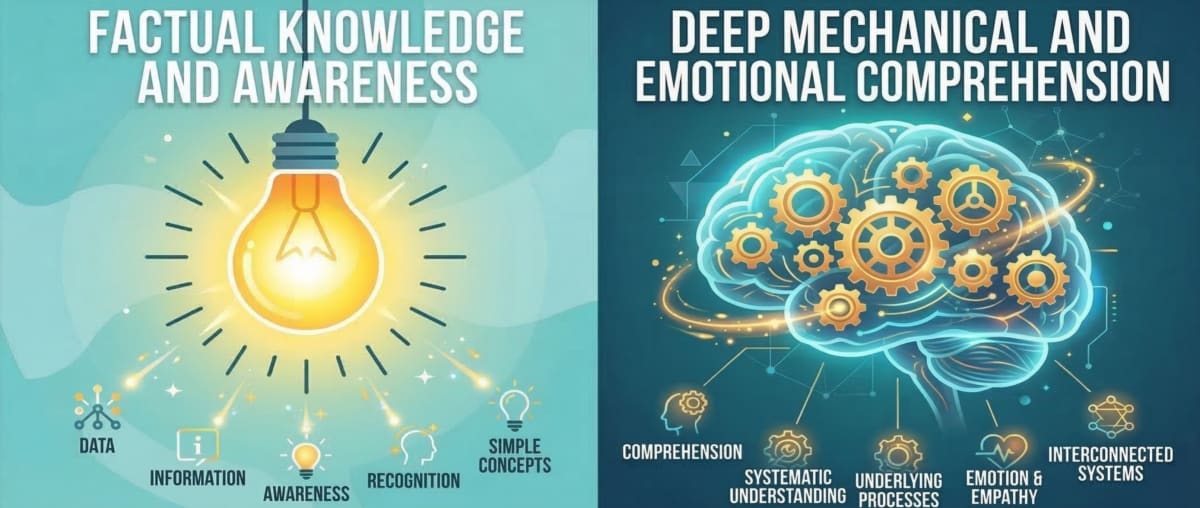
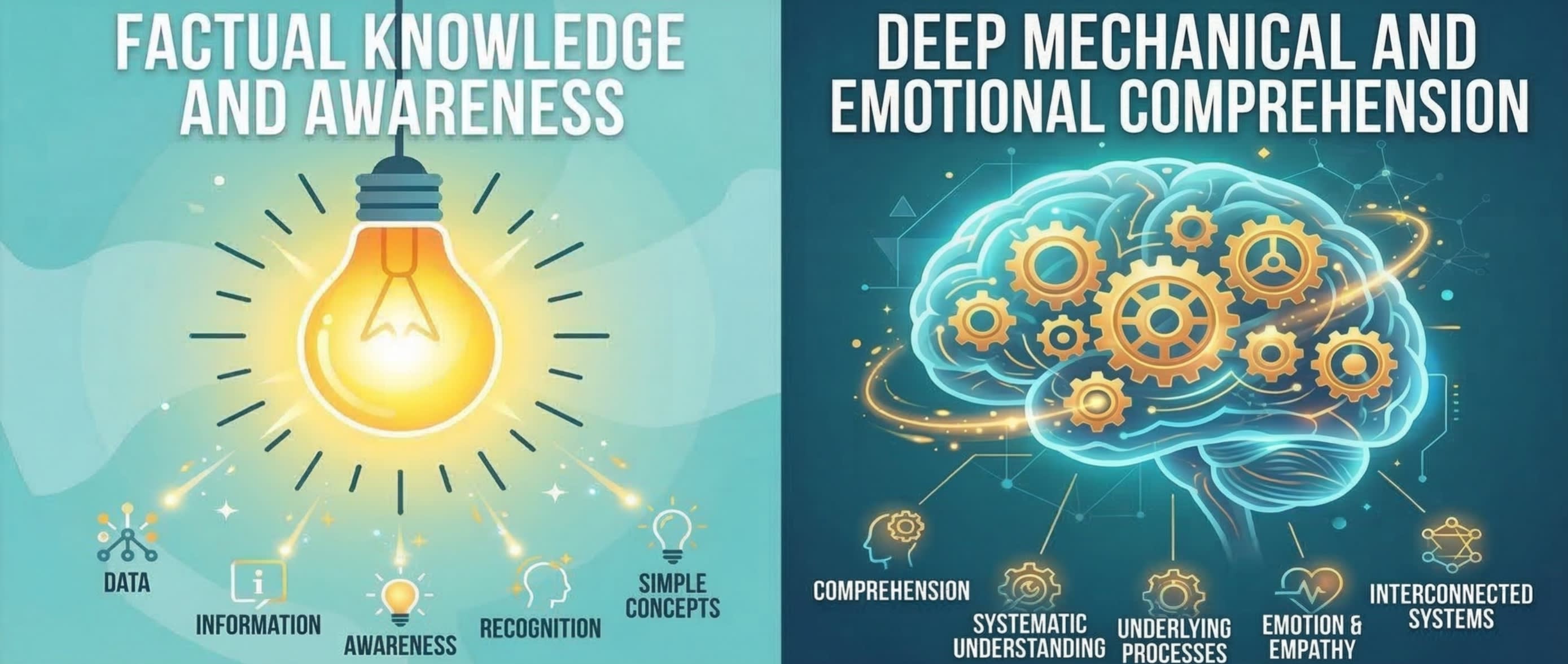
Let’s isolate 知道 (zhīdào). Think of this as your “data bank.” It is purely about having a piece of information stored in your mental hard drive. You are aware of a fact, a location, or an event. You don’t need to be an expert or feel anything about it; you simply have the data.
Real-World Scenarios for 知道:
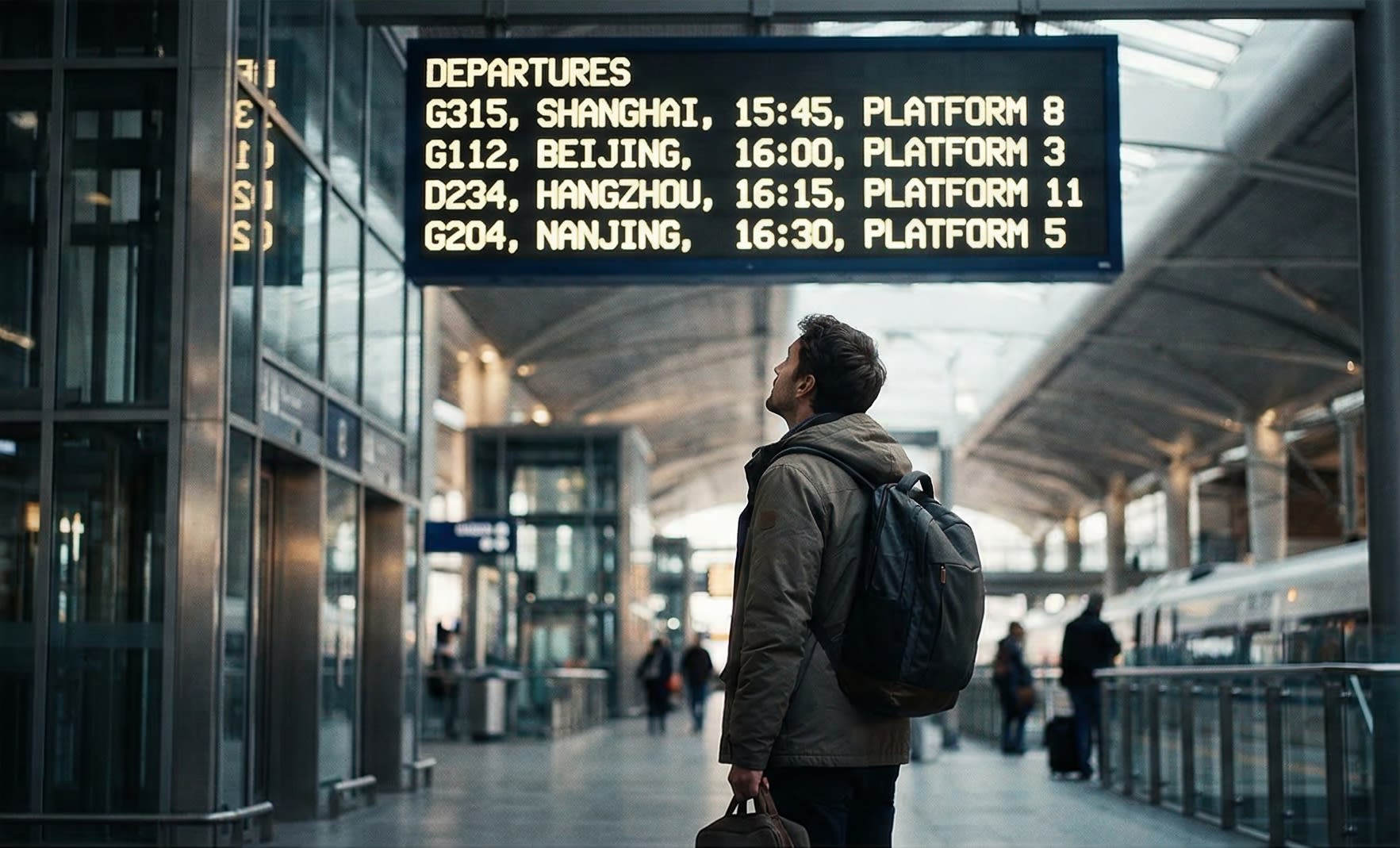
- Navigating the City: If you are asking for directions to the Forbidden City, you are asking for factual information.
- “I know where the subway station is.”
- Wǒ zhīdào dìtiě zhàn zài nǎlǐ. (我知道地铁站在哪里。)
- Relaying Information: Whether it’s rain in the forecast or a change in a meeting time.
- “Do you know that it is going to rain tomorrow?”
- Nǐ zhīdào míngtiān yào xiàyǔ ma? (你知道明天要下雨吗?)
- The “Got It” Moment: When you acknowledge receipt of information.
- “I know / I’ve got it.”
- Wǒ zhīdào le. (我知道了。)
Notice the pattern? None of these require emotional intelligence or deep analysis. You aren’t “understanding” the subway station; you just know its coordinates. For those who find themselves overusing generic placeholders, you might want to look into how to move beyond using ‘Ge’ (个) for everything to add more color to your sentences.
2. The Deep Dive: 懂 (Dǒng) - Intellectual and Emotional Comprehension
Now, enter 懂 (dǒng). This is not about the “what”; it is about the “how” and the “why.” To dǒng is to have processed information through the gears of your mind. It implies that you have analyzed a logic, decoded a language, or grasped the soul of a situation.
Real-World Scenarios for 懂:
- Cracking the Language Code: When you listen to a podcast or a friend’s rant, you are processing sounds into meaning.
- “I don’t understand this Chinese grammar rule.”
- Wǒ bù dǒng zhōngwén yǔfǎ. (我不懂中文语法。)
- The “Eureka” Moment: When a complex concept finally clicks after a long struggle.
- “I finally understand!”
- Wǒ dǒng le! (我懂了!)
- Empathy: This is perhaps the most human usage of the word.
- “Nobody understands me.”
- Méiyǒu rén dǒng wǒ. (没有人懂我。)
When you say someone doesn’t dǒng you, you aren’t saying they lack data about you; you’re saying they don’t grasp your inner life. It carries the weight of a true, soulful connection.

3. The Ultimate Test: Layering Both
If you want to sound fluent, stop separating these concepts in your mind and start layering them. Often, you will know the “what” (知道) but struggle with the “how” (懂).
Example A: The Language Barrier Imagine you are sitting in a bustling café in Shanghai. You hear the rapid-fire rhythm of Shanghainese.
- “I know they are speaking Shanghainese, but I don’t understand what they are saying.”
- Wǒ zhīdào tāmen zài shuō shànghǎihuà, dànshì wǒ tīng bù dǒng. (我知道他们在说上海话,但是我听不懂。)
Example B: The Logical Disconnect Imagine a friend makes a confusing decision.
- “I know what he is doing, but I don’t understand why he is doing it.”
- Wǒ zhīdào tā zài zuò shénme, dànshì wǒ bù dǒng tā wèishénme yào zhèyàng zuò. (我知道他在做什么,但是我不懂他为什么要这样做。)
4. Grammar Power: The Result Complement
One of the coolest features of 懂 (dǒng) is its role as a “result complement.” You attach it to the end of a sensory verb to prove you didn’t just hear or see—you actually processed it.
- 听懂 (tīng dǒng): I heard it and caught the meaning.
- 看懂 (kàn dǒng): I read it and the logic is clear.
You cannot do this with 知道. If you say “听知道,” you’re essentially saying “I heard and I know,” which is not a natural construction. If you’re tired of making mistakes like this, perhaps it’s time to refine your basics with our guide on The 3 ‘De’s of Chinese Grammar.
5. Expanding the Matrix: 认识 (Rènshi) and 了解 (Liǎojiě)
If 知道 is data and 懂 is logic, we need to talk about the missing pieces: 认识 (rènshi) and 了解 (liǎojiě).
- 认识 (Rènshi): Use this for people or characters. If you tell a native speaker “Wǒ zhīdào John,” they’ll think you know about him (like a celebrity). Use rènshi to say you’ve actually met.
- 了解 (Liǎojiě): This is “to be thoroughly familiar with.” It implies depth. You might know (zhīdào) a restaurant exists, but you understand (liǎojiě) the restaurant’s history and its chef’s philosophy after dining there for years.
| Term | Nuance | When to Use |
|---|---|---|
| 知道 (Zhīdào) | Factual awareness | Data, news, locations, facts. |
| 懂 (Dǒng) | Deep comprehension | Logic, languages, emotional depth, complex ideas. |
| 认识 (Rènshi) | Personal acquaintance | People, recognizing characters, familiar faces. |
| 了解 (Liǎojiě) | Thorough familiarity | Deep study of a subject or complex human backgrounds. |
6. Social Etiquette: The “Nagging” Trap
Finally, a note on social grace. Be careful with Wǒ zhīdào le. If a parent or boss gives you advice and you snap it back too quickly, it sounds like: “I know, stop telling me!”
Instead, try to show the speaker you heard them. A soft Míngbai le (明白了 - I have clarified/understood) carries a much more respectful tone. If you are learning the nuances of social hierarchy, consider learning how to call people properly in China to avoid these tonal minefields.
Remember, language isn’t just about the words you choose; it’s about how you feel when you say them. If you’re ever struggling to find the right traditional tea set to host a friend for a conversation, remember that the best way to master these nuances is through real-world, human interaction.
Keep practicing, stay curious, and keep digging. Your fluency is closer than you think!
Disclaimer: As an Amazon Associate, ChinaCurator earns from qualifying purchases.