

If you have been studying Mandarin Chinese for a few months, you have undoubtedly discovered the ultimate survival tool, the magic bullet, the Swiss Army knife of Chinese grammar: 个 (gè).
I remember my first few weeks in China clearly. I would walk into a local convenience store, point at whatever I wanted, and confidently declare, “Yi ge! Yi ge!” I used it for everything. A coffee? Yi ge. A notebook? Yi ge. A puppy I saw in the park? Yi ge. It felt like I had cracked the code to communication, but in reality, I was just making myself sound like a toddler.
Because “Ge” is the most universal measure word in the Chinese language, native speakers will almost always understand what you mean. However, relying on “Ge” for everything comes with a catch: it is the ultimate dead giveaway that you are a beginner. To a native Chinese ear, hearing someone say “yi ge gou” (one dog) or “yi ge che” (one car) sounds a bit like an English speaker saying “I want a piece of dog” or “I bought a piece of car.” It is understandable, but it sounds incredibly unnatural.
In Chinese, nouns cannot be directly attached to numbers. You must use a “Measure Word” (量词 - liàngcí) as a bridge. While memorizing dozens of them seems like a nightmare, there is actually a brilliant, deeply visual logic behind them. If you want to move beyond the basics, you should also brush up on the 3 ‘De’s of Chinese Grammar to refine your sentence structure further.
1. The “Shape” Category: Flat, Long, and Rigid
Ancient Chinese people categorized objects heavily based on their physical appearance. If you can visualize the shape of an object, you can almost always guess its measure word.
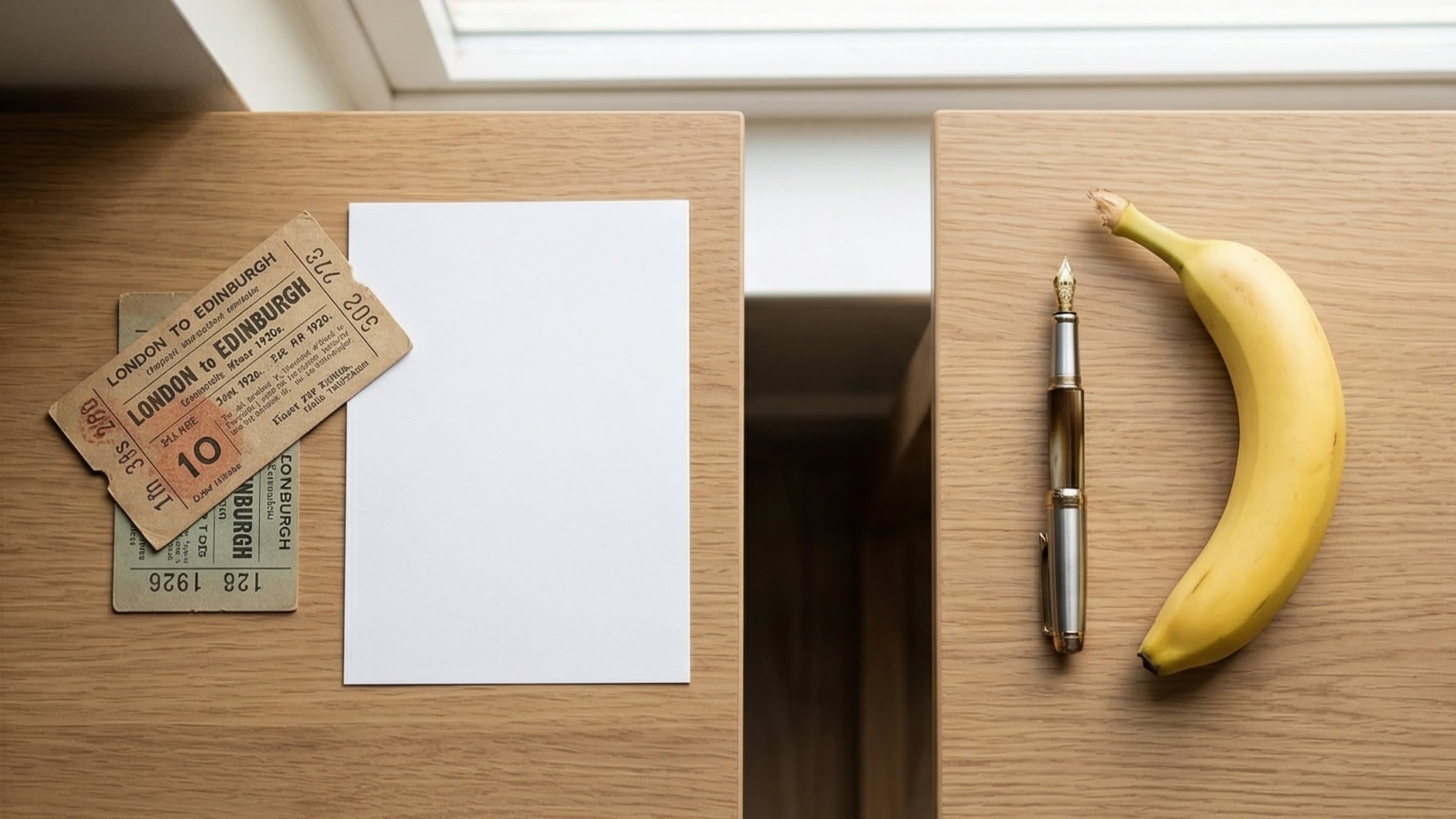
张 (zhāng): For Flat Things
The character 张 originally meant “to stretch a bow.” Over time, it became the measure word for anything that has a flat, stretched surface. I always think of a flat sheet of paper when I use this one.
- 一张桌子 (yì zhāng zhuōzi): A table (a flat surface).
- 一张床 (yì zhāng chuáng): A bed.
- 一张纸 / 一张票 (yì zhāng zhǐ / yì zhāng piào): A piece of paper / A ticket.
- 一张脸 (yì zhāng liǎn): A face (a flat surface with features).
条 (tiáo): For Long, Flexible Things
If something is long, bendy, or winding, it almost certainly takes “Tiao.”
- 一条河 / 一条路 (yì tiáo hé / yì tiáo lù): A river / A road (winding through the landscape).
- 一条裤子 (yì tiáo kùzi): A pair of pants (long and flexible).
- 一条鱼 / 一条蛇 (yì tiáo yú / yì tiáo shé): A fish / A snake.
- The Weird Exception: 一条狗 (yì tiáo gǒu) - A dog. Why? Historically, dogs were viewed as long, lean animals that roam around, so they inherited the “flexible/long” measure word.
根 (gēn): For Long, Rigid Things
Unlike “Tiao,” which is for flexible things, “Gen” (which means ‘root’) is used for long things that hold their shape.
- 一根香蕉 (yì gēn xiāngjiāo): A banana.
- 一根笔 (yì gēn bǐ): A pen.
- 一根柱子 (yì gēn zhùzi): A pillar.
2. The “Animal” Kingdom: Small vs. Big
When talking about animals, Chinese makes a very clear distinction between small, agile creatures and large livestock.
只 (zhī): For Small Animals (and Pairs)
“Zhi” is the most common measure word for animals. If it is a pet, a bird, or an insect, use “Zhi.”
- 一只猫 (yì zhī māo): A cat.
- 一只鸟 (yì zhī niǎo): A bird.
- Body Parts Bonus: It is also used for one half of a pair. For example, 一只鞋 (yì zhī xié) is one shoe, and 一只手 (yì zhī shǒu) is one hand.
头 (tóu): For Large Livestock
“Tou” literally translates to “Head.” Just like in English where farmers say “50 head of cattle,” Chinese uses “Tou” for large, heavy animals.
- 一头牛 (yì tǒu niú): A cow.
- 一头猪 (yì tǒu zhū): A pig.
- 一头大象 (yì tǒu dàxiàng): An elephant.
匹 (pǐ): Exclusive to Horses
Horses get their own VIP measure word: 一匹马 (yì pǐ mǎ). Historically, horses were measured by the length of cloth draped over their backs.
3. The “Modern World”: Tech, Transport, and Media
As the world modernized, the Chinese language adapted its ancient measure words to fit machines, cars, and digital screens.
台 (tái): For Machinery and Appliances
“Tai” originally meant “platform” or “stage.” Today, it is used for heavy machinery, appliances, and computers.
- 一台电脑 (yì tái diànnǎo): A computer.
- 一台电视 (yì tái diànshì): A TV.
- 一台空调 (yì tái kōngtiáo): An air conditioner.
辆 (liàng): For Wheeled Vehicles
If it has wheels and you can drive or ride it on the road, it takes “Liang.”
- 一辆车 (yí liàng chē): A car.
- 一辆自行车 (yí liàng zìxíngchē): A bicycle.
- Exception: Trains are long and segmented, so they take 一列火车 (yí liè huǒchē), and planes take 一架飞机 (yí jià fēijī) because they have a rigid structural frame.
部 (bù): For Phones and Movies
“Bu” is a fantastic, high-frequency word used for specific electronics and entertainment.
- 一部手机 (yí bù shǒujī): A mobile phone. (You can also say yī ge shǒujī, but yī bù sounds much more native and professional).
- 一部电影 (yí bù diànyǐng): A movie.
4. The “Bound” Category: Books and Documents
本 (běn): For Bound Books
“Ben” originally meant “root” or “foundation.” Today, it is used for anything bound with a spine.
- 一本书 (yì běn shū): A book.
- 一本杂志 (yì běn zázhì): A magazine.
份 (fèn): For Documents and Portions
“Fen” means a portion or a copy.
- 一份报纸 (yí fèn bàozhǐ): A newspaper.
- 一份文件 (yí fèn wénjiàn): A document.
- 一份工作 (yí fèn gōngzuò): A job (a portion of responsibilities).

5. When is it ACTUALLY okay to use “Ge” (个)?
After reading all of this, you might be terrified to use “Ge” ever again. Don’t be! “Ge” is still the correct measure word for a massive portion of the Chinese vocabulary.
You must use “Ge” for:
- People: 一个人 (yí ge rén - one person), 一个朋友 (yí ge péngyou - a friend).
- Abstract Concepts: 一个问题 (yí ge wèntí - a question), 一个想法 (yí ge xiǎngfǎ - an idea).
- Locations/Institutions: 一个国家 (yí ge guójiā - a country), 一个公司 (yí ge gōngsī - a company).
- When you panic: If you are in the middle of a sentence and your brain completely blanks on whether a watermelon is a “Tiao” or a “Zhi,” just use “Ge.” A native speaker will understand you perfectly. Communication is always better than perfection!
6. The Measure Word Cheat Sheet
Bookmark this page and refer to this matrix the next time you are practicing your vocabulary.
| Measure Word | Pinyin | Visual Logic | Examples |
|---|---|---|---|
| 张 | zhāng | Flat, stretched surfaces | 桌子 (table), 纸 (paper) |
| 条 | tiáo | Long, flexible objects | 路 (road), 裤子 (pants) |
| 只 | zhī | Small animals / Pairs | 猫 (cat), 鞋 (shoe) |
| 台 | tái | Machines and appliances | 电脑 (computer) |
| 本 | běn | Bound books with spines | 书 (book), 杂志 (magazine) |
Final Thoughts from Wei
Stop treating measure words as random, meaningless syllables that you have to memorize by brute force. They are not a punishment for learning Chinese; they are a window into how the language visually categorizes the physical world.
I still have days where I slip up. Just last week, I caught myself using the wrong measure word for a camera, and my friend laughed and gently corrected me. That is part of the process. Every time you learn a new noun, take two seconds to learn its measure word. Ask yourself: Is it flat? Is it an animal? Does it have a motor? Once you start noticing the patterns, your brain will naturally start predicting the correct measure words, and you will instantly level up your spoken Mandarin.
Say goodbye to the “Ge” crutch, and start speaking like a native! To continue your journey, check out my guide on how to count past 100 without losing your mind.

Ready to level up your authentic Chinese? Learn how to navigate the digital world in our guide to Taobao Survival Chinese or master the art of Typing Chinese on an English Keyboard.