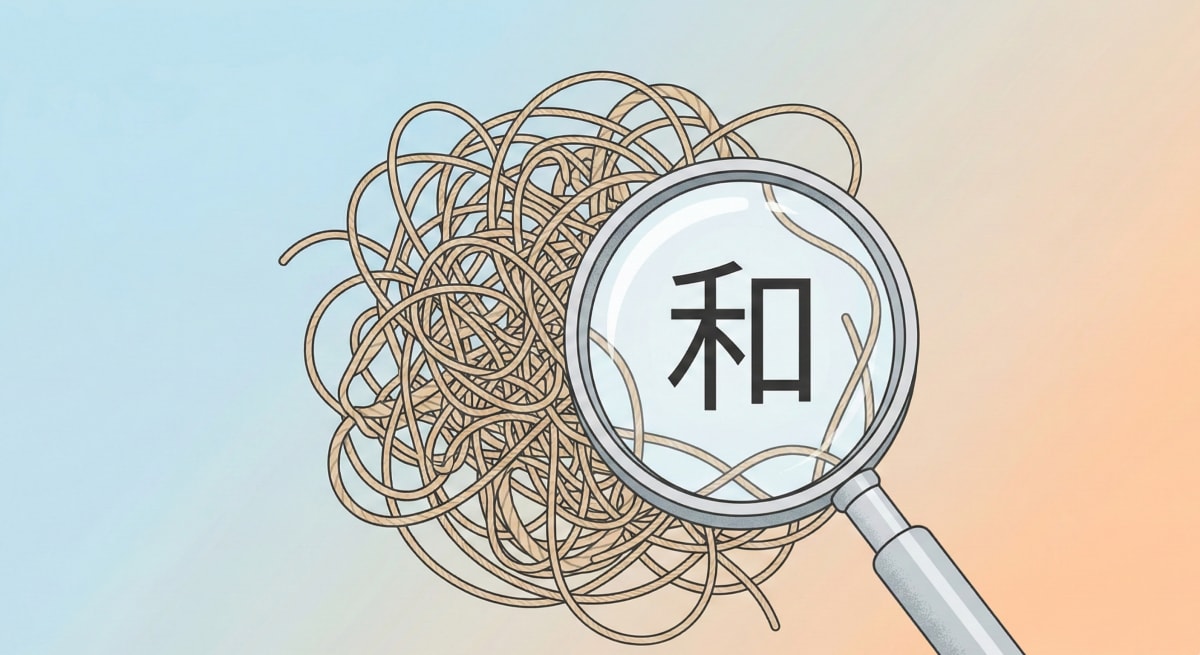

Let’s be honest: taking the first step into the world of Mandarin Chinese often feels like trying to crack a vault without the combination. To the uninitiated, the writing looks less like a language and more like a dense, indecipherable code. If your brain is wired for the clean, predictable structures of a spreadsheet or the rigid logic of backend coding, the initial sight of thousands of characters can trigger a very real “fight or flight” response.
For far too long, Mandarin has worn the crown of “the world’s most difficult language.” It is a reputation built on mystery and, frankly, a lot of outdated gatekeeping. As we move through 2026, I’ve found that the tools at our disposal have changed the game entirely.
The truth is, Chinese isn’t “harder” than English or Spanish; it’s simply built on a different operating system. Much of the anxiety around learning Mandarin stems from tall tales told by people who never really understood the language’s internal beauty. Let’s dismantle the five biggest myths holding you back and reveal the underlying luóji (逻辑)—the profound logic—that makes Mandarin surprisingly intuitive once you stop fighting it.
Myth 1: “The grammar is an absolute nightmare.”
Whenever I hear someone complain about “impossible grammar,” they’re usually thinking of the grueling conjugations of French verbs or the three-gender minefield of German nouns. Here is the best news you’ll get all day: Mandarin has none of that.
Think of Chinese grammar like a set of modular building blocks. It’s highly structural and efficient, almost like clean, minimalist code.
- No Verb Conjugation: In English, “to go” morphs into go, goes, went, gone, going. In Chinese, the verb is just qù (去), and it stays qù (去) regardless of who is doing it or when it happened. You just add a time marker if you need to be specific.
- No Gender, No Pluralization: A chair is just a chair. You don’t need to memorize whether it’s masculine or feminine, and you don’t add an “s” to the end of a word to make it plural.
- The Reality: Once you master the basic Subject-Verb-Object rhythm, you are essentially just plugging new vocabulary into a reliable, unchanging formula. It’s remarkably liberating.

Myth 2: “If you slip up on a tone, you’re doomed.”
We’ve all heard the horror stories. The “Mother vs. Horse” trap—where accidentally swapping mā (妈) for mǎ (马) is supposed to lead to social disaster—is the bogeyman of every beginner’s life.
But here is the secret that seasoned expats know: yǔjìng (语境)—context—is your safety net. Native speakers aren’t listening for isolated sounds; they are processing the entire sentence, your body language, and the physical environment.
If you walk into a small coffee maker shop and accidentally use the wrong tone for “buy” versus “sell,” the barista won’t suddenly think you’re auditioning for a retail job. They’ll just see you pointing at a latte.
- The Reality: Tones are important, but don’t let them paralyze your vocal cords. Be bold. If you make a mistake, correct yourself and keep moving. As I often explain in my guide on how to order coffee and milk tea, confidence is half the battle.
Myth 3: “You need 10,000 characters just to read a menu.”
When you look at a newspaper, the density of the characters is admittedly intimidating. It’s easy to assume the only way forward is sǐjì yìngbèi (死记硬背)—the soul-crushing, brute-force method of rote memorization.
But you don’t need 10,000 characters. To navigate daily life, read street signs, and understand the news, you only need about 2,000 to 2,500 characters. In Chinese, we call this gòuyòng (够用)—”enough to be useful.”
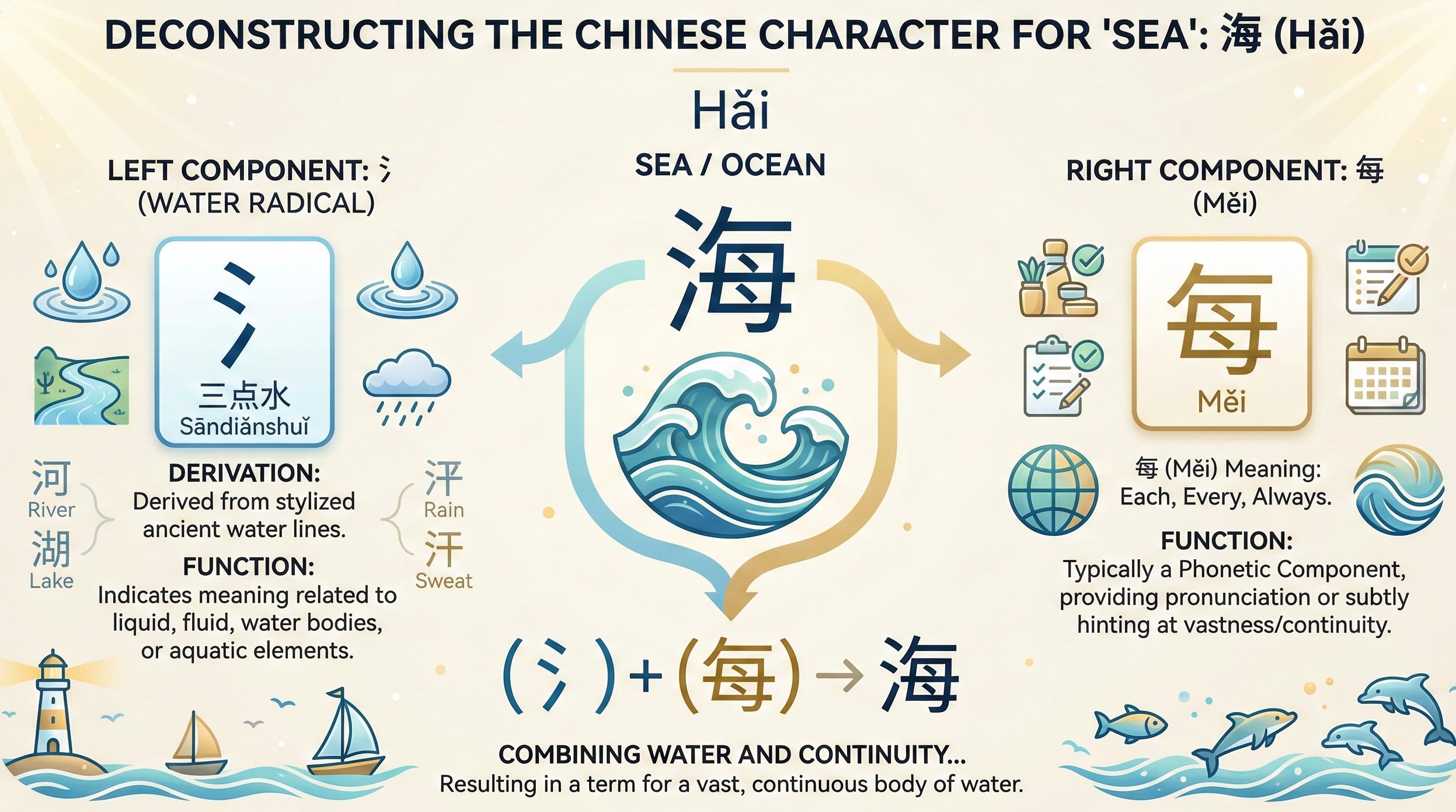
Characters aren’t random squiggles; they are puzzles. They are built from “radicals,” which are recurring semantic keys.
- The Water Radical (氵): See these three drops on the left? It almost always signals something related to liquid.
- 海 (hǎi) = Sea
- 泪 (lèi) = Tear
- 汗 (hàn) = Sweat
Myth 4: “You have to spend years learning calligraphy.”
In the past, being forced to replicate characters by hand for hours was part of the hazing ritual of learning Chinese. In 2026, it is largely a hobby. Unless you are chasing the meditative, tactile joy of a master calligrapher—much like the zen-like focus involved in bead rubbing (Panwan)—there is no reason to obsess over pen strokes.
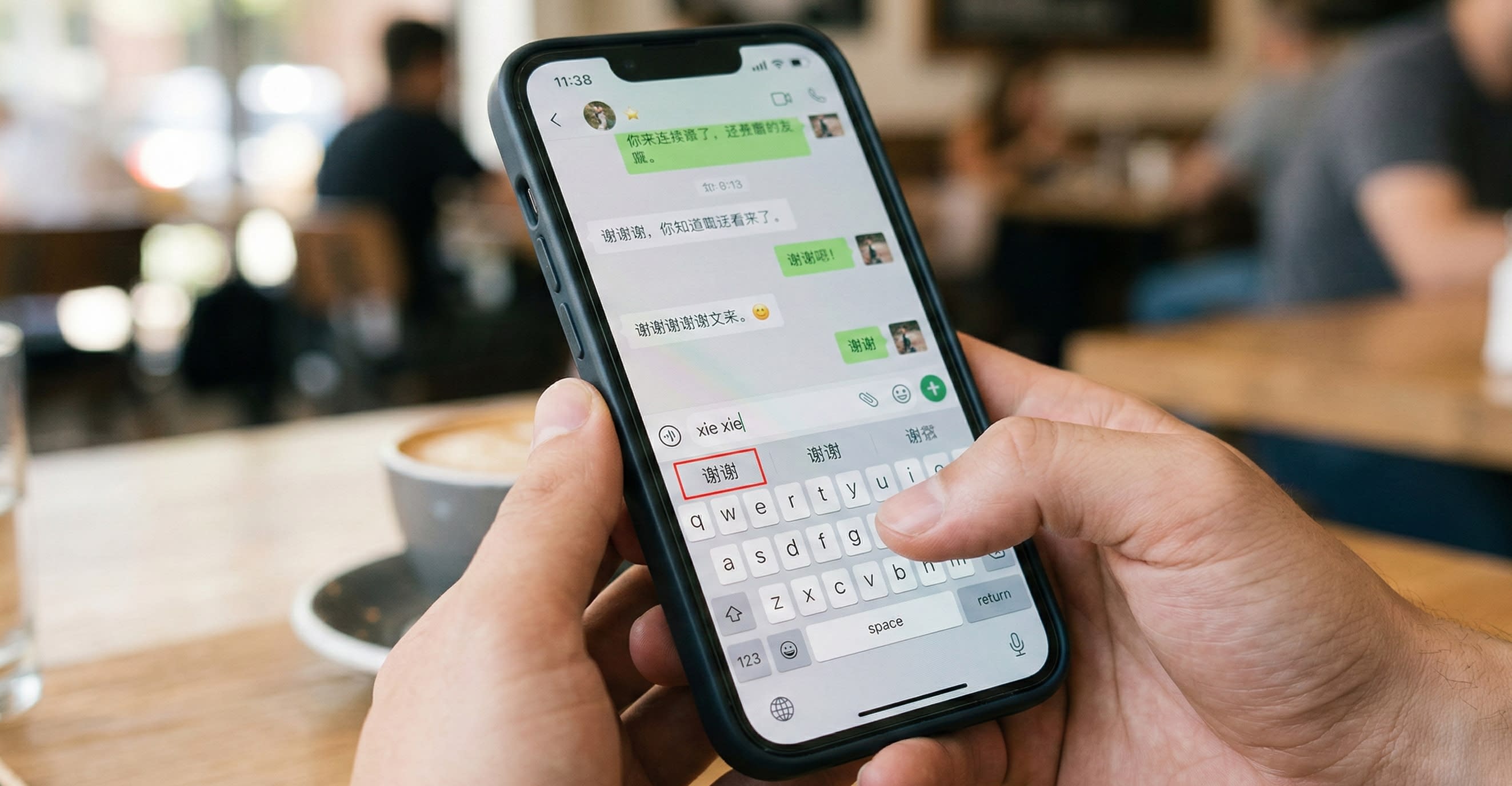
Today, 99% of our communication is done via dǎzì (打字)—typing. We use Pinyin to input the sounds, and our smartphones suggest the characters.
- The Reality: Your goal is recognition, not production. If you can read the character on a screen, you are literate. Don’t waste energy on hand-writing if your ultimate goal is real-world communication.
Myth 5: “Your adult brain is too rigid.”
There is a pervasive myth that if you didn’t learn Mandarin as a toddler, you’ve missed the window. As someone who started well into adulthood, I can promise you this is nonsense.
Children have the advantage of mimicking accents, yes. But adults have the ultimate superpower: strategic discipline. You know how to manage a project. You know how to take a massive goal and slice it into bite-sized, achievable pieces. You can use flashcards and spaced-repetition systems to optimize your memory far more efficiently than any child could.
Consistency beats raw talent every single time. 20 minutes a day, every single day, will put you ahead of the person who studies five hours once a week.
The Verdict: A Change in Perspective
| The Myth | The 2026 Reality |
|---|---|
| Grammar is impossible. | It's modular and logical. No conjugations required. |
| Tones must be perfect. | Context does the work. Don't let fear silence you. |
| Memorize 10,000 characters. | 2,000 characters based on radicals is all you need for fluency. |
| Handwriting is mandatory. | Digital input is standard. Prioritize reading over writing. |
| Adults can't learn it. | Adults have the discipline to master systems. |
Final Thoughts
Chinese isn’t a mountain that’s impossible to climb; it’s a vast, fascinating landscape that reveals its secrets as you walk through it. Stop romanticizing the “rote memorization” of the past and start treating the language like the sophisticated system it is.
Whether you’re curious about internet slang or just want to speak with confidence, the matrix of Mandarin is waiting for you. Take a deep breath, pick up your phone, and start your journey today.
Disclaimer: As an Amazon Associate, ChinaCurator earns from qualifying purchases.