
I still remember the day I decided to stop “pointing and praying” at menus. I was in a small, bustling noodle shop, the air thick with the scent of chili oil and star anise, and the waitress was waiting patiently—or perhaps impatiently—for me to order. I realized then that if I wanted to actually live in China rather than just pass through it, I needed to stop hiding behind English.
If you’ve been feeling that same spark of frustration, you have probably already explored why “Is Chinese Hard? A 2026 Reality Check” or perhaps you’ve been dipping your toes into the basics through “Demystifying Chinese”. It is an exhilarating journey, but let’s be honest: the initial wall can be intimidating. The first month of your language journey isn’t just about memorizing words; it’s about retraining your tongue, your ears, and your entire mental framework.
This is the roadmap I wish I had on day one. It’s not a magic pill, but it is a consistent, sustainable way to build a foundation that won’t crumble the moment you step outside.
The 30-Day Roadmap: Week by Week

Week 1: Master the Basics (Pinyin & Pronunciation)
The first week is about getting comfortable with the “musical” nature of the language. Ignore the characters for a moment; your priority is Pinyin—the Romanization system that tells you how to sound out Chinese.

- The Mindset: Don’t be afraid to sound silly. You are essentially doing vocal gymnastics.
- The Goal: Dedicate 30–45 minutes daily to focused drill work.
- Days 1–2: The Sounds of Silence (and vowels): Focus on the initials and finals. You’ll find sounds that your English-trained throat has never made. Take the
ü—that specific “u” with the umlaut. It sounds like you’re trying to say “ee” while pursing your lips as if you’re whistling. It feels unnatural, but keep doing it until it becomes muscle memory. - Days 3–4: The Tonal War: This is where most beginners quit. I used to record myself on my phone and play it back against native speaker audio on the Forvo app. When my “ma” didn’t sound like their “ma,” I knew I had work to do. If you struggle with tones, look for professional guides to avoid the common mistake of ignoring them entirely—it’s the Ultimate Shortcut to Fluency.
- Days 5–7: Putting it Together: Stop treating syllables as isolated sounds. Start reading small chunks. Even if you’re just saying
nǐ hǎo(你好 - hello) to your houseplant, build the habit of speaking aloud.
Week 2: Survival Vocabulary
By week two, you’re transitioning from “making noise” to “making sense.” We aren’t going for fluency here; we are going for survival.
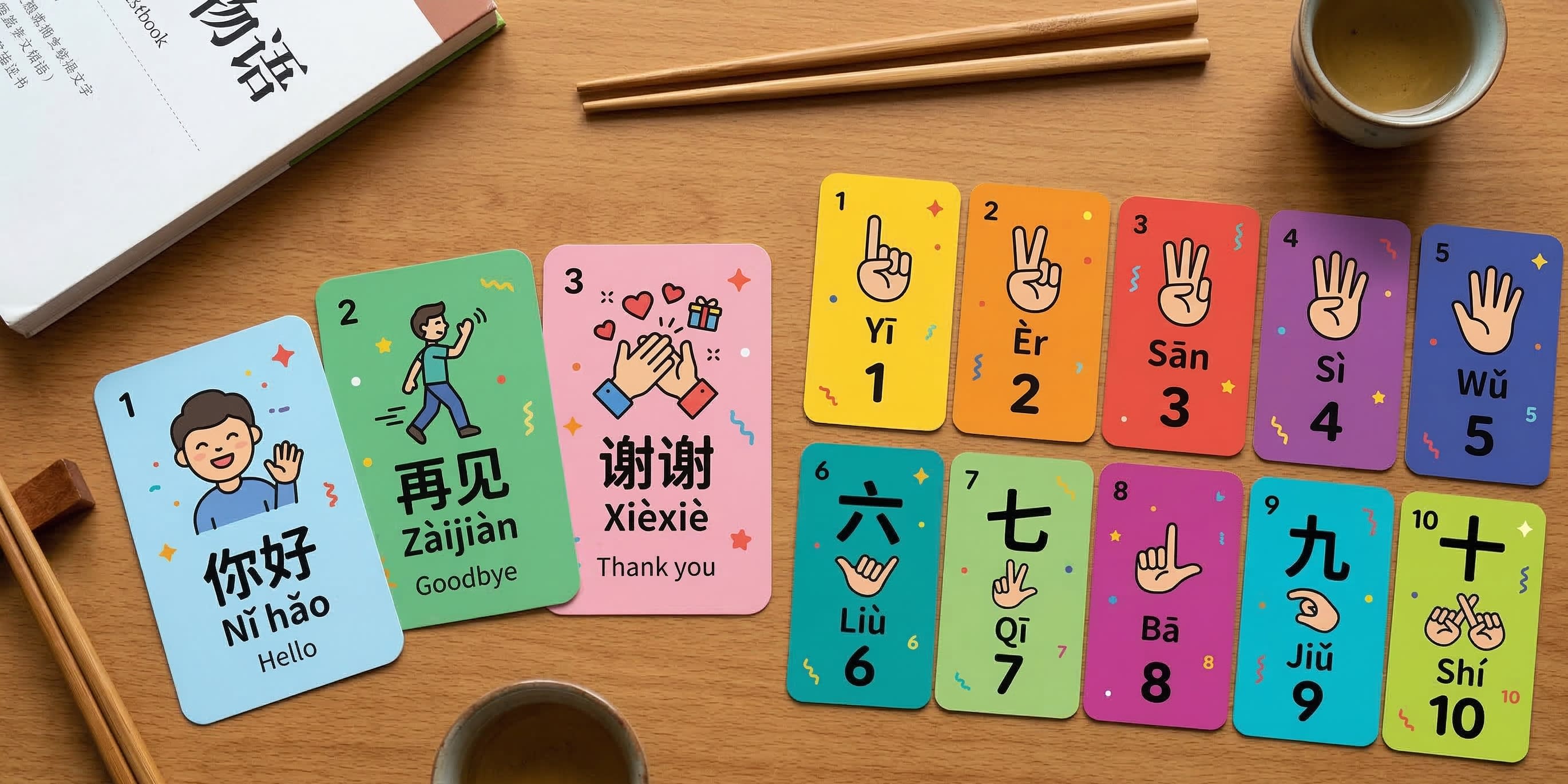
- The Focus: High-frequency words that act as the scaffolding of daily life.
- Politeness First: Learning
xièxie(谢谢 - thank you) andbù kèqi(不客气 - you’re welcome) is non-negotiable. These simple phrases are social lubricants that open doors in every Chinese city. - Numbers: You will use them constantly, from prices in the market to your taxi fare.
- Self-Introduction: Get comfortable saying
Wǒ de míngzi shì...(我的名字是… - My name is…). Once you can say your name, the world of Chinese speakers begins to open up. - Pro Tip: If you find yourself in a local shop trying to distinguish between items, you might want to look into how to use measure words properly, as it’s a hurdle everyone faces when learning the language.
Week 3: Grammar Logic
Many people fear Chinese grammar because they’ve heard it’s “unstructured.” The truth? It’s elegantly logical. Once you understand the mechanics, it’s much more consistent than the irregular verbs of French or the gendered nouns of Spanish.

- The SVO Rule: Chinese uses a Subject-Verb-Object structure, which is essentially the same as English.
Wǒ chī fàn(我吃饭 - I eat rice) is a perfect, logical sentence. - The ‘ma’ Question: Don’t stress about complex question structures. Just turn a statement into a question by tacking a
ma(吗) at the end. It’s almost too easy! - The Deep Dive: My confusion about modifiers only vanished when I started studying the nuances of the language’s markers, specifically when I tackled The 3 ‘De’s of Chinese Grammar.
Week 4: Characters and Immersion
By week four, you’ve earned the right to start looking at the “art” behind the language: characters.
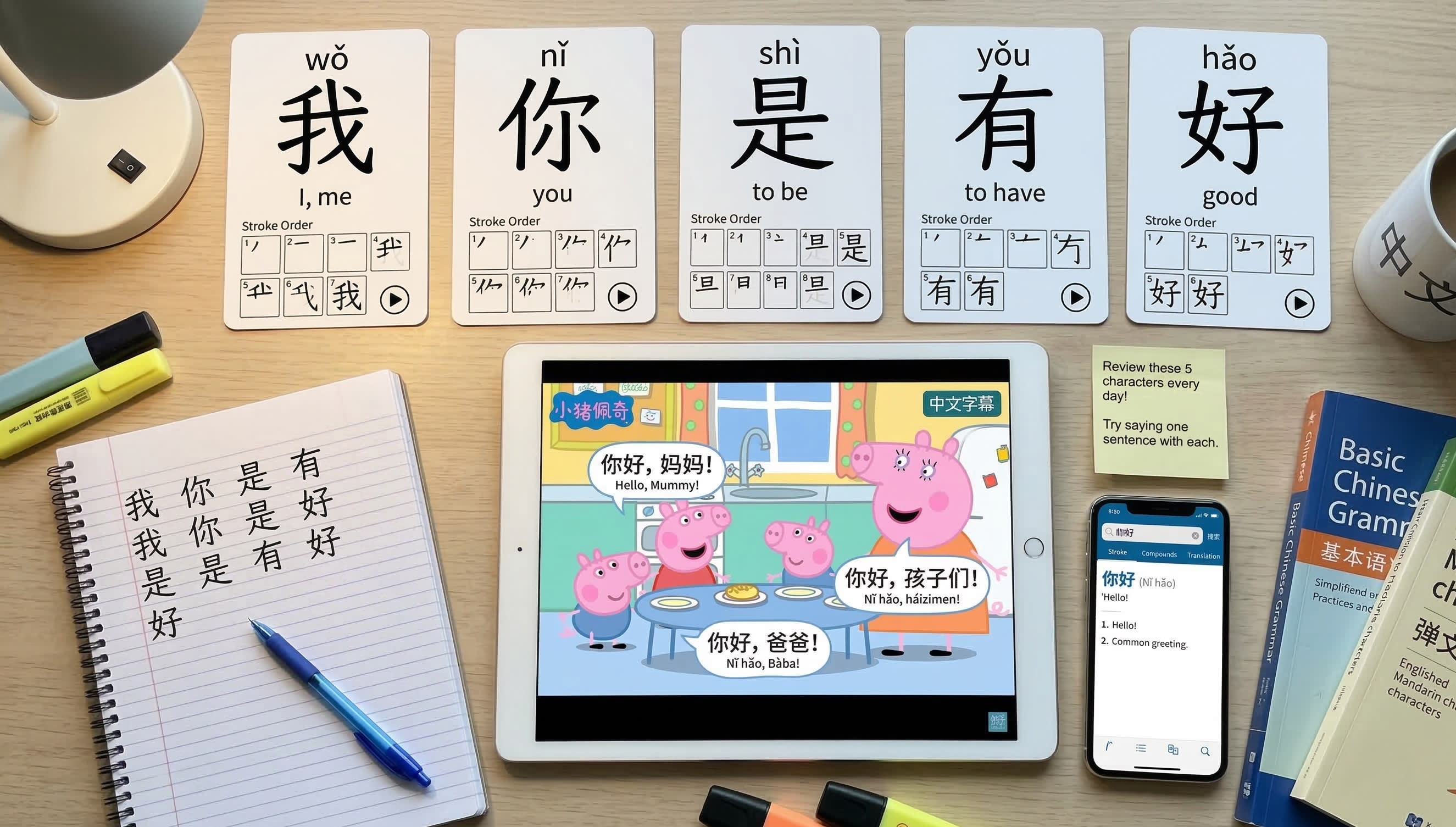
- The Character Reality: Don’t try to learn 100 characters a day. Focus on the 10 most common ones. Using an app like Pleco to see the stroke order helps you understand the “rhythm” of writing, which makes them easier to remember.
- Immersion: Watch a Chinese cartoon. You don’t need to understand every word; you need to hear the rhythm and identify the words you’ve learned.
Your First-Month Progress Table
| Week | Primary Focus | Action Item |
|---|---|---|
| 1 | Pinyin & Tones | Record and refine your tone accuracy. |
| 2 | Survival Vocab | Master 50-70 core words. |
| 3 | Sentence Structure | Construct 10 original sentences daily. |
| 4 | Reading & Listening | Identify common characters in media. |
Beyond the First Month: Keeping the Momentum
Consistency is the secret sauce. If you find yourself needing to navigate a coffee shop, you might find my guide on Survival Chinese: How to Order Coffee and Milk Tea Like a Local quite helpful.
If you ever feel like you are hitting a wall, remind yourself why you started. Learning Chinese isn’t a sprint—it’s an evolution. Every time you stumble or mispronounce a tone, you aren’t failing; you’re refining your internal map.
You will eventually get comfortable enough to handle day-to-day situations, perhaps even using a nice writing notebook to keep track of the characters you find most beautiful. Don’t stress the destination—enjoy the view as you go. Welcome to the journey!
Disclaimer: As an Amazon Associate, ChinaCurator earns from qualifying purchases.