3 Common Misconceptions About Mandarin & Chinese Culture Debunked
Myth 1: “Mandarin is the hardest language in the world!”
Truth: Mandarin is more accessible than you think! Here’s why:
| Aspect | Mandarin | English |
|---|---|---|
| Basic Fluency Requirement | 3,000 common characters (far fewer than English words needed for fluency) | 10,000+ words to achieve similar fluency levels |
| Character Structure | 80% follow “radical + phonetic” patterns (e.g., 清 qīng = water radical + 青 qīng sound) – easy to recognize and memorize | Alphabetic system with irregular spelling rules, silent letters, and inconsistent pronunciation |
| Grammar Tenses | No complex tense conjugations! Past/present/future are indicated by time words like “yesterday” (昨天 zuótiān) or “tomorrow” (明天 míngtiān) | Multiple tense forms (simple past, present perfect, future continuous, etc.) with specific verb changes |
| Pronunciation | 4 main tones + 1 neutral tone – learnable with practice (use apps like Pimsleur for listening drills and tone practice) | Stress-based pronunciation with regional accents, varied vowel sounds, and challenging consonant clusters |
Myth 2: “Chinese people only eat rice and dumplings!”
Truth: Chinese cuisine is incredibly diverse, with 8 major culinary styles. Here are some popular dishes from key regions:
| Region | Signature Dishes | Pronunciation (Pinyin + Characters) |
|---|---|---|
| Sichuan | Spicy hot pot (numbs and spicy broth with meat/vegetables), Mapo tofu (silky tofu in chili-bean sauce) | 火锅 (huǒguō) – Spicy hot pot 麻婆豆腐 (mápó dòufu) – Mapo tofu |
| Cantonese | Dim sum (bite-sized savory snacks like har gow and siu mai), Roasted duck (crispy skin with tender meat) | 点心 (diǎnxīn) – Dim sum 烤鸭 (kǎoyā) – Roasted duck |
| Shandong | Braised sea cucumber (tender sea cucumber in savory sauce), Pancake rolls with green onion (crispy pancake wrapped with scallions) | 红烧海参 (hóngshāo hǎishēn) – Braised sea cucumber 煎饼卷大葱 (jiānbǐng juǎn dàcōng) – Pancake rolls with green onion |
| Yunnan | Cross-bridge rice noodles (clear broth with rice noodles, meat, and fresh vegetables served separately) | 过桥米线 (guòqiáo mǐxiàn) – Cross-bridge rice noodles |
Fun Fact: Fortune cookies are not Chinese! They were invented in the US by Japanese immigrants in the early 20th century.

Myth 3: “Chinese culture is too conservative and hard to understand!”
Truth: Modern Chinese culture beautifully blends tradition and contemporary life – here’s how:
| Category | Key Details |
|---|---|
| Modern Lifestyle | Young Chinese embrace global trends: K-pop, Netflix, international fashion, and social media (WeChat is a super-app combining WhatsApp, Instagram, PayPal, and food delivery – used by over 1 billion people!) |
| Traditional Culture (Accessible) |
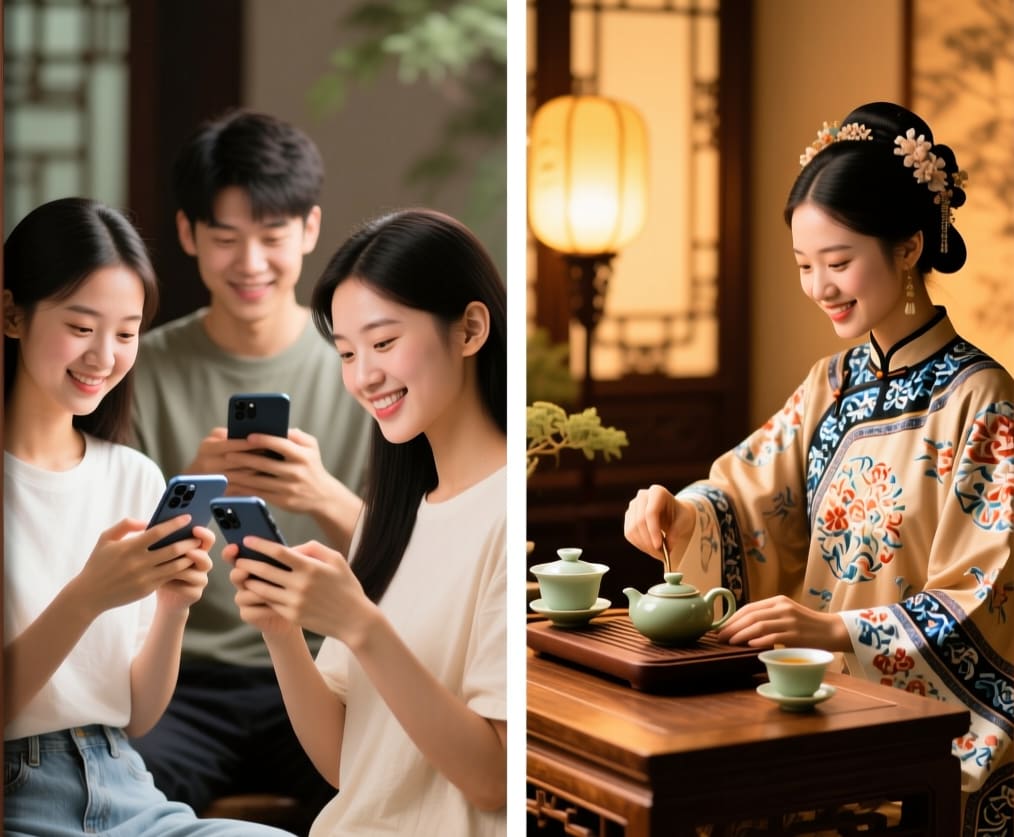
- Feng shui (风水 fēngshuǐ): Arranging living/working spaces to promote harmony and positive energy (simple tip: keep your desk tidy and facing natural light for good luck!) - Tea culture (茶文化 cháwénhuà): More than just drinking tea – it's a social ritual for connecting with friends, family, or colleagues (try "gōngfu chá" – elaborate tea brewing ceremony) - Zodiac signs (生肖 shēngxiào): 12 animal signs based on birth year (2024 = Year of the Dragon, 2025 = Year of the Snake) – used to predict personality traits and compatibility |
Fascinating Chinese Cultural Elements You’ll Love
Language & Wordplay (Homophones)
Chinese culture loves wordplay thanks to homophones (谐音 xiéyīn) – words that sound the same but have different meanings:
| Item | Pronunciation (Pinyin + Characters) | Homophone Meaning | Cultural Significance |
|---|---|---|---|
| Fish | 鱼 (yú) | 余 (yú) = "Surplus/Abundance" | Eaten during Chinese New Year for "more than enough" (年年有余 nián nián yǒu yú) |
| Orange | 橙 (chéng) | 成 (chéng) = "Success/Achievement" | Given as gifts during holidays to wish success |
| Peach | 桃 (táo) | 逃 (táo) = "Escape" | Symbolizes warding off bad luck (e.g., peach wood charms) |
Lucky Symbols & Etiquette
| Category | Key Details |
|---|---|
| Lucky Symbols |
- Red: Universally lucky (red envelopes, wedding dresses, bank cards, and holiday decorations) - Numbers: 8 (八 bā) = prosperity (sounds like "fa" in "fācái" 发财 = get rich), 6 (六 liù) = smoothness; 4 (四 sì) = unlucky (sounds like "sǐ" 死 = death) |
| Social Etiquette |
- "Losing face" (丢脸 diūliǎn): Avoid embarrassing others publicly – it's a core respect principle (e.g., don't correct someone harshly in front of a group) - Greetings: A slight nod, handshake, or "nǐ hǎo" (你好) is standard; hugs/kisses are rare in formal or traditional settings - Gift-giving: Avoid giving clocks (symbolize death) or sharp objects (symbolize conflict); wrap gifts nicely (red or gold paper is preferred) |

Keep Exploring Chinese Culture & Mandarin
- 5 Easy Mandarin Phrases for Travel – Essential phrases for ordering food, asking directions, and making friends.
- Chinese Zodiac Guide: What is Your Animal Sign – Discover your personality traits according to Chinese zodiac.
- 10 Funny Cultural Differences Foreigners Notice in China – Learn through humorous observations.
About Us
We’re dedicated to making Mandarin learning fun and accessible for beginners. Follow us for authentic cultural insights, practical language tips, and resources to help you connect with Chinese culture. Whether you’re planning a trip to China, interested in global cultures, or want to learn a new language, we’re here to guide you every step of the way!

