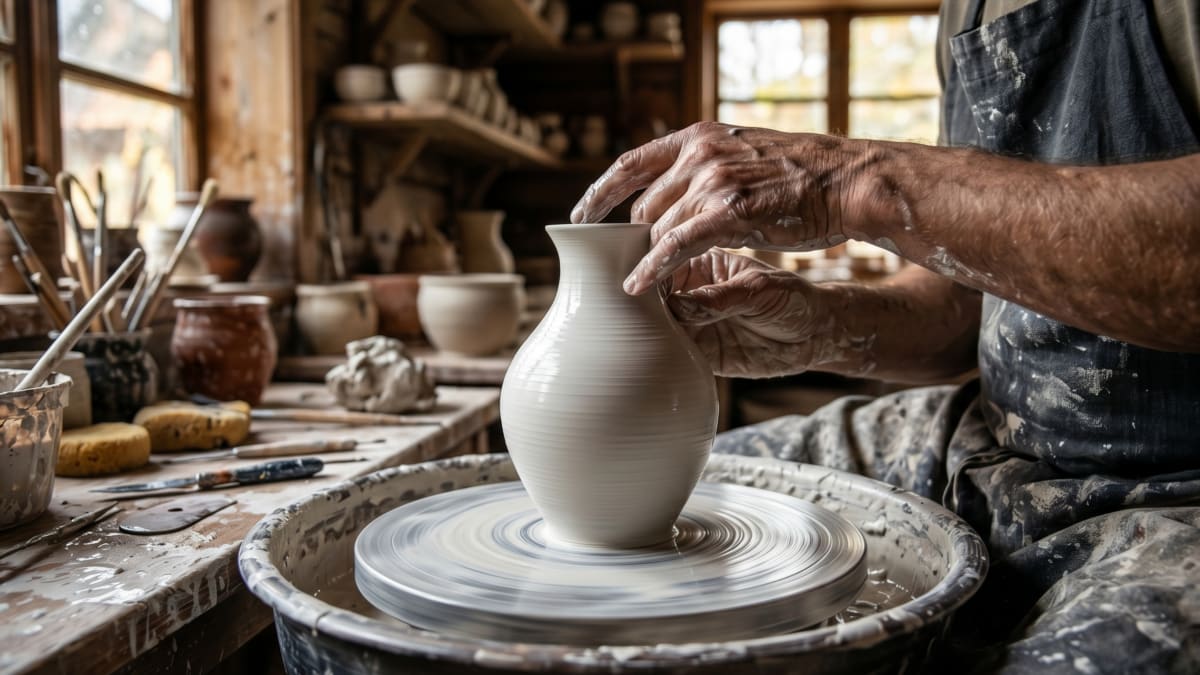
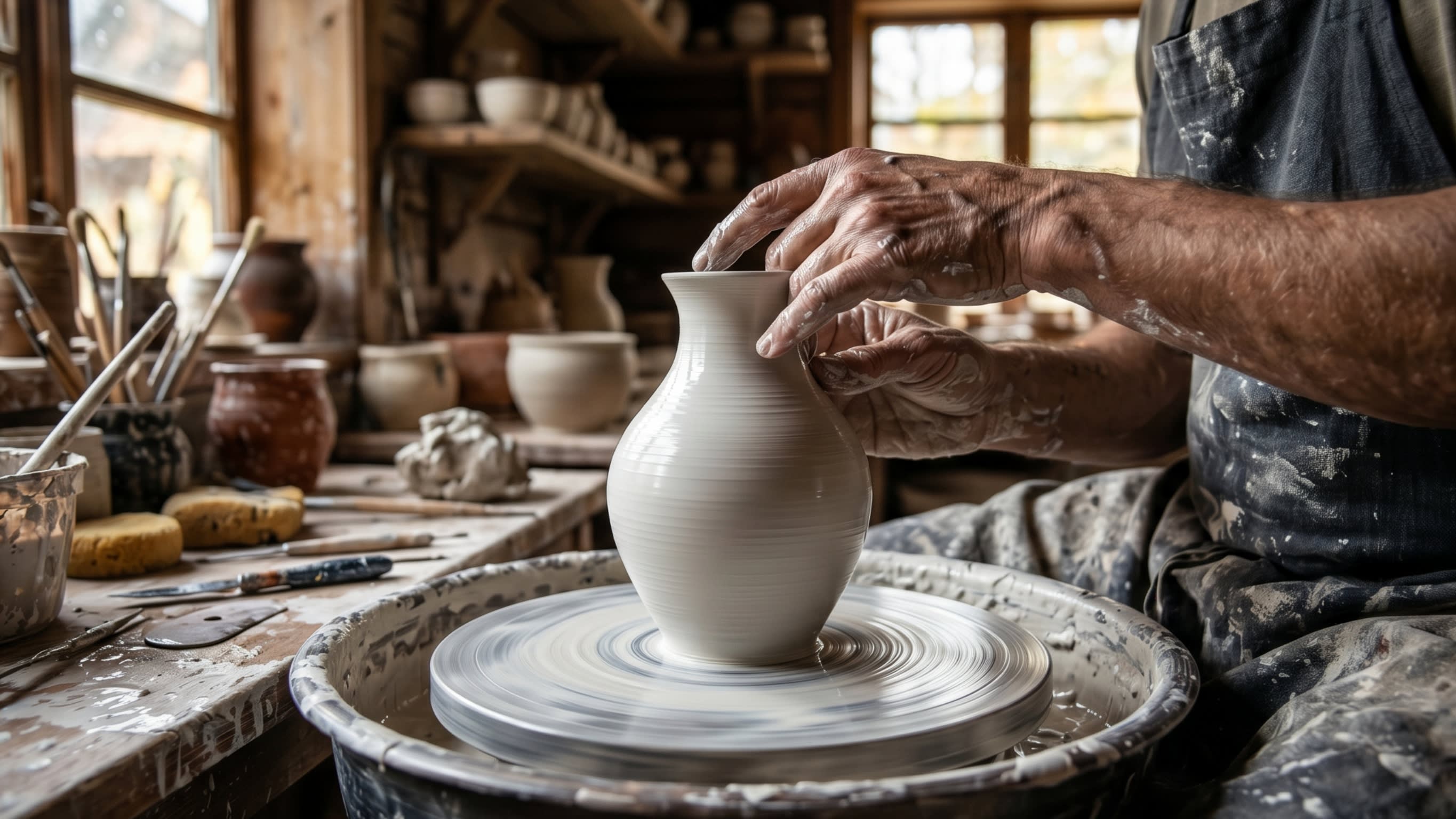
In the mist-draped hills of Jiangxi (江西 - jiāng xī), a city has been breathing fire for over a thousand years. Jingdezhen (景德镇 - jǐng dé zhèn) is far more than just a destination; it is a living, breathing curatorial space where the raw elements of earth, water, and flame collide to create something transcendent.
In 2026, as mass-produced trinkets flood the global market, I find that the true value of travel lies in the “Fingerprint of the Master”—that tiny, imperfect ridge left on a bowl by the person who shaped it. If you are tired of soulless gift shops, join me in bypassing the tourist traps. We are going into the silent, dusty workshops where the legendary “White Gold” of China is still being born.
The 2026 Artisan Renaissance
Jingdezhen today pulses with two distinct heartbeats. The first is the weight of Imperial History (御窑历史 - yù yáo lì shǐ) that defined the Ming and Qing dynasties. The second is the vibrant, restless energy of the Nomadic Artist Community (景漂文化 - jǐng piāo wén huà).
With the launch of the new High-Speed Rail (HSR) express lines, reaching this sanctuary from the neon lights of Shanghai takes less than three hours. Yet, the moment you step into the old, narrow alleyways, time bends. The frantic pace of the modern world dissolves into the steady, rhythmic hum of a kick-wheel.
If you are planning your own pilgrimage, don’t forget to pack a sturdy pair of walking shoes—the uneven cobblestones are a rite of passage. For those curious about how to navigate these artistic hubs, you might find my guide to Reverse Tourism in China’s Underrated Cities helpful for finding similar pockets of quietude elsewhere.
Phase 1: The Imperial Heart – Imperial Kiln Museum (御窑博物馆)
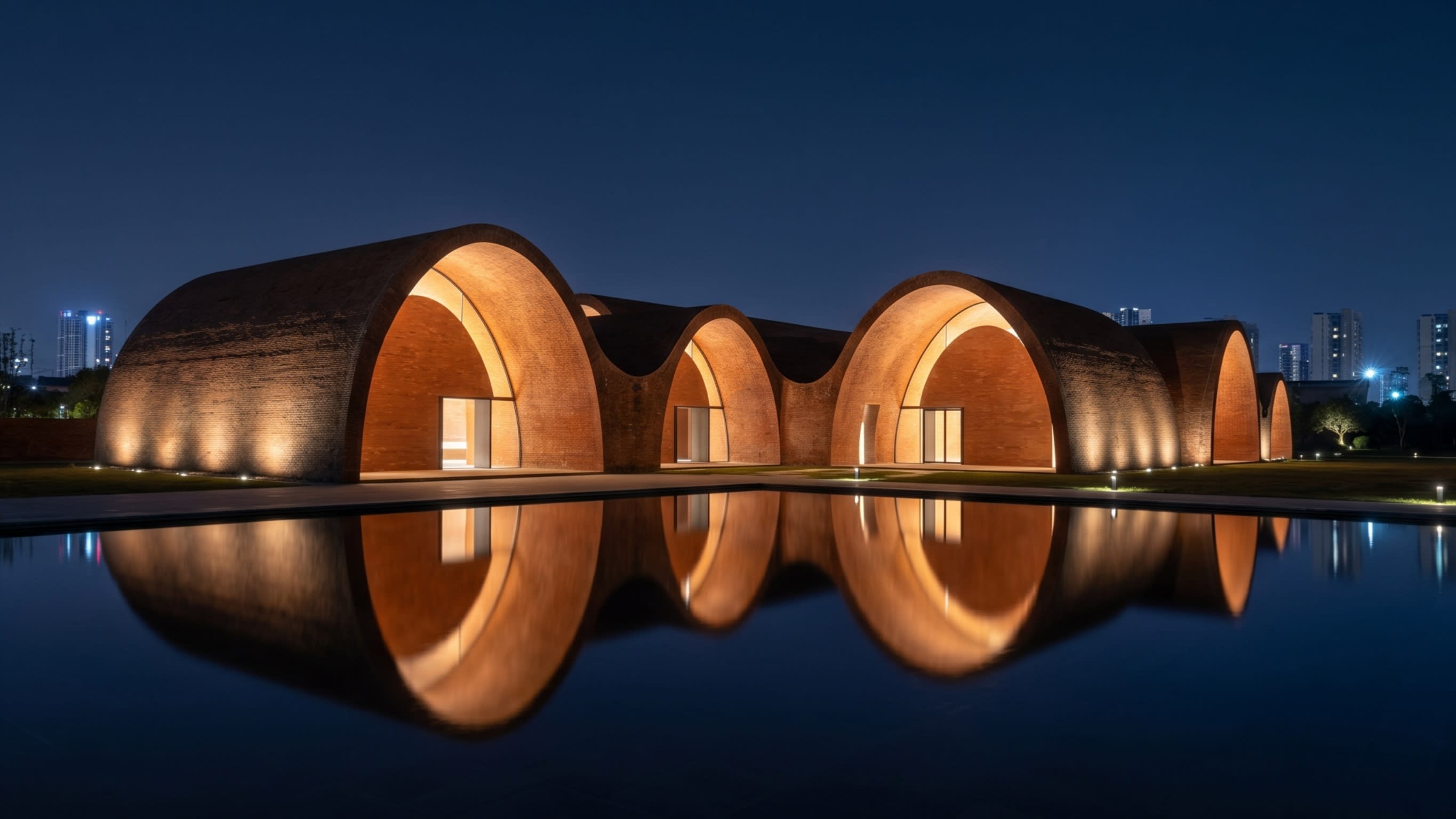
Your journey should always begin at the Imperial Kiln Museum (御窑博物馆 - yù yáo bó wù guǎn). Voted as a architectural marvel, its series of brick-red vaults echo the shape of ancient kilns.
Stepping inside at twilight is an ethereal experience. In 2026, the museum has integrated Silent AR Technology, allowing you to see the phantom flames of the past dancing across the reconstructed kilns. It is a profound, almost spiritual introduction to the sheer scale of Chinese ceramic history. Keep an eye out for the “shards” embedded in the walls; these are the remnants of pieces deemed imperfect by Imperial standards—a humbling reminder that the masters of old chased a perfection that was, at times, impossible.
Phase 2: The Creative Hub – The Sculpture Factory (雕塑工厂)
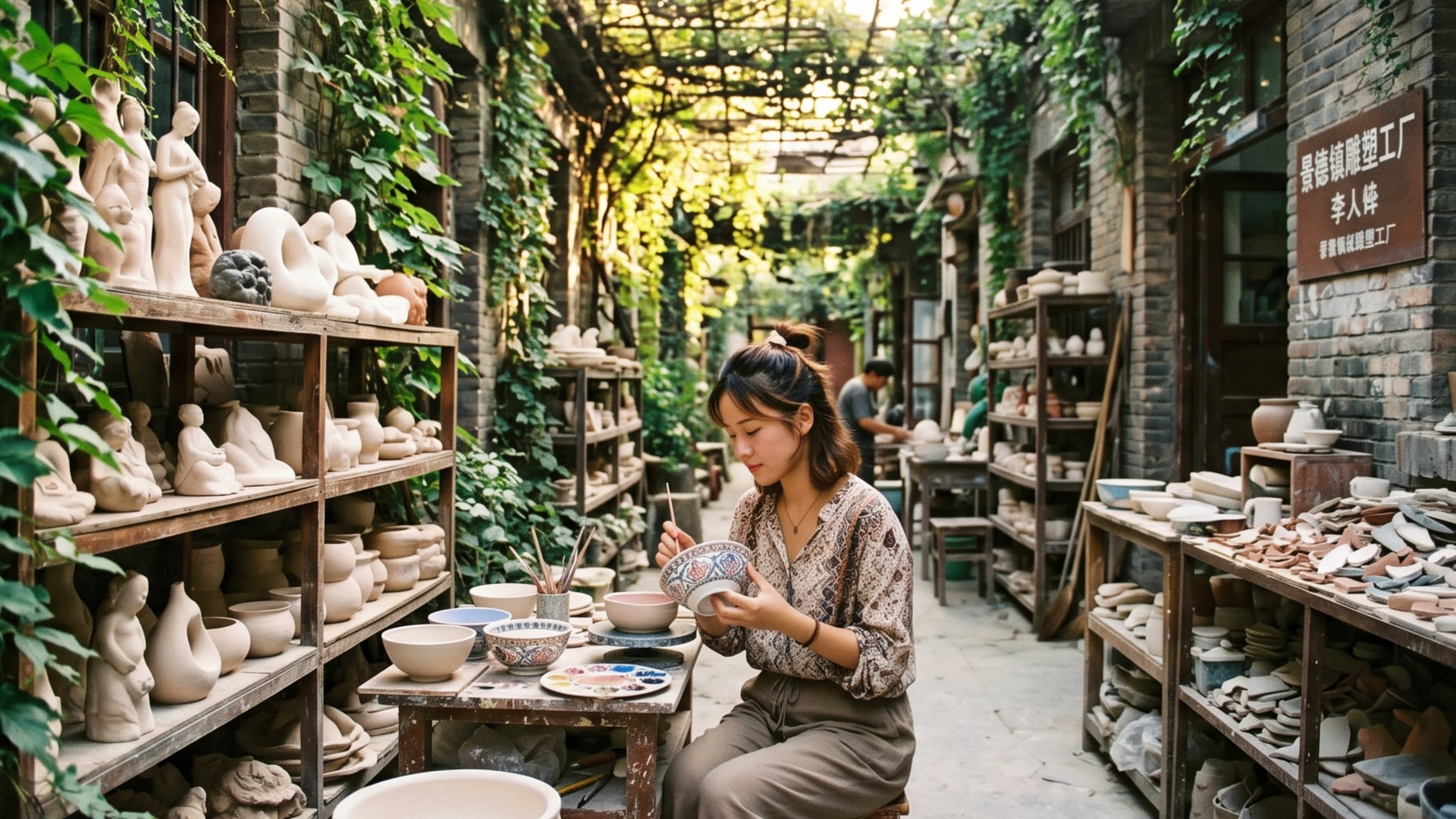
To truly connect with the contemporary masters, head to the Sculpture Factory (雕塑工厂 - diāo sù gōng chǎng). This is the epicenter of the ‘Jing漂’ (jǐng piāo), the transient artists who have “drifted” here from across the globe to dedicate their lives to clay.
Avoid the bright, front-facing retail boutiques. Instead, wander into the narrow, winding alleys tucked behind the main structures. You will find masters specializing in delicate Blue and White (青花 - qīng huā) or the intricate, vibrant Fencai (粉彩 - fěn cǎi) techniques hidden in plain sight. Many of these studios operate “By Appointment Only.” It feels exclusive, but in reality, it is simply a way to protect the deep concentration required for their craft.
For those who appreciate this level of devotion, you might also enjoy exploring the Art of Calligraphy in Xi’an, another city where the focus on the “stroke” defines the culture.
Phase 3: The Detail – Understanding the “White Gold”
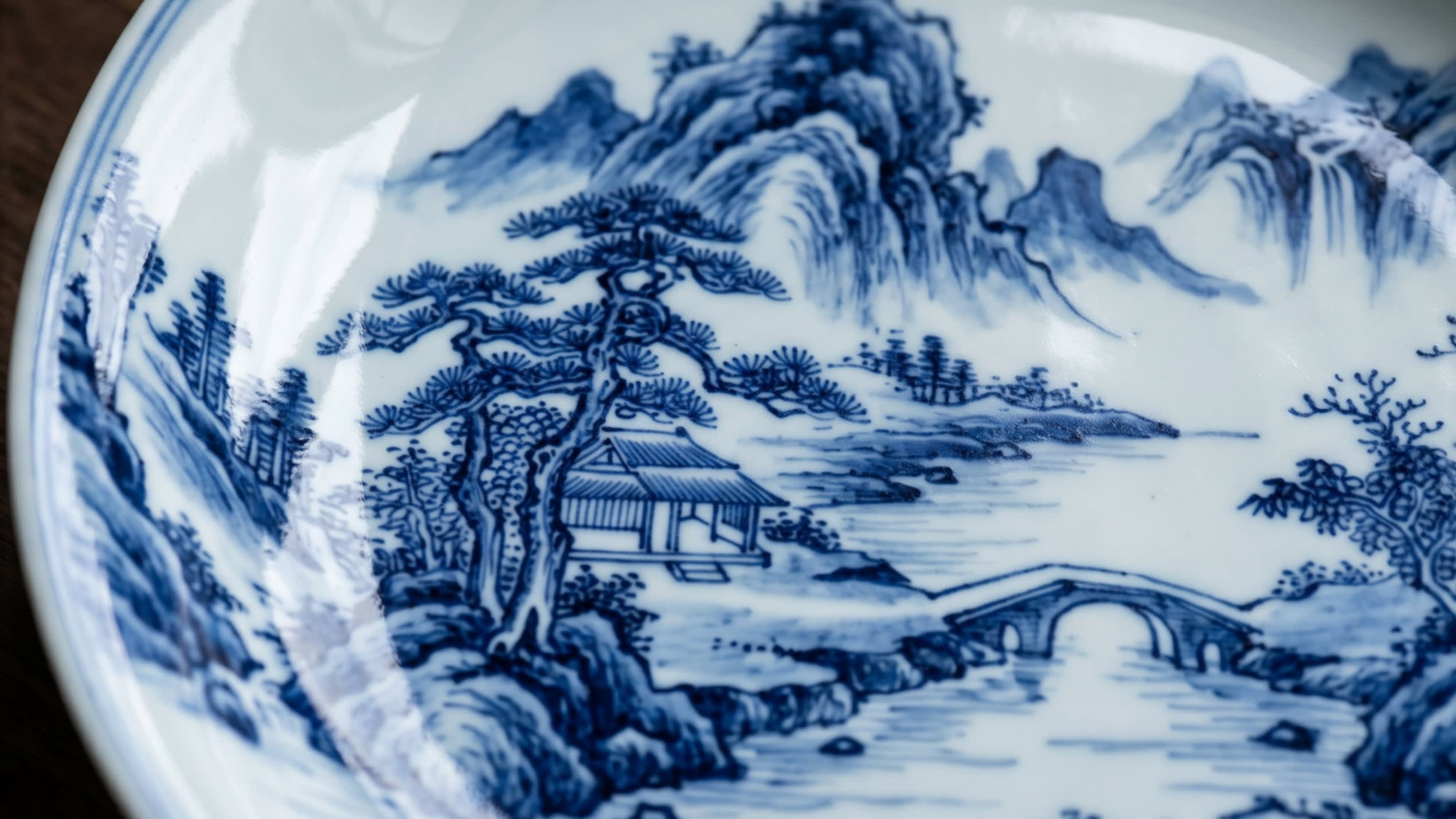
To buy like a seasoned curator, you must learn to look for the four classical hallmarks of high-quality Jingdezhen porcelain: “White as Jade, Bright as a Mirror, Thin as Paper, and Sounding like a Bell.”
In 2026, I have noticed local masters pushing the limits of the “Thin as Paper” standard. I once held a bowl so translucent that the light of the workshop lamps passed through it as if it were carved from frozen morning mist. When you lightly tap these pieces, the resulting ring is a sustained, crystalline note—a testament to the high-purity Kaolin clay used.
If you’re buying high-end pieces, ensure you invest in a durable travel bag to keep your treasures safe during the journey home.
Jingdezhen Art Hubs: A 2026 Comparison
| Art Hub | Vibe | Best For | Rating |
|---|---|---|---|
| Sculpture Factory | Rustic & Raw | Meeting Masters | ⭐⭐⭐⭐⭐ |
| Taoxichuan | Industrial Chic | Night Markets | ⭐⭐⭐⭐ |
| Sanbao Valley | Quiet & Zen | Retreats | ⭐⭐⭐⭐⭐ |
Fueling the Fire: The Taste of the Porcelain Capital

The masters here don’t just work with fire; they consume it. The local cuisine is unapologetically spicy and vibrant. You haven’t truly lived until you’ve sat on a low plastic stool and “slurped” a bowl of Cold Rice Noodles (冷粉 - lěng fěn) for breakfast. These thick, handmade noodles are tossed with pickled radish, heaps of orange chili oil, and toasted peanuts.
It is the kind of “fiery” energy that keeps you walking through the alleys for hours. If you find the heat intimidating, keep some chili oil neutralizers handy, but do try the local food—it is the lifeblood of this city.
Traveler’s Language Survival Table
| English | Chinese & Pinyin |
|---|---|
| Is this handmade? | 这是手工做的吗? (Zhè shì shǒu gōng zuò de ma?) |
| I want to find a master. | 我想找一位匠人。 (Wǒ xiǎng zhǎo yī wèi jiàng rén.) |
| It sounds like a bell. | 听起来像钟声。 (Tīng qǐ lái xiàng zhōng shēng.) |
Final Thoughts from Yiran
Jingdezhen teaches us the profound value of slowing down. In a world increasingly dominated by instant, AI-generated designs, watching a master spend ten days perfecting a single vase is a radical act of beauty.
My advice? Resist the urge to buy the first thing that catches your eye. Spend your first two days simply walking, talking to the artists, and soaking in the atmosphere. Only when a piece truly speaks to you—when you feel that invisible “click” of connection—should you bring it home. It won’t just be a souvenir; it will be a piece of someone’s life.
Planning more travel? Check out my Survival Guide for 5A Scenic Spots in 2026 to make sure your journey across China is just as seamless as it is inspiring.
Disclaimer: As an Amazon Associate, ChinaCurator earns from qualifying purchases.