🥡 Introduction: The Ultimate Savory Comfort Food
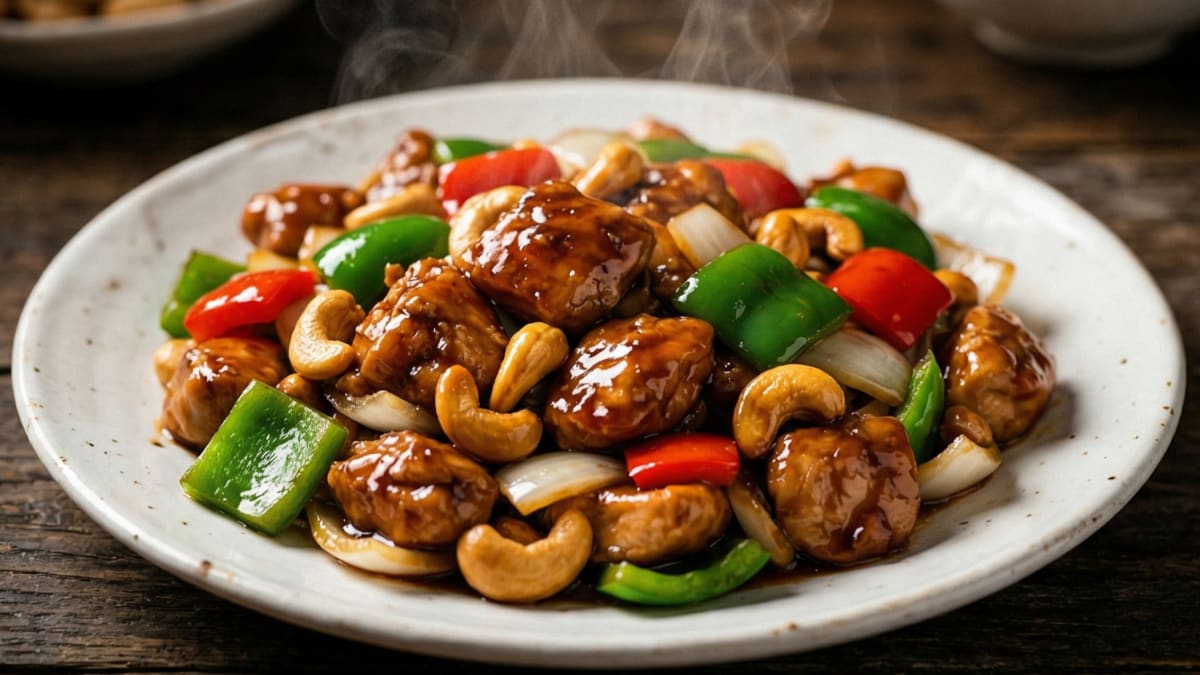
When I think of Chinese takeout, my mind often wanders to the usual heavy hitters. But while dishes like General Tso’s or Orange Chicken rely on deep-fried breading and sugary glazes, Cashew Chicken (腰果鸡丁 - Yāoguǒ Jīdīng) is a much more elegant affair.
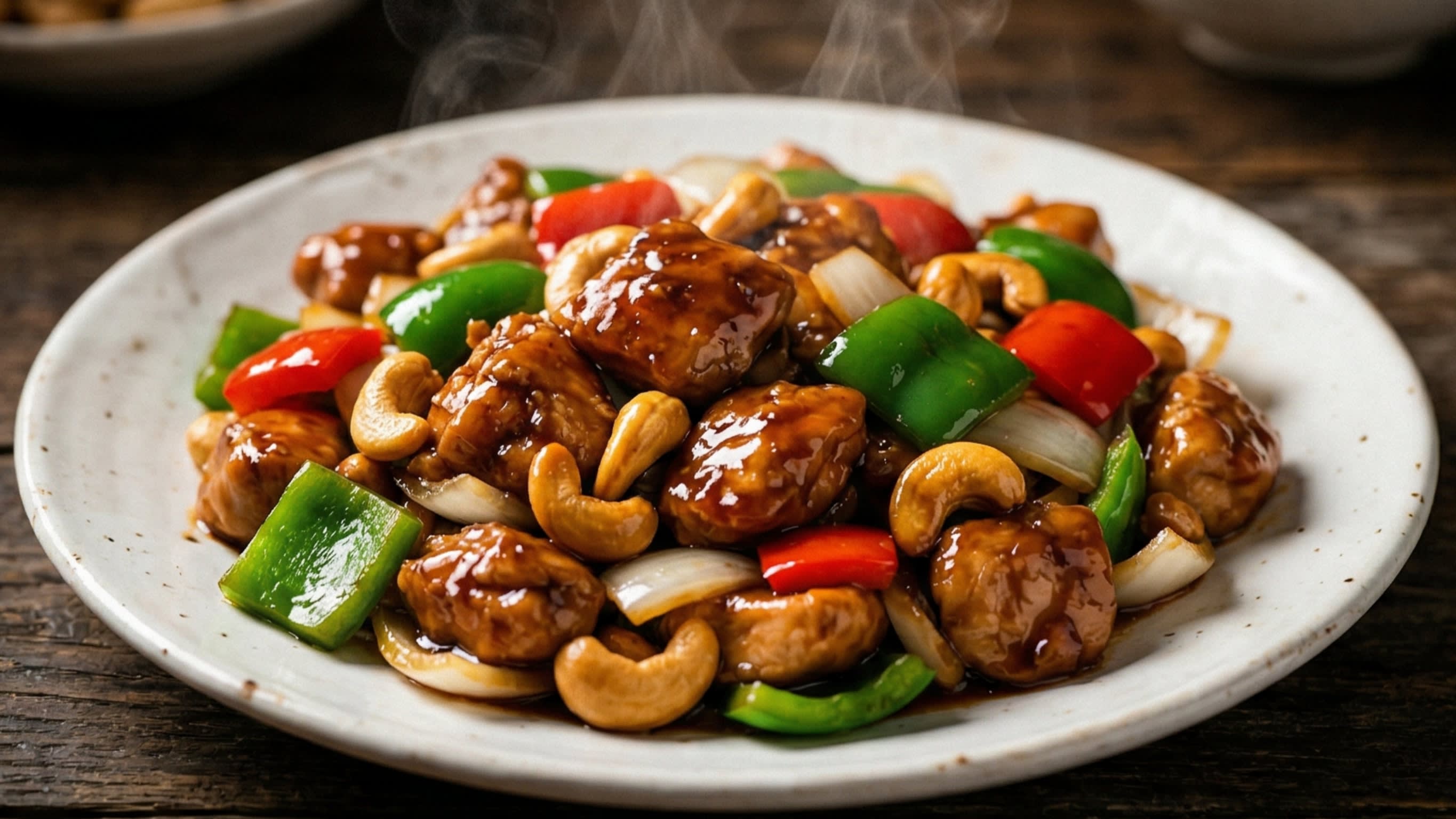
This dish is a masterclass in textures. I love the contrast between the velvety chicken, the sharp crunch of fresh bell peppers and water chestnuts, and the buttery, roasted snap of golden cashews. It is all brought together by a savory, umami-packed brown sauce that practically demands a bowl of steaming Jasmine rice.
Because it isn’t deep-fried, it feels significantly lighter than most takeout. However, I’ve seen many home cooks struggle with two classic pitfalls: dry, rubbery chicken and soggy, lackluster cashews. Today, I am going to share the techniques I’ve learned to fix those issues forever. I’ll show you how to get that restaurant-style “velvety” texture and ensure your nuts stay crunchy until the very last bite.
🆚 Cashew Chicken vs. Kung Pao Chicken
I get asked this constantly: “What’s the actual difference between Cashew Chicken and Kung Pao Chicken?” While both use diced chicken, the flavor profiles are worlds apart.
- Kung Pao Chicken (宫保鸡丁): This is a Sichuan classic. It’s fiery, numbing, and features a complex Lychee flavor—a balance of sweet, sour, and spicy. It typically uses peanuts and is heavily seasoned with dried chilies and Sichuan peppercorns. If you are looking for that specific numbing heat, I recommend checking out my guide on Authentic Sichuan Mapo Tofu.
- Cashew Chicken (腰果鸡丁): This leans into Cantonese sensibilities. It’s non-spicy, deeply savory, and relies on the rich, earthy umami of oyster sauce and sesame oil. If I’m cooking for guests who don’t want a chili-induced meltdown, this is my go-to dish.
🔬 The Science of the Stir-Fry: Velveting and Toasting
To reach restaurant standards in your own kitchen, you need to master two fundamental techniques.
1. Saving the Chicken: “Shang Jiang” (上浆)
Chicken breast (鸡胸肉 - Jīxiōngròu) is lean, which means it dries out in seconds if tossed into a hot wok unprotected.
I always practice Shàngjiāng (上浆 - Velveting). By massaging the diced chicken with a bit of water, soy sauce, and cornstarch, I force the meat fibers to hold onto moisture. The cornstarch forms a microscopic protective barrier that keeps the interior tender while the exterior sears.
2. The Golden Crunch
If you throw raw cashews into a wet stir-fry, they’ll end up soft and oily. I always toast them in a dry pan over low heat until they release their nutty oils and turn golden. The secret? I never add them until the heat is completely off. By tossing them in at the very final second, I guarantee they retain that satisfying, loud snap.
🛒 Ingredients List
| Category | Ingredients |
|---|---|
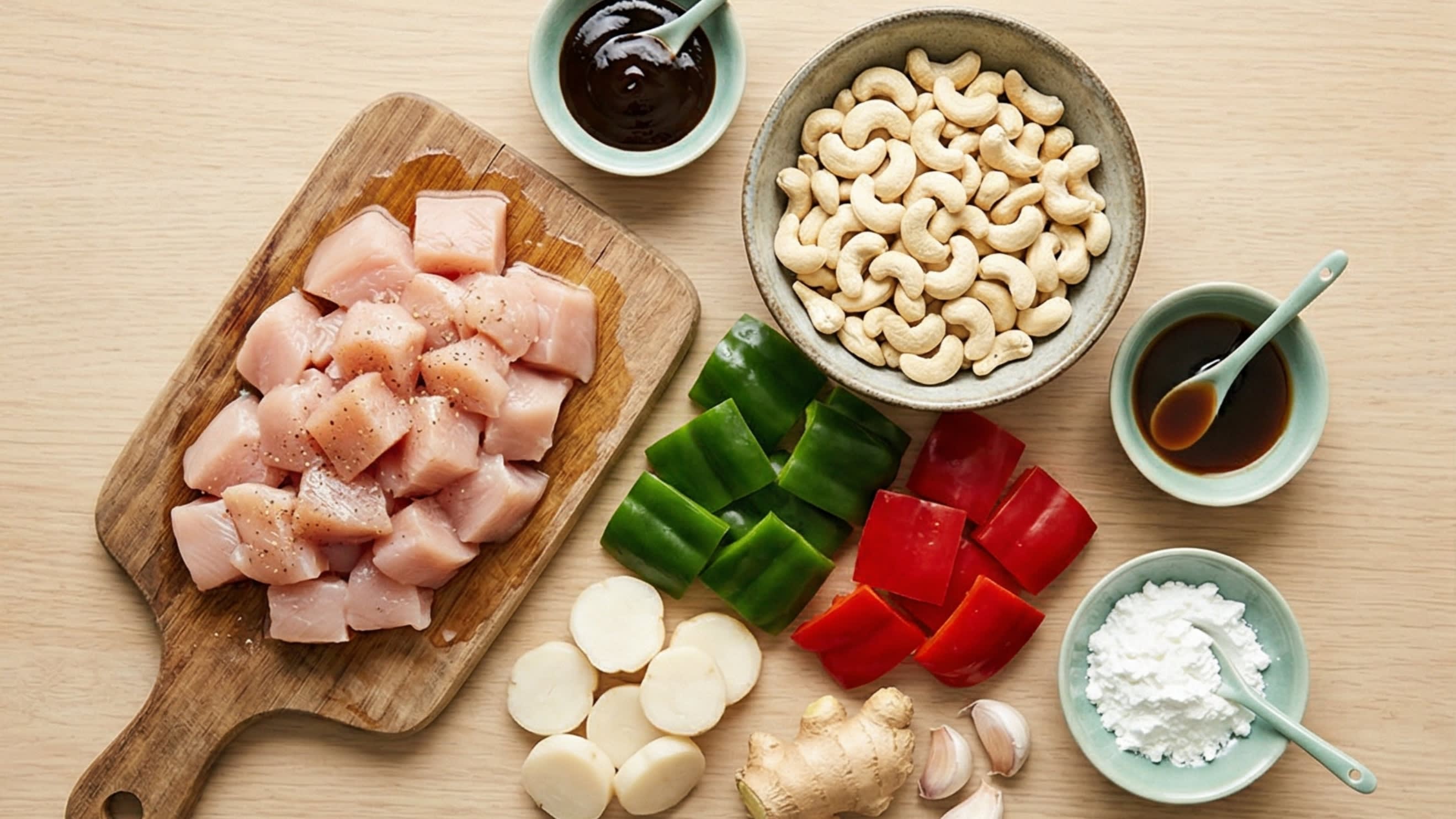
| Protein | 1 lb (450g) Boneless, Skinless Chicken Breast (鸡胸肉), cut into 3/4-inch cubes. |
| Crunch | 1 cup Raw, Unsalted Cashews (腰果 - Yāoguǒ), 1 Green Bell Pepper, 1 Red Bell Pepper, 1/2 White Onion, 1/2 cup canned Sliced Water Chestnuts. |
| Sauce | 3 tbsp Oyster Sauce (蚝油), 1 tbsp Light Soy Sauce, 1/2 tsp Dark Soy Sauce (老抽), 1 tsp Hoisin Sauce, 1 tsp Sugar, 1/2 tsp Toasted Sesame Oil, 1/4 tsp White Pepper, 1/3 cup Chicken Broth, 1 tbsp Cornstarch. |
🍳 Step-by-Step Instructions
1. Velvet the Chicken (上浆): I place my chicken in a bowl, massaging it with soy sauce, wine, and water until the liquid is fully absorbed. Then, I fold in the cornstarch until the meat feels tacky. Finally, I add a splash of oil to seal it. I let this rest while I chop my veggies.
2. Whisk the Sauce: I whisk the oyster sauce, soy sauces, sugar, sesame oil, and chicken broth in a small bowl until the cornstarch is dissolved. Being prepared here is the difference between a controlled stir-fry and a chaotic mess.
3. Toast the Cashews: In a dry wok over low heat, I toast the cashews until they turn deep gold and fragrant. I move them to a cold plate immediately; if left in the wok, they’ll continue to cook and burn.
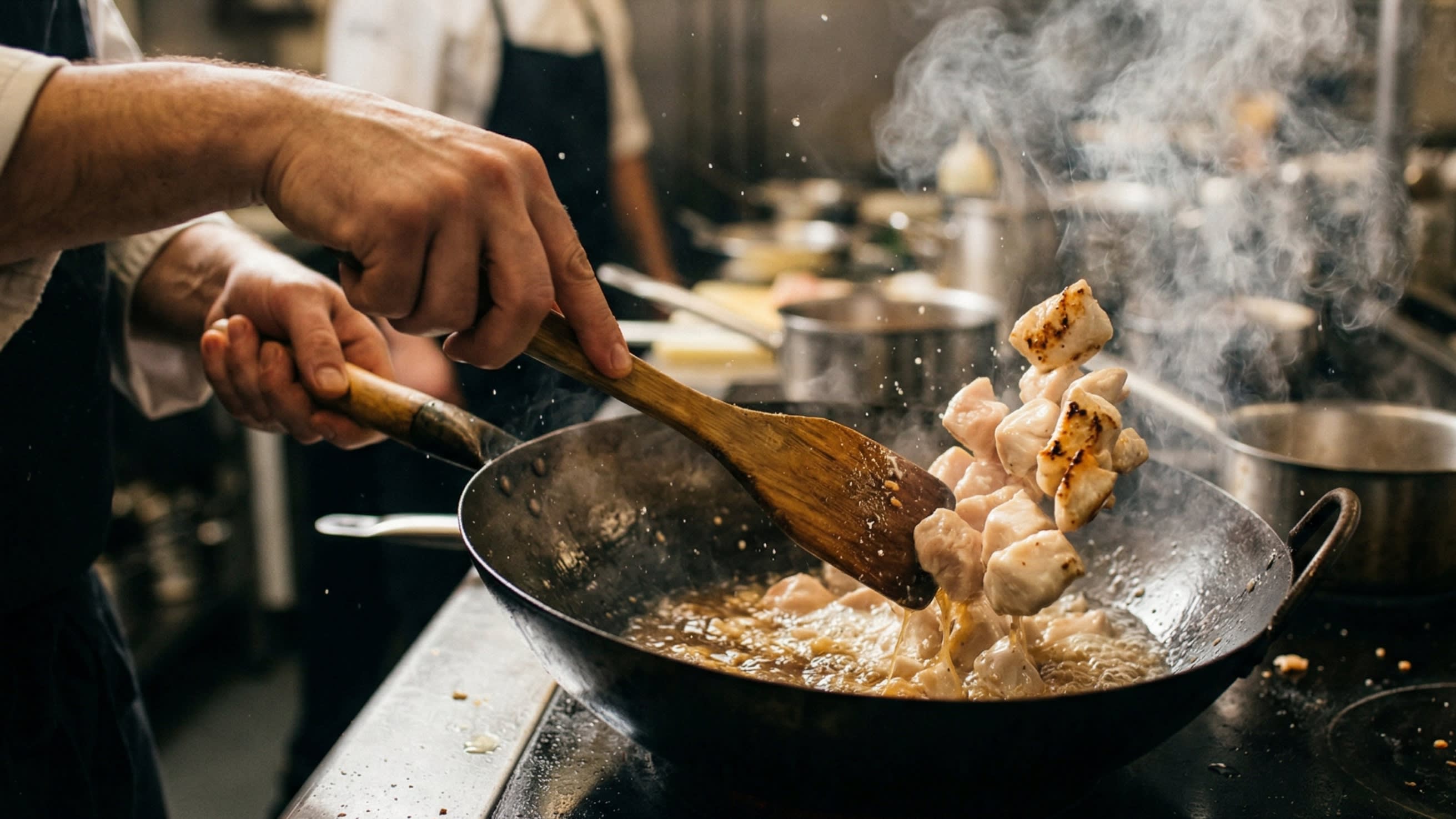
4. Sear the Chicken (滑炒 - Huáchǎo): I wipe my wok clean, crank the heat to high, and add oil. Once shimmering, I sear the chicken in a single layer for 30 seconds before tossing it until it is 90% cooked. I remove the chicken immediately.
5. Blister the Vegetables (断生 - Duànshēng): Using the same wok, I add the onions, peppers, and water chestnuts. I stir-fry aggressively for 60 seconds to get that smoky blister while keeping the crunch.
6. Awaken Aromatics & Thicken: I clear a space for my minced ginger and garlic. Once fragrant, I whisk my sauce and pour it into the bubbling center of the wok. In seconds, it transforms into a thick, mahogany glaze.
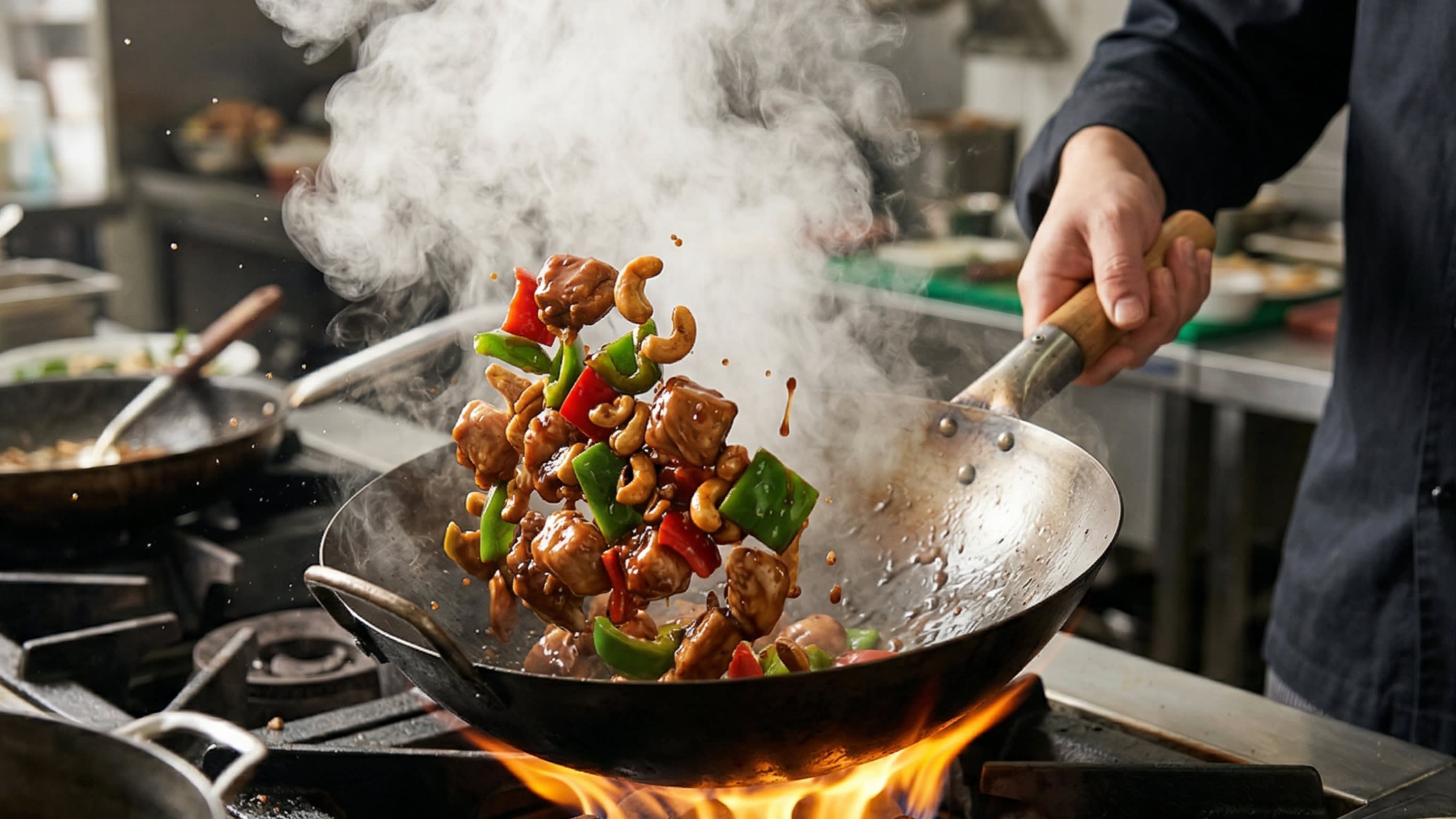
7. The Final Reunion: I return the chicken to the pan and toss everything until coated. Then, I kill the heat completely. I dump in my toasted cashews, give it one final toss, and serve.
💡 Troubleshooting & Pro Tips
- Chicken still tough? You either skipped the velveting or overcooked it. Once that chicken is opaque and firm, it’s ready. If you leave it in too long while the sauce thickens, you’ll lose that restaurant-style texture.
- Sauce looking pale? You probably skimped on the dark soy sauce. It’s not just for salt; it’s for that gorgeous, glossy depth.
- Cashews lost their crunch? You added them too soon. They are a “finishing” ingredient—keep them away from the fire.
If you enjoy the precision of high-heat stir-frying, you might find my guide to Wok Hei (breath of the wok) useful for refining your skills further.
🎥 Watch the Restaurant Technique
Disclaimer: As an Amazon Associate, ChinaCurator earns from qualifying purchases.