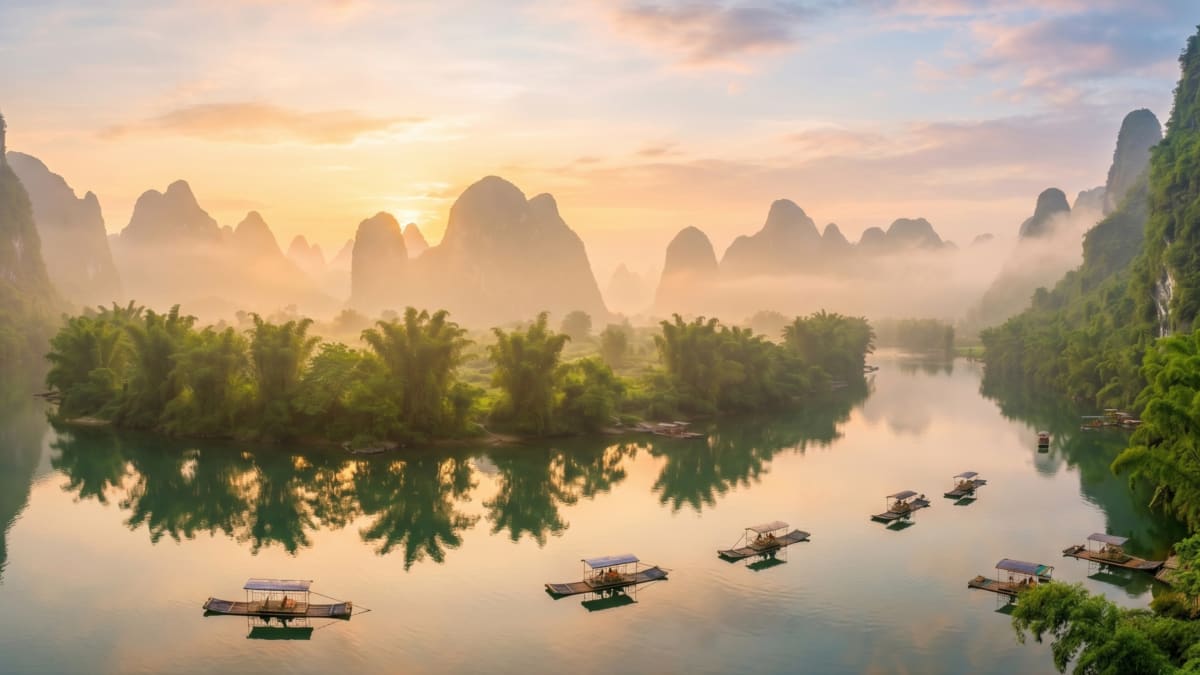
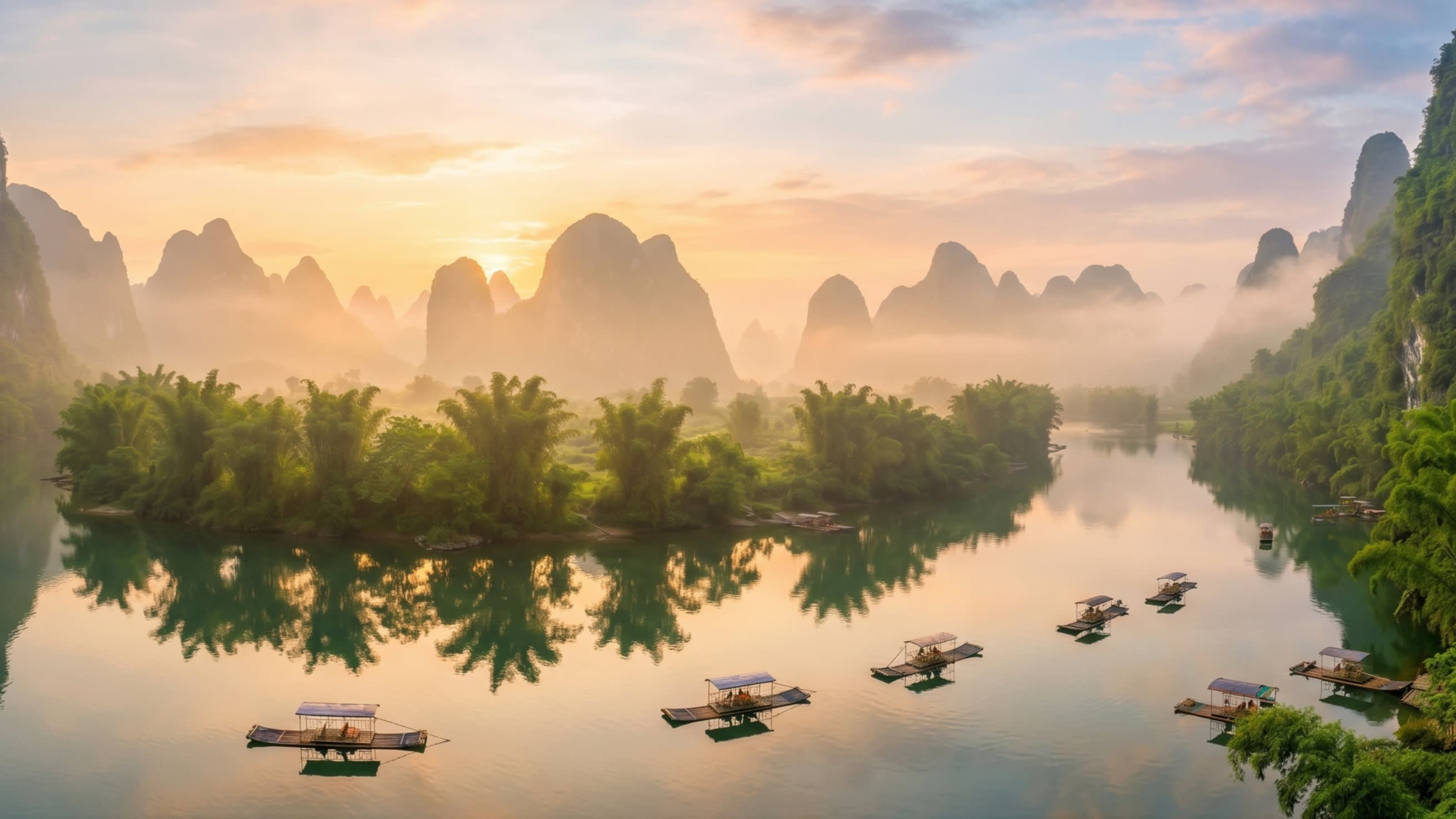
In the southwestern corner of China, the earth does not merely sit flat—it erupts into a billion-year-old dreamscape of limestone cones and hidden, emerald-colored waters. This is the Karst Landscape (喀斯特地貌 - kā sī tè dì mào), a geological wonder that has captivated poets and painters for centuries. In 2026, the legendary “Emerald Loop” has evolved into the ultimate pilgrimage for those who yearn to witness the “Real China” with modern comfort. Thanks to a hyper-efficient network of High-Speed Rail (高铁 - gāo tiě), you can now enjoy a traditional breakfast in the ancient, winding streets of Guilin and catch the sunset silhouette of the peaks of Guizhou on the very same day. As a curator of the sublime, I invite you to step into what feels like a living ink-wash painting.
Why the “Emerald Loop” is the 2026 Travel Goal
The Emerald Loop (翡翠环线 - fěi cuì huán xiàn) is more than a transit route; it is a meticulously curated connection of the most visually staggering karst regions across Guangxi and Guizhou provinces. With the 2026 completion of the Gui-Guang HSR Expansion (贵广高铁扩能 - guì guǎng gāo tiě kuò néng), travel times between these dreamlike hubs have been slashed by nearly 40%.
Whether you are a student seeking a restorative break from the digital grind or a seasoned traveler chasing that elusive “Perfect Frame,” this circuit offers a level of ‘Yanhuoqi’ (烟火气 - the raw, vibrant vibe of life) that you simply cannot find in sterile tourist hubs. We have moved past the era of stressful, cramped tour buses; today, we traverse the landscape at 300km/h, watching the clouds dance between the mountain spires.
As a traveler, the feeling of “walking inside a painting” (人在画中游 - rén zài huà zhōng yóu) is the true reward here. Whether you are navigating the intricate karst formations or simply enjoying a quiet moment by the water, the connection to nature is profound. If you are looking for other ways to experience China’s natural splendor, you might also find inspiration in our guide to China in July: High Altitudes and Lavender Fields.
Stop 1: Guilin & Yangshuo – The Classic Masterpiece (桂林与阳朔)
“Guilin’s scenery is the best under heaven” (桂林山水甲天下 - guì lín shān shuǐ jiǎ tiān xià). In 2026, this isn’t merely a poetic slogan; it is a preserved reality that greets you the moment you step off the train.
The Yulong River (遇龙河 - yù lóng hé)
While the Li River is celebrated for its grandeur, the Yulong River is where you find intimacy. In 2026, local conservation efforts have strictly limited motorized craft here, leaving you with nothing but the rhythmic, hypnotic splash of a Bamboo Raft (竹筏 - zhú fá) oar against the mirrored surface of the water.
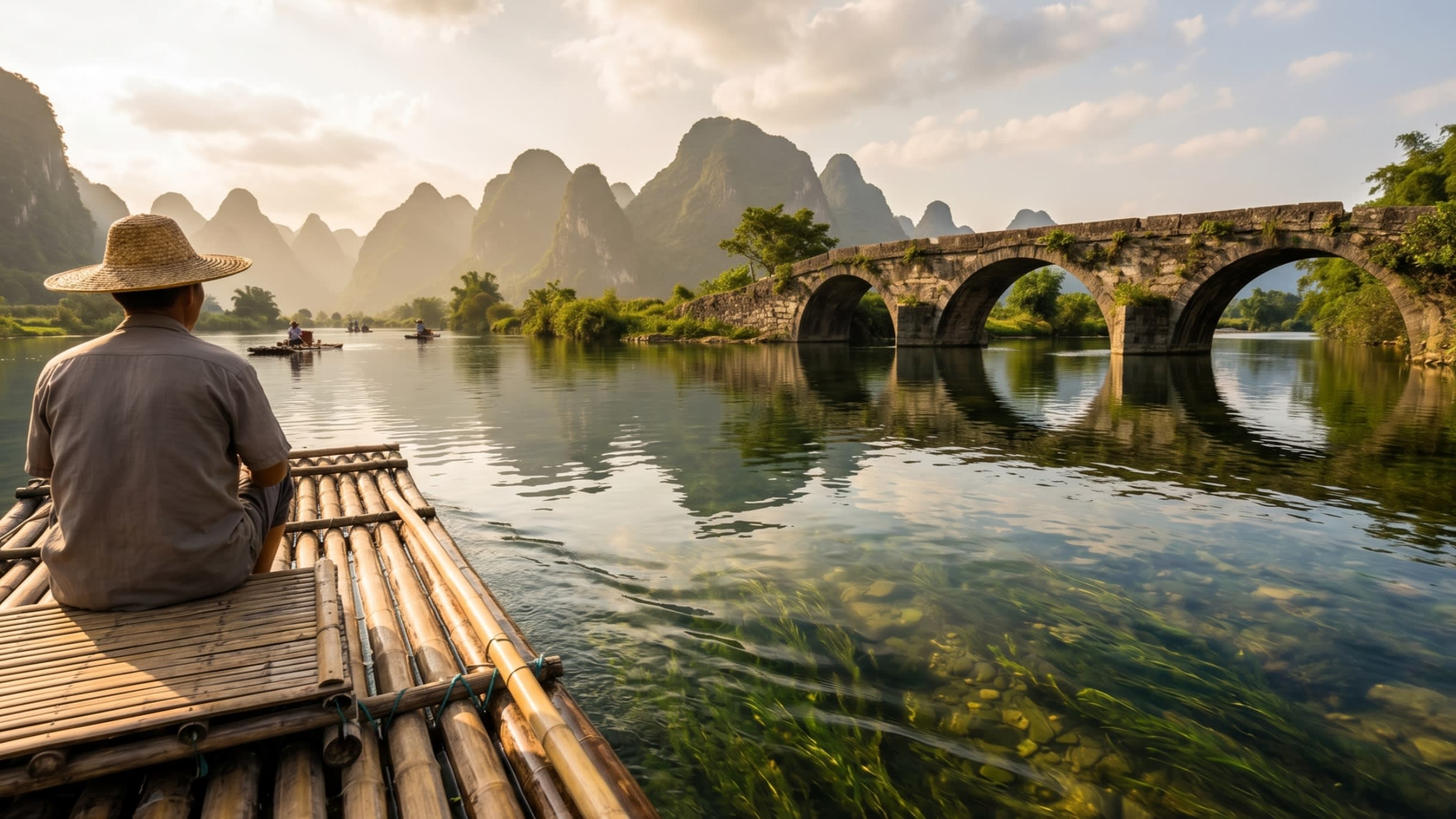
The experience truly begins at Fuli Bridge (富里桥 - fù lǐ qiáo). This 500-year-old stone arch acts as a natural frame for the dramatic karst peaks rising in the background. If you arrive at dawn, the crowds are non-existent—it is just you, the thick, swirling mist, and the profound silence of the valley. To avoid the midday “People Mountain People Sea” (人山人海 - rén shān rén hǎi), I highly recommend using the “Guilin Travel” WeChat mini-program to secure a private raft timeslot well in advance.
Stop 2: Libo Xiaoqikong – The Earth’s Emerald (荔波小七孔)
Crossing the provincial border into Guizhou (贵州 - guì zhōu) via the HSR, you will arrive in Libo. Often whispered about as the “Emerald on the Belt of the Earth,” this UNESCO World Heritage site offers a surreal intensity of color.
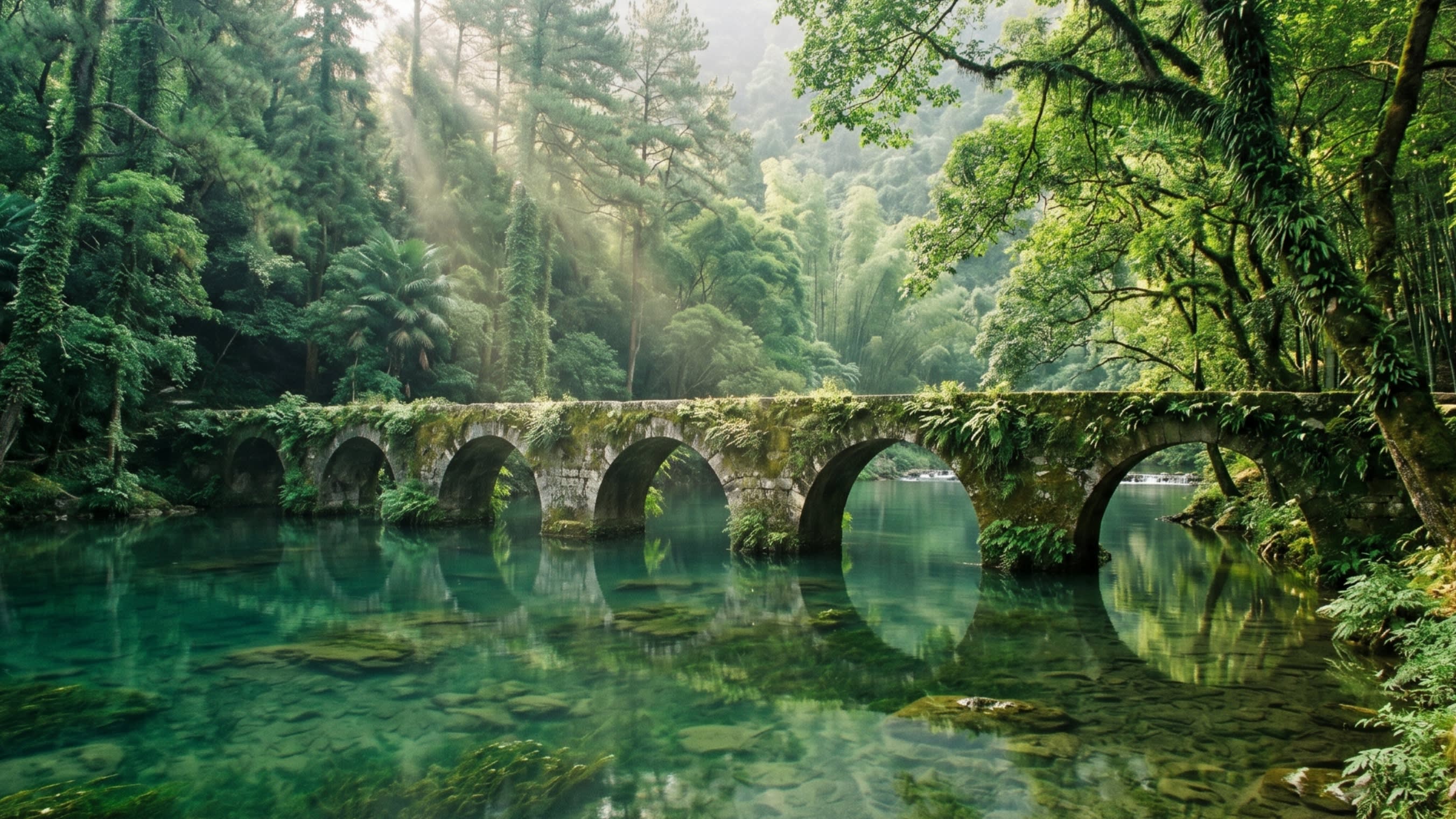
The heart of this scenic area is the Seven-Hole Bridge (小七孔桥 - xiǎo qī kǒng qiáo). Built in 1836, the ancient stone architecture is draped in velvety moss, stretching over water so turquoise it defies belief. The 2026 infrastructure includes Smart Hydrology Monitoring, which protects these delicate ecosystems while ensuring water clarity remains high. Walking through the “Water Forest” (水上森林 - shuǐ shàng sēn lín) offers a sense of “escaping the world” (避世 - bì shì) that is incredibly effective at clearing the mind.
Stop 3: Wanfenglin – The Forest of Ten Thousand Peaks (万峰林)
Further west in Xingyi lies Wanfenglin, arguably one of the most visually significant karst peak forests on the planet.
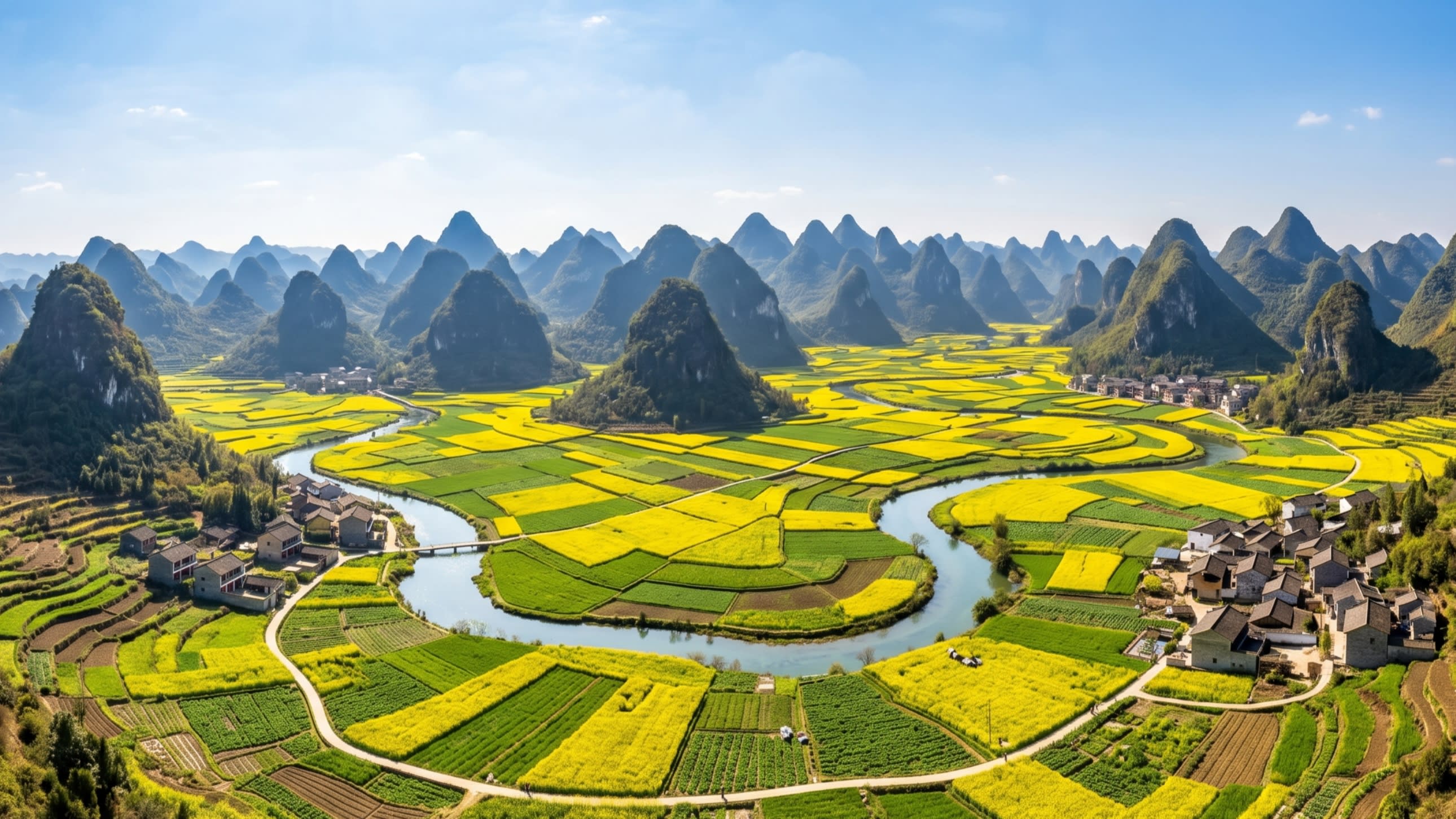
The Eight Trigrams Field (八卦田 - bā guà tián) is a breathtaking natural formation where rice paddies have been shaped over generations to mirror traditional Bagua designs. In 2026, the local “Low-Carbon Cycling Path” has become my favorite way to traverse the valley—it is perfectly silent, allowing you to hear the wind rushing through the stalks of grain. This region is the ancestral home of the Buyi People (布依族 - bù yī zú). If you have an evening to spare, sit in on a performance of their “Eight-Tone Sitting Song” (八音坐唱 - bā yīn zuò chàng); it is a haunting, multi-generational auditory tradition that lingers in the air long after the song ends.
The Emerald Loop Comparison Matrix (2026 Edition)
| Location | Primary Aesthetic | Key Activity | Crowd Level (2026) |
|---|---|---|---|
| Yangshuo | Poetic & Misty | Bamboo Rafting | High (Book Early) |
| Libo | Vibrant Emerald | Forest Trekking | Medium |
| Wanfenglin | Pastoral & Grand | Valley Cycling | Low (Hidden Gem) |
Fueling the Adventure: Southern Karst Gastronomy
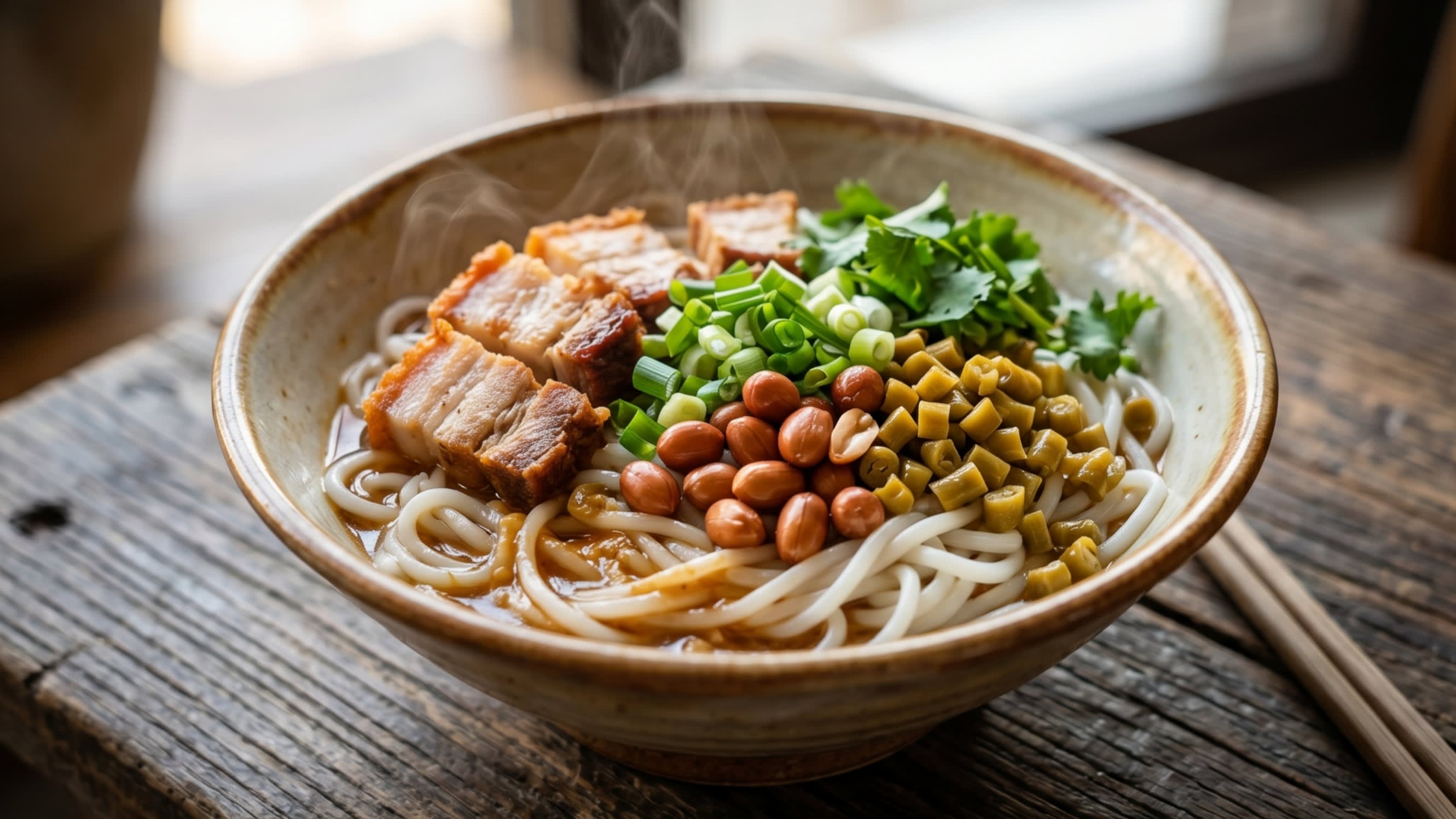
This journey is as much about your palate as it is about your eyes. You must try Guilin Rice Noodles (桂林米粉 - guì lín mǐ fěn). Resist the urge to ask for soup immediately; the local way is to enjoy them “dry” (干捞 - gān lāo), allowing the rich, savory gravy to coat the silky rice noodles, accented by crispy bits of pork and tart, pickled long beans. If you are preparing for your trip at home, you might want to look for high-quality fermented soy sauce to replicate the depth of flavor you’ll find here.
As you head into Guizhou, the profile shifts toward the bright and the bold. Sour Fish Soup (酸汤鱼 - suān tāng yú) is the definitive regional specialty. Using fermented tomatoes as a base, this tangy broth is considered a local “Life-Saving Medicine” (续命神药 - xù mìng shén yào) after a long day of hiking. It is the perfect restorative dish. If you’re feeling adventurous and want to try an authentic spice profile, you can easily source some Sichuan peppercorns to bring a bit of that southern zing back to your own kitchen.
Traveler’s Language Survival Table (Karst Edition)
| English Phrase | Chinese & Pinyin |
|---|---|
| One bowl of Guoshao noodles. | 要一份锅烧米粉。(Yào yī fèn guō shāo mǐ fěn.) |
| Is the water clear today? | 今天水清吗?(Jīn tiān shuǐ qīng ma?) |
| I want to hire a bamboo raft. | 我想坐手划竹筏。(Wǒ xiǎng zuò shǒu huá zhú fá.) |
Final Thoughts from Ran
The Emerald Loop is not merely a geographic excursion; it is a profound exercise in awe. In 2026, the marriage of modern high-speed infrastructure and ancient, preserved landscapes allows us to witness the most beautiful corners of China with an ease that was once unimaginable. Whether you are drifting down the Yulong River or standing atop the ten thousand peaks of Xingyi, you are witnessing a version of the earth that feels untethered from time.
My advice for your journey? Pack a lightweight, high-quality rain jacket, ensure your camera battery is fully charged, and make it a priority to reach the Xiaoqikong bridge before the mist burns away. The southern karst peaks are patient, waiting to show you their soul. If you find yourself craving even more mountain exploration after this trip, consider looking into our guide on China’s Yellow Mountain (Huangshan): Is the Sunrise Worth the 60,000 Steps?.
Disclaimer: As an Amazon Associate, ChinaCurator earns from qualifying purchases.