🥦 Introduction: The Pinnacle of Chinese Vegan Cuisine
When people think of Chinese takeout, they usually envision heavy, meat-centric dishes like General Tso’s Chicken or Mongolian Beef. But deep within the ancient culinary traditions of China lies a dish that is entirely plant-based, astonishingly healthy, and so incredibly flavorful that even the most hardcore meat-eaters will ask for seconds.
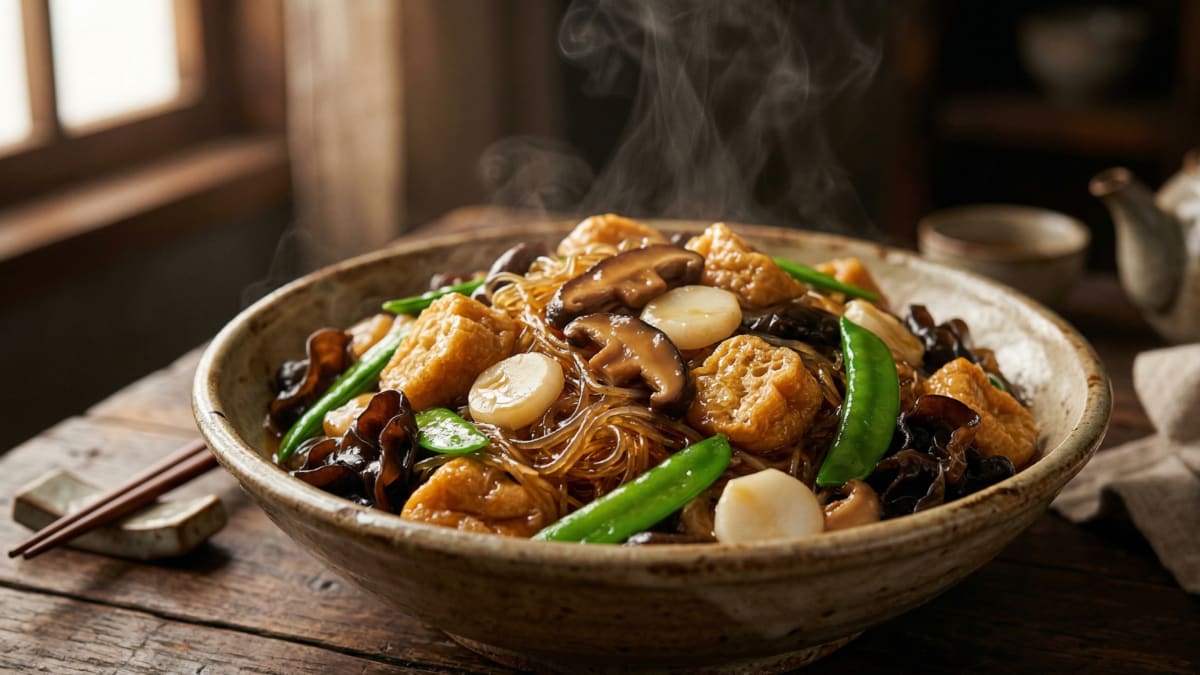
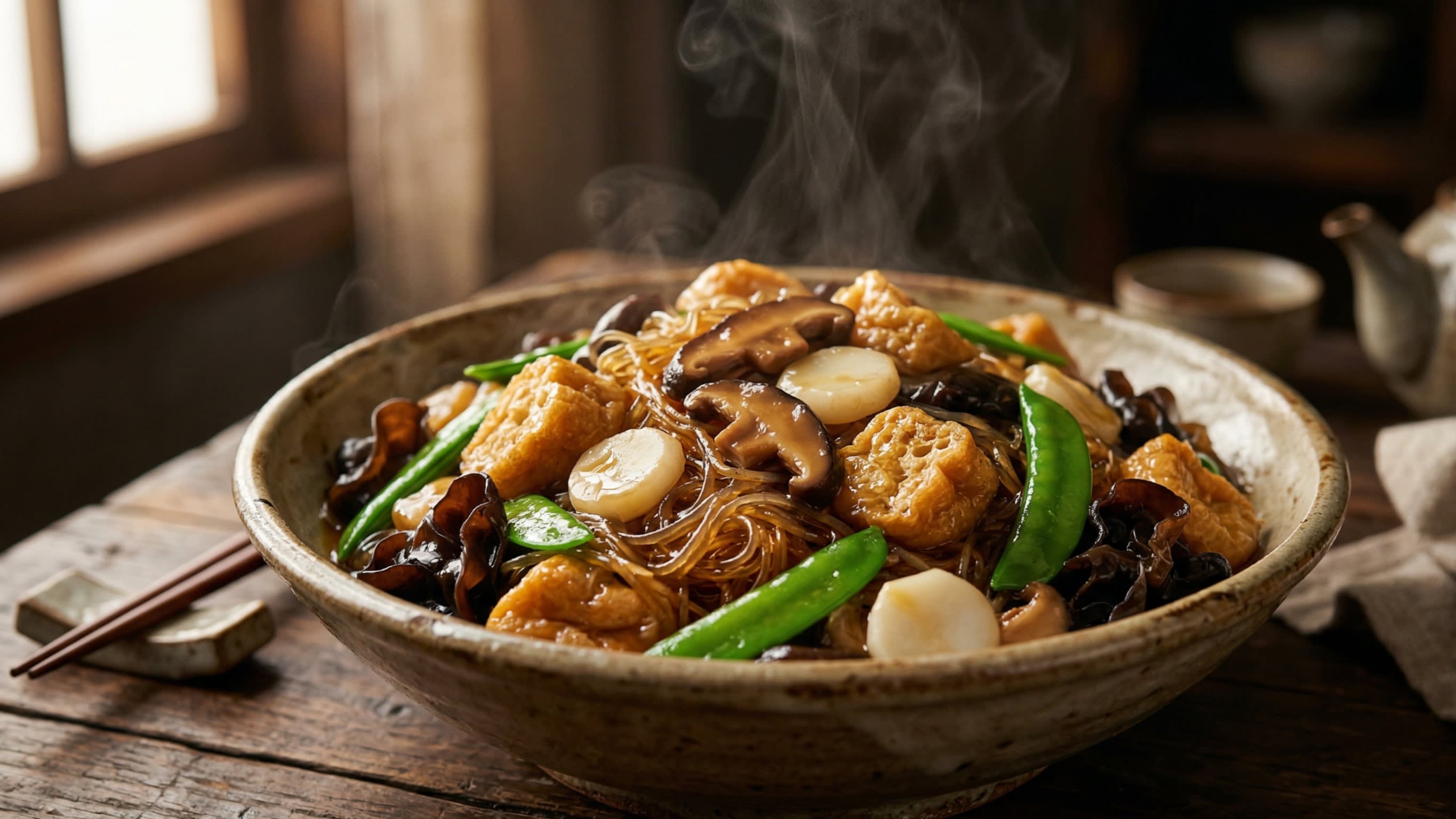
This legendary dish is Buddha’s Delight (罗汉斋 - Luóhàn Zhāi).
Historically crafted by Buddhist monks who adhere to a strict vegetarian diet, Luohan Zhai is far more than just a random plate of stir-fried vegetables. It is a highly deliberate, culturally significant feast. In traditional Chinese households, a massive, elaborate version of this dish is served on the first day of the Lunar New Year. Eating it is believed to purify the body and soul, honoring the Buddhist tradition of non-violence while setting a clean, peaceful tone for the year ahead.
For Western home cooks, replicating this dish can seem intimidating because it relies on a long list of unfamiliar dried Asian ingredients. Furthermore, many homemade vegan stir-fries end up tasting incredibly bland and watery.
Today, we are going to change that. We will decode the mysterious dry goods aisle of your local Asian supermarket, teach you the ultimate secret to extracting explosive vegan umami without using a drop of meat broth, and help you master the breathtaking textural matrix of authentic Buddha’s Delight.
📜 The Lore: What is a “Luohan”?
To truly appreciate this dish, you must understand its majestic name.
In Chinese Buddhism, a Luóhàn (罗汉) refers to an Arhat—an enlightened, ascetic monk who has achieved spiritual purity. The dish was originally named to honor the “Eighteen Arhats,” and the most elaborate, traditional banquet versions of this recipe will literally include exactly 18 distinct, hand-picked vegan ingredients!
For our home-cooked version, we are not going to force you to find 18 different vegetables. Instead, we are focusing on the essential core ingredients that provide the iconic combination of earthy flavors, spongy textures, and crisp bites that define this masterpiece.
🔬 The Science of Vegan Umami (鲜味)
The biggest question Westerners ask is: “How do Chinese restaurants make this purely vegetable dish taste so incredibly savory, rich, and meaty?”
In Chinese cooking, the concept of a deep, savory, mouth-watering flavor is called Xiān (鲜 - Umami). Without meat bones or chicken broth, we must extract Xian from plants. Here are the two ultimate restaurant secrets:
1. Liquid Gold: Mushroom Soaking Water (香菇水)
We do not use fresh button mushrooms for this recipe. You absolutely must use Dried Shiitake Mushrooms (干香菇 - Gān xiānggū). The drying process chemically intensifies the guanylate compounds in the mushrooms, turning them into little umami bombs. To use them, you must rehydrate them in warm water. DO NOT THROW THIS WATER AWAY! The soaking liquid becomes a dark, intensely earthy, and highly flavorful mushroom broth (香菇水 - Xiānggū shuǐ). This liquid replaces plain water or vegetable stock as the foundational base for our sauce.
2. Vegetarian Mushroom Oyster Sauce (香菇素蚝油)
Standard oyster sauce is the backbone of Cantonese cooking, but it is made from real oysters. To keep this dish 100% vegan while maintaining that thick, syrupy, deeply savory caramel flavor, Chinese chefs use Vegetarian Oyster Sauce. Instead of oysters, this sauce is brewed using concentrated shiitake mushroom extract. It is a mandatory ingredient for a truly authentic Luohan Zhai!
🧽 The Texture Matrix: Sponges and Crunches
A perfect Buddha’s Delight is designed to be a playground of textures.
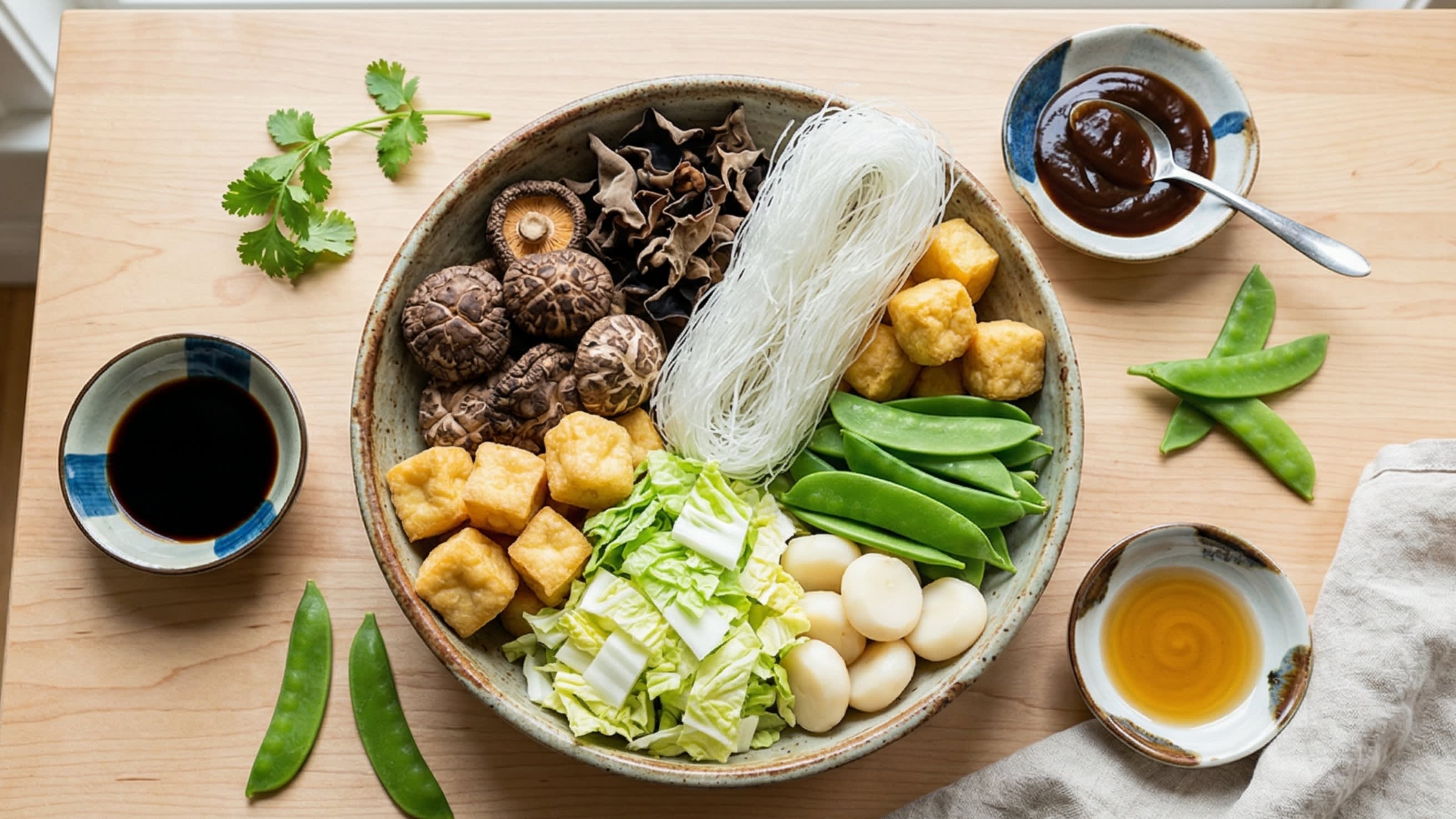
- The Sponges: The undisputed stars of the dish are Tofu Puffs (豆腐泡 - Dòufupào) and Glass Noodles (粉丝 - Fěnsī). Tofu puffs are deep-fried cubes of tofu that have an airy, porous, sponge-like interior. When you simmer them in the wok, they literally drink up the rich, savory mushroom sauce. When you bite into them, they burst with hot, delicious gravy.
- The Crunches: To contrast the soft sponges, we use Water Chestnuts (马蹄) for a sweet, watery snap, Snow Peas (荷兰豆) for a fresh green crunch, and rehydrated Wood Ear Mushrooms (木耳 - Mù’ěr) for a unique, gelatinous, snappy chew.
🛒 Ingredients List
The Dry Ingredients (Requires Rehydration - 泡发):
- 6-8 Dried Shiitake Mushrooms (干香菇). Soak in 1.5 cups of warm water. Save 1 cup of the soaking water!
- 1/2 cup Dried Wood Ear Mushrooms (木耳)
- 1/4 cup Dried Lily Flowers / Golden Needles (黄花菜) - Optional, but highly traditional! Snip off the hard ends after soaking.
- 1 small bundle (about 1.5 oz) Mung Bean Glass Noodles (粉丝)
The Fresh Veggies & Proteins:
- 1.5 cups Napa Cabbage (大白菜), chopped into large squares
- 1.5 cups Fried Tofu Puffs (豆腐泡), cut in half. (If you can’t find them, use pan-fried firm tofu cubes).
- 1 cup Snow Peas (荷兰豆), strings removed
- 1/2 cup canned Sliced Water Chestnuts (马蹄), drained
- 1/2 cup canned Bamboo Shoots (竹笋), sliced
- 1/2 medium Carrot, sliced into thin rounds
- 3 cloves Garlic, finely minced (蒜末)
- 1 thumb-sized piece of fresh Ginger, julienned (姜丝)
The Ultimate Vegan Umami Sauce:
- 1 cup Reserved Mushroom Soaking Water (香菇水)
- 2 tbsp Vegetarian Mushroom Oyster Sauce (香菇素蚝油)
- 1.5 tbsp Light Soy Sauce (生抽)
- 1 tsp Dark Soy Sauce (老抽 - purely for a rich, appetizing color)
- 1 tsp Sugar
- 1 tsp Toasted Sesame Oil (芝麻油)
- 1/4 tsp White Pepper powder
- 1 tbsp Cornstarch (玉米淀粉) mixed with 1 tbsp water (for the slurry)
The Frying:
- 3 tbsp high-heat Cooking Oil (peanut, canola, or vegetable oil)
🍳 Step-by-Step Instructions
1. Rehydrate the Dry Goods (泡发 - Pàofā): This is the most crucial prep step. Place the dried shiitake mushrooms, wood ear mushrooms, and lily flowers into separate bowls of warm water for at least 30 minutes until fully softened.
- Shiitake: Squeeze the excess water out of the mushrooms, slice them thickly, and carefully reserve 1 cup of the dark soaking liquid (make sure not to scoop up any dirt at the bottom).
- Wood Ear & Lily Flowers: Rinse thoroughly, slice the wood ears into bite-sized pieces, and snip the hard woody tips off the lily flowers.
- Glass Noodles: Soak them in hot water for 5 minutes until soft. Drain and cut them with scissors into 3-inch lengths so they are easy to eat.
2. Mix the Magic Broth: In a small bowl, whisk together the reserved 1 cup of mushroom soaking water, vegetarian oyster sauce, light soy sauce, dark soy sauce, sugar, white pepper, and toasted sesame oil. Set aside.
3. Sizzle the Aromatics: Heat your wok or a large, deep skillet over medium-high heat. Add 2 tablespoons of cooking oil. Toss in the minced garlic and julienned ginger. Let them sizzle for 15 seconds until the oil is highly fragrant.
4. Sauté the Earthy Ingredients: Add the sliced shiitake mushrooms, wood ear mushrooms, lily flowers, and carrots to the wok. Stir-fry aggressively for about 2 minutes. Frying the mushrooms in the hot oil before adding liquid unlocks their fat-soluble aromatic compounds, dramatically intensifying their earthy flavor.
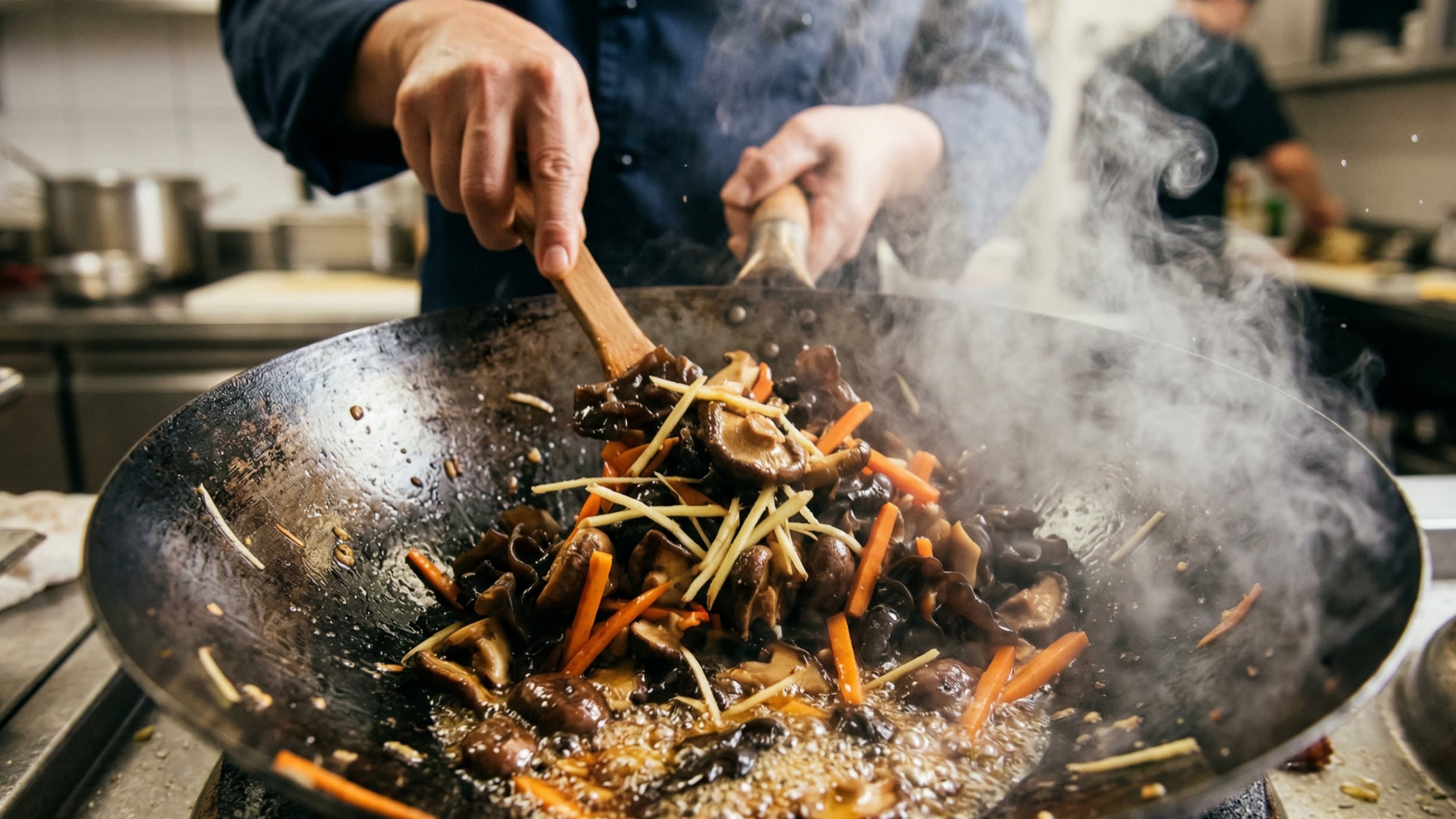
5. The Braise (焖煮 - Měnzhǔ): Add the Napa cabbage, bamboo shoots, and halved tofu puffs (豆腐泡) to the wok. Pour your prepared vegan umami broth over the ingredients. Bring the liquid to a lively boil. Turn the heat down to medium, cover the wok with a lid, and let it simmer (braise) for exactly 3 minutes. This allows the spongy tofu puffs and the cabbage to drink up the incredibly savory sauce.
6. The Final Crunch and Noodle Addition: Remove the lid. The cabbage should be wilted, and the tofu puffs swollen with broth. Add the snow peas (荷兰豆), the water chestnuts, and the soaked glass noodles (粉丝). Toss everything together for 1 to 2 minutes. You want the snow peas to turn bright emerald green but remain highly crisp. The glass noodles will absorb whatever excess broth is remaining.
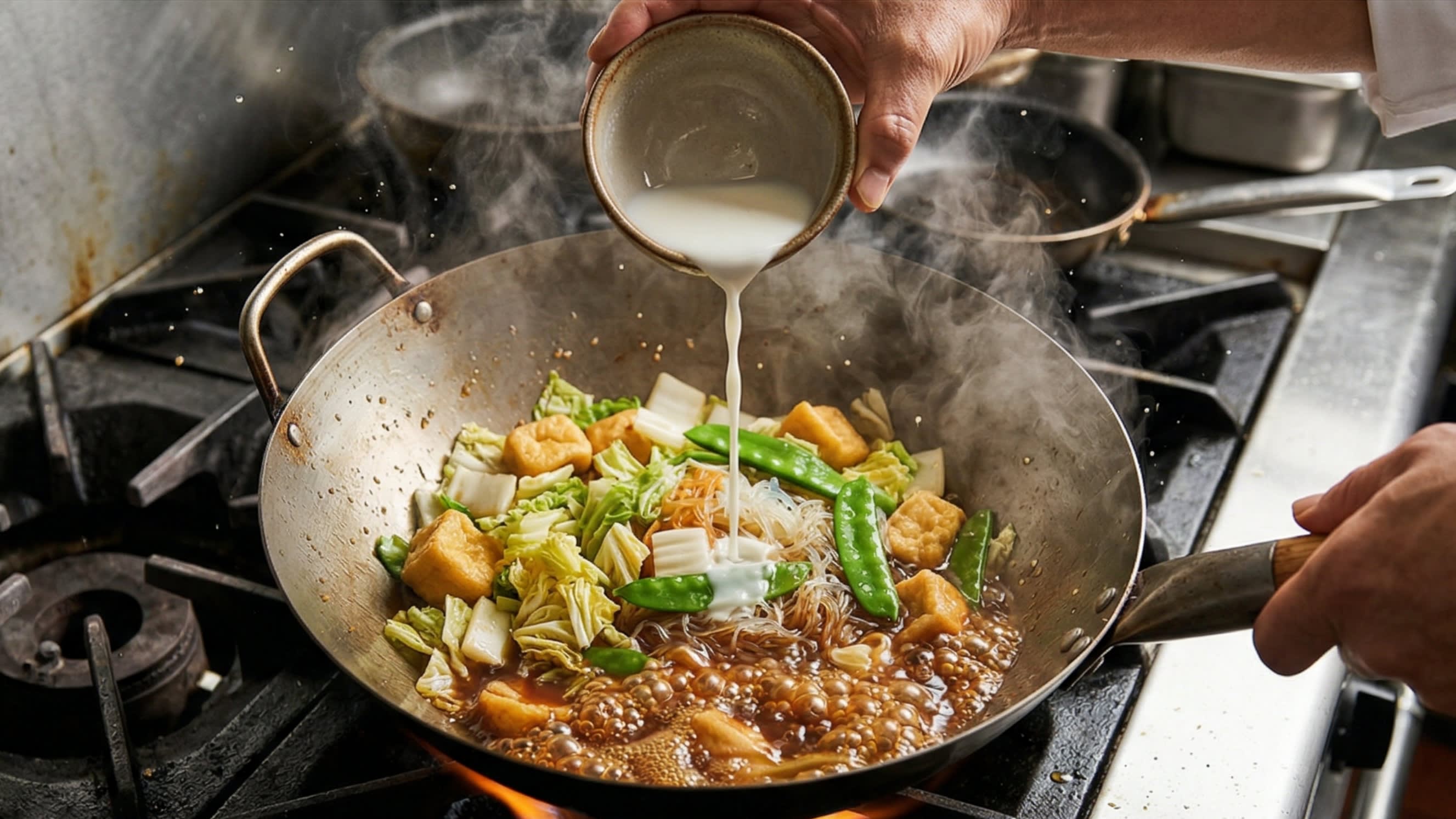
7. Thicken the Glaze (勾芡 - Gōuqiàn): Give your cornstarch-water slurry a quick stir. Push the ingredients to the sides of the wok to reveal the bubbling liquid in the center. Pour the slurry slowly into the boiling liquid while stirring constantly. Within 20 seconds, the thin broth will transform into a thick, glossy, velvety sauce that clings beautifully to the vegetables and noodles.
8. Serve: Turn off the heat. Plate this breathtaking, colorful masterpiece immediately. Serve with bowls of steamed white rice and enjoy the ultimate, guilt-free vegan feast!
💡 Troubleshooting & Pro Tips
- My dish tastes too watery and bland! You made one of two mistakes: You threw away the shiitake mushroom soaking water and used plain tap water instead, or you skipped the cornstarch slurry at the end. The slurry (勾芡) is mandatory! It thickens the liquid so it coats the vegetables, rather than leaving them sitting in a bland puddle.
- Can I use fresh mushrooms? You can add fresh button or cremini mushrooms, but you cannot replace the dried shiitake mushrooms. Dried shiitakes are the architectural foundation of the umami flavor in this dish. Fresh mushrooms simply do not have the same intense, concentrated savory depth.
- Customizing Your Luohan Zhai: This dish is the ultimate fridge-cleaner. Feel free to add baby corn, sliced lotus root (莲藕), broccoli florets, or fresh shiitake mushrooms. As long as you maintain the balance of the umami sauce and the diverse textures, it will be incredible.
📦 Shop Authentic Asian Vegan Essentials
To capture the authentic, deeply savory umami of a Chinese Buddhist feast, these specific pantry staples are non-negotiable. (As an Amazon Associate, ChinaCurator earns from qualifying purchases.)
- Premium Dried Shiitake Mushrooms (干香菇) - The absolute soul of the dish. Rehydrating these creates the intensely flavorful "liquid gold" broth.
- Lee Kum Kee Vegetarian Mushroom Stir-Fry Sauce (素蚝油) - The ultimate vegan substitute for oyster sauce, providing a thick, sweet, and incredibly savory umami backbone.
- Dried Black Wood Ear Mushrooms (木耳) - Essential for providing that signature snappy, gelatinous crunch that contrasts the soft tofu.
- Mung Bean Glass Noodles (粉丝) - These delicate noodles act as microscopic sponges, soaking up the delicious savory gravy.