🥢 Introduction: The Ultimate Test of a Cantonese Chef
In the highly competitive world of traditional Cantonese culinary arts, there is a famous saying: “If you want to test the true skill of a wok chef, do not ask them to cook an expensive abalone or lobster. Ask them to make a plate of Beef Chow Fun.”
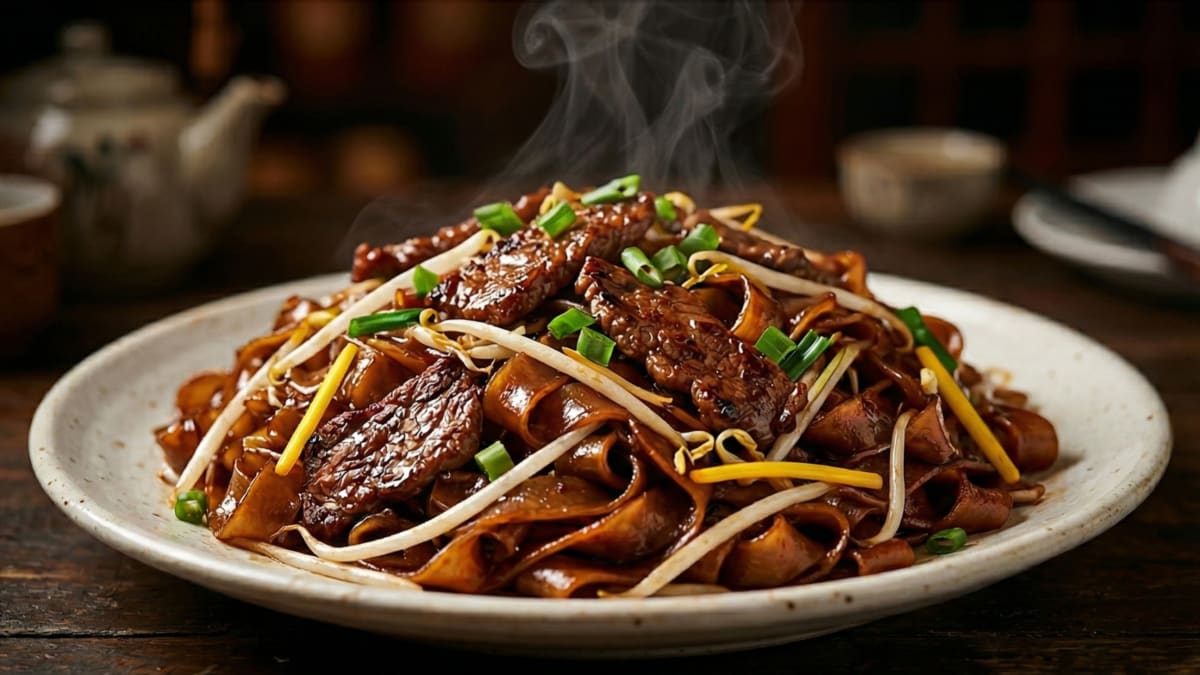
Beef Chow Fun (干炒牛河 - Gān chǎo niú hé) is the undisputed holy grail of Chinese stir-fried noodles. Walk into any midnight Dai Pai Dong (open-air food stall) in Guangzhou or Hong Kong, and you will hear the rhythmic, aggressive clanging of carbon steel woks and smell the intoxicating, smoky aroma of caramelizing soy sauce hitting roaring flames.
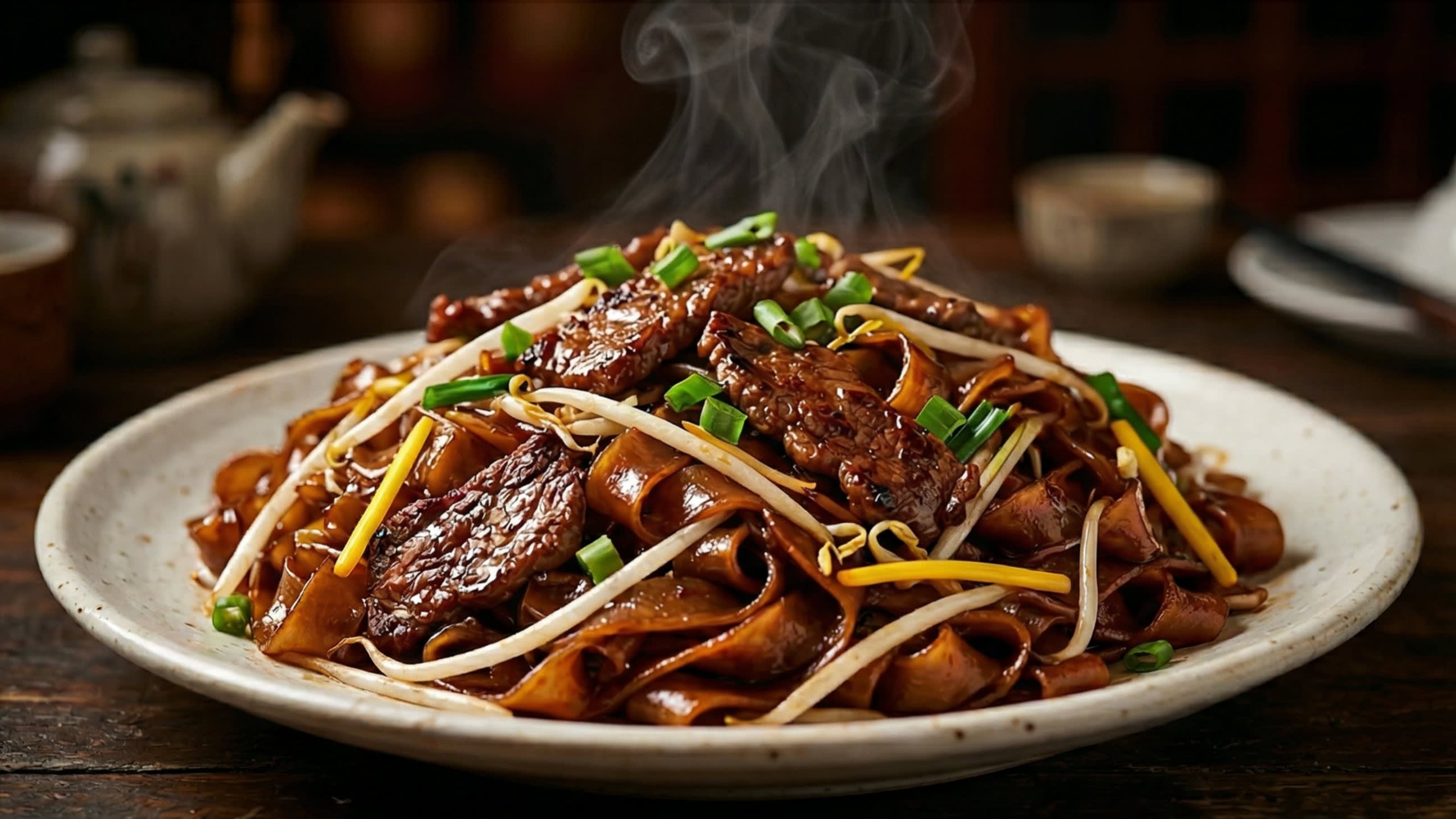
When executed perfectly, this dish is a textural masterpiece. The wide rice noodles are incredibly springy and slippery, coated in a savory, dark mahogany glaze without a single drop of excess liquid pooling on the plate. The beef is tender and velvety, while the fresh bean sprouts provide a loud, watery crunch. Above all, the entire dish must be infused with Guōqì (锅气 - Wok Hei)—the legendary “breath of the wok,” a complex, smoky, almost charred flavor born from extreme heat.
However, for Western home cooks, this dish is notoriously difficult. If you have ever tried making it, you likely ended up with a tragic pile of mushy, broken noodle fragments glued to the bottom of your pan. Today, we are going to demystify the science of the wok. We will teach you how to handle fragile rice noodles, how to prevent sticking, and how to capture that elusive restaurant-quality smoke in your own kitchen.
🔬 The Anatomy of the Dish: What is “Gon Chau”?
To master this dish, you must first understand its name. The Chinese name Gān chǎo niú hé translates literally to “Dry-fried beef rice noodles.”
- Hé (河): Short for Héfěn (河粉), the wide, flat, fresh rice noodles that form the body of the dish.
- Niú (牛): The velveted, tender beef slices.
- Gān chǎo (干炒 - Dry Fry): This is the most crucial part. Unlike “Wet-fried” dishes (湿炒) which are smothered in a thick, cornstarch-thickened gravy, a “Dry Fry” uses absolutely zero added water or broth. The noodles are aggressively seared in oil, and the soy sauce must rapidly evaporate and caramelize onto the noodles, leaving the final plate completely dry, glossy, and intensely flavorful.
🥡 The Noodle Dilemma: How to Prevent a Broken Mess
The biggest obstacle home cooks face is the rice noodle itself. Fresh Hefen (河粉) is incredibly delicate. If you buy fresh rice noodles from an Asian supermarket and put them in the refrigerator, the cold temperature turns the starches into a solid, hard brick.
The Restaurant Secret (Peeling the Brick): If you try to peel cold, refrigerated rice noodles apart, they will instantly shatter into a million tiny, unusable pieces. To fix this, simply place the sealed package of cold rice noodles in the microwave for 30 to 45 seconds. The gentle heat softens the starches, returning them to their pliable, freshly-steamed state. Once warm, lightly oil your hands and gently peel the long noodle strands apart before they go into the wok.
(If you cannot find fresh rice noodles, you can use wide dried rice noodles. Soak them in warm water until they are just pliable—do not boil them until they are soft, or they will turn to mush in the wok!)
🔥 The “Run Guo” Technique: How to Stop the Sticking
Rice noodles are essentially pure starch. The moment they hit a hot metal pan, they want to act like superglue. To prevent your noodles from sticking and tearing, you must practice the ancient art of Rùnguō (润锅 - Conditioning the Wok).
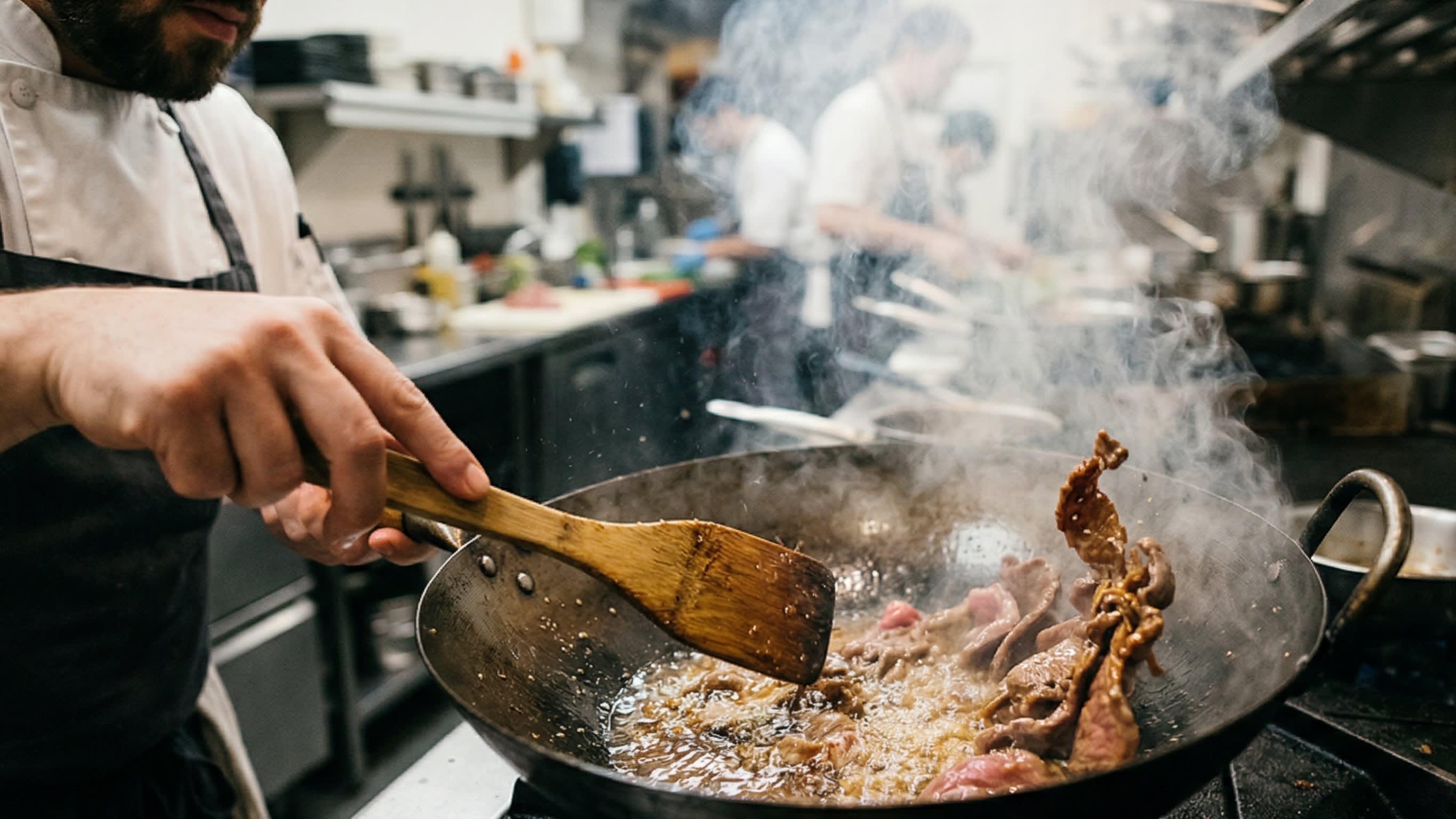
You must use a carbon steel wok or a heavy cast-iron pan (do not use stainless steel!). Heat the empty wok over maximum heat until it is smoking aggressively. Pour in a generous ladle of cold cooking oil and swirl it around to coat the entire inner surface of the wok. Then, pour that hot oil out into a heat-proof bowl, and add fresh, cold oil for cooking. This extreme temperature differential forces the metal pores to expand and absorb the oil, creating a temporary, miraculously non-stick patina that will allow your delicate rice noodles to glide effortlessly.
🛒 Ingredients List
The Beef & Velveting Marinade (上浆):
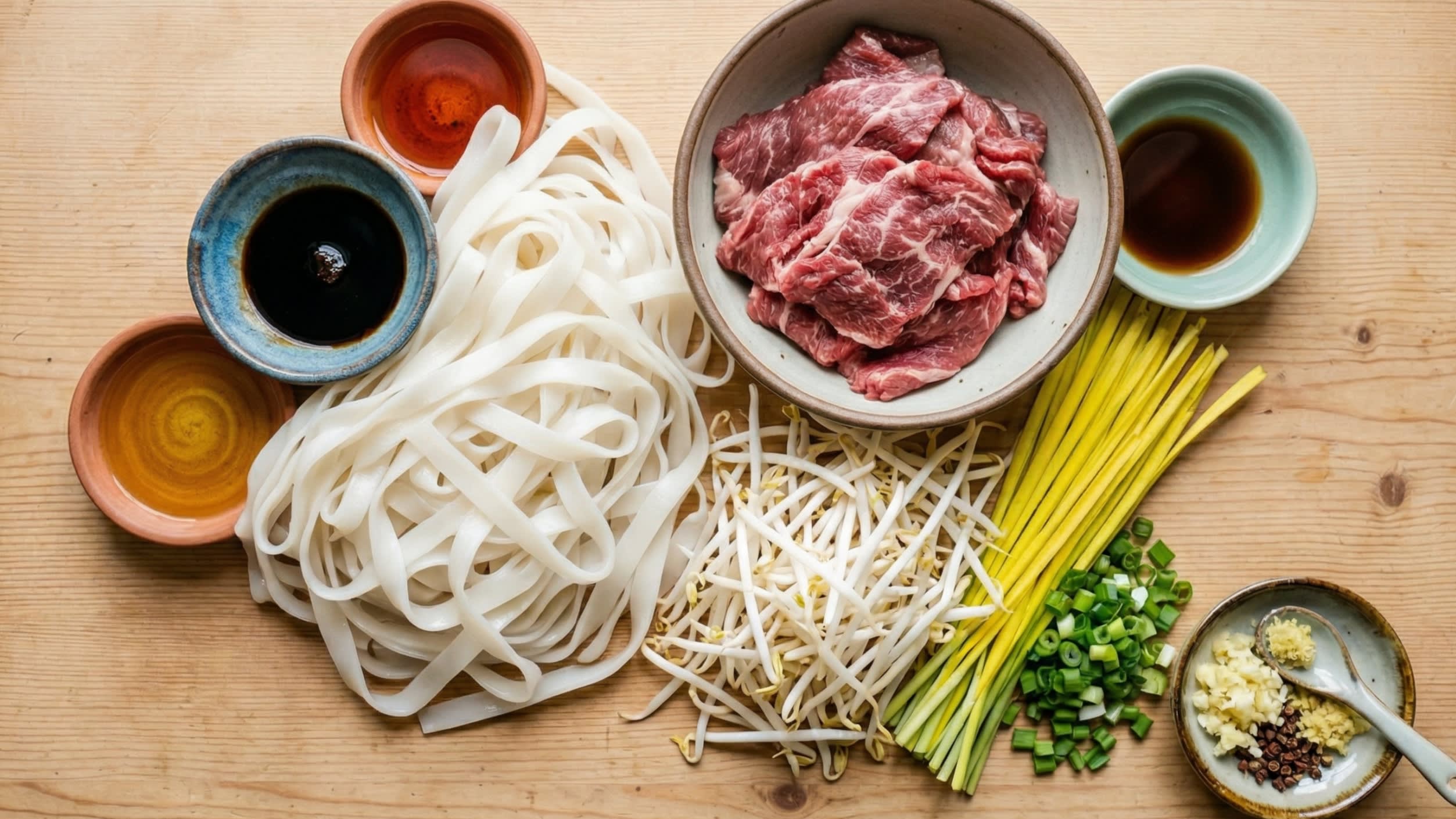
- 1/2 lb (225g) Flank Steak or Sirloin, sliced 1/4-inch thick against the grain
- 1 tsp Light Soy Sauce (生抽)
- 1 tsp Shaoxing Cooking Wine (绍兴酒)
- 1/2 tsp Cornstarch (玉米淀粉)
- 1/4 tsp Baking Soda (小苏打 - The secret to meltingly tender meat!)
- 1 tbsp Water
- 1 tbsp Cooking Oil (to seal the moisture)
The Noodles & Vegetables:
- 1 lb (450g) Fresh Wide Rice Noodles (河粉 - Héfěn). If cold, microwave slightly and separate the strands by hand.
- 2 cups fresh Mung Bean Sprouts (绿豆芽 - Lǜdòuyá), rinsed and completely dried
- 1/2 cup Yellow Chives (韭黄 - Jiǔhuáng), cut into 2-inch sections. This is the traditional Cantonese aromatic! If you can’t find them, use extra green scallions.
- 3 stalks Scallions / Green Onions (葱段), cut into 2-inch sections
- 2 slices fresh Ginger, julienned
- 1/2 White Onion, sliced thinly
The Authentic Dry-Fry Sauce:
- 2 tbsp Light Soy Sauce (生抽)
- 1.5 tbsp Dark Soy Sauce (老抽 - Lǎochōu). Mandatory for that deep, glossy brown color!
- 1 tbsp Oyster Sauce (蚝油)
- 1/2 tsp Sugar
- 1/4 tsp White Pepper powder
- Note: Notice there is NO water or cornstarch in this sauce! This is a “Dry Fry.”
🍳 Step-by-Step Instructions
1. Velvet the Beef (上浆): Place the sliced beef in a bowl. Add the water, light soy sauce, Shaoxing wine, and baking soda. Massage aggressively until the beef absorbs all the liquid. Add the cornstarch and mix until sticky. Finally, coat with 1 tbsp of oil. Let it rest for 15 minutes.
2. Mix the Sauce: In a small bowl, combine the light soy sauce, dark soy sauce, oyster sauce, sugar, and white pepper. Stir until the sugar is dissolved. Place it near the stove.
3. Sear the Beef: Condition your wok (Run Guo technique described above). Heat 2 tablespoons of oil over high heat until smoking. Add the marinated beef. Spread it out into a single layer and let it sear undisturbed for 30 seconds. Stir-fry quickly until it is 80% cooked and slightly browned. Remove the beef and set it aside.
4. Blister the Aromatics: Wipe the wok clean with a paper towel. Place it back over high heat. Add 1 tablespoon of fresh oil. Toss in the sliced white onions and ginger. Stir-fry for 30 seconds until the onions are fragrant and slightly translucent.
5. Sear the Noodles (The Critical Step): Add another 1 tablespoon of oil to the wok. Gently lay your separated, room-temperature rice noodles over the onions. Put down your spatula! If you use a metal spatula to chop at the noodles, you will break them. Let the noodles sit undisturbed against the hot metal for 20 seconds to develop a slight sear and smoky flavor. Chef’s Trick: Use a pair of long wooden cooking chopsticks (筷子 - Kuàizi) to gently lift and toss the noodles from the bottom up, preventing breakage.
6. Caramelize the Sauce: Give your sauce a quick stir and pour it evenly over the noodles. Use your chopsticks to toss the noodles vigorously. The extreme heat of the wok will cause the soy sauces to vaporize and caramelize instantly, coating the noodles in a rich, dark mahogany glaze.
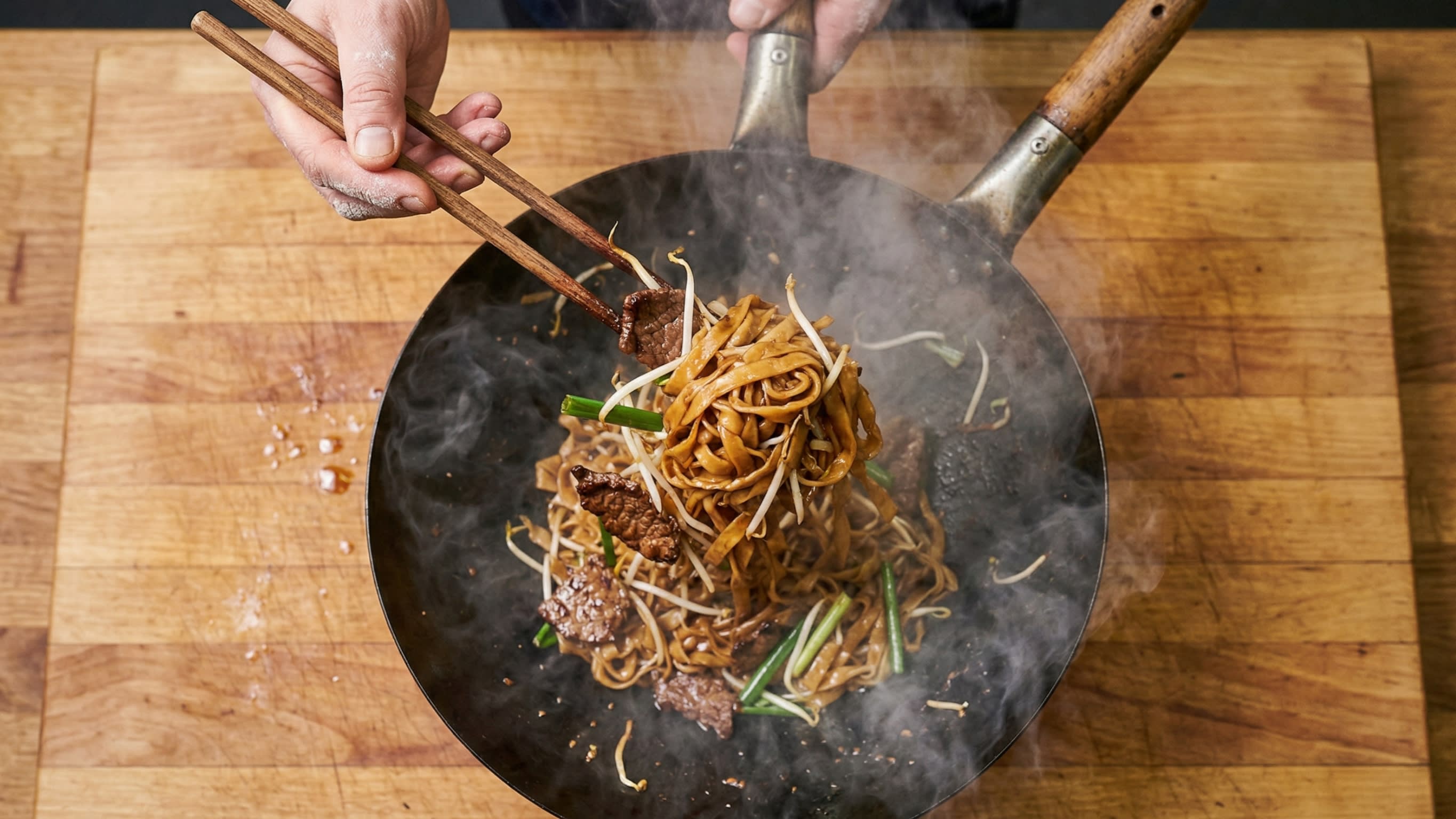
7. The Final Reunion (断生): Add the cooked beef back into the wok. Immediately toss in the mung bean sprouts (绿豆芽), yellow chives (韭黄), and scallions. Toss everything together rapidly over high heat for exactly 45 seconds. You want the bean sprouts to remain incredibly crisp and watery (断生 - Duan Sheng) to contrast the chewy noodles.
8. Serve: Turn off the heat. Transfer the glistening, smoky, completely dry noodles to a large plate. Serve immediately while it is piping hot and the Wok Hei is at its peak!
💡 Troubleshooting & Pro Tips
- My noodles turned into a giant, mushy paste! You made one of three mistakes: You soaked dried noodles in boiling water until they were fully soft before frying; your wok wasn’t hot enough (causing them to steam instead of sear); or you used a flat spatula and aggressively chopped them into tiny pieces while stirring. Use chopsticks to toss!
- The dish is too greasy. “Dry frying” requires heat, not excessive oil. The secret to preventing sticking is a properly seasoned wok (Run Guo), not drowning the noodles in half a cup of oil. Also, ensure your bean sprouts are completely dry before adding them, or they will release water and make the dish soggy.
- Why doesn’t my dish look dark brown like the restaurant? You skipped the Dark Soy Sauce (老抽). Light soy sauce provides the salty flavor, but dark soy sauce is what gives Cantonese noodles that iconic, appetizing, deep caramelized color.
📦 Shop Authentic Cantonese Essentials
To master the authentic "Wok Hei" and the precise flavor profile of a Hong Kong food stall, these tools and sauces are non-negotiable. (As an Amazon Associate, ChinaCurator earns from qualifying purchases.)
- Pearl River Bridge Dark Soy Sauce (老抽) - The absolute mandatory ingredient for giving the rice noodles that beautiful, deep mahogany color.
- Authentic Carbon Steel Wok - The only pan capable of reaching the extreme temperatures required to generate true "Wok Hei" without ruining a non-stick coating.
- Extra-Long Wooden Cooking Chopsticks - The professional chef's tool for tossing and lifting fragile rice noodles without breaking them into mush.
- Lee Kum Kee Premium Oyster Sauce (蚝油) - Provides the rich, savory, umami backbone to the dry-fry sauce.