
🍜 Introduction: The Undisputed King of Sichuan Street Food
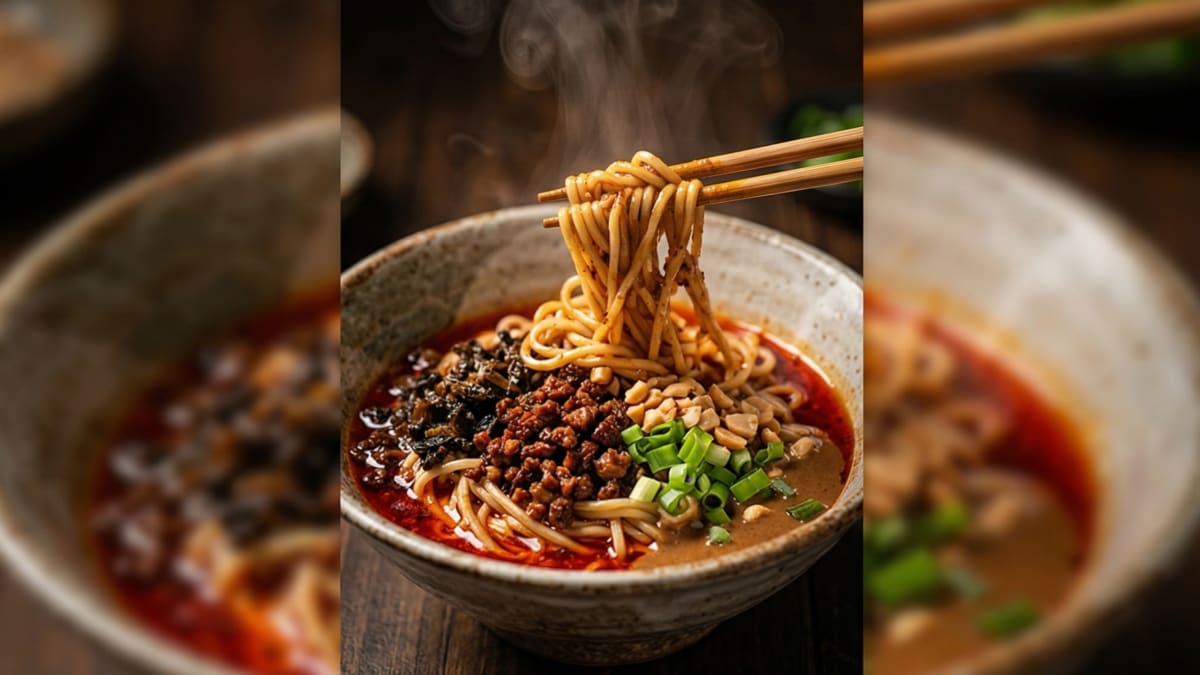
If you want to experience the true, unadulterated, and explosive flavor profile of authentic Chinese Sichuan cuisine, look no further than a steaming, fiery bowl of Dan Dan Noodles (担担面 - Dàndàn Miàn).
For many Westerners, their first encounter with Dan Dan Noodles is at a localized Chinese takeout restaurant, where it is often served as a sweet, peanut-butter-heavy noodle soup. Let us set the record straight right now: Authentic Sichuan Dan Dan Noodles are not a soup, and they do not use peanut butter.
Real Dan Dan Noodles are an intense, dry-tossed noodle dish (干拌面). They are a breathtaking symphony of the famous Sichuan Málà (麻辣 - Numbing and Spicy) flavor profile. The dish consists of fresh, chewy wheat noodles sitting on top of a highly complex, fiery red chili and sesame sauce, topped with incredibly crispy, savory fried pork and fermented mustard greens. When you aggressively mix the bowl together, every single strand of noodle becomes coated in a thick, nutty, spicy, and umami-packed glaze that will leave your lips tingling and your tastebuds begging for more.
Today, we are going to dive deep into the ancient street-food origins of this dish, decode the mysterious traditional ingredients you need to buy at your local Asian market, and teach you how to assemble the ultimate bowl of Dan Dan Noodles right in your own kitchen.
📜 The History: What Does “Dan Dan” Mean?
To understand why this dish is structured the way it is, you have to look at its history. The name “Dan Dan” does not refer to a person; it refers to a Biǎndan (扁担), which is a traditional wooden carrying pole worn across the shoulders.
In the 1840s, street vendors in the bustling city of Chengdu, Sichuan province, would walk through the streets carrying a Biandan. Hanging from one end of the pole was a large basket containing fresh noodles. Hanging from the other end was a pot of boiling water and a compartmentalized box filled with various intense sauces, chili oils, and crispy pork toppings.
Because the vendors had to carry everything on their shoulders, carrying heavy pots of broth was impossible. Therefore, the noodles were served “dry.” The vendor would place a concentrated flavor bomb of sauces at the bottom of a small bowl, quickly boil a handful of noodles, throw them on top of the sauce, and hand it to the customer. The customer would mix it themselves on the street corner. This ingenious, highly portable setup created the legendary flavor architecture we still use today.
🔬 Decoding the Soul: The Authentic Ingredients
To make this dish taste like it came straight out of a hidden alleyway in Chengdu, you cannot take shortcuts. You must understand the four pillars of Dan Dan Noodles.
1. The Soul of the Pork: Sui Mi Ya Cai (碎米芽菜)
This is the single most important ingredient that Western recipes omit. Yácài (芽菜) is a type of fermented mustard green native to the Sichuan city of Yibin. It is dark, finely minced, and packed with an earthy, salty, slightly sweet, and incredibly deep umami flavor. When you fry the minced pork until it is crispy (脆臊 - Cuìsāo), you add the Yacai into the wok. The pork absorbs the fermented magic, creating a topping that is so flavorful you could eat it entirely on its own. (If you absolutely cannot find Yacai, the closest substitute is Zha Cai / pickled mustard stems, but it will slightly change the flavor profile).
2. The Numbing Magic: Sichuan Peppercorns (花椒)
Sichuan cuisine is famous for the Mala (麻辣) flavor. “La” means spicy (from chili peppers), but “Ma” means numbing. Sichuan Peppercorns (花椒 - Huājiāo) are not actually pepper; they are the dried husks of the prickly ash citrus tree. When you eat them, they create a strange, wonderful, vibrating, and numbing sensation on your lips and tongue. You must use freshly ground, high-quality red Sichuan peppercorns for this recipe.

3. The Nutty Base: Chinese Sesame Paste (芝麻酱)
Many Western recipes substitute peanut butter for this. Do not do it! Chinese Sesame Paste (芝麻酱 - Zhīmájiàng) is made from heavily roasted sesame seeds, resulting in a dark brown paste that is incredibly aromatic, smoky, and slightly bitter. Middle Eastern Tahini is made from raw sesame seeds and is too mild. If you must substitute, use a 50/50 mix of Tahini and unsweetened peanut butter, but try to find the real Chinese sesame paste!
4. The Fire: Chili Oil (红油)
A good Sichuan Chili Oil (红油 - Hóngyóu) is not just spicy; it is deeply aromatic, infused with star anise, cinnamon, bay leaves, and garlic. The bright red oil is the visual and flavorful heart of the sauce matrix at the bottom of the bowl.
🛒 Ingredients List
The Crispy Pork Topping (脆臊):
- 1/2 lb (225g) Ground Pork (pork belly or 80/20 mix is best)
- 1 tbsp Cooking Oil
- 1/3 cup Sui Mi Ya Cai (碎米芽菜) - Sichuan fermented mustard greens
- 1 tbsp Shaoxing Cooking Wine (绍兴酒)
- 1 tsp Dark Soy Sauce (老抽 - for a rich caramel color)
- 1/2 tsp finely minced Ginger (姜末)
The Authentic Sauce Matrix (Per Serving Bowl):
- 1 tbsp Chinese Sesame Paste (芝麻酱)
- 2 tbsp Sichuan Chili Oil with sediment (辣椒油 / 红油)
- 1 tbsp Light Soy Sauce (生抽)
- 1 tsp Black Rice Vinegar (镇江香醋)
- 1/2 tsp Ground Sichuan Peppercorns (花椒粉) - Grind them fresh for the best numbing effect!
- 1 clove Garlic, finely minced (蒜末)
- 1/2 tsp Sugar (糖)
- 1 tbsp Hot Noodle Boiling Water (to thin the sauce)
The Noodles & Garnish:
- 2 portions of Fresh Chinese Wheat Noodles (about 200g per person)
- A handful of leafy green vegetables (like Bok Choy or Spinach)
- 2 tbsp Roasted Peanuts, crushed (花生碎)
- 2 stalks Scallions (葱花), finely chopped
🍳 Step-by-Step Instructions
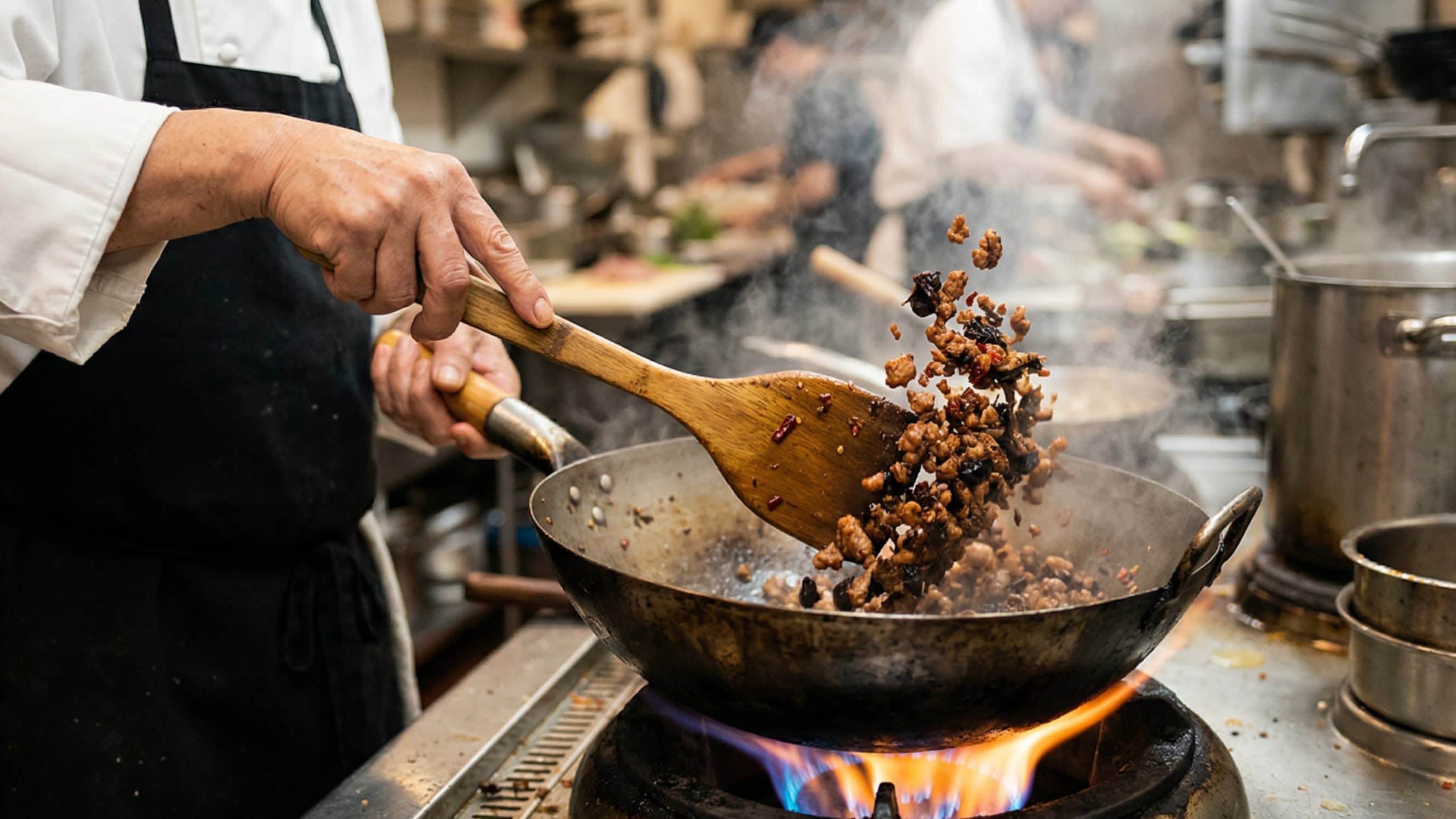
1. Fry the Crispy Pork (煸炒脆臊): Heat 1 tablespoon of cooking oil in a wok over medium-high heat. Add the ground pork and use your spatula to break it apart into tiny pieces. Stir-fry aggressively for about 3 to 4 minutes until the water evaporates and the pork begins to brown and crisp up in its own rendered fat.
2. Infuse the Yacai: Once the pork is crispy, turn the heat down to medium. Add the minced ginger and the Shaoxing wine to deglaze the wok. Stir in the dark soy sauce to give the pork a beautiful, dark mahogany color. Finally, add the Sui Mi Ya Cai (碎米芽菜). Stir-fry for another 2 minutes until the earthy, savory aroma fills your kitchen. Remove from heat and set aside. This pork topping can be stored in the fridge for weeks!
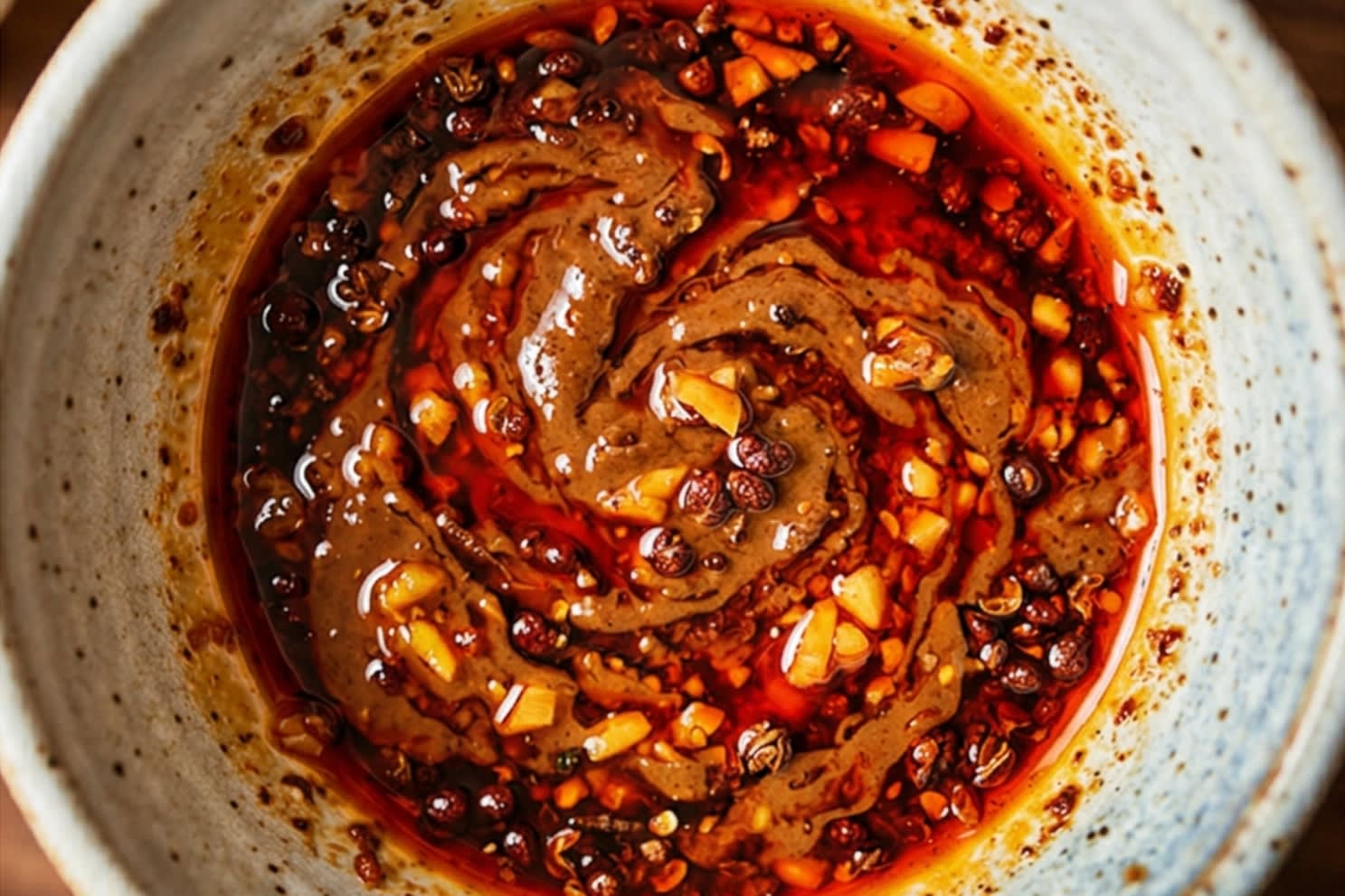
3. Build the Sauce Bowl (The Most Important Step): Authentic Dan Dan Noodles are assembled directly in the serving bowl. In the bottom of your bowl, combine the Chinese sesame paste, light soy sauce, black vinegar, minced garlic, sugar, freshly ground Sichuan peppercorn powder, and the vibrant red chili oil. Stir it vigorously into a thick, highly aromatic paste.
4. Boil the Noodles and Greens: Bring a large pot of water to a rolling boil. Add your fresh wheat noodles. Because they are fresh, they should only take about 3 to 4 minutes to cook. You want them cooked but still chewy and springy (劲道 - Jìndào). In the last 30 seconds of boiling, throw in your leafy greens (Bok Choy or Spinach) to quickly blanch them.
5. Assemble the Masterpiece: Before draining the noodles, take 1 tablespoon of the starchy, boiling noodle water and stir it into your sauce bowl to slightly thin it out and wake up the aromas. Drain the noodles completely and place them directly on top of the sauce in the bowl. Arrange the blanched greens on the side.
6. Garnish and Toss: Spoon a generous amount of your crispy pork and Yacai mixture over the top of the noodles. Garnish heavily with crushed roasted peanuts and bright green scallions (葱花).
7. How to Eat It: Do not just eat the pork off the top! You must grab your chopsticks, dig all the way down to the bottom of the bowl, and aggressively toss and mix the noodles for about 30 seconds. The hot noodles will emulsify the chili oil and sesame paste into a thick, glossy, fiery glaze that coats every single strand. Prepare your tastebuds for the ultimate Sichuan ride!
💡 Troubleshooting & Pro Tips
- Why is my sesame paste seized and clumpy? Chinese sesame paste is very thick and tends to separate in the jar, much like natural peanut butter. Before using it, you must stir the jar vigorously. When you add soy sauce to it in the bowl, it might clump up initially—just keep stirring, and the hot noodle water will smooth it out!
- It’s not numbing enough! Sichuan peppercorns lose their numbing power (the Ma flavor) very quickly once ground. If you bought pre-ground powder that has been sitting on a shelf for a year, it will taste like sawdust. Always buy whole Sichuan peppercorns, toast them lightly in a dry pan, and grind them yourself in a spice grinder or mortar and pestle.
- Can I make it vegetarian? Absolutely. Skip the pork and use crumbled firm tofu or finely diced shiitake mushrooms. Fry them exactly the same way with the Yacai. The true soul of the dish is the Yacai and the sauce, not the meat!
📦 Shop Authentic Sichuan Essentials
To capture the explosive, authentic street-food flavor of Chengdu, upgrading your pantry with these specific traditional ingredients is mandatory. (As an Amazon Associate, ChinaCurator earns from qualifying purchases.)
- Sui Mi Ya Cai (碎米芽菜) - The absolute soul of the dish. This fermented mustard green provides an earthy umami that cannot be replicated.
- Premium Red Sichuan Peppercorns (大红袍花椒) - Essential for the iconic "numbing" sensation. Buy them whole and grind them fresh!
- Pure Chinese Sesame Paste (纯芝麻酱) - Made from roasted sesame seeds, providing a deep, smoky, nutty flavor far superior to peanut butter.
- Lao Gan Ma or Blank Slate Sichuan Chili Oil - A high-quality, deeply infused chili oil is the fiery heart of the sauce matrix.