🥡 Introduction: The Ultimate Savory Comfort Food
When it comes to Chinese-American takeout, chicken stir-fries dominate the menu. But while dishes like General Tso’s or Orange Chicken rely on heavy, deep-fried breading and intensely sweet, syrupy glazes, Cashew Chicken (腰果鸡丁 - Yāoguǒ Jīdīng) offers a completely different, much more refined culinary experience.
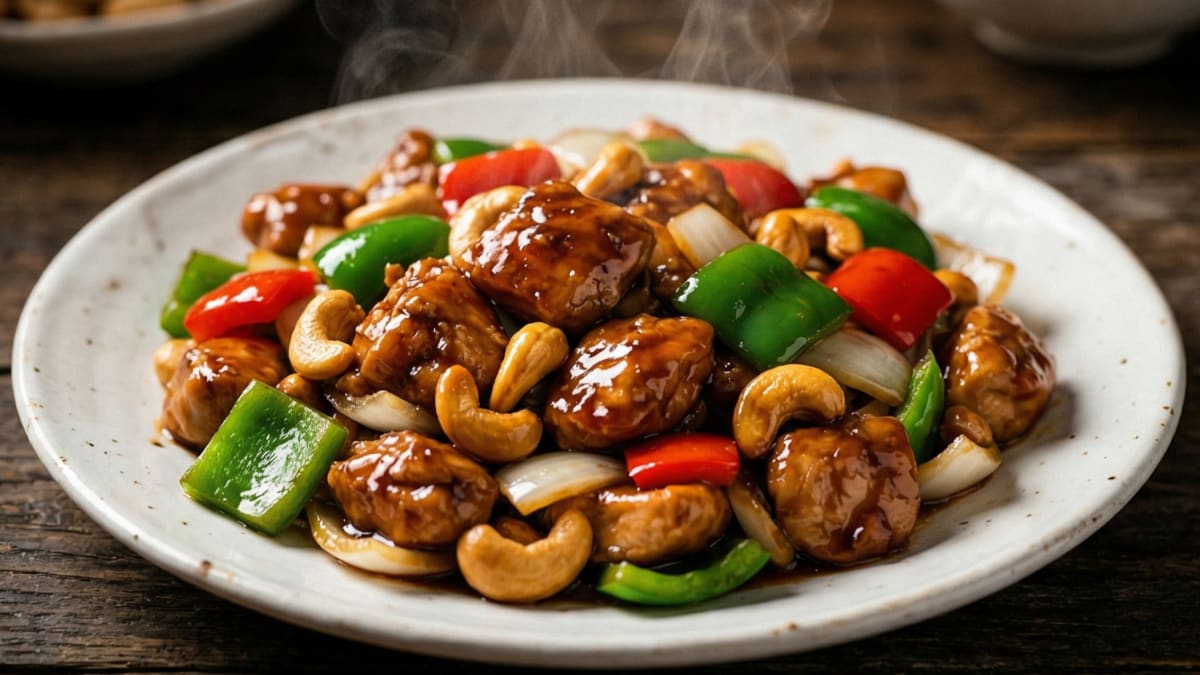
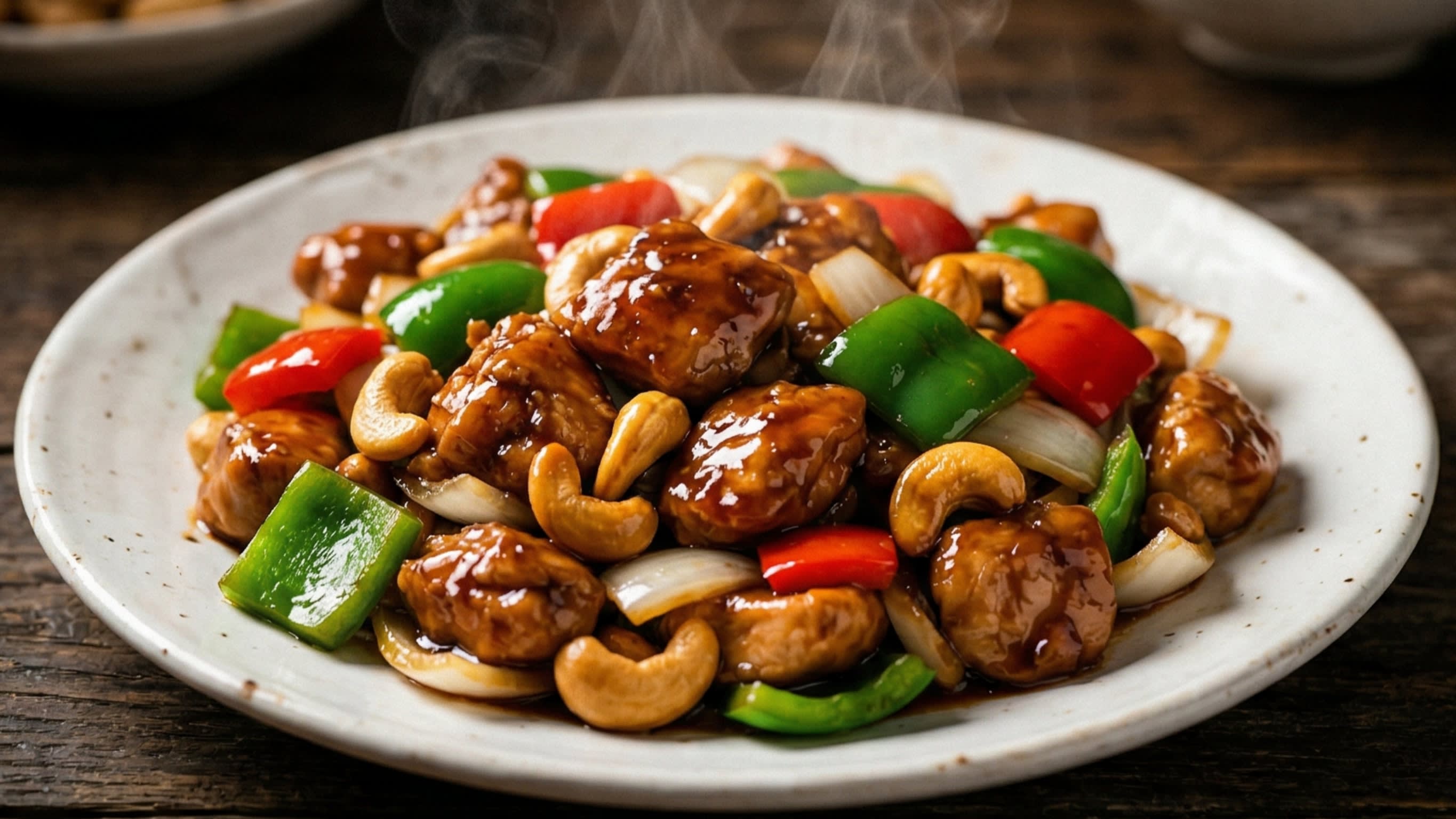
This classic dish is a masterclass in elegant textural contrast. It features impossibly tender, velvety cubes of chicken, the watery crunch of fresh bell peppers and water chestnuts, and the rich, buttery, roasted snap of golden cashews. Everything is brought together by a deeply savory, umami-packed brown sauce that is practically begging to be soaked up by a steaming bowl of Jasmine rice.
Because it is not deep-fried, Cashew Chicken is significantly healthier and lighter than its takeout cousins. However, when Western home cooks attempt to make it, they often run into two devastating problems: the chicken breast turns out as dry and tough as a rubber eraser, and the cashews become soggy, sad, and mushy from sitting in the sauce.
Today, we are going to fix those problems forever. We will reveal the traditional Chinese restaurant technique for making lean chicken breast melt in your mouth, and the secret to ensuring your cashews retain their legendary crunch until the very last bite.
🆚 Cashew Chicken vs. Kung Pao Chicken
One of the most frequent questions from Chinese food lovers is: “What is the difference between Cashew Chicken and Kung Pao Chicken?” While both feature diced chicken and nuts, their flavor profiles are entirely different:
- Kung Pao Chicken (宫保鸡丁): This is a classic Sichuan dish. It is fiery, numbing, and features a complex Lychee flavor (a delicate balance of sweet and sour). It traditionally uses roasted peanuts and is heavily spiced with dried red chilies and Sichuan peppercorns.
- Cashew Chicken (腰果鸡丁): This dish leans closer to a traditional Cantonese flavor profile. It is entirely non-spicy. The sauce is deeply savory, earthy, and highly umami-driven, relying heavily on oyster sauce, soy sauce, and a touch of sesame oil. The star nut is, of course, the rich, crescent-shaped cashew.
If you are cooking for a family, children, or anyone who cannot handle spicy food, Cashew Chicken is the absolute undisputed champion.
🔬 The Science of the Stir-Fry: Velveting and Toasting
To elevate your homemade Cashew Chicken to professional restaurant standards, you must master two fundamental Chinese culinary techniques.
1. Saving the Chicken Breast: “Shang Jiang” (上浆)
Chicken breast (鸡胸肉 - Jīxiōngròu) is incredibly lean. If you just chop it up and throw it into a hot wok, the heat will violently squeeze all the moisture out of the muscle fibers, leaving you with dry, chalky meat.
You must practice Shàngjiāng (上浆 - Velveting). By massaging the raw, diced chicken with water, soy sauce, and Cornstarch (玉米淀粉), you force the meat to absorb liquid. The cornstarch creates a microscopic, invisible gel barrier around the chicken. When it hits the hot oil, this barrier locks the moisture inside, resulting in a texture that is unbelievably soft, slippery, and velvety.
2. The Golden Crunch: Toasting the Nuts
If you throw raw cashews into a wet stir-fry, they will absorb the sauce and turn into mush. Even if you buy “pre-roasted” cashews from the snack aisle, they are not crispy enough for a stir-fry. In a Chinese kitchen, the very first step is to gently toast the cashews in a dry wok (or with a tiny drop of oil) over low heat until they turn golden brown and release their natural, nutty essential oils. More importantly, you do not add the cashews to the wok until the heat is completely turned off at the very end of the recipe. This guarantees a loud, satisfying crunch in every single bite.
🛒 Ingredients List
The Chicken & Velveting Marinade (上浆):
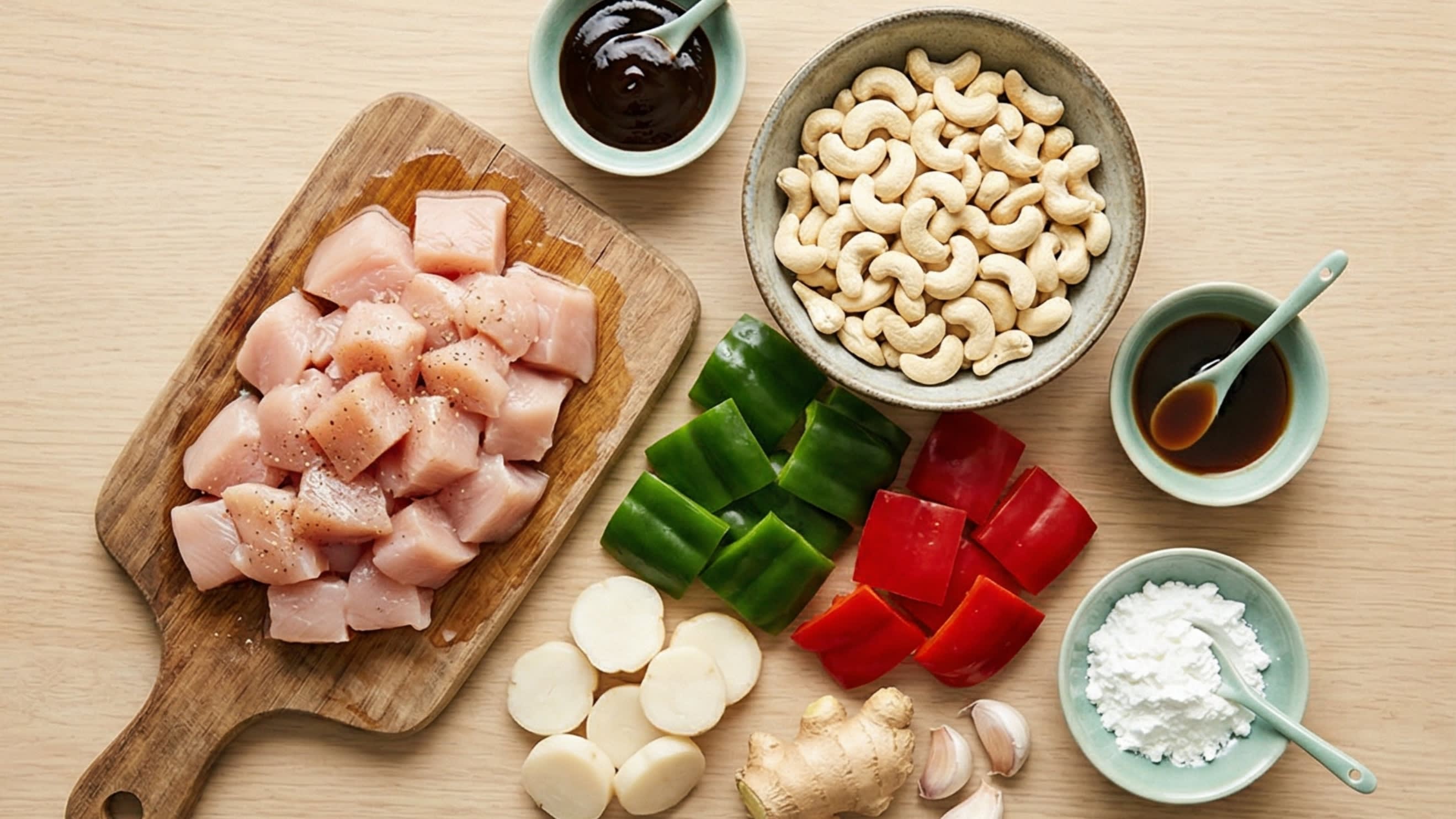
- 1 lb (about 450g) Boneless, Skinless Chicken Breast (鸡胸肉), cut into 3/4-inch cubes. (You can use chicken thighs if you prefer darker meat!)
- 1 tbsp Light Soy Sauce (生抽)
- 1 tbsp Shaoxing Cooking Wine (绍兴酒)
- 1 tbsp Cornstarch (玉米淀粉)
- 2 tbsp Water (the meat will absorb this!)
- 1 tbsp Cooking Oil (to seal the moisture)
The Crunch Elements:
- 1 cup Raw, Unsalted Cashews (腰果 - Yāoguǒ)
- 1 Green Bell Pepper (青椒), cut into 1-inch squares
- 1 Red Bell Pepper (红椒), cut into 1-inch squares
- 1/2 White Onion (洋葱), cut into 1-inch squares
- 1/2 cup canned Sliced Water Chestnuts (马蹄), drained
The Aromatics:
- 3 cloves Garlic, finely minced (蒜末)
- 1 thumb-sized piece of fresh Ginger, finely minced (姜末)
The Ultimate Savory Brown Sauce (碗汁):
- 3 tbsp Oyster Sauce (蚝油) - The thick, umami-rich soul of the sauce.
- 1 tbsp Light Soy Sauce (生抽)
- 1/2 tsp Dark Soy Sauce (老抽 - purely for that appetizing, dark restaurant color)
- 1 tsp Hoisin Sauce (海鲜酱) - Optional, but adds a fantastic depth of flavor!
- 1 tsp Sugar
- 1/2 tsp Toasted Sesame Oil (芝麻油)
- 1/4 tsp White Pepper powder
- 1/3 cup Chicken Broth or Water
- 1 tbsp Cornstarch (for thickening)
🍳 Step-by-Step Instructions
1. Velvet the Chicken (上浆): Place your cubed chicken breast in a mixing bowl. Add the light soy sauce, Shaoxing wine, and water. Vigorously massage the liquids into the meat with your hands until the bowl is completely dry. Add the cornstarch and massage again until the chicken feels sticky. Finally, pour in the 1 tbsp of cooking oil to coat the cubes. Let it rest for 15 to 20 minutes.
2. Whisk the Sauce (碗汁): In a small bowl, whisk together the oyster sauce, light soy sauce, dark soy sauce, hoisin sauce, sugar, sesame oil, white pepper, chicken broth, and 1 tbsp of cornstarch. Make sure the sugar and cornstarch are completely dissolved. Set this bowl right next to your stove.
3. Toast the Cashews (The Secret Step): Heat your wok or a large skillet over low heat. Add the raw cashews (no oil needed, or just a tiny drop). Stir them continuously for about 3 to 5 minutes until they turn a beautiful, deep golden brown and smell incredibly nutty. Remove them immediately and set them aside on a cold plate to crisp up. Do not leave them in the hot pan, or they will burn!
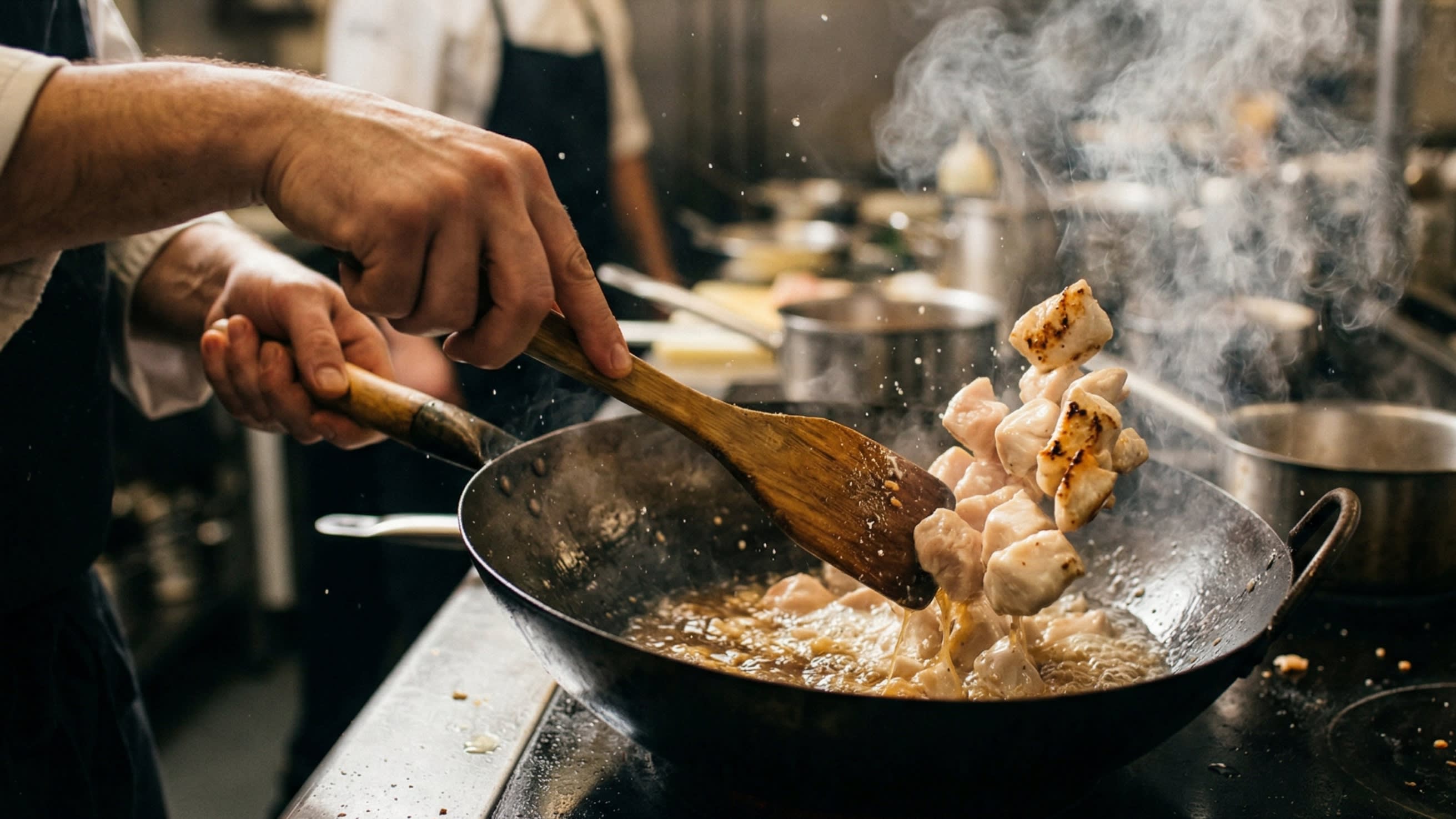
4. Sear the Chicken (滑炒 - Huáchǎo): Wipe the wok clean. Turn the heat up to high and add 2 tablespoons of cooking oil. When the oil is shimmering, carefully add the marinated chicken cubes. Spread them out into a single layer and let them sear undisturbed for 30 seconds. Then, stir-fry rapidly for about 3 to 4 minutes until the chicken is 90% cooked and has a pale, firm exterior. Remove the chicken and set it aside.
5. Blister the Vegetables (断生 - Duànshēng): Keep the remaining oil in the wok (add 1 tsp more if the pan is dry). Keep the heat on high. Add the diced onions, green and red bell peppers, and water chestnuts. Stir-fry aggressively for just 60 seconds. You want them to develop a slight smoky blister but remain incredibly crisp (Duan Sheng). Push the vegetables to the side of the wok.
6. Awaken the Aromatics: In the center of the wok, add the minced garlic and ginger. Let them sizzle in the hot oil for 10 seconds until your kitchen smells amazing.
7. Thicken the Glaze (勾芡 - Gōuqiàn): Give your prepared brown sauce bowl a quick stir to lift the settled cornstarch, and pour it directly into the wok. Stir constantly. Within 30 seconds, the chicken broth will reduce, and the sauce will miraculously transform into a thick, glossy, bubbling, dark mahogany gravy.
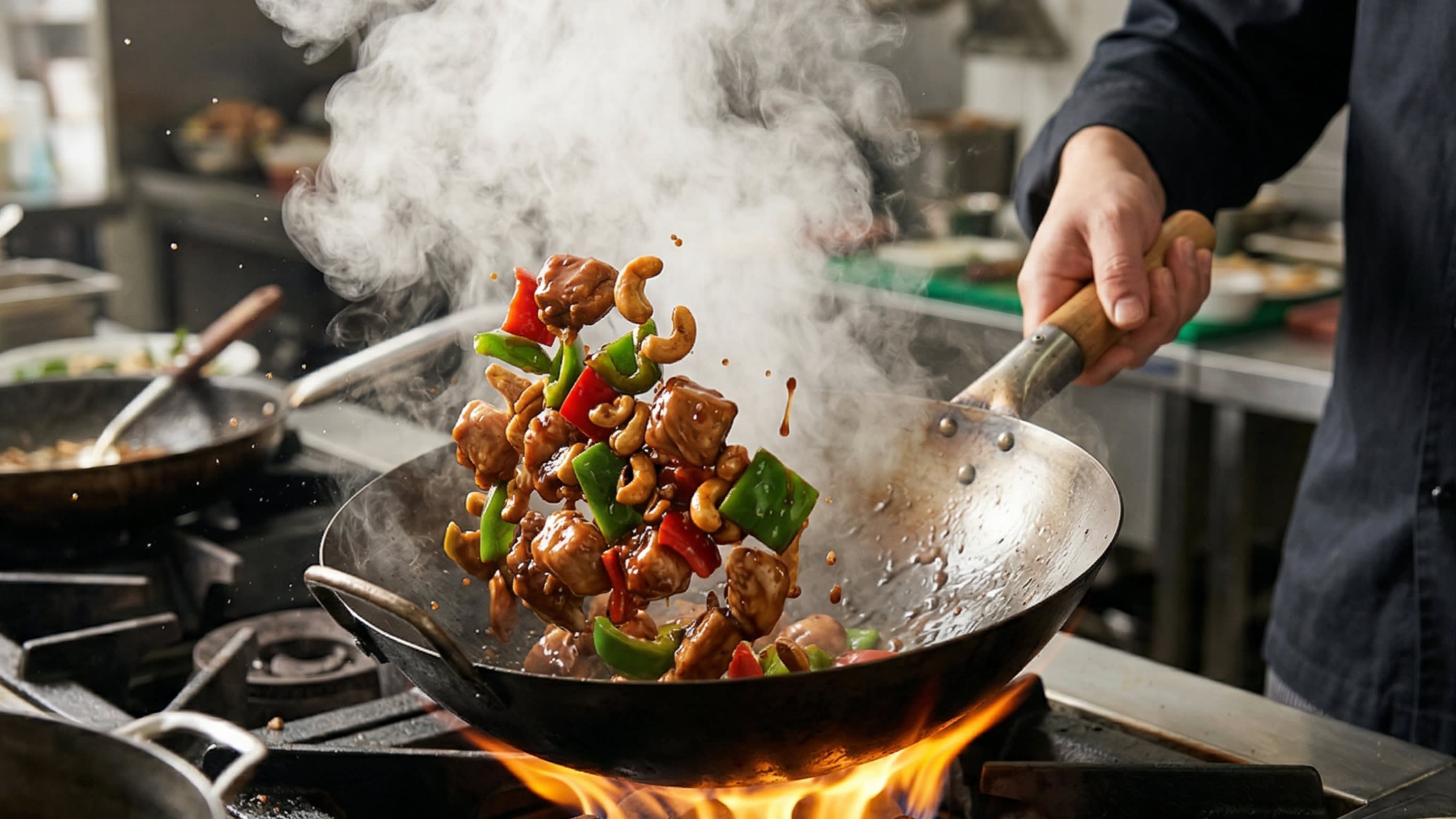
8. The Final Reunion & The Cashew Secret: The moment the sauce is thick and shiny, dump your cooked chicken back into the wok. Toss everything together for 15 seconds so the chicken and vegetables are perfectly coated in the rich glaze. Turn off the heat entirely! Now, dump in your toasted, golden cashews. Give it one final, gentle toss. Adding the cashews off the heat ensures they never boil in the sauce, preserving their ultimate crunch.
9. Serve: Plate this gorgeous, colorful masterpiece immediately. Serve piping hot with a massive bowl of steamed Jasmine rice to soak up that incredible savory gravy!
💡 Troubleshooting & Pro Tips
- My chicken is still tough! You probably skipped the velveting process (marinating with water and cornstarch), or you cooked the chicken for way too long. Chicken breast cooks incredibly fast in a hot wok. Once it turns opaque and firm, get it out of the pan! It will finish cooking when you toss it back into the hot sauce.
- Why does my sauce look pale and watery? You either didn’t let the sauce boil long enough in Step 7 to activate the cornstarch thickener, or you forgot the Dark Soy Sauce (老抽). Dark soy sauce is the absolute secret to that appetizing, dark brown, glossy restaurant appearance.
- The cashews got soft. Never simmer the cashews in the sauce! They must be the very last ingredient to hit the wok, and the heat must be turned off. The sauce should just coat them, not soak them.
📦 Shop Authentic Kitchen Essentials
To achieve that legendary restaurant-quality velvety chicken and perfectly balanced savory umami sauce, these specific ingredients are absolute game-changers. (As an Amazon Associate, ChinaCurator earns from qualifying purchases.)
- Lee Kum Kee Premium Oyster Sauce (蚝油) - The absolute soul of the sauce. It provides the thick body and massive savory depth that soy sauce alone cannot achieve.
- Pearl River Bridge Dark Soy Sauce (老抽) - The mandatory ingredient for giving the chicken and sauce that appetizing, dark mahogany restaurant color.
- Premium Raw Whole Cashews - Buying them raw and toasting them yourself in the wok is the ultimate secret to maximizing their buttery, nutty flavor and crunch.
- Traditional Carbon Steel Wok - The ultimate vessel for searing the chicken quickly and blistering the peppers without making them mushy.