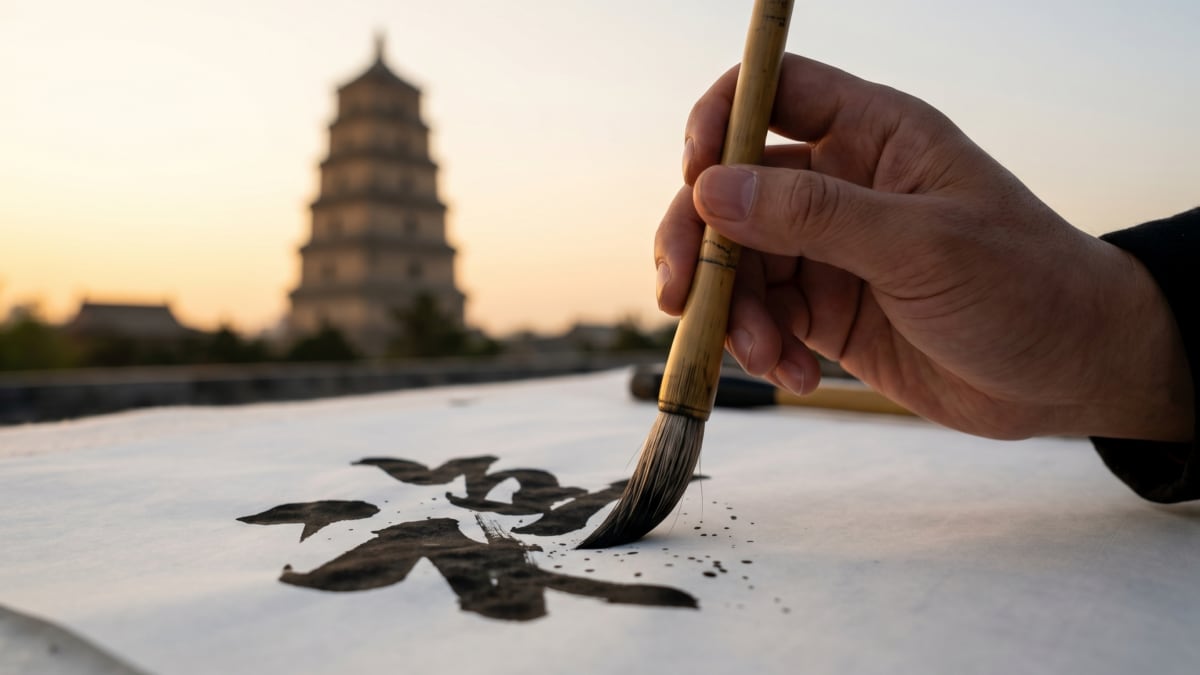
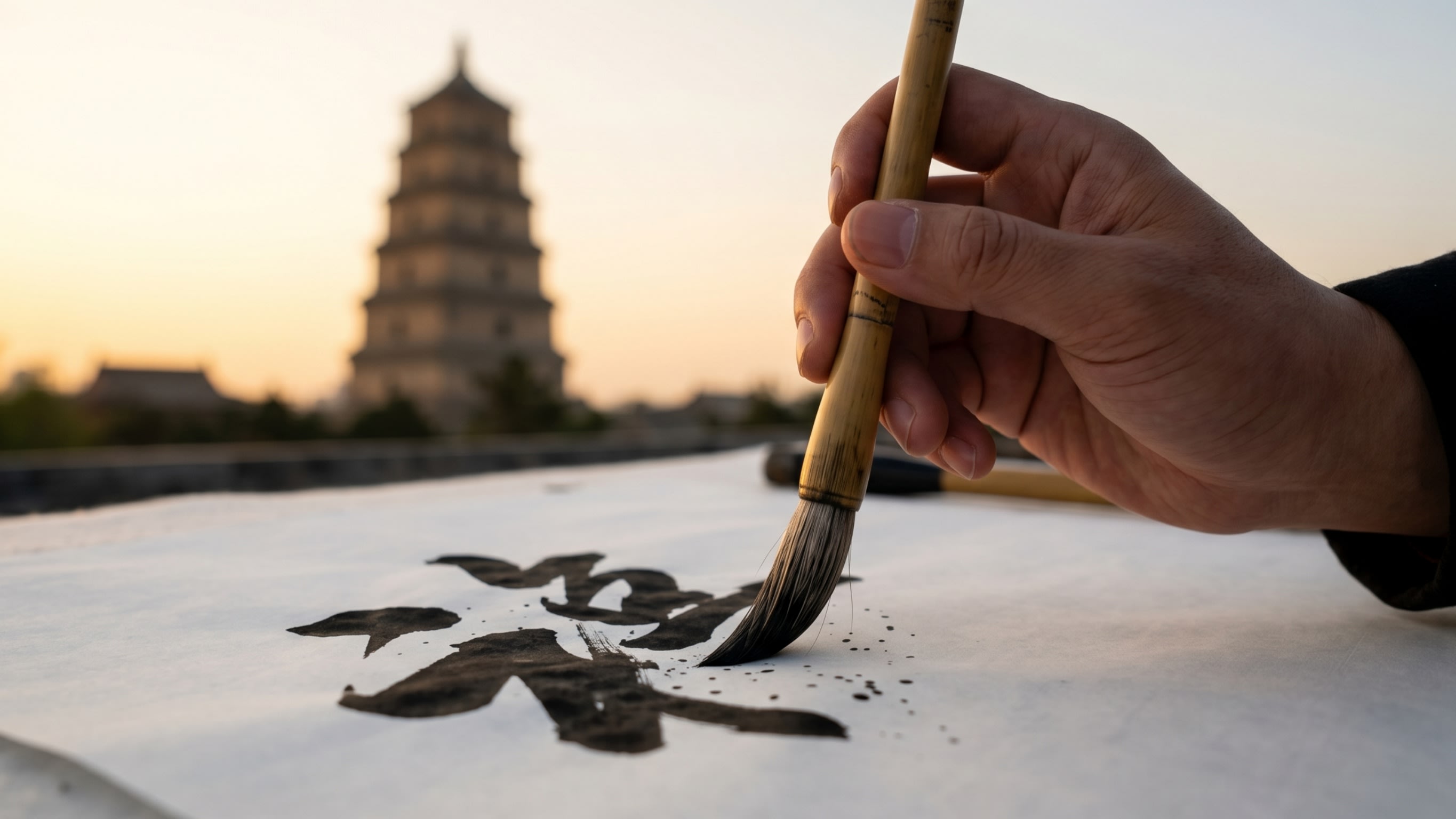
In the heart of Xi’an (西安 - xī’ān), the air still carries a faint, nostalgic scent of aged pine soot and dampened earth. While the rest of the world sprints toward an increasingly digital horizon, the area surrounding the 5A-rated Giant Wild Goose Pagoda (大雁塔 - dà yàn tǎ) remains a steadfast sanctuary for those seeking to reconnect with the “Art of the Brush.”
In 2026, calligraphy has evolved beyond a mere academic hobby; it has become a profound spiritual dialogue with the Tang Dynasty. As someone who has spent years chasing the quietest corners of China, I invite you to set aside your smartphone. Let us rediscover inner peace through the deliberate, weighted rhythm of the ink stroke.
The Calligraphy Renaissance of 2026
Xi’an has long held the title of the ‘City of the Brush,’ but in 2026, we are witnessing a genuine ‘Cultural Awakening’ (文化觉醒 - wén huà jué xǐng). Hidden within the labyrinthine alleys near the Great Tang All Day Mall (大唐不夜城 - dà táng bù yè chéng), a new wave of boutique calligraphy studios is bridging the gap between history and the modern traveler.
For those of us raised on keyboards and touchscreens, learning ‘Shū fǎ’ (书法 - calligraphy) is a startling shift in perspective. It is, quite literally, the “method of the law of writing.” It demands a level of stillness that the modern world often tries to steal from us.
- My Personal Reflection: In Xi’an, calligraphy isn’t just about the characters on the page; it’s a form of ‘Xiū wéi’ (修为 - self-cultivation). There is a specific, humbling sensation when you begin grinding your own ink beneath the shadow of the ancient Pagoda. You aren’t just practicing a skill; you are entering a state of ‘Jì mì gǎn’ (静谧感 - a profound sense of serenity). If you want to elevate your 72 Hours in Xi’an, this ‘sincere’ experience—what we locals call ‘Zǒu xīn’ (走心)—is by far the most rewarding way to spend your time.
Phase 1: The Monumental Muse – Giant Wild Goose Pagoda (大雁塔)
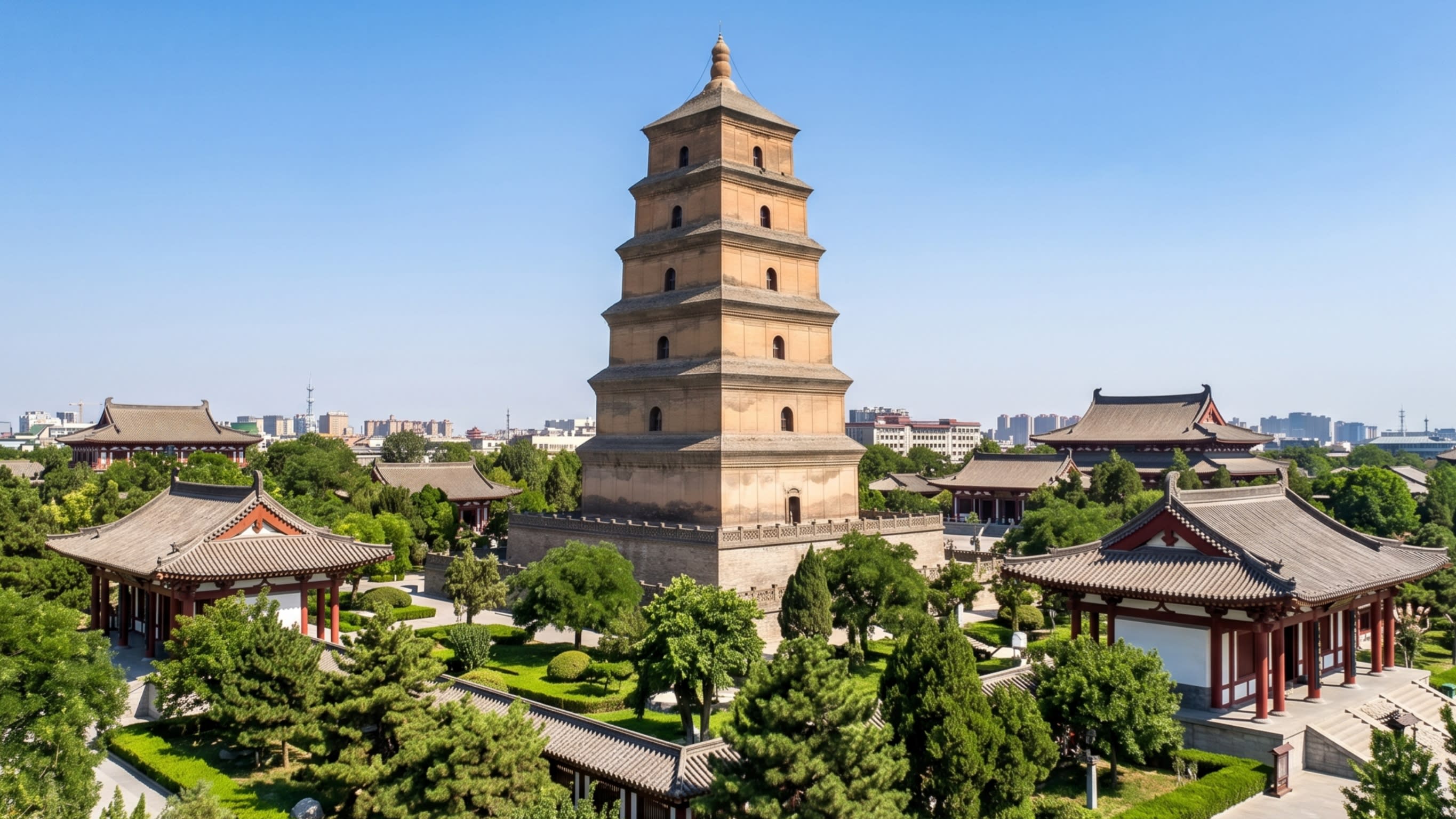
Your journey begins at the Giant Wild Goose Pagoda. Originally constructed in 652 AD to shelter the sacred sutras brought back from India by the monk Xuanzang, this structure is a silent witness to centuries of imperial ambition.
- The Historical Weight: This was once the hallowed ground where elite Tang scholars—the Jinshi (进士 - jìn shì)—would inscribe their names after surviving the brutal imperial examinations. To hold a brush here is to reach back through time, following the footsteps of China’s most formidable intellectuals.
- The Atmosphere: In 2026, the local municipal planners have designated ‘Silent Zones’ around the gardens. Here, you will find elderly locals practicing ‘Dì shū’ (地书 - ground calligraphy), using oversized brushes dipped in water to write fleeting poems on the stone pavement. It is a beautiful, ephemeral art form—one that vanishes just as quickly as it is created.
Phase 2: The Library of Stone – Beilin Museum (碑林)
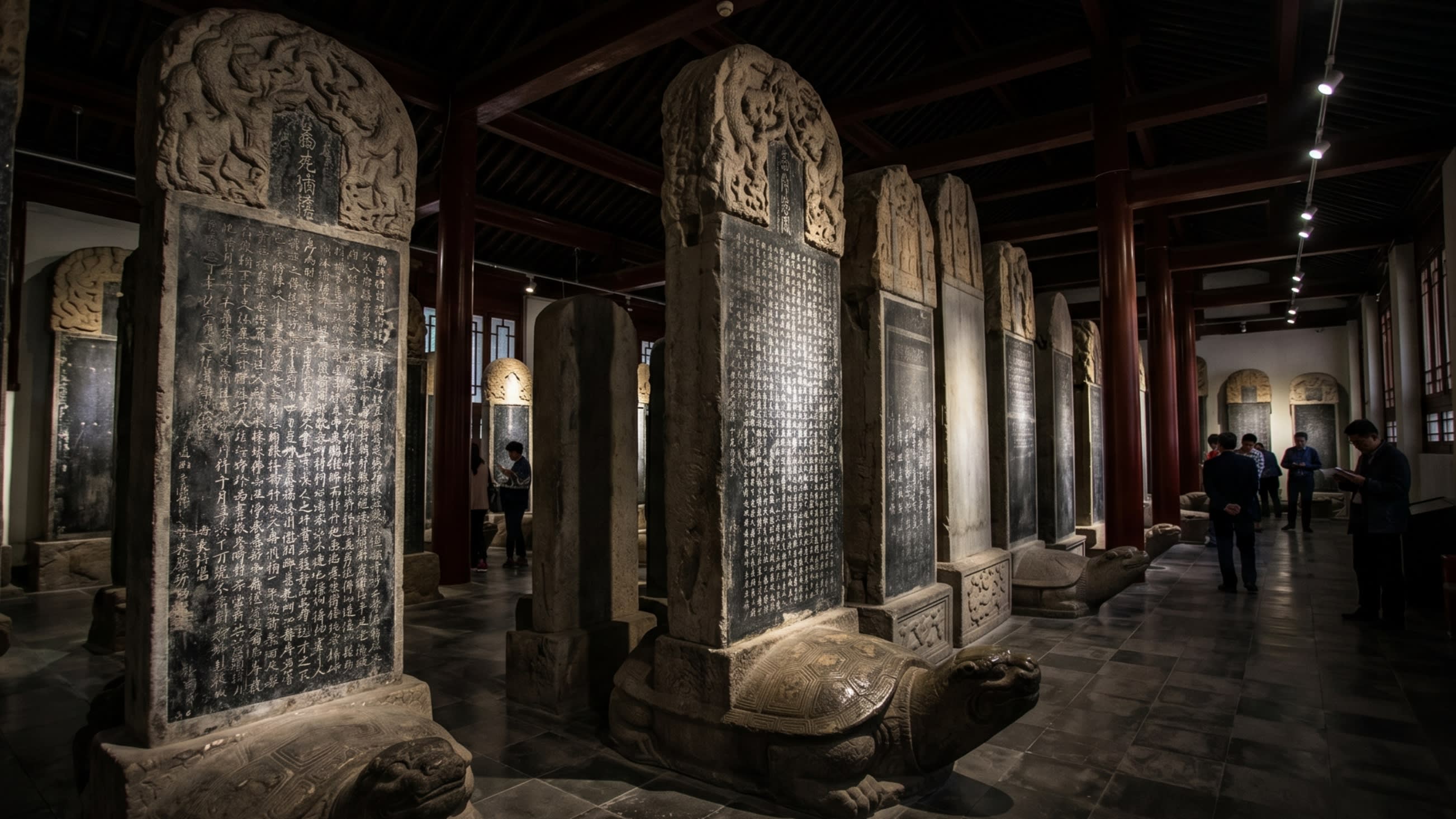
To truly grasp the nuance of a brush stroke, you must first study the stone. The Xi’an Stele Forest (碑林 - bēi lín) is, without hyperbole, the most significant archive of stone steles in the country.
- Standing with Masters: Within these walls, you can stand face-to-face with the original carvings of legends like Yan Zhenqing (颜真卿) and Ouyang Xun (欧阳询). These aren’t copies; they are the literal rock faces that have held these characters for over a millennium. You can feel the tension in every curve of the stone.
- Tactile Learning: If you want a hands-on experience, the museum offers ‘Tà piàn tǐ yàn’ (拓片体验 - ink rubbing workshops). You will learn to use a specialized traditional ink pad to transfer these ancient engravings onto paper. It is a meditative, tactile lesson in how information was preserved long before the printing press.
Phase 3: The Immersion – Grinding the Ink (磨墨)
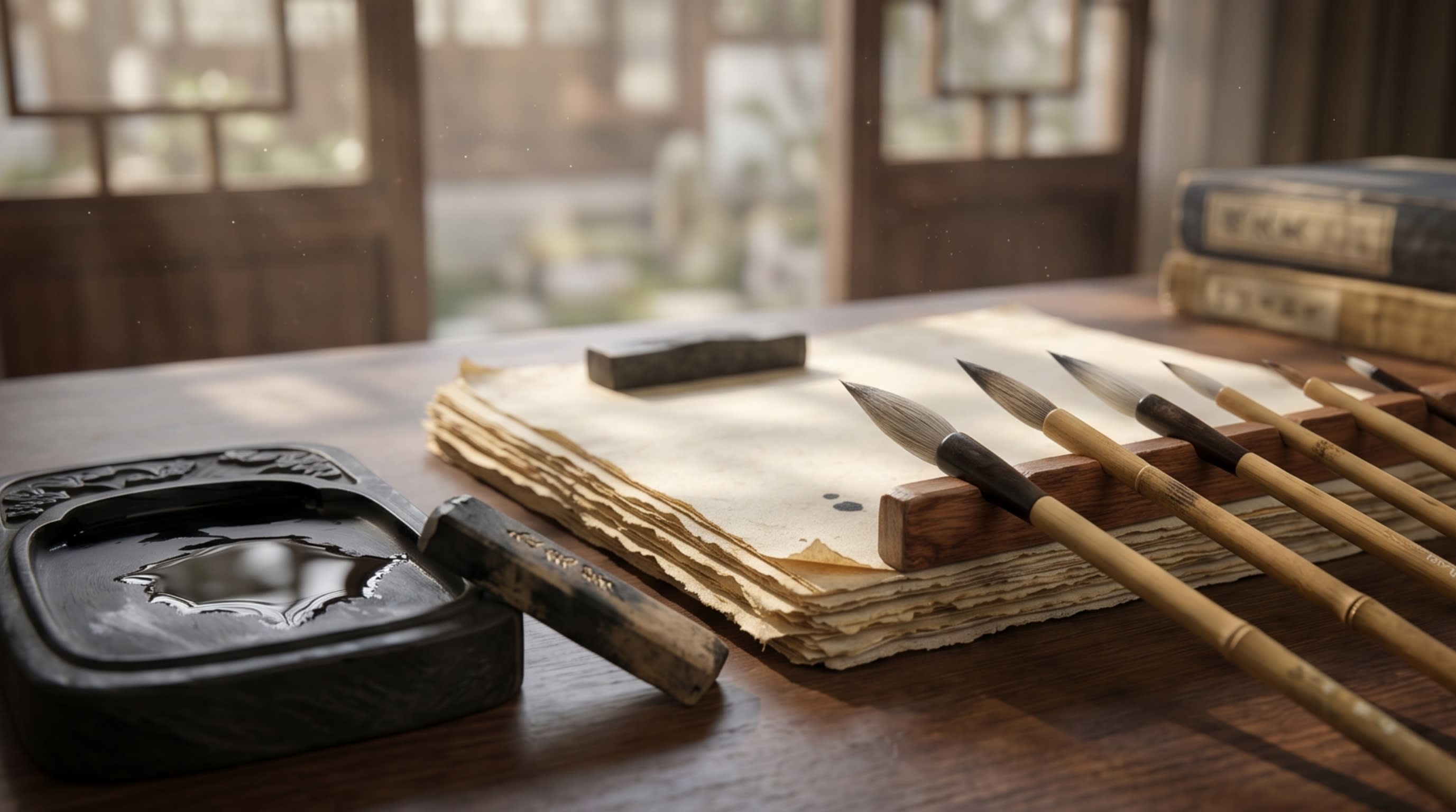
The best studios near the Pagoda insist on the ‘Full Ritual.’ Do not expect bottled ink; you will be required to grind it yourself.
- The Inkstone (砚台 - yàn tái): You will use a heavy, carved Duan inkstone. Adding just a few drops of water to the stone, you grind the inkstick in steady, circular motions. The 10 minutes required for this task is your primary meditation.
- The Paper (宣纸 - xuān zhǐ): Known as ‘Living Paper,’ this traditional absorbent surface reacts instantly to the speed and pressure of your hand. It is unforgiving yet incredibly expressive.
- The Breath: My teacher once told me, “If your breath is jagged, your line will be weak.” It is a lesson in biology as much as art. If you are interested in exploring similar meditative practices, you might enjoy my guide on Chinese Stress Relief: The Art of Bead Rubbing.
Calligraphy Experience Comparison (2026 Edition)
| Experience Type | Vibe | Location | Effort |
|---|---|---|---|
| Ground Calligraphy | Casual/Social | Pagoda North Square | Easy |
| Traditional Studio | Formal/Focused | Shuyuanmen Street | Medium |
| Ink Rubbing | Historical | Beilin Museum | Medium |
Fuel for the Brush: The ‘Biang’ Challenge
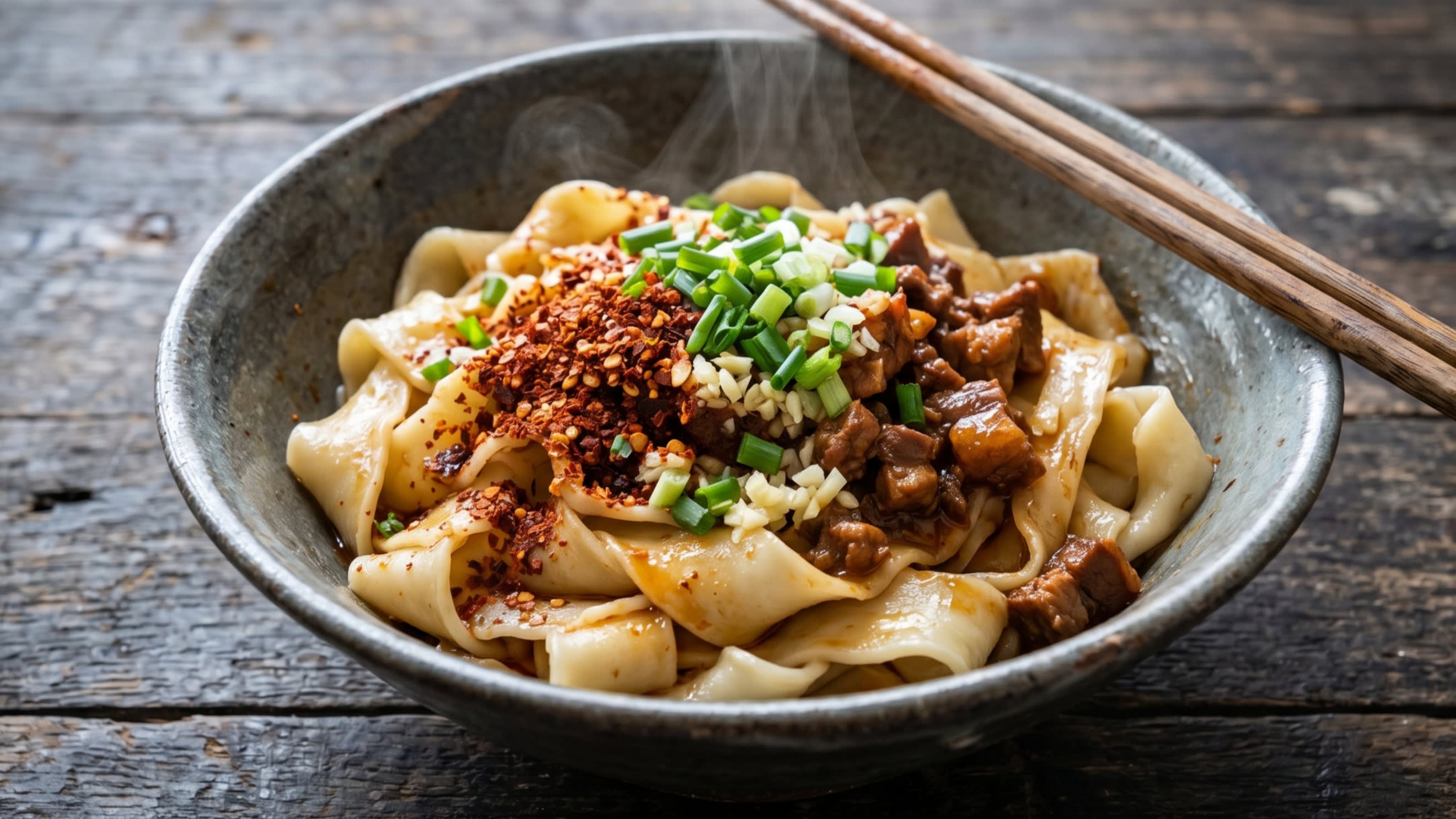
No trip to Xi’an is complete without a bowl of Biang Biang Noodles (裤带面 - kù dài miàn). The character ‘Biang’ is famously the most complex in the Chinese language, boasting over 50 strokes. Attempting to write it is a rite of passage for any calligraphy student.
When you slurp these wide, hand-pulled noodles, doused in hot chili oil and vinegar, you are experiencing the true ‘Yanhuoqi’ (烟火气 - the raw, vibrant vibe of life) of Shaanxi.
Final Thoughts
Calligraphy is ultimately a masterclass in the ‘Màn shēng huó’ (慢生活 - slow life). We practice not because we need to finish a page, but because we need to sync our tempo with the ancient rhythms of this city.
My advice? Stop chasing perfection. The beauty isn’t in the character itself; it is in the ink stains on your fingers and the profound, quiet peace that fills your mind when you finally stop trying to control the brush and start letting it lead.
🖌️ Calligraphy Immersion Checklist
- Arrival: Use the Xi'an North HSR Station (西安北站 - xī'ān běi zhàn). It is incredibly well-connected for anyone traveling from the coast.
- Shopping: For authentic calligraphy brushes, visit Shuyuanmen Street.
- Etiquette: At the Beilin Museum, remember these are cultural relics. Do not touch the stone surface.
Disclaimer: As an Amazon Associate, ChinaCurator earns from qualifying purchases.