🥩 Introduction: The Crown Jewel of Chinese Comfort Food
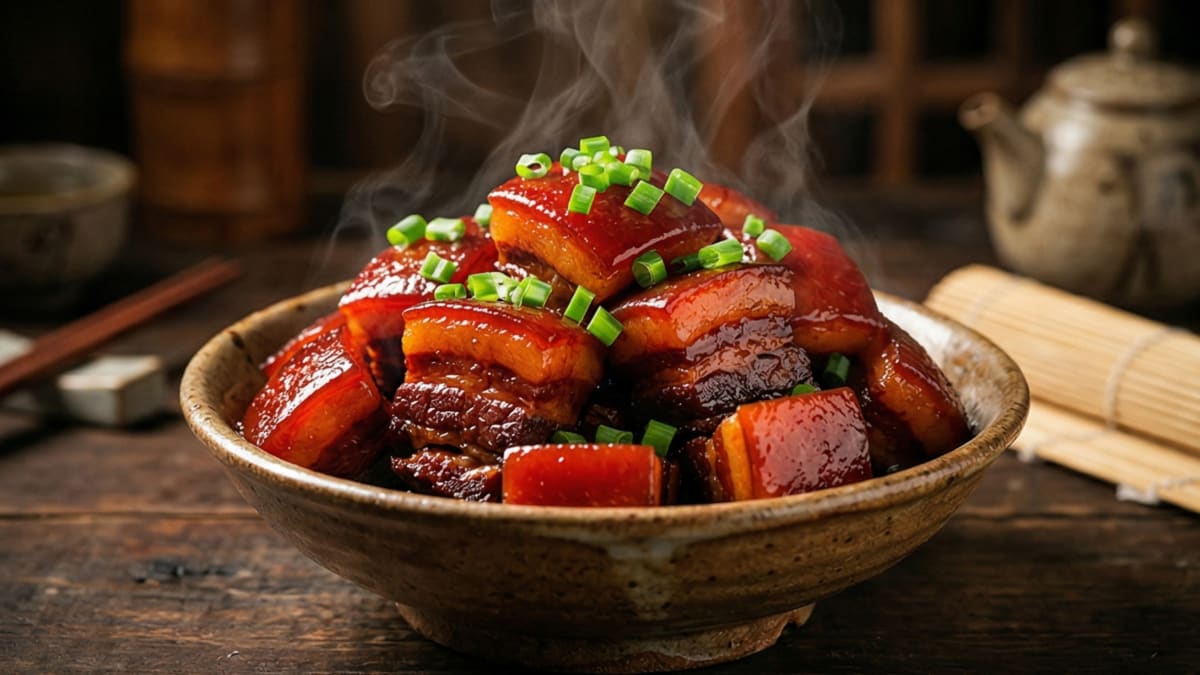
If there is a single dish that defines the heart, soul, and absolute indulgence of traditional Chinese home cooking, it is undeniably Hong Shao Rou (红烧肉 - Hóngshāoròu), famously known as Red Braised Pork Belly.
This iconic dish is the ultimate culinary equalizer. It is celebrated at lavish billionaire banquets and cooked in humble rural kitchens across China. It was famously documented as the absolute favorite dish of Chairman Mao Zedong.
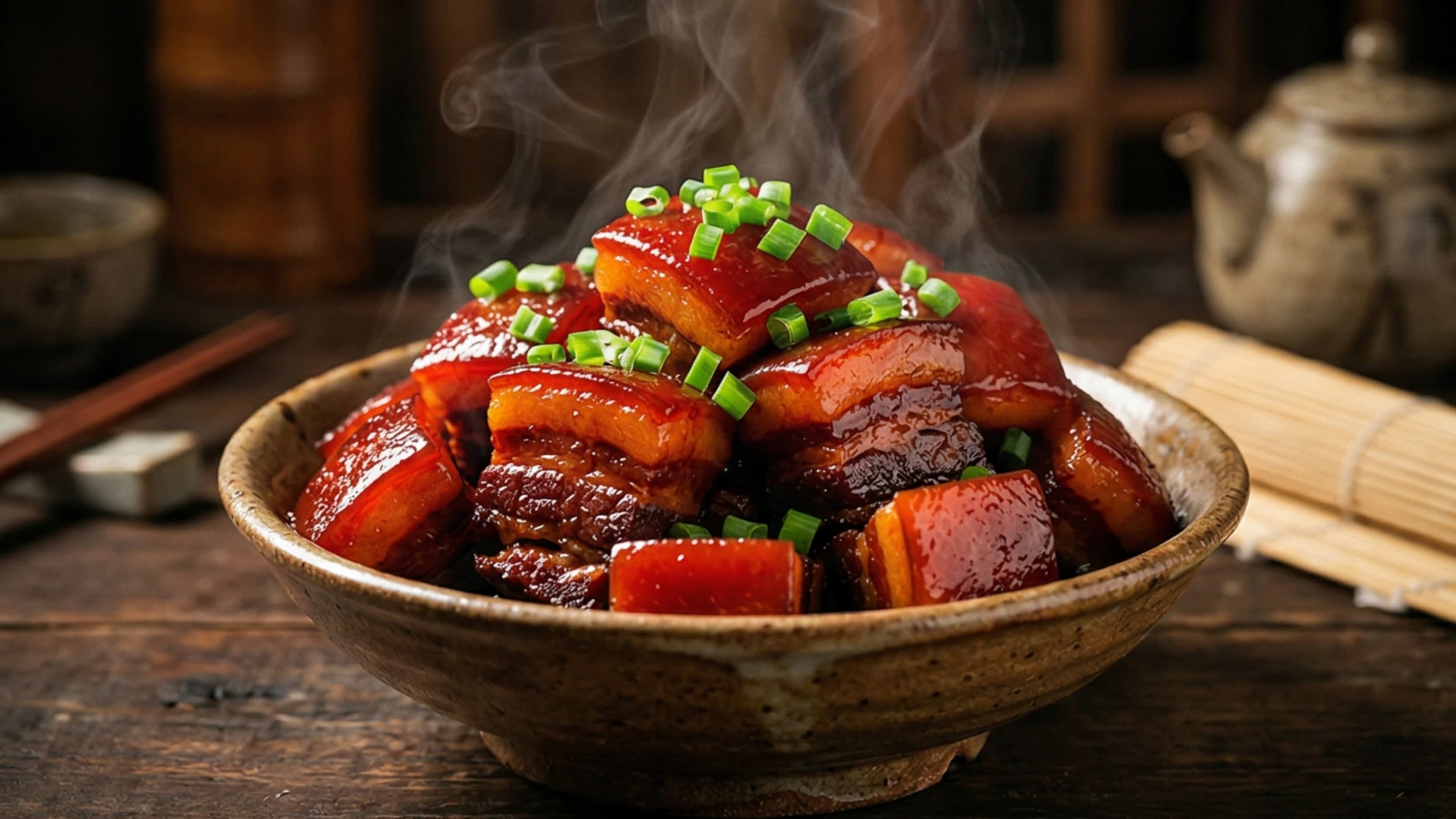
When executed perfectly, Hong Shao Rou is a life-changing gastronomic experience. It features thick, majestic cubes of pork belly with distinct, beautiful layers of fat and lean meat, capped by a soft, gelatinous skin. The texture is notoriously described in Chinese as Féi ér bú nì, Rùkǒu jí huà (肥而不腻,入口即化)—meaning “Fat but not greasy, melting instantly in your mouth.” Every single cube is encased in a sticky, savory-sweet, glowing ruby-red glaze that commands you to eat it with massive bowls of steamed white rice.
However, when Western home cooks try to make this dish, they often encounter disastrous results. The meat turns out tough and stringy, the fat feels like chewing on pure oil, and the sauce looks like a muddy, unappetizing black soup.
Today, we are going to unlock the ancient culinary secrets of Chinese braising. We will teach you how to properly render the fat, the temperature rules you must never break, and the ultimate, high-level restaurant technique known as Chao Tangse—the secret to that breathtaking ruby-red glow.
🔬 The Science of Melting Pork: Rules You Cannot Break
To achieve a texture that literally dissolves on your tongue without feeling greasy, you must understand the physics of pork belly.
1. The Cut: Skin-On is Mandatory (带皮五花肉)
You cannot use pork chops, and you cannot use skinless pork belly. Authentic Hong Shao Rou requires Dàipí Wǔhuāròu (带皮五花肉 - Skin-on Five-Flower Meat). The skin contains massive amounts of collagen. During the long braising process, this collagen breaks down into gelatin, creating an incredibly luxurious, sticky texture that thickens the sauce naturally and gives the dish its signature mouthfeel.
2. Rendering the Fat (煸炒出油)
Why does authentic Hong Shao Rou not taste greasy? Because we force the fat out before we braise it! After blanching the pork, you must sear the cubes in a dry wok. This process, known as Biānchǎo (煸炒), slowly renders (melts) the excess liquid fat out of the pork belly. We then pour this excess oil away. This leaves behind a structurally sound, deeply flavorful piece of meat that will absorb the sauce instead of leaking grease.
3. The Temperature Shock Warning
This is the number one reason homemade pork turns out tough and rubbery. After you blanch or sear the hot pork, you must never let it touch cold water! If hot meat proteins are hit with cold water, they violently seize and contract, tightening the muscle fibers permanently. Always rinse blanched pork with warm water, and always braise the pork using boiling hot water!
💎 The Holy Grail Technique: “Chao Tangse” (炒糖色)
If you look at cheap takeout recipes, they tell you to use massive amounts of Dark Soy Sauce to color the meat. This is fundamentally wrong. Heavy dark soy sauce turns the pork a dull, flat black and makes it overly salty.
The true, luminous, ruby-red color of authentic Hong Shao Rou comes from an advanced Chinese culinary technique called Chǎo Tángsè (炒糖色 - Caramelizing the Sugar Color).
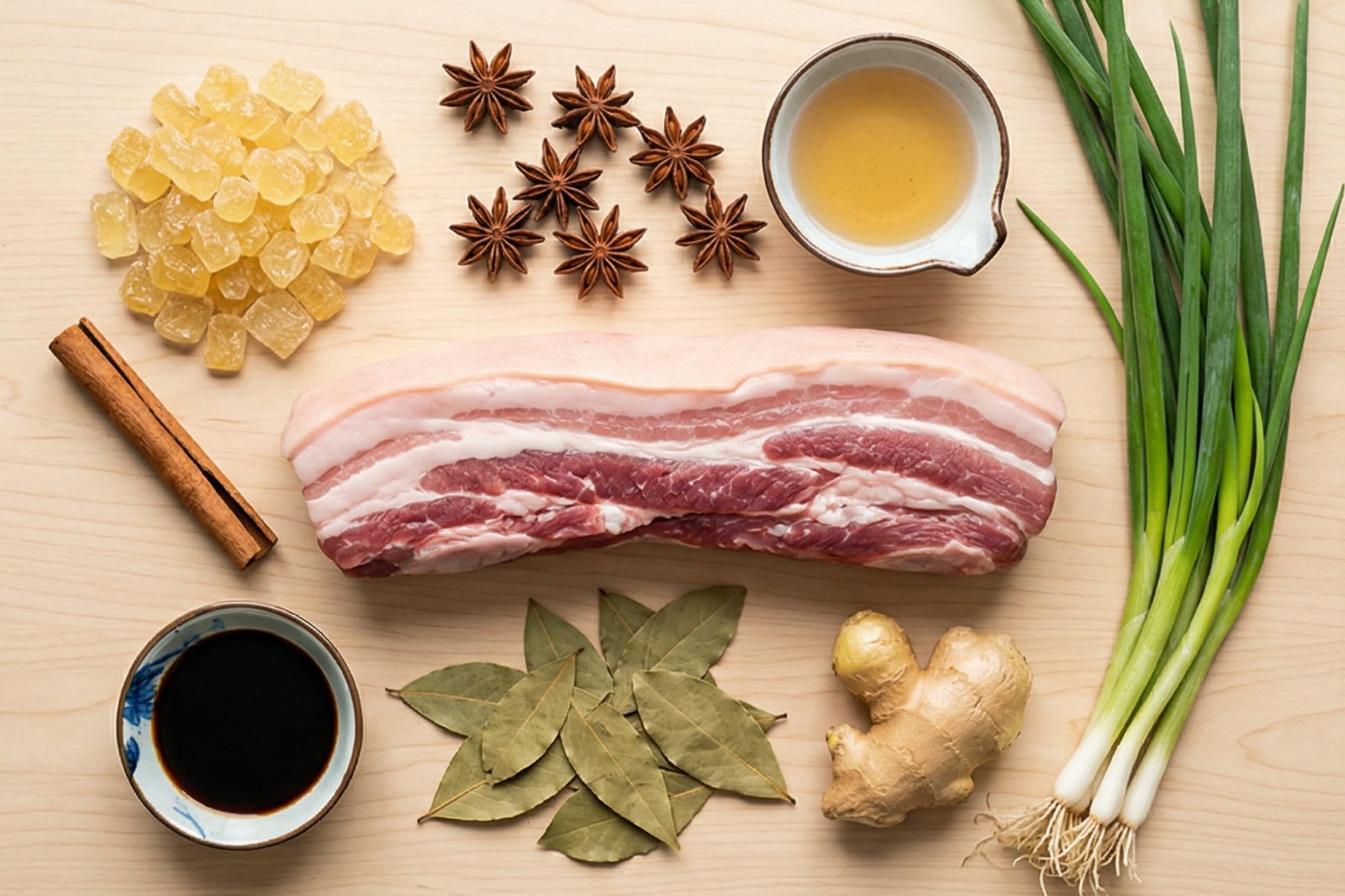
Instead of regular white sugar, authentic recipes demand Rock Sugar (冰糖 - Bīngtáng). Rock sugar provides a cleaner, less cloying sweetness and creates a shinier glaze. To perform Chao Tangse, you melt rock sugar in a little oil over low heat until it liquefies, bubbles furiously, and turns a deep, rich amber/ruby-red color. The exact moment it reaches this stage, you dump the pork into the wok. The caramelized sugar instantly coats the meat, initiating a massive Maillard reaction that provides a breathtaking color and a complex, smoky, caramel depth that soy sauce could never achieve.
🛒 Ingredients List
The Meat & Prep:
- 1.5 lbs (about 700g) Skin-On Pork Belly (带皮五花肉), cut into 1.5-inch (4cm) uniform cubes.
- 3 slices fresh Ginger (for blanching)
- 1 tbsp Shaoxing Cooking Wine (for blanching)
The Caramel & Aromatics:
- 2 tbsp Cooking Oil
- 30g (about 2-3 large pieces) Rock Sugar (冰糖 - Bīngtáng). If you absolutely cannot find it, substitute with 2.5 tbsp of regular white sugar.
- 4 slices fresh Ginger (姜片)
- 3 stalks Scallions (葱段), cut into 2-inch sections
- 2 whole Star Anise (八角 - Bājiǎo)
- 1 small Cinnamon Stick (桂皮 - Guìpí)
- 3 Dried Bay Leaves (香叶 - Xiāngyè)
- 2-3 Dried Red Chilies (干辣椒) - Optional, for a tiny background kick, not meant to be spicy!
The Braising Liquids:
- 2 tbsp Light Soy Sauce (生抽)
- 1 tbsp Dark Soy Sauce (老抽)
- 2 tbsp Shaoxing Cooking Wine (绍兴酒)
- 3 to 4 cups Boiling Water (Must be boiling hot!)
- Salt to taste (added at the very end)
🍳 Step-by-Step Instructions
1. Blanching (焯水 - Chāo shuǐ): Place the pork belly cubes into a pot of cold water. Add 3 slices of ginger and 1 tbsp of Shaoxing wine. Bring it to a boil over medium-high heat. Let it boil for 3 to 4 minutes. You will see a layer of grey foam and impurities float to the top. Remove the pork with a slotted spoon and rinse it thoroughly under warm water. Pat the pork completely dry with paper towels (so it doesn’t explode in the oil later).
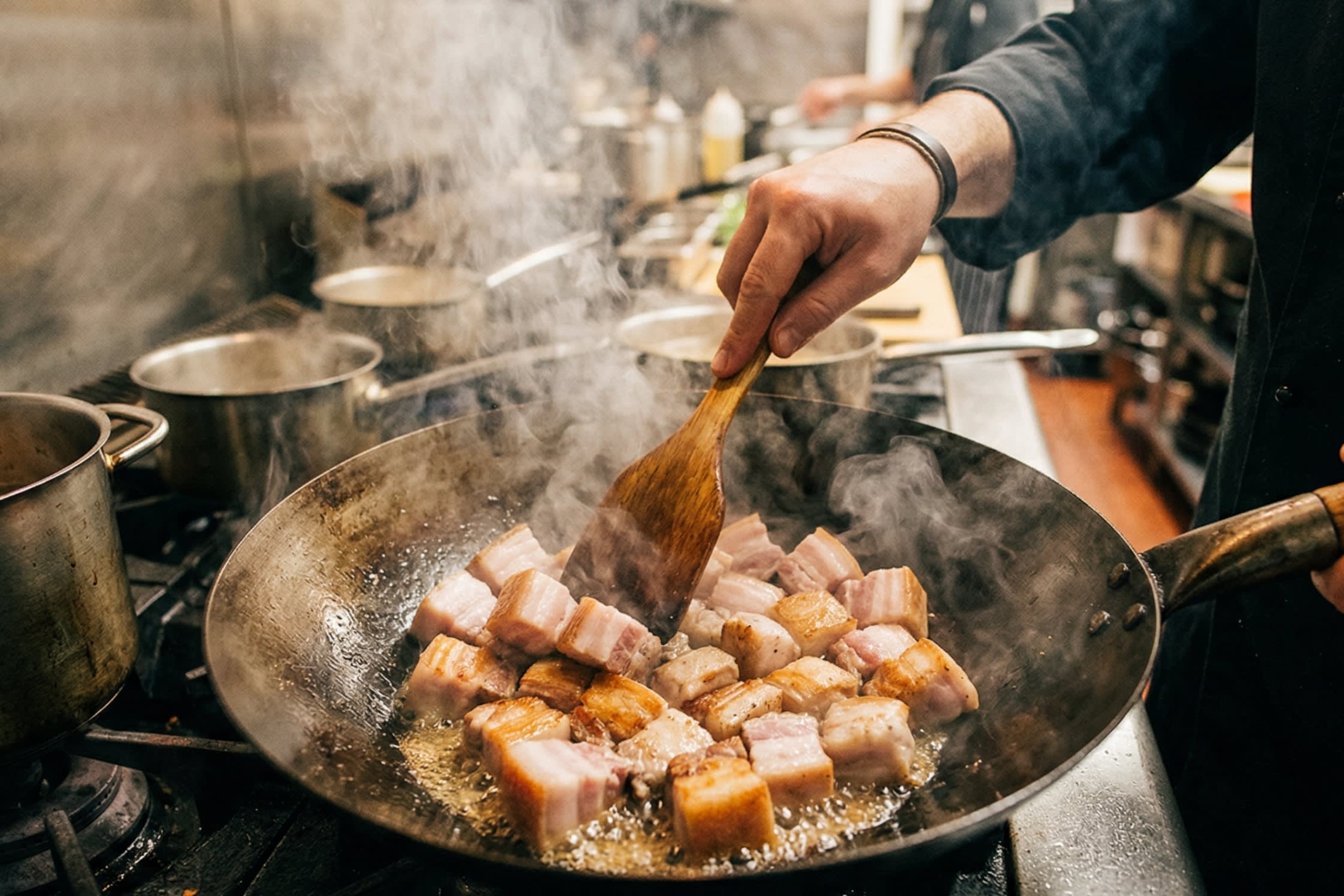
2. Render the Fat (煸炒出油): Heat a clean wok over medium heat. Add just a tiny drop of oil to lubricate the pan. Add the dried pork belly cubes. Slowly pan-fry them for about 5 to 8 minutes, turning occasionally. You will see them turn golden brown, and a large amount of liquid fat will render out into the pan. Remove the pork and pour out the excess fat (save it for frying vegetables later!).
3. The Magic of “Chao Tangse” (炒糖色): Wipe the wok clean. Add 2 tablespoons of fresh cooking oil and the rock sugar (冰糖). Turn the heat to low. Stir continuously. The sugar will melt, then bubble with large white bubbles, then suddenly turn into a dense, bubbling, dark amber/ruby-red foam. The exact second it turns dark amber, immediately dump the seared pork back into the wok! Toss aggressively. The caramelized sugar will instantly coat the pork in a glowing, red-brown lacquer.
4. Awaken the Aromatics: Add the ginger slices, scallions, star anise (八角), cinnamon (桂皮), bay leaves, and dried chilies. Stir-fry for 1 minute until the spices release their intoxicating aroma.
5. The Braise (红烧 / 慢炖): Add the Shaoxing wine, light soy sauce, and dark soy sauce. Toss for 30 seconds. Now, pour in enough boiling hot water to just barely submerge the pork cubes. Bring the liquid back to a rolling boil. Turn the heat down to the absolute lowest setting. Cover the wok or pot with a tight-fitting lid. Let it simmer undisturbed for exactly 60 to 75 minutes. The pork should be incredibly tender when pierced with a chopstick.
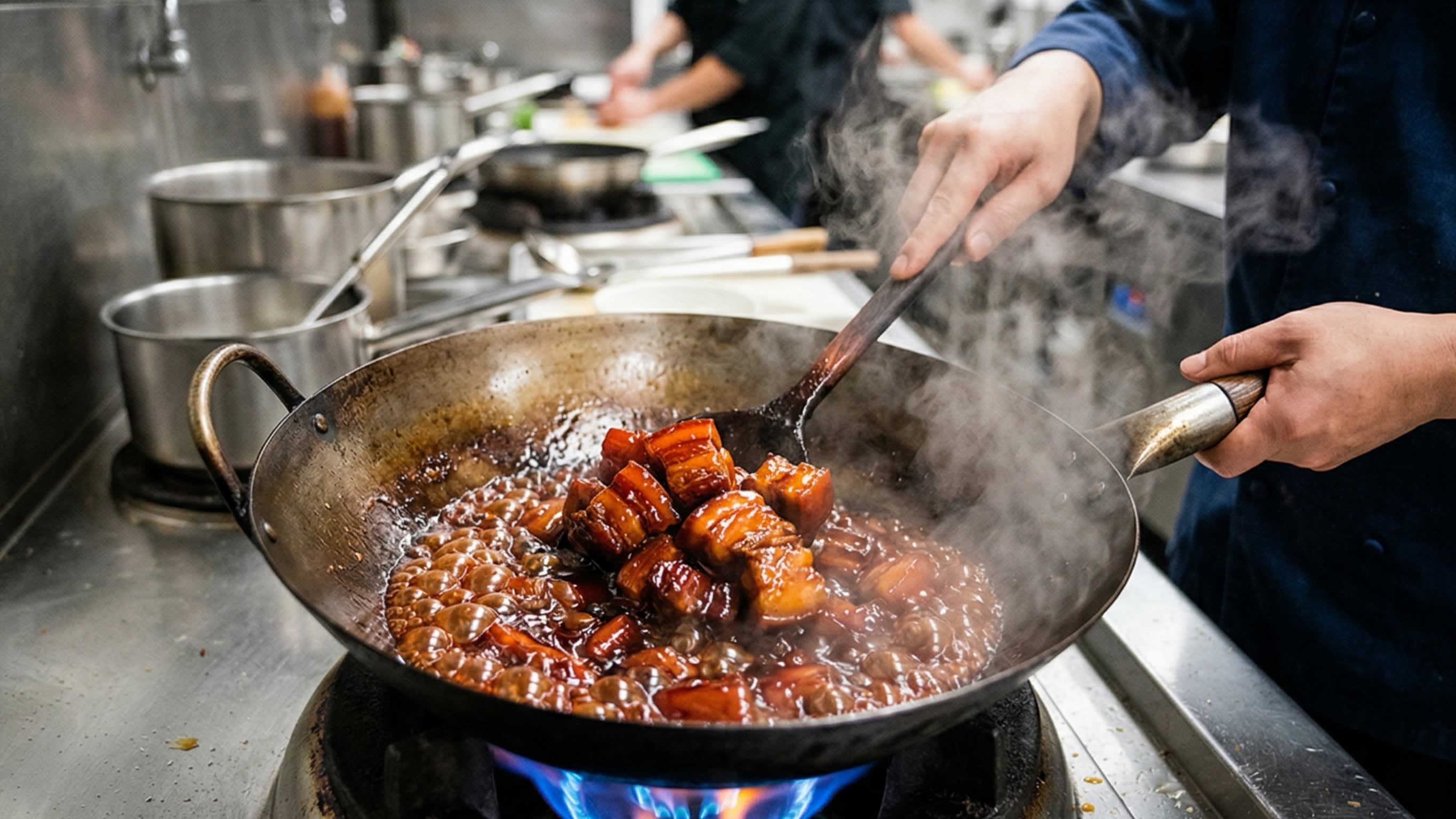
6. The Final Reduction (大火收汁 - Dàhuǒ shōuzhī): This is the grand finale. Remove the lid. There should still be some liquid left. Turn the heat up to maximum high! Stir the pork gently but constantly. As the water rapidly evaporates, the melted gelatin from the pork skin and the caramelized sugars will combine. Within 3 to 5 minutes, the liquid will transform into a thick, glossy, sticky syrup that heavily coats every piece of pork.
7. Serve: Turn off the heat. Plate this breathtaking, glowing masterpiece immediately. Garnish with a sprinkle of fresh scallions. It is absolutely mandatory to serve this with a massive bowl of steamed white rice to soak up that unbelievable, sticky, savory-sweet glaze!
💡 Troubleshooting & Pro Tips
- My sugar burned and turned bitter! Chao Tangse happens very fast. The transition from perfect amber foam to burnt, bitter black smoke takes about 3 seconds. If you are a beginner, use very low heat. If it burns, throw it away, wipe the wok, and start over—burned sugar will ruin the entire dish.
- Why is my pork tough and chewy? You broke the temperature rule. You either washed the hot blanched pork with freezing cold tap water, or you added cold water to the wok in Step 5 to braise the meat. Cold water causes the proteins to seize permanently. Always use warm or boiling water!
- It’s not red enough. Make sure you achieved a good caramelization with the sugar, and ensure you are using a high-quality Dark Soy Sauce (老抽). The combination of caramelized sugar and dark soy sauce is what creates that iconic red-mahogany glow.
📦 Shop Authentic Braising Essentials
To capture the authentic, complex, melt-in-your-mouth flavor of traditional Chinese braising, upgrading your pantry with these specific ingredients is non-negotiable. (As an Amazon Associate, ChinaCurator earns from qualifying purchases.)
- Yellow Rock Sugar (老冰糖) - The absolute soul of the dish. It creates a shinier, redder, and cleaner caramel glaze than regular white sugar.
- Pearl River Bridge Dark Soy Sauce (老抽) - The mandatory ingredient for adding profound depth and helping achieve the deep mahogany color.
- Premium Whole Star Anise (八角) - The signature aromatic backbone of Chinese red-braised dishes.
- Traditional Carbon Steel Wok - The ultimate pan for searing the fat, caramelizing the sugar, and performing the rapid, high-heat sauce reduction.