🍍 Introduction: The Tropical Takeout Legend
When it comes to the Mount Rushmore of Chinese-American takeout, one flavor profile universally dominates the palate: Sweet and Sour. And sitting proudly at the top of that tropical, tangy mountain is the legendary Pineapple Chicken (菠萝鸡 - Bōluó Jī).
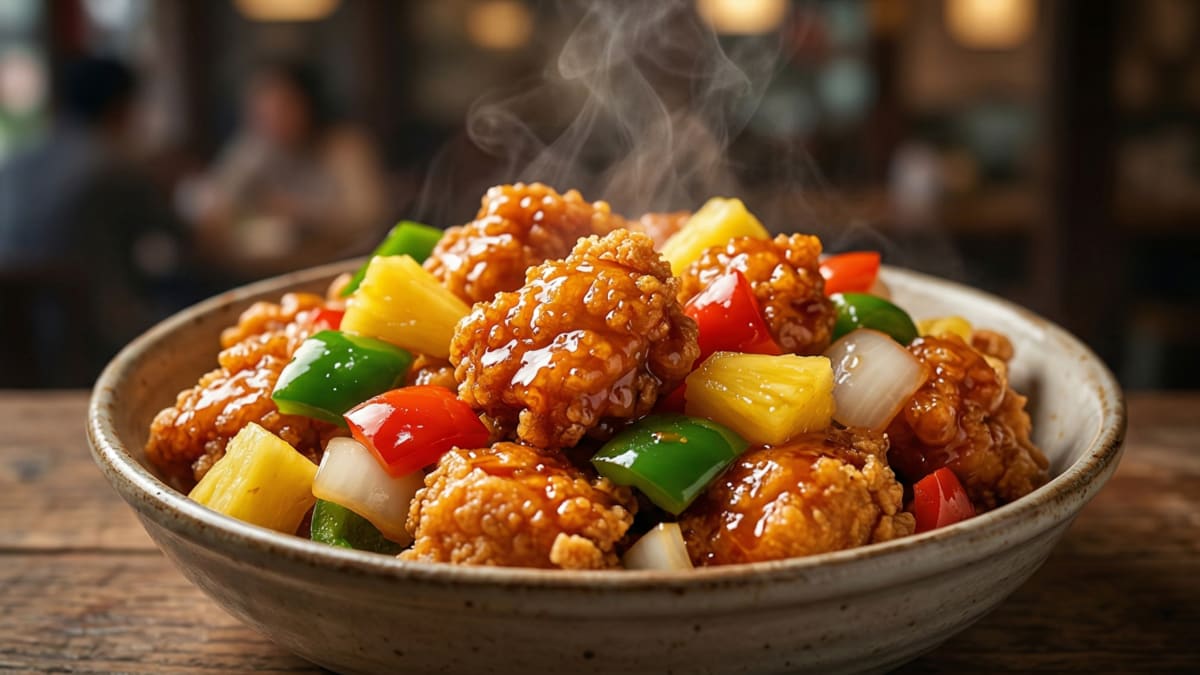
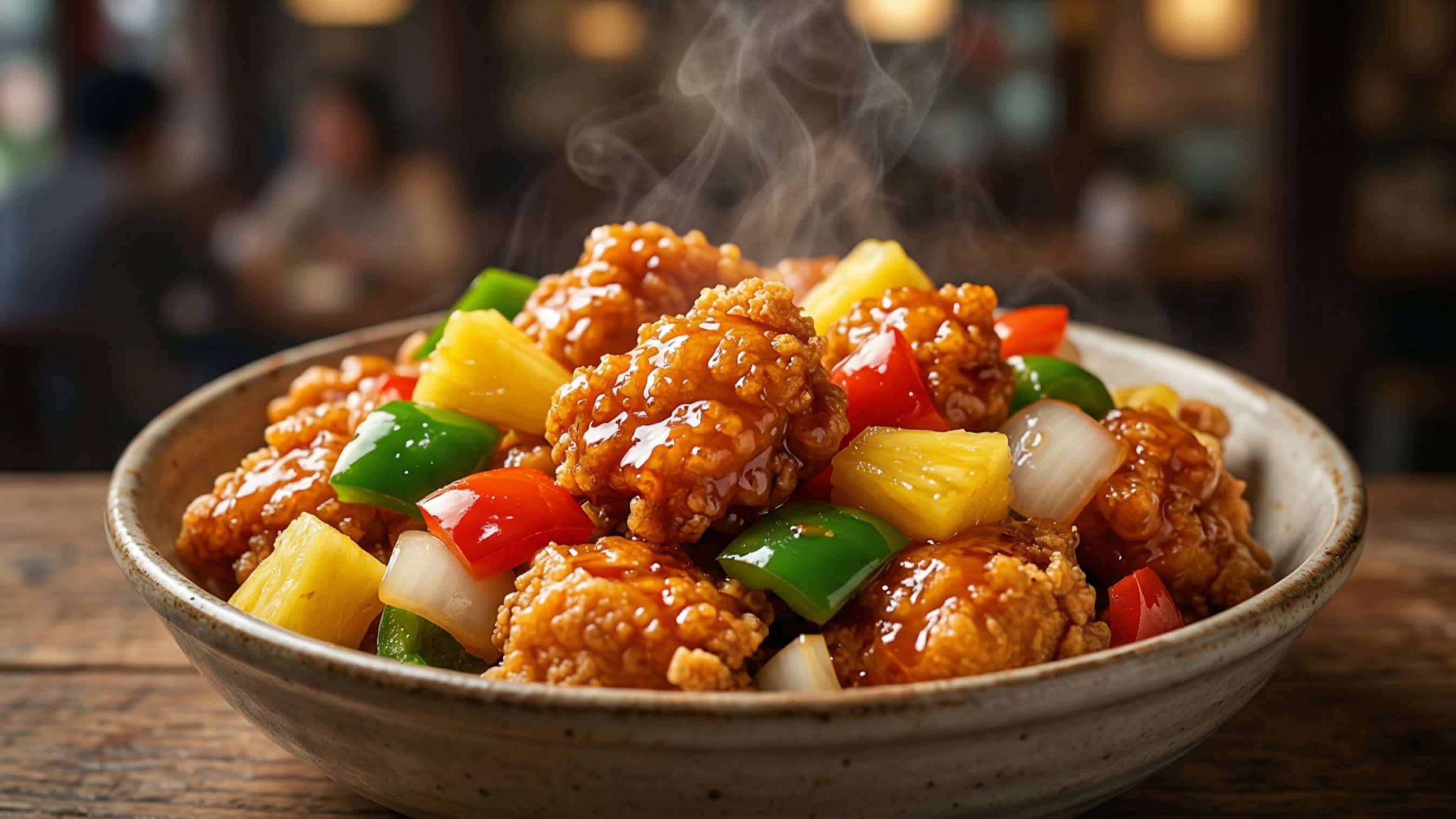
This dish is an absolute masterpiece of sensory contrast. When executed perfectly, it features massive, juicy chunks of chicken encased in a shatteringly crisp, glass-like crust. These golden nuggets are tossed in a blazing hot wok with vibrant, crunchy bell peppers, sweet white onions, and bright, explosive chunks of juicy pineapple. Everything is brought together by a thick, highly glossy, sticky sweet and sour glaze that strikes a flawless balance between rich savory umami, fruity tartness, and caramelized sweetness.
Unfortunately, its legendary status has been heavily tarnished by lazy mall food courts. If you order Pineapple Chicken today, you are likely to receive a tragic, soggy box of heavily breaded, rubbery meat swimming in a cloyingly sweet, neon-red, artificial syrup that tastes more like a melted lollipop than a savory dinner.
Today, we are taking this beloved classic back to its authentic roots. We are going to banish the artificial food coloring forever. We will decode the biological science of the pineapple enzyme, reveal the exact restaurant ratios for the ultimate Sweet and Sour sauce, and teach you the unbreakable rules of Chinese deep-frying to guarantee a crust that stays crispy even after it is drenched in sauce!
🔬 The Culinary Science: The Pineapple Enzyme Warning
The biggest debate among home cooks making this dish is: “Should I use fresh pineapple or canned pineapple?” For the absolute best, most vibrant, and complex tropical flavor, Fresh Pineapple (新鲜菠萝) is the undisputed king. However, fresh pineapple harbors a powerful biological secret that can completely destroy your dish if you are not careful: an enzyme called Bromelain (菠萝蛋白酶).
Bromelain is a highly aggressive proteolytic enzyme, meaning it breaks down meat proteins. If you try to be clever and use fresh pineapple juice as a marinade for your raw chicken, the bromelain will literally digest the chicken muscle fibers. If left for more than 30 minutes, your chicken will turn into a mushy, powdery, inedible paste!
- (Note: The canning process heats the pineapple and destroys this enzyme, which is why canned juice is safe for marinades).
The Restaurant Solution: We do not use fresh pineapple to marinate the meat. Instead, we use a simple soy sauce and egg white marinade. We save the fresh, juicy chunks of pineapple for the very last 30 seconds of wok-tossing. The quick heat slightly caramelizes the fruit’s natural sugars while preserving its bright, explosive, tangy crunch, providing a burst of acidity that cuts through the rich, deep-fried chicken perfectly!
🍗 The Indestructible Crust: “Guahu” and Double Frying
If your chicken turns soggy the second the sweet and sour sauce touches it, you are using the wrong coating.
Do not use heavy Western flour or thick, bready batters. To achieve a shell that stays crunchy for an astonishing amount of time, we rely entirely on Cornstarch (玉米淀粉). When the chicken chunks are massaged with egg white and then tossed in dry cornstarch (a technique known as 挂糊 - Guàhú), the starch creates a microscopic, impenetrable barrier.
Furthermore, you must utilize the Fùzhá (复炸 - Double Fry) method:
- The First Fry (350°F / 175°C): Cooks the raw chicken all the way through and lightly sets the pale cornstarch shell.
- The Second Fry (400°F / 200°C): After letting the chicken rest, you drop it back into screaming hot oil for just 60 seconds. This flash-fry violently drives out any remaining surface moisture, turning the crust dark golden-brown and achieving that legendary Wàisū lǐnèn (外酥里嫩 - shatteringly crisp outside, tender inside) texture.
🥫 Decoding the “Tang Cu” (糖醋): The Authentic Sauce
The vibrant, reddish-orange glaze of authentic Pineapple Chicken does not come from red dye #40. It is a carefully calibrated balance of flavors known in Chinese cuisine as Tángcù (糖醋 - Sweet and Sour).
The foundation of this sauce relies on the umami and subtle acidity of high-quality Tomato Ketchup (番茄酱). To elevate it from a simple dipping sauce to a complex culinary glaze, you must balance the ketchup with Rice Vinegar (米醋) for a sharp, clean tang, Light Soy Sauce (生抽) for a deep savory backbone, and brown sugar to aid in caramelization. A splash of fresh (or canned) pineapple juice ties the whole tropical profile together.
🛒 Ingredients List
The Chicken & The Crispy Coating:
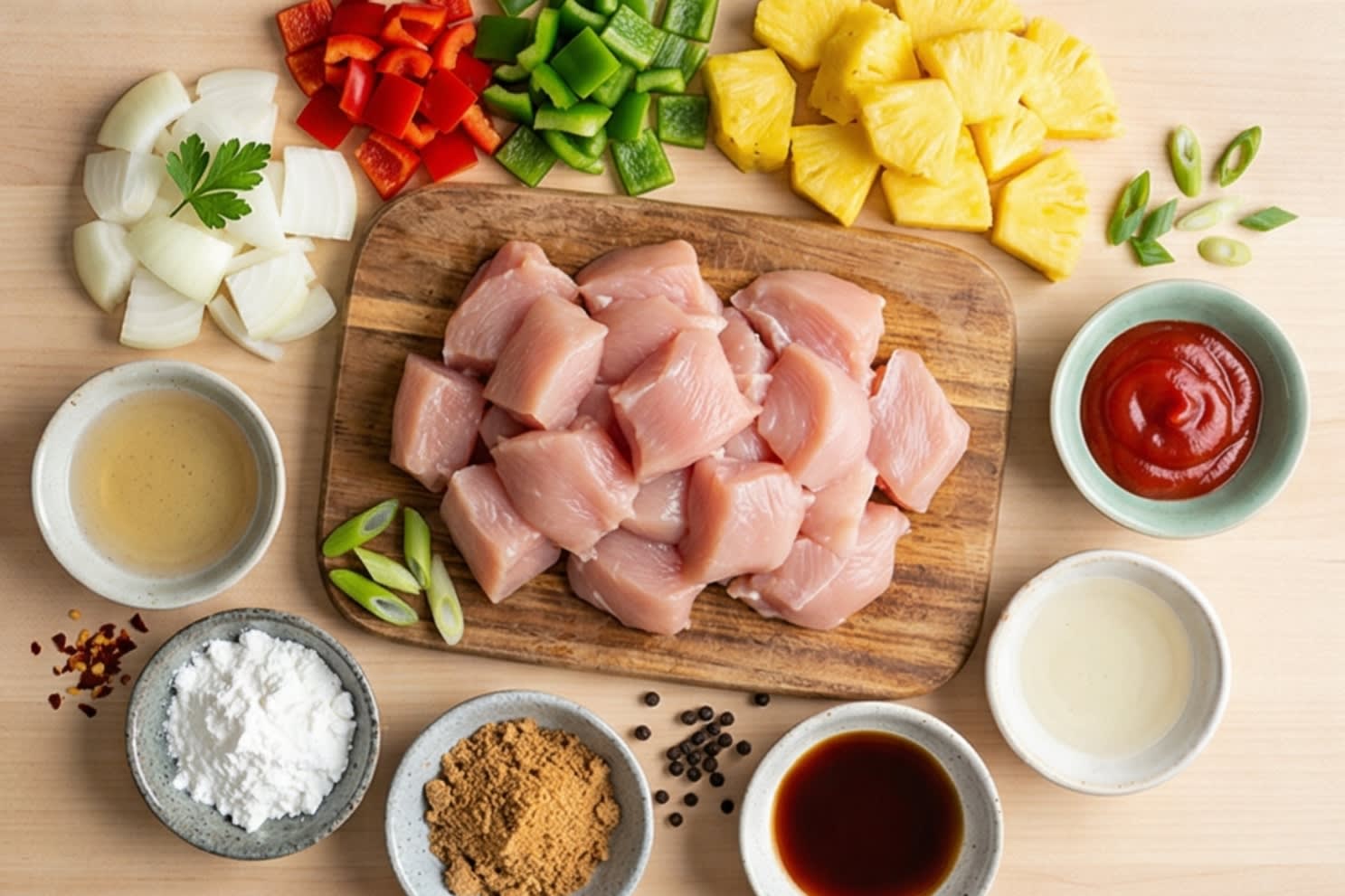
- 1.5 lbs (700g) Boneless, Skinless Chicken Thighs or Breasts. Cut into large, 1.5-inch bite-sized chunks.
- 1 tbsp Light Soy Sauce
- 1 tbsp Shaoxing Cooking Wine
- 1/2 of an Egg White (蛋清) - The essential glue for the starch!
- 1 cup Cornstarch (玉米淀粉)
- 4 cups high-heat Cooking Oil (peanut, canola, or vegetable oil)
The Tropical Mix (配菜):
- 1.5 cups Fresh Pineapple Chunks (菠萝块). Canned works in a pinch, but fresh is vastly superior!
- 1/2 Green Bell Pepper (青椒), cut into 1-inch squares
- 1/2 Red Bell Pepper (红椒), cut into 1-inch squares
- 1/2 White Onion (洋葱), cut into 1-inch squares
The Ultimate Sweet & Sour Glaze (糖醋汁):
- 1/3 cup Tomato Ketchup (番茄酱)
- 1/4 cup Rice Vinegar (米醋) or White Vinegar
- 1/4 cup Pineapple Juice (Use the juice collected from cutting the fresh pineapple, or from a can)
- 3 tbsp Brown Sugar or White Sugar (adjust based on the sweetness of your pineapple)
- 1 tbsp Light Soy Sauce (生抽)
- 1 tsp Cornstarch mixed with 1 tbsp water (for the slurry)
🍳 Step-by-Step Instructions
1. Prep and Coat the Chicken (挂糊): Place your large chicken chunks into a bowl. Add the 1 tbsp of light soy sauce, Shaoxing wine, and the egg white. Massage aggressively until the chicken absorbs all the liquid. In a large, wide bowl, add the 1 cup of dry cornstarch. Working in small batches, drop the chicken pieces into the starch. Toss them thoroughly, using your fingers to press the starch firmly into the meat, ensuring every single crevice is coated. Shake off the excess starch so it doesn’t burn in your frying oil.
2. Mix the Sweet & Sour Glaze: In a small bowl, whisk together the ketchup, rice vinegar, pineapple juice, brown sugar, and light soy sauce. Stir until the sugar is mostly dissolved. Keep your cornstarch slurry in a separate tiny bowl.
3. The First Fry (Setting the Crust): Heat your 4 cups of oil in a wok or a heavy Dutch oven to 350°F (175°C). Carefully drop the coated chicken chunks into the hot oil one by one. Do not overcrowd the pan; fry in two batches! Let them fry undisturbed for 60 seconds to set the crust, then gently separate them with chopsticks. Fry for a total of 4 to 5 minutes until pale, firm, and cooked through. Remove and drain on a wire rack.
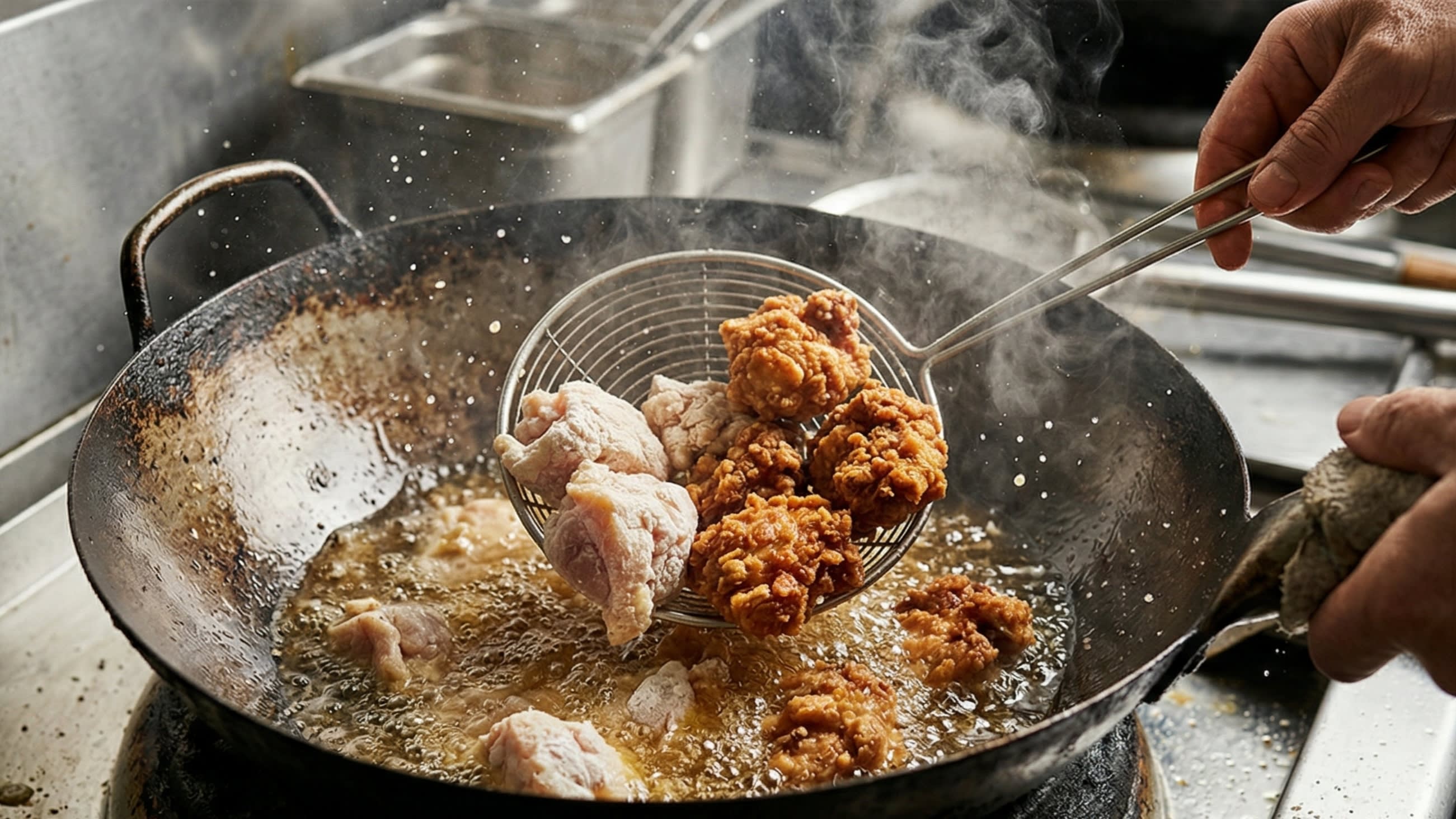
4. The Second Fry (复炸 - Maximum Crunch): Turn the heat up to high and let the oil hit 400°F (200°C). Carefully drop all the rested chicken back into the screaming hot oil. Fry for exactly 60 to 90 seconds. You will see the chicken turn a glorious, deep, dark golden brown. Scoop them out immediately and drain well. They are now shatteringly crisp!
5. Blister the Veggies (断生): Carefully pour all the hot frying oil out of the wok, leaving just 1 tablespoon of oil. Turn the heat down to medium-high. Add the white onions and bell peppers. Toss aggressively for 45 seconds. You want them to be vibrant and slightly blistered but still retain a massive, refreshing crunch (断生 - Duan Sheng).
6. Caramelize the Sauce: Add the fresh pineapple chunks to the wok and toss for 15 seconds. Pour your prepared sweet and sour sauce mixture into the wok over the vegetables. Let it come to a furious boil. Give your cornstarch slurry a quick stir and pour it into the bubbling sauce. Within 15 seconds, the sauce will thicken dramatically into a highly glossy, sticky, reddish-orange syrup.
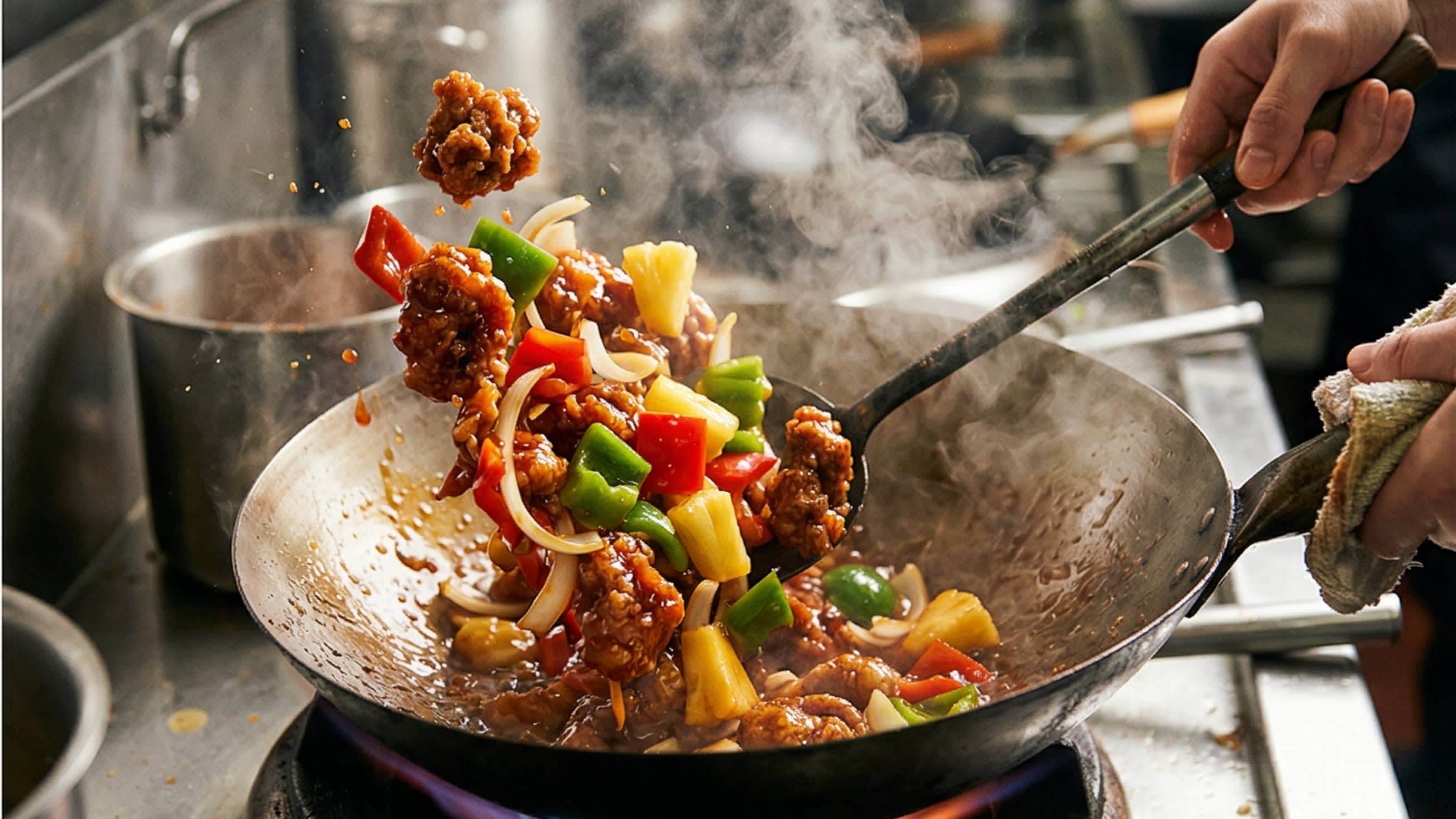
7. The Final Toss: The exact second the sauce is thick and glossy, turn off the heat! Dump your crispy double-fried chicken into the wok. Toss everything aggressively and quickly for 10 seconds. The goal is to lacquer the chicken with the sticky glaze without letting it sit in the wet sauce for too long.
8. Serve: Plate immediately! The contrast of the hot, crispy, savory chicken with the bright, juicy bursts of fresh pineapple is incredible. Serve piping hot alongside a massive bowl of steamed Jasmine rice to soak up that glorious sticky glaze!
💡 Troubleshooting & Air Fryer Tips
- My chicken turned soggy immediately! You made one of two mistakes. Either you didn’t fry the chicken at a high enough temperature during the second fry (400°F is crucial to drive out surface moisture), or your sauce was too watery. The sweet and sour sauce must be reduced and thickened into a tight syrup with the cornstarch slurry before the chicken goes back in. If the sauce is a watery soup, it will destroy the crust instantly.
- The sauce is too sweet or too sour. The acidity of fresh pineapples varies wildly! Always taste your sauce mixture before pouring it into the wok. If your pineapple is very tart, add an extra pinch of sugar. If it is overly sweet, add an extra splash of rice vinegar. Balance is key in Tang Cu (Sweet and Sour) cooking.
- Can I make this in an Air Fryer? Absolutely! Toss your marinated chicken in the dry cornstarch, then spray the chunks generously with cooking oil spray until no dry white powder remains. Air fry at 400°F (200°C) for 12-15 minutes, flipping halfway, until golden and crispy. Then, toss them in the wok with your thickened sauce and fresh pineapple!
📦 Shop Authentic Asian Pantry Essentials
To capture the authentic, complex, sweet-and-sour flavor profile of a high-end Chinese restaurant, upgrading your pantry is highly recommended. (As an Amazon Associate, ChinaCurator earns from qualifying purchases.)
- Pearl River Bridge Light Soy Sauce (生抽) - The absolute soul of the savory background notes. It grounds the sweet and sour glaze, preventing it from tasting like candy.
- Marukan Genuine Brewed Rice Vinegar (米醋) - Essential for providing a clean, smooth, and authentic tang that harsh Western white vinegar cannot replicate.
- Asian Stainless Steel Spider Strainer - The best tool for safely and rapidly scooping large batches of crispy chicken out of boiling hot oil without losing the delicate batter.
- Traditional Carbon Steel Wok - The ultimate vessel for deep frying and rapidly boiling the glossy, sticky caramel glaze to perfection.