🥢 Introduction: The Crown Jewel of the Dim Sum Cart
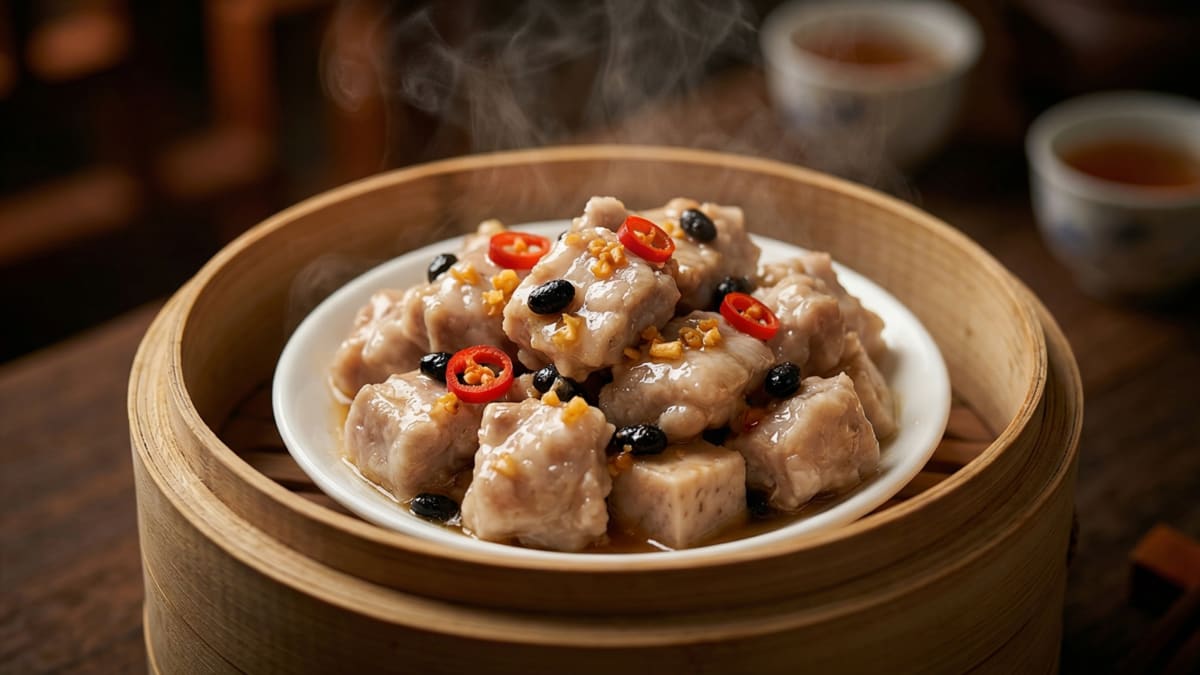
Imagine sitting in a grand, bustling Cantonese teahouse in Hong Kong on a Sunday morning. The air is thick with the aroma of jasmine tea and sweet roasted pork. A metal cart rolls by, stacked high with traditional bamboo steamers. You point, the server lifts a wooden lid, and a cloud of deeply savory, garlicky steam escapes. Inside lies a small plate of the most iconic appetizer in Southern China: Steamed Pork Ribs with Black Bean Sauce (豉汁蒸排骨 - Chǐzhī Zhēng Páigǔ).
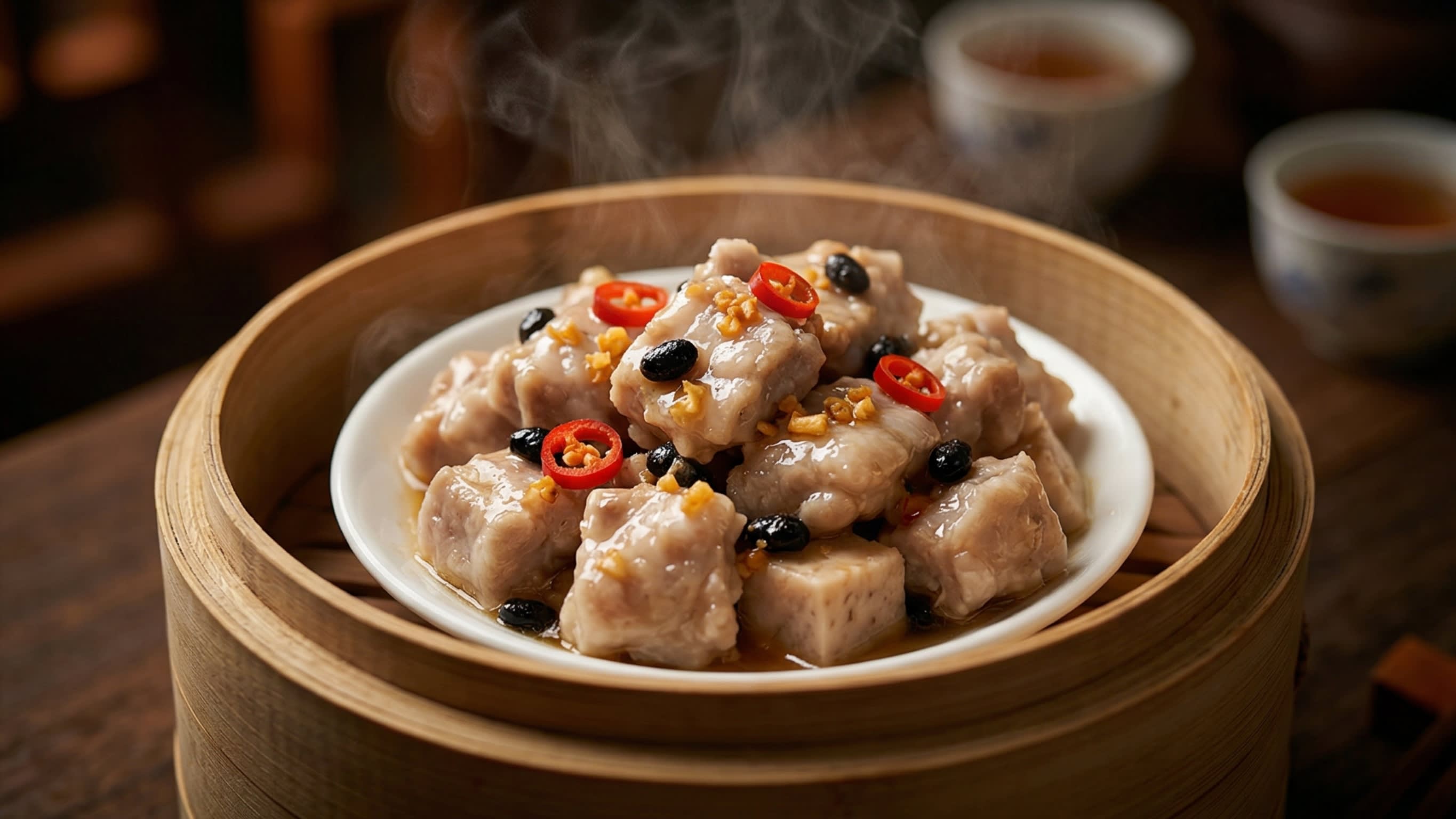
Unlike Western-style barbecue ribs, which are cooked in massive, sticky, smoke-heavy racks, Dim Sum spare ribs are an exercise in delicate refinement. The ribs are chopped horizontally across the bone into tiny, bite-sized nuggets. When executed perfectly, the meat is pale, snow-white, and glistening. The texture is breathtaking: it is incredibly slippery and velvety on the outside, yet juicy, bouncy, and tender enough to effortlessly slip right off the bone. The flavor is a complex, savory umami explosion driven by fermented black soybeans, garlic, and a hint of sweetness.
However, when Western home cooks attempt to recreate this dish, it often ends in culinary heartbreak. The ribs come out looking dark grey and bloody. The meat is tough, rubbery, and impossible to chew. And the signature “slippery” texture is completely missing.
Today, we are going to pull back the curtain on the Dim Sum kitchen. We will teach you the intense “washing” technique required to purify the meat, the precise chemical order of the marinade to achieve that legendary velvety texture, and how to awaken the fermented magic of the black bean.
🧼 The “Snow White” Secret: Purifying the Pork (去血水)
If your steamed ribs look dark brown or have ugly, coagulated grey blood pooling at the bottom of the plate, you missed the most important step in Cantonese cooking.
In Western cooking, you are often told never to wash your meat. In Chinese cooking, when you want a clean, pure, and elegant steamed dish, aggressively washing the meat is absolutely mandatory. We must remove the residual blood and myoglobin, a process known as Qù Xuèshuǐ (去血水 - Removing the bloody water).
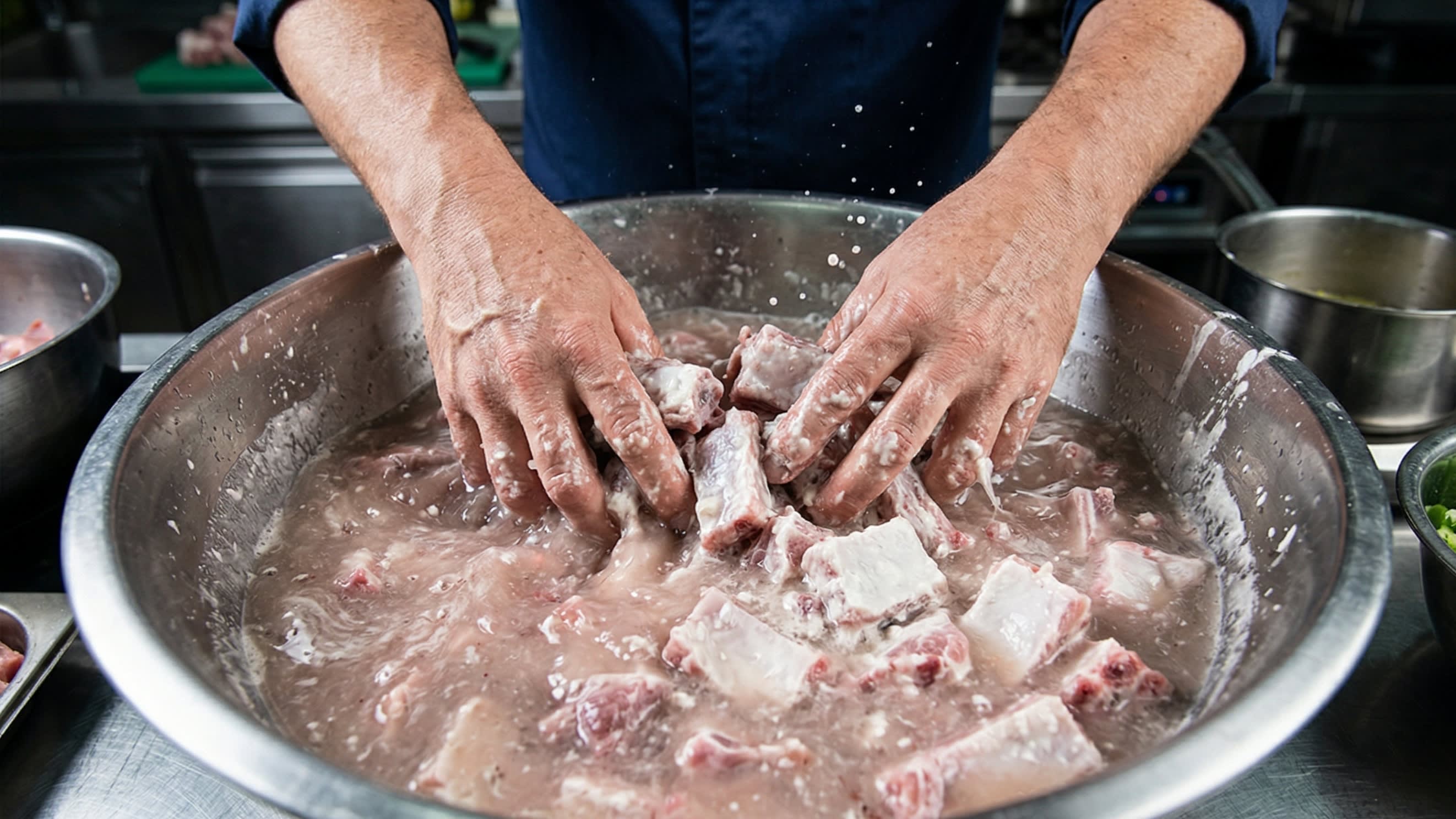
The Restaurant Technique: You cannot just rinse the ribs under the tap. You must place the raw, chopped ribs in a bowl and add a generous spoonful of flour or cornstarch and a splash of water. You use your hands to aggressively massage and scrub the ribs. The dry starch acts as an abrasive sponge, pulling the trapped blood and impurities out of the meat fibers. After massaging, you rinse the ribs under cold running water for 10 to 15 minutes. By the end of this process, the pork will miraculously turn pale and snow-white. This guarantees that your final dish will have zero gamey, “porky” odor and will look as elegant as a high-end restaurant’s.
Crucial Step: After washing, you must use paper towels to squeeze the ribs until they are bone-dry. If they are wet, the marinade will slide right off!
🛡️ The Velvet Shield: The Science of “Shang Jiang” (上浆)
How do Dim Sum restaurants achieve that incredibly smooth, slippery, and tender mouthfeel? It relies on a marinade technique called Shàngjiāng (上浆 - Velveting/Coating).
But it is not just about the ingredients; it is about the exact order in which you add them:
- The Flavor Base: First, you massage the ribs with sugar, salt, and soy sauce. The salt penetrates the meat, breaking down the proteins and drawing in the flavors.
- The Water: You massage in a splash of water. The broken-down proteins act like a sponge, absorbing the water to make the meat juicy.
- The Shield (生粉 - Shēngfěn): Next, you add a heavy coating of Potato Starch or Cornstarch. This creates a microscopic, sticky gel barrier around the meat, locking the water and flavor inside.
- The Seal: Finally, you add a tablespoon of cooking oil. This oil coats the starch barrier, ensuring the ribs don’t clump together in the steamer and providing that incredibly rich, smooth, and slippery (滑嫩 - Huánèn) texture.
🧄 Activating the Black Bean (炒香豆豉)
The soul of this dish is Dòuchǐ (豆豉 - Fermented Black Soybeans). They are small, black, wrinkled beans that possess a deeply savory, salty, and slightly funky umami profile.
Many home cooks just throw raw black beans into the marinade. This is a mistake! To unlock their full potential, you must lightly rinse them, gently mash them with the back of a knife, and then briefly sauté them in hot oil with minced garlic. This heat activation releases their trapped essential oils, transforming the raw funkiness into a spectacular, mouth-watering aroma that will perfume the entire steamer.
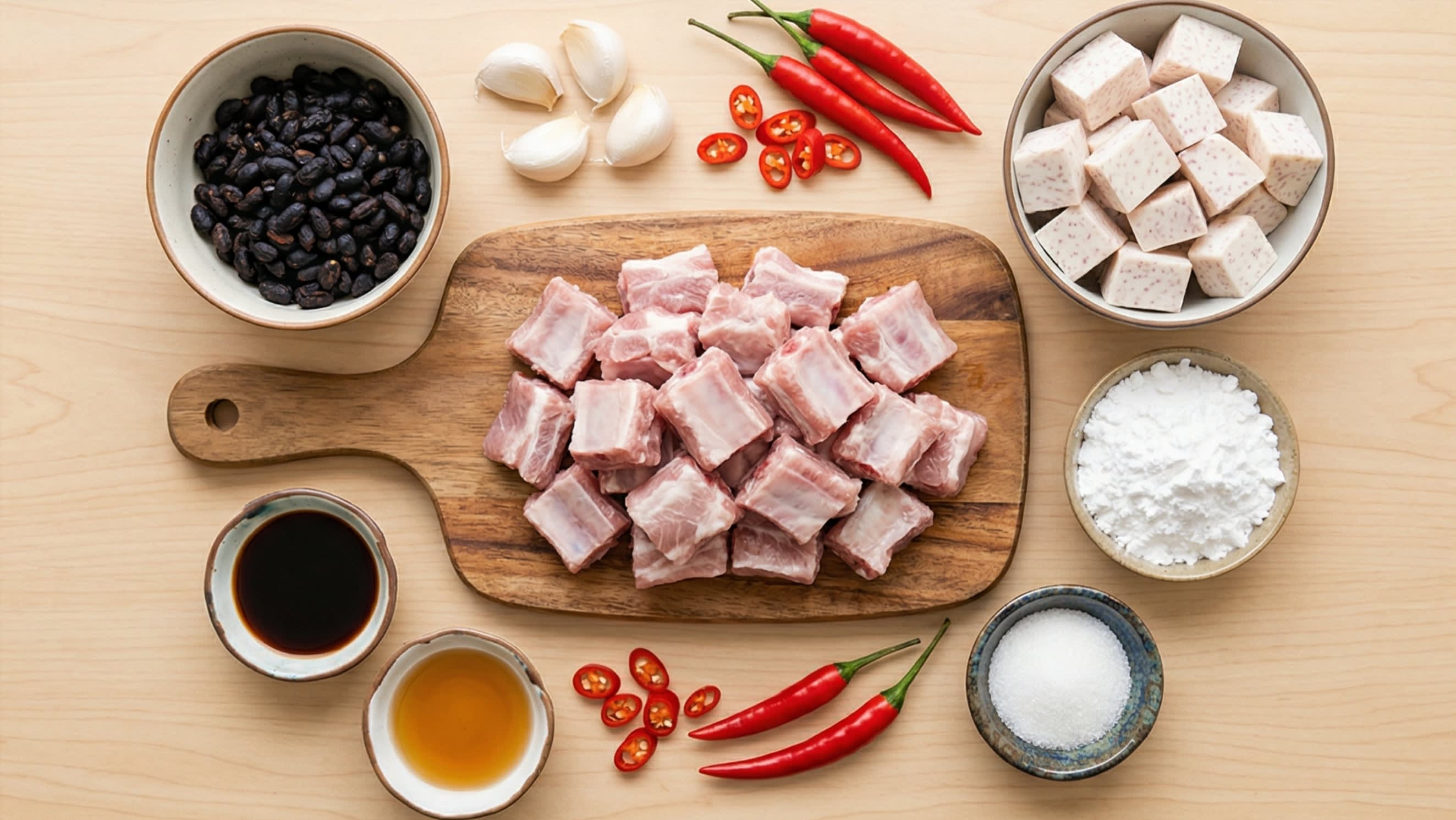
🛒 Ingredients List
The Meat & Prep:
- 1 lb (450g) Pork Spare Ribs. Ask your butcher to cut them horizontally across the bone into 1-inch (2.5cm) bite-sized strips.
- 1 tbsp All-Purpose Flour or Cornstarch (for washing the meat)
The Base Bed (Optional but Traditional):
- 1 cup Taro Root (芋头) or Kabocha Squash (南瓜), cut into small 1-inch cubes. This sits under the ribs and absorbs all the incredible pork juices!
The Black Bean Garlic Paste:
- 1.5 tbsp Fermented Black Beans (豆豉), lightly rinsed, patted dry, and roughly chopped
- 4 cloves Garlic, very finely minced (蒜末)
- 1 tbsp Cooking Oil (to sauté the paste)
The Velveting Marinade (上浆):
- 1 tsp Sugar (糖) - Crucial for balancing the salty black beans.
- 1/2 tsp Salt
- 1 tbsp Light Soy Sauce (生抽)
- 1 tbsp Shaoxing Cooking Wine (绍兴酒)
- 1/4 tsp White Pepper powder
- 1.5 tbsp Potato Starch (土豆淀粉) or Cornstarch (玉米淀粉)
- 1 tbsp Cooking Oil (for the final seal)
- 1 fresh Red Chili (红辣椒), sliced into thin rings (for garnish and slight heat)
🍳 Step-by-Step Instructions
1. The “Snow White” Wash (抓洗去血水): Place the chopped ribs in a large bowl. Add 1 tbsp of flour and 2 tbsp of water. Use your hands to aggressively massage and scrub the ribs for 2 minutes until the liquid turns a dark, muddy pink. Transfer the ribs to a colander and rinse them under running cold water for 10 minutes until the meat looks pale white. CRITICAL: Drain the ribs and use multiple paper towels to squeeze and pat them completely, 100% dry.
2. Activate the Aromatics (炒香豆豉): Heat a small pan over medium-low heat. Add 1 tbsp of cooking oil, the roughly chopped fermented black beans (豆豉), and the minced garlic. Sauté gently for 60 seconds until the kitchen smells incredibly fragrant. Do not burn the garlic! Remove from heat and let it cool completely.
3. The Velveting Marinade (上浆 - Order Matters!):
- Place the bone-dry ribs in a clean bowl. Add the sugar, salt, white pepper, light soy sauce, and Shaoxing wine. Massage vigorously for 2 minutes until the meat has absorbed all the liquid and feels sticky.
- Add the cooled Black Bean Garlic Paste. Mix well.
- Sprinkle the Potato Starch evenly over the meat. Massage again until every rib is coated in a thick, sticky, white paste.
- Finally, pour in 1 tbsp of cooking oil and gently toss to seal the ribs. Cover and marinate in the fridge for at least 30 minutes.
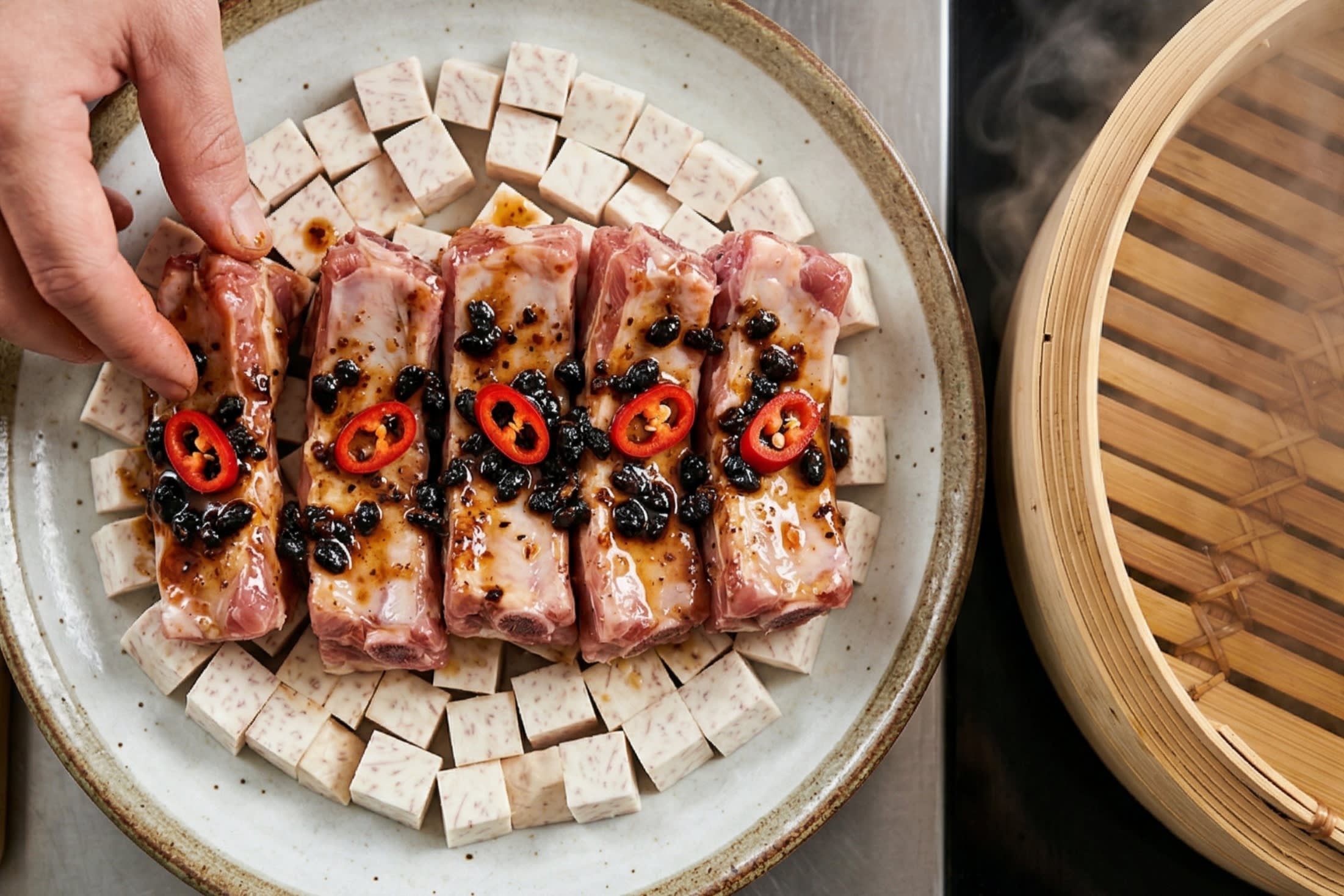
4. The Plating Architecture: Spread the cubed Taro Root (or squash) in a single layer at the bottom of a heat-proof ceramic plate with a slight lip. Take your marinated ribs and lay them in a single layer on top of the taro. Do not stack the ribs in a giant mountain! If they are piled too high, the steam cannot penetrate, and the meat will cook unevenly. Scatter the sliced red chili rings over the top.
5. High Heat Steaming (旺火足气): Set up a bamboo steamer over a wok, or a metal steaming rack in a large pot. Fill with plenty of water and bring it to a furious, rolling boil. Carefully place the plate of ribs into the steamer. Cover with a tight-fitting lid. Steam over high heat for exactly 12 to 15 minutes (depending on the size of your ribs). Do not open the lid during cooking!
6. Serve: Carefully remove the blazing hot plate from the steamer. The ribs should be curled, glistening, and coated in a translucent, savory sauce. Garnish with a tiny sprinkle of fresh chopped scallions. Serve immediately right off the plate, and make sure to eat the incredibly flavorful, sauce-soaked taro underneath!
💡 Troubleshooting & Pro Tips
- My meat is tough and chewy! Two possibilities: You stacked the ribs in a huge pile, so the steam couldn’t reach the center, requiring you to overcook the outside to cook the inside. Or, you steamed them over low heat. Dim Sum ribs require a short, violent blast of high-pressure steam (旺火足气) to snap the meat into a tender, juicy state.
- The sauce is watery and didn’t stick to the ribs. You didn’t dry the ribs properly in Step 1. If the ribs are wet, the starch cannot adhere to the meat, and it simply washes away into a watery puddle during steaming. Paper towels are your best friend!
- Why did my taro turn to mush? If you cut your taro or squash pieces too small, they will completely disintegrate during the 15-minute high-heat steam. Keep them chunky (about 1 inch) so they maintain their structural integrity while absorbing the pork fat.
📦 Shop Authentic Dim Sum Essentials
To capture the authentic, complex, savory flavor and the perfect steaming environment of a true Cantonese teahouse, upgrading your kitchen is highly recommended. (As an Amazon Associate, ChinaCurator earns from qualifying purchases.)
- Yangjiang Preserved Black Beans (阳江豆豉) - The absolute soul of the dish. These fermented soybeans provide the intense, earthy, savory umami bomb that defines this classic.
- Premium Potato Starch (土豆淀粉) - Superior to cornstarch for steaming! It provides a clearer, more translucent, and far more slippery, velvety coating for the meat.
- Traditional 10-inch Bamboo Steamer - The essential vessel. Bamboo absorbs excess condensation, preventing water from dripping down and ruining your delicate meat glaze.
- Heavy Carbon Steel Cleaver - The mandatory tool if you want to cleanly chop pork ribs horizontally through the bone at home.