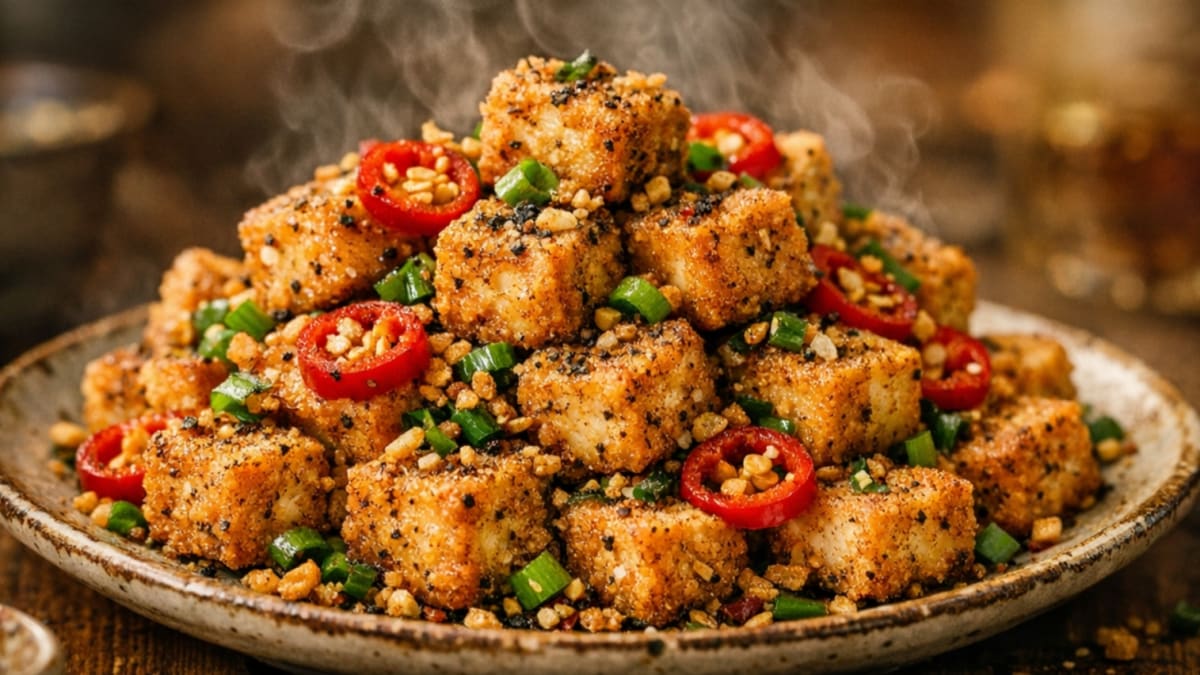
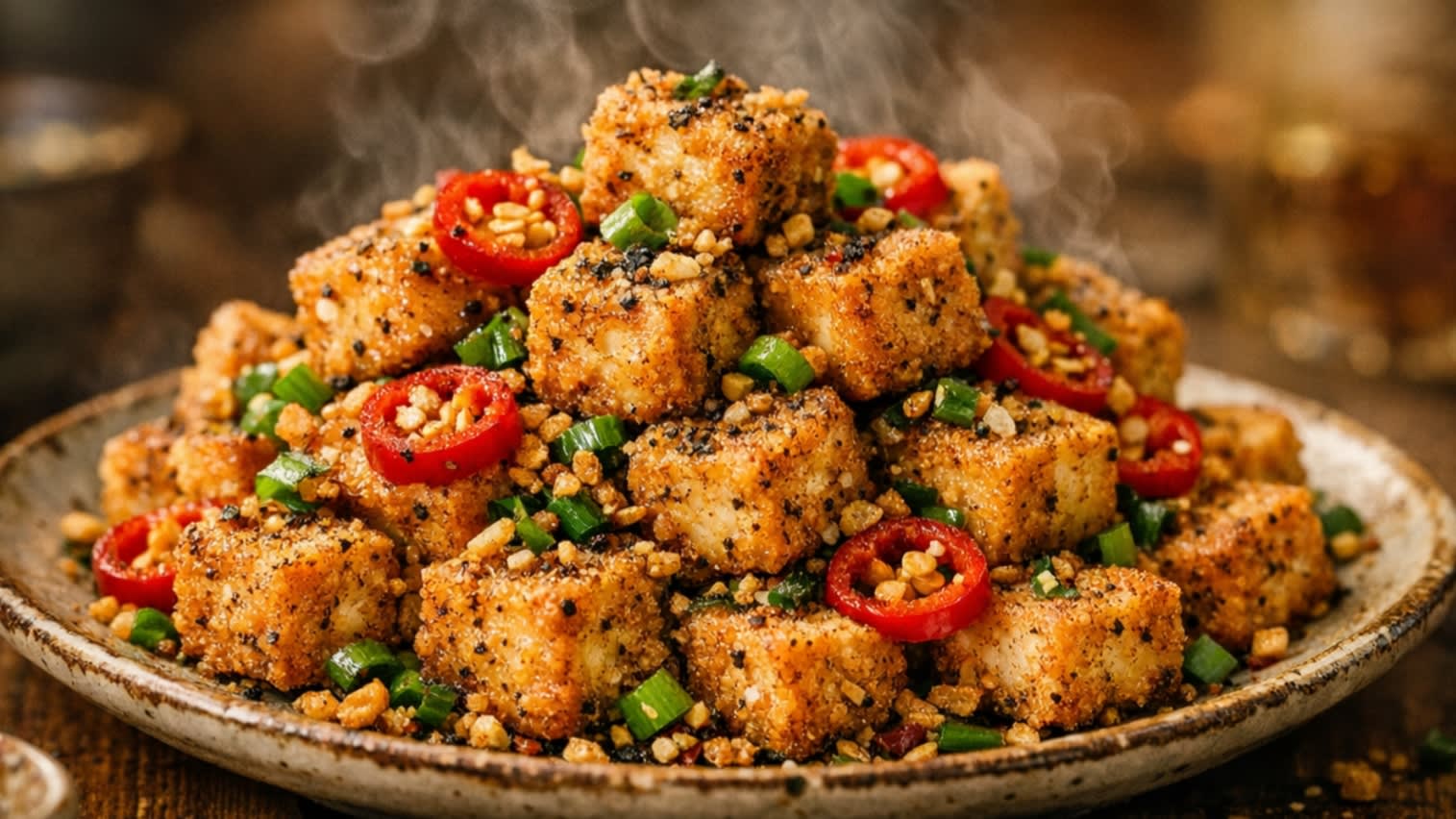
🧊 Introduction: The Undisputed King of Vegan Appetizers
When you sit down at a traditional Cantonese Dim Sum parlor or a bustling Chinese seafood restaurant, there is one appetizer that is universally adored by hardcore meat-eaters and strict vegans alike. It is a dish so highly addictive, texturally perfect, and intensely flavorful that a single plate is rarely enough.
We are talking about the legendary Salt and Pepper Tofu (椒盐豆腐 - Jiāoyán Dòufu).
When executed flawlessly by a master wok chef, this dish is a miracle of culinary contrast. The exterior of the golden tofu cube is encased in a shatteringly crisp, incredibly light, and craggy crust. The moment your teeth break through that delicate shell, you are met with a piping hot, pillowy soft, incredibly silky interior that melts in your mouth. The entire cube is generously dusted in a deeply roasted, earthy, and slightly numbing spice blend, then tossed with explosive aromatics like sizzling garlic, fresh scallions, and fiery red chilies. It is the ultimate expression of the Chinese culinary concept Wàisū lǐnèn (外酥里嫩 - Crispy on the outside, tender on the inside).
However, replicating this magic at home is notoriously frustrating. Western home cooks often end up with a tragic, soggy mess. The batter falls off in the frying pan, the tofu turns into dense, rubbery blocks, or the entire dish tastes like a bland, watery sponge.
Today, we are going to fix all of that. We will unveil the strict rules of tofu selection, the specific Asian starch required for an indestructible crust, and the authentic roasted spice blend that elevates this humble soybean block into an absolute umami bomb.
🧱 The Foundation: Choosing and Pressing the Tofu
The first massive mistake people make is buying the wrong type of tofu. If you buy “Silken” (嫩豆腐) or “Soft” tofu, it will completely disintegrate the moment it touches the hot oil. If you buy “Extra-Firm” tofu that has been vacuum-sealed into a dense brick, the inside will be too tough and rubbery, ruining the “pillowy soft” contrast.
You must buy standard Firm Tofu (老豆腐 / 北豆腐 - Lǎo dòufu), usually sold submerged in a plastic tub of water. It has enough structural integrity to hold its shape during frying, but still retains a high water content for a soft interior.
The Physics of Pressing (压水 - Yā shuǐ)
Even Firm Tofu contains too much water straight out of the package. If you fry it immediately, the escaping steam will blow the crust right off the tofu. You must press it! Wrap the block of tofu in paper towels or a clean kitchen towel. Place a heavy cutting board or a cast-iron skillet on top of it for 15 to 20 minutes. This gentle pressure slowly squeezes out the excess surface moisture. By removing this water, you not only ensure a dry surface for the batter to cling to, but you also create microscopic empty pockets inside the tofu, allowing it to better absorb the delicious salt and pepper seasoning later!
🔬 The Indestructible Crust: Sweet Potato Starch
If your tofu crust turns soggy five minutes after leaving the pan, you are probably using standard Western all-purpose wheat flour. Wheat flour contains gluten, which acts like a heavy sponge, soaking up cooking oil and ambient moisture.
To achieve that legendary, glass-like, craggy restaurant crust, Chinese chefs rely entirely on Sweet Potato Starch (红薯淀粉 - Hóngshǔ diànfěn). Unlike fine cornstarch, authentic sweet potato starch often comes in coarse, tiny granules. When you toss the damp tofu cubes in this coarse starch, the granules stick to the surface. When they hit the boiling hot oil, they rapidly expand and fry into a microscopic, scaly, incredibly crunchy shell that stays crispy for an astonishing amount of time. It is the absolute secret weapon for Chinese deep-frying!
🧂 Decoding the “Jiao Yan” (椒盐): The Soul of the Dish
The English translation “Salt and Pepper” is wildly misleading. If you use standard table salt and black pepper from your pantry, your dish will taste flat and boring.
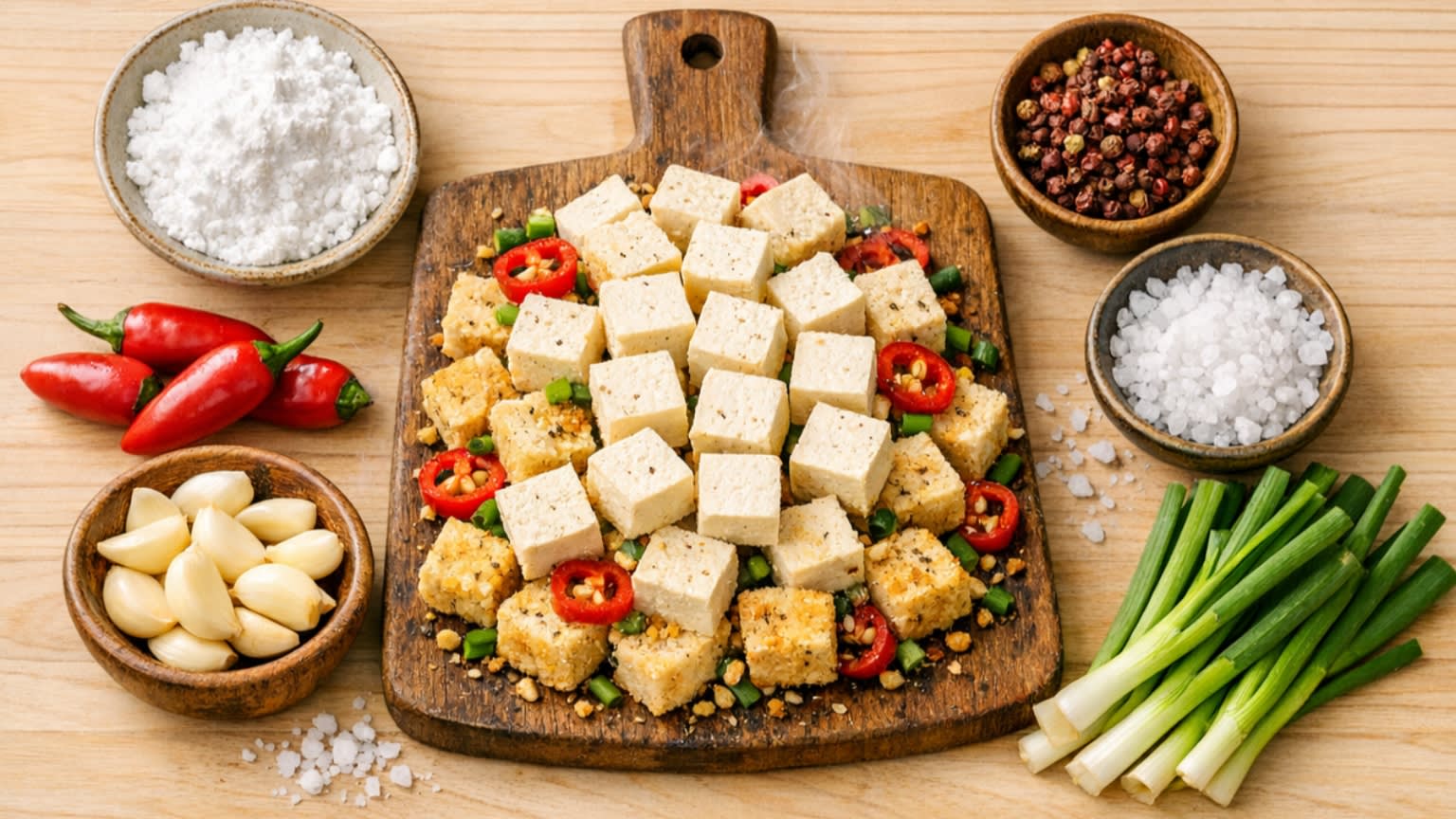
In authentic Chinese cooking, Jiāoyán (椒盐) translates strictly to “Sichuan Peppercorn Salt.” This is a highly aromatic, roasted dry rub. You must combine coarse sea salt and whole Sichuan Peppercorns (花椒 - Huājiāo) in a dry wok over low heat. As they toast, the salt turns slightly golden, and the peppercorns release their intense, citrusy, and uniquely numbing essential oils. You then grind this mixture into a fine powder, mixing it with a touch of white pepper and Chinese five-spice powder. This complex, roasted spice blend is what gives the dish its highly addictive, signature street-food aroma.
🛒 Ingredients List
The Authentic “Jiao Yan” Seasoning (椒盐):
- 1 tbsp Whole Sichuan Peppercorns (花椒)
- 1 tbsp Coarse Sea Salt or Kosher Salt
- 1/2 tsp White Pepper powder (白胡椒粉)
- 1/4 tsp Five-Spice Powder (五香粉)
The Tofu & The Crust:
- 1 block (14-16 oz) Firm Tofu (老豆腐). Drained, pressed for 20 minutes, and cut into 1-inch cubes.
- 1 cup Coarse Sweet Potato Starch (红薯淀粉). If you absolutely cannot find it, pure Cornstarch (玉米淀粉) is your next best option.
- 4 cups high-heat Cooking Oil (peanut, canola, or vegetable oil)
The Explosive Aromatics:
- 5 cloves Garlic, very finely minced (蒜末)
- 1-2 fresh Red Chilies or Jalapeños (红辣椒), thinly sliced into rings. Adjust for your spice tolerance.
- 2 stalks Scallions (葱花), finely chopped (green parts only)
🍳 Step-by-Step Instructions
1. Make the Authentic Jiao Yan (椒盐): Heat a dry wok or skillet over medium-low heat. Add the coarse salt and whole Sichuan peppercorns. Toast them continuously for 3 to 5 minutes until the salt takes on a slightly yellowish hue and the peppercorns smell incredibly fragrant, smoky, and floral. Remove from the heat, let it cool, and grind the mixture into a fine powder using a spice grinder or a mortar and pestle. Stir in the white pepper and five-spice powder. Set aside.
2. Coat the Tofu: After your tofu has been pressed and cubed, place the sweet potato starch in a large, wide bowl. Working in small batches, gently toss the tofu cubes in the starch. Ensure every single side of the cube is completely coated in a thick, dry, powdery layer. Gently shake off the excess starch so it doesn’t burn in your oil. Let the coated tofu sit on a cutting board for 5 minutes; the starch will absorb a tiny bit of the tofu’s moisture, helping it adhere perfectly.
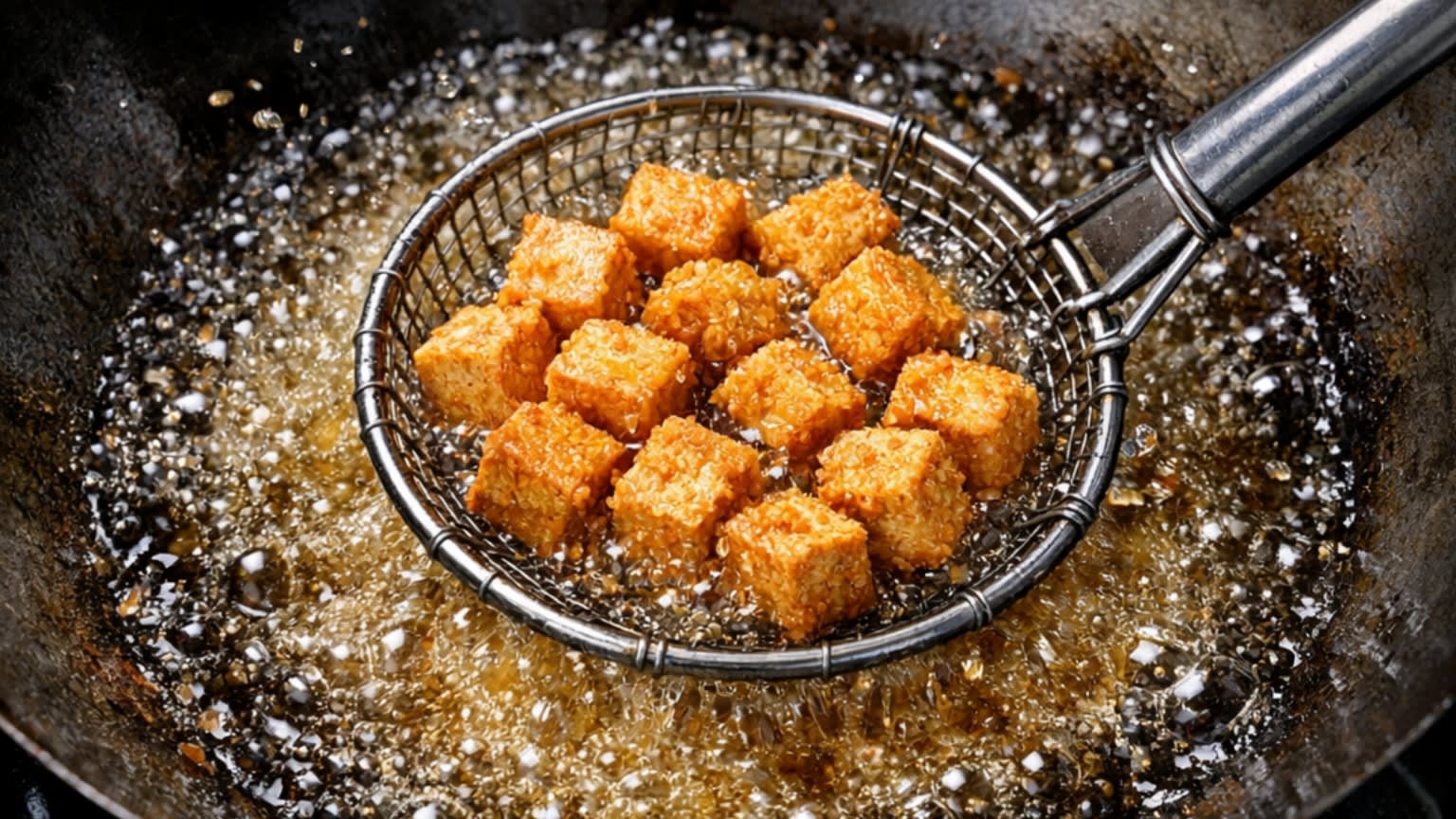
3. The First Fry (Setting the Crust): Heat your 4 cups of oil in a wok or a heavy-bottomed Dutch oven to 350°F (175°C). Carefully drop the coated tofu cubes into the oil one by one. Do not overcrowd the pan; fry in two batches! Crucial: Do not touch the tofu for the first 60 seconds! If you stir them immediately, you will knock the raw batter right off. After 60 seconds, gently separate any pieces that are sticking together. Fry for about 4 to 5 minutes until they have a pale, firm, golden crust. Remove with a spider strainer and let them rest on a wire rack.
4. The Second Fry (复炸 - Fùzhá): To achieve that shatteringly crisp restaurant texture that stays crunchy for hours, you must double-fry. Turn the heat to maximum and let the oil hit 400°F (200°C). Drop all the rested tofu cubes back into the screaming hot oil for exactly 60 to 90 seconds. Watch them turn a gorgeous, deep golden brown. Remove and drain well on the wire rack.
5. Sizzle the Aromatics (煸香): Carefully pour all the hot frying oil out of the wok, leaving just 1 tablespoon of oil inside. Turn the heat down to medium. Add your finely minced garlic and sliced red chilies. Stir-fry aggressively for 15 seconds until the garlic turns golden and extremely fragrant. Do not burn the garlic, or it will turn bitter!
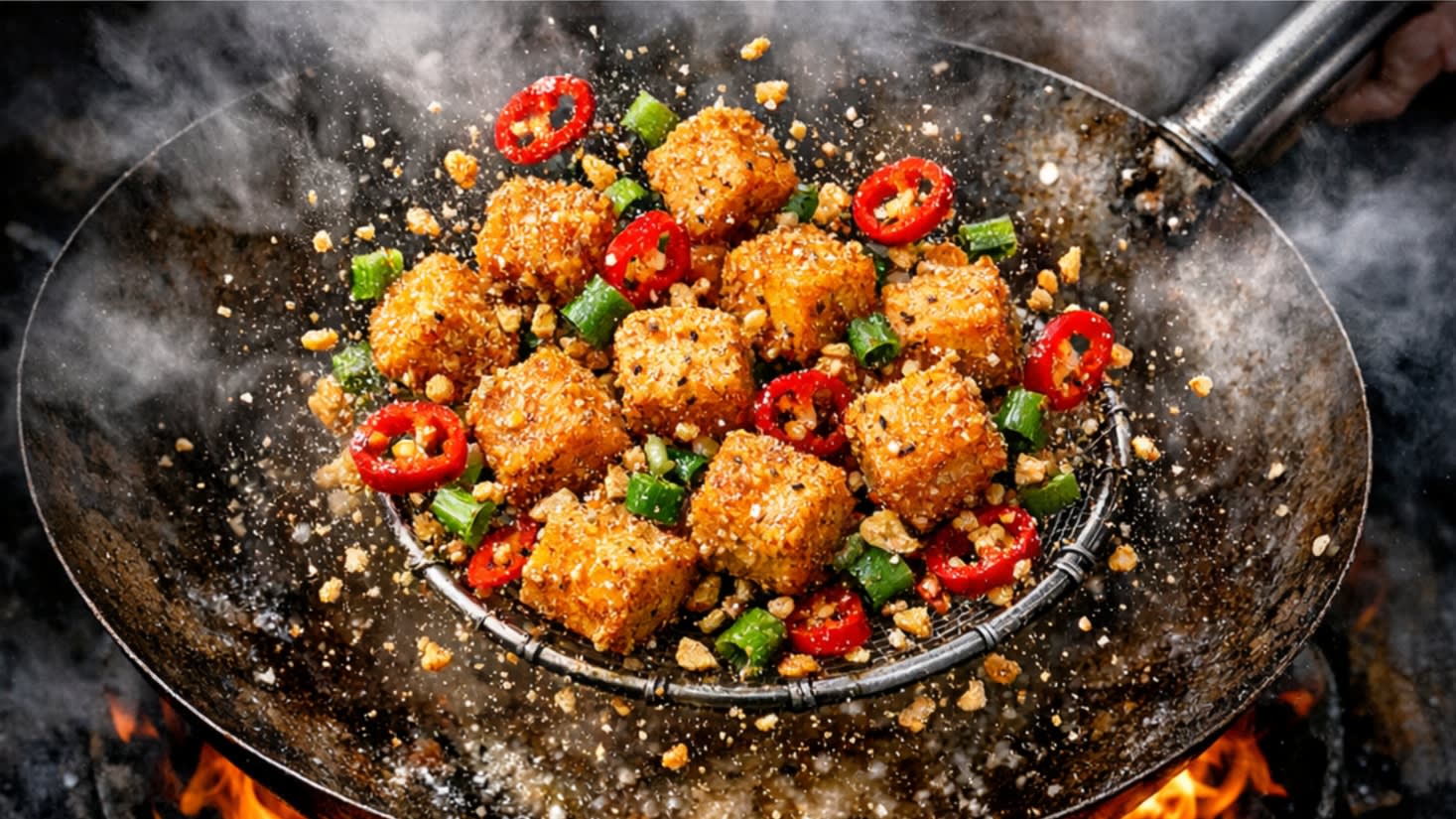
6. The Final Seasoning Toss: Dump your crispy, double-fried tofu into the wok with the garlic and chilies. Turn off the heat entirely! Immediately sprinkle 1 to 2 teaspoons of your prepared Jiao Yan (Salt and Pepper) spice mix evenly over the tofu, along with the fresh scallions. Toss everything aggressively for 10 seconds so the residual heat and a tiny bit of the garlic oil bind the roasted spices to the craggy, crispy tofu crusts.
7. Plate and Devour: Transfer the glorious golden cubes to a serving platter immediately. Serve piping hot. This is the ultimate finger food, perfect with an ice-cold beer or as a spectacular side dish for a larger Asian feast. Enjoy the crunch!
💡 Troubleshooting & Air Fryer Tips
- Why did my batter fall off? You likely skipped pressing the tofu. If the tofu is dripping wet, the starch turns into a slimy paste instead of a dry coating. Always press your tofu, and remember not to stir it immediately after dropping it into the hot oil! Give the crust a minute to set.
- The dish tastes bitter. Two common culprits: You burned the garlic during the final aromatic toss (keep the heat medium-low for that step!), or you burned the Sichuan peppercorns while toasting them in Step 1. Toast them gently on low heat just until fragrant.
- Can I make this in an Air Fryer? Yes, you can make an excellent, healthier version! After coating the pressed tofu in sweet potato starch, spray the cubes generously and evenly with cooking oil spray until no dry white powder is visible. Air fry at 400°F (200°C) for 15-18 minutes, shaking the basket halfway through, until golden and super crispy. Then, toss them in a pan with the sautéed garlic, chilies, and your spice blend!
📦 Shop Authentic Asian Pantry Essentials
To capture the authentic, shatteringly crisp texture and the explosive, roasted flavor profile of a Chinese Dim Sum parlor, upgrading your pantry with these specific ingredients is highly recommended. (As an Amazon Associate, ChinaCurator earns from qualifying purchases.)
- Coarse Sweet Potato Starch (红薯淀粉) - The absolute secret to an ultra-crispy, craggy, flaky crust that refuses to get soggy. Do not substitute with wheat flour!
- Premium Whole Sichuan Peppercorns (花椒) - Essential for toasting your own authentic "Jiao Yan" salt blend. The citrusy, floral, numbing aroma is irreplaceable.
- Asian Stainless Steel Spider Strainer - The mandatory tool for safely and quickly scooping delicate, crispy tofu out of boiling hot oil without damaging the crust.
- Traditional Carbon Steel Wok - The ultimate vessel for double-frying and rapidly tossing the crispy tofu in the aromatic spices.