🌿 Introduction: The Sizzling Jewel of Taiwanese Cuisine
If you walk into any traditional Taiwanese Rechao (stir-fry pub) or sit down at a bustling night market, your senses will inevitably be hijacked by a wildly intoxicating aroma. It is a scent so powerful and distinct—a deeply savory, sweet, herbal, and toasted fragrance—that you will instantly demand to know what is cooking.
That dish is the legendary Three Cup Chicken (三杯鸡 - Sānbēijī).
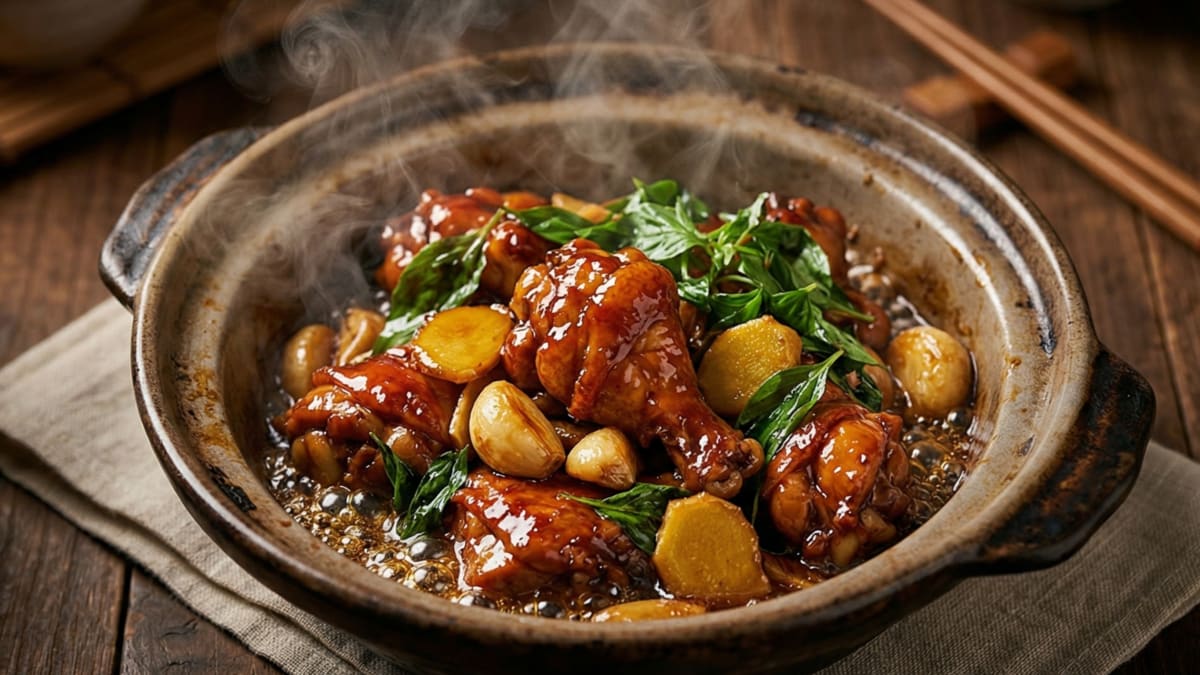
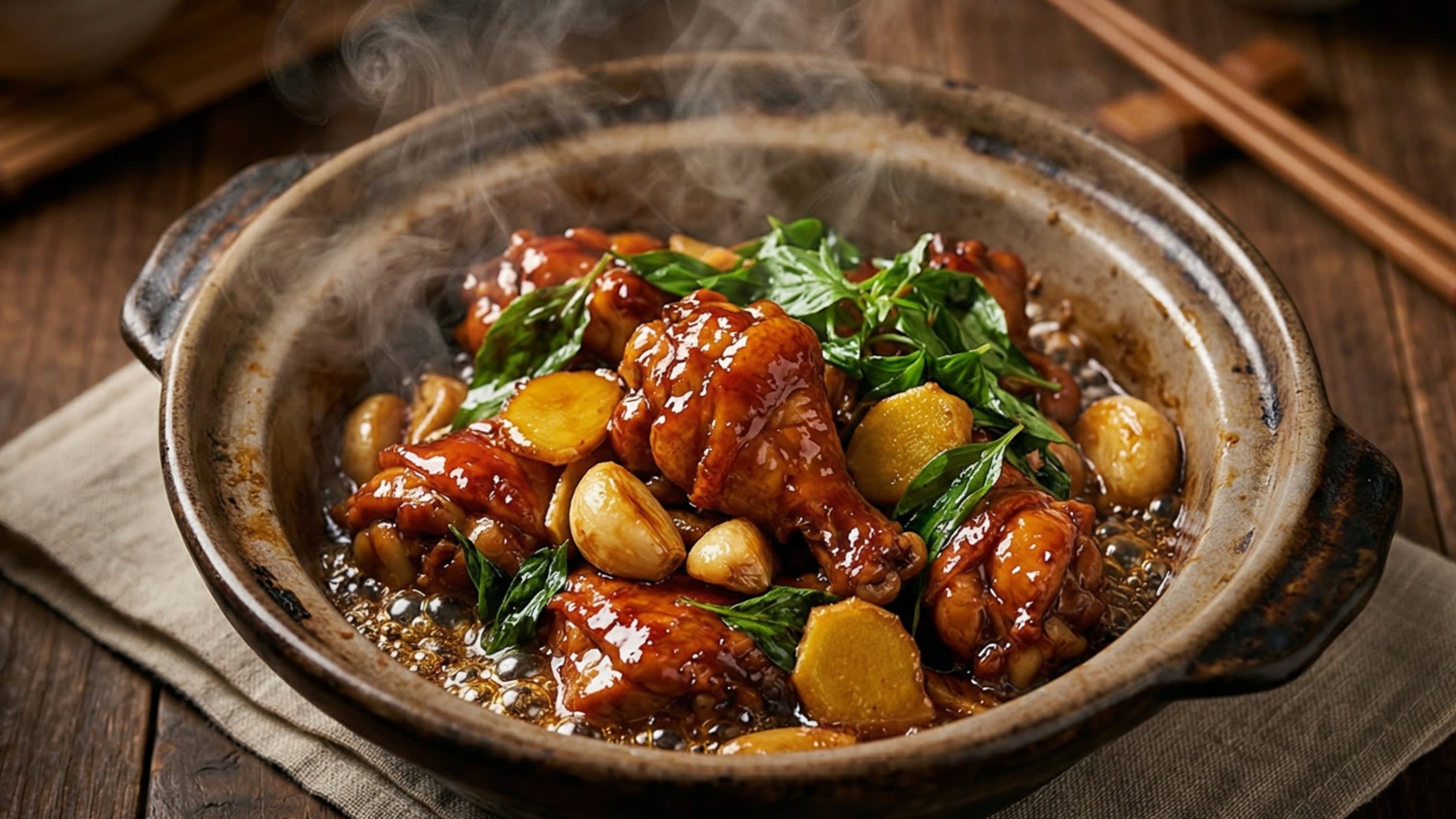
Although its historical roots trace back to Jiangxi province in mainland China, the dish was enthusiastically adopted, refined, and made world-famous by Taiwan. It is a breathtaking culinary performance. Plump pieces of chicken are aggressively braised until the savory-sweet liquid completely reduces into a thick, sticky, dark mahogany glaze. The dish is then showered with an obscene amount of fresh basil and served in a screaming hot, sizzling claypot (砂锅 - Shāguō).
However, when Western home cooks try to make this masterpiece, things often go terribly wrong. The chicken ends up swimming in an unappetizing pool of grease, or the dish somehow tastes suspiciously like an Italian pasta sauce.
Today, we are going to debunk the biggest myth surrounding this recipe’s name, explore the strict rules of Asian herbs, and teach you the auditory restaurant secret—yes, listening to the food—to achieve that flawless, sticky caramel glaze.
🚫 The Myth: Please Don’t Use Three Literal Cups!
The name of this dish is a massive culinary trap for beginners. Three Cups (三杯) refers to the traditional recipe calling for one cup of Sesame Oil, one cup of Soy Sauce, and one cup of Rice Wine.
Let me be absolutely clear: If you literally use one whole cup of each ingredient, your dish will be a devastating, inedible, greasy disaster.
In modern cooking, “Three Cups” does not refer to volume; it refers to the Golden Ratio (黄金比例). The soul of the sauce is built on a 1:1:1 ratio of these three core ingredients:
- Black Sesame Oil (黑麻油): Provides a deep, nutty, roasted foundation.
- Soy Sauce (酱油): A mix of light and dark soy sauce provides the salty umami and the beautiful caramel color.
- Rice Wine (米酒): Sweetens the sauce, tenderizes the meat, and evaporates during cooking to carry the beautiful aromas into the air.
By scaling this ratio down to tablespoons rather than cups, you achieve an intensely flavorful, sticky glaze without the pool of grease.
🌿 The Herb Dilemma: Do Not Use Sweet Basil!
The second biggest mistake home cooks make is grabbing standard Sweet Basil from the Western supermarket. If you use Italian sweet basil, your Three Cup Chicken will taste exactly like a weird Asian pesto.
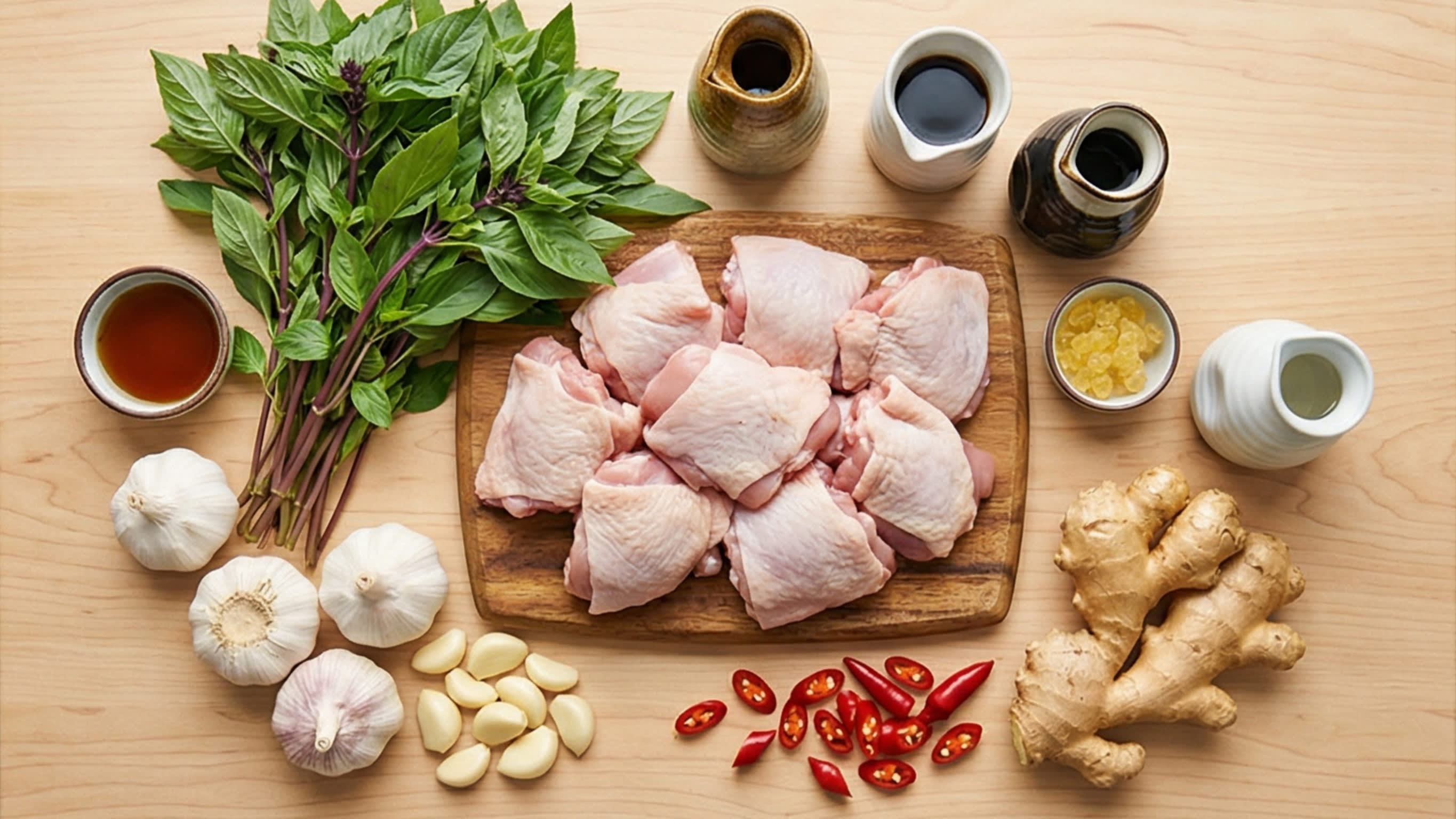
You absolutely must use Thai Basil (九层塔 - Jiǔcéngtǎ). While both are basil, they are chemically and flavorfully worlds apart. Sweet basil is delicate, sweet, and peppery. Thai basil, recognized by its purple stems and narrower, sturdier leaves, contains high levels of anethole—the same compound found in star anise. It delivers a robust, almost spicy, licorice/anise aroma that stands up beautifully to the heavy soy sauce and sesame oil. In traditional Taiwanese cooking, we throw a massive handful of Jiu Ceng Ta into the wok at the very last second, just letting the residual heat wilt the leaves and release their explosive essential oils.
🍗 The Meat: Why Bone-In is Non-Negotiable
If you use boneless, skinless chicken breasts for this dish, you are missing out on 50% of the flavor. Authentic San Bei Ji demands Bone-in, Skin-on Chicken Thighs (带骨鸡腿肉 - Dàigǔ Jītuǐròu). The bones release natural gelatin into the sauce as it braises, acting as a natural thickener that makes the glaze incredibly sticky and lip-smacking. The skin renders its fat, creating a crispy, caramelized exterior that boneless breast meat simply cannot achieve.
🛒 Ingredients List
The Chicken & Aromatics:
- 1.5 lbs (about 700g) Bone-in, Skin-on Chicken Thighs, chopped through the bone into 1.5-inch chunks. (Ask your butcher to do this, or use a heavy cleaver!)
- 12-15 whole cloves Garlic (大蒜), peeled but left whole. Do not mince them! You want sweet, roasted garlic bombs.
- 1 large piece of fresh Ginger (生姜), unpeeled, cut into 10 thick slices.
- 2 cups loosely packed fresh Thai Basil leaves (九层塔) - Do not substitute with Italian sweet basil!
- 2 fresh Red Chilies (红辣椒), sliced on a diagonal (Optional, mostly for color and a mild kick).
The 1:1:1 Golden Ratio Sauce:
- 3 tbsp Toasted Sesame Oil (芝麻油) - Must be 100% pure, dark toasted sesame oil.
- 3 tbsp Michiu or Shaoxing Rice Wine (米酒)
- 2 tbsp Light Soy Sauce (生抽)
- 1 tbsp Dark Soy Sauce (老抽) - Crucial for the dark mahogany color!
- 1.5 tbsp Rock Sugar (冰糖) or Brown Sugar. Sugar is vital to balance the savory soy sauce and create the sticky caramel glaze.
- 1 tbsp Cooking Oil (neutral oil like canola or peanut, for the initial sear)
🍳 Step-by-Step Instructions
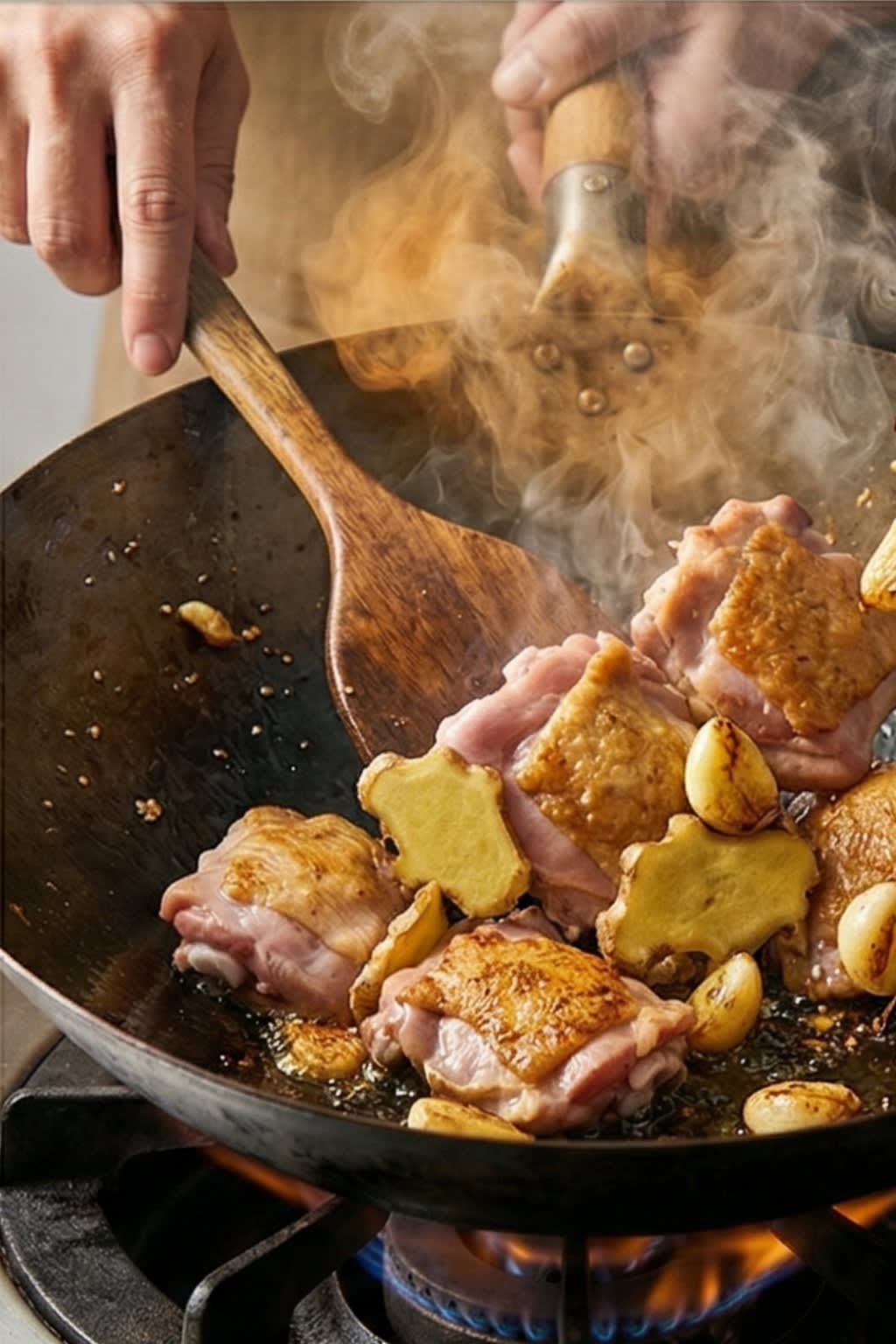
1. Sear the Aromatics (煸香): Heat a wok or a large skillet over medium heat. Add 1 tbsp of neutral cooking oil and 2 tbsp of the Toasted Sesame Oil. (Chef’s Secret: Pure sesame oil has a low smoke point and can turn bitter if heated too high. Mixing it with a little neutral oil protects it!) Add the thick ginger slices. Slowly fry them for about 3 to 4 minutes until the edges wrinkle, curl, and turn slightly browned. Then, add the whole garlic cloves and fry for another 2 minutes until they are golden and blistered. The kitchen will smell incredible.
2. Sear the Chicken: Turn the heat up to medium-high. Add the chopped, bone-in chicken thighs to the wok, skin-side down if possible. Let them sear undisturbed for 2 minutes to render some of the chicken fat and brown the skin. Toss the chicken and aromatics together for another 3 minutes until the chicken is opaque on the outside.
3. The Braise: Add the rock sugar (or brown sugar) to the wok. Stir-fry for 1 minute until the sugar melts and coats the chicken. Now, pour in the Light Soy Sauce, Dark Soy Sauce, and Rice Wine. Stir everything aggressively. Bring the liquid to a rolling boil. Turn the heat down to medium-low, cover the wok tightly with a lid, and let it braise for 10 to 12 minutes. This cooks the chicken to the bone and infuses it with flavor.
4. The Science of the Sizzle (大火收汁 - Dàhuǒ shōuzhī): Remove the lid. There will still be a lot of watery liquid in the pan. Turn the heat up to maximum high! You must now reduce the sauce. Listen closely to the wok. Initially, you will hear a low, rumbling, watery boiling sound. As the water from the rice wine and chicken evaporates, the sound will suddenly change to a sharp, high-pitched crackling and sizzling. This means the water is gone, and the chicken is now literally frying in the sesame oil and caramelized sugar!
5. The Basil Climax: The moment the sauce coats the chicken in a thick, sticky, dark glossy glaze and you hear that loud sizzling crackle, turn off the heat immediately. Pour the remaining 1 tbsp of Toasted Sesame Oil over the chicken. Dump the massive pile of fresh Thai Basil (九层塔) and the sliced red chilies directly into the hot wok.
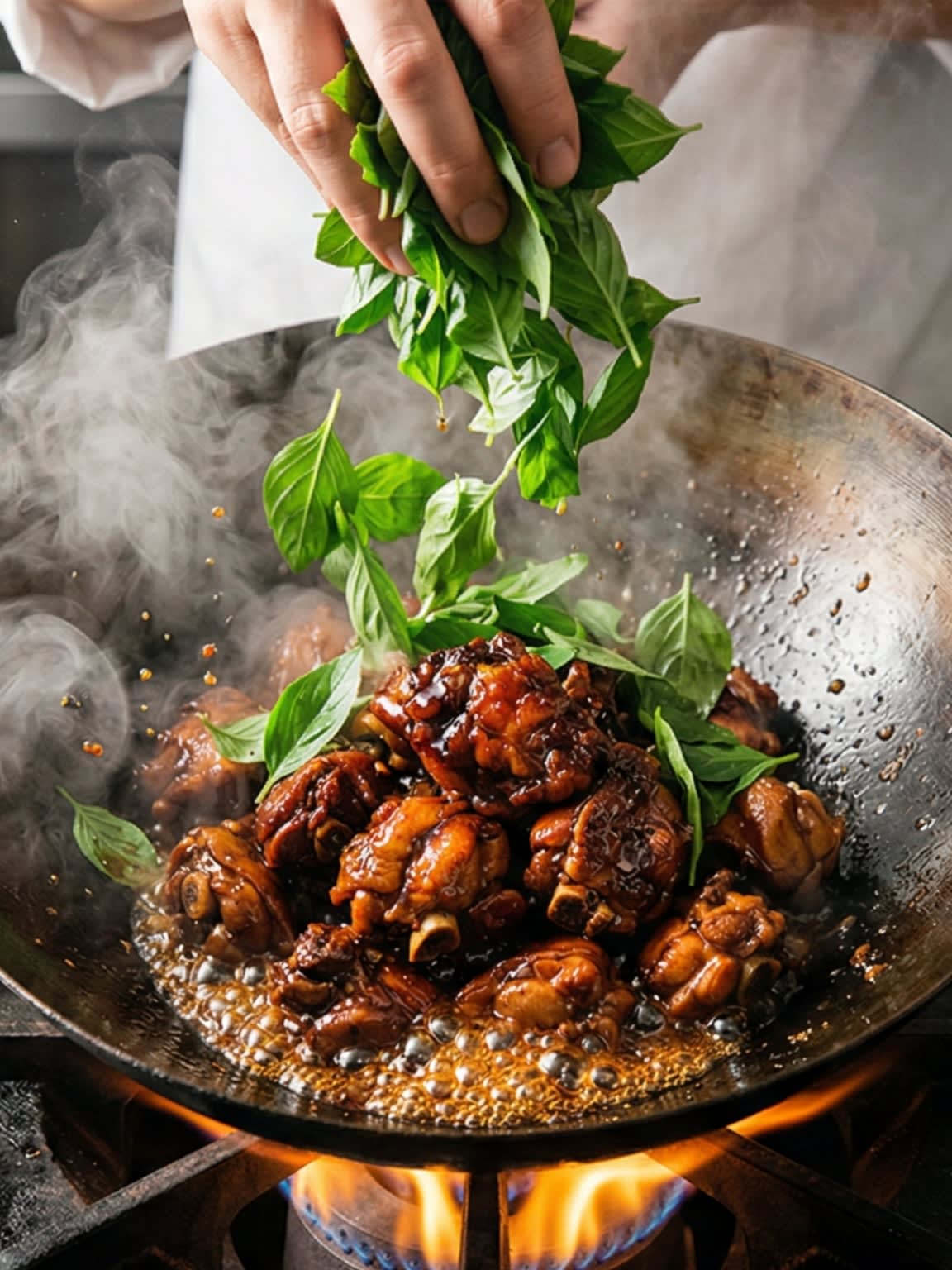
6. Toss and Serve: Toss everything vigorously for exactly 15 seconds. The residual heat of the chicken and the wok will instantly wilt the basil, releasing an explosive, sweet, licorice aroma that will fill your entire house. Transfer immediately to a pre-heated claypot (for authenticity) or a serving platter. Serve piping hot with massive bowls of steamed white rice.
💡 Troubleshooting & Pro Tips
- My dish is watery and not sticky! You failed the “Shou Zhi” (sauce reduction) phase. You must be patient and leave the heat on high until the water completely evaporates. The sauce should literally look like thick, dark syrup clinging to the meat, with only clear oil sizzling at the bottom of the pan. No watery puddles allowed!
- The dish tastes bitter. Two possibilities: You burned the garlic because you chopped it (always use whole cloves!), or you burned the sesame oil by heating it too aggressively at the very beginning. Remember to keep the heat medium-low when toasting the ginger and garlic.
- Can I use boneless chicken breast? You can, but it will not be authentic and will likely dry out during the 10-minute braise. If you must use boneless meat, use boneless skinless chicken thighs instead. They have enough fat to survive the braising process and remain juicy.
📦 Shop Authentic Taiwanese Essentials
To capture the authentic, complex, sweet-and-savory caramelized flavor profile of a Taiwanese night market, upgrading your pantry is highly recommended. (As an Amazon Associate, ChinaCurator earns from qualifying purchases.)
- Kadoya 100% Pure Toasted Sesame Oil (芝麻油) - The absolute soul of the dish. You cannot make Three Cup Chicken without a high-quality, dark, toasted sesame oil.
- Pearl River Bridge Dark Soy Sauce (老抽) - The mandatory ingredient for giving the chicken that appetizing, dark, sticky mahogany restaurant color.
- Yellow Rock Sugar (老冰糖) - Provides a cleaner, glossier, and more authentic caramelization than standard white table sugar.
- Traditional Ceramic Sand Claypot (砂锅) - The authentic, heat-retaining vessel used in restaurants to serve the dish while it is still audibly sizzling and smoking at the table.