🥣 Introduction: The Ultimate Asian Comfort Food
In Western culture, when you feel under the weather, crave warmth on a freezing winter morning, or simply need a bowl of pure, unadulterated comfort, you reach for Chicken Noodle Soup. But in Chinese households across the globe, that universal cure-all is a steaming, velvety bowl of Congee (粥 - Zhōu).
While congee comes in endless variations, there is one specific recipe that reigns supreme as the undisputed heavyweight champion of Chinese rice porridge: Century Egg and Pork Congee (皮蛋瘦肉粥 - Pídàn Shòuròu Zhōu).
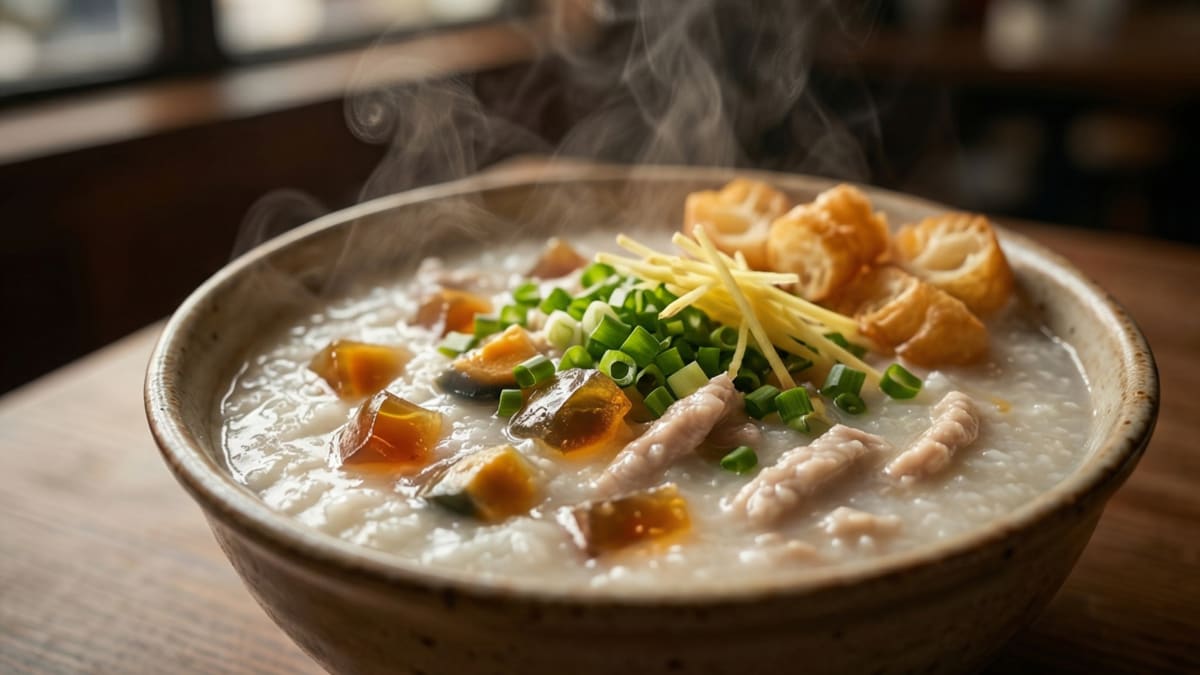
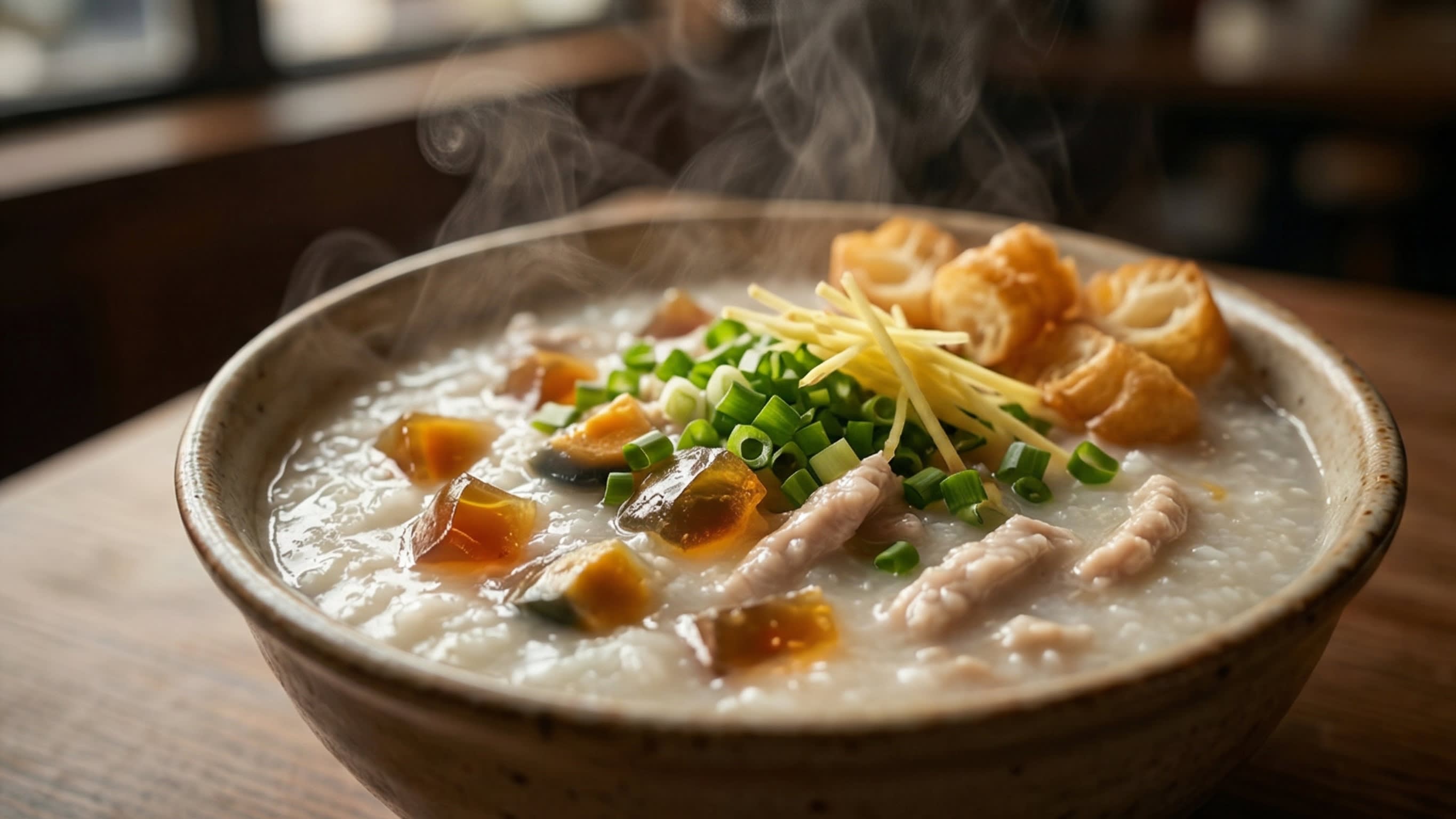
Walk into any bustling Dim Sum parlor in Hong Kong or any late-night diner in Guangzhou, and you will see bowls of this magnificent dish on every table. When executed perfectly, the rice grains completely break down into a milky, creamy, and deeply savory soup base (粥底 - Zhōudǐ). It is loaded with impossibly tender slivers of marinated lean pork and chunks of century egg, which provide a rich, earthy, and intense umami flavor that is highly addictive.
However, when Western home cooks attempt to make congee, the result is often tragic: a watery, separated soup with hard rice grains sitting sadly at the bottom of the pot. Today, we are going to unlock the ancient Cantonese secrets of congee. We will demystify the intimidating Century Egg, teach you how to treat your pork, and reveal a mind-blowing, time-saving restaurant hack that guarantees a perfectly silky, creamy texture every single time.
🥚 Demystifying the Century Egg (皮蛋)
For many non-Asian cooks, the Century Egg (皮蛋 - Pídàn) is surrounded by an intense “fear factor.” It looks like an alien artifact: the egg white has turned into a translucent, dark amber jelly, and the yolk is a creamy, dark greyish-green.
Let’s clear up the myths right now:
- It is not a hundred years old! A century egg is simply a duck egg (or chicken/quail egg) that has been cured in a mixture of clay, wood ash, salt, quicklime, and rice hulls for several weeks to a few months.
- The Flavor Profile: The alkaline curing process fundamentally changes the egg’s chemistry. The white becomes a bouncy, flavorless gelatin, while the yolk transforms into a rich, creamy, almost cheese-like substance that explodes with savory umami and a subtle, earthy sulfur note.
- The Ammonia Smell: When you crack open a raw century egg, it has a distinct alkaline or slight ammonia smell. Do not worry! The moment you chop it up and boil it in the hot congee, that harsh smell completely dissipates, leaving behind nothing but a rich, savory depth that flavors the entire pot of rice.
🔬 The Culinary Science: The “Freezing” Hack for Silky Rice
Traditional Chinese grandmothers will tell you that to achieve the legendary Miánmì (绵密 - Creamy and Silky) texture, where the rice grains blossom and melt into the water (开花 - Kāihuā), you must stand over the stove and stir the pot for two to three hours.
We are going to do it in 30 minutes using the brilliant physics of the Freezing Hack.
If you wash your raw rice, drain it, coat it in a tiny bit of oil and salt, and freeze it overnight (or for at least 2 hours), you fundamentally alter the grain’s structure. The residual moisture inside the rice grain turns into ice crystals. Since water expands when it freezes, these ice crystals act like microscopic bombs, shattering the cellular structure of the rice grain from the inside out.
When you drop this frozen, shattered rice directly into boiling water, the grains immediately explode and release their starches into the liquid. This hack cuts your cooking time by 70% and guarantees a thick, velvety congee without the hours of tedious stirring!
🛒 Ingredients List
The “Shattered” Rice Prep:
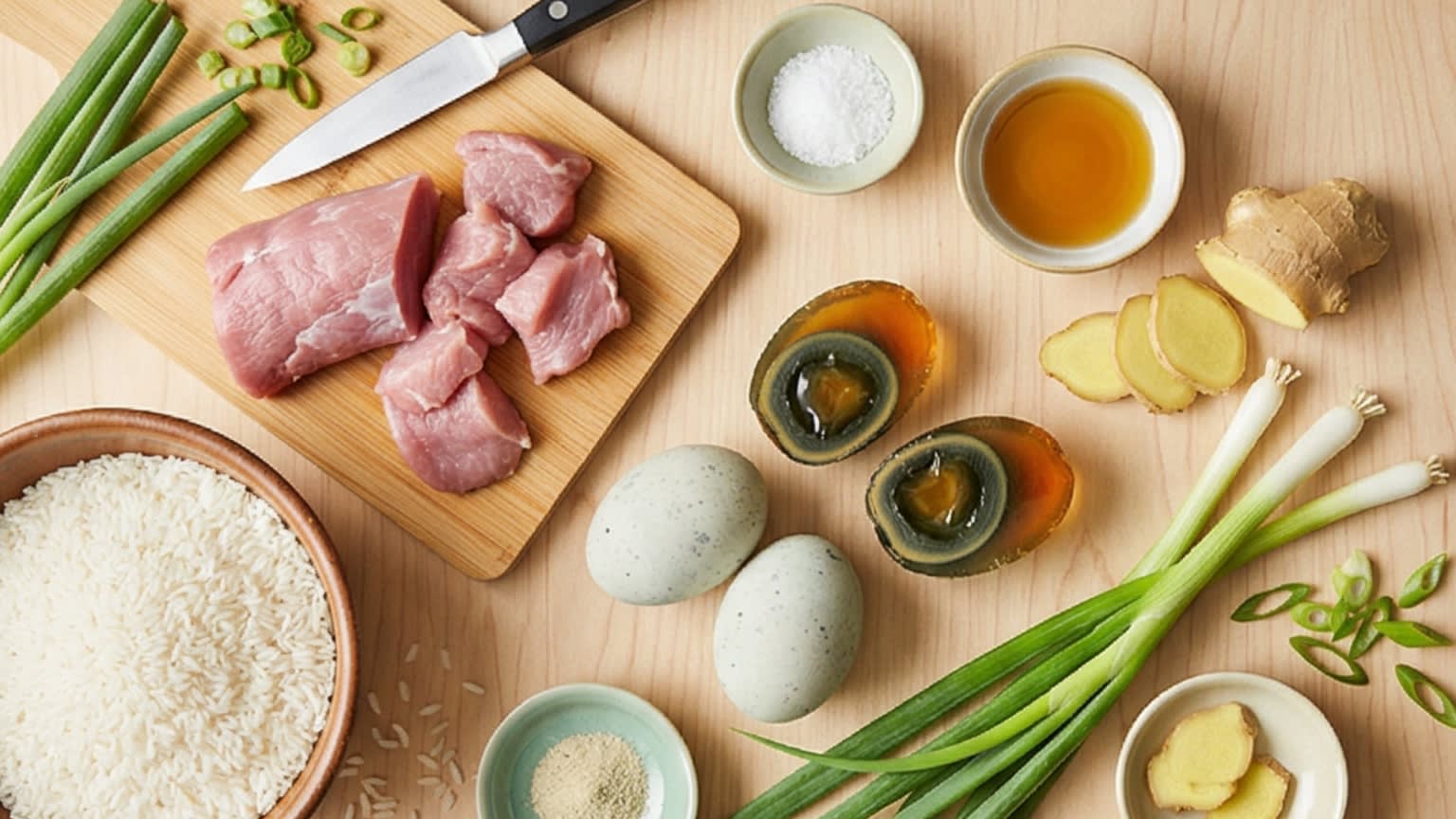
- 3/4 cup high-quality Jasmine Rice
- 1 tsp Cooking Oil (peanut or vegetable oil)
- 1/2 tsp Salt
- 8 to 9 cups Water or Chicken Broth (Congee requires a massive 1:10 or 1:12 rice-to-water ratio!)
The Pork & Marinade:
- 1/2 lb (about 225g) Lean Pork Loin or Tenderloin (瘦肉 - Shòuròu)
- 1 tsp Light Soy Sauce (生抽)
- 1 tsp Shaoxing Cooking Wine (绍兴酒)
- 1/2 tsp finely julienned fresh Ginger (姜丝)
- 1/2 tsp Cornstarch (玉米淀粉)
- A pinch of White Pepper powder (白胡椒粉)
The Star Ingredients & Garnish:
- 2 large Century Eggs (皮蛋), peeled and diced into 1/2-inch chunks.
- 2-inch piece of fresh Ginger, peeled and very finely julienned into hair-like threads (姜丝 - Jiāngsī)
- 2 stalks Scallions (葱花), finely chopped
- 1 tsp Toasted Sesame Oil (芝麻油)
- Salt and White Pepper to taste
- Optional but Highly Recommended: Youtiao (油条 - Chinese Fried Dough Sticks), cut into bite-sized pieces for dipping!
🍳 Step-by-Step Instructions
1. The Freezing Hack (Do this ahead of time!): Wash the Jasmine rice thoroughly under cold water until the water runs clear. Drain the rice well. Place the damp rice in a Ziplock bag or a freezer-safe container. Add the 1 tsp of oil and 1/2 tsp of salt, and massage it into the grains. Seal the bag and place it in the freezer for at least 2 hours, or preferably overnight.
2. Marinate the Pork: Cut the pork tenderloin into extremely thin, bite-sized slivers. Place the pork in a bowl and add the light soy sauce, Shaoxing wine, julienned ginger, cornstarch, and white pepper. Massage well and let it marinate for 15 minutes. The cornstarch acts as a velvet shield, ensuring the lean pork stays incredibly tender in the boiling soup.
3. Prep the Century Eggs: Peel the century eggs. Pro-tip: If the yolk is very soft and sticks to your knife, dip your knife in hot water before slicing! Dice the eggs into chunks. Divide the chunks into two equal halves.
4. Boil the Congee Base (熬粥底): Bring your 8 to 9 cups of water (or chicken broth) to a furious, rolling boil in a large, heavy-bottomed pot or Dutch oven. Take your frozen block of rice and drop it directly into the boiling water. Stir well so the rice doesn’t stick to the bottom. Add one half of the diced century eggs into the pot right now. Turn the heat down to medium-low so the liquid is at a steady, gentle simmer. Cover the pot, leaving a small crack open so it doesn’t boil over.
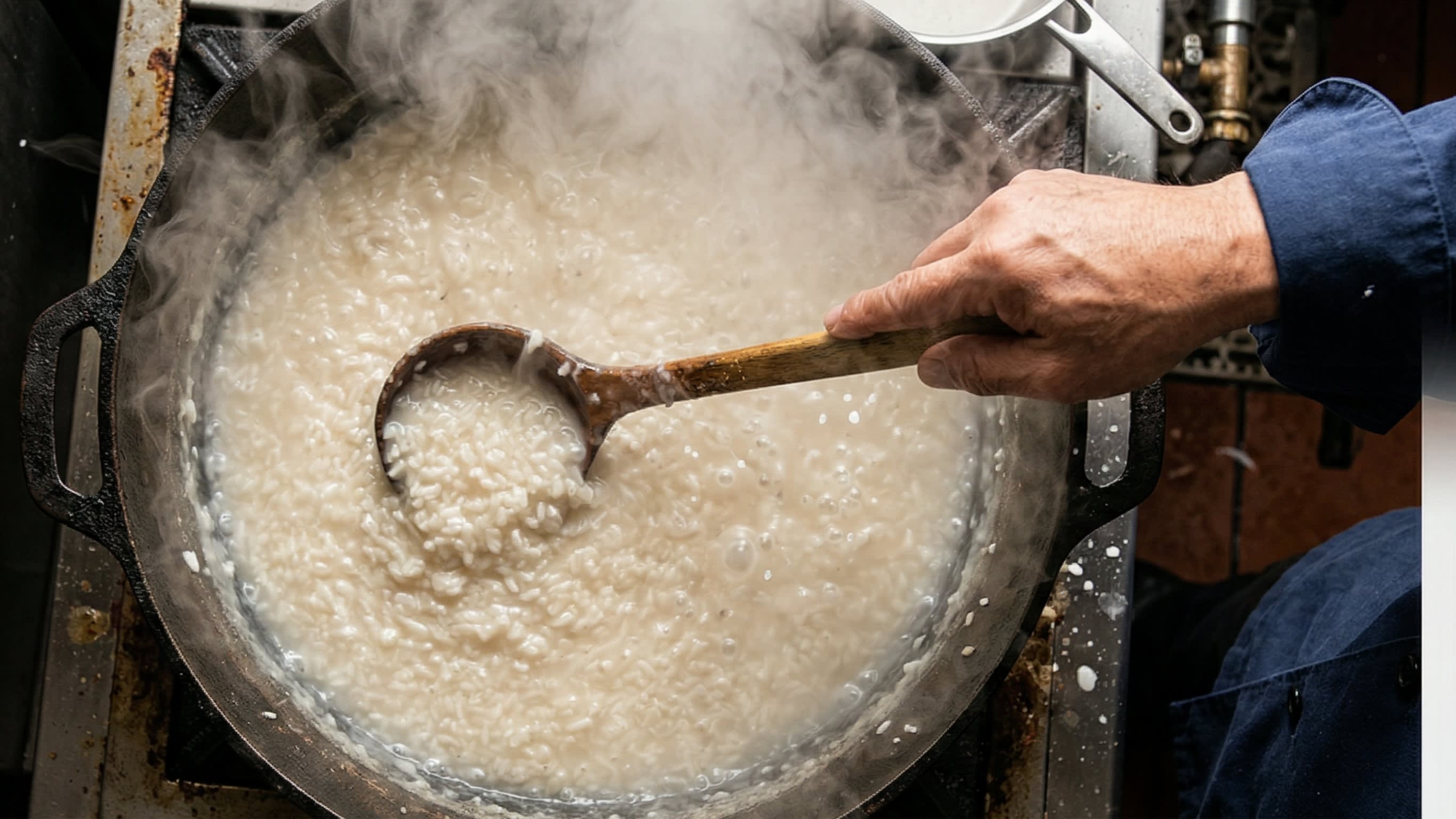
5. The Magic Melt: Let the congee simmer for 25 to 30 minutes. Stir the bottom of the pot every 5-10 minutes to prevent scorching (糊锅 - Húguō). You will notice the rice grains breaking down rapidly into a beautiful, silky cream. The century eggs you added early will literally melt into the broth, infusing the entire pot of plain rice with a deep, savory, umami flavor.
6. Cook the Pork: Once the congee has reached your desired thickness (it should look like a velvety cream soup, not watery), turn the heat up slightly. Drop the marinated pork slivers into the boiling congee. Use your ladle to quickly separate the meat pieces so they don’t clump together. The pork is sliced so thinly that it will be perfectly cooked and tender in exactly 2 minutes.
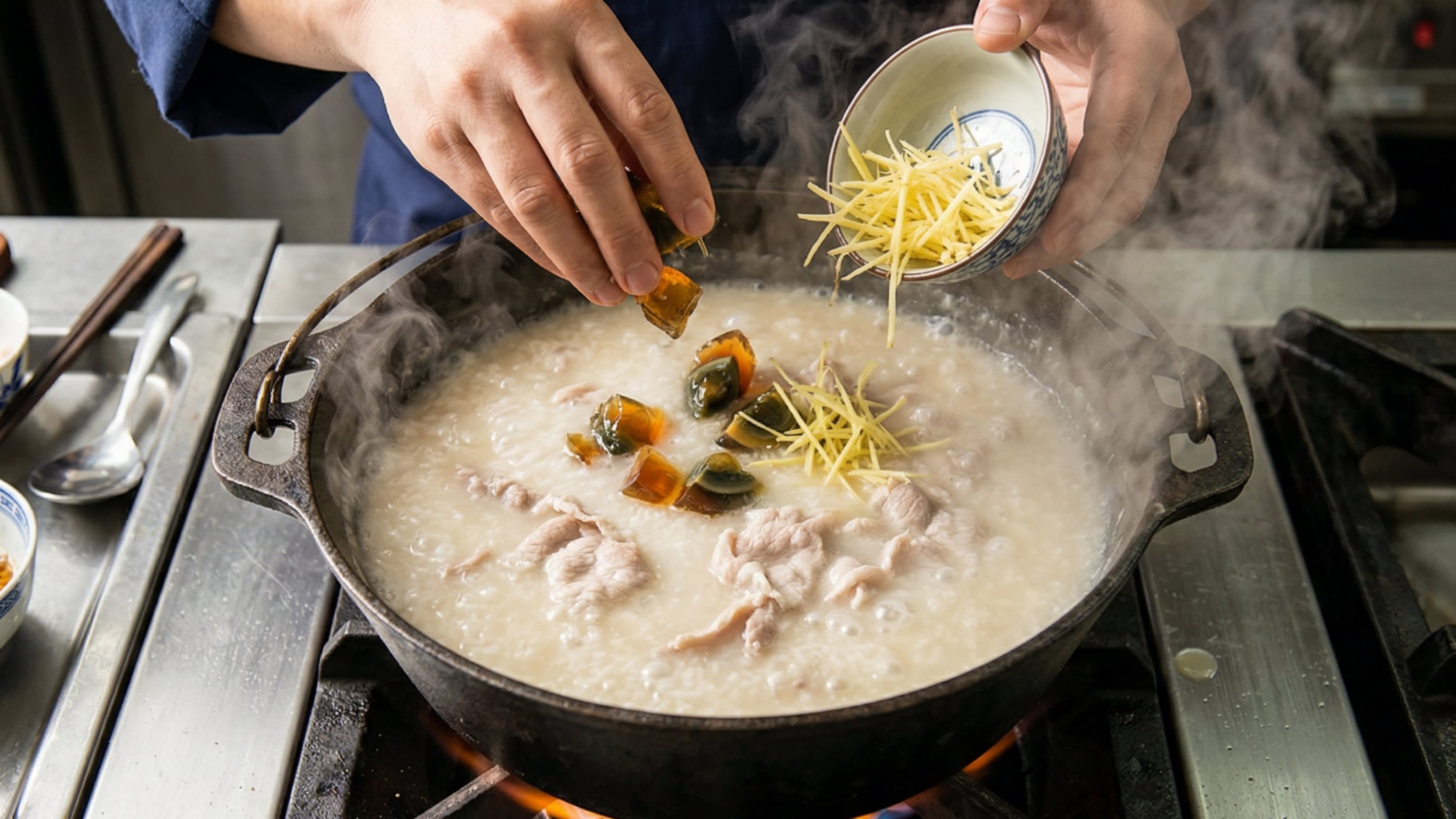
7. The Final Assembly: Immediately turn off the heat. Stir in the remaining half of the diced century eggs (these will maintain their bouncy texture!), the finely julienned ginger threads (姜丝), and a generous drizzle of toasted sesame oil. Taste the congee and add salt and white pepper to your liking.
8. Garnish and Serve: Ladle the steaming, soul-warming congee into deep ceramic bowls. Garnish heavily with fresh chopped scallions. If you have them, dip crispy pieces of Youtiao (fried dough) into the creamy congee. Enjoy the ultimate Chinese comfort food!
💡 Troubleshooting & Pro Tips
- My congee is burning at the bottom of the pot! Because the rice releases so much starch, it naturally wants to sink and stick to the bottom. You must stir it thoroughly every 5 to 10 minutes, making sure your ladle scrapes the very bottom of the pot. Keep the heat on a gentle simmer, never a furious boil once the rice is in.
- Is the congee too thick or too thin? Congee thickens significantly as it cools down! If it looks perfect in the boiling pot, it will be too thick in the bowl. It should look slightly looser than your desired final texture while still on the stove. If it gets too thick, simply stir in half a cup of boiling water to loosen it up.
- Why add ginger at the very end? The incredibly fine, hair-like threads of raw ginger added off the heat provide a sharp, fresh, and slightly spicy bite that cuts beautifully through the rich, heavy umami of the century egg and pork. It completely eliminates any residual meaty odors. Do not skip the fresh ginger garnish!
📦 Shop Authentic Dim Sum Essentials
To capture the authentic, comforting flavors of a traditional Cantonese congee shop, having the right ingredients is absolutely essential. (As an Amazon Associate, ChinaCurator earns from qualifying purchases.)
- Authentic Century Eggs (皮蛋) - The undisputed star of the dish. Look for lead-free century eggs with beautiful "pine branch" crystalline patterns on the egg whites.
- Premium White Pepper Powder (白胡椒粉) - The mandatory spice for congee. It provides a complex, earthy heat without the harshness of black pepper.
- Kadoya 100% Pure Toasted Sesame Oil (芝麻油) - A drizzle of this right before serving elevates the aroma of the entire bowl.
- Heavy Cast Iron Dutch Oven - The best pot for maintaining the slow, steady, even heat required for simmering congee without scorching the bottom.