🐓 Introduction: The Masterpiece of Subtlety
In the global landscape of famous Asian cuisine, many dishes rely on fiery chilies, numbing peppercorns, or heavy, deep-fried caramelized batters to command your attention. But there is one legendary dish that conquers the culinary world through absolute purity, subtlety, and flawless execution: Hainan Chicken Rice (海南鸡饭 - Hǎinán Jī Fàn).
Tracing its roots back to the Wenchang city of Hainan province in southern China, this dish was brought by early immigrants to Southeast Asia, where it was meticulously refined and ultimately crowned as the undisputed national dish of Singapore.
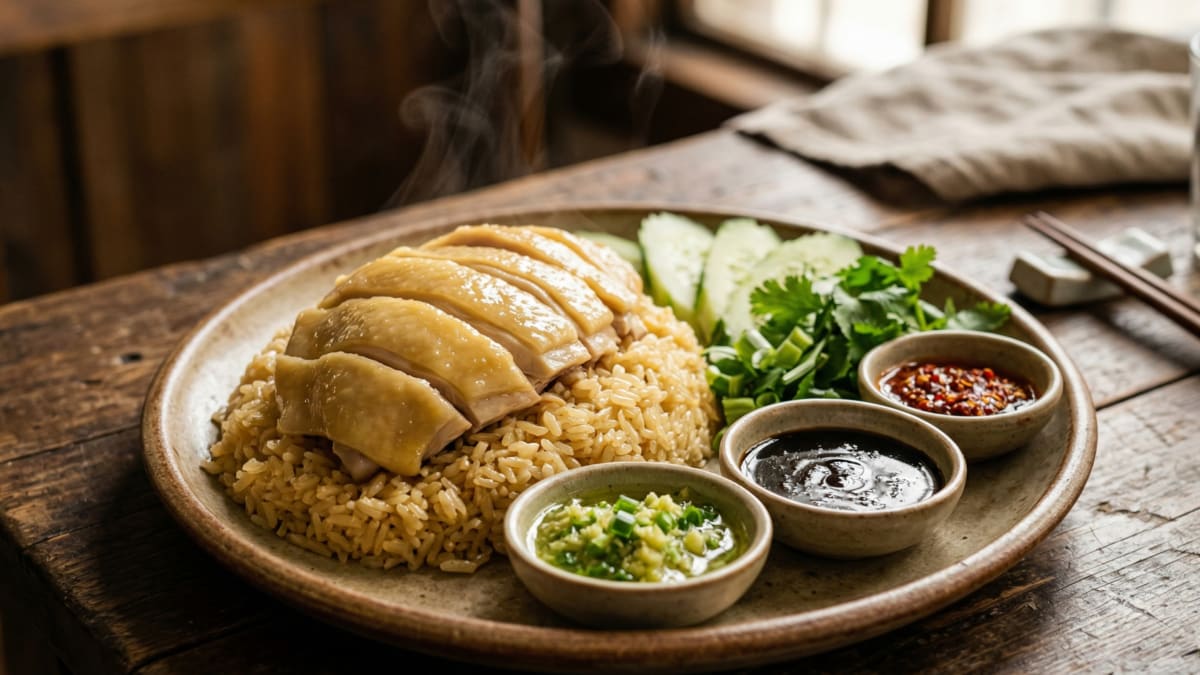
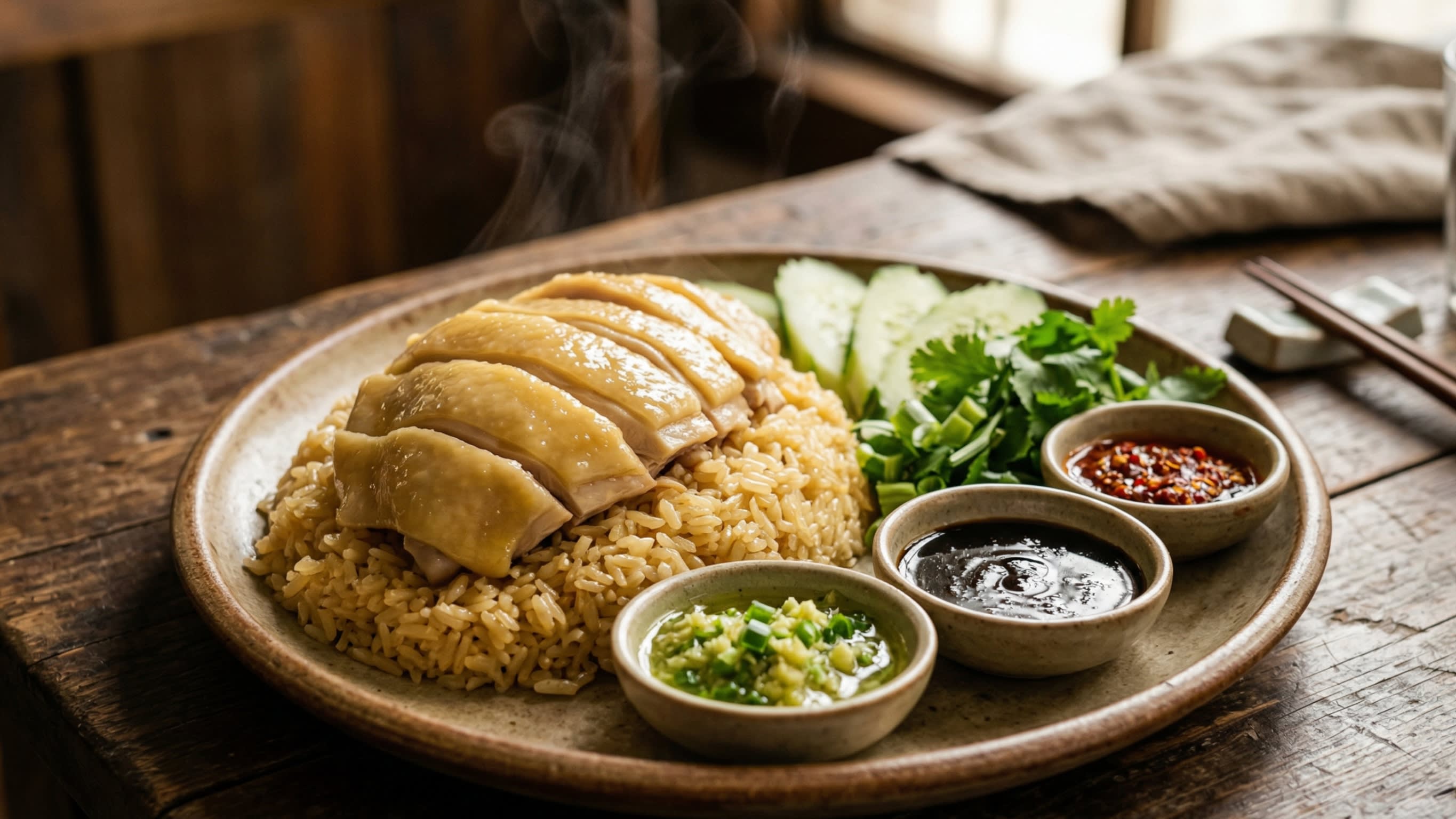
At first glance, it looks deceptively simple: boiled chicken served with plain-looking rice. But to a trained palate, an authentic plate of Hainan Chicken Rice is a breathtaking gastronomic achievement. The chicken must be impossibly tender and velvety, encased in a snappy, beautifully gelatinous skin. The rice—which is arguably the true star of the show—is not boiled in water; it is toasted in rendered chicken fat and aromatics, then cooked in the rich, savory chicken broth until every single grain glistens and bursts with complex umami. Finally, the dish is tied together by the “Holy Trinity” of dipping sauces: a pungent ginger-scallion oil, a fiery chili garlic sauce, and a thick, syrupy dark soy sauce.
For Western home cooks, achieving this level of perfection is notoriously difficult. The chicken often turns out chalky and overcooked, the skin tears and turns rubbery, and the rice tastes bland.
Today, we are going to unveil the highly guarded, generational secrets of Asian chicken rice stalls. We will teach you the physics of the “steep and shock” poaching method, the traditional way to exfoliate the chicken, and the ultimate secret to the most fragrant rice you will ever eat in your life.
🔬 The Science of Velvety Chicken: “Jin Shu” and the Ice Bath
If you place a whole chicken in a pot of vigorously boiling water and leave it there for an hour, the violent agitation will tear the skin, and the extreme heat will squeeze every drop of moisture out of the muscle fibers. You will be left with dry, stringy meat.
To achieve that legendary, silky-smooth restaurant texture, you must master two fundamental techniques.
1. Poaching via Residual Heat (浸熟 - Jìn shú)
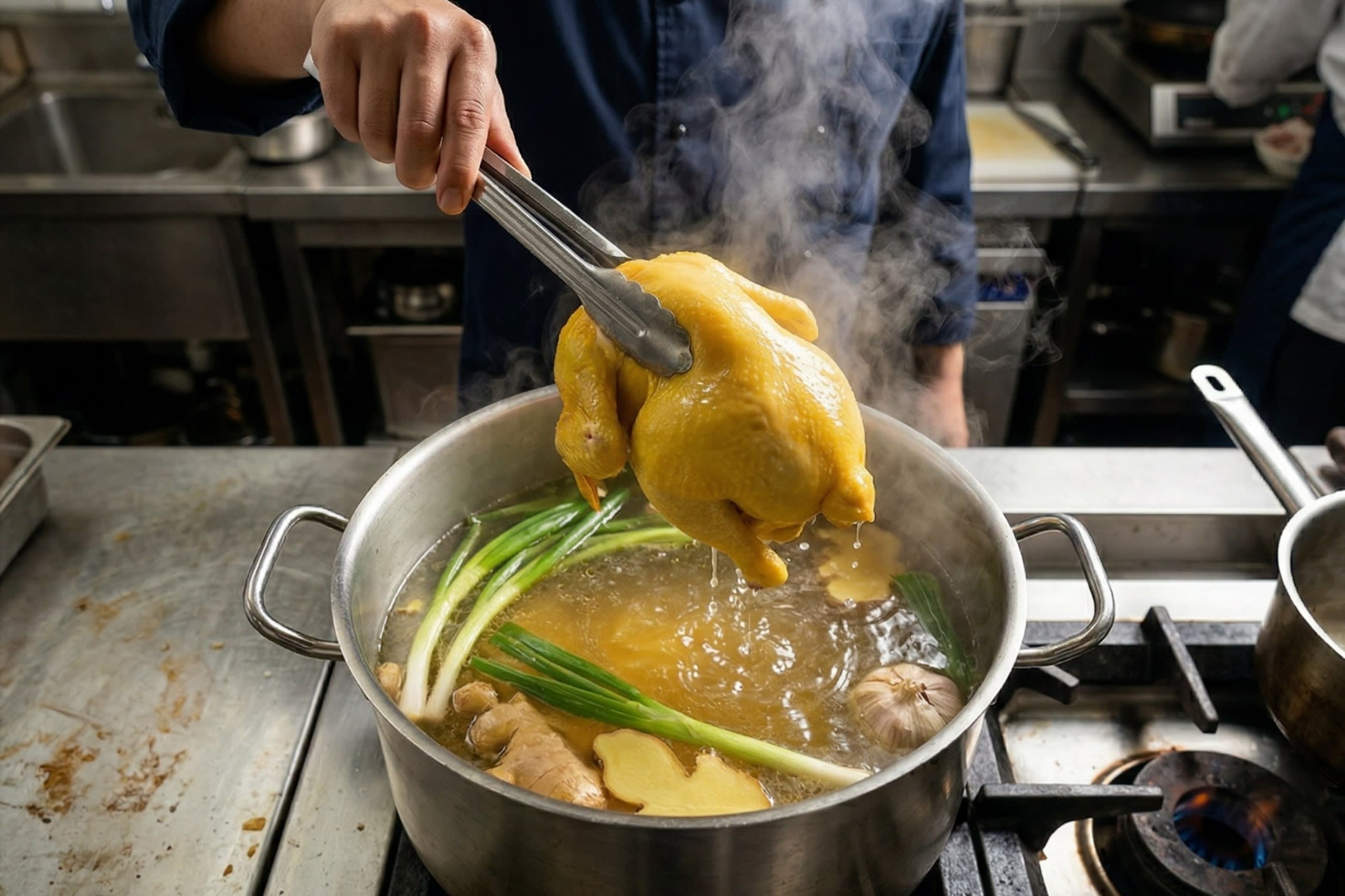
Chinese chefs do not actively boil the chicken. They practice Jìn shú (浸熟 - Steeping to cook). You submerge the chicken in boiling water, but then you immediately drop the heat to the absolute lowest bare simmer, or turn the heat off entirely and cover the pot. The chicken cooks gently and slowly via the residual heat of the water. This gentle poaching environment prevents the proteins from seizing and contracting. Chef’s Secret: During the poach, you must lift the chicken out of the water by its neck and plunge it back in a few times. This forces the cold water inside the cavity to exchange with the boiling water outside, ensuring the bird cooks evenly from the inside out!
2. The Ice Bath Shock (过冰水 - Guò bīng shuǐ)
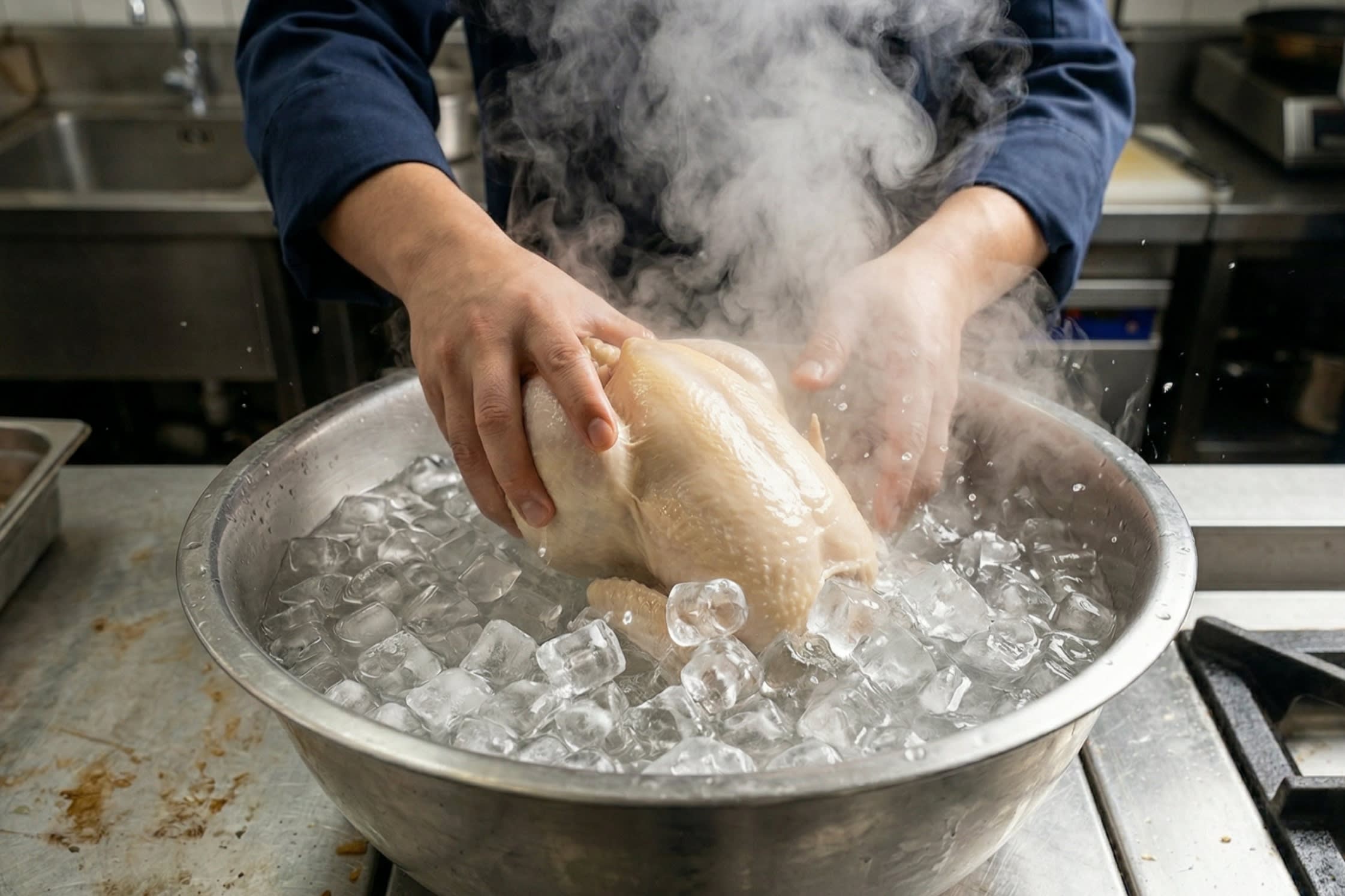
This is the single most crucial step for the perfect skin. The exact second the chicken is fully cooked, you must immediately plunge the entire steaming hot bird into a massive basin of ice-cold water. This violent temperature shock abruptly halts the cooking process, preventing the breast meat from drying out. More importantly, it rapidly tightens the collagen in the chicken skin, transforming it from a soft, flabby mess into a firm, snappy, and beautifully gelatinous skin (果冻般的鸡皮).
🍚 The Soul of the Dish: Chicken Fat Rice (鸡油饭)
A local Singaporean or Hainanese food critic will judge your dish primarily by the rice, not the chicken. The rice must be so fragrant and deeply savory that it can be eaten completely on its own.
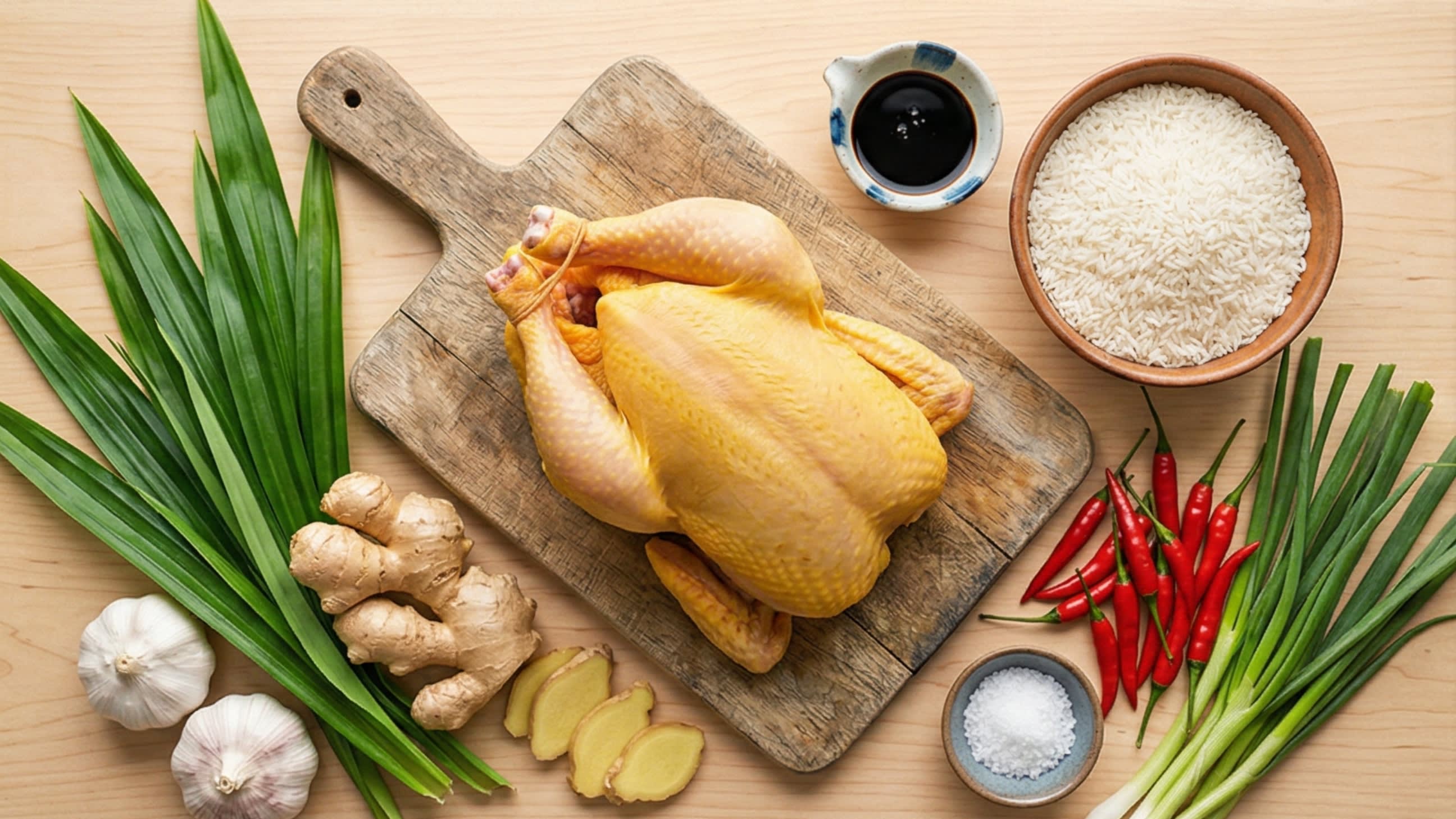
To achieve this, you cannot just throw rice in a rice cooker with water. You must make Jīyóufàn (鸡油饭 - Chicken Fat Rice). First, you trim the excess fat pads from the raw chicken cavity and render them down in a wok over low heat to extract pure, liquid golden chicken fat (鸡油 - Jīyóu). You then use this glorious liquid gold to fry minced shallots, garlic, and ginger until highly aromatic. Next, you toss the raw, washed Jasmine rice directly into the wok, toasting the grains in the fat until they are slightly translucent. Finally, the toasted rice is transferred to a rice cooker, submerged in the rich, savory broth created from poaching the chicken, and steamed alongside tied knots of Pandan Leaves (斑斓叶 - Bānlán yè)—a tropical leaf that imparts an intoxicating, sweet, vanilla-like floral aroma to the entire kitchen.
🛒 Ingredients List
The Chicken & The Poach:
- 1 Whole Free-Range or Organic Chicken (about 3.5 to 4 lbs / 1.5 - 1.8 kg). Quality is everything here! Seek out yellow-skin chickens if possible.
- 2 tbsp Coarse Kosher Salt (for exfoliating the skin)
- 4-inch piece of fresh Ginger, thickly sliced and smashed
- 4 stalks of Scallions (green onions), cut in half
- 1 large pot of Water (enough to completely submerge the chicken)
- A massive bowl of Ice and Cold Water (for the ice bath)
The Chicken Fat Rice (鸡油饭):
- 2 cups high-quality Jasmine Rice, washed thoroughly until the water runs clear, then drained well
- Excess Chicken Fat and Skin (trimmed from the raw whole chicken)
- 4 cloves Garlic, finely minced
- 2 Shallots (红葱头), finely minced
- 1 inch fresh Ginger, finely minced
- 2 knotted Pandan Leaves (斑斓叶). You can find these frozen in most Asian markets. If omitted, the rice will still be good, but lacking the authentic Southeast Asian fragrance.
- 1/2 tsp Salt
- 2 cups of the Reserved Chicken Poaching Broth
The Holy Trinity of Sauces:
- Ginger-Scallion Oil (姜葱酱): 3 tbsp very finely minced ginger, 3 tbsp very finely minced scallions, 1/2 tsp salt, 1/2 tsp sugar. Pour 3 tbsp of smoking hot cooking oil over the mixture to release the aromas.
- Chili Garlic Sauce (辣椒酱): Blend 5 fresh red Thai chilies, 3 cloves garlic, 1 inch ginger, 1 tbsp lime juice, 1 tbsp reserved chicken broth, 1 tsp sugar, and a pinch of salt until smooth.
- Sweet Dark Soy Sauce (甜酱油): 3 tbsp thick, sweet dark soy sauce (Kecap Manis), mixed with 1 tbsp of hot chicken broth to thin it slightly.
🍳 Step-by-Step Instructions
1. Exfoliate and Prep the Chicken: Remove the chicken from the fridge 1 hour before cooking. Reach inside the cavity and pull out the large chunks of yellow fat. Save this fat for the rice! Take 2 tablespoons of coarse kosher salt and aggressively rub it all over the outside of the chicken. This “spa treatment” exfoliates the skin, removing dead cells, impurities, and yellow film, guaranteeing a smooth, beautiful skin later. Rinse the chicken thoroughly inside and out. Stuff the cavity with half of the smashed ginger slices and the scallions.
2. The Gentle Poach (浸熟): Bring a massive pot of water (large enough to submerge the chicken completely) to a rolling boil. Add the remaining ginger slices and a tablespoon of salt. Hold the chicken by its neck or legs and dunk it into the boiling water, then lift it entirely out. Repeat this dunking process 3 times. This ensures the hot water flows into the cold cavity, equalizing the temperature. Finally, submerge the chicken completely breast-side down. The water temperature will drop. Wait for it to just barely return to a simmer (tiny champagne bubbles, NOT a rolling boil). Turn the heat down to the absolute lowest setting, cover the pot tightly, and let it poach gently for exactly 45 to 50 minutes.
3. The Ice Bath Shock (过冰水): Prepare a massive bowl filled with ice cubes and cold water. Once the 50 minutes are up, carefully lift the chicken from the hot broth (save the broth!). Use a thermometer to ensure the thickest part of the thigh reads 165°F (74°C). Immediately plunge the entire hot chicken into the ice water. Let it sit submerged for 15 minutes. This abrupt shock stops the cooking and tightens the skin into a snappy, gelatinous masterpiece. After 15 minutes, remove it, pat it completely dry, and rub the skin with a few drops of sesame oil for a beautiful, appetizing gloss.
4. Render the Chicken Fat (炼鸡油): While the chicken is resting, heat a wok or large skillet over medium-low heat. Toss in the raw chicken fat and skin you trimmed earlier. Let it slowly fry for about 10 minutes until the fat renders out into clear, golden liquid oil, and the skin pieces become crispy cracklings. Remove and discard the crispy skin solids, leaving the glorious liquid chicken fat in the pan.
5. Toast the Rice: Add the minced shallots, garlic, and ginger to the hot chicken fat in the wok. Sauté for 2 minutes until highly fragrant. Add the washed, thoroughly drained raw Jasmine rice. Stir-fry the rice continuously for 3 to 4 minutes until the grains absorb the fat and become slightly translucent and toasted.
6. Cook the Chicken Fat Rice: Transfer the toasted rice mixture to your rice cooker. Pour in exactly 2 cups of the hot, savory chicken poaching broth you saved earlier. Add 1/2 tsp of salt. Take your long, green Pandan leaves (斑斓叶), tie them into a tight knot, and bury them in the middle of the rice. Press “Cook.” When it is done, open the lid, discard the pandan leaves, and fluff the insanely fragrant rice with a paddle.
7. Prepare the Holy Trinity Sauces: While the rice is cooking, prepare your Ginger-Scallion Oil, Chili Garlic Sauce, and Sweet Dark Soy Sauce as outlined in the ingredients list. Put them into three small, beautiful dipping bowls.
8. Carve and Serve: Using a heavy, sharp cleaver, chop the completely cooled, rested chicken through the bone into bite-sized strips. Plate the chicken beautifully alongside a mound of the aromatic chicken fat rice, garnished with fresh cucumber slices and a bowl of the remaining hot chicken broth on the side. Dip the velvety chicken into the sauces and experience perfection!
💡 Troubleshooting & Pro Tips
- Why is there red/pink near the bones? Is it raw? In traditional Chinese and Southeast Asian cooking, a perfectly poached chicken should have slightly pinkish-red marrow inside the bones. If the bones are completely grey/black, the breast meat is hopelessly overcooked and dry. As long as the meat itself is opaque and reads 165°F (74°C), it is perfectly safe and authentically cooked!
- The skin tore and looks ugly. You either boiled the water too violently (a rolling boil destroys delicate skin), or you skipped the initial “dunking” phase which helps the skin expand gently before the long poach. Always use the lowest possible heat.
- My rice is mushy. You likely didn’t drain your washed rice thoroughly before tossing it into the wok. If the rice is soaking wet, it will steam instead of toasting in the chicken fat, throwing off the liquid-to-rice ratio in the rice cooker. Drain it well!
📦 Shop Authentic Hainanese Essentials
To capture the authentic, complex fragrance and the precise flavor profile of a Singaporean hawker center, upgrading your pantry is absolutely necessary. (As an Amazon Associate, ChinaCurator earns from qualifying purchases.)
- Frozen or Dried Pandan Leaves (斑斓叶) - The absolute soul of the rice. This tropical leaf infuses the grains with an incredibly fragrant, sweet, vanilla-like aroma.
- Kecap Manis (Indonesian Sweet Dark Soy Sauce) - Essential for the dipping sauce trinity. It is much thicker, sweeter, and more syrupy than regular dark soy sauce.
- Premium Thai Hom Mali Jasmine Rice - You must use high-quality, long-grain Jasmine rice to ensure the grains remain distinct, fluffy, and absorbent.
- Heavy Carbon Steel Cleaver - The mandatory tool for cleanly chopping whole, bone-in chicken into perfect, uniform serving pieces without crushing the meat.