🐟 Introduction: The Pinnacle of Cantonese Culinary Arts
In Western culinary traditions, a high-end seafood dinner often involves heavy cream sauces, intense pan-searing, or deep-frying heavily battered fillets. However, if you step into a Michelin-starred Cantonese restaurant in Hong Kong or Guangzhou, the ultimate expression of luxury, wealth, and culinary perfection is astonishingly simple: Steamed Whole Fish (清蒸鱼 - Qīngzhēng Yú).
For many Western home cooks, the idea of buying, preparing, and serving a fish with its head and eyes still attached is deeply intimidating. But in Chinese culture, serving a whole fish is absolutely mandatory, especially during the Lunar New Year. The Chinese word for fish (鱼 - Yú) sounds exactly like the word for “surplus” or “abundance.” Serving it whole from head to tail symbolizes a good beginning and a good end to the year—a blessing known as Nián Nián Yǒu Yú (年年有余 - May you have abundance every year).
Beyond the beautiful symbolism, this cooking method is a masterclass in respecting the ingredient. The philosophy of Cantonese seafood dictates that if a fish is exceptionally fresh, any heavy spices, garlic, or thick sauces are an insult to the ingredient. High-heat steaming preserves the fish’s natural oceanic sweetness, rendering the flesh impossibly delicate, flaky, and buttery.
Today, we are going to conquer your fear of the whole fish. We will teach you how to select the freshest fish at the Asian market, the architectural secret to steaming it evenly, and the explosive, dramatic final step that transforms this dish from a plain steamed protein into an aromatic masterpiece.
🛒 The Ultimate Guide: How to Buy a Whole Fish
The golden rule of Qing Zheng Yu is simple: You can only steam a fresh fish. If the fish has been sitting in a freezer for months, it will taste incredibly fishy, and you should fry it or braise it in heavy soy sauce instead.
When you go to your local Asian supermarket, look for Sea Bass (鲈鱼), Branzino, Flounder, or Tilapia. Ask the fishmonger to clean it for you (scale it, gut it, and remove the gills), but before you buy, perform this 3-second freshness check:
- The Eyes: They must be crystal clear and bulging. If they are cloudy, grey, or sunken, walk away.
- The Gills: Lift the gill flap. The gills should be bright, vibrant red. If they are dark brown or muddy, the fish is old.
- The Slime: The fish should have a clean, transparent, ocean-scented slime on it. It should not smell strongly of “fishy” ammonia.
🔬 The Science of the Steam: Eliminating the “Fishy” Smell
Even with the freshest fish, there is a natural odor that must be neutralized. In Chinese cooking, removing this unwanted odor is called Qùxīng (去腥).
1. The Chopstick Architecture
You should never lay a fish completely flat on the steaming plate. The bottom will boil in its own juices and become mushy, and the steam won’t cook it evenly. The Restaurant Secret: Cut thick slices of ginger and scallions and lay them flat on the plate. Place the fish on top of them. This creates a physical gap between the fish and the plate, allowing the 212°F (100°C) steam to circulate 360 degrees around the fish, cooking it perfectly and quickly.
2. The Golden Rule: Throw Away the Fishy Water!
This is the single biggest mistake home cooks make. When the fish is done steaming, there will be a pool of cloudy, grey liquid at the bottom of the plate. Do not use this liquid as a sauce! That water contains all the blood, impurities, and intensely fishy proteins that were sweat out during the steaming process. You must carefully pour this cloudy liquid down the sink before you add your final seasonings.
🔥 The Climax: “Po You” (泼油) and the Scallion Curl
The magic of this dish happens after the fish is cooked.
While the fish steams, you will prepare Cōngjiāngsī (葱姜丝)—extremely fine, julienned strips of ginger and scallion greens. Pro-tip: Soak the julienned scallion greens in a bowl of ice water for 5 minutes. The ice water shocks the plant cells, causing them to beautifully curl up like tiny green springs!
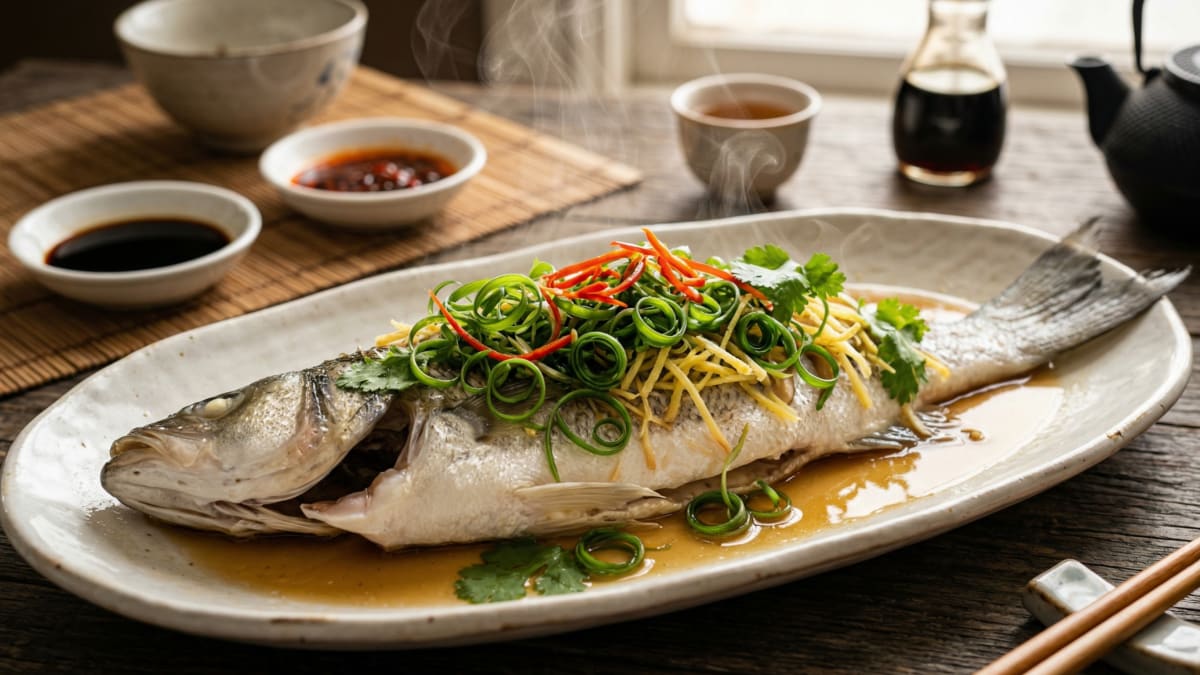
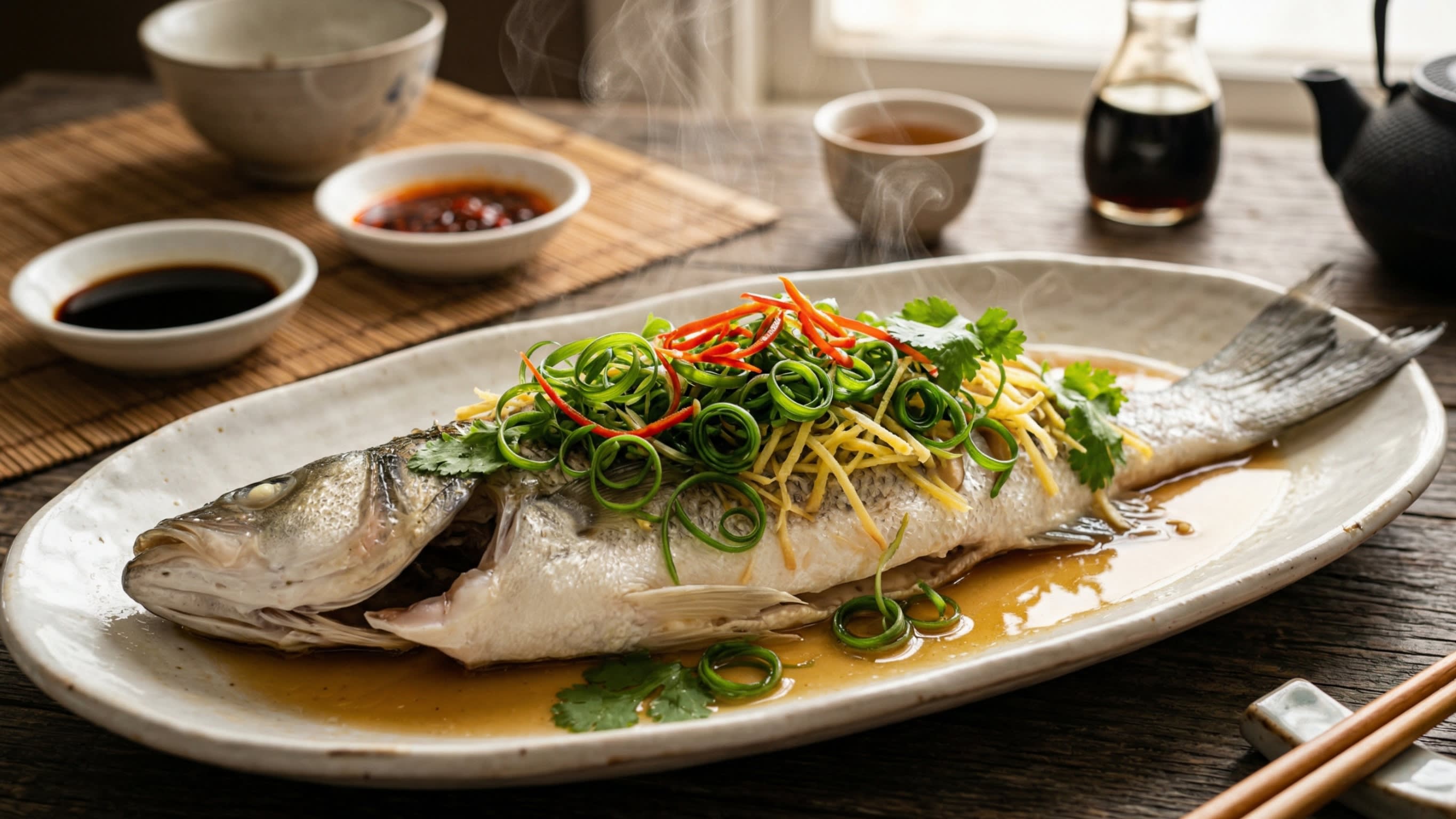
Once the fish is steamed and the dirty water is poured away, you pile a massive mountain of these fresh scallion curls and ginger on top of the fish. Then comes the Pōyóu (泼油 - Splashing Hot Oil). You heat a few tablespoons of cooking oil until it is literally smoking hot, and pour it directly over the raw aromatics. The violent, sizzling heat instantly extracts the essential oils from the ginger and scallions, creating an explosive, mouth-watering aroma that permanently perfumes the delicate fish.
Finally, you pour a sweet, seasoned soy sauce around the edges of the plate. The dish is complete.
🛒 Ingredients List
The Fish & Prep:
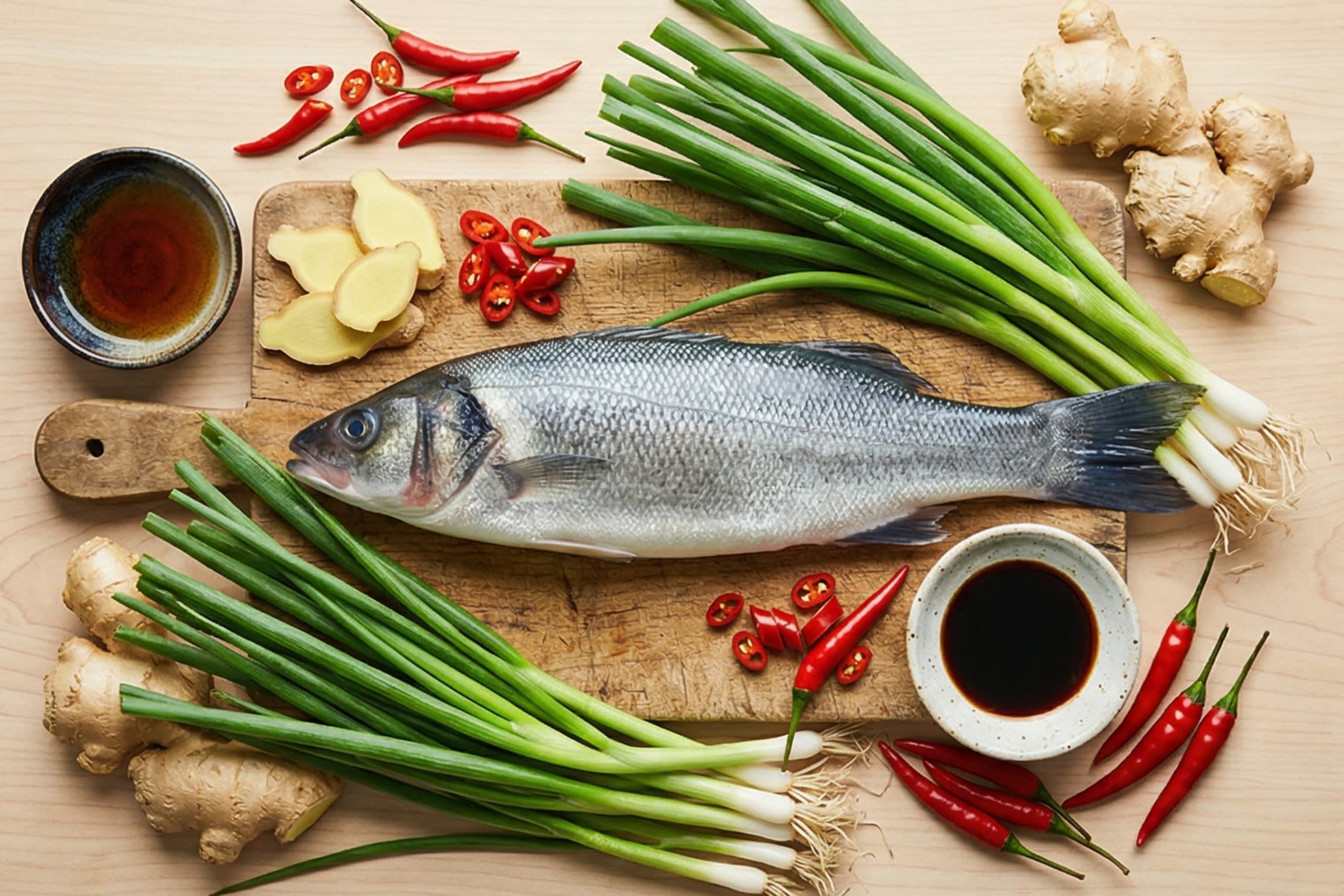
- 1 Whole Fish (about 1.5 lbs / 700g). Sea Bass, Branzino, Striped Bass, or Tilapia. Cleaned, scaled, gutted, and gills removed.
- 1 large knob of fresh Ginger (姜), peeled
- 4-5 stalks of fresh Scallions / Green Onions (葱)
- 2 tbsp Shaoxing Cooking Wine (绍兴酒)
- A pinch of Salt
The Aromatic Garnish (葱姜丝):
- 3 inches of the green parts of the Scallions, very finely julienned into long, thin threads
- 2 inches of fresh Ginger, very finely julienned into hair-like threads
- 1 fresh Red Chili (红辣椒), thinly julienned (Optional, mostly for beautiful color contrast)
The Sizzle & Sauce:
- 3 tbsp high-heat Cooking Oil (peanut, canola, or vegetable oil)
- 1/4 cup Seasoned Soy Sauce for Seafood (蒸鱼豉油 - Zhēngyú chǐyóu). This is a specialized, slightly sweetened soy sauce. If you cannot find it, mix 3 tbsp regular light soy sauce with 1 tbsp water, 1 tsp sugar, and a dash of sesame oil.
🍳 Step-by-Step Instructions
1. Prep the Aromatics (The Ice Water Trick): Take your finely julienned scallion greens and red chili threads and place them into a small bowl of ice-cold water. Within a few minutes, you will see them magically curl up into beautiful little springs. Set the finely julienned ginger aside.
2. Prepare the Fish (去腥): Wash the cleaned fish thoroughly under cold water, ensuring the dark bloodline along the spine inside the belly is completely scraped out. Pat the fish incredibly dry inside and out with paper towels. Make 3 deep diagonal slashes on both sides of the fish (cutting down to the bone). This helps the fish cook faster and more evenly. Rub the entire fish, inside and out, with a tiny pinch of salt and the Shaoxing cooking wine.
3. Build the Steaming Architecture: Take a heat-proof plate that is large enough to hold the fish. Take the remaining thick, white parts of the scallions and thick slices of ginger, and lay them flat on the plate. Place the fish directly on top of this ginger-scallion bed, elevating it slightly off the plate. Stuff a few more slices of ginger inside the belly cavity.
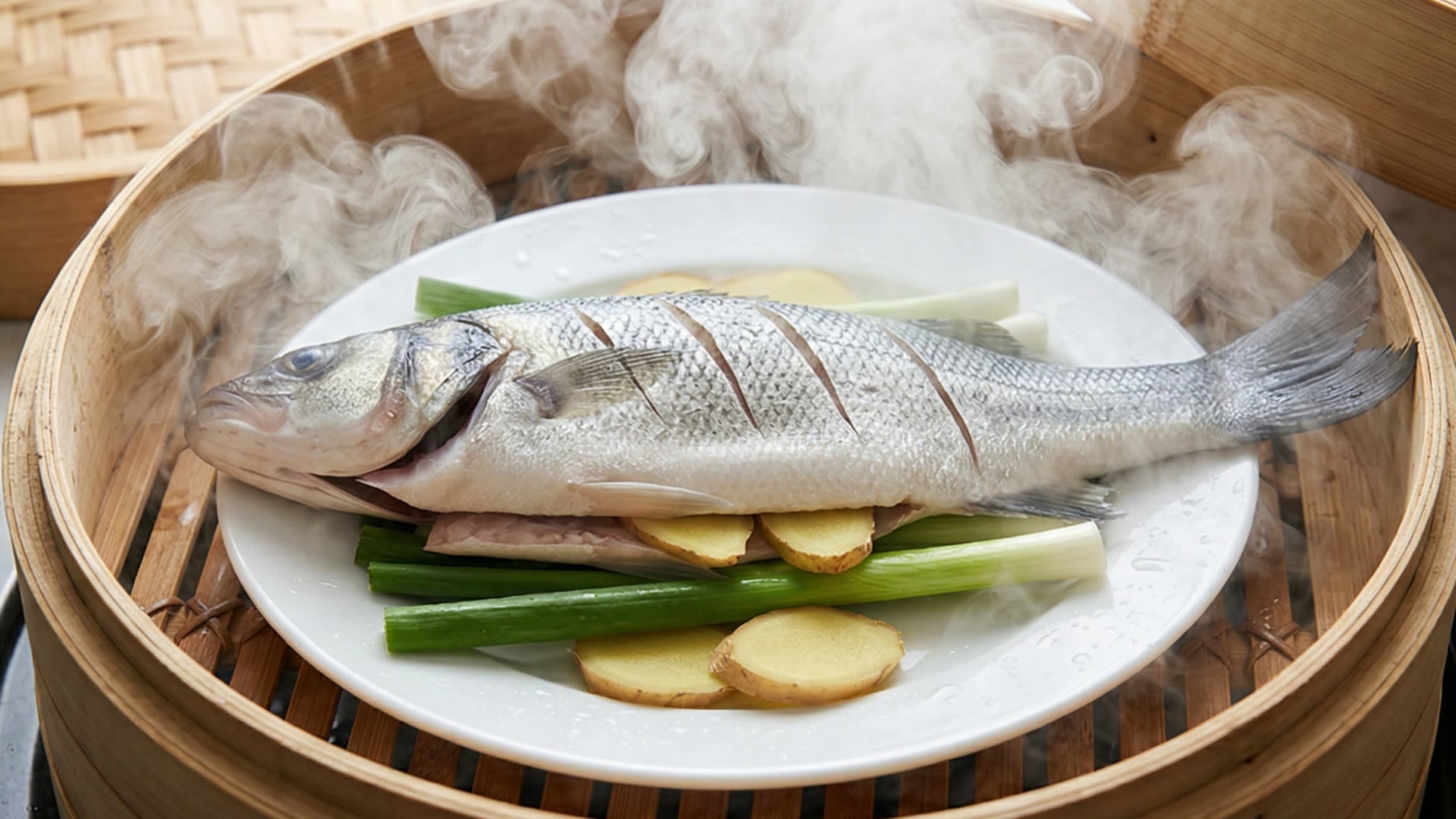
4. The Steam: Set up a wok or a large pot with a steaming rack. Add water and bring it to a furious, rolling boil. Never put the fish into a cold steamer! Once boiling, carefully place the plate with the fish onto the rack. Cover tightly with a lid. Steam over high heat for exactly 8 to 10 minutes (depending on the thickness of the fish).
5. The Chopstick Test: To check if the fish is perfectly cooked, poke a chopstick into the thickest part of the flesh right behind the gills, down to the spine. If the flesh is opaque white and flakes away from the bone effortlessly, it is done. Do not overcook it!
6. Drain the Fishy Water (Crucial Step): Carefully remove the hot plate from the steamer. Immediately, and very carefully, tilt the plate over your sink and pour away every single drop of the cloudy, watery liquid that has pooled at the bottom. Discard the thick ginger and scallions that were stuffed inside the belly and under the fish.
7. The Climax (泼油 - Sizzling the Oil): Drain your curled scallions and chilies from the ice water. Pile them, along with the julienned ginger, into a massive, beautiful mountain directly on top of the steamed fish. In a small saucepan, heat the 3 tablespoons of cooking oil over high heat until it begins to smoke slightly (about 375°F / 190°C). Carefully pour the smoking hot oil directly over the mountain of ginger and scallions. You will hear a loud, violent sizzle, and the most incredible aroma will instantly fill your kitchen.
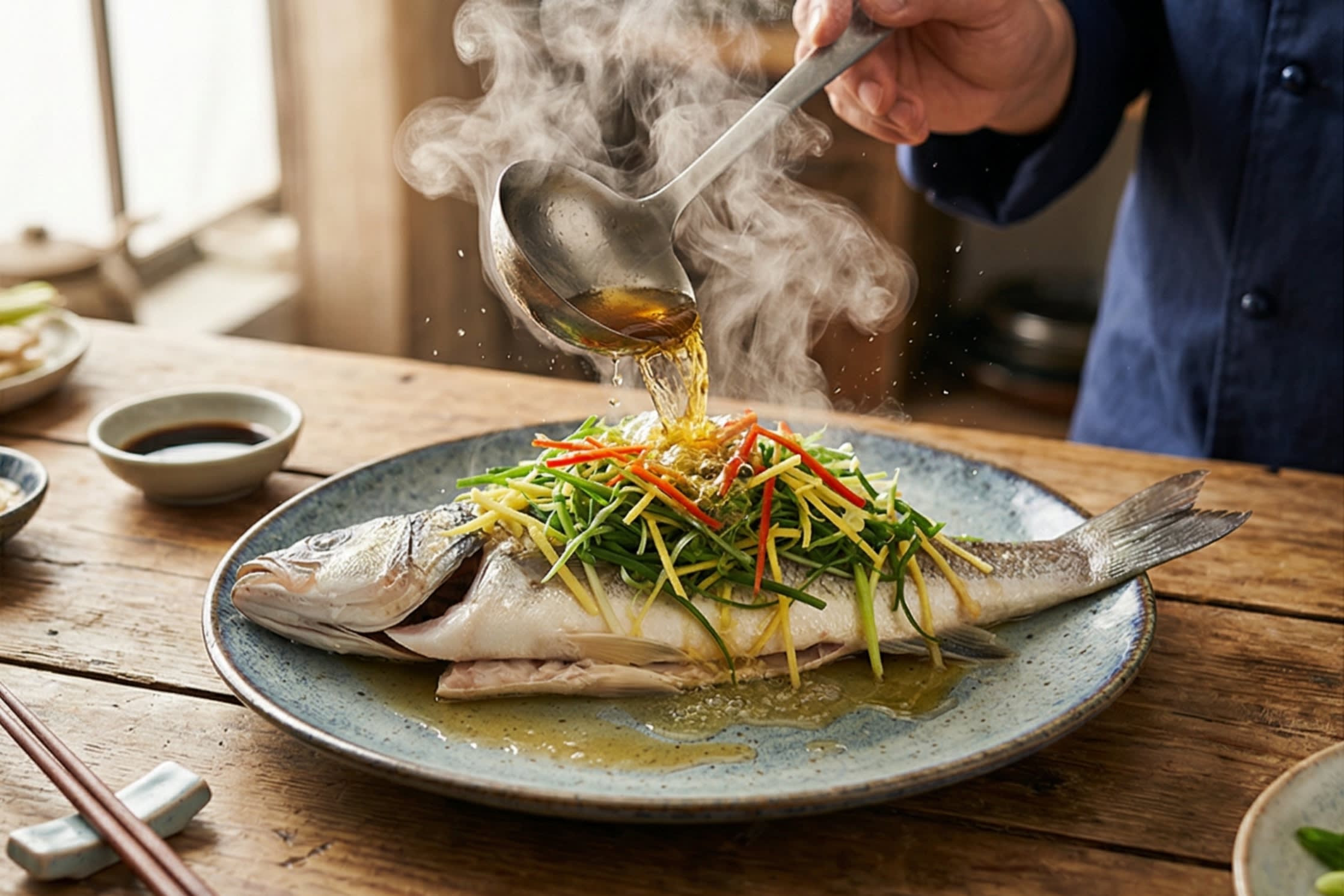
8. Dress and Serve: Finally, pour the Seasoned Soy Sauce for Seafood (蒸鱼豉油) gently around the edges of the plate (do not pour it directly over the crispy scallions, or they will get soggy). Serve immediately! To eat, use your chopsticks to pick off pieces of the delicate white flesh, dip it into the seasoned soy sauce pool, and eat it with a little bit of the hot-oil-infused scallions. Enjoy the absolute pinnacle of Cantonese cuisine!
💡 Troubleshooting & Pro Tips
- My fish is rubbery and tough. You overcooked it! Fish cooks astonishingly fast in steam. A standard 1.5 lb fish takes no more than 9 minutes. If you leave it in there for 15 minutes, the delicate proteins will seize, and the meat will become dry and tough.
- Why can’t I just use regular soy sauce? Regular light soy sauce is far too harsh and salty for delicate steamed fish. Zhengyu Chiyou (蒸鱼豉油) is specifically brewed to be sweeter, milder, and enhanced with umami specifically for seafood. If you can’t find it, you must dilute regular soy sauce with a little water, sugar, and sesame oil before using it.
- My steaming plate cracked! Make sure you are using a thick, heat-proof ceramic or stoneware plate. Cheap glass or thin plates can shatter under the extreme heat of a roaring steamer.
📦 Shop Authentic Seafood Essentials
To capture the delicate, sweet oceanic flavor of authentic Cantonese seafood, upgrading your kitchen with these specific tools and sauces is non-negotiable. (As an Amazon Associate, ChinaCurator earns from qualifying purchases.)
- Lee Kum Kee Seasoned Soy Sauce for Seafood (蒸鱼豉油) - The absolute soul of the dish. It provides the perfect balance of sweet, savory, and umami designed specifically for delicate fish.
- 10-Inch or 12-Inch Bamboo Steamer - The traditional, breathable vessel for perfectly circulating steam without trapping condensation that drips back onto your food.
- Stainless Steel Steaming Rack - Essential for converting any large wok or deep pan into a highly effective steaming chamber.