🦑 Introduction: The Undisputed King of Seafood Appetizers
Walk into any bustling Cantonese dim sum parlor or late-night Dai Pai Dong (open-air food stall) in Hong Kong, and you are guaranteed to see one dish on nearly every single table: Salt and Pepper Squid (椒盐鱿鱼 - Jiāoyán Yóuyú).
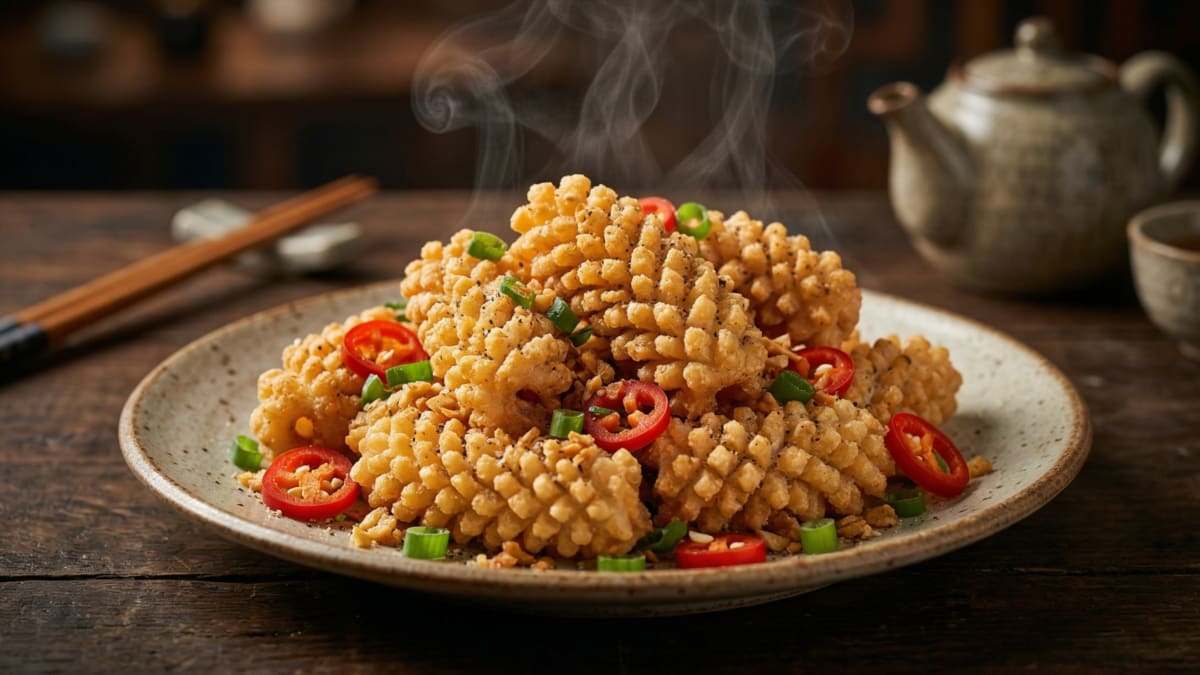
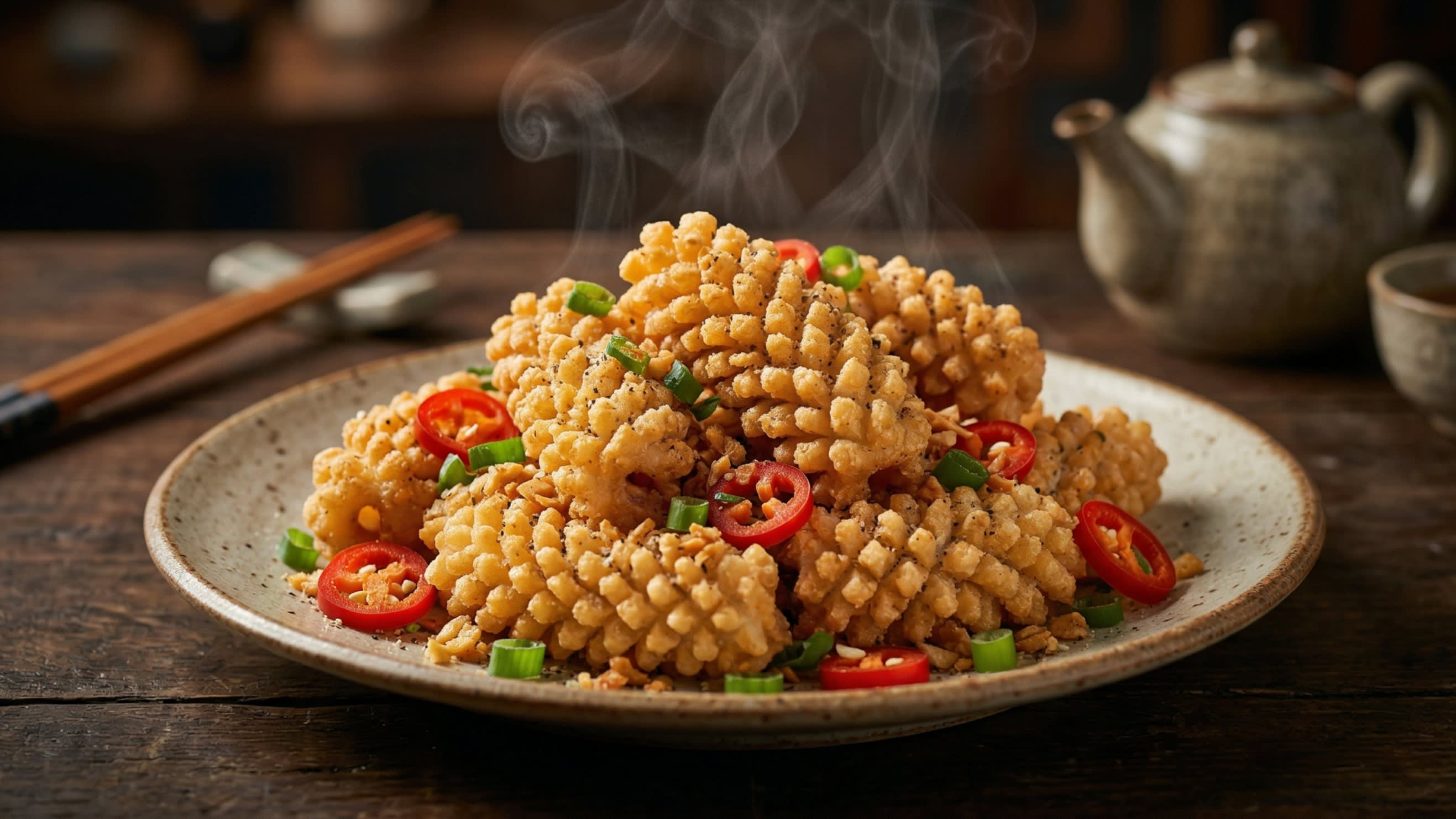
When executed perfectly, this dish is a sensory masterpiece and the ultimate bar snack. It features beautiful, intricate curls of fresh squid encased in a shatteringly crisp, incredibly light, golden crust. The moment your teeth break through that delicate crunch, you are met with a remarkably tender, almost buttery interior. The entire dish is then aggressively tossed in a blazing hot wok with fried garlic, fresh fiery chilies, scallions, and an explosive, highly aromatic roasted spice blend.
However, for Western home cooks, replicating this dish is often a frustrating disaster. You might end up with soggy, pale batter that immediately falls off in the pan. Worse, the squid itself turns into a tough, unchewable piece of rubber that tastes like a car tire.
Today, we are going to unveil the highly guarded culinary secrets of Chinese seafood chefs. We will teach you the legendary knife skills required to prevent rubbery squid, decode the true components of the “Salt and Pepper” spice mix, and reveal the specific Asian starch that guarantees a crust that stays crispy for hours.
🔪 The Knife Skills Secret: “Maisui Huadao” (麦穗花刀)
In Western cooking, squid is usually just sliced horizontally into “calamari rings.” While fine for thick batters, it is a fatal mistake for authentic Chinese stir-frying or flash-frying. Squid muscle fibers are incredibly dense. If exposed to heat for even a few seconds too long, those fibers violently contract, turning the seafood into tough rubber.
To solve this, Chinese chefs employ an exquisite knife technique known as Màisuì huādāo (麦穗花刀), which translates to the “Wheat Ear” or “Pinecone” cut.
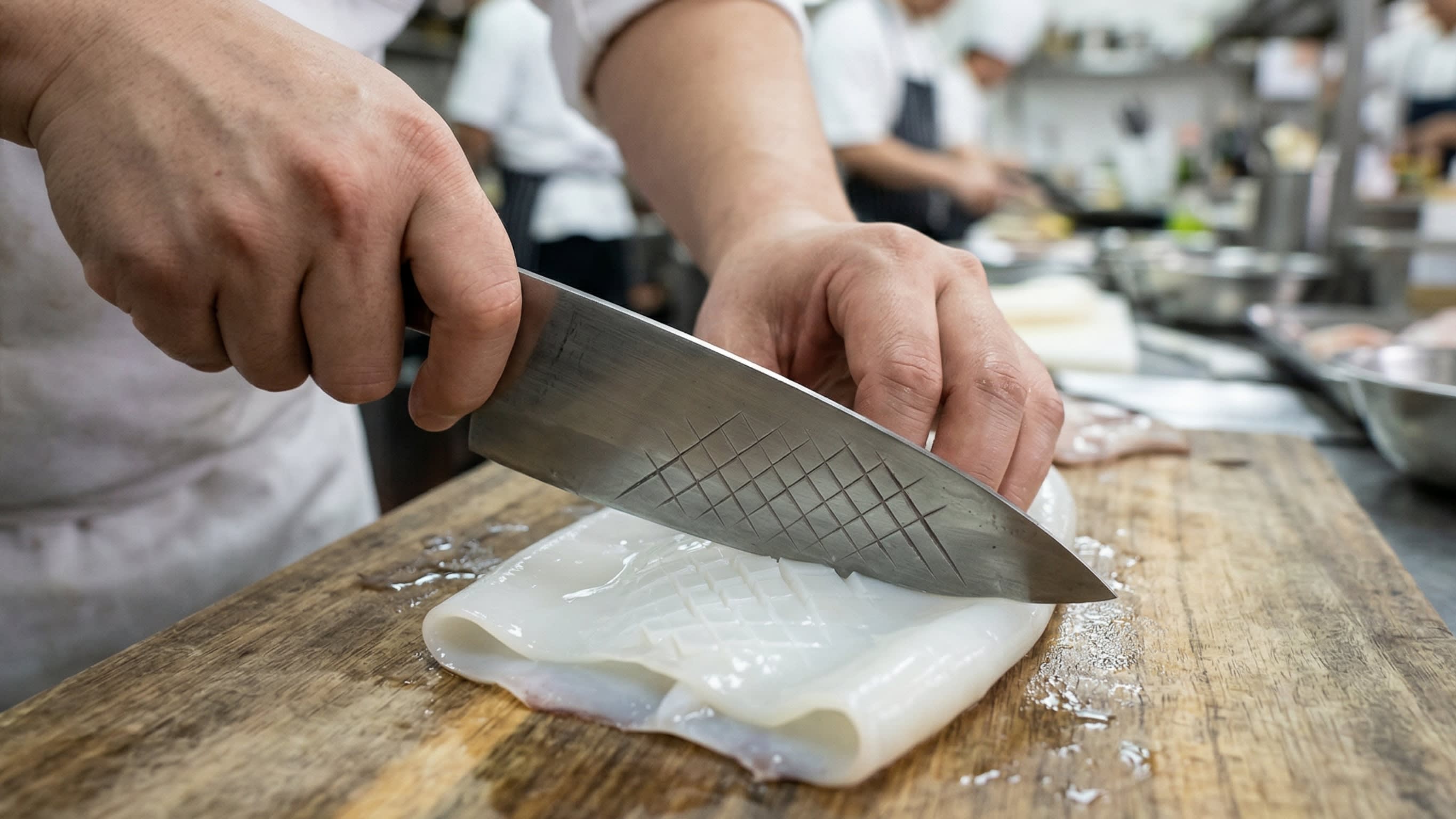
You take a flat tube of squid and use a very sharp knife to score a tight, diagonal crosshatch pattern on the inside surface of the flesh, being careful not to cut all the way through. This brilliant technique serves three crucial physical purposes:
- The Tenderizer: By physically severing the tight muscle fibers, you completely destroy the squid’s ability to contract and turn rubbery. The meat remains impossibly tender.
- The Surface Area: The deep grooves act like tiny pockets, gripping the batter tightly so it never falls off in the frying oil.
- The Magic Curl: When the scored squid hits the hot oil, the heat causes it to instantly roll up backward, expanding the crosshatch pattern outward to look like a beautiful, blooming pinecone. Because it curls, it cooks completely in less than 60 seconds!
🧂 Decoding the Seasoning: What is “Jiao Yan”?
Another massive misconception is the seasoning itself. If you simply sprinkle Western table salt and black pepper over your fried squid, you will be deeply disappointed. It will lack the signature intoxicating, street-food aroma.
In Chinese cuisine, Jiāoyán (椒盐) translates to “Sichuan Peppercorn Salt.” It is a highly specific, traditional dry rub. To make it, you must toast coarse sea salt and whole Sichuan Peppercorns (花椒 - Huājiāo) together in a dry wok over low heat until the salt turns slightly yellow and the peppercorns release their incredibly fragrant, citrusy, and slightly numbing essential oils. You then grind this mixture into a fine powder, often adding a pinch of white pepper and five-spice powder. This roasted spice bomb is the true soul of the dish.
🔬 The Indestructible Crust: Sweet Potato Starch
If your batter is falling off or turning soggy, you are probably using all-purpose wheat flour. Wheat flour contains gluten, which absorbs moisture and becomes a heavy, soft paste.
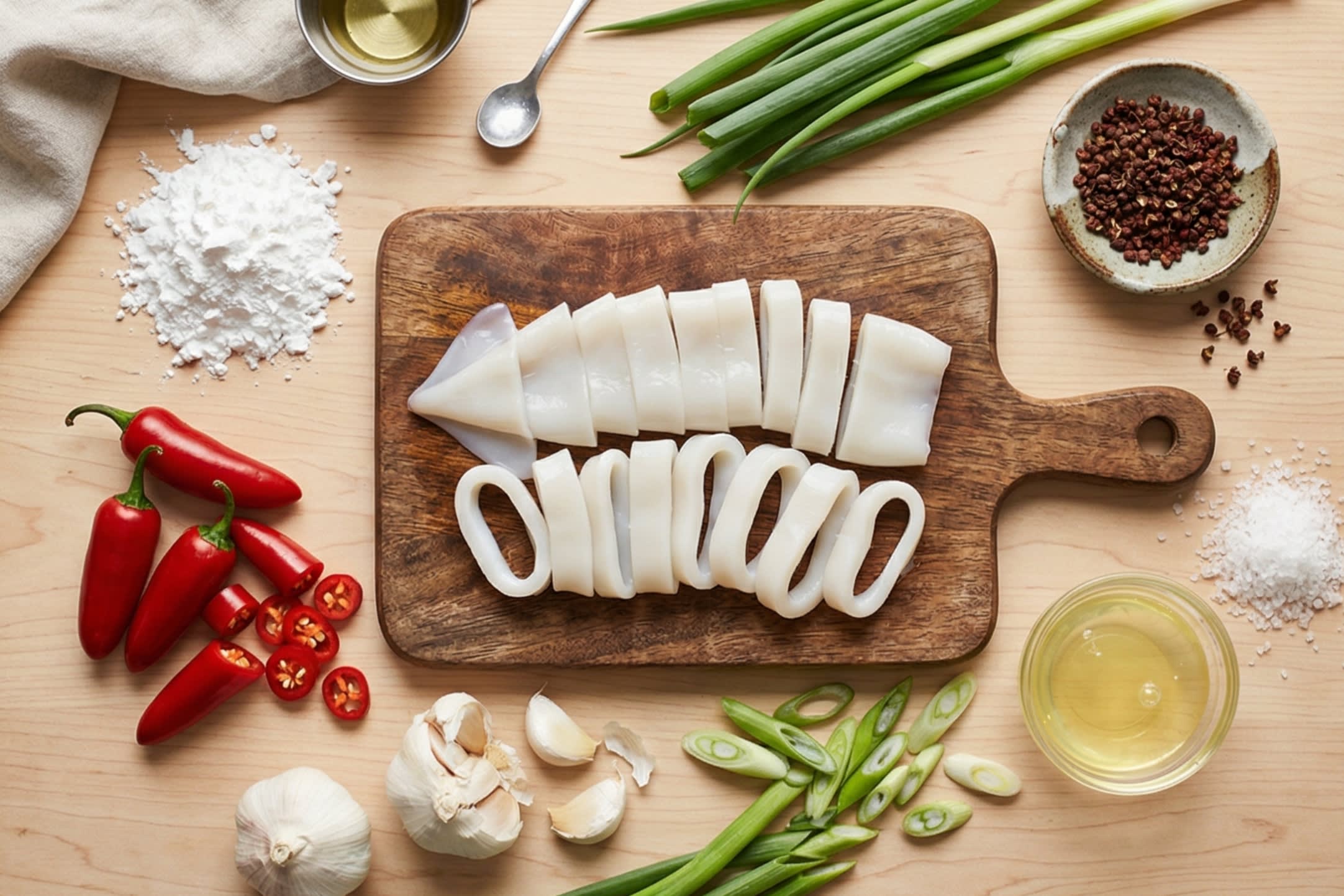
Authentic Chinese deep-frying for dishes requiring a flaky, craggy crust relies on Sweet Potato Starch (红薯淀粉 - Hóngshǔ diànfěn). Unlike fine cornstarch, sweet potato starch often comes in coarse, tiny granules. When you toss the marinated squid in this coarse starch, the granules adhere to the meat. When they hit the boiling oil, they expand and fry into a microscopic, glass-like shell with tiny crispy craters that capture the salt and pepper seasoning perfectly. This texture is known as Wàisū lǐnèn (外酥里嫩 - crispy outside, tender inside).
🛒 Ingredients List
The “Jiao Yan” Seasoning (椒盐):
- 1 tbsp Whole Sichuan Peppercorns (花椒)
- 1 tbsp Coarse Sea Salt or Kosher Salt
- 1/2 tsp White Pepper powder (白胡椒粉)
- 1/4 tsp Five-Spice Powder (五香粉)
The Squid & Marinade:
- 1 lb (450g) Cleaned Squid Tubes (鱿鱼 - Yóuyú). Fresh or thawed from frozen works perfectly.
- 1 tbsp Shaoxing Cooking Wine (绍兴酒)
- 1/2 tsp Salt
- 1 large Egg White (蛋清) - The crucial binder that helps the starch stick!
The Crust & Frying:
- 1 cup Coarse Sweet Potato Starch (红薯淀粉). If you absolutely cannot find this, pure Cornstarch (玉米淀粉) is an acceptable substitute.
- 4 cups high-heat Cooking Oil (peanut, canola, or vegetable oil)
The Aromatic Garnish:
- 4 cloves Garlic, very finely minced (蒜末)
- 1-2 fresh Red Chilies or Jalapeños (红辣椒), thinly sliced into rings
- 2 stalks Scallions (葱花), finely chopped
🍳 Step-by-Step Instructions
1. Make the Authentic Jiao Yan (椒盐): Heat a dry wok or skillet over medium-low heat. Add the coarse salt and whole Sichuan peppercorns. Toast them continuously for 3 to 5 minutes until the salt takes on a slightly yellowish hue and the peppercorns smell incredibly fragrant and smoky. Remove from heat, let it cool, and grind the mixture into a fine powder using a spice grinder or mortar and pestle. Stir in the white pepper and five-spice powder. Set aside.
2. The “Pinecone” Cut (麦穗花刀): Take a cleaned squid tube and cut a slit down one side so it opens up like a book. Crucial: Identify the inside of the squid tube (the side that originally housed the organs). You must score the inside, otherwise, it will not curl correctly! Using a very sharp knife, lightly score diagonal lines across the flesh, spaced about 1/8-inch apart, cutting only halfway through the meat. Do not cut all the way through! Then, rotate the squid 90 degrees and score diagonal lines in the opposite direction, creating a tight crosshatch pattern. Finally, cut the scored squid into bite-sized rectangular pieces.
3. Marinate and Coat: Place the scored squid pieces in a bowl. Add the Shaoxing wine and 1/2 tsp salt. Massage well. Add the egg white and mix vigorously until the squid is completely coated in the sticky egg wash. Place your sweet potato starch in a wide bowl. Working in small batches, toss the wet squid pieces into the starch. Press the starch firmly into the deep grooves of the crosshatch cuts. Shake off the excess powder vigorously so it doesn’t burn in the oil.
4. The Flash Fry (First Fry): Heat your oil in a wok or Dutch oven to 375°F (190°C). Carefully drop the coated squid pieces into the hot oil one by one. The magic happens instantly: within 5 seconds, the squid will violently curl up backward into beautiful pinecone shapes! Fry them for only 45 to 60 seconds until the crust is pale and firm. Use a spider strainer to remove them immediately. Do not overcook them!
5. The Second Fry (复炸 - Fùzhá): To achieve that shatteringly crisp restaurant texture, turn the heat to maximum and let the oil hit 400°F (200°C). Drop all the rested squid back into the screaming hot oil for exactly 20 to 30 seconds. Watch them turn a gorgeous, deep golden brown. Remove and drain well on a wire rack.
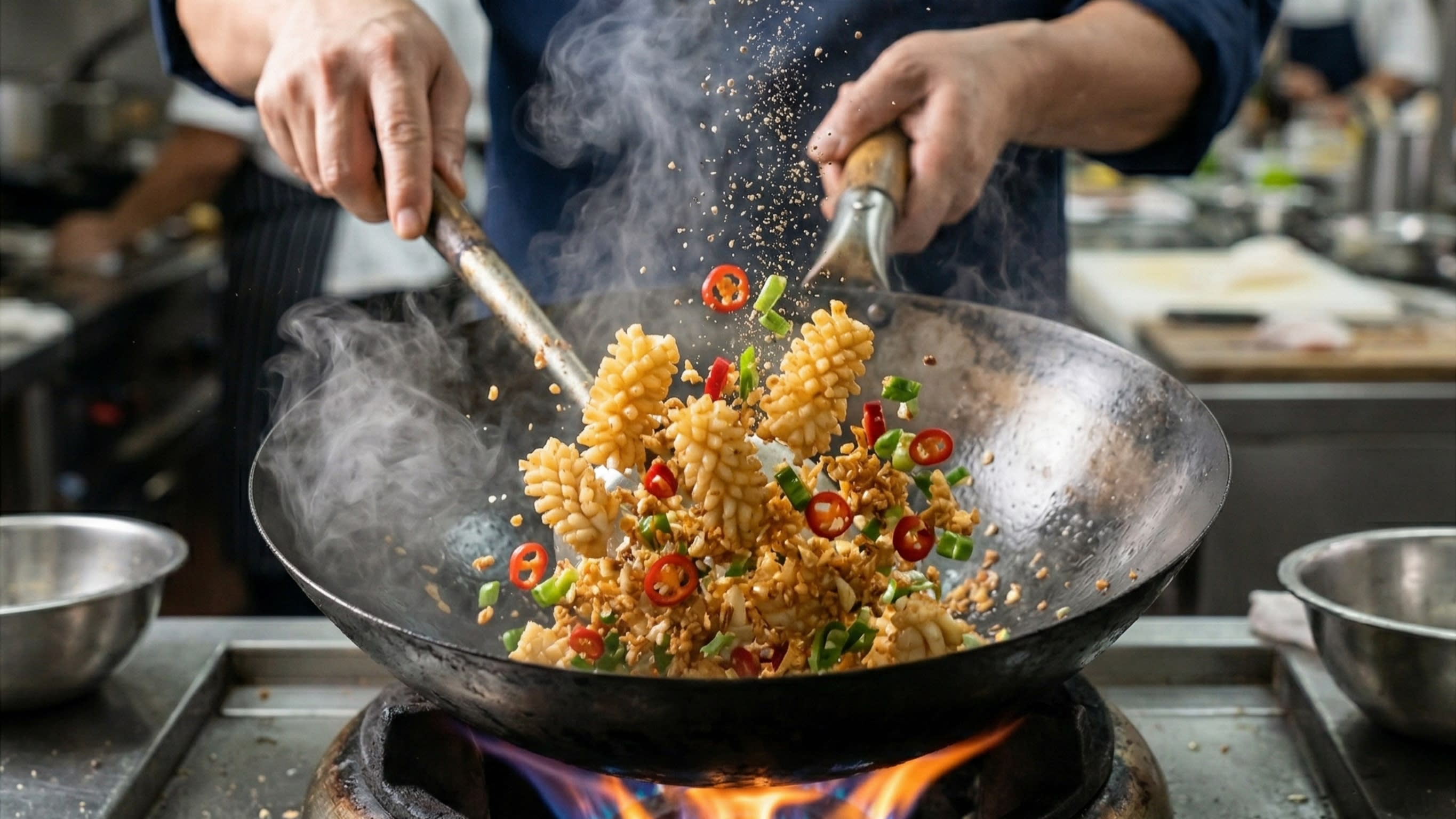
6. The Aromatic Toss: Carefully pour all the hot frying oil out of the wok, leaving just 1 teaspoon of oil. Turn the heat down to medium. Add the minced garlic and sliced red chilies. Stir-fry for 15 seconds until the garlic turns golden and extremely fragrant.
7. Season and Serve: Dump your crispy, double-fried squid into the wok with the garlic and chilies. Turn off the heat entirely! Immediately sprinkle 1 to 2 teaspoons of your prepared Jiao Yan (Salt and Pepper) spice mix over the squid, along with the fresh scallions. Toss everything aggressively for 10 seconds so the hot oil and steam bind the spices to the craggy crust. Plate immediately and serve piping hot with ice-cold beer!
💡 Troubleshooting & Pro Tips
- Why is my squid chewy and rubbery? Two reasons: You either forgot to score it (which cuts the muscle fibers), or you left it in the frying oil for too long. Squid cooks in literally seconds. If you leave it in boiling oil for 3 minutes, it will turn into a hockey puck. Flash fry it quickly!
- The batter fell off in the oil! You likely skipped the egg white binder, or you didn’t press the dry starch hard enough into the grooves of the meat. Make sure to thoroughly coat every crevice before shaking off the excess.
- Can I use Air Fryer? While deep-frying provides the absolute best “pinecone” curl and flakiest crust, you can make a healthier version. Generously spray the starch-coated squid with cooking oil and air fry at 400°F (200°C) for 6-8 minutes, shaking the basket halfway, before tossing them in a pan with the garlic and chilies.
📦 Shop Authentic Dim Sum Essentials
To capture the authentic, shatteringly crisp texture and the explosive flavor profile of a Hong Kong seafood stall, upgrading your pantry is non-negotiable. (As an Amazon Associate, ChinaCurator earns from qualifying purchases.)
- Coarse Sweet Potato Starch (红薯淀粉) - The absolute secret to an ultra-crispy, craggy, flaky crust that doesn't get soggy. Do not use wheat flour!
- Premium Whole Sichuan Peppercorns (花椒) - Essential for toasting your own authentic "Jiao Yan" salt blend. The citrusy, numbing aroma is irreplaceable.
- Asian Stainless Steel Spider Strainer - The mandatory tool for safely scooping delicate, curled squid out of boiling hot oil in seconds.
- Traditional Carbon Steel Wok - The ultimate vessel for flash-frying and rapidly tossing the crispy squid in the aromatic spices.