🌶️ Introduction: The Undisputed King of Sichuan Cuisine
If you ask a Westerner to name the most famous Sichuan dish, they will almost always say Kung Pao Chicken or Mapo Tofu. But if you walk into any home, local diner, or banquet hall in Sichuan province and ask a native what the absolute “King of Sichuan Cuisine” (川菜之首) is, the answer is overwhelmingly unanimous: Twice Cooked Pork (回锅肉 - Huíguōròu).
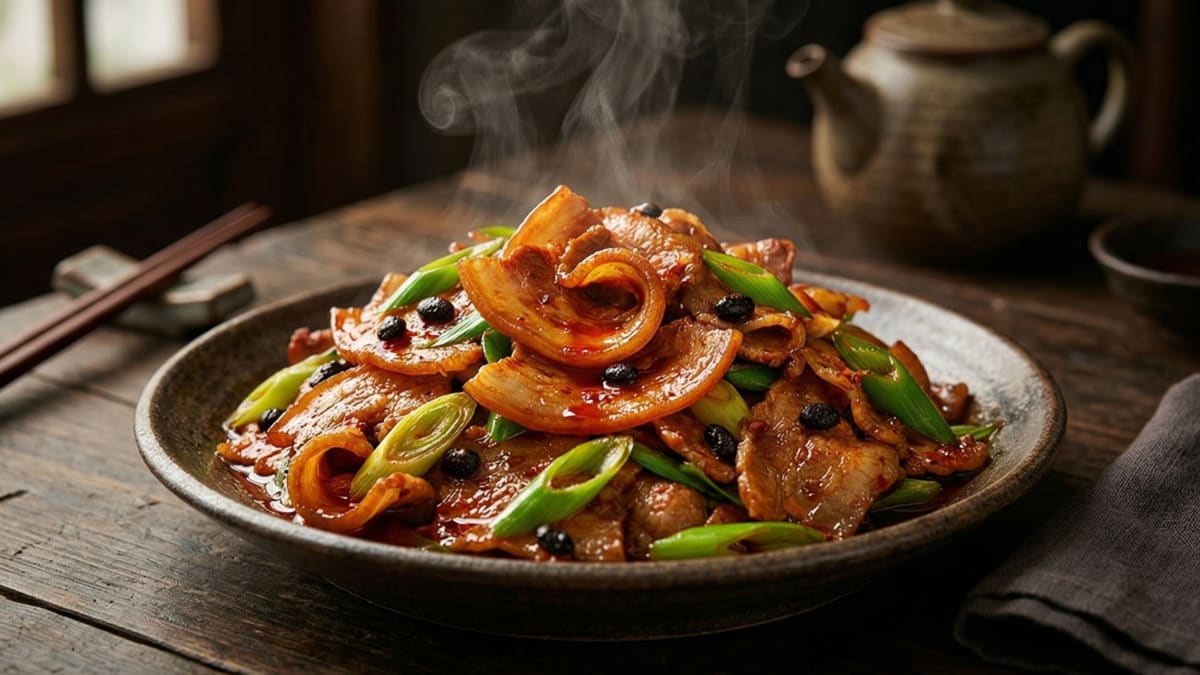
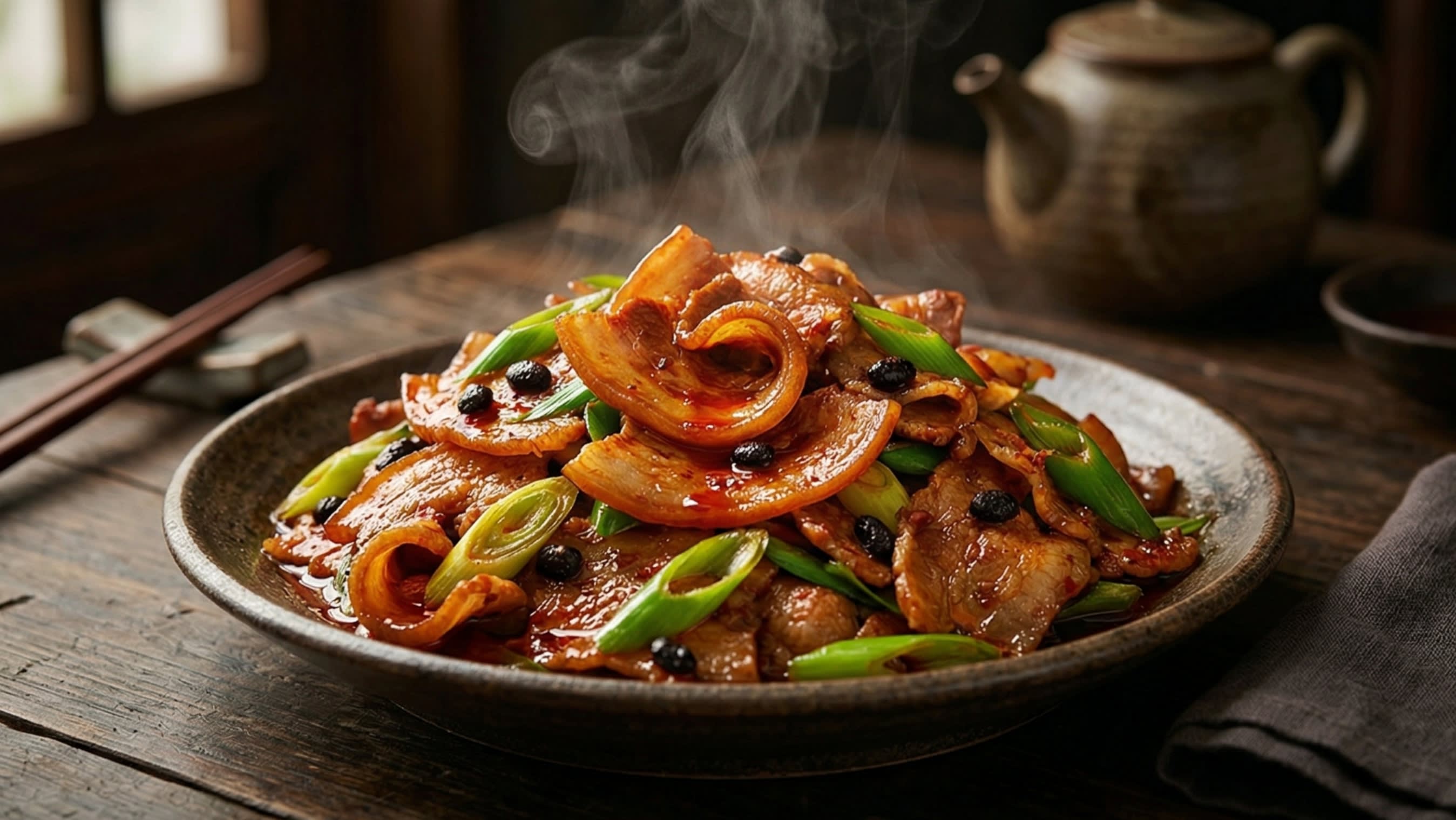
This legendary dish is the ultimate test of a Sichuan chef’s wok skills. It is an incredibly intense, savory, slightly sweet, and fiery masterpiece. It features paper-thin slices of rich, skin-on pork belly that have been expertly seared until the edges crisp up and curl into tiny little bowls. The pork is then vigorously tossed in a blazing hot wok with a complex, umami-bomb sauce made from fermented broad beans, black beans, and sweet bean paste, paired with the sharp, sweet crunch of fresh garlic scapes or leeks.
Many Western home cooks avoid making this dish because they fear the pork belly will taste like a mouthful of pure, greasy fat. Today, we are going to completely shatter that fear. We will reveal the ingenious “twice-cooked” method that physically strips away the heavy grease, the secret to achieving the legendary curling meat slices, and the “Holy Trinity” of traditional Sichuan sauces that you absolutely must have in your pantry.
🔬 The Culinary Science: Why Cook it Twice?
The Chinese name Huíguō (回锅) literally translates to “returning to the wok.” This isn’t just a quirky name; it is a highly functional, two-step culinary process designed to transform tough, fatty pork into a melt-in-your-mouth delicacy.
1. The First Cook: The Boil (煮肉)
You cannot simply slice raw pork belly and throw it into a stir-fry. It will be tough, chewy, and impossibly greasy. The first step is to submerge a whole slab of Skin-on Pork Belly (带皮五花肉 - Dàipí Wǔhuāròu) into boiling water heavily seasoned with ginger, scallions, and Sichuan peppercorns. Boiling the pork for 20-30 minutes does three things: it removes the gamey blood and impurities, it softens the tough skin, and it firms up the meat structure. Chef’s Secret: After boiling, you must let the pork cool completely (or put it in the fridge for 20 minutes). Cooling hardens the fat, allowing you to slice the meat paper-thin without it falling apart!
2. The Second Cook: Rendering the Fat (煸炒出油)
Once thinly sliced, the pork “returns to the wok” for a dry sear over medium heat. This is the magic moment. The heat violently renders (melts) the excess liquid fat out of the white layers of the pork belly. By the time you are done, the pork slices are incredibly fragrant, slightly crispy, and have lost almost all their heavy greasiness.
🏮 The Mark of Perfection: “Deng Zhan Wo” (灯盏窝)
If you want to know if a chef in Chengdu has truly mastered Hui Guo Rou, you look at the shape of the meat.
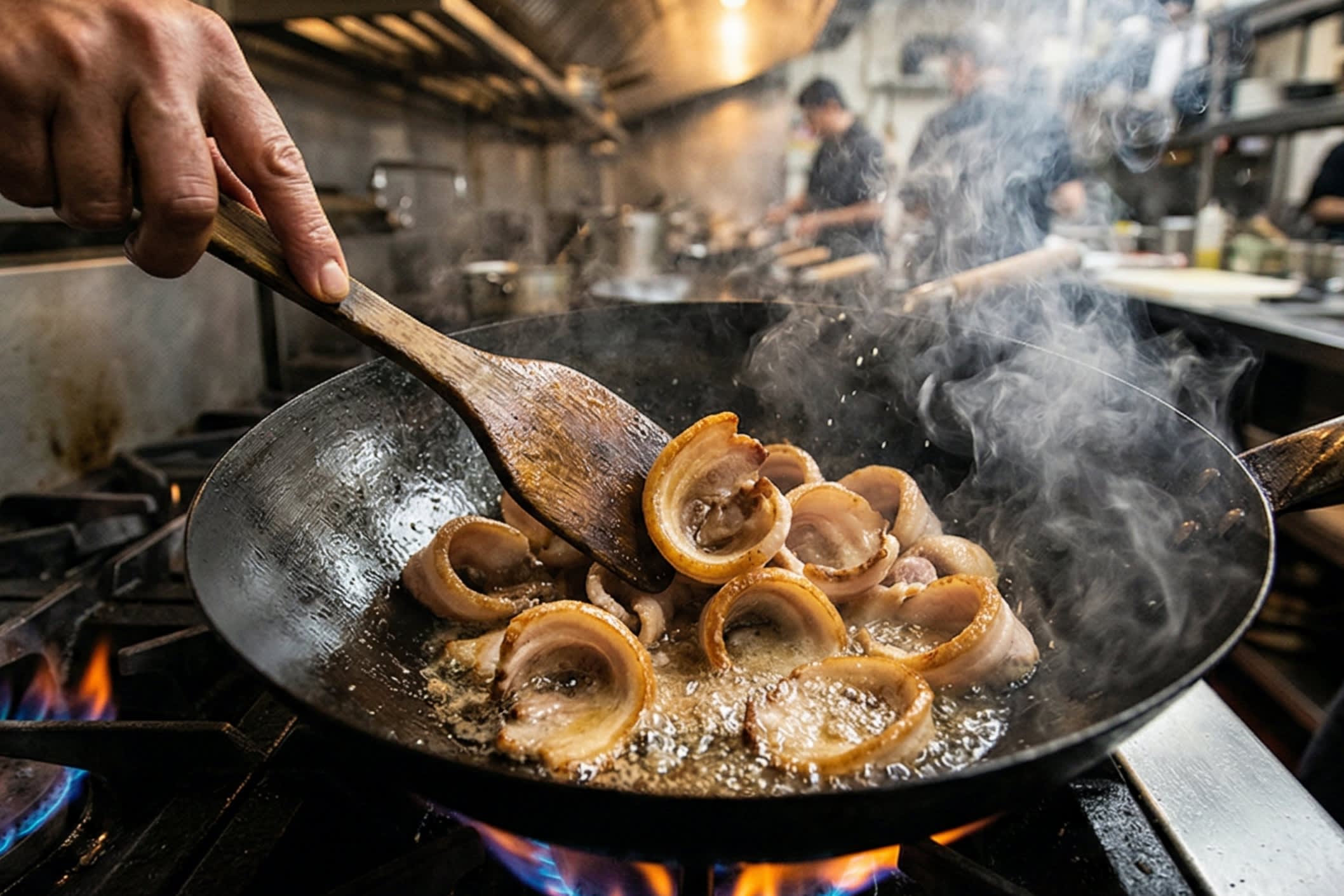
When you slice the pork belly paper-thin (with the skin still attached) and render the fat in the wok, the skin and the lean meat contract at different rates due to the heat. This physical reaction causes the flat slices of pork to curl up at the edges, forming a shape that looks exactly like a tiny, traditional Chinese oil lamp bowl.
In Chinese culinary terms, this beautiful curl is called Dēngzhǎnwō (灯盏窝 - Lantern Bowl). These tiny meat bowls are absolutely crucial because they act as perfect little scoops, catching and holding onto the intense, fiery red sauce and fermented black beans!
🏺 The Holy Trinity of Sichuan Flavor
To achieve the authentic, mind-blowing flavor of a Chengdu street-side restaurant, you cannot rely on generic soy sauce. You must use the “Holy Trinity” of traditional Sichuan fermented sauces.
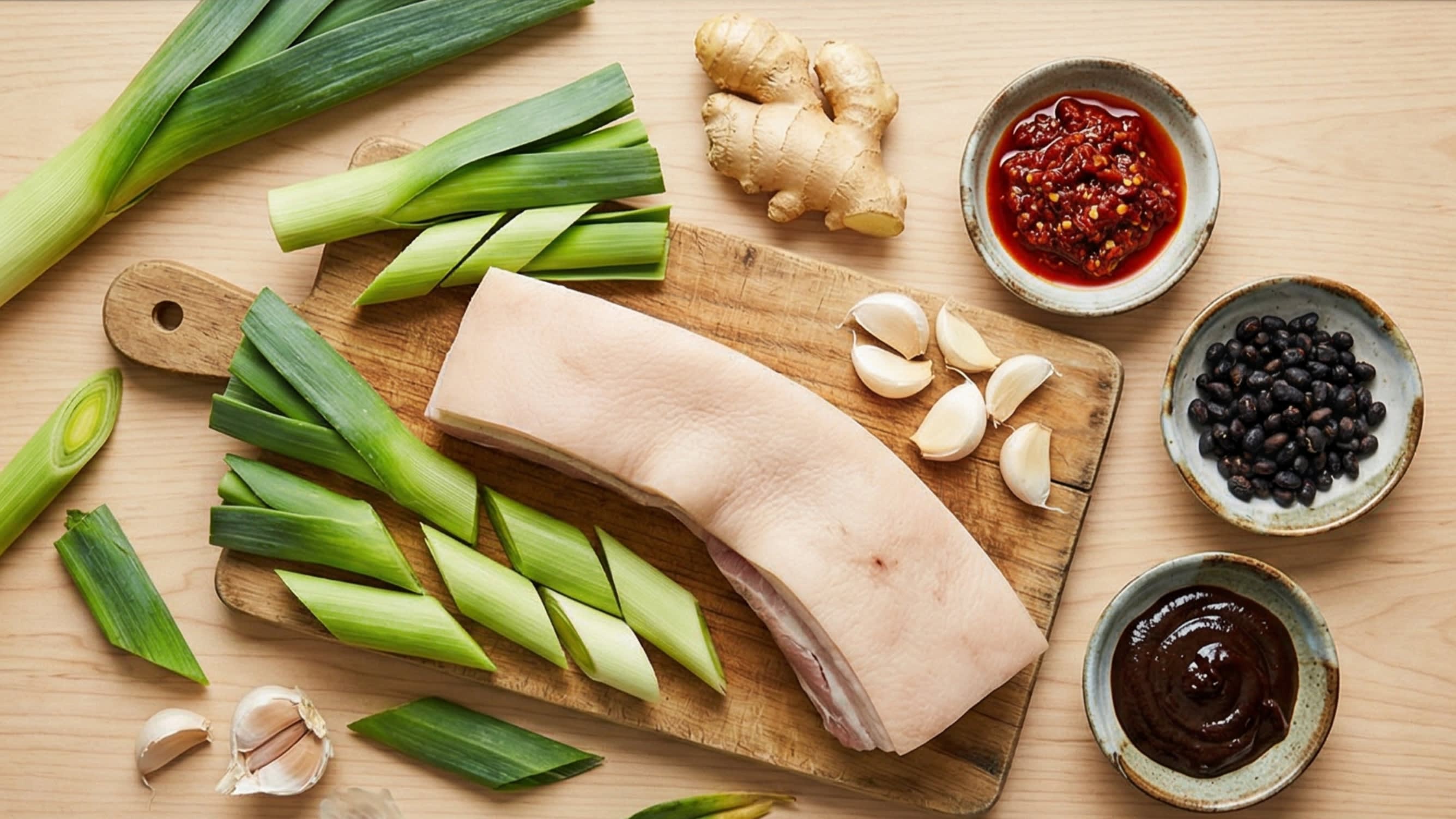
- Pixian Doubanjiang (郫县豆瓣酱): The absolute soul of Sichuan cooking. It is a fermented paste made from chili peppers and broad beans. It provides an intense, earthy, spicy heat and a brilliant ruby-red oil.
- Douchi (豆豉): These are fermented, salted black soybeans. They look like tiny black pebbles and provide a massive, pungent, savory umami explosion that acts as the backbone of the dish.
- Tianmianjiang (甜面酱): Also known as Sweet Bean Sauce. Because Doubanjiang and Douchi are aggressively salty and spicy, you need this dark, sweet, molasses-like fermented wheat paste to balance the flavor profile and add a beautiful caramelized glaze to the pork.
🛒 Ingredients List
The First Cook (Boiling the Pork):
- 1 lb (about 450g) Skin-on Pork Belly (带皮五花肉). Skin-on is mandatory for the “Lantern Bowl” curl!
- 3 slices fresh Ginger
- 2 stalks Scallions
- 1 tsp whole Sichuan Peppercorns (花椒)
- 1 tbsp Shaoxing Cooking Wine (绍兴酒)
The Holy Trinity Sauce Matrix:
- 1.5 tbsp Pixian Doubanjiang (郫县豆瓣酱), finely minced so no large bean chunks remain
- 1 tbsp Fermented Black Beans (豆豉 - Dòuchǐ), lightly rinsed and roughly chopped
- 1 tbsp Sweet Bean Sauce (甜面酱 - Tiánmiànjiàng)
- 1 tsp Light Soy Sauce (生抽)
- 1 tsp Sugar (糖)
The Aromatics & Veggies:
- 3 large Leeks or Garlic Scapes (蒜苗 / 青蒜 - Suànmiáo). Cut on a diagonal into 2-inch pieces. Separate the thicker white stems from the green leafy parts.
- 3 cloves Garlic, sliced
- 1 thumb-sized piece of fresh Ginger, sliced
- 1 tbsp Cooking Oil (for the wok)
🍳 Step-by-Step Instructions
1. The First Cook (煮肉): Place the whole slab of pork belly into a pot of cold water. Add the ginger slices, scallions, Sichuan peppercorns, and Shaoxing wine. Bring to a boil, then reduce the heat to medium-low and simmer for 20 to 25 minutes. You should be able to poke a chopstick through the meat, but it should still be firm, not falling apart.
2. Chill and Slice: Remove the pork from the water and let it cool completely. Pro tip: Place it in the freezer for 15-20 minutes. Once the fat has hardened, use your sharpest knife to cut the pork into incredibly thin, large slices (about 1/16-inch thick).
3. Render the Fat (煸炒出油): Heat a wok over medium heat. Add 1 tablespoon of cooking oil to lubricate the pan. Add the thin pork slices. Slowly stir-fry them for about 4 to 5 minutes. You will see liquid fat rendering out into the wok, and the edges of the pork will begin to crisp up and magically curl into the Deng Zhan Wo (灯盏窝) lantern shape! If your pork belly was very fatty, you might have too much oil in the wok now. Pour out the excess, leaving only about 2 tablespoons of oil in the pan.
4. Fry the Holy Trinity (炒红油): Push the curled pork slices to the side of the wok. In the center, where the hot oil is pooling, add the minced Doubanjiang (豆瓣酱) and the chopped fermented black beans (豆豉). Stir-fry them in the oil over medium heat for 30 seconds. The hot oil will extract the fiery red pigment from the chili paste, turning the entire wok a beautiful, glowing ruby red.
5. Caramelize the Sauce: Add the sliced garlic, sliced ginger, and the Sweet Bean Sauce (甜面酱). Toss everything together with the pork slices. Add the light soy sauce and sugar. Stir-fry aggressively for 1 minute until the pork absorbs the dark, sweet, and spicy flavors and becomes deeply caramelized.
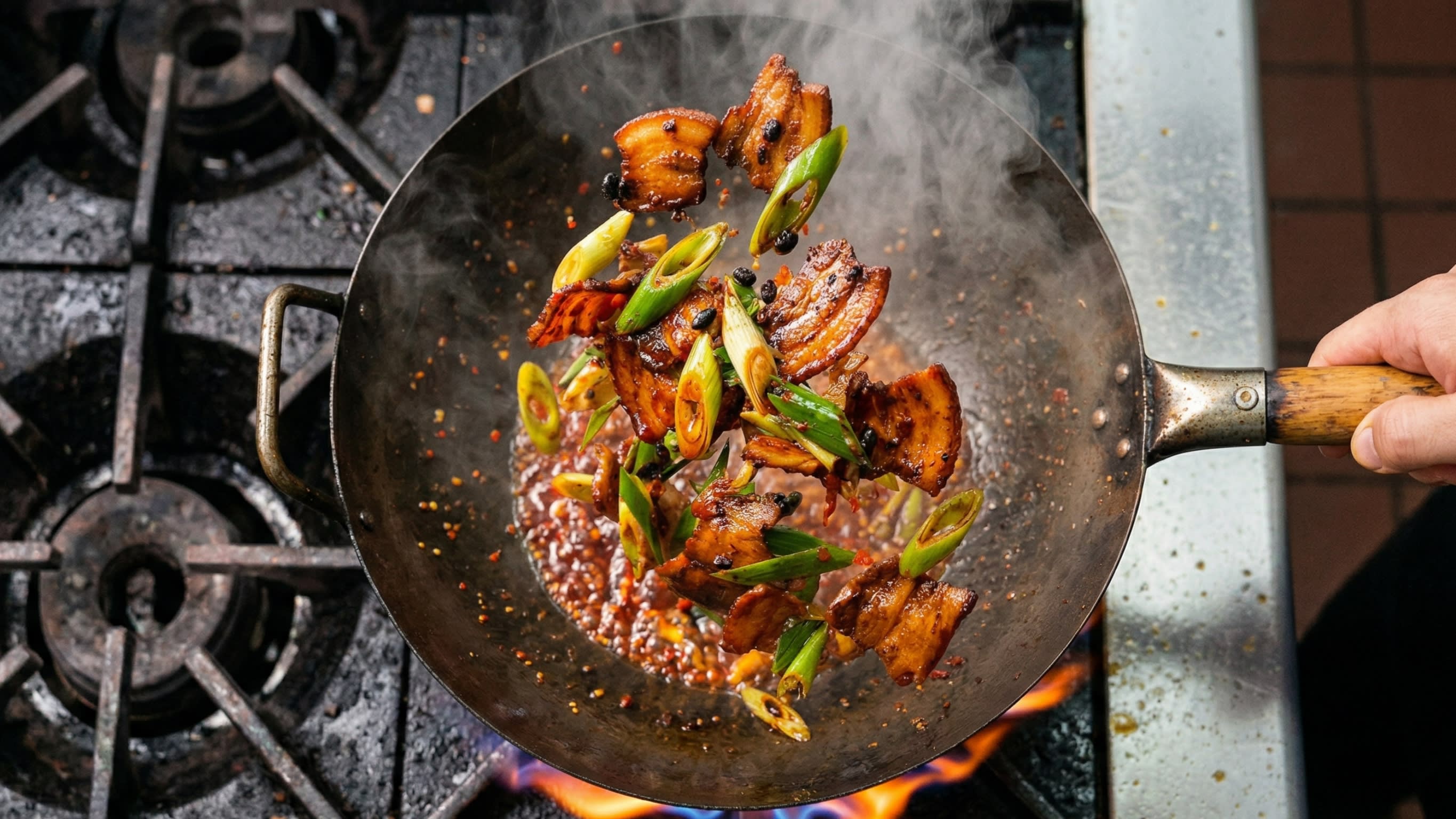
6. The Final Crunch (断生): Add the thicker white stems of the leeks (or garlic scapes) to the wok first. Toss for 30 seconds. Finally, add the green leafy parts. Stir-fry for another 20 seconds. You want the leeks to wilt slightly but remain incredibly crisp and vibrant green (断生 - Duan Sheng).
7. Serve: Turn off the heat. Plate this breathtaking, red-glowing masterpiece immediately. The intensely savory, spicy, and rich flavor of Twice Cooked Pork demands to be eaten with massive bowls of plain steamed white rice. Enjoy the ultimate Sichuan experience!
💡 Troubleshooting & Pro Tips
- Why is my pork tough and chewy? You probably sliced the pork too thick, or you didn’t boil it long enough during the first step. The slices must be almost paper-thin so the fat can render out quickly in the wok without overcooking the lean meat.
- The dish is a greasy disaster. You didn’t render the fat properly in Step 3! The goal of the dry-sear is to melt the fat out of the pork. If your wok looks like a swimming pool of oil before you add the sauces, you must pour the excess oil away!
- I can’t find Garlic Scapes or Leeks. In authentic Sichuan cooking, Suànmiáo (蒜苗 - Garlic Scapes/Stems) provide an incredibly sharp, sweet, garlicky crunch that cuts through the rich pork fat. If you cannot find them, large Leeks are the best substitute. Large green bell peppers or white onions can also be used in a pinch!
📦 Shop Authentic Sichuan Essentials
To capture the authentic, complex, and fiery flavor profile of traditional Sichuan cuisine, upgrading your pantry with these specific ingredients is absolutely non-negotiable. (As an Amazon Associate, ChinaCurator earns from qualifying purchases.)
- Pixian Doubanjiang (郫县豆瓣酱) - The soul of Sichuan cooking. This fermented broad bean paste provides the essential spicy heat and the signature glowing red oil.
- Yangjiang Preserved Black Beans (豆豉) - These tiny fermented soybeans are umami bombs that provide the deep, savory backbone of the dish.
- Sweet Bean Sauce (甜面酱) - Essential for balancing the fiery heat with a dark, caramelized, molasses-like sweetness.
- Traditional Carbon Steel Wok - The ultimate pan for rendering the pork fat and aggressively tossing the sticky, red oil sauce.