🥬 Introduction: The Ultimate Test of a Chinese Chef
When Westerners think of Chinese takeout, their minds usually go straight to heavy, deep-fried meats covered in sweet and sticky sauces. However, if you sit down at a traditional Chinese family dinner or a high-end banquet, no meal is considered complete without a plate of vibrant, freshly stir-fried green vegetables.
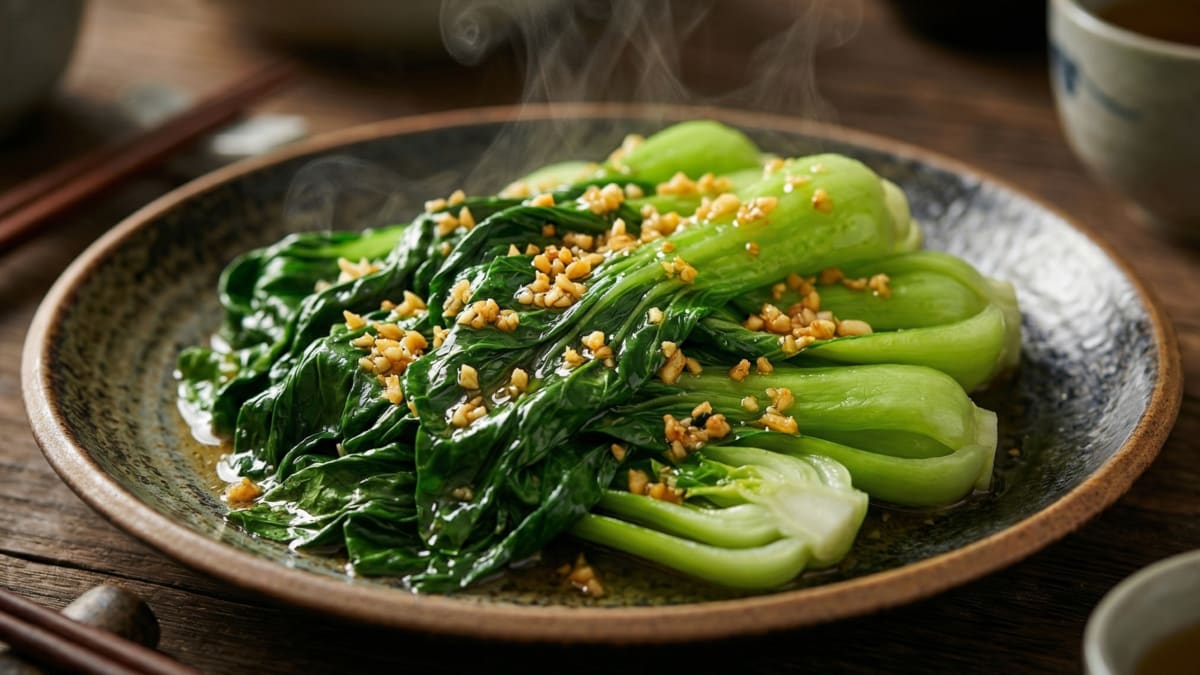
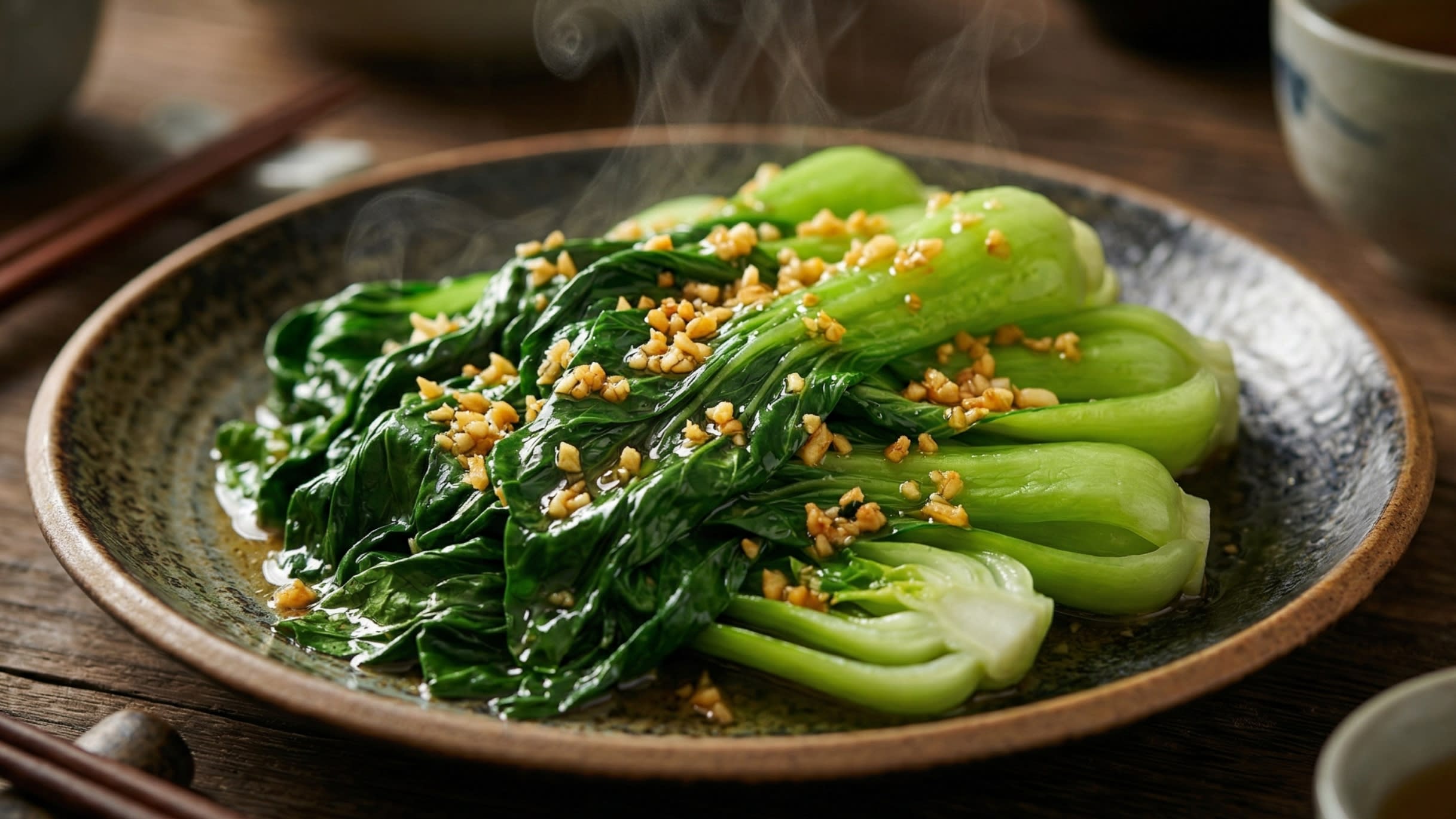
Among the vast pantheon of Chinese leafy greens, the absolute, undisputed crowd favorite is Chinese Garlic Bok Choy (蒜蓉炒小白菜 - Suànróng Chǎo Xiǎobáicài).
In the culinary world of Cantonese and Sichuan chefs, cooking a plate of plain green vegetables is widely considered the ultimate test of wok skills. It is incredibly exposing. There is no heavy batter to hide behind, and no dark soy sauce to mask mistakes. When executed perfectly, the Bok Choy arrives at the table a breathtaking, vibrant emerald green. The leaves are softly wilted and soaked in garlicky umami, while the thick stems remain incredibly juicy and tender-crisp. Most importantly, the plate is relatively dry—there is no massive puddle of watery soup ruining the dish.
However, when home cooks attempt to stir-fry Bok Choy, it frequently turns into a culinary tragedy. The vegetables oxidize and turn a sad, murky olive-brown. The leaves turn into flavorless mush while the stems remain raw and tough. And worst of all, the wok fills up with water, boiling the vegetables instead of frying them.
Today, we are going to master the beautiful simplicity of Chinese greens. We will teach you the golden rule of moisture control, the crucial prep step of separating the anatomy of the vegetable, and the exact timing required to capture that legendary, elusive Guōqì (锅气 - Wok Hei).
🔬 The Physics of the Wok: The “Bone Dry” Rule
Why do your homemade stir-fried vegetables always turn out watery and soggy? Because you are breaking the fundamental law of Chinese vegetable cooking: The vegetables must be bone dry before they hit the hot oil.
Bok Choy is comprised of over 90% water. When you wash your vegetables and immediately throw them into the wok while they are still dripping wet, a catastrophic physical reaction occurs. The excess water instantly crashes the temperature of your wok. Instead of searing in hot oil, the water begins to boil. Your beautiful Bok Choy is now steaming and boiling in a puddle of its own juices (出水 - Chūshuǐ). This destroys the crisp texture, turns the leaves yellow, and completely prevents the garlic flavor from adhering to the vegetable.
The Restaurant Secret: You must wash your Bok Choy thoroughly, and then aggressively drain it. Use a salad spinner, or lay the leaves out on a clean kitchen towel and pat them completely dry. The drier the leaves, the fiercer the sizzle, and the crispier the final dish!
🔪 The Anatomy of Bok Choy: Separation Anxiety
The second biggest mistake home cooks make is throwing the entire Bok Choy into the wok all at once.
Look closely at a piece of Baby Bok Choy. It has two distinct parts:
- The Stems (菜梗 - Càigěng): Thick, dense, pale green, and packed with water. They take longer to cook.
- The Leaves (菜叶 - Càiyè): Thin, delicate, dark green, and incredibly fragile. They cook in mere seconds.
If you throw them into the wok simultaneously, by the time the thick stems are properly cooked, the delicate leaves will have disintegrated into mush. The Solution: You must separate them! Cut the Bok Choy in half, separating the stems from the leaves. When stir-frying, you add the stems first, give them a 30-second head start, and then toss in the leaves. This guarantees perfectly even cooking every single time.
🧄 The Flavor Engine: Garlic and The “Umami Pinch”
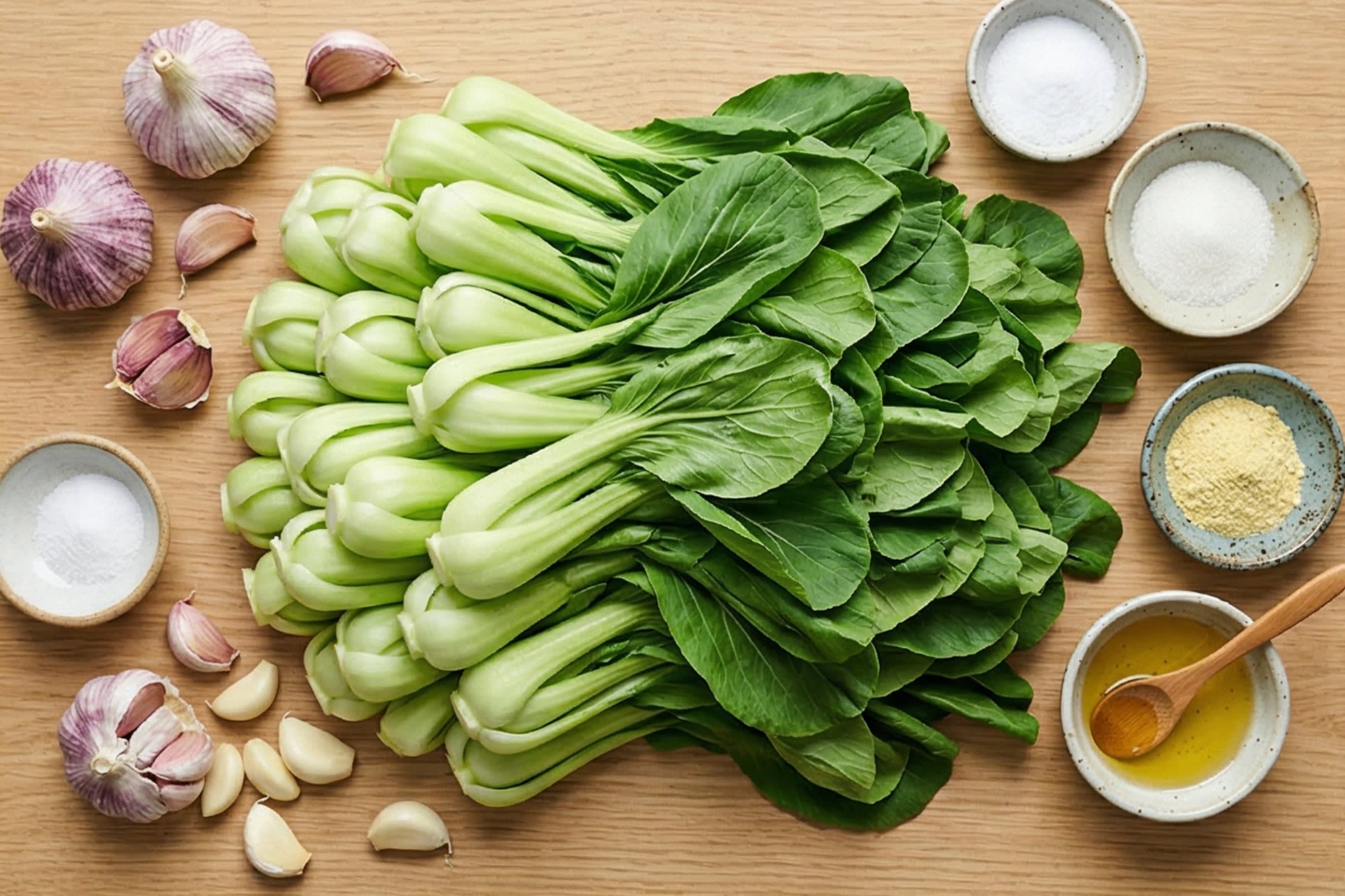
The name of the dish is Suànróng (蒜蓉 - Minced Garlic) Bok Choy. Garlic is not just an aromatic here; it is the main flavoring agent. You cannot use garlic powder, and you cannot use jarred, pre-minced garlic (which is highly acidic and lacks essential oils). You must use fresh garlic, and you must use a lot of it.
But Chinese restaurant chefs have one more secret to elevating the flavor profile of plain vegetables: The Umami Pinch. Along with salt, authentic recipes call for a tiny pinch of white sugar and a pinch of Chicken Bouillon powder (鸡粉). The sugar doesn’t make the dish sweet; it neutralizes the natural bitterness and astringency of the leafy greens. The chicken bouillon acts as an MSG-laden flavor amplifier, making the simple garlic oil taste incredibly rich, deep, and savory.
🛒 Ingredients List
The Vegetables:
- 1 lb (about 450g) Baby Bok Choy (小白菜 - Xiǎobáicài). Look for small, firm heads with unblemished dark green leaves.
- 2 tbsp high-heat Cooking Oil (peanut, canola, or vegetable oil)
The Aromatic Flavor Engine:
- 5-6 large cloves Garlic, very finely minced (蒜末 - Suànmò). Do not skimp on this!
The Restaurant Seasoning Blend:
- 1/2 tsp Salt (adjust to taste)
- 1/4 tsp Granulated Sugar (糖) - Crucial to balance the bitterness of the greens.
- 1/4 tsp Chicken Bouillon Powder (鸡精 / 鸡粉) - Optional, but highly recommended for that authentic restaurant umami depth. Vegans can substitute with mushroom powder.
- 1 tsp Toasted Sesame Oil (芝麻油) - For a final aromatic finish.
🍳 Step-by-Step Instructions
1. Wash and Separate (The Most Crucial Prep Step): Cut off the very bottom root of each Baby Bok Choy so the leaves separate. Wash them thoroughly in cold water; dirt loves to hide near the base of the stems! Separate the anatomy: Cut each leaf in half horizontally, separating the thick, pale stems (菜梗) from the dark green, leafy tops (菜叶). Place them in two separate piles.
2. Dry Completely (沥干水分): Run the separated Bok Choy through a salad spinner until it is completely, 100% bone-dry. Alternatively, lay them out on paper towels and pat them vigorously. Remember: Water is the enemy of a good stir-fry!
3. Prepare the Seasoning: To ensure you aren’t scrambling while the wok is screaming hot, mix your salt, sugar, and chicken bouillon powder in a tiny bowl. Have your minced garlic ready.
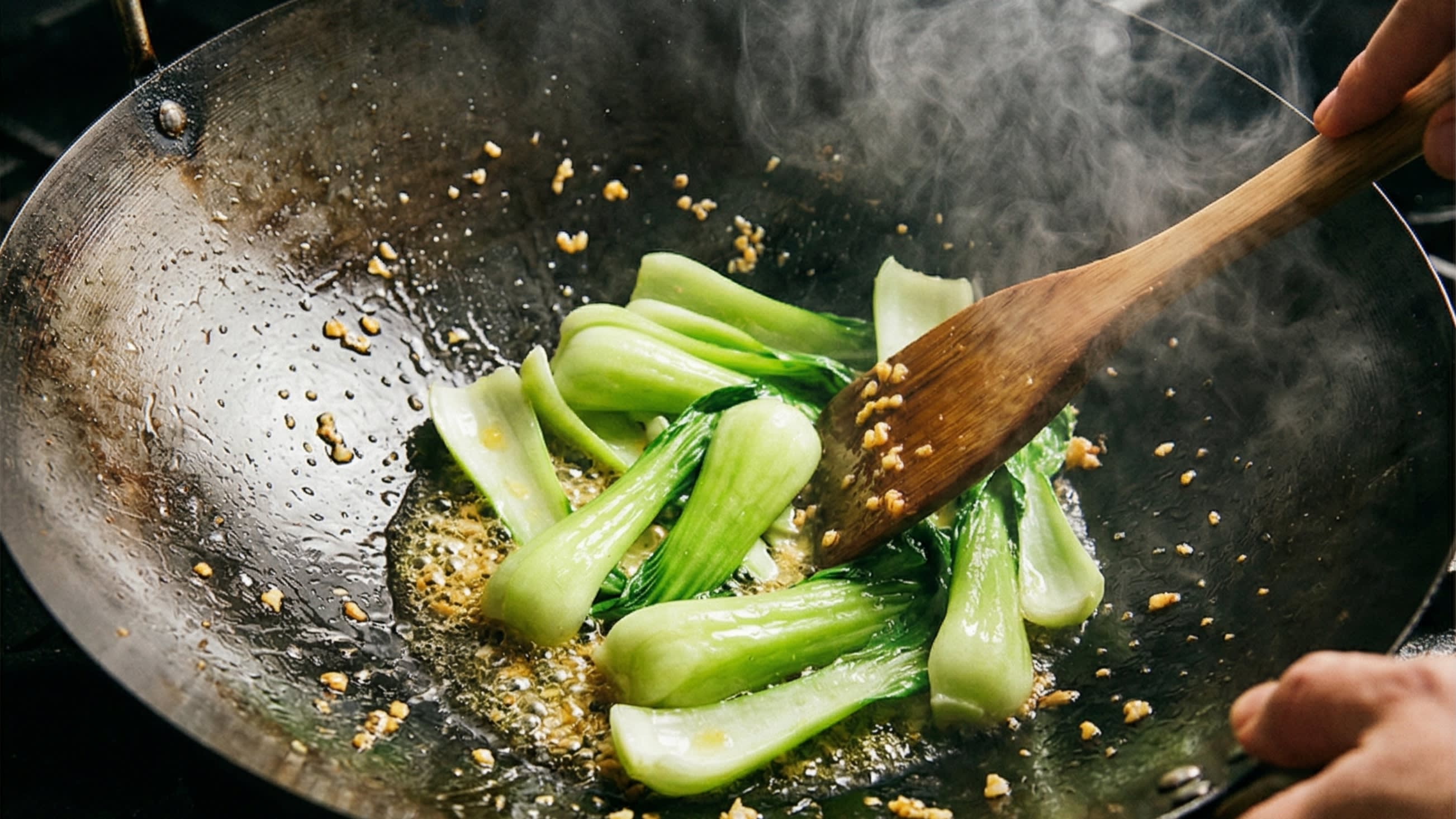
4. Sizzle the Garlic (爆香): Heat your wok or a large, wide skillet over medium heat. Add the 2 tablespoons of cooking oil. Add the minced garlic. Sizzle the garlic gently for 10 to 15 seconds until it becomes highly fragrant and turns a very light golden color. Do not let the garlic burn and turn brown, or the entire dish will be bitter!
5. The Stems Go First (猛火快炒): Immediately turn the heat up to MAXIMUM HIGH (猛火 - Měnghuǒ). The wok should be roaring. Throw in the pile of pale Bok Choy stems. Toss them aggressively in the garlic oil for exactly 30 seconds. You want to hear a loud, furious sizzling sound.
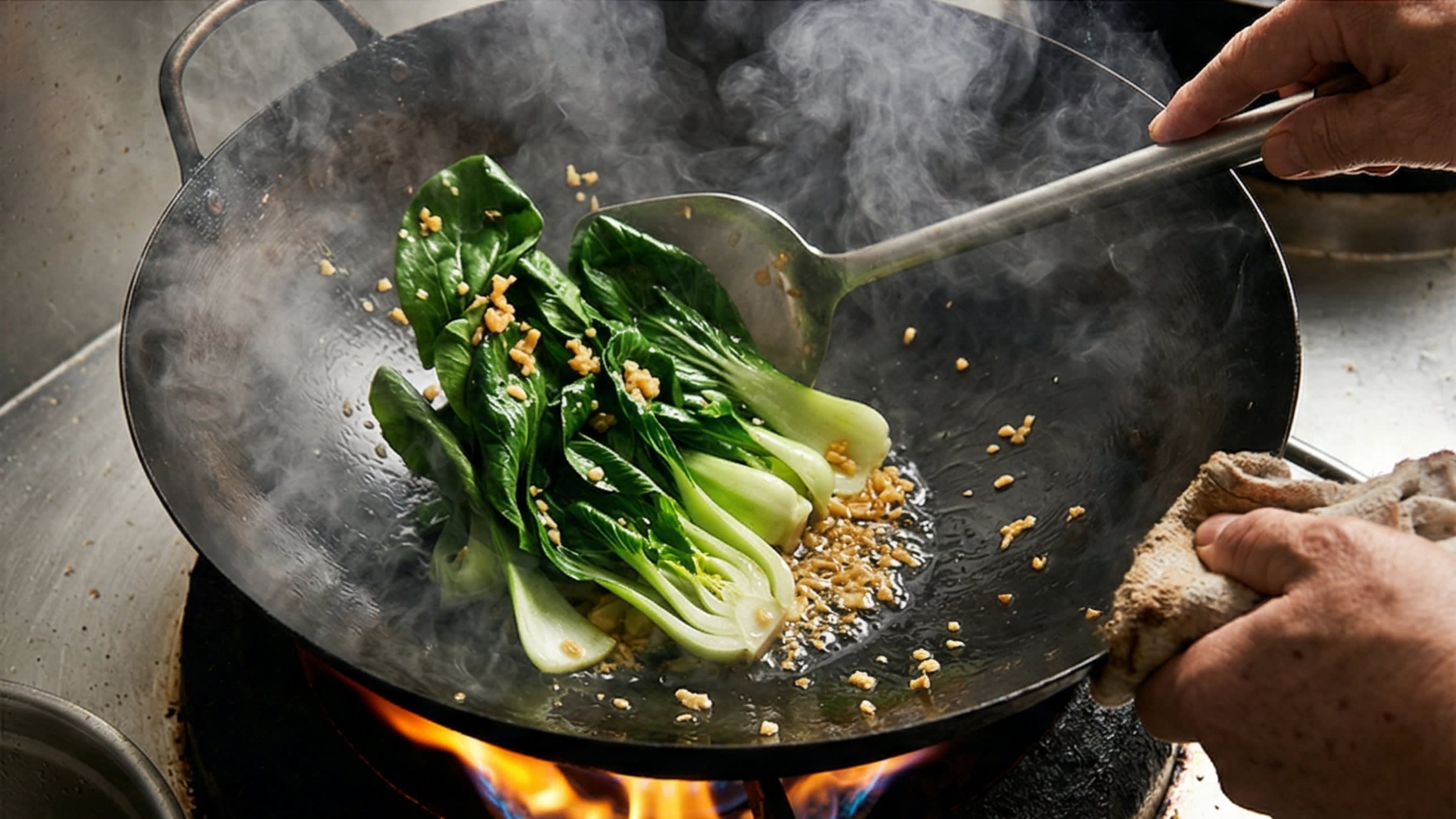
6. The Leaves and Seasoning (断生): Now, throw in the pile of delicate dark green leaves. Sprinkle your prepared seasoning mix (salt, sugar, chicken powder) evenly over the vegetables. Toss rapidly and continuously for another 30 to 45 seconds. The leaves will instantly wilt, shrink, and turn a breathtaking, glossy emerald green (断生 - Duan Sheng).
7. Finish and Serve: The exact second the leaves are wilted but the stems are still snappy, turn off the heat! Drizzle the 1 teaspoon of toasted sesame oil over the vegetables and give it one final toss. Immediately transfer the Bok Choy to a serving plate. Do not leave it in the hot wok, or the residual heat will overcook it into mush. Serve steaming hot alongside your favorite main courses and rice!
💡 Troubleshooting & Pro Tips
- My Bok Choy released a massive pool of water in the wok! You didn’t dry the vegetables thoroughly in Step 2, or your wok wasn’t hot enough in Step 5. High heat evaporates the vegetable’s natural moisture instantly, locking in the crunch. If your wok cools down, the vegetables will boil and weep water.
- The garlic burned and tastes bitter. Minced garlic burns incredibly fast, especially on high heat. This is why we sizzle it on medium heat first to infuse the oil, and then immediately drop the Bok Choy stems in. The moisture from the stems instantly lowers the oil temperature just enough to stop the garlic from burning while the vegetables cook!
- Can I add soy sauce or oyster sauce? You can, but it is not traditional for this specific dish. Dark sauces will stain the beautiful, vibrant green leaves and muddy the pure, clean, garlicky flavor profile. If you crave more umami, stick to the chicken bouillon powder or a tiny splash of light soy sauce at the very end.
📦 Shop Authentic Asian Pantry Essentials
To capture the vibrant color, tender-crisp texture, and deep, savory restaurant flavor profile, upgrading your kitchen tools is highly recommended. (As an Amazon Associate, ChinaCurator earns from qualifying purchases.)
- Lee Kum Kee Chicken Bouillon Powder (鸡粉) - The absolute secret weapon in Chinese restaurant kitchens. A tiny pinch provides a massive, savory umami depth to plain vegetables without darkening the sauce.
- Kadoya 100% Pure Toasted Sesame Oil (芝麻油) - A few drops added off the heat right before serving gives the greens an intoxicating, roasted, nutty aroma.
- OXO Good Grips Large Salad Spinner - The most crucial tool for ensuring your washed leafy greens are 100% bone-dry before hitting the roaring hot wok.
- Traditional Carbon Steel Wok - The ultimate vessel for achieving the extreme, sustained high heat required to capture true "Wok Hei" (Breath of the Wok).